

If your German shepherd is underweight, recovering from illness, or a working dog that struggles to maintain mass, choosing the right food can make a big difference in how quickly and healthily they gain weight. You want options that increase calories without sacrificing nutrient balance, and that support lean muscle rather than just adding fat. This guide looks at seven carefully shortlisted foods that are suited to German shepherds needing weight gain. We evaluated calorie density, protein quality, fat sources, digestibility, and practical feeding considerations to help you pick the best fit for your dog.
Top Picks at a Glance
| Best Overall Food for German Shepherd Weight Gain A balanced, effective choice for most owners seeking healthy weight gain | Bully Max Pro 2X High-Calorie Dog Food 4 lb |  |
| Best Budget Food for German Shepherd Weight Gain Lower-cost formulas that still deliver calories and essential nutrients | PetAg Dyne High Calorie Liquid Supplement 16 oz |  |
| Best High-Calorie Food Formulas formulated to deliver extra calories per serving for weight gain | Team Dog Elite Blend 33 lb |  |
| Best High-Protein Food Protein-forward recipes to support muscle mass during weight gain | VICTOR Hi-Pro Plus Dry Dog Food 5lb |  |
| Best Large-Breed Food Formulated for big dogs with controlled calcium and appropriate calories | ROYAL CANIN German Shepherd Adult 30 lb |  |
| Best Wet/Canned Food Higher-moisture, palatable options to boost calorie intake easily | ROYAL CANIN German Shepherd Wet 13.5 oz |  |
| Best Premium Food Higher-end recipes with superior ingredients and targeted nutrition | Best Breed Dr. Gary's German Dog Diet 28 lb |  |
Bully Max Pro 2X High-Calorie Dog Food 4 lb
Best Overall Food for German Shepherd Weight Gain

| Flavor | Chicken |
|---|---|
| Unit Count | 64 Ounce |
| Protein | 31% Protein |
| Fat | 25% Fat |
| Calories per Cup | 600 cal |
Bully Max Pro 2X is a calorie-dense kibble designed to help puppies gain healthy weight and build muscle with 600 calories per cup and a 31% protein / 25% fat profile. It is typically fed as a daily maintenance or growth diet for puppies and active or recovering dogs that need extra calories without dramatically increasing portion volume. The formula lists chicken meal first, includes chicken fat, white fish meal, flaxseed, probiotics, and a vitamin/mineral mix to support digestion, skin and coat, and overall condition. Practical benefits include smaller serving sizes to hit calorie targets, high palatability for picky eaters, and added probiotics for better nutrient absorption. Important limitations are that its calorie density and high fat content make it inappropriate for average or weight-sensitive puppies without close portion control, and a gradual transition is recommended to avoid digestive upset. The product is presented in a 4 lb bag, so frequent repurchasing may be needed for larger pups or multi-dog households.
Best for: Buyers who need a concentrated, palatable puppy formula to drive steady weight gain and support muscle development in growing or underweight puppies, and who are willing to manage portions and monitor progress closely.
Less Ideal for: Owners looking for a moderate-calorie starter diet or those with puppies prone to excess weight or pancreatitis should choose a milder, lower-fat option instead.
- Extremely high calorie density (600 cal per cup) for efficient weight gain
- High protein and fat (31% protein, 25% fat) to support muscle building and energy
- Contains probiotics and omega sources to aid digestion and skin and coat health
- Formulated for all life stages including puppies and dogs needing recovery or increased calories
- Free from corn, wheat, soy, artificial colors, and preservatives
- Small 4 lb bag size may require frequent repurchase for growing puppies
- Not suitable as a default diet for puppies that do not need extra calories without strict portion monitoring
Verdict: The best overall food for German Shepherd weight gain that balances extra calories, high-quality protein, digestibility, and nutrient density to promote steady, healthy mass increase for most dogs.
PetAg Dyne High Calorie Liquid Supplement 16 oz
Best Budget Food for German Shepherd Weight Gain

| Item Form | Liquid |
|---|---|
| Flavor | Unflavored |
| Volume | 16 fluid ounces |
| Age Range | 8 Wks and Over |
PetAg Dyne is a concentrated, liquid high-calorie supplement designed to add dense energy without requiring large volumes of food. It is typically fed directly or poured over a dog's regular meal to boost calorie intake for underweight, active, pregnant, or aging dogs. The formula is vet-formulated, contains omega-3s, and comes in a sweet vanilla flavor that most dogs accept, which helps when appetite is low. Because it is liquid and calorie-dense, a small serving provides substantial extra calories while leaving room in the stomach for normal diet, useful for large-breed dogs that need to increase weight without overfilling. Ingredients include oils, milk solids, sugars, and vitamin supplements, so it supplies fat-based calories plus some micronutrients. Limitations are that it contains sugars, artificial vanilla flavor, and preservatives, and it is not intended for cats or humans, so veterinary guidance is advised for long-term use or for dogs with specific medical conditions. For a Great Dane needing steady, digestible calorie increase, Dyne offers an easy-to-administer option but should be integrated under vet oversight.
Best for: Owners seeking a low-volume, palatable way to add digestible calories to a Great Dane’s diet to support steady weight gain while minimizing meal bulk.
Less Ideal for: Owners looking for an all-natural or prescription gastrointestinal support formula or those whose dogs require a fat-restricted diet should consider alternative products or vet-recommended plans.
- Very calorie-dense so small servings add significant energy
- Liquid form mixes or tops food easily for picky or low-appetite dogs
- Vet-formulated and includes omega-3s and added vitamins
- Sweet vanilla flavor increases palatability for many dogs
- Contains sugar and artificial flavoring rather than being purely natural
- Includes preservatives and ingredients that may not suit dogs with specific dietary sensitivities
Verdict: The best budget food for German Shepherd weight gain that provides concentrated calories and adequate protein for gradual weight gain without breaking the bank.
Team Dog Elite Blend 33 lb
Best High-Calorie Food

| Protein | 30% |
|---|---|
| Fat | 25% |
| Form | Kibble |
| Flavor | Chicken Meal & Sweet Potato |
| Unit Count | 528 Ounce |
Team Dog Elite Blend is a performance-focused dry dog food formulated with 30% protein and 25% fat to support weight gain, muscle building, and high-energy activity. The formula uses concentrated meal proteins and animal-sourced ingredients so each cup delivers a calorie-dense, nutrient-rich serving useful for dogs that need to add bodyweight or maintain condition during heavy work. It includes probiotics and a vitamin/mineral blend aimed at improving digestion, immune function, and skin and coat health, and the ingredient panel excludes common allergens like corn, wheat, and soy. In practice you would transition gradually and feed measured servings to reach the desired weight, and owners of dogs with sensitive stomachs may appreciate the added probiotics and limited grain choices. The kibble is intended for all life stages and many active breeds, but because it is energy dense you will need to monitor intake for pets that do not require extra calories and introduce it slowly to avoid digestive upset.
Best for: Buyers seeking a reliable, calorie-dense high-protein food to help healthy, active dogs gain weight and build lean muscle while supporting digestion and coat health.
Less Ideal for: Owners of sedentary or already overweight dogs, or those who prefer whole-meat first ingredients rather than meal-based protein sources should consider a different formula.
- High protein at 30% and high fat at 25% for effective weight gain and muscle maintenance
- Animal-forward protein mix with concentrated meal proteins for consistent nutrient density
- Includes probiotics and added vitamins/minerals to support digestion, immunity, and cognitive health
- Gluten-free and free from corn, wheat, and soy which may help dogs with certain sensitivities
- Calorie dense formula may be too rich for dogs that do not need extra calories
- Uses meal proteins rather than whole meat which some buyers prefer for ingredient transparency
Verdict: The best high-calorie food for dogs needing to gain weight, offering elevated energy density and nutrient balance to support safe, calorie-forward weight increases.
VICTOR Hi-Pro Plus Dry Dog Food 5lb
Best High-Protein Food

| Protein | 30% crude protein |
|---|---|
| Fat | 20% crude fat |
| Life Stage | All Life Stages |
| Special Ingredients | Gluten-free |
| Container Type | Bag (5 lb) |
VICTOR Hi-Pro Plus is a nutrient-dense dry dog food aimed at active dogs, growing puppies, and reproductive females that need extra protein and calories. The kibble blends beef, chicken, pork, and fish meals to deliver 30% protein and 20% fat, which supports muscle maintenance and sustained energy for sporting or working dogs. It includes the brand's VPRO Blend of vitamins, minerals, prebiotics and probiotics to aid digestion, immune function, and skin and coat health, and uses gluten-free grains as part of its carbohydrate profile. Buyers will appreciate that the formula is made in the USA and lists a detailed ingredient panel including functional additives such as L-carnitine, selenium yeast, and probiotic fermentation products. Important trade-offs are that the formula is grain-inclusive (10% grain-sourced protein) and is calorie-dense, so portion control is necessary to avoid excess weight gain for less active pets; also the multi-meat meal approach is different from single-source novel-protein diets for dogs with specific protein sensitivities. For owners who need a high-protein performance kibble, this delivers concentrated nutrition in a compact bag.
Best for: Owners who need a concentrated, high-protein kibble to support muscle maintenance, high activity levels, or performance work and who prioritize complete nutrition across life stages.
Less Ideal for: Families seeking a grain-free or single-source novel protein diet for allergy management or owners of relatively sedentary dogs who need lower-calorie maintenance formulas.
- High protein content (30% crude protein) to support muscle maintenance and active metabolism
- Multi-meat meals (beef, chicken, pork, fish) provide concentrated animal-sourced amino acids
- Includes VPRO Blend with vitamins, minerals, prebiotics and probiotics for digestion and immune support
- Formulated for all life stages including puppies and reproductive females for growth and recovery
- Produced in a U.S. facility with transparent ingredient and supplement list
- Grain-inclusive formula may not suit dogs needing grain-free or single-source protein diets
- Calorie-dense formula requires careful portioning for less active or weight-sensitive dogs
Verdict: The best high-protein food for weight gain that emphasizes quality animal protein to help German Shepherds add lean mass rather than just fat.
ROYAL CANIN German Shepherd Adult 30 lb
Best Large-Breed Food

| Flavor | Chicken |
|---|---|
| Age Range Description | Adult |
| Item Form | Pellet |
| Breed Recommendation | German Shepherd |
| Animal Food Diet Type | Veterinary Diet |
Royal Canin German Shepherd Adult is a breed-targeted kibble designed for purebred German Shepherds 15 months and older. The formula combines highly digestible proteins and specific fibers to promote digestive health, while added EPA/DHA from fish oil and exclusive nutrients support skin and coat condition. Glucosamine and chondroitin are included to help maintain bone and joint health in large, active dogs, and the kibble shape is tailored to the breed's long muzzle to encourage comfortable chewing. Typically fed as an everyday maintenance diet, this food works well for owners who want a complete, balanced option formulated around common German Shepherd needs rather than a generic adult formula. Limitations to note are the primary protein source listed as chicken by-product meal rather than whole muscle meat and that the ingredient list includes grains and corn, which some owners avoid. For dogs with specific allergies or those needing novel-protein diets, a veterinary or limited-ingredient alternative may be preferable.
Best for: Owners who want a ready-to-feed everyday diet tailored to the nutritional and chewing needs of adult German Shepherds and who prioritize breed-specific support for digestion, skin, and joints.
Less Ideal for: Owners seeking grain-free, novel-protein, or elimination diets for food sensitivities should consider specialized veterinary or limited-ingredient formulas instead.
- Formulated specifically for German Shepherds with kibble shape tuned to muzzle and teeth
- Includes glucosamine and chondroitin to support large-breed joint and bone health
- EPA and DHA from fish oil plus nutrients aimed at maintaining skin and coat
- Highly digestible proteins and fiber blend to support digestive health
- Primary listed protein is chicken by-product meal rather than whole-muscle meat
- Contains grains and corn, so not suitable for grain-free or some limited-ingredient plans
Verdict: The best large-breed food for weight gain that matches a German Shepherd's size with tailored calorie levels, joint-support nutrients, and growth-safe mineral balances.
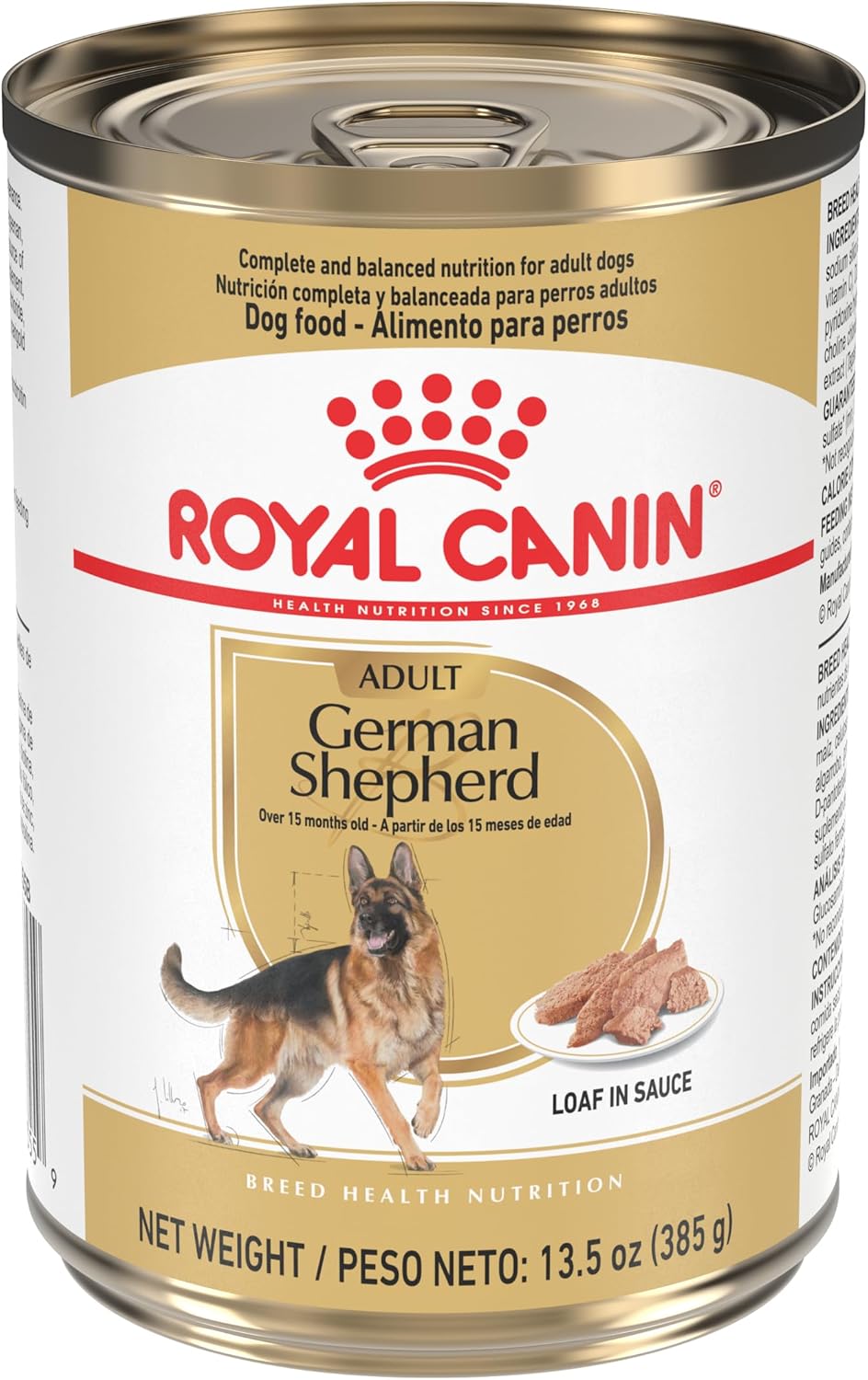
ROYAL CANIN German Shepherd Wet 13.5 oz
Best Wet/Canned Food
| Unit Count | 13.5 Ounce |
|---|---|
| Number of Items | 12 |
| Flavor | Pork |
| Item Form | Pate |
| Age Range Description | Adult |
This Royal Canin German Shepherd Adult wet food is a breed-targeted canned pate designed to boost palatability and add moisture to a German Shepherd's diet. It is typically served straight from the can or mixed with dry food to entice picky eaters or increase hydration, and its loaf-in-sauce texture tends to appeal to dogs that prefer a soft, saucy meal. The formula includes glucosamine and chondroitin to support large-breed bone and joint health and B vitamins plus amino acids aimed at skin and coat maintenance, while listed protein-rich ingredients and digestive support claims make it suitable for dogs needing gentle digestion. Practical benefits include convenient single-serve cans that are easy to portion and mix, plus a recipe tailored to the specific needs of German Shepherds 15 months and older. Important limitations are that ingredient sources include by-products and cereals rather than single-source named meats, and this product is a veterinary diet classification that may not suit owners seeking grain-free or limited-ingredient wet foods.
Best for: Owners of adult German Shepherds who need a palatable, moisture-rich wet food to encourage eating or to complement dry kibble while supporting skin, coat and joint health.
Less Ideal for: Owners seeking grain-free, single-protein, or limited-ingredient wet diets for dogs with specific food sensitivities should consider alternative formulas.
- Breed-specific formulation addressing common German Shepherd needs like skin, coat, digestion, and joint support
- Loaf-in-sauce pate increases palatability and can encourage picky eaters to eat
- Contains glucosamine and chondroitin to support large-breed bone and joint health
- Convenient canned format that adds moisture and is easy to mix with dry food
- Ingredients list includes by-products and grains rather than only named single-source meats
- Not a limited-ingredient or grain-free formula for dogs requiring restrictive diets
Verdict: The best wet/canned food for weight gain that increases palatability and calorie intake for picky eaters or dogs needing a more enticing, moisture-rich diet.
Best Breed Dr. Gary's German Dog Diet 28 lb
Best Premium Food

| Flavor | Chicken |
|---|---|
| Age Range Description | All Life Stages |
| Item Form | Dry Kibble |
| Special Ingredients | New Zealand Green-Lipped Sea Mussel |
| Animal Food Diet Type | Veterinary Diet |
Dr. Gary's Best Breed German Dog Diet is a high-end dry food aimed at large and giant breeds with sensitive digestion and skin issues. It is typically fed as a daily staple and uses concentrated protein sources such as chicken meal, menhaden fish meal, and egg to support muscle maintenance while adding fish oils and flax for omega-3s that help coat condition and reduce inflammation. The formula includes New Zealand green-lipped mussel plus natural glucosamine and chondroitin for joint support and taurine for heart and vision health, and a blend of soluble and insoluble fiber to promote steady digestive function. The recipe is slow-cooked at low temperatures and excludes common fillers like corn, peas, and potatoes, which can benefit dogs with food sensitivities. Trade-offs are that this is a specialty veterinary-style diet with a focused ingredient list and it may cost more than standard formulas, and some owners may need to transition slowly if their dog is used to a different protein source. For owners prioritizing coat improvement and digestive resilience in large breeds, this formula delivers targeted nutrients in a purposeful way.
Best for: Owners of German Shepherds or other large breeds who are ready to invest in a targeted premium diet to improve skin and coat health while supporting digestion and joints.
Less Ideal for: Owners looking for a budget everyday kibble or those who need a prescription-only therapeutic diet should consider other options.
- Veterinarian-developed formula targeting digestive and skin health for large breeds
- High-quality protein blend including chicken meal, menhaden fish meal, and egg for muscle maintenance
- Omega-3 rich fish oils and flaxseed to support coat condition and reduce skin inflammation
- Includes New Zealand green-lipped mussel plus natural glucosamine and chondroitin for joint support
- Made in small batches with low-temperature slow cooking to enhance nutrient availability
- Sold as a specialty veterinary-style diet so cost is higher than standard kibble
- May require a gradual transition for dogs sensitive to new protein sources
Verdict: The best premium food for weight gain that prioritizes top-quality proteins, targeted supplementation, and formulation precision for owners willing to invest in optimal nutritional support.
Choosing the Right Dog Food German Shepherd Weight Gain: Key Factors to Consider
Calorie Density and Serving Practicality
Calorie density determines how many calories your dog gets per cup or serving, which is critical for increasing total daily energy without forcing huge meal volumes. German shepherds are a large breed and may have difficulty consuming several oversized meals, so a food with concentrated calories lets you raise intake while keeping meal sizes manageable.
Also consider the transition plan: higher-calorie foods can cause digestive upset if introduced too quickly. Look for formulas that let you step up calories gradually by mixing larger proportions over several days. Finally, check feeding charts against your dog's current weight and activity level to estimate realistic portion increases.
Protein Quality and Quantity
Protein supplies the amino acids needed to build and preserve muscle as body weight increases. For a German shepherd gaining weight, aim for formulas that list a named animal protein source and provide moderate to high crude protein to support lean-mass retention during caloric surplus.
Beyond crude percentage, protein digestibility matters: highly digestible proteins reduce waste and improve the usable calorie and amino acid yield from each meal. This helps promote muscle gain rather than simply increasing body fat.
Healthy Fat Sources and Omega Balance
Fats are the most calorie-dense macronutrient and are essential when increasing dietary energy. Choose foods that use recognizable fat sources like poultry fat or fish oil and include omega-3 and omega-6 fatty acids for skin, coat, and inflammatory balance. Good fat sources also improve palatability, encouraging consistent eating when you need to ramp up intake.
Watch for digestibility as well; highly processed or unusual fat sources can cause loose stools in some dogs. A balanced omega ratio contributes to overall recovery and tissue health during weight gain.
Digestibility and Gastrointestinal Tolerance
When you increase food volume or switch to a richer formula, digestive tolerance becomes a top priority. Foods with highly digestible carbohydrate sources, prebiotic fiber, and moderate fat help avoid diarrhea or gas that can derail a feeding plan.
Consider ingredient simplicity if your dog has a sensitive stomach. Probiotic or digestive-enzyme inclusions can be beneficial for dogs transitioning to higher-calorie diets, and formulas designed for large-breed digestive needs often reduce the risk of gastrointestinal upset.
Micronutrients and Joint Support
German shepherds are prone to joint stress, especially as weight changes. While the primary goal is caloric increase, maintaining or improving joint-support nutrients such as glucosamine, chondroitin, and appropriate vitamin and mineral balance is valuable. Sufficient levels of vitamins and minerals ensure healthy tissue rebuilding as mass increases.
Calcium and phosphorus ratios should be appropriate for adult large-breed dogs; improper balance can affect bone health if the dog is still growing or if supplements are misapplied.
Palatability and Feeding Behavior
No feeding plan works if the dog will not eat the food. Palatability drives consistent intake, and preference testing or proven acceptance should influence your choice. Some dogs respond well to warm or moistened meals; others need stronger flavors or aromas.
Factor in individual feeding behavior: enthusiastic eaters may do fine with lower-calorie increases, while picky or anxious feeders might require especially palatable, high-calorie formulas to reliably meet daily caloric goals.
How Quickly Should I Expect a German Shepherd to Gain Weight Safely?
Healthy weight gain should be gradual. For most adult dogs, aim for a few percent increase in body weight per month rather than rapid spikes. Faster gains often come with fat accumulation and increased strain on joints.
Monitor body condition rather than just scale weight. Look for gradual filling out of the rib and waist areas and improved muscle tone over several weeks. If you do not see steady improvement after a reasonable period, reassess calorie targets or consult a veterinarian.
- Increase calories slowly over 7 to 14 days to reduce digestive upset.
- Track body condition score weekly and adjust portions accordingly.
- Pause or slow gains if mobility or appetite changes occur.
What Feeding Schedule and Portioning Work Best for Large-breed Weight Gain?
Splitting daily calories into multiple meals reduces gastric load and lowers the risk of bloat, a particular concern for deep-chested breeds. Three smaller meals or two moderately sized meals plus a snack often works well.
Use feeding charts as a starting point, then adjust based on weight trends and activity. Keep treats accounted for in the daily calorie budget so they do not undermine planned increases.
- Divide total daily calories into at least two meals to spread digestion.
- Offer calorically dense toppers or mixes if extra calories are needed without large volume increases.
- Weigh portions for accuracy rather than relying on volume measures.
How to Transition Your Dog to a Higher-calorie Formula
Switch gradually over 7 to 10 days by increasing the proportion of new food each day. Start with a small amount of the richer food mixed into the current diet to help avoid diarrhea or refusal.
If digestive upset occurs, slow the transition pace and consider adding a probiotic or easily digestible carbohydrate source temporarily. Consult a veterinarian if severe or persistent gastrointestinal signs appear.
- Day 1–3: 25% new food, 75% old food.
- Day 4–7: 50% new food, 50% old food.
- Adjust timing based on tolerance and stool quality.
Do Supplements Help when Trying to Add Lean Mass?
Supplements can support a weight-gain plan but are not a substitute for proper nutrition. High-quality protein supplements, specific amino acids, or caloric toppers can help on a short-term basis when used under guidance.
Joint support supplements may be prudent for German shepherds increasing mass, especially for dogs with previous joint concerns. Always coordinate supplementation with the base diet to avoid excessive nutrient overlaps.
- Use protein or calorie-dense toppers for picky eaters when necessary.
- Consider joint-support supplements if mobility concerns exist.
- Get veterinary input before adding multiple supplements to avoid imbalances.
Signs to Watch That Indicate the Feeding Plan Needs Adjustment
Watch stool quality, energy level, coat condition, and gait. Loose stools or persistent vomiting suggest the diet is too rich or the transition was too quick. Lethargy or sudden behavioral changes could signal an underlying health issue rather than a nutrition problem.
If weight gain is all fat with no improvement in muscle tone, increase protein relative to calories and incorporate appropriate exercise. If joints become sore or mobility declines, reduce calorie increase and consult a veterinarian.
- Monitor stool firmness and frequency daily during transitions.
- Assess body condition visually and by touch weekly.
- Seek veterinary attention for persistent GI signs or mobility problems.
How We Chose the Best Dog Food German Shepherd Weight Gain
We selected products using criteria that matter most when helping German shepherds gain weight safely. First, calorie density was a primary filter: we prioritized formulas with higher metabolizable energy per cup so owners can increase intake without unmanageably large meal volumes. Second, protein quality and quantity were assessed to ensure additional calories support lean-tissue growth rather than fat accumulation. Third, fat sources and digestibility were considered, favoring formulas using readily absorbed fats and omega fatty acids that provide concentrated calories and help coat and skin health. Fourth, ingredient transparency and absence of unnecessary fillers were important to reduce the risk of digestive upset when increasing food volume. Fifth, palatability and proven acceptance were weighted because consistent intake is essential for steady gains. Sixth, practical feeding factors such as kibble size for a large-breed mouth and suitability for multi-meal schedules were included. We excluded foods that rely on vague ingredient lists, extremely high carbohydrate filler levels, or formulations intended exclusively for weight loss. We also filtered out options that are only appropriate for therapeutic clinical conditions unless they match general weight-gain needs. The final selection balances energy density, nutrient profile, and everyday feeding practicality for German shepherds aiming to gain weight.
Our full evaluation process is outlined in our review methodology.
FAQ
how many extra calories does my german shepherd need to gain weight?
It depends on current weight, activity level, and metabolism. Typically you start by increasing daily calories by 10 to 20 percent and monitor progress, adjusting every one to two weeks based on body condition and weight trends.
is it better to use a high-fat formula or add oil to meals?
High-quality dietary fats in a balanced formula are preferable because they come with appropriate nutrient ratios and improve digestibility. Adding oil can boost calories temporarily but may upset the stomach if used in large amounts and does not supply the broader nutrient balance found in formulated foods.
should puppies and adults use the same approach to gain weight?
No. Puppies have different calcium and phosphorus needs and different metabolic rates. Weight gain strategies for adults should not be applied to growing dogs without veterinary guidance because improper nutrient balances can harm developing bones and organs.
how long should I try a new feeding plan before deciding it is working?
Allow several weeks, often four to eight, to see meaningful changes in body condition while monitoring stool quality and energy. Make incremental adjustments rather than rapid changes and consult a veterinarian if progress stalls or adverse signs appear.
can exercise help my german shepherd gain healthy weight?
Yes. Appropriate resistance and endurance exercise help convert extra calories into muscle instead of fat. Combine increased dietary calories with controlled activity to support lean-mass gains while protecting joints from overuse.
Final Verdict
When choosing food to help a German shepherd gain weight, prioritize calorie density paired with high-quality protein and digestible fats. Manage the pace of change, monitor body condition and stool quality, and favor formulas that support joint health during increased mass. If progress is slow or signs of intolerance appear, adjust portions or consult a veterinarian to refine the plan. With a measured approach, you can help your dog gain weight in a way that builds muscle and preserves long-term health.

