

If your golden retriever shows signs of digestive upset, picking the right food can change daily comfort and long-term health. Dogs with sensitive stomachs often need formulas that reduce gut irritation, support nutrient absorption, and provide consistent energy for an active breed. This guide shortlists seven top-quality foods aimed specifically at Golden retrievers with sensitive stomachs and explains what makes each option suitable. We evaluated ingredient sources, digestibility, and nutrient balance so you can focus on options likely to ease stomach issues while keeping your dog healthy and active. Read on to find choices that match your priorities and lifestyle.
Top Picks at a Glance
| Best Overall Food for Golden Retrievers with Sensitive Stomach A well-balanced formula that soothes digestion while meeting breed needs | Hill's Science Diet Sensitive Stomach & Skin Large Breed |  |
| Best Budget Food for Golden Retrievers with Sensitive Stomach A low-cost option that still focuses on stomach-friendly ingredients | Wag Wholesome Grains Salmon Dog Food 30 lb |  |
| Best Premium Food A higher-end formula prioritizing quality ingredients and advanced digestion support | Annamaet Original Sensitive Skin & Stomach 25-lb |  |
| Best Limited-Ingredient Food A simplified recipe with fewer proteins and additives to reduce triggers | Natural Balance Limited Ingredient Salmon & Sweet Potato |  |
| Best Digestive-Support Food Formulas with probiotics, prebiotics, and gentle fibers to aid digestion | Purina ONE Lamb & Rice Dry Dog Food |  |
| Best Wet Food Moist recipes that are easier on digestion and highly palatable | Hill's Science Diet Sensitive Stomach & Skin 12-Pack |  |
| Best Large-Breed Food Formulated for bigger dogs with joint support and appropriate calorie density | Royal Canin Golden Retriever Adult Dry Food 5 lb |  |
Hill's Science Diet Sensitive Stomach & Skin Large Breed
Best Overall Food for Golden Retrievers with Sensitive Stomach

| Flavor | Chicken |
|---|---|
| Age Range Description | Adult 1-5 |
| Unit Count | 480 Ounce |
| Breed Recommendation | Large Breeds |
| Special Ingredients | Prebiotic |
Hill's Science Diet Sensitive Stomach & Skin Large Breed is a chicken and barley dry formula designed for adult large dogs that experience occasional digestive upsets and skin sensitivities. It uses highly digestible ingredients and added prebiotic fiber to support a balanced gut microbiome and improve nutrient absorption, while vitamin E and omega fatty acids help maintain skin and coat condition. The recipe lists chicken as the first ingredient and includes a mix of grains, vegetables, and clinically proven antioxidants such as vitamins C and E to support immune health. Typical use is daily feeding as a complete diet for large-breed adults, with gradual transition instructions on the package and a feeding guide to adjust portions for body condition. Limitations include that it is a grain-containing veterinary-style formula so owners seeking grain-free or novel-protein elimination diets will need alternatives, and dogs with specific protein allergies should review the ingredient list. For Great Danes and other large breeds that need controlled digestibility and skin support, this is a practical, vet-backed everyday option.
Best for: Owners of large-breed adult dogs seeking a reliably digestible everyday food that soothes occasional stomach upset and supports skin health.
Less Ideal for: Dogs that require grain-free formulas, novel protein elimination diets, or have specific allergies to chicken should consider alternative specialty diets.
- Formulated for sensitive stomachs with prebiotic fiber for gut support
- Includes vitamin E and omega fatty acids to promote skin and coat health
- High-quality chicken is the first ingredient for protein-focused nutrition
- Clinically proven antioxidants (vitamins C and E) to support immune health
- Taste and digestibility tailored for adult large-breed dogs
- Contains common grains and chicken so not suitable for dogs requiring grain-free or novel-protein diets
- Not a prescription-only therapeutic diet despite 'veterinary diet' label, so consult a vet for complex conditions
Verdict: The best all-around food for Golden Retrievers with sensitive stomachs, offering balanced nutrition, gentle ingredients, and proven digestive tolerance for everyday feeding.
Wag Wholesome Grains Salmon Dog Food 30 lb
Best Budget Food for Golden Retrievers with Sensitive Stomach

| Flavor | Salmon |
|---|---|
| Age Range Description | Adult |
| Item Form | Pellet |
| Unit Count | 480 Ounce |
Wag Wholesome Grains Salmon is a 30 lb adult dry dog formula that puts salmon as the first ingredient and uses whole grain brown rice for carbohydrate. It is intended for daily feeding and includes added calcium and phosphorus plus glucosamine to support bone and joint health, DHA and antioxidants for immune and brain support, and a package of probiotics listed in the ingredient panel. Typical use is straightforward: follow the bag feeding transition guidance over 7 to 10 days, portion by weight and activity level, and keep fresh water available. The recipe avoids corn, wheat, soy, artificial colors, flavors, and preservatives, which makes it a reasonable budget-conscious option for owners who want a simpler ingredient set. Because it is a large 30 lb bag and positioned as an affordable Amazon brand, it delivers calories and key nutrients at a lower price per pound, though it is not a specialized veterinary prescription or limited-ingredient diet for food-sensitive dogs. Buyers should expect a standard kibble texture and conventional ingredient sourcing rather than premium single-origin formulas.
Best for: Owners who need an economical daily adult formula that still lists a real meat first and includes joint and cognitive support ingredients for a large-breed dog.
Less Ideal for: Dogs with diagnosed food allergies, multi-ingredient sensitivities, or those needing a prescription diet for medical conditions should consider specialized formulas instead.
- Real salmon listed as the first ingredient
- Includes added calcium, phosphorus and glucosamine for bone and joint support
- No corn, wheat, soy, artificial colors, flavors, or preservatives listed
- Large 30 lb bag offers lower cost per feeding for everyday use
- Not a veterinary therapeutic or limited-ingredient formula for dogs with diagnosed food sensitivities
Verdict: The best budget food for owners who need an affordable, stomach-sensitive formula that provides basic nutrition and improved digestibility without extra frills.
Annamaet Original Sensitive Skin & Stomach 25-lb
Best Premium Food

| Flavor | Lamb |
|---|---|
| Age Range Description | All Life Stages |
| Specific Uses For Product | Sensitive Skin, Sensitive Stomach |
| Special Ingredients | turmeric, coconut oil |
Annamaet Original Sensitive Skin & Stomach is a dry dog food aimed at dogs that need gentler digestion and skin support. The formula centers on novel animal proteins (lamb and whitefish) and ancient grains like millet, with pumpkin for fiber and ingredients such as turmeric and coconut oil that the brand positions as nutraceuticals. In practice this feed is used as an everyday diet for dogs of all life stages, offering complete meals in a 25-pound bag and cup-based feeding guidelines for different weights. The recipe is corn, wheat, and soy free, which reduces common allergen exposure, and the inclusion of fiber sources can help firmer stools and more regular gut function. Buyers should note this is a premium, grain-friendly formula rather than grain-free, so dogs with strict grain-free requirements or prescribed veterinary elimination diets may need alternatives. The bag size and single-bag packaging mean bulk buyers should plan storage, and ingredient-focused premium diets like this typically cost more than commodity kibble.
Best for: Owners who prioritize premium ingredient sourcing and targeted digestive and skin support for sensitive dogs and want a ready-to-feed complete diet they can use long term.
Less Ideal for: Owners who require a grain-free prescription or need the lowest-cost, bulk commodity kibble for multiple large dogs.
- Uses novel protein sources (lamb and whitefish) suitable for dogs with protein sensitivities
- Contains pumpkin and other fiber sources to support digestion
- Formulated for all life stages with feeding guidelines for different weights
- Free of corn, wheat, and soy to reduce common allergen exposure
- Not grain-free, so not suitable for owners specifically seeking grain-free diets
- Premium ingredient sourcing means higher cost compared with generic kibbles
Verdict: The best premium food for owners willing to invest in superior ingredient sourcing, targeted digestive support, and more complete nutrient profiles for sensitive dogs.
Natural Balance Limited Ingredient Salmon & Sweet Potato
Best Limited-Ingredient Food

| Flavor | Salmon & Sweet Potato |
|---|---|
| Item Form | Pellet |
| Animal Food Diet Type | Limited Ingredient |
| Unit Count | 64 Ounce |
| Breed Recommendation | Small Breeds |
This Natural Balance Limited Ingredient Salmon & Sweet Potato recipe is a grain-free dry food designed for small-breed adult dogs and dogs with simplified dietary needs. It uses salmon and salmon meal as the primary animal proteins and a short ingredient list intended to reduce exposure to common irritants like corn, wheat, and soy. In everyday use it serves as a complete daily feed for small dogs and can also be used during an elimination trial because the formula focuses on a single animal protein and limited carbohydrate sources such as sweet potato and potato. Practical benefits include ingredients chosen to support digestion and skin and coat health, added vitamins and minerals for balanced nutrition, and convenient bagged packaging for daily feeding. Limitations to note are that this is a small-breed formula so kibble size and nutrient balance are aimed at smaller dogs, and while the ingredient list is simplified it still contains items like yeast, canola oil, and mixed tocopherols that some owners may avoid during strict elimination diets.
Best for: Owners of Miniature Schnauzers who suspect ingredient sensitivities and want a short, single-protein diet tailored to small-breed needs and easy use during an elimination trial.
Less Ideal for: Families needing a truly novel-protein or prescription hypoallergenic formula for medically diagnosed food allergies, or owners of medium and large breeds seeking a different nutrient profile.
- Single primary animal protein (salmon) which simplifies ingredient exposure during elimination trials.
- Grain-free formula with no corn, wheat, or soy listed to reduce common dietary irritants.
- Formulated for small breeds with nutrients to support skin, coat, and digestive health.
- Includes added vitamins, minerals, and salmon meal for balanced daily nutrition.
- Formulated specifically for small breeds, so nutrient profile and kibble size may not suit larger dogs.
- Contains multiple non-protein ingredients (dried yeast, canola oil, mixed tocopherols) that could still trigger sensitivities in highly reactive dogs.
Verdict: The best limited-ingredient food for dogs whose sensitivities respond to shorter, simpler ingredient lists that minimize common allergens and irritants.
Purina ONE Lamb & Rice Dry Dog Food
Best Digestive-Support Food

| Flavor | Lamb & Rice |
|---|---|
| Item Form | Kibble |
| Age Range Description | Adult |
| Unit Count | 264 Ounce |
Purina ONE Lamb & Rice is a conventional dry adult dog food built around real lamb as the primary protein and rice as a digestible carbohydrate source. It is typically fed as a complete everyday diet and is formulated to support digestion with prebiotic fiber and a Microbiome Balance approach, while added vitamins and minerals aim to support heart, eye, skin and coat health. The bag contains crunchy kibble combined with tender morsels to appeal to picky eaters and includes glucosamine sources for joint support. In practice this formula provides a familiar, multi-benefit option for dogs needing improved gut support and general nutrition rather than an elimination-style diet. Important limitations for owners seeking a strict limited-ingredient or single-protein prescription are that the ingredient list includes multiple grains, by-product meal and several added components, so it is not a minimal-ingredient formula and may still trigger sensitivities in dogs with confirmed intolerances. For pet owners wanting a widely available, nutrition-forward lamb recipe to try for digestive support, this is a practical choice; for dogs with clear food allergies, a veterinary recommended limited-ingredient diet is a better fit.
Best for: Home owners looking for a broadly nutritious lamb-based adult dry food to try for digestive support and improved coat and joint health in a non-prescription diet.
Less Ideal for: Dogs with confirmed food allergies or severe sensitivities that require a strict limited-ingredient or single-protein veterinary diet should avoid this product.
- Real lamb listed as the first ingredient for animal protein.
- Formulated with prebiotic fiber and Microbiome Balance to support gut and immune health.
- Contains added vitamins and minerals for overall nutrition including skin, coat, eye, and heart support.
- Includes glucosamine sources to contribute to joint support.
- Crunchy kibble plus tender morsels that increases palatability for many dogs.
- Not a true limited-ingredient or single-protein formula due to multiple grains and by-product meal.
- Contains several added ingredients that may still trigger sensitivities in food-sensitive dogs.
Verdict: The best digestive-support food for pets needing extra gastrointestinal help through added probiotics, prebiotic fiber, and easy-to-digest carbohydrate sources.
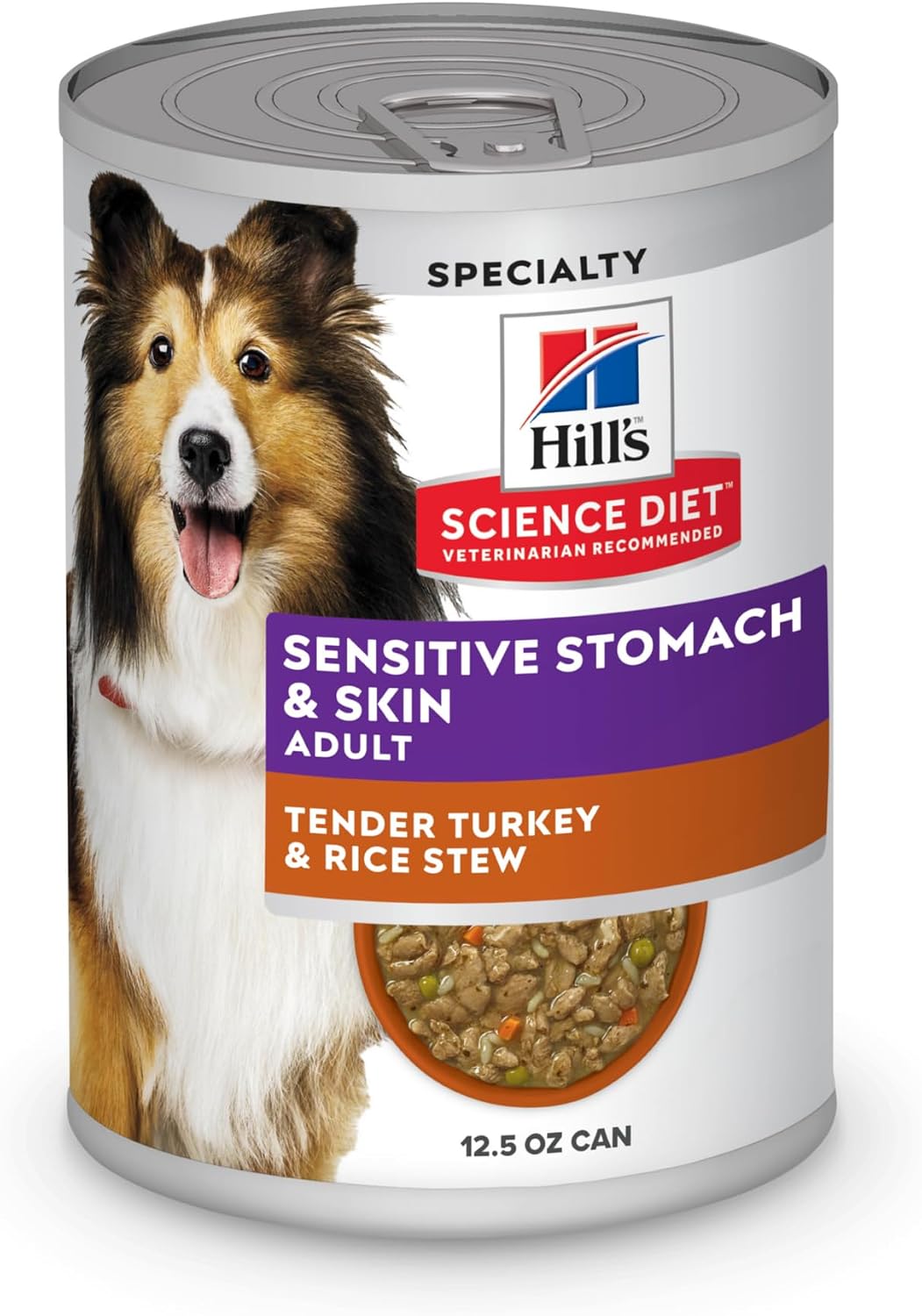
Hill's Science Diet Sensitive Stomach & Skin 12-Pack
Best Wet Food
| Flavor | Turkey & Rice Stew |
|---|---|
| Item Form | Wet Food |
| Age Range Description | Adult 1-6 |
| Unit Count | 150 Ounce |
| Number of Items | 12 |
Hill's Science Diet Sensitive Stomach & Skin Turkey & Rice Stew is a wet adult dog food designed to reduce digestive upset while supporting skin and coat health. It is typically fed as a primary meal or mixed with dry food during a transition, and the recipe emphasizes highly digestible ingredients such as turkey, rice and prebiotic fiber to promote a balanced gut microbiome. The formula includes omega-6 fatty acids and vitamin E for skin and coat nourishment and added antioxidants like vitamins C and E to support immune health. Practical benefits include easy acceptance by many dogs, straightforward feeding guidance on the package, and formulation without chicken meat noted as an allergen claim. Trade-offs are that it is a wet, case-packaged food which may be less convenient for free-feeding and requires refrigeration of opened cans, and ingredient lists still contain multiple meat- and broth-based components that could bother dogs with very specific single-protein elimination diets.
Best for: Buyers looking for a vet-formulated wet food to reduce occasional digestive upset and improve skin condition in adult Weimaraners, prioritizing digestibility and skin-support nutrients.
Less Ideal for: Owners who need a strictly single-protein elimination diet or who prefer dry kibble for travel and free-feeding should consider other options.
- Formulated for sensitive stomachs with highly digestible turkey and rice base
- Contains prebiotic fiber to support gut bacteria and digestion
- Includes omega-6 fatty acids and vitamin E to help skin and coat health
- Clinically proven antioxidants (vitamins C and E) to support immune function
- Comes as wet food in a multi-can case which requires refrigeration after opening and may be less convenient than dry food
- Not a single-protein limited-ingredient diet for strict elimination testing
Verdict: The best wet food for owners seeking a highly digestible, moisture-rich option that can be easier on sensitive stomachs and more appealing to picky eaters.
Royal Canin Golden Retriever Adult Dry Food 5 lb
Best Large-Breed Food

| Flavor | Chicken |
|---|---|
| Age Range Description | Adult |
| Breed Recommendation | Golden Retriever |
| Unit Count | 80 Ounce |
This Royal Canin Golden Retriever Adult dry formula is a breed-specific kibble built around the needs of adult Goldens. The bag features a specialized kibble shape and texture intended to match a Golden Retriever's muzzle and encourage chewing, and the recipe includes nutrients such as taurine, EPA and DHA for heart support plus targeted ingredients to help skin barrier and coat condition. It is used as a complete daily diet for dogs 15 months and older and is practical for owners who want a breed-tailored option with controlled calories to help maintain ideal weight. The formula also lists glucosamine and chondroitin sources that can contribute to joint health, and the provided directions recommend a 7-day transition to avoid digestive upset. Limitations include use of ingredient sources like corn and chicken by-product meal, which some owners avoid, and the 5 lb size may require frequent repurchase for larger households or multi-dog homes. For Goldens with known ingredient sensitivities a limited-ingredient or novel-protein diet may be a better match.
Best for: Owners of adult Golden Retrievers who prioritize a breed-tailored daily diet that supports coat, heart, and weight management while aiming to make feeding simpler with a specialized kibble.
Less Ideal for: Dogs with known sensitivities to common ingredients like corn or chicken by-products or owners seeking a limited-ingredient or novel-protein prescription-style diet.
- Breed-specific kibble shape and texture designed for Golden Retriever mouth conformation
- Contains heart-supporting nutrients including taurine, EPA and DHA
- Includes nutrients aimed at supporting skin barrier and coat health
- Contains joint-support ingredients such as glucosamine and chondroitin
- Calorie-and-fat profile formulated to help maintain healthy weight in adult Goldens
- Includes common allergens and broad ingredients like corn and chicken by-product meal
- Smaller 5 lb bag may be inconvenient for large dogs or multi-dog households
Verdict: The best large-breed food for bigger dogs that need breed-appropriate calorie density, joint-support nutrients, and digestive-friendly formulations to maintain health without upsetting sensitive stomachs.
Choosing the Right Dog Food Golden Retriever Sensitive Stomach: Key Factors to Consider
Protein Source and Amount
Protein drives muscle maintenance and energy for Golden retrievers, but the type of protein matters for dogs with sensitive stomachs. Easily digestible single-source animal proteins or novel proteins reduce the chance of food-triggered reactions and simplify troubleshooting when problems arise.
Pay attention to the guaranteed crude protein percentage; formulas for sensitive stomachs often moderate protein to avoid overwhelming the digestive tract while still meeting the breed's needs. Also consider the protein processing level. Hydrolyzed or highly digestible proteins are sometimes used in sensitive formulas because they break down more readily in the gut and are less likely to provoke immune reactions.
Fat Level and Fatty Acid Profile
Fat is a concentrated energy source for active Golden retrievers, but too much fat can trigger loose stools or pancreatitis in prone dogs. A moderate fat level supports activity without overtaxing digestion. Look for clear labeling of crude fat percentage so you can match intake to your dog's activity and body condition.
Quality of fat matters too. Long-chain omega-3 fatty acids from fish oil and balanced omega-6s support skin, coat, and intestinal health and can reduce inflammatory responses in the gut. Avoid formulas that list generic 'animal fat' without a more specific source when digestive sensitivity is a concern.
Digestible Carbohydrates and Fiber Mix
Carbohydrates supply energy and influence stool quality. Highly processed starches can ferment in the gut and contribute to gas or soft stools, while complex, moderately digestible carbohydrates help steady blood sugar and support energy levels.
Fiber type and quantity both affect digestion. Soluble fibers (like beet pulp or certain prebiotic fibers) can normalize stool consistency and feed beneficial bacteria, while insoluble fibers promote regularity. For sensitive stomachs, a mix that favors gentle soluble fibers and prebiotics often improves gut flora and reduces episodes of diarrhea.
Ingredient Transparency and Exclusions
Clear labeling helps you avoid known triggers. Sensitive-stomach formulas that list all ingredients specifically and avoid vague descriptors make it easier to identify potential allergens or irritants. Limited-ingredient diets reduce the number of possible triggers and simplify elimination trials if you need to isolate a problematic component.
Also watch for common additives that can provoke sensitivities in some dogs, such as artificial colors, flavors, and excessive preservatives. While not all dogs react to these, minimizing unnecessary additives reduces the chance of adverse responses and improves overall ingredient quality.
Probiotics, Prebiotics, and Gut Support
Live probiotics and fermentable prebiotics can help stabilize digestive function by supporting a healthy microbiome. For sensitive stomachs, formulations that include a clinically studied probiotic strain or a clear prebiotic fiber source often offer measurable improvements in stool consistency and nutrient absorption.
Consider whether the product lists viable CFU counts or describes the probiotic strains used. Prebiotics such as FOS or MOS can aid beneficial bacteria but should be in balanced amounts to avoid excess fermentation that might worsen gas in some dogs.
Calorie Density and Portion Control
Calorie density affects how much food you feed and how the stomach processes meals. Highly calorie-dense formulas require smaller portions, which may be easier on a sensitive stomach, but too concentrated a formula can still lead to digestive upset if fed in large single meals.
Work with the calorie information to set meal sizes that match your dog's activity level. Splitting daily food into multiple smaller meals can reduce gastric strain and improve stool consistency for dogs prone to sensitivity.
How Do I Tell if My Golden Retriever's Stomach Is Sensitive or It's Something Else?
Observe patterns rather than single incidents. Occasional loose stool or vomiting can be caused by dietary indiscretion, sudden recipe changes, or stress. Sensitivity is more likely when signs are chronic, recurring after certain foods, or accompanied by persistent symptoms like gas, itchy skin, or low energy.
Track diet, treats, and environment for several weeks to spot correlations. If symptoms consistently follow a specific ingredient type or commercial formula, that points toward dietary sensitivity. If digestive issues are severe, include a veterinary check to rule out medical causes before changing long-term feeding.
- Look for recurring diarrhea, vomiting, or flatulence linked to meals.
- Note skin problems or ear infections appearing alongside digestion issues.
- Keep a simple food log for two to four weeks to identify triggers.
Is a Limited-ingredient Diet Necessary for Every Sensitive Dog?
Not always. Limited-ingredient diets help simplify the ingredient list and make elimination trials easier, but they are not universally required. Many dogs respond well to regular formulas that prioritize highly digestible protein sources and gentle carbohydrate blends without being strictly limited-ingredient.
Start with milder, easy-to-digest formulas and monitor response. Reserve a strict limited-ingredient or novel-protein diet for dogs that continue to show symptoms or when allergy testing and veterinary guidance suggest a food-based trigger.
- Use limited-ingredient diets when troubleshooting a suspected food allergy.
- Consider novel proteins only if common proteins fail to resolve symptoms.
How Should Feeding Routine Change for a Sensitive-stomach Retriever?
Meal frequency and portion control are practical first steps. Feeding two to three smaller meals per day reduces the digestive load per sitting and can improve stool consistency. Maintain consistent feeding times and avoid frequent treats or table scraps, which can destabilize digestion.
When introducing a new formula, transition slowly over 7 to 14 days by gradually increasing the new food proportion. Abrupt changes can trigger gastrointestinal upset even if the new formula is gentler. Keep hydration steady, as water intake directly affects stool formation and overall digestive health.
- Split daily calories into multiple meals to ease digestion.
- Transition gradually across at least a week to minimize upset.
- Limit snacks and monitor treats for hidden ingredients.
What Role Do Supplements and Wet Food Play in Managing Sensitivity?
Supplements such as fish oil, digestive enzymes, and specific probiotics can offer targeted support. Fish oil supplies omega-3s that reduce intestinal inflammation, while digestive enzyme supplements help break down proteins and fats for dogs that struggle with natural enzyme production.
Adding some wet food can increase palatability and moisture intake, which may benefit dogs with mild sensitivity. Use mixed feeding thoughtfully, ensuring overall daily nutrient and calorie balance remains appropriate for the dog's weight and activity level.
- Probiotics and enzymes can be helpful adjuncts when selected to match the dog's needs.
- Use wet food to boost moisture and palatability but maintain portion control.
When Should I Consult a Veterinarian About My Dog's Digestion?
Consult a veterinarian if your golden retriever has repeated vomiting, blood in stool, sustained weight loss, severe lethargy, or signs of abdominal pain. Those symptoms may indicate a medical condition that requires diagnostic testing rather than dietary adjustment alone.
Also seek professional advice when chronic skin or ear issues accompany digestive signs, since allergic reactions often affect multiple systems. A vet can recommend appropriate tests, therapeutic diets, or referrals to a veterinary nutritionist when necessary.
- Seek urgent care for blood in stool, severe vomiting, or collapse.
- Book a non-urgent vet visit for persistent or progressive digestive symptoms.
How to Run a Simple At-home Elimination Trial
An elimination trial helps identify food intolerances by feeding a single-protein, single-carbohydrate diet for a fixed period—usually 8 to 12 weeks—while avoiding all other food and treats. Before starting, consult with your veterinarian to ensure the chosen diet meets nutritional needs for a Golden retriever and to get guidance on the trial length.
Keep a daily log of stool quality, appetite, energy, and any skin or ear symptoms. If improvement occurs, reintroduce the previous ingredient slowly to confirm the trigger. If no change is seen after the trial, pursue further veterinary diagnostics to look for non-dietary causes.
- Choose a nutritionally complete single-source diet for the trial.
- Document responses daily and reintroduce ingredients one at a time.
How We Chose the Best Dog Food Golden Retriever Sensitive Stomach
We focused on criteria that matter for Golden retrievers with sensitive stomachs and applied filters to remove products unlikely to deliver reliable digestive support. Primary evaluation factors included ingredient quality, digestibility evidence, protein and fat balance appropriate for a medium-large active breed, and inclusion of gut-supporting nutrients such as fiber, prebiotics, and omega fatty acids. We also considered formulation variety for common sensitivities, including limited-ingredient and novel-protein approaches, plus whether kibble texture and size suit a retriever's jaw and chewing patterns. We excluded formulas that rely heavily on common gastrointestinal irritants or excessive fillers that can worsen loose stools. Veterinary-formula therapeutic diets were considered only when they matched the sensitivity scope and typical home management needs. Finally, we looked at manufacturer transparency on sourcing and guaranteed analysis to prioritize options that make it straightforward to compare nutrient levels and ingredient intent.
Our full evaluation process is outlined in our review methodology.
FAQ
Can food sensitivity cause skin and ear problems in Golden retrievers?
Yes. Food sensitivities can manifest beyond digestion and often appear as itchy skin, chronic ear infections, or recurrent hot spots. These signs sometimes appear alongside gastrointestinal symptoms, so seeing both suggests a dietary component worth investigating with your veterinarian.
How long does it take to see improvement after switching to a sensitive-stomach formula?
Some dogs show improvement within a few days, but meaningful, consistent changes typically take several weeks. A full response is often assessed over 6 to 12 weeks to allow gut flora and intestinal lining time to stabilize.
Are grain-free diets better for dogs with sensitive stomachs?
Not necessarily. Grain-free does not automatically mean more digestible. Some dogs do well on grain-inclusive diets with easy-to-digest grains, while others respond better to grain-free or novel-carbohydrate formulas. The key is digestibility and ingredient quality rather than simply the absence of grains.
Will probiotics fix my dog's digestive sensitivity on their own?
Probiotics can help by supporting healthy gut bacteria, but they are rarely a standalone cure. They work best alongside an appropriate diet and feeding routine. Choose strains and formulations that are suited to canine use and follow recommended dosing for the product.
How should I adjust feeding for a senior golden retriever with a sensitive stomach?
Older dogs often need fewer calories and slightly different nutrient balances. For seniors with sensitivity, choose a formula with moderate calories, easily digestible proteins, and joint-supporting nutrients. Smaller, more frequent meals and routine veterinary checks help detect age-related conditions that can affect digestion.
Final Verdict
Prioritize a formula that balances digestibility, appropriate protein and fat levels, and targeted gut support when selecting food for a Golden retriever with a sensitive stomach. Ingredient clarity and manageable portioning are practical tools for reducing episodes of digestive upset. Accept that finding the right diet can require testing and patience. Start with gentle, well-formulated options, monitor response consistently, and involve your veterinarian for persistent or severe issues to ensure the best long-term outcome.

