

If your German shepherd struggles with digestive upset, choosing the right food matters for daily comfort and long-term health. You need formulas that reduce gastrointestinal triggers while still delivering the calories and nutrients a large, active breed requires. This guide collects seven top-rated dog foods suited specifically for german shepherds with sensitive stomachs and explains why each type made the shortlist. We evaluated recipes for ingredient simplicity, digestibility, and overall nutrient balance to help you narrow down practical options that support digestion, energy, and coat condition.
Top Picks at a Glance
| Best Overall Dog Food for GSD with Sensitive Stomach A balanced, easy-to-digest formula that suits most sensitive GSDs | Hill's Science Diet Sensitive Stomach & Skin Large Breed |  |
| Best Budget Dog Food for GSD with Sensitive Stomach An affordable, gentle formula that maintains basic nutrition and digestibility | Wag Wholesome Grains Salmon Dog Food 30 lb |  |
| Best Limited-Ingredient Dog Food Simple recipes with few ingredients to reduce allergy and upset risk | Natural Balance Limited Ingredient Salmon & Sweet Potato 24 lb |  |
| Best Grain-Free Dog Food A grain-free formula aimed at pets sensitive to cereals and fillers | Go! Solutions Sensitivities Salmon 22 lb |  |
| Best High-Protein Dog Food Higher-protein recipes that support muscle mass and active GSD metabolism | Purina Pro Plan Sport 30/20 Salmon |  |
| Best Wet Dog Food Canned or pouched diets that are palatable and easier on digestion | Purina Pro Plan Sensitive Salmon & Rice |  |
| Best Premium Dog Food A higher-end formula prioritizing quality ingredients and advanced digestion support | ROYAL CANIN German Shepherd Adult 30 lb |  |
Hill's Science Diet Sensitive Stomach & Skin Large Breed
Best Overall Dog Food for GSD with Sensitive Stomach

| Flavor | Chicken |
|---|---|
| Age Range Description | Adult 1-5 |
| Unit Count | 480 Ounce |
| Breed Recommendation | Large Breeds |
| Special Ingredients | Prebiotic |
Hill's Science Diet Sensitive Stomach & Skin Large Breed is a chicken and barley dry formula designed for adult large dogs that experience occasional digestive upsets and skin sensitivities. It uses highly digestible ingredients and added prebiotic fiber to support a balanced gut microbiome and improve nutrient absorption, while vitamin E and omega fatty acids help maintain skin and coat condition. The recipe lists chicken as the first ingredient and includes a mix of grains, vegetables, and clinically proven antioxidants such as vitamins C and E to support immune health. Typical use is daily feeding as a complete diet for large-breed adults, with gradual transition instructions on the package and a feeding guide to adjust portions for body condition. Limitations include that it is a grain-containing veterinary-style formula so owners seeking grain-free or novel-protein elimination diets will need alternatives, and dogs with specific protein allergies should review the ingredient list. For Great Danes and other large breeds that need controlled digestibility and skin support, this is a practical, vet-backed everyday option.
Best for: Owners of large-breed adult dogs seeking a reliably digestible everyday food that soothes occasional stomach upset and supports skin health.
Less Ideal for: Dogs that require grain-free formulas, novel protein elimination diets, or have specific allergies to chicken should consider alternative specialty diets.
- Formulated for sensitive stomachs with prebiotic fiber for gut support
- Includes vitamin E and omega fatty acids to promote skin and coat health
- High-quality chicken is the first ingredient for protein-focused nutrition
- Clinically proven antioxidants (vitamins C and E) to support immune health
- Taste and digestibility tailored for adult large-breed dogs
- Contains common grains and chicken so not suitable for dogs requiring grain-free or novel-protein diets
- Not a prescription-only therapeutic diet despite 'veterinary diet' label, so consult a vet for complex conditions
Verdict: The best all-around dog food for German Shepherds with sensitive stomachs, offering gentle digestibility, balanced nutrients, and consistent palatability for daily feeding.
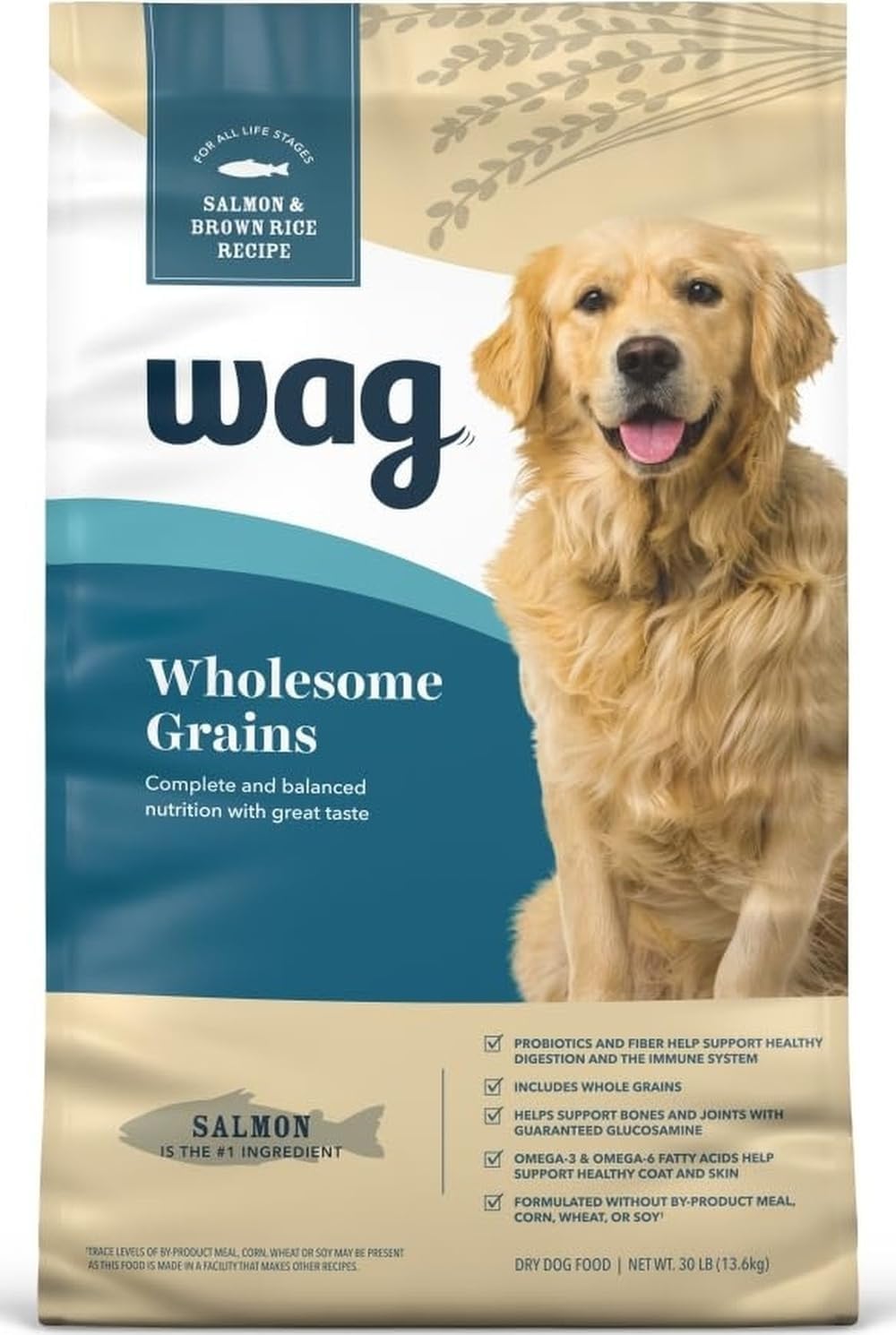
Wag Wholesome Grains Salmon Dog Food 30 lb
Best Budget Dog Food for GSD with Sensitive Stomach
| Flavor | Salmon |
|---|---|
| Age Range Description | Adult |
| Item Form | Pellet |
| Unit Count | 480 Ounce |
Wag Wholesome Grains Salmon is a 30 lb adult dry dog formula that puts salmon as the first ingredient and uses whole grain brown rice for carbohydrate. It is intended for daily feeding and includes added calcium and phosphorus plus glucosamine to support bone and joint health, DHA and antioxidants for immune and brain support, and a package of probiotics listed in the ingredient panel. Typical use is straightforward: follow the bag feeding transition guidance over 7 to 10 days, portion by weight and activity level, and keep fresh water available. The recipe avoids corn, wheat, soy, artificial colors, flavors, and preservatives, which makes it a reasonable budget-conscious option for owners who want a simpler ingredient set. Because it is a large 30 lb bag and positioned as an affordable Amazon brand, it delivers calories and key nutrients at a lower price per pound, though it is not a specialized veterinary prescription or limited-ingredient diet for food-sensitive dogs. Buyers should expect a standard kibble texture and conventional ingredient sourcing rather than premium single-origin formulas.
Best for: Owners who need an economical daily adult formula that still lists a real meat first and includes joint and cognitive support ingredients for a large-breed dog.
Less Ideal for: Dogs with diagnosed food allergies, multi-ingredient sensitivities, or those needing a prescription diet for medical conditions should consider specialized formulas instead.
- Real salmon listed as the first ingredient
- Includes added calcium, phosphorus and glucosamine for bone and joint support
- No corn, wheat, soy, artificial colors, flavors, or preservatives listed
- Large 30 lb bag offers lower cost per feeding for everyday use
- Not a veterinary therapeutic or limited-ingredient formula for dogs with diagnosed food sensitivities
Verdict: The best low-cost dog food option for GSDs with sensitive stomachs that still delivers adequate nutrition and tolerable ingredients without breaking the bank.
Natural Balance Limited Ingredient Salmon & Sweet Potato 24 lb
Best Limited-Ingredient Dog Food

| Flavor | Salmon & Sweet Potato |
|---|---|
| Item Form | Dry |
| Age Range Description | Adult |
| Animal Food Diet Type | Limited Ingredient |
| Package Size Name | 24 lb |
This Natural Balance Limited Ingredient Salmon & Sweet Potato formula is a grain-free dry kibble built around a single animal protein to simplify meals for dogs with sensitivities. It is typically fed as a daily adult diet and is useful for owners doing elimination trials because the ingredient list is intentionally short and excludes corn, wheat, and soy. The recipe lists salmon and salmon meal first, with sweet potatoes and potatoes as digestible carbohydrate sources, plus flaxseed and added vitamins and minerals for complete nutrition. In practice the kibble supports digestion and skin and coat health for many dogs, and the absence of common fillers makes transitions and ingredient tracking easier. Limitations include its grain-free profile, which some veterinarians no longer recommend for all dogs, and that it still contains multiple carbohydrate and oil ingredients so it is not a single-ingredient diet; dogs with severe or veterinary-diagnosed allergies may still require prescription feeding. For poodle owners focused on straightforward ingredient lists and easier elimination testing, this bag is a practical, vet-recommended option to try.
Best for: Poodle owners who need a clear, short ingredient list to troubleshoot suspected food sensitivities and who want a complete adult diet suitable for elimination testing.
Less Ideal for: Owners seeking a single-ingredient or prescription hypoallergenic diet for confirmed allergies, or those preferring grain-inclusive formulas recommended by some vets.
- Single primary animal protein listed first (salmon) simplifies elimination feeding
- Grain-free formula without corn, wheat, or soy that can reduce common irritants
- Includes added vitamins, minerals, and omega-supporting ingredients for skin and coat health
- Large 24 lb bag provides value and fewer trips to restock
- Grain-free formulation may not be appropriate for every dog and should be discussed with a veterinarian
- Contains multiple non-protein carbohydrate ingredients so it is not a single-ingredient diet
Verdict: The best limited-ingredient dog food for owners who want minimal, recognizable ingredients to lower the chance of digestive upset or food sensitivities.
Go! Solutions Sensitivities Salmon 22 lb
Best Grain-Free Dog Food

| Flavor | Salmon |
|---|---|
| Item Form | Dry Kibble |
| Age Range Description | All Life Stages |
| Animal Food Diet Type | Limited Ingredient |
| Allergen Information | Grain-Free, Gluten Free, Chicken-Free |
This Go! Solutions Sensitivities Salmon recipe is a grain-free, limited-ingredient dry kibble designed for dogs with food sensitivities and sensitive stomachs. It uses de-boned salmon and salmon meal as primary proteins and avoids common allergens like chicken, corn, wheat, soy and potatoes, which helps limit exposure to triggers. The formula includes prebiotic fiber from dried chicory root and probiotics-friendly ingredients to support digestion, plus sources of omega fatty acids to promote skin and coat health. It is marketed as nutritionally complete for all life stages and breed sizes, so it can be fed long term without rotating to another base diet. Practical benefits include a single novel protein source for elimination diets and a recyclable, resealable bag for easier storage. Limitations to note are the reliance on legumes (peas, lentils, chickpeas) and tapioca as carbohydrate sources, which some dogs may not tolerate, and that individual reactions vary so an elimination trial is still recommended. For large-breed dogs with specific veterinary needs, consult your vet before switching diets.
Best for: Buyers seeking a grain-free, limited-ingredient kibble focused on digestibility and skin support for dogs that react poorly to common grains and poultry proteins.
Less Ideal for: Owners whose dogs have known legume or tapioca sensitivities or who need a veterinary-prescribed therapeutic diet for medical conditions.
- Real salmon listed as the first ingredient and single novel animal protein
- Limited ingredient, chicken-free and grain-free formulation for allergy management
- Includes prebiotic fiber (dried chicory root) to support gut health and digestion
- Formulated for all life stages so it can be used from puppy to senior without switching
- Uses legumes and tapioca as primary carbohydrate sources which may still trigger sensitivities in some dogs
- Large 22 lb bag may be bulky for storage in small homes
Verdict: The best grain-free dog food for dogs that react poorly to grains, providing alternative carbohydrate sources while focusing on digestibility.
Purina Pro Plan Sport 30/20 Salmon
Best High-Protein Dog Food

| Flavor | Salmon & Rice |
|---|---|
| Age Range Description | Adult |
| Animal Food Diet Type | Veterinary Diet |
| Unit Count | 528 Ounce |
Purina Pro Plan Sport 30/20 Salmon is a concentrated, high-protein dry formula designed to fuel athletic and highly active dogs. It supplies about 30% protein and 20% fat to support lean muscle maintenance and endurance, with real salmon listed first and added amino acids to help muscle recovery after exercise. The formula includes guaranteed live probiotics for digestive and immune support and sources of glucosamine and EPA to help joint health and mobility for dogs that run, retrieve, or train frequently. Typical use is as a daily feed for adult active dogs or retrievers, with feeding amounts adjusted for activity level and body condition; transition guidance is provided for switching diets. Limitations include use of some by-product ingredients and grain ingredients rather than a grain-free recipe, so owners seeking limited-ingredient or novel-protein diets should consider alternatives. The bagged format is convenient for multi-dog households but requires proper storage to preserve freshness and probiotics.
Best for: Owners of retrievers or other highly active adult dogs who prioritize muscle maintenance, endurance, and recovery during regular training or heavy activity.
Less Ideal for: Owners seeking a grain-free, limited-ingredient, or novel-protein diet for food sensitivities should consider different formulas.
- High protein and fat ratio tailored for high-activity dogs to support endurance and muscle maintenance
- Real salmon as the first ingredient for a recognizable protein source
- Contains guaranteed live probiotics to support digestion and immune health
- Includes ingredients that supply glucosamine and EPA to help joint support and mobility
- Contains poultry by-product meal and grains rather than a limited-ingredient or novel-protein recipe
Verdict: The best high-protein dog food for German Shepherds needing greater amino-acid support and lean-muscle maintenance without sacrificing stomach tolerance.
Purina Pro Plan Sensitive Salmon & Rice
Best Wet Dog Food

| Flavor | Salmon & Rice |
|---|---|
| Item Form | Pate |
| Age Range Description | Adult |
| Number of Items | 12 |
| Unit Count | 156 Ounce |
Purina Pro Plan Sensitive Skin & Stomach Salmon & Rice is a moisture-rich canned pate designed for adult dogs with digestive or skin sensitivities. It uses real salmon and easily digestible rice as primary ingredients and adds natural prebiotic fiber to support gut bacteria, plus linoleic acid to help skin and coat health. The formula is high in protein to help maintain lean muscle and provides 23 essential vitamins and minerals for complete and balanced nutrition. In practice this product works well as a primary wet diet or mixed with dry food to increase palatability and moisture intake, and its pate texture is easy for small dogs or those with dental issues to eat. It contains no artificial colors, flavors, or preservatives and is labeled allergen-free with no wheat or soy. One limitation is that it is a veterinary diet style formula—buyers should confirm suitability with their veterinarian for ongoing therapeutic needs, and like many canned foods it may be more expensive per calorie than dry kibble for long-term feeding plans.
Best for: Owners seeking a moisture-rich, easy-to-eat wet diet for small adult dogs with sensitive digestion or reduced appetite who prioritize digestive support and skin health.
Less Ideal for: People looking for a budget primary diet for large-breed dogs or those who prefer dry-only feeding without veterinary-style formulations.
- Real salmon and digestible rice base for palatable, gentle digestion
- Includes natural prebiotic fiber to support intestinal bacteria
- Linoleic acid to help support skin and coat health
- Pate texture is easy for small dogs and dogs with dental issues to eat
- Complete and balanced with 23 vitamins and minerals for adult maintenance
- Packaged as a case of 12 which may be bulky for single-dog households
- Formulated as a specialized veterinary-style diet so check with a vet for long-term use
Verdict: The best wet dog food for dogs who benefit from higher moisture and softer textures that can be gentler on sensitive stomachs and easier to eat.
ROYAL CANIN German Shepherd Adult 30 lb
Best Premium Dog Food

| Flavor | Chicken |
|---|---|
| Age Range Description | Adult |
| Item Form | Pellet |
| Breed Recommendation | German Shepherd |
| Animal Food Diet Type | Veterinary Diet |
Royal Canin German Shepherd Adult is a breed-targeted kibble designed for purebred German Shepherds 15 months and older. The formula combines highly digestible proteins and specific fibers to promote digestive health, while added EPA/DHA from fish oil and exclusive nutrients support skin and coat condition. Glucosamine and chondroitin are included to help maintain bone and joint health in large, active dogs, and the kibble shape is tailored to the breed's long muzzle to encourage comfortable chewing. Typically fed as an everyday maintenance diet, this food works well for owners who want a complete, balanced option formulated around common German Shepherd needs rather than a generic adult formula. Limitations to note are the primary protein source listed as chicken by-product meal rather than whole muscle meat and that the ingredient list includes grains and corn, which some owners avoid. For dogs with specific allergies or those needing novel-protein diets, a veterinary or limited-ingredient alternative may be preferable.
Best for: Owners who want a ready-to-feed everyday diet tailored to the nutritional and chewing needs of adult German Shepherds and who prioritize breed-specific support for digestion, skin, and joints.
Less Ideal for: Owners seeking grain-free, novel-protein, or elimination diets for food sensitivities should consider specialized veterinary or limited-ingredient formulas instead.
- Formulated specifically for German Shepherds with kibble shape tuned to muzzle and teeth
- Includes glucosamine and chondroitin to support large-breed joint and bone health
- EPA and DHA from fish oil plus nutrients aimed at maintaining skin and coat
- Highly digestible proteins and fiber blend to support digestive health
- Primary listed protein is chicken by-product meal rather than whole-muscle meat
- Contains grains and corn, so not suitable for grain-free or some limited-ingredient plans
Verdict: The best premium dog food for owners willing to invest in top-quality ingredients and specialized digestive aids to help manage chronic sensitivity while optimizing overall health.
Choosing the Right Dog Food GSD Sensitive Stomach: Key Factors to Consider
Protein Source and Digestibility
Protein type matters because some german shepherds react to common proteins. Single-source or novel proteins reduce ingredient complexity and make it easier to identify the trigger.
Highly digestible proteins, indicated by named meat, fish, or single-protein formulations, put less strain on the gut and help your dog extract necessary amino acids. Avoid vague listings like unspecified meat derivatives, as they complicate elimination testing and can hide potential allergens. For large breeds you also need sufficient quality protein to support muscle mass without overloading a sensitive digestive system.
Carbohydrate Choices and Fiber Balance
Carbohydrates affect stool quality and gut fermentation. Easily digestible carbs such as rice, cooked oats, or sweet potato tend to be gentler than high-fiber legumes for dogs with sensitive stomachs.
Fiber is not one-size-fits-all. Soluble fiber can soothe digestion and normalize stool, while insoluble fiber supports transit. A balanced mix helps avoid loose stools or constipation. If your dog has a history of gas or loose stools, prefer recipes designed to limit fermentable carbohydrates and include moderate fiber levels.
Fat Level and Fatty Acid Profile
Fat is a dense energy source for german shepherds, but excessive fat can trigger pancreatitis-like symptoms or loose stools in sensitive dogs. Look for moderate, defined fat levels appropriate to the breed's activity level.
Omega-3 and omega-6 fatty acids support skin and coat and may reduce inflammatory responses in the gut. The source of fat matters too; named animal fats or fish oil are preferable to generic vegetable fats. Consistent fat content also helps you transition between diets with fewer digestive upsets.
Additives, Preservatives, and Artificial Ingredients
Artificial colors, flavors, and some preservatives can irritate sensitive dogs. Choose formulas that minimize unnecessary additives and use natural preservation methods when possible.
Functional additions such as probiotics, prebiotics, and digestive enzymes can improve tolerance for some dogs, but they should be used in balanced amounts. Watch for excessive vitamins or herbal blends that could complicate an elimination approach if you are diagnosing food sensitivities.
Kibble Size, Texture, and Feeding Practicality
Physical kibble shape and hardness affect chewing and salivation, which in turn influences how food is broken down before swallowing. German shepherds often prefer larger kibbles sized for a medium-large bite, which can slow intake and help digestion.
For dogs with dental issues or fast eaters, consider softer formats or slow-feeding strategies. Also factor in how easy the food is to portion and store; frequent exposure to stale or rancid food can worsen digestive problems, so packaging that preserves freshness is valuable.
Nutrient Profile for Large-breed Needs
German shepherds have specific nutrient demands: high enough protein and fat for maintenance and activity, plus joint-support nutrients to protect hips and elbows. Sensitive stomach formulas must deliver those nutrients without excessive fillers that offer little energy.
Look for balanced calcium and phosphorus, appropriate caloric density, and inclusion of joint-friendly ingredients such as glucosamine and chondroitin when relevant. A formula that meets large-breed maintenance requirements while remaining gentle on the stomach will reduce the need for supplemental feeding adjustments.
How Do I Transition My German Shepherd to a New Sensitive-stomach Food Safely?
Transition gradually over 7 to 10 days to reduce the risk of vomiting, diarrhea, or appetite loss. Start with about 10% of the new food mixed into 90% of the current food for two to three days, then increase the new food incrementally until you are feeding 100% of the new formula.
Monitor stool consistency, appetite, and energy during the transition. If your dog shows worsening symptoms, slow the transition or consult your veterinarian for alternative strategies. For dogs with severe reactions, a veterinary-supervised elimination or prescription diet may be necessary.
- Day 1–3: 10% new, 90% old
- Day 4–6: 25% new, 75% old
- Day 7–9: 50% new, 50% old
- Day 10–12: 75% new, 25% old, then 100% if tolerated
When Should I Expect to See Improvements in Digestion?
Mild improvements such as firmer stools or reduced gas can appear within a week, but meaningful changes in chronic symptoms often take four to eight weeks. Give any new diet adequate trial time before concluding it is ineffective.
Keep a simple log of stool quality, frequency, vomiting, and any skin or coat changes. That record helps you and your veterinarian determine whether a formula is truly beneficial or if other medical issues are contributing to digestive problems.
- Short-term: 7–14 days for minor changes
- Medium-term: 4–8 weeks for consistent improvement
- If no improvement after 8 weeks, reassess with your vet
Should I Use a Limited-ingredient or Novel-protein Diet?
Limited-ingredient diets reduce the number of distinct components, which simplifies elimination testing and lowers the chance of exposure to common triggers. Novel-protein diets introduce a protein your dog has not commonly eaten, which can be effective if the sensitivity is protein-specific.
Both strategies can be helpful depending on the suspected cause. If you are unsure which approach to take, consult your veterinarian to prioritize testing or a trial that matches your dog's history and symptom pattern.
- Use limited-ingredient when multiple suspected triggers exist
- Use novel-protein if prior diets contained common proteins like chicken or beef
- Avoid rotating proteins during an elimination trial
Can Supplements Help with a Sensitive Stomach?
Certain supplements can support digestion without altering the main diet. Probiotics help restore healthy gut flora and may reduce loose stools; digestive enzymes can aid macronutrient breakdown for dogs that struggle to process certain foods.
Fish oil and other omega supplements support skin and coat health and may lower mild intestinal inflammation. Always discuss supplements with your veterinarian to ensure they do not conflict with medications or diagnostic testing plans.
- Probiotics: often helpful for stool consistency
- Digestive enzymes: useful for food tolerance issues
- Omega fatty acids: support coat and can moderate inflammation
How Do Feeding Schedule and Portion Control Affect Digestion?
Regular feeding times and measured portions help stabilize digestion and reduce the risk of binge eating that can provoke gastrointestinal upset. For adult german shepherds, two meals daily rather than one large meal reduces gastric load and aids steady energy release.
Adjust portions to maintain healthy body condition. Overfeeding can cause loose stools and excess weight, while underfeeding can lead to poor coat condition and lethargy. Use the feeding guidelines on the label as a starting point and refine based on your dog's activity level and body condition.
- Feed twice daily for most adult german shepherds
- Measure portions precisely instead of free feeding
- Increase water availability to support digestion
When Should I Consult a Veterinarian About Persistent Stomach Issues?
Consult your vet promptly if your dog has repeated vomiting, bloody stools, rapid weight loss, signs of abdominal pain, or persistent lack of appetite. These signs could indicate conditions beyond simple food sensitivity.
If dietary changes and over-the-counter supplements do not improve symptoms after a reasonable trial, your veterinarian can run tests to rule out parasites, inflammatory bowel disease, pancreatic conditions, or metabolic disorders that mimic food intolerance.
- Emergency consult for vomiting with lethargy or blood in stool
- Routine consult if symptoms persist despite dietary trials
- Ask about tests for parasites, pancreatitis, and inflammatory bowel disease
How We Chose the Best Dog Food GSD Sensitive Stomach
We focused on factors that actually influence digestive tolerance and overall health for german shepherds with sensitive stomachs. Our selection filters prioritized recipes with limited or novel protein sources, highly digestible carbohydrate choices, and a transparent ingredient list that minimizes common irritants. We also considered guaranteed analysis for adequate protein and fat for a large working breed, plus inclusion of soluble and insoluble fiber to support stool quality and gut motility. Beyond formulation, we favored foods with clinical backing for digestibility or nutrient fortification that supports skin and coat, such as omega fatty acids and zinc. Manufacturing controls and ingredient sourcing transparency were part of the editorial assessment when available in product information. We excluded formulas that rely heavily on unspecified meat meals, excessive additives, or overly long ingredient chains that make it hard to identify the primary protein and carbohydrate sources. In short, the list reflects recipes that balance digestibility, appropriate macro nutrition for a german shepherd, and ingredient clarity while excluding foods with likely gastrointestinal triggers or unclear formulations.
Our full evaluation process is outlined in our review methodology.
FAQ
Can switching proteins stop my german shepherd's stomach problems?
Sometimes. If a protein is the trigger, moving to a novel or single-protein formula can reduce reactions. It often requires an elimination trial of several weeks to determine whether the protein change resolved symptoms.
Are grain-free diets better for sensitive stomachs?
Not necessarily. Some dogs tolerate grains well, while others react to specific carbohydrate sources. What matters more is the digestibility and simplicity of the carbohydrate, not the mere absence of grains.
How long should I try a new sensitive-stomach food before giving up?
Allow four to eight weeks for a fair trial, while monitoring stool, appetite, and energy. Short-term changes may appear sooner, but chronic issues need more time to respond.
Will probiotics alone fix chronic digestive issues?
Probiotics can help normalize gut flora and improve stool quality in many cases, but they are not a cure-all. Underlying conditions or dietary triggers may still need targeted management and veterinary evaluation.
Should I feed smaller meals if my german shepherd has a sensitive stomach?
Yes. Smaller, more frequent meals reduce the digestive load per feeding and can help prevent reflux, bloating, or loose stools in dogs with sensitive digestion.
Can seasonal changes affect my dog's digestion?
Seasonal factors such as activity level, hydration, and exposure to different foods or yard substances can change digestion. Monitor diet and stool whenever routine or environment changes occur.
Final Verdict
Focus on ingredient clarity and digestibility when choosing food for a german shepherd with a sensitive stomach. Prioritize named protein sources, gentle carbohydrates, appropriate fat levels, and a balanced fiber blend. Be prepared to trial a formula for several weeks and adjust feeding routine, supplements, or portion sizes if needed. Tradeoffs are inevitable: simpler recipes can ease digestion but may require supplementation for joint or coat support. Use the evaluation factors above to match a formula to your dog's activity level and sensitivity profile, and consult your veterinarian for persistent or severe problems so you can choose confidently.

