

When a Havanese shows itching, digestive upsets, or recurrent ear problems, the right formula can make a big difference in daily comfort and long-term skin health. Choosing dog food tailored for Havanese with allergies helps reduce exposure to common triggers while delivering the vitamins, minerals, and calories a small, active companion needs. This guide shortlists seven promising options that balance limited-ingredient formulas, digestibility, and small-breed nutrient profiles. Below you will find practical evaluation criteria and short product summaries selected for sensitive Havanese. Use the notes on protein sources, carbohydrate types, and feeding management to match a formula to your dog's symptoms and veterinary guidance.
Top Picks at a Glance
| Best Overall Food for Havanese with Allergies Balanced allergy-friendly recipe that suits most Havanese dietary needs | Hill's Science Diet Sensitive Stomach Small Bites |  |
| Best Budget Food for Havanese with Allergies Low-cost allergy-conscious option that still meets basic nutritional needs | Nutrish Salmon Dry Dog Food 4.5 lb |  |
| Best Limited-Ingredient Food Short, simple ingredient lists to reduce potential allergen triggers | Natural Balance Limited Ingredient Salmon & Sweet Potato |  |
| Best Novel-Protein Food Uses uncommon proteins to avoid reactions to typical meat sources | ACANA Singles Duck & Pear 4.5 lb |  |
| Best Grain-Free Food Formulated without grains for dogs sensitive to wheat or corn | Blue Buffalo Basics Salmon 4-lb |  |
| Best Wet Food Moist, palatable recipes that are easier to digest and mix | Hill's Science Diet Sensitive Stomach & Skin 12-Pack |  |
| Best Premium Food Higher-end hypoallergenic formulas with superior ingredients and sourcing | ORIJEN Original Dry Dog Food 4.5 lb |  |
Hill's Science Diet Sensitive Stomach Small Bites
Best Overall Food for Havanese with Allergies

| Flavor | Chicken |
|---|---|
| Age Range Description | Adult 1-6 |
| Item Form | Pellet |
| Specific Uses For Product | Stomach & Skin Sensitivity support Small Kibble |
| Unit Count | 64 Ounce |
Hill's Science Diet Sensitive Stomach & Skin Small Bites is a dry adult formula designed for dogs that have occasional digestive upset and skin sensitivity. The recipe uses high-quality chicken as the first ingredient along with prebiotic fiber to support a balanced gut microbiome and improve nutrient absorption, and it includes vitamin E and omega fatty acids to help maintain skin and coat health. The small kibble size makes it easy for brachycephalic breeds like French Bulldogs to pick up and chew, and the formula emphasizes gentle carbohydrates such as barley and rice rather than heavy legumes. Practical benefits include predictable digestibility, a complete nutrient profile with clinically proven antioxidants, and guidance for transitioning pets to the food. Limitations are that it is not an elimination diet with a novel protein, so dogs with specific protein allergies may need a more restricted formula, and the bag sizes and ingredient list include grains, which some owners prefer to avoid entirely. For many dogs prone to mild-to-moderate stomach sensitivity, this offers a veterinary-backed, easy-to-feed option.
Best for: Owners seeking a veterinarian-recommended, highly digestible daily food for adult dogs that commonly have mild digestive upset and skin sensitivity, especially for breeds that benefit from small kibble.
Less Ideal for: Owners whose dogs require a novel protein or strict limited-ingredient elimination diet for confirmed food allergies should choose a dedicated hypoallergenic formula instead.
- First ingredient is high-quality chicken for consistent protein
- Prebiotic fiber to support gut microbiome and digestibility
- Includes vitamin E and omega fatty acids to support skin and coat
- Small kibble size suited to dogs with short muzzles or picky chewers
- Clinically backed antioxidants to support immune health
- Contains common grains and chicken, so not suitable as a novel-protein elimination diet
- Not marketed as a limited-ingredient formula for dogs with multiple food sensitivities
Verdict: The best overall food for Havanese with allergies, offering a well-rounded, hypoallergenic formulation that balances nutrition, digestibility, and common-allergen avoidance for everyday feeding.
Nutrish Salmon Dry Dog Food 4.5 lb
Best Budget Food for Havanese with Allergies

| Flavor | Salmon |
|---|---|
| Age Range Description | Adult |
| Unit Count | 72 Ounce |
| Specific Uses For Product | Digestive Health |
Rachael Ray Nutrish Real Salmon, Veggies & Brown Rice is a 4.5 lb dry adult dog food that uses real salmon as the #1 ingredient and includes vegetables and whole grains for balanced meals. It is intended for routine feeding of adult dogs of all breeds and emphasizes easily digestible protein to support digestive health. The recipe lists salmon, chicken meal, and brown rice among primary ingredients and is formulated without added artificial flavors, with added vitamins and minerals and a veterinarian-reviewed formula. In practice this makes it a sensible option for pet owners seeking a gentler, grain-containing diet that still delivers complete nutrition for daily meals. The bag size and common feeding chart make portioning straightforward, though the formula does include several common allergens like barley and soy and uses multiple plant protein meals, so extremely reactive dogs may still need a more restricted novel-protein or grain-free diet. For household budgets that need a milder, salmon-forward recipe without premium pricing, this formula balances ingredient quality and affordability for everyday use.
Best for: Buyers who need an affordable everyday dry food that leans on salmon and gentle ingredients to support digestion while keeping grocery costs down.
Less Ideal for: Owners whose dogs have diagnosed food allergies or require a single novel-protein or grain-free elimination diet should consider a limited-ingredient prescription or specialty formula instead.
- Real salmon listed as the first ingredient for a recognizable animal protein source
- Formulated without added artificial flavors and includes added vitamins and minerals
- Veterinarian-reviewed formula with focus on digestive support
- Suitable for all adult breed sizes with standard feeding guidelines
- Contains common allergens such as barley and soy which may trigger sensitive dogs
- Includes multiple plant-based protein meals rather than a single novel protein source
Verdict: The best budget food for Havanese with allergies, providing affordable, limited-allergen nutrition and adequate digestibility for owners prioritizing cost without sacrificing core dietary needs.
Natural Balance Limited Ingredient Salmon & Sweet Potato
Best Limited-Ingredient Food

| Flavor | Salmon & Sweet Potato |
|---|---|
| Item Form | Pellet |
| Animal Food Diet Type | Limited Ingredient |
| Unit Count | 64 Ounce |
| Breed Recommendation | Small Breeds |
This Natural Balance Limited Ingredient Salmon & Sweet Potato recipe is a grain-free dry food designed for small-breed adult dogs and dogs with simplified dietary needs. It uses salmon and salmon meal as the primary animal proteins and a short ingredient list intended to reduce exposure to common irritants like corn, wheat, and soy. In everyday use it serves as a complete daily feed for small dogs and can also be used during an elimination trial because the formula focuses on a single animal protein and limited carbohydrate sources such as sweet potato and potato. Practical benefits include ingredients chosen to support digestion and skin and coat health, added vitamins and minerals for balanced nutrition, and convenient bagged packaging for daily feeding. Limitations to note are that this is a small-breed formula so kibble size and nutrient balance are aimed at smaller dogs, and while the ingredient list is simplified it still contains items like yeast, canola oil, and mixed tocopherols that some owners may avoid during strict elimination diets.
Best for: Owners of Miniature Schnauzers who suspect ingredient sensitivities and want a short, single-protein diet tailored to small-breed needs and easy use during an elimination trial.
Less Ideal for: Families needing a truly novel-protein or prescription hypoallergenic formula for medically diagnosed food allergies, or owners of medium and large breeds seeking a different nutrient profile.
- Single primary animal protein (salmon) which simplifies ingredient exposure during elimination trials.
- Grain-free formula with no corn, wheat, or soy listed to reduce common dietary irritants.
- Formulated for small breeds with nutrients to support skin, coat, and digestive health.
- Includes added vitamins, minerals, and salmon meal for balanced daily nutrition.
- Formulated specifically for small breeds, so nutrient profile and kibble size may not suit larger dogs.
- Contains multiple non-protein ingredients (dried yeast, canola oil, mixed tocopherols) that could still trigger sensitivities in highly reactive dogs.
Verdict: The best limited-ingredient food for Havanese with allergies, focusing on minimal, easily identifiable ingredients to help isolate and avoid common triggers while delivering complete nutrition.
ACANA Singles Duck & Pear 4.5 lb
Best Novel-Protein Food

| Flavor | Duck & Pear Recipe |
|---|---|
| Item Form | Dry Kibble |
| Age Range Description | Adult |
| Animal Food Diet Type | Limited Ingredient |
| Unit Count | 72 Ounce |
ACANA Singles Duck & Pear is a limited-ingredient, grain-free kibble built around one animal protein source: duck (including duck meal, duck liver and freeze-dried duck). It is designed for dogs with sensitivities and for elimination-diet testing because the formula avoids multiple meat proteins and common fillers like wheat and soy. The recipe also includes fiber-rich ingredients such as pears, sweet potato and pumpkin plus added probiotics and fish oil to support digestion, skin and coat health. Typical feeding is twice daily following the bag guide and monitoring weight; the 4.5 lb bag is convenient for trialing a new food or for small-breed dogs. Practical benefits include high animal-ingredient content for protein needs and a short ingredient profile that simplifies pinpointing triggers. Important limitations are that it is grain-free and contains legumes (chickpeas, lentils) which can be a concern for some dogs, and the 4.5 lb size may require more frequent repurchase for multi-dog households. For owners doing elimination feeding, the single-protein focus makes this formula easy to use, but always consult your veterinarian when testing for allergies.
Best for: Owners who need a single-animal-protein diet to identify food sensitivities and want a nutritionally complete limited-ingredient option for small breeds or trial periods.
Less Ideal for: Households feeding medium or large dogs that need larger, more economical bag sizes or owners avoiding grain-free/legume-containing diets on veterinary advice.
- Single identifiable animal protein source (duck) simplifies elimination diets and allergy testing
- High proportion of animal ingredients to support protein needs
- Includes fiber-rich fruits and vegetables plus probiotics for digestive support
- Formulated to support skin and coat health with omega sources like fish oil
- Contains legumes and chickpeas which some vets avoid in grain-free formulas
- Smaller 4.5 lb bag may not be economical for larger or multiple dogs
Verdict: The best novel-protein food for Havanese with allergies, featuring uncommon protein sources to minimize cross-reactivity and support dogs with sensitivities to traditional proteins.
Blue Buffalo Basics Salmon 4-lb
Best Grain-Free Food

| Flavor | Salmon & Potato |
|---|---|
| Age Range | Adult |
| Form | Dry |
| Unit Count | 64 Ounce |
Blue Buffalo Basics Salmon & Potato is a grain-free, limited-ingredient dry dog food that uses real deboned salmon as its primary protein and potatoes as an alternative carbohydrate. It is typically fed as a daily adult maintenance diet for dogs with sensitivities, and the formula includes LifeSource Bits, added omega 3 and 6 fatty acids, and fish oil and flaxseed to help support skin and coat health. The ingredient list minimizes common triggers by excluding chicken, corn, wheat, soy, dairy, and eggs and includes probiotics and cranberry and blueberry for antioxidant support. Practical benefits for a bulldog with grain-related skin reactions include a single animal protein focus and gentler carbohydrate sources that may reduce inflammatory responses and digestive upset. Important limitations are that this is a 4-lb bag useful for trialing or small households rather than long-term bulk supply, and grain-free formulas are not the only approach for skin issues so veterinary guidance may still be needed for complex allergies or nutritional balance.
Best for: Buyers seeking a grain-free, limited-ingredient adult dry food for bulldogs whose skin or digestive issues appear linked to cereal grains and who want a single animal protein formula to trial.
Less Ideal for: Owners looking to feed multiple large dogs from a single bag or those whose pets require veterinary-prescribed therapeutic diets for complex food allergies should consider alternatives.
- Real deboned salmon is the first ingredient providing a single high-quality protein source
- Grain-free, limited-ingredient recipe avoids common cereal grains and poultry by-products
- Includes omega 3 and 6 fatty acids plus fish oil and flaxseed to support skin and coat
- Contains probiotics and antioxidant-rich LifeSource Bits for digestive and immune support
- Small 4-lb bag size may require more frequent purchases for medium and large dogs
- Grain-free is not a guaranteed solution for all skin allergies and may require veterinary testing
Verdict: The best grain-free food for Havanese with allergies, designed for dogs that react to grains and offering alternative carbohydrate sources while maintaining balanced nutrition.
Hill's Science Diet Sensitive Stomach & Skin 12-Pack
Best Wet Food
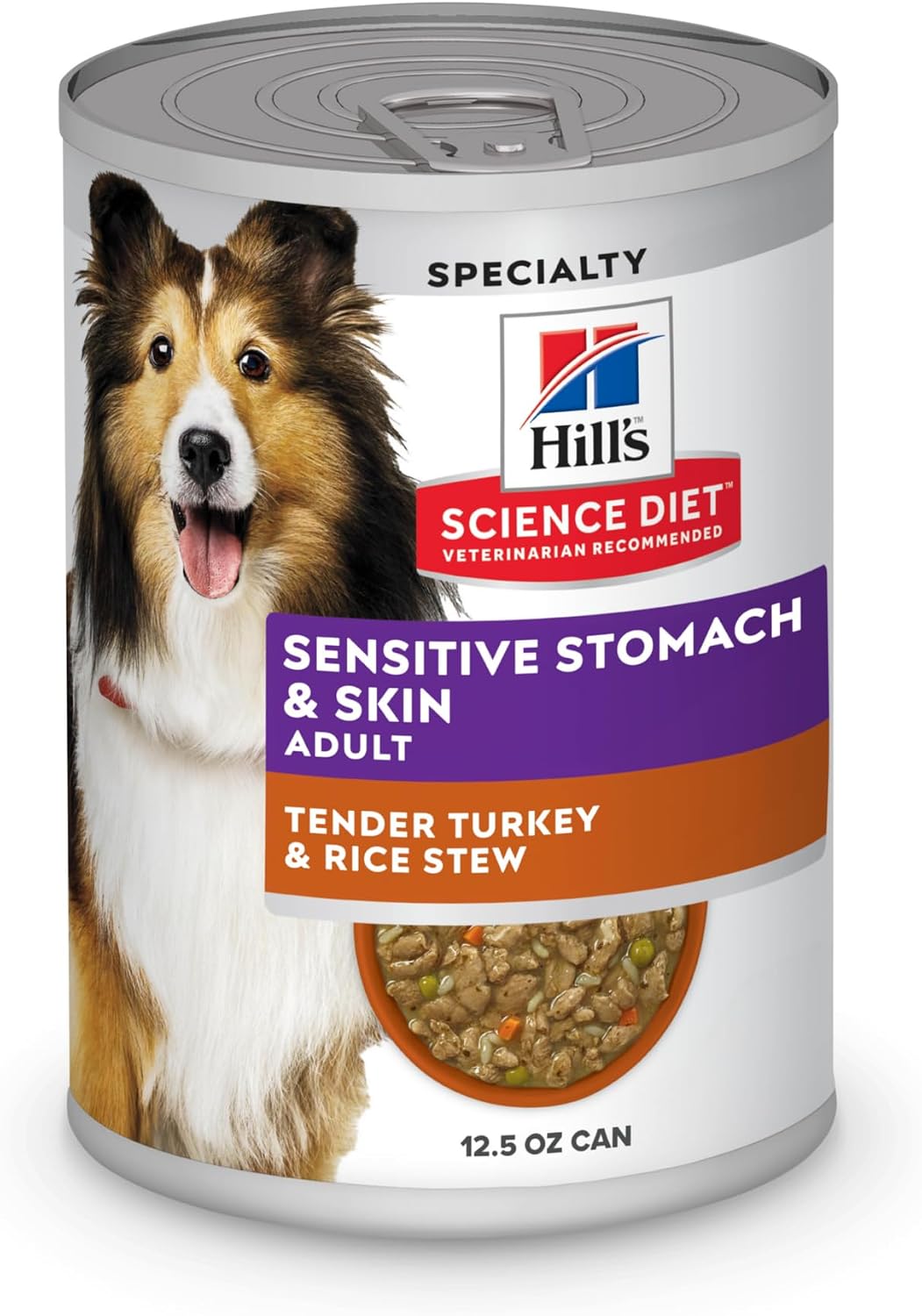
| Flavor | Turkey & Rice Stew |
|---|---|
| Item Form | Wet Food |
| Age Range Description | Adult 1-6 |
| Unit Count | 150 Ounce |
| Number of Items | 12 |
Hill's Science Diet Sensitive Stomach & Skin Turkey & Rice Stew is a wet adult dog food designed to reduce digestive upset while supporting skin and coat health. It is typically fed as a primary meal or mixed with dry food during a transition, and the recipe emphasizes highly digestible ingredients such as turkey, rice and prebiotic fiber to promote a balanced gut microbiome. The formula includes omega-6 fatty acids and vitamin E for skin and coat nourishment and added antioxidants like vitamins C and E to support immune health. Practical benefits include easy acceptance by many dogs, straightforward feeding guidance on the package, and formulation without chicken meat noted as an allergen claim. Trade-offs are that it is a wet, case-packaged food which may be less convenient for free-feeding and requires refrigeration of opened cans, and ingredient lists still contain multiple meat- and broth-based components that could bother dogs with very specific single-protein elimination diets.
Best for: Buyers looking for a vet-formulated wet food to reduce occasional digestive upset and improve skin condition in adult Weimaraners, prioritizing digestibility and skin-support nutrients.
Less Ideal for: Owners who need a strictly single-protein elimination diet or who prefer dry kibble for travel and free-feeding should consider other options.
- Formulated for sensitive stomachs with highly digestible turkey and rice base
- Contains prebiotic fiber to support gut bacteria and digestion
- Includes omega-6 fatty acids and vitamin E to help skin and coat health
- Clinically proven antioxidants (vitamins C and E) to support immune function
- Comes as wet food in a multi-can case which requires refrigeration after opening and may be less convenient than dry food
- Not a single-protein limited-ingredient diet for strict elimination testing
Verdict: The best wet food for Havanese with allergies, providing highly palatable, moisture-rich meals that can be gentler on sensitive stomachs and useful for picky or dehydrated dogs.
ORIJEN Original Dry Dog Food 4.5 lb
Best Premium Food

| Flavor | Original Recipe |
|---|---|
| Age Range Description | All Life Stages |
| Item Form | Granule |
| Unit Count | 72 Ounce |
ORIJEN Original is a protein-forward, grain-free kibble designed to mirror ancestral diets by using fresh or raw meats, organs, and whole fish as primary ingredients. It is typically used as a main diet for dogs of all life stages and is especially suited to active breeds that benefit from higher protein and fat. Notable features include a reported 85 percent fresh or raw animal ingredient content, WholePrey components (organs and bones) for naturally occurring nutrients, and a blend of fruits, vegetables, and botanicals for added micronutrients. In practice this yields a dense, nutrient-rich food that can support lean muscle maintenance, skin and coat health, and digestive function when transitioned gradually. Limitations include its grain-free formulation, which some owners may avoid based on current veterinary guidance, and the richer nutrient profile that may require careful portion control for less active or weight-sensitive dogs. The bag size is modest, so frequent repurchase or multi-bag storage may be necessary for larger or multi-dog households.
Best for: Owners who prioritize premium, meat-rich formulas and want a biologically appropriate, nutrient-dense diet for active or working breeds like Australian Shepherds.
Less Ideal for: Owners seeking a grain-inclusive or lower-protein maintenance diet for sedentary or weight-prone dogs should consider other options.
- Very high proportion of fresh or raw animal ingredients listed as primary components
- WholePrey approach includes organs and bones to supply naturally occurring vitamins and minerals
- Formulated for all life stages with added omega fatty acids to support skin and coat
- Contains fruits, vegetables, and botanicals for additional micronutrients and digestive support
- Grain-free formulation may not align with some recent veterinary recommendations
- Rich, high-protein recipe can lead to overfeeding if portions are not adjusted for lower activity dogs
Verdict: The best premium food for Havanese with allergies, offering higher-quality ingredients, specialized processing, and rigorous sourcing for owners who want top-tier allergy management and nutrition.
Choosing the Right Dog Food Havanese Allergy: Key Factors to Consider
Protein Source and Single-protein Formulas
The protein source is often the primary trigger in food-related allergic reactions. Choosing a single, novel protein or hydrolyzed protein can reduce exposure to common allergens and make it easier to identify what your Havanese tolerates. When switching, look for clear labeling showing the named meat, fish, or alternative protein as the dominant ingredient.
Beyond allergen management, protein quality affects palatability and amino acid balance. For a small breed like the Havanese, efficient protein utilization supports lean muscle and energy without excess caloric load. If your dog has a suspected protein sensitivity, a limited-ingredient or single-protein food simplifies an elimination trial and helps your veterinarian pinpoint the cause.
Carbohydrate Type and Digestibility
Carbohydrates vary in how they impact digestion and immune responses. Some dogs tolerate whole grains well, while others react to wheat or corn. Grain-free does not automatically mean hypoallergenic; what matters is the specific carbohydrate source and how your dog digests it. Look for lower-glycemic options and whole-food carbohydrates such as sweet potato, peas, or easily digestible rice when managing gastrointestinal symptoms.
Digestibility measures like guaranteed analysis and inclusion of prebiotic fibers can also affect stool quality and nutrient absorption. For an elimination trial, choose a food with a single, simple carbohydrate to reduce confounding factors when monitoring responses.
Fatty Acids and Skin Support
Omega-3 and omega-6 fatty acids help control inflammation and support a healthy coat, which is particularly important for Havanese prone to itchy skin. Adequate levels of EPA and DHA can reduce dermatitis and improve overall skin barrier function when combined with the removal of allergens from the diet.
Check the ingredient list for named fish oils or flaxseed and the guaranteed analysis for crude fat values. Balanced fatty acids also contribute to cognitive and joint health, but the primary concern in food-allergy cases is controlling inflammatory processes that manifest in the skin and ears.
Additives, Preservatives, and Artificial Ingredients
Artificial colors, flavors, and some preservatives can irritate sensitive dogs or complicate an elimination trial. Choosing a food with minimal additives reduces the number of variables when evaluating whether symptoms improve. Natural preservatives like mixed tocopherols and clear statements about no artificial dyes are helpful markers.
Also consider inclusion of common additives such as probiotics and digestive enzymes. While these can aid digestion, they add components that might confound an allergy assessment. If you are performing a strict elimination diet, start with the simplest formula and introduce functional additives only after symptoms stabilize.
Kibble Size, Calorie Density, and Portion Control
Havanese have small mouths and quick metabolisms; kibble size and calorie density therefore influence feeding accuracy and weight management. Appropriately sized kibble reduces feeding frustration and helps ensure consistent intake of nutrients. Too-high calorie density can lead to weight gain if portions are not carefully measured.
Look for products designed for small breeds or check manufacturer guidance on recommended feeding amounts. Accurate portion control is essential during an elimination trial to avoid conflating allergy symptoms with weight-related issues or metabolic upset.
Veterinary Support and Transition Protocols
Managing food allergies often requires veterinary guidance for diagnosis and oversight of an elimination trial. A clear transition protocol minimizes gastrointestinal upset when switching foods and helps you identify true improvements. Veterinarians may recommend trial lengths, symptom checklists, and reintroduction schedules for suspect ingredients.
Ensure you have a plan to monitor ear infections, skin lesions, and stool quality during the trial. If your dog is on medication for skin conditions, discuss how and when to taper treatment in coordination with dietary changes so you can accurately assess the food's effectiveness.
How Long Should I Trial a New Food for a Suspected Allergy
A meaningful elimination trial usually lasts 8 to 12 weeks because skin and gastrointestinal symptoms can take time to resolve after the offending ingredient is removed. Expect gradual improvement over several weeks rather than immediate changes.
Keep feeding strictly only the trial formula and avoid treats, table scraps, and flavored chews during this period. Document symptoms weekly—note itching intensity, ear discharge, stool consistency, and any new rashes to give your veterinarian a clear record.
- Minimum trial: 8 weeks for initial improvement
- Full assessment: up to 12 weeks for persistent cases
- Record symptoms weekly and avoid all non-trial foods
Can Supplements Help While Managing Dietary Allergies
Supplements such as fish oil for omega-3s, certain probiotics, and topical skin treatments can support comfort while you identify dietary triggers. Use supplements cautiously during an elimination trial, because they introduce additional ingredients that could be allergens.
If you plan to use supplements, discuss them with your veterinarian and consider introducing them only after the main food has shown stable results. Prioritize supplements with clear, minimal ingredient lists when possible.
- Introduce supplements only with vet approval
- Choose single-ingredient or clearly labeled formulations
- Monitor for changes after starting any new supplement
What to Do if Your Havanese Refuses a Limited-ingredient Formula
Refusal can stem from unfamiliar flavors, texture changes, or underlying health issues. Try gradual transitions over 7 to 10 days to improve acceptance, mixing increasing proportions of the new food into the old. Warm the food slightly or add a small amount of low-sodium, plain broth to enhance aroma without adding potential allergens.
If refusal persists, consult your veterinarian to rule out dental pain, gastrointestinal upset, or other medical causes. They may recommend a different single-protein option or a palatability-focused hypoallergenic formula designed for picky eaters.
- Transition slowly to the new food over 7 to 10 days
- Use low-sodium broth or slight warming to enhance aroma
- Check for dental or medical issues if refusal continues
Recognizing Non-food Causes of Skin and Ear Symptoms
Not all itching or ear problems result from food allergies. Environmental allergens, parasites, contact irritants, and endocrine issues can produce similar signs. While dietary change is an important step, a comprehensive approach that includes parasite control, environmental management, and veterinary diagnostics is often necessary.
If symptoms do not improve on a strict trial, your veterinarian may recommend skin scrapings, allergy testing, or diagnostic imaging to rule out other causes. Using a systematic approach prevents wasting time on unnecessary dietary changes alone.
- Consider fleas, pollen, household cleaners, and fabrics as possible triggers
- Follow up with veterinary diagnostics if no improvement on diet
- Maintain parasite control during any elimination trial
How to Read Ingredient Panels During an Elimination Trial
When assessing labels, focus on named proteins, the first five ingredients, and any ambiguous terms like 'meat by-products' or 'animal digest' that can hide the true source. For elimination trials, choose foods where the main protein and carbohydrate are clearly identified.
Also review the guaranteed analysis for crude protein, fat, fiber, and moisture so you can compare nutritional density across candidate foods. Clear labeling makes it easier to keep the trial controlled and to reintroduce ingredients methodically during challenge testing.
- Prioritize named protein and carbohydrate sources
- Avoid vague ingredient terms that obscure allergen identity
- Compare guaranteed analysis to monitor nutrient consistency
Feeding Schedules and Portioning Tips for Small Havanese
Divide daily allowance into two or three smaller meals to stabilize energy and reduce begging. Small, frequent meals are easier to measure accurately and help prevent overeating on calorie-dense formulas. Use a kitchen scale for precision when starting a new formula or performing an elimination trial.
Keep a feeding log that tracks portion size, times, and any snacks so you can correlate feeding habits with symptom changes. Adjust portions gradually based on body condition score rather than guesswork to maintain an ideal weight.
- Feed two to three small meals per day for consistent energy
- Weigh portions for accuracy during an elimination trial
- Adjust based on body condition score and activity level
How We Chose the Best Dog Food Havanese Allergy
We prioritized formulas that address the most common allergy and intolerance patterns seen in small-breed dogs. Key evaluation criteria included protein source clarity, ingredient simplicity, digestibility measures, and nutrient profile suited for a small, moderately active adult Havanese. We also considered packaging sizes and kibble shape where relevant to small mouths, as well as manufacturer transparency about sourcing and processing. We excluded products with unclear ingredient panels, proprietary blends that hide primary protein sources, or that lacked information on guaranteed analysis. We did not include treats, supplements, or veterinary prescription diets when compiling this list; the focus is complete foods intended for everyday feeding. Important dimensions that informed placement were first five ingredient composition, presence of common allergens such as beef, dairy, wheat, and soy, inclusion of novel or single proteins, clearly stated omega fatty acid levels for skin support, and carbohydrate sources that are gentle on digestion. Finally, we favored formulas with reported digestibility, reasonable calorie density for small-breed metabolism, and options available in appropriately sized bags so owners can rotate or trial without long-term commitment.
Our full evaluation process is outlined in our review methodology.
FAQ
How quickly should my Havanese show improvement after switching foods
You may see partial improvement within two to four weeks, but full resolution often requires eight to 12 weeks. Skin and coat take time to recover, so remain consistent and record changes weekly.
Is grain-free food better for allergic Havanese
Grain-free is not automatically better. The important factor is whether the specific carbohydrate or protein triggers your dog's symptoms. Choose formulas based on ingredient clarity and digestibility rather than marketing claims.
Can I use treats during an elimination diet
Treats can interfere with an elimination trial and should be avoided unless they are the same limited-ingredient product as the main food. If treats are necessary, use single-ingredient options approved by your veterinarian.
When should I consult a veterinarian about food allergies
Consult a veterinarian when symptoms are chronic, severe, or include recurrent ear infections. A vet can recommend an appropriate elimination trial, run diagnostics, and advise on supplements or prescription options if needed.
Are wet foods better than dry for allergic dogs
Wet and dry formats both have pros and cons. Wet food can be more palatable and useful for picky eaters, while dry kibble is convenient and can be formulated for small-breed mouths. Choose the format that encourages consistent intake and matches your elimination strategy.
Final Verdict
Prioritize clear, limited-ingredient formulas that match the suspected allergen profile and provide balanced nutrition for a small-breed Havanese. Focus first on protein clarity, digestible carbohydrates, and adequate omega fatty acids to support skin recovery while keeping portions appropriate for a small dog. Expect to commit to a structured elimination trial under veterinary guidance, and be prepared to balance palatability with ingredient simplicity. With careful monitoring and a patient approach, you can identify a daily food that reduces allergic reactions while keeping your Havanese healthy and active.

