

Choosing the right food for a Jack Russell puppy affects growth, energy, and long-term health. Because this breed is small, energetic, and has distinct nutritional needs, what you feed during the first year matters for bone development, lean muscle, and digestive tolerance. This guide shortlists seven top puppy foods selected for their nutrient balance, digestibility, and suitability for small, high-energy terrier-type pups. Below you will find the criteria we used to evaluate each option and practical notes to help you match a food to your puppy's activity level and growth stage.
Top Picks at a Glance
| Best Overall Food for Jack Russell Puppy A balanced, age-appropriate formula suited to Jack Russell puppy needs | ROYAL CANIN Jack Russell Puppy Dry Dog Food 3 lb |  |
| Best Budget Food for Jack Russell Puppy An affordable puppy formula that covers basics without extra frills | Pedigree Puppy Dry Dog Food 3.5 lb |  |
| Best Small-Breed Food Formulated for small mouths, higher calorie density, and kibble size | Royal Canin X-Small Puppy Dry Food 3 lb |  |
| Best High-Protein Food A protein-forward formula to support muscle development and activity | ORIJEN Puppy Dry Dog Food 4.5 lb |  |
| Best Limited-Ingredient Food Simpler recipes for puppies with sensitivities or picky digestion | The Honest Kitchen Clusters Puppy 4 lb |  |
| Best Dry Food Classic kibble options for convenience, dental benefit, and storage | Hill's Science Diet Puppy Small Bites |  |
| Best Premium Food Higher-end, nutrient-dense formulas with top-tier ingredients and sourcing | Fromm Puppy Gold Chicken 15 lb |  |
ROYAL CANIN Jack Russell Puppy Dry Dog Food 3 lb
Best Overall Food for Jack Russell Puppy
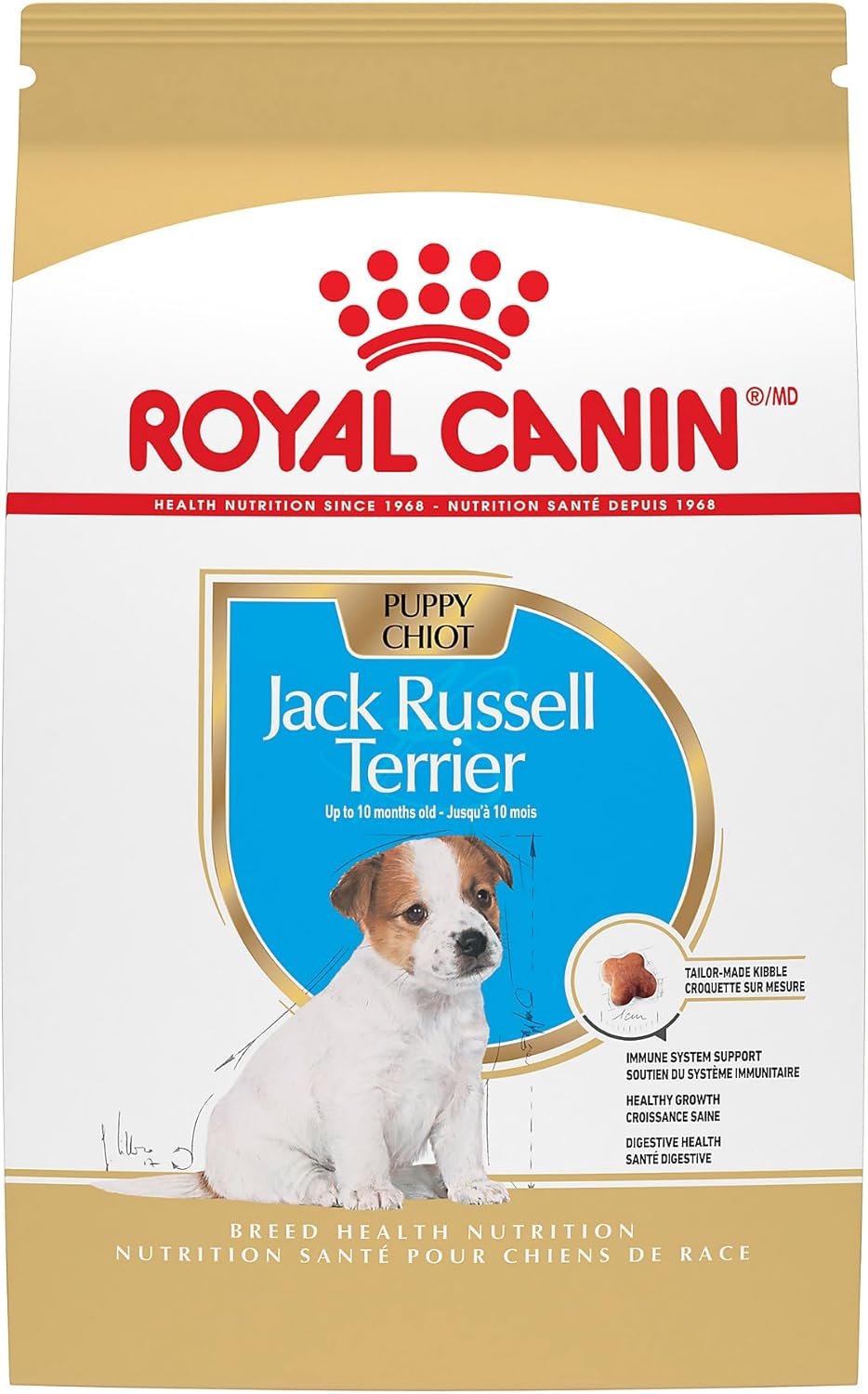
| Age range | Puppy, 1 month and up |
|---|---|
| Unit count | 48 Ounce (3 Pound bag) |
| Specific uses | Digestive Health, Immune Support |
| Breed recommendation | Jack Russell Terrier |
This breed-targeted dry food is formulated specifically for Jack Russell Terrier puppies, with kibble shaped and sized for the breed's rectangular jaw and chewing style. It is typically fed as a complete dry diet for puppies up to about 10 months and aims to support immune development with an antioxidant blend including vitamin E, promote healthy growth with controlled protein and balanced calcium and phosphorus, and support digestion through high-quality proteins and prebiotics. Practical benefits include the adapted kibble that makes it easier for small mouths to pick up and chew, nutrient balance intended for steady growth of a small, active puppy, and focus on stool quality and digestive support. Limitations are that it is a breed-specific veterinary-style formula so it is tailored to purebred Jack Russell puppies and not intended as a one-size-fits-all puppy food, and the ingredient list includes common grains and some by-product meal which some owners may prefer to avoid. This is best used as a primary dry food for owners seeking a breed-formulated option during the puppy months and who prioritize targeted nutrition over grain-free or novel-protein diets.
Best for: Owners of purebred Jack Russell Terrier puppies who want a complete, breed-focused dry food that supports immune development, digestion, and controlled growth during the puppy stage.
Less Ideal for: Owners seeking a grain-free, novel-protein, or general-purpose puppy formula for mixed-breed litters should consider broader or specialized alternatives instead.
- Kibble shape and size adapted for Jack Russell puppy jaw and bite patterns
- Antioxidant complex with vitamin E to support developing immune system
- Balanced protein and calcium/phosphorus levels to support steady growth
- High-quality proteins and prebiotics to aid digestive health and stool quality
- Formulated specifically for Jack Russell puppies so not ideal if you have mixed-breed puppies with different needs
- Contains grains and chicken by-product meal which some owners avoid
Verdict: The best overall food for a Jack Russell puppy that balances essential nutrients, appropriate calorie and protein levels, and digestibility for steady growth and energy.
Pedigree Puppy Dry Dog Food 3.5 lb
Best Budget Food for Jack Russell Puppy

| Flavor | Chicken & Vegetable |
|---|---|
| Age Range Description | Puppy |
| Item Form | Dry Kibble |
| Unit Count | 56 Ounce |
| Animal Food Nutrient Content Claim | High Protein, No Added Sugar |
Pedigree Puppy Dry Dog Food is a straightforward, budget-friendly puppy kibble made from chicken-based protein, grains, and added vitamins and minerals to support growth. You would typically use it as a daily staple while transitioning a young dog from weaning to adult food, following the feeding guide on the package to match your puppy's weight and age. The formula emphasizes high-quality protein sources for muscle development and includes 36 vitamins, minerals, and amino acids intended to support immune health, brain development, and bone strength. In practice this means an owner gets a complete and balanced commercial diet that is easy to portion and serve dry or softened with water for very young pups. Ingredient-wise it contains common commodity grains and by-product meals rather than premium single-source meats, so it delivers required calories and nutrients at a lower cost but not the cleanest ingredient panel. Expect good availability and consistent kibble size, but owners seeking grain-free, novel proteins, or limited-ingredient formulas will need to look elsewhere.
Best for: Value-conscious puppy owners who need an affordable, complete puppy kibble that supports growth and daily feeding routines.
Less Ideal for: Owners who require grain-free, novel-protein, or limited-ingredient veterinary diets for food sensitivities should consider specialty formulas instead.
- Formulated specifically for puppies with nutrients to support growth and immune health
- Contains high-protein sources to support muscle development
- Includes 36 vitamins, minerals, and amino acids for complete and balanced nutrition
- Easy-to-follow feeding guide for age and weight makes portioning simple
- Uses ingredient list with grains and by-product meals rather than single-source premium proteins
- Not suitable for owners seeking grain-free or limited-ingredient diets
Verdict: The best budget food for a Jack Russell puppy that provides complete puppy nutrition and acceptable ingredient quality while keeping costs low for value-conscious owners.
Royal Canin X-Small Puppy Dry Food 3 lb
Best Small-Breed Food

| Age Range | Puppy 2 to 10 months |
|---|---|
| Breed Size Recommendation | X-Small / Small breeds |
| Item Form | Kibble |
| Flavor | Chicken & Vegetable |
| Unit Count | 48 Ounce |
Royal Canin X-Small Puppy is a dry kibble made specifically for extra-small breed puppies, with a crunchy, tiny kibble designed to be easy for very small mouths to pick up and chew. It is intended for puppies 2 to 10 months with an expected adult weight under about 8 pounds and is used as a daily complete diet or mixed with Royal Canin wet puppy formulas for texture variety. The formula highlights DHA and omega-3s for brain development, antioxidants for immune support, and a blend of prebiotics and digestible proteins to promote gut health. Practical benefits include portion-sized nutrition tailored to high energy needs during growth and a kibble texture that can help dental health by encouraging chewing. Limitations are that it is sized and balanced for extra-small breeds only, so growing puppies expected to exceed the target adult weight will need a different formula, and the ingredient list includes grains and by-product meal which some buyers may avoid. The 3 lb bag is convenient for trialing a Westie puppy but may require more frequent repurchase than larger bags for multi-puppy households.
Best for: Owners of West Highland Terrier puppies and other very small-mouthed breeds who prioritize kibble size and targeted growth-stage nutrition to make feeding and chewing comfortable.
Less Ideal for: Owners whose puppies are expected to exceed the formula's target adult weight or buyers seeking grain-free or novel-protein ingredient lists should consider alternative formulations.
- Kibble sized and shaped for very small mouths to make eating easier for Westie puppies
- Contains DHA and omega-3 fatty acids to support brain development
- Includes prebiotics and highly digestible proteins to promote healthy digestion
- Antioxidants like vitamins E and C to support immune system development
- Available in a 3 lb bag that is practical for testing or small-breed households
- Formulation uses poultry by-product meal and grains, which some owners prefer to avoid
- Sized specifically for extra-small breeds so not suitable if the puppy will grow beyond the target adult weight
Verdict: The best small-breed food for owners who want a puppy formula sized and balanced specifically for small dogs’ metabolism, bite size, and energy demands.
ORIJEN Puppy Dry Dog Food 4.5 lb
Best High-Protein Food

| Flavor | Puppy Recipe |
|---|---|
| Item Form | Dry Kibble |
| Unit Count | 72 Ounce |
| Age Range Description | Puppy |
| Animal Food Diet Type | Raw |
ORIJEN Puppy is a grain-free dry dog food designed to deliver high-protein, nutrient-dense nutrition for growing puppies. It uses an 85 percent fresh-or-raw animal ingredient approach with wholeprey components such as muscle, organs, and bones so pups get a concentrated source of amino acids, vitamins, and minerals without relying on synthetic additives. Typical use is twice-daily feeding guided by the brand chart, and the kibble includes a freeze-dried coating for added palatability. Practical benefits include a protein-forward recipe to support muscle and brain development, small kibble size aimed at puppies, and added functional ingredients for digestive and immune support. Limitations to consider are the grain-free formulation itself, which may not be necessary for all puppies and can be higher in calories and protein than some owners expect, and the bag size is modest at 4.5 pounds which may require more frequent repurchasing for larger litters or bigger-breed pups.
Best for: Puppy owners who want a grain-free, biologically inspired diet that emphasizes fresh animal ingredients and nutrient density to support rapid growth and development.
Less Ideal for: Owners who prefer lower-protein or grain-inclusive recipes, those feeding adult dogs or puppies with specific caloric restrictions, or caretakers who need larger bulk bags to avoid frequent restocking.
- High inclusion of fresh or raw animal ingredients for complete amino acid profile
- WholePrey meats and organs provide naturally occurring vitamins and minerals
- Grain-free recipe for owners avoiding grains or managing suspected grain sensitivities
- Small kibble and nutrient profile formulated specifically for puppies
- Includes freeze-dried coating to boost palatability and encourage eating
- Smaller 4.5 lb bag may require frequent repurchasing for larger or multiple puppies
- Protein- and calorie-dense formula may be excessive for puppies that need lower energy diets
Verdict: The best high-protein food for active Jack Russell puppies that need extra amino acids to support lean muscle growth and sustained energy during play and training.
The Honest Kitchen Clusters Puppy 4 lb
Best Limited-Ingredient Food
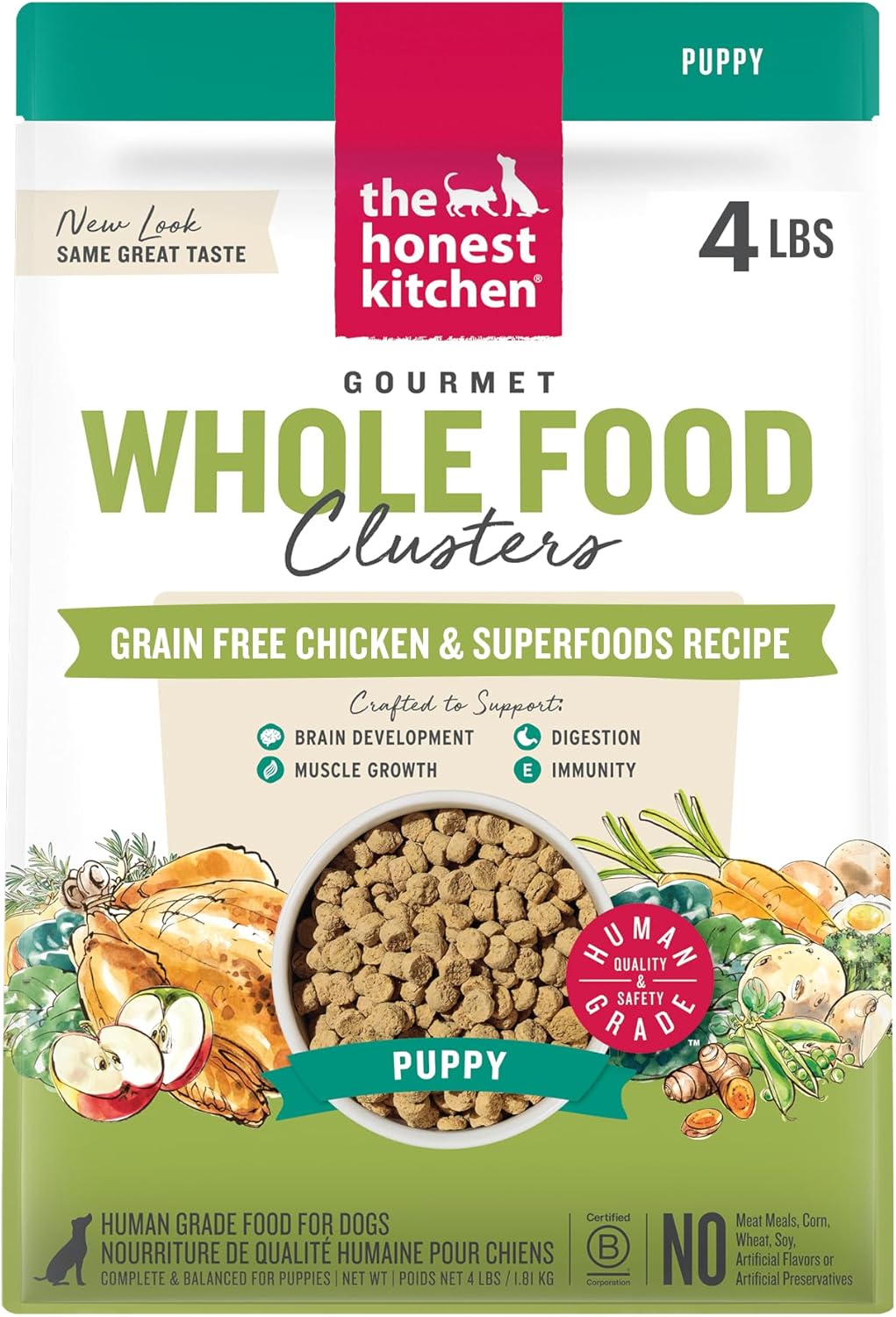
| Flavor | Chicken & Superfoods |
|---|---|
| Age Range Description | Puppy |
| Item Form | Dry |
| Unit Count | 64 Ounce |
The Honest Kitchen Clusters Puppy is a human-grade, grain-free dry puppy food made from cage-free chicken and whole-food ingredients that are cold-pressed, roasted and gently dehydrated into small clusters. It is typically used as a complete daily meal for puppies, a topper to add fresh-food texture to wet food, or as high-value training rewards thanks to the bite-sized pieces. Notable features include a first-ingredient real protein (cage-free chicken), added probiotics and salmon oil for digestive and brain support, and a production process aimed at preserving nutrients without high-heat extrusion. In practice this delivers a recognizable-ingredient recipe that most puppies find palatable and that supports digestion, skin and coat when fed according to the provided guidelines. Limitations to consider are that the formula is grain-free with many whole-food inclusions rather than a strictly short, minimal-ingredient list, and the product comes in 4 lb packaging which may be more than needed for very small dogs or single-puppy households expecting longer storage; storage and gradual transitions are advised to avoid stomach upset.
Best for: Buyers who prioritize human-grade, recognizable ingredients and want a puppy formula that doubles as tasty training treats and a digestive-supporting main meal for sensitive puppies.
Less Ideal for: Owners who need a very short, single-protein elimination diet or who require tiny trial-size packaging for repeated rotation between formulas.
- Human-grade ingredients with cage-free chicken as the first ingredient
- Cold-pressed and gently dehydrated clusters that preserve flavor and nutrients
- Includes probiotics and salmon oil to support digestion and brain development
- Bite-sized clusters suitable as a complete meal, topper, or training treat
- Not a single-source or extremely short ingredient list despite being clean-label
- 4 lb bag may be large for very small breeds or single-puppy households
Verdict: The best limited-ingredient food for Jack Russell puppies with suspected food sensitivities or digestive issues who benefit from fewer, recognizable ingredients and fewer common allergens.
Hill's Science Diet Puppy Small Bites
Best Dry Food
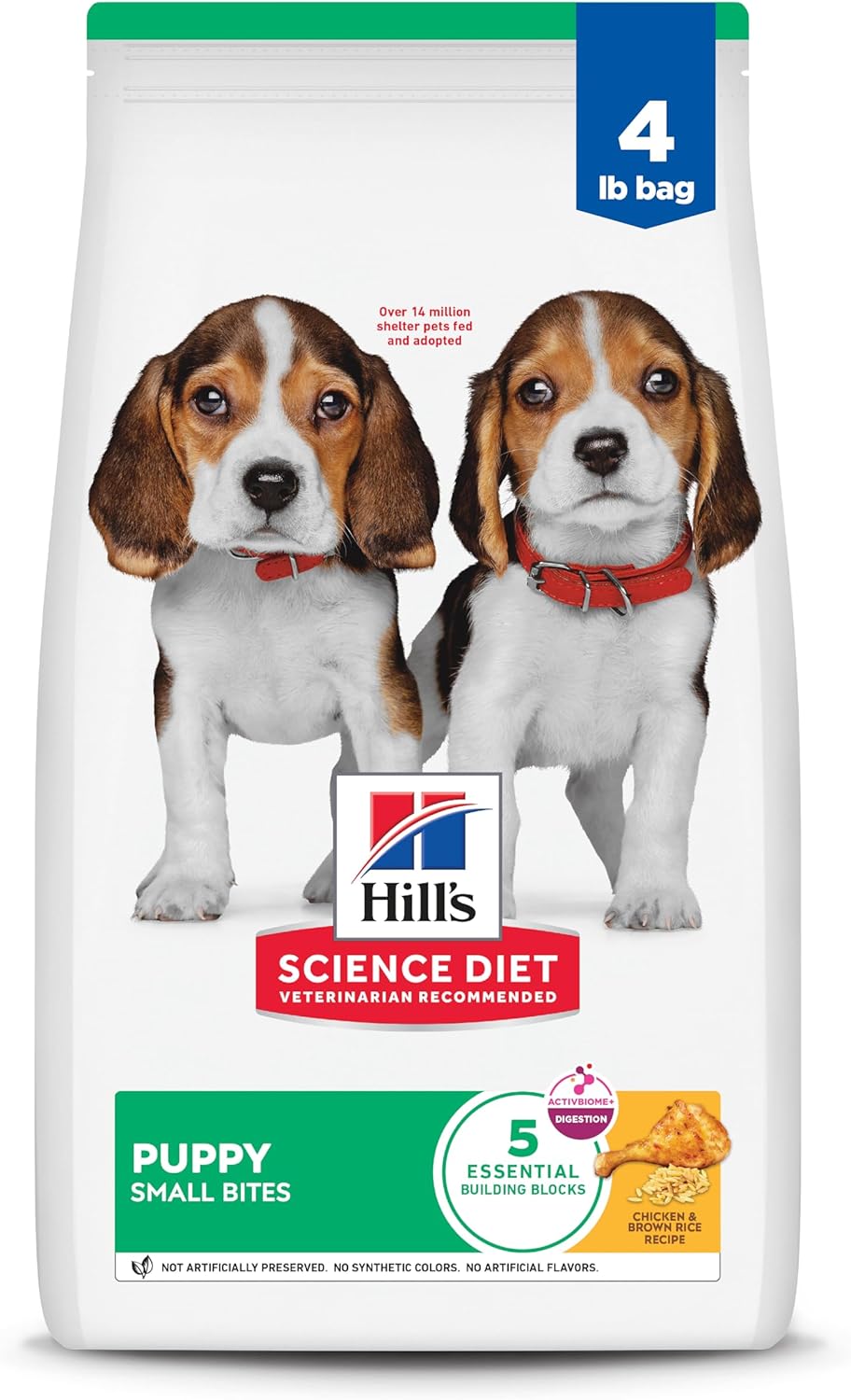
| Flavor | Chicken & Brown Rice |
|---|---|
| Age Range | Puppy |
| Dog Breed Size | Small |
| Unit Count | 72 Ounce |
Hill's Science Diet Puppy Small Bites is a dry puppy food made with small kibble sized for puppies and small-breed mouths and formulated to support growth, digestion, and developing systems. It is typically fed as a daily diet for puppies and can be introduced gradually over a week when switching foods. Notable features include chicken as the primary ingredient, brown rice and whole grains for energy, a blend of vitamins and minerals to support muscle, bone, brain and eye development, and ActivBiome+ prebiotic fibers to support gut microbiome health. Practical benefits are easy chewing for small mouths, nutrient balance targeted at growing puppies, and guidance from feeding charts on the package. Limitations are that the ingredient list includes common allergens like chicken and whole grains, so it may not suit puppies with specific protein or grain sensitivities, and the formula is a standard puppy recipe rather than a limited-ingredient or hypoallergenic prescription diet for pronounced skin sensitivities. The kibble size and nutrient focus make it a convenient everyday option for small-breed puppies that tolerate chicken and grain ingredients.
Best for: Buyers looking for an everyday growth-focused puppy kibble sized for small mouths and aimed at supporting development and digestive health.
Less Ideal for: Puppies with diagnosed food allergies, persistent skin reactions, or owners seeking a veterinary hypoallergenic or grain-free prescription diet should consider specialized alternatives.
- Small, bite-sized kibble designed for puppies and small breeds
- Formulated with DHA and fish oil to support brain and eye development
- Includes prebiotic fiber blend (ActivBiome+) to support digestion
- Balanced vitamins and minerals to support bone, muscle and immune development
- Contains common protein and grain ingredients that can trigger sensitivities in some puppies
- Not a limited-ingredient or veterinary hypoallergenic prescription formula
Verdict: The best dry food for Jack Russell puppies whose owners prioritize convenience, shelf stability, and kibble designed to encourage chewing and oral health.
Fromm Puppy Gold Chicken 15 lb
Best Premium Food

| Flavor | Chicken |
|---|---|
| Age Range Description | Puppy |
| Unit Count | 240 Ounce |
| Breed Recommendation | Medium Breeds, Small Breeds |
| Special Ingredients | Proteins |
Fromm Puppy Gold Chicken is a dry puppy formula designed to support growth, reproduction, and digestive health in small and medium breed puppies. It is typically fed to puppies and to pregnant or nursing mothers following AAFCO growth and gestation/lactation guidelines. The recipe lists real chicken, chicken meal and chicken broth near the top plus additional animal proteins such as duck, lamb and menhaden fish meal, which raise the total protein and amino acid content useful for active, lean-mass developing pups. Whole grains and added probiotics provide digestible energy and gut support, while salmon oil and eggs add omega fatty acids and extra protein sources. Practical benefits include a nutrient-dense profile for puppies with higher activity needs and family-farm sourcing that may appeal to buyers preferring artisanal brands. Limitations are that the bag targets small and medium breeds so feeding amounts must be adjusted for beagles specifically, and the formula includes grains so it is not suitable for owners seeking grain-free diets or those managing grain-sensitive pups.
Best for: Buyers seeking a protein-forward, multi-source animal protein puppy food for active small to medium breed puppies who need support for lean-mass growth and digestive health.
Less Ideal for: Owners who require grain-free formulas or who want a product formulated specifically to a single breed or unique caloric needs should look elsewhere.
- Real animal proteins listed high in the ingredient panel including chicken, chicken meal, and fish meal.
- Multiple protein sources (chicken, duck, lamb, fish) that support amino acid variety for muscle development.
- Enhanced with probiotics to aid digestion during growth and dietary transitions.
- Includes salmon oil and dried egg product for additional omega fats and protein.
- Not a grain-free recipe, so unsuitable for grain-elimination diets.
- Formulated broadly for small and medium breeds rather than being tailored specifically to beagles' caloric curve.
Verdict: The best premium food for owners willing to invest in higher-quality ingredients, advanced formulation, and rigorous sourcing to support optimal growth and long-term health in their Jack Russell puppy.
Choosing the Right Dog Food Jack Russell Puppy: Key Factors to Consider
Protein Quality and Percentage
Protein is the foundation of a puppy's diet because it supplies amino acids needed for tissue growth, immune function, and muscle development. For Jack Russell puppies, look for formulas that list a named animal protein as the first ingredient and provide a protein percentage appropriate for growing small breeds. Higher-quality protein sources are more digestible and supply essential amino acids without excess bulk.
Too little protein can slow growth and compromise lean mass. Too much protein from low-quality sources can tax immature kidneys and contribute to loose stools. Focus on balanced protein levels from recognizable sources rather than undifferentiated 'meat meals' without origin details.
Calorie Density and Feeding Guidelines
Calorie density determines how much food you feed at each meal and affects weight management. Jack Russell puppies are energetic and burn calories quickly, so choose a diet that provides sufficient calories per cup to meet their activity without forcing large portion volumes that can encourage overeating.
Clear feeding charts that adjust for age, current weight, and activity level make it easier to portion meals. Also consider food formats that support measured portions to avoid free-feeding, which can lead to inconsistent weight gain during rapid growth phases.
Kibble Size and Texture
Small-breed puppies have smaller mouths and different chewing patterns than larger breeds. Kibble designed for small mouths reduces the risk of gulping and promotes slower eating, which can improve digestion and reduce choking risk. Texture matters too: some puppies prefer crunchy kibble, while others do better with softer or moistened food during teething.
Kibble design should encourage pickup and chewing rather than swallowing whole. Also consider whether the shape and hardness are suitable for a teething puppy; offering options to hydrate or soften food can help during transitions.
Fat Content and Essential Fatty Acids
Fat supplies concentrated energy and supports skin, coat, and neurological development. For an active Jack Russell puppy, moderate to moderately high fat helps sustain play and learning bursts throughout the day. Look for specified sources of fat and listed omega-3 fatty acids like DHA for brain and eye development.
Excessive fat can promote unwanted weight gain in less active puppies, while too little may leave an energetic pup lacking stamina. Balance is key, and the guaranteed analysis should match the pup's activity pattern. Also note that the type of fat influences coat quality and inflammatory responses.
Digestibility and Ingredient Tolerance
Digestibility affects stool quality, nutrient absorption, and overall comfort. Jack Russell puppies can be sensitive to abrupt diet changes or low-quality fillers that cause gas and loose stools. Favor formulas with digestible carbohydrate sources, limited artificial additives, and prebiotics or probiotics aimed at supporting a healthy gut.
Ingredient transparency helps you identify potential allergens or intolerances. When introducing a new food, transition gradually over a week to monitor tolerance. If your puppy shows persistent digestive upset, selecting a hypoallergenic or novel-protein formula may be necessary under veterinary guidance.
Life-stage Nutrients and Growth Management
Puppy formulas are intended to supply higher levels of certain vitamins, minerals, and amino acids needed during rapid development. Calcium and phosphorus ratios, for example, influence proper bone growth, while added vitamins support immune system maturation. For a small-breed puppy, look for life-stage labeling and nutrient levels tailored to smaller bodies and faster metabolic rates.
Over-supplementation of some nutrients can create growth imbalances, so formulas that adhere to recognized life-stage standards are preferable. Consider whether the food provides joint-support nutrients if your puppy will be highly active, and ensure that everything aligns with your vet's guidance for growth rate and expected adult size.
How Many Calories Should My Jack Russell Puppy Eat Each Day?
Daily calorie needs depend on age, weight, and activity level. Young, very active Jack Russell puppies typically require more calories per pound than larger breeds because of their higher metabolism and playfulness.
Start by using the feeding chart on the chosen formula as a baseline, then adjust based on body condition. Monitor your puppy's rib coverage, waistline when viewed from above, and energy levels. Increase or decrease portions in small increments and reassess weekly until you find a steady growth pattern.
- Use body condition scoring rather than cup counts alone.
- Feed multiple small meals daily to stabilize energy.
- Recalculate portions as the puppy gains weight and becomes less reliant on frequent feeding.
When Should I Transition From Puppy Food to Adult Food?
Jack Russell puppies often reach adult size earlier than larger breeds. Transitioning typically occurs between 9 and 12 months, depending on growth rate and the vet's assessment. Watch for signs that growth is slowing and that the puppy is near its expected adult weight.
Switch gradually over 7 to 10 days by mixing increasing amounts of adult food into the puppy formula to avoid digestive upset.
- Consult your veterinarian to determine the optimal timing for your individual puppy.
- Monitor joints and energy; if growth plates are still closing, a slower transition may be appropriate.
Can Small-breed Puppy Food Prevent Common Digestive Issues?
Formulas designed for small breeds often include easily digestible ingredients and prebiotic fibers that support gut microbiota. These choices can reduce incidents of soft stool and gas that are common when a puppy's digestive system is still maturing.
However, no food can guarantee elimination of all digestive issues. Consistent feeding schedules, gradual diet changes, and attention to ingredient sensitivities are equally important for preventing upset stomachs.
- Look for prebiotics or probiotics in the ingredient list if digestive sensitivity is a concern.
- Avoid abrupt diet swaps and human food treats that can trigger intolerance.
How to Handle Picky Eating or Fluctuating Appetite
Picky eating can be normal in developing puppies. Before changing foods, rule out health issues with a vet. Small-breed puppies sometimes prefer varied textures or stronger-smelling foods, and occasional appetite dips are common during teething or development milestones.
Practical strategies include offering the food at consistent times, warming dry food slightly to enhance aroma, and maintaining a predictable feeding routine. Limit snacks between meals to preserve interest in main meals.
- Avoid free-feeding; present meals for limited periods.
- Rotate textures slowly rather than switching formulas abruptly.
What Supplements, if Any, Are Useful for Jack Russell Puppies?
Most complete puppy diets provide the vitamins and minerals necessary for healthy development, so supplements are rarely needed when feeding a balanced formula. Specific supplements such as omega-3s for cognitive development or joint-support nutrients may be beneficial in consultation with your veterinarian.
Only add supplements based on identified needs or veterinary advice to prevent nutrient imbalances. Overuse of certain supplements can interfere with the nutrient profile of a complete diet.
- Discuss fish oil supplements for DHA with your vet if the diet is low in omega-3s.
- Use probiotic supplements selectively for short-term digestive support after illness or antibiotic use.
How We Chose the Best Dog Food Jack Russell Puppy
We prioritized criteria that directly affect growth, energy management, and digestive health for small, active terrier puppies. First, protein quality and level: growing Jack Russell puppies need concentrated, high-quality animal protein to build muscle and support development. Second, calorie density and portion control: because this breed burns a lot of energy in short bursts, we looked for foods that provide adequate calories per serving without encouraging excess weight gain. Third, fat composition and essential fatty acids: appropriate fat supports energy needs and skin and coat health while omega-3s support brain and retinal development. Fourth, kibble size and texture: small mouths and fast eating habits mean kibble must be bite-sized and shaped to reduce gulping. Fifth, digestibility and ingredient tolerability: we favored formulas with easily digested carbohydrate sources and limited hard-to-digest fillers that can cause stool issues. Sixth, life-stage formulation and added joint-support nutrients for rapidly growing puppies. We excluded products that are not specifically formulated for puppies or that list unsuitable protein sources for small-breed growth. We also filtered out options lacking transparent nutrient data or those without appropriate calorie guidance. Our selections emphasize clear ingredient lists, appropriate guaranteed analysis values, and formulations suited to small, high-energy terrier-type puppies.
Our full evaluation process is outlined in our review methodology.
FAQ
How often should I feed a Jack Russell puppy each day?
Feed small-breed puppies three to four times daily while they are young to maintain steady energy and avoid hypoglycemia. As the puppy grows, you can reduce meals to two daily feedings, adjusting portions to maintain healthy weight.
Is wet food better than dry food for teething puppies?
Wet food can be easier to eat during teething, but dry kibble supports dental abrasion and can be easier to portion. You can soften kibble with warm water temporarily to ease teething discomfort while preserving balanced nutrition.
What signs indicate my puppy is not tolerating a food?
Watch for loose stools, increased gas, persistent vomiting, lack of appetite, or changes in coat quality. If these symptoms appear after a diet change, transition back and consult your veterinarian to rule out intolerance or allergy.
Should I choose a grain-free formula for my Jack Russell puppy?
Grain-free diets are not inherently better. Unless your puppy has a diagnosed grain sensitivity, choose a formula based on digestibility and nutrient balance rather than grain exclusion alone. Discuss any suspected sensitivities with your veterinarian.
How do I convert feeding recommendations to my puppy's actual portions?
Use the feeding chart on the formula as a starting point, then adjust according to your puppy's body condition and activity. Measure portions with a kitchen scale or measuring cup, and reassess weekly, making small changes until growth tracks steady.
Final Verdict
Prioritize a puppy formula that matches the Jack Russell's small-breed growth pattern: quality protein, appropriate calorie density, and kibble suited for a small mouth. Balance fat and essential fatty acids to support energy and brain development while choosing digestible ingredients that minimize stool issues. Monitor growth and body condition closely and be prepared to adjust portions or life-stage timing with input from your veterinarian. By focusing on nutrient composition, calorie guidance, and digestibility rather than marketing claims, you can select a balanced food that supports healthy development and long-term vitality for your Jack Russell puppy.

