

Feeding a miniature pinscher puppy the right food matters for growth, dental development, and long-term health. Because min pin puppies have tiny mouths, fast metabolisms, and often sensitive stomachs, the wrong formula can lead to wasted food, poor weight gain, or chewing trouble. This guide shortlists six top puppy foods chosen for nutrient balance, kibble size, and digestibility to meet the specific needs of min pin puppies. We explain the criteria that mattered and what to expect from each type of formula so you can pick the right option quickly.
Top Picks at a Glance
| Best Overall Dog Food for Min Pin Puppies A well-rounded puppy formula that suits most Min Pin needs | Hill's Science Diet Puppy Small & Mini |  |
| Best Budget Dog Food for Min Pin Puppies An affordable puppy formula that still meets basic nutritional needs | Pedigree Puppy Dry Dog Food 3.5 lb |  |
| Best High-Protein Dog Food A protein-forward formula to support muscle development and energy | Purina Pro Plan Puppy Chicken & Rice 6 lb |  |
| Best Grain-Free Dog Food A formulation without grains for sensitive digestive systems | ORIJEN Small Breed Puppy 4 lb |  |
| Best Small-Breed Dog Food Kibble size and calorie density tailored to tiny mouths and metabolisms | Royal Canin Small Puppy Dry Dog Food 4 lb |  |
| Best Premium Dog Food A higher-end formula emphasizing superior ingredients and sourcing | Fromm Puppy Gold Dry Dog Food 5 lb |  |
Hill's Science Diet Puppy Small & Mini
Best Overall Dog Food for Min Pin Puppies
| Flavor | Chicken & Brown Rice |
|---|---|
| Age Range Description | Puppy |
| Specific Uses For Product | Small & Mini Breeds Puppy Premium Nutrition |
| Unit Count | 72 Ounce |
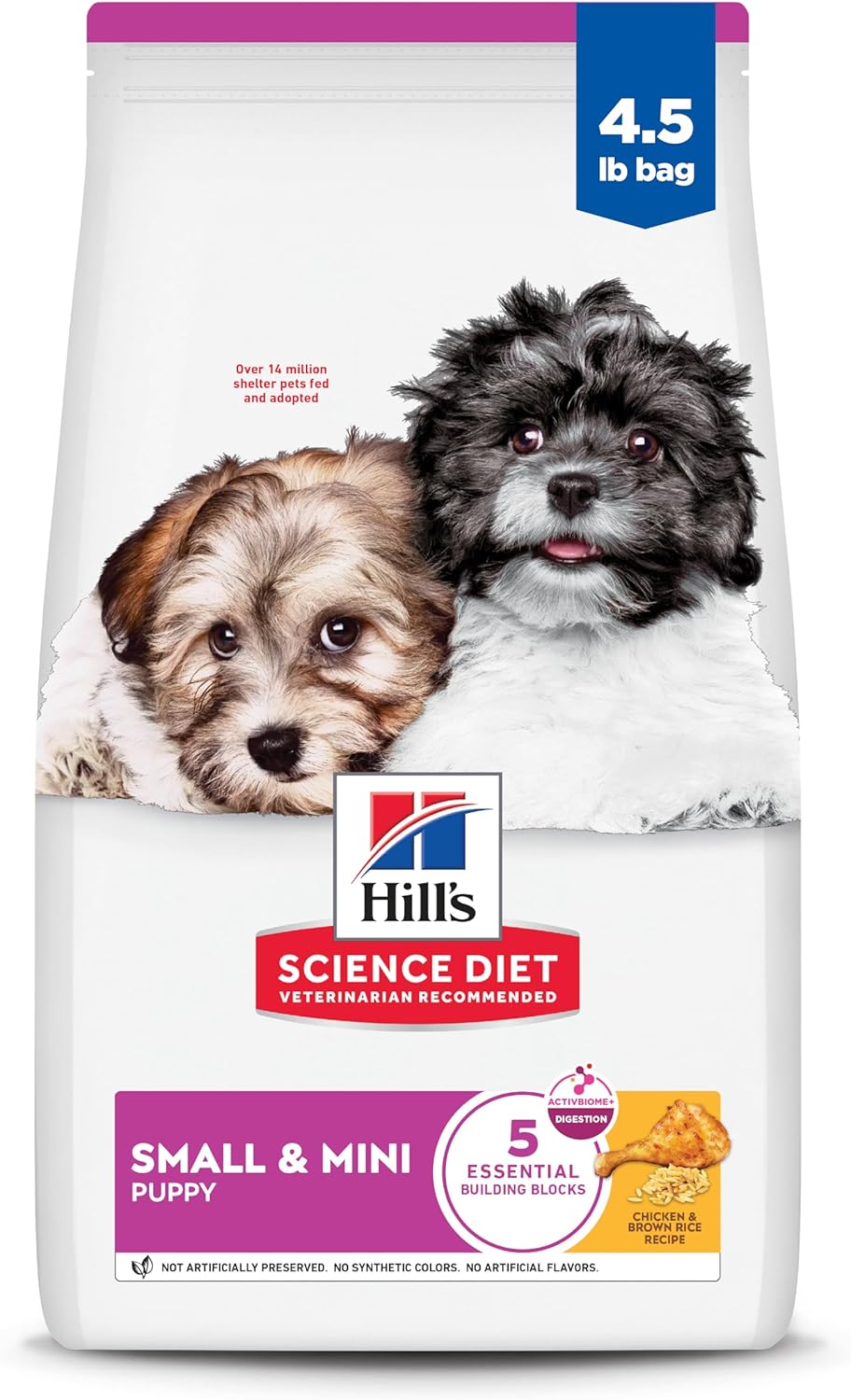
Hill's Science Diet Puppy Small & Mini is a dry kibble formulated specifically for toy and small-breed puppies, combining concentrated calories, high-quality proteins, and nutrients aimed at early development. The small nibble size and calorie density make it convenient for frequent small meals and help meet the higher metabolic needs of little puppies. Notable features include DHA and fish oil for brain and eye development, balanced minerals to support growing bones and teeth, a special antioxidant blend for immune support, and prebiotic fibers to aid digestion. In practice the food is used as a complete diet from weaning through the puppy stage with feeding amounts adjusted to body condition; the bag includes feeding guidelines and the manufacturer recommends transitioning over seven days. Limitations are that the ingredient list includes grains and several plant proteins, so owners preferring grain-free or novel-protein formulas for allergy management may need alternatives, and the 4.5 lb bag size may require frequent repurchasing for multi-puppy households. For most small-breed puppies this provides a vet-focused, nutrient-dense base for growth.
Best for: Buyers seeking a veterinary-recommended, nutrient-dense puppy formula tailored to toy and small breeds who prioritize brain, bone, and immune development in early life.
Less Ideal for: Owners who need a grain-free, limited-ingredient, or novel-protein diet for food sensitivities should look at specialized alternatives.
- Kibble sized for small and toy breed mouths
- Contains DHA and fish oil to support brain and eye development
- Antioxidant blend and vitamins to support immune health
- Prebiotic fibers to support digestion and gut microbiome
- Formulated with concentrated calories and high quality proteins for growth
- Contains grains and common plant proteins that may not suit dogs with specific food sensitivities
- Smaller 4.5 lb bag may require frequent repurchase for multiple puppies
Verdict: The best overall dog food for Min Pin puppies that balances appropriate calories, digestible proteins, essential nutrients for growth, and broad palatability for everyday feeding.
Pedigree Puppy Dry Dog Food 3.5 lb
Best Budget Dog Food for Min Pin Puppies

| Flavor | Chicken & Vegetable |
|---|---|
| Age Range Description | Puppy |
| Item Form | Dry Kibble |
| Unit Count | 56 Ounce |
| Animal Food Nutrient Content Claim | High Protein, No Added Sugar |
Pedigree Puppy Dry Dog Food is a straightforward, budget-friendly puppy kibble made from chicken-based protein, grains, and added vitamins and minerals to support growth. You would typically use it as a daily staple while transitioning a young dog from weaning to adult food, following the feeding guide on the package to match your puppy's weight and age. The formula emphasizes high-quality protein sources for muscle development and includes 36 vitamins, minerals, and amino acids intended to support immune health, brain development, and bone strength. In practice this means an owner gets a complete and balanced commercial diet that is easy to portion and serve dry or softened with water for very young pups. Ingredient-wise it contains common commodity grains and by-product meals rather than premium single-source meats, so it delivers required calories and nutrients at a lower cost but not the cleanest ingredient panel. Expect good availability and consistent kibble size, but owners seeking grain-free, novel proteins, or limited-ingredient formulas will need to look elsewhere.
Best for: Value-conscious puppy owners who need an affordable, complete puppy kibble that supports growth and daily feeding routines.
Less Ideal for: Owners who require grain-free, novel-protein, or limited-ingredient veterinary diets for food sensitivities should consider specialty formulas instead.
- Formulated specifically for puppies with nutrients to support growth and immune health
- Contains high-protein sources to support muscle development
- Includes 36 vitamins, minerals, and amino acids for complete and balanced nutrition
- Easy-to-follow feeding guide for age and weight makes portioning simple
- Uses ingredient list with grains and by-product meals rather than single-source premium proteins
- Not suitable for owners seeking grain-free or limited-ingredient diets
Verdict: The best budget dog food for Min Pin puppies that provides complete puppy nutrition and reasonable ingredient quality for owners prioritizing cost without sacrificing growth requirements.
Purina Pro Plan Puppy Chicken & Rice 6 lb
Best High-Protein Dog Food

| Flavor | Chicken & Rice |
|---|---|
| Age Range Description | Puppy |
| Item Form | Dry |
| Specific Uses For Product | Hip and Joint Support |
| Animal Food Nutrient Content Claim | High Protein |
Purina Pro Plan High Protein Dry Puppy Food Chicken & Rice is a puppy formula designed to support active growth with real chicken as the primary protein source. It is typically fed as a daily dry kibble for puppies and can be offered moistened during weaning or fed dry as puppies mature. Notable features include DHA from fish oil to support brain and vision development, added calcium and phosphorus for bone and tooth growth, live probiotics for digestive health, and antioxidants to support immune development. In practice this formula helps build lean muscle and provides concentrated nutrients for puppies that need higher protein intake, and its digestible recipe reduces the chance of stomach upset during diet transitions. Limitations include the presence of some by-product meals and grain ingredients, which may be less suitable for owners seeking grain-free or novel-protein diets, and the ingredient list includes salts and common additives that some sensitive puppies may not tolerate. Feeding amounts should be adjusted as puppies grow and you may want to consult your veterinarian for breed-specific needs.
Best for: Buyers looking to support active, growing puppies with a higher-protein, vet-backed kibble that emphasizes muscle development and digestive support.
Less Ideal for: Owners seeking a grain-free, novel-protein, or limited-ingredient puppy diet for allergy-prone dogs should consider specialized formulas instead.
- Real chicken listed as the first ingredient for bioavailable animal protein
- Includes DHA from fish oil to support brain and vision development
- Live probiotics and highly digestible formula to ease digestion and stool quality
- Added calcium, phosphorus and minerals to support bone and tooth growth
- Contains poultry by-product meal and common grains rather than novel or grain-free sources
- Includes multiple added ingredients and preservatives that some owners may avoid
Verdict: The best high-protein dog food for active or growing puppies that need extra quality protein to support healthy muscle development and sustained energy levels.
ORIJEN Small Breed Puppy 4 lb
Best Grain-Free Dog Food

| Weight | 4 Pound |
|---|---|
| Flavor | Grain Free Small Breed Puppy Recipe |
| Item Form | Dry Kibble |
| Unit Count | 64 Ounce |
| Target Species | Dog |
ORIJEN Small Breed Puppy is a 4 lb bag of grain-free dry kibble designed to meet the nutritional needs of small breed puppies using a WholePrey approach. The formula delivers a high proportion of animal ingredients including fresh chicken, turkey, wild-caught fish and organs, which provide concentrated protein, natural vitamins and minerals to support muscle and bone development. Kibble is small and nutrient-dense for easy chewing by tiny mouths, and the recipe includes EPA and DHA from fish to support brain development. Added fiber, prebiotics and probiotics target digestive health, while a mix of fruits and vegetables supplies antioxidants and micronutrients. Because it is grain free and high in animal content, this food is well suited for owners prioritizing premium sourcing and nutrient density, but it may be richer than needed for less active puppies or those requiring a grain-inclusive diet for specific sensitivities. Expect to follow the transition guidelines on the package to avoid stomach upset when switching foods.
Best for: Owners seeking a top-tier, nutrient-dense puppy diet with carefully sourced animal ingredients and a focus on long-term development for small-breed puppies.
Less Ideal for: Owners who prefer grain-inclusive diets, have puppies with specific carbohydrate tolerances, or want the lowest-calorie option for very sedentary pups should consider alternatives.
- High ratio of fresh and raw animal ingredients for concentrated protein and natural nutrients
- Small, nutrient-dense kibble sized for small breed puppy mouths
- Includes EPA and DHA from multiple fish sources to support brain development
- Formulated with prebiotics, probiotics and fiber to aid digestive health
- Made with a variety of whole fruits, vegetables and functional botanicals for antioxidant support
- Grain-free, very high animal-protein formula may be excessive for lower-activity puppies or those needing grain-inclusive diets
- Higher nutrient density can require careful portion control to avoid overfeeding
Verdict: The best grain-free dog food for puppies whose caregivers prefer grain-free ingredient lists or need alternative carbohydrate sources due to mild sensitivities.
Royal Canin Small Puppy Dry Dog Food 4 lb
Best Small-Breed Dog Food

| Flavor | Chicken |
|---|---|
| Age Range Description | Puppy |
| Specific Uses For Product | Brain Health, Digestive Health, Immune Support |
| Item Form | Pellet |
| Package Size Name | 4 lb |
Royal Canin Small Breed Puppy Dry Dog Food is a targeted kibble made for 2-to-10-month-old puppies expected to reach about 9–22 pounds as adults. The formula combines small, crunchy kibble with nutrients sized and balanced for small mouths and higher energy needs, delivering DHA and omega-3s for brain development plus antioxidants for immune support. It also includes prebiotics and highly digestible proteins to promote steady digestion during rapid growth. Owners typically feed this as a primary dry diet or mix with the brand's wet thin-slices for variety during transition periods. Practical benefits include thoughtfully portioned kibble texture that encourages chewing and a nutrient profile tuned for small-breed metabolism. Limitations are that the formula contains ingredients like chicken by-product meal, grains, and fish, so buyers seeking grain-free or single-protein limited-ingredient diets will need alternatives, and puppies with specific allergies to listed allergens should avoid it. Packaging is a standard bag so expect typical storage needs to maintain freshness.
Best for: Buyers with small-breed puppies who need a nutrient-dense dry food with appropriately sized kibble and focused support for growth and digestion.
Less Ideal for: Owners seeking grain-free, single-source protein, or hypoallergenic limited-ingredient formulas should consider other options.
- Small, crunchy kibble sized for puppies with small mouths
- Includes DHA and omega-3s to support brain development
- Prebiotics and highly digestible proteins help support digestion
- Antioxidants such as vitamins E and C for immune support
- Contains multiple common allergens and grain ingredients, not grain-free
- Uses chicken by-product meal rather than single whole-protein labeling
Verdict: The best small-breed dog food formulated with appropriately sized kibble, concentrated calories, and nutrient balance for the faster metabolisms and bite sizes of smaller puppies.
Fromm Puppy Gold Dry Dog Food 5 lb
Best Premium Dog Food

| Flavor | Chicken |
|---|---|
| Age Range Description | Puppy |
| Item Form | Pellet |
| Special Ingredients | Proteins |
| Animal Food Diet Type | Veterinary Diet |
Fromm Puppy Gold is a premium kibble formulated specifically for small and medium breed puppies and pregnant or nursing mothers. It uses real chicken as the first ingredient along with chicken meal, fish meal, and other high quality proteins to supply amino acids needed for growth and tissue development. The recipe includes whole grains and added functional ingredients such as probiotics to aid digestion and salmon oil to support coat health, which makes it useful for puppies with sensitive stomachs or higher nutrient needs. Typical use is as a complete daily diet fed to growing puppies or as a gestation/lactation formula for mothers, following AAFCO feeding guidelines. The practical benefits are concentrated nutrition in a 5 lb bag that is easy to portion, recognizable meat-first ingredients, and digestive support from multiple fermentation products. Limitations to consider are that the formula contains grains and a broad ingredient list that may not suit owners seeking grain-free or single-protein limited-ingredient diets, and the smaller bag size means more frequent repurchasing for multi-puppy households.
Best for: Owners who prioritize higher-quality, meat-forward puppy nutrition with added digestive and coat-support ingredients and are willing to pay for premium formulations.
Less Ideal for: Owners who need grain-free, single-protein, or veterinary elimination diets should consider alternative formulas tailored to those restrictions.
- Real meat (chicken) listed as the first ingredient for high-quality protein
- Includes probiotics and multiple fermentation products to support digestion
- Added salmon oil provides omega fatty acids for skin and coat health
- Formulated to meet AAFCO nutrient profiles for growth and gestation/lactation
- Contains whole grains, so not suitable for owners seeking grain-free diets
- Smaller 5 lb bag requires more frequent repurchasing for larger litters or multiple puppies
Verdict: The best premium dog food for owners willing to invest in elevated ingredient quality, specialized nutrient profiles, and stricter sourcing or processing standards for optimal puppy health.
Choosing the Right Dog Food Min Pin Puppy: Key Factors to Consider
Kibble Size and Texture
Kibble size and texture directly affect a min pin puppy's ability to pick up and chew food comfortably. Tiny, dense kibbles are easier for small jaws to grasp, while oversized pieces can lead to frustration, fast gulping, or choking hazards. Texture matters too: a slightly softer or thinner-baked kibble can be gentler on developing teeth, whereas very hard pellets may be fine for older dogs but too challenging for young puppies.
Consider how the kibble will interact with your puppy's eating style. Puppies that tend to inhale food may benefit from differently textured shapes that slow intake. If you plan to feed dry only, choose a kibble shape sized for small mouths. If you mix with wet food or moisten kibble, ensure the pieces hold up enough to provide chewing stimulation without becoming mushy.
Protein Quality and Quantity
Protein supplies the amino acids puppies need for muscle growth, organ development, and tissue repair. For min pin puppies, protein should come from named animal sources or balanced plant-animal blends with digestibility in mind. A formula must provide adequate protein for growth without being excessively heavy, which can be harder on immature kidneys and digestion.
Evaluate ingredient lists for specific protein sources rather than vague terms. Also consider protein digestibility; highly digestible proteins reduce stool volume and support better nutrient uptake. Balance is key: look for formulas tailored to puppy growth with the appropriate protein percentage for small-breed puppies.
Fat and Calorie Density
Miniature pinschers burn energy quickly and need a calorie density that supports healthy weight gain without promoting obesity. Fat is the most concentrated energy source in puppy food and supplies essential fatty acids for brain development and a healthy coat. However, too much fat can trigger loose stools in some puppies, while too little can make it difficult for a tiny puppy to meet calorie needs in the small servings they can physically eat.
Choose a formula with moderate-to-high calorie density formulated for puppies, and consider formulas that list healthy fat sources such as fish or poultry oils. Watch for balance: caloric concentration should match your puppy's activity level and growth rate so you can feed appropriate portion sizes without overburdening digestion.
Digestive Support and Stool Quality
Many min pin puppies have sensitive stomachs during early life transitions. Ingredients that support digestion, like prebiotic fibers, probiotics, and moderately fermentable carbohydrates, help maintain stool consistency and nutrient absorption. Poor digestion not only causes household cleanup but also reduces the calories and nutrients the puppy actually obtains from each meal.
Look for formulas that specifically mention digestive support or include known gentle carbohydrate sources. Avoid foods that rely heavily on unfamiliar novel ingredients if your puppy has shown sensitivity. Consistent stool quality is a practical sign a formula suits your puppy's digestion.
Bone and Dental Development Balance
Puppy foods must supply the correct balance of calcium and phosphorus plus other minerals and vitamins to support healthy bone growth. Small breeds like min pins reach skeletal maturity earlier than large breeds, so formulas should avoid excessive mineral concentrations that are beneficial for giant breeds but unnecessary for tiny puppies.
Dental development also depends on nutrient balance and kibble interaction with teeth. Adequate calcium, phosphorus, vitamin D, and trace minerals in appropriate proportions prevent developmental problems. Ensure the chosen formula is labeled for growth and that its mineral profile is appropriate for small-breed puppies.
Transition Flexibility and Palatability
A puppy's willingness to eat a new food is critical during the switch from milk and training treats to solid meals. Palatability affects intake, but overly rich flavors or heavy additives can mask low-quality ingredients. Look for palatable formulations that rely on wholesome, recognizable ingredients to entice eating without overwhelming the digestive system.
Transition flexibility matters because you may need to mix wet and dry forms or gradually introduce new proteins. Formulas that respond well to moistening and pair easily with toppers help you manage gradual transitions, minimize refusal, and keep feeding consistent during growth phases.
How Much Should I Feed a Min Pin Puppy and How Often?
Feeding frequency for min pin puppies typically starts at four meals per day during the first few months, dropping to three meals by three months and then to two meals after about six months. The exact amount per feeding depends on the formula's calorie density and your puppy's weight and activity level. Use the feeding guidelines on the package as a starting point and adjust based on weight gain, body condition, and stool quality.
Monitor body condition rather than relying solely on portion charts: you should be able to feel the ribs with a light covering and see a defined waist from above. If your puppy is gaining too quickly or producing loose stools, reduce portion sizes or switch to a less calorie-dense formula. If your puppy is not gaining weight or seems constantly hungry, increase the amount slightly and recheck in a week.
- Start with smaller, more frequent meals to prevent hypoglycemia and encourage steady intake.
- Weigh your puppy weekly during the first months to confirm appropriate growth trajectory.
- Adjust portions by 5 to 10 percent rather than large jumps to avoid digestive upset.
Can I Mix Wet Food or Toppers with Dry Kibble?
Yes. Mixing wet food or a small amount of puppy-safe topper can increase palatability and help during transitions. For min pin puppies, moistening kibble also softens pieces, making them easier to chew. Keep toppers minimal to avoid diluting the balanced nutrition of the base formula.
When mixing, maintain a consistent ratio and account for the extra calories from toppers. If you use a topper to help a puppy eat, choose ones formulated for puppies and avoid human foods that can be harmful. Observe stool quality after adding new items and reduce or stop them if digestive issues appear.
- Mix wet and dry in gradual steps over a week when changing diets.
- Limit high-calorie toppers to occasional use to prevent excessive weight gain.
- Avoid dairy or seasoned human foods that can upset digestion.
What Signs Indicate a Formula Is Not Working for My Puppy?
Look for persistent loose stools, increased gas, vomiting, loss of appetite, or sudden changes in energy levels. These are common indicators that a formula may not agree with your puppy. Skin irritation or dull coat, while not always immediate, can also signal a sensitivity to ingredients over several weeks.
If you observe any concerning symptoms, try eliminating recent diet changes and revert to a previously tolerated food. For persistent or severe signs, contact your veterinarian for guidance. Small-breed puppies can dehydrate quickly if vomiting or diarrhea continues, so prompt action is important.
- Loose stools for more than two days warrants a closer look or vet advice.
- Gradual onset of poor coat quality suggests a longer-term ingredient sensitivity.
- Sudden refusal to eat paired with lethargy needs immediate veterinary attention.
Is Grain-free Food Necessary for Min Pin Puppies?
Grain-free is not inherently necessary for min pin puppies and does not guarantee better digestion or health. Many puppies tolerate moderate amounts of whole grains well, and grains can provide digestible carbohydrates and fiber. The decision should be based on individual sensitivity rather than a blanket assumption that grain-free means better.
If your puppy shows signs of grain sensitivity, such as chronic gastrointestinal upset or skin issues, try a trial of a grain-free formula under veterinary supervision. Otherwise, prioritize ingredient quality, nutrient balance, and digestibility over whether a formula contains grains.
- Reserve grain-free options for confirmed sensitivities rather than first choice.
- Whole grains can be a useful source of energy and fiber for many puppies.
- Consult your veterinarian before long-term grain elimination.
When Should I Switch From Puppy to Adult Food?
Most small-breed dogs reach near-adult size earlier than larger breeds. For min pin puppies, a transition to adult food often begins around nine to twelve months, depending on individual growth. Watch skeletal maturity and body condition: when growth plates have closed and your puppy's weight stabilizes, it is usually safe to move to an adult formula.
Switch gradually over a week to ten days to avoid digestive upset. Choose an adult formula appropriate for small-breed energy needs and monitor your dog's body condition after the switch. If your puppy remains unusually active or seems to need more calories, consult your veterinarian before making the change.
- Check with your vet if unsure about your puppy's skeletal maturity.
- Transition slowly, mixing increasing amounts of adult food each day.
- Reassess body condition and stool quality during and after the switch.
How We Chose the Best Dog Food Min Pin Puppy
We evaluated formulas that match the nutritional and mechanical needs of miniature pinscher puppies, focusing on items that support steady growth without overwhelming a small digestive system. Selection began with official nutritional adequacy for growth and continued with assessment across several category-specific dimensions. Key evaluation criteria included digestible protein sources and amounts appropriate for puppy growth; fat levels for energy that do not cause loose stools; kibble size and shape suitable for small mouths and weaker jaws; vitamin and mineral balance for bone and dental development; and inclusion of prebiotics or probiotics to support sensitive stomachs. We excluded products intended only for adult dogs, breeds with dramatically different jaw sizes, or formulas with unbalanced calcium-to-phosphorus ratios that can risk improper bone development in puppies. We also filtered out foods that rely primarily on fillers with little nutritional value. Final picks emphasis was on formulas that provide complete growth nutrition, manageable kibble pieces, and components that aid digestion and immune support.
Our full evaluation process is outlined in our review methodology.
FAQ
How often should a min pin puppy be fed kibble each day?
Young min pin puppies typically eat four times daily at first, then drop to three meals by around three months and two meals after about six months. Adjust frequency based on activity, appetite, and your veterinarian's recommendations.
Is small-breed puppy formula different from regular puppy formula?
Yes. Small-breed puppy formulas usually have smaller kibble, higher calorie density per cup, and nutrient balances tailored for faster metabolisms. These differences help tiny puppies get enough energy and nutrients in manageable portions.
Can I feed the same puppy food throughout the entire growth period?
Often you can, provided the formula is specifically complete for growth and your puppy tolerates it well. Monitor growth, body condition, and stool quality and switch only if nutritional needs or tolerances change.
What human foods are safe as occasional toppers for a puppy?
Plain cooked lean meats, unsweetened pumpkin, or small amounts of plain cooked rice can be used sparingly as toppers. Avoid onions, garlic, chocolate, grapes, raisins, and seasoned foods. Always introduce new items slowly and in small portions.
How do I know if my puppy has a food allergy versus a sensitivity?
Food allergies often present as chronic skin itching, hot spots, or ear infections, while sensitivities more commonly cause gastrointestinal signs like intermittent diarrhea or gas. Both require veterinary input for diagnosis, and an elimination trial may be recommended to identify the cause.
Final Verdict
Prioritize formulas that combine appropriate kibble size, balanced growth nutrition, and digestive support when choosing food for a min pin puppy. Focus on protein quality, calorie density that fits a small appetite, and a mineral profile suited for small-breed bone development. Expect to monitor weight and stool quality and be ready to adjust portions or formulas if digestion or growth does not follow a healthy pattern. With attention to these tradeoffs, you can select a puppy food that supports steady growth and a comfortable transition to adulthood.

