

Choosing the right puppy food for a mini schnauzer puppy matters because early nutrition shapes growth, immune development, and long-term health. Mini schnauzer puppies have specific needs: high-quality protein for muscle and brain development, controlled calories to avoid excessive growth, and kibble size that smaller jaws can manage comfortably. This guide shortlists the top puppy foods suited to those needs and explains the factors that separate a solid daily diet from a merely adequate one. Below you will find our top choices and the evaluation criteria we used to vet them, including nutrient balance, digestibility, and feeding practicality.
Top Picks at a Glance
| Best Overall Dog Food for Mini Schnauzer Puppy A balanced, all-purpose puppy formula ideal for most mini schnauzers | ROYAL CANIN Miniature Schnauzer Puppy 2.5 lb |  |
| Best Budget Dog Food for Mini Schnauzer Puppy A lower-cost puppy formula that still meets basic nutrition needs | Pedigree Puppy Dry Dog Food 3.5 lb |  |
| Best Premium Dog Food Higher-end puppy formulas with superior ingredients and processing standards | Farmina N&D Pumpkin Mini Lamb & Blueberry 15.4 lb |  |
| Best High-Protein Dog Food Formulas with elevated animal protein to support lean muscle development | ORIJEN Small Breed Puppy 4 lb |  |
| Best Grain-Free Dog Food Puppy recipes formulated without grains for grain-sensitive dogs | Merrick Grain Free Puppy Food 4 lb |  |
| Best Small-Breed Dog Food Kibble and nutrient profiles sized and balanced for smaller mouths | Hill's Science Diet Puppy Small & Mini |  |
| Best Sensitive-Stomach Dog Food Gentle, easily digestible recipes for pups with tummy issues | Hill's Science Diet Puppy Sensitive Stomach & Skin |  |
ROYAL CANIN Miniature Schnauzer Puppy 2.5 lb
Best Overall Dog Food for Mini Schnauzer Puppy

| Flavor | Chicken |
|---|---|
| Age Range Description | Puppy |
| Breed Recommendation | Miniature Schnauzer |
| Unit Count | 40 Ounce |
| Item Form | Pellet |
Royal Canin Miniature Schnauzer Puppy is a breed-targeted dry kibble designed for purebred Mini Schnauzer puppies aged about 8 weeks to 10 months. The formula pairs a specialized kibble shape that small, blunt muzzled puppies can pick up easily with a nutrient profile aimed at healthy growth: concentrated proteins, prebiotics for digestion, an antioxidant blend including vitamin E for immune support, and L-carnitine to help maintain ideal weight. In practice you would use this as the puppy growth diet until about 10 months, feeding by the package guidelines and transitioning to the adult Miniature Schnauzer formula thereafter. The recipe emphasizes digestibility and stool quality, which is helpful for housetraining and sensitive tummies, and the kibble size suits small mouths so mealtime is less fiddly. It does contain common grains and chicken by-product meal, so buyers seeking grain-free or novel-protein options should look elsewhere. The product is tightly focused on breed-specific needs rather than serving as a one-size-fits-all puppy food, which is a strength for owners wanting precision nutrition but a limitation for those needing broad dietary restrictions.
Best for: Buyers of purebred Miniature Schnauzer puppies who want a focused growth formula that matches their puppy's jaw shape and supports digestion, immunity, and healthy weight during the first months.
Less Ideal for: Owners who need a grain-free, novel-protein, or broadly breed-agnostic puppy diet should consider alternative formulas better suited to those constraints.
- Kibble shaped for small, blunt muzzles to make picking up and chewing easier
- Antioxidant blend including vitamin E supports developing immune system
- Prebiotics and high-quality proteins promote digestibility and firmer stool quality
- Moderate fat levels plus added L-carnitine to help manage healthy weight during growth
- Contains grains and chicken by-product meal, not suitable for grain-free or limited-ingredient diets
- Formulated specifically for Miniature Schnauzer puppies so not ideal for mixed-breed or other-breed puppies seeking a general formula
Verdict: The best overall dog food for a Mini Schnauzer puppy that balances protein, fats, DHA for brain development, kibble size, and digestibility for everyday growth and energy.
Pedigree Puppy Dry Dog Food 3.5 lb
Best Budget Dog Food for Mini Schnauzer Puppy

| Flavor | Steak & Vegetable |
|---|---|
| Age Range Description | Puppy |
| Item Form | Dry Kibble |
| Unit Count | 56 Ounce |
| Target Species | Dog |
Pedigree Puppy Dry Dog Food is a traditional, affordable puppy kibble formulated to support growth and basic developmental needs. It is designed for daily feeding and includes high protein sources, DHA, calcium and phosphorus to support muscle, brain and bone development, plus a mix of vitamins and minerals to support immune health. The bag works well for routine feeding at home and can be served dry or softened with water for younger puppies. Ingredients include animal meals, chicken by-product meal and grains, so digestibility and ingredient quality are typical for value-focused formulas rather than premium grain-free or limited-ingredient diets. Practical benefits are straightforward: widely available, familiar feeding guidelines for different puppy weights, and added micronutrients like DHA. Important limitations are that the formula contains multiple common allergens and colored additives, and it is not aimed at owners seeking grain-free, single-protein, or specialty ingredient lists for sensitive pups.
Best for: Buyers prioritizing low-cost, complete puppy nutrition who want a straightforward, easy-to-feed formula for routine daily meals.
Less Ideal for: Owners of puppies with food sensitivities, those who need grain-free or single-protein diets, or buyers seeking premium ingredient lists and novel proteins.
- Formulated with DHA and minerals to support brain and bone development
- Complete and balanced for daily puppy feeding with established feeding guidelines
- Includes high-protein sources to support muscle growth
- Versatile serving—can be fed dry or softened with water for younger puppies
- Contains multiple common allergens and artificial color additives
- Uses by-product meals and grains rather than premium single-source proteins
Verdict: The best budget dog food for a Mini Schnauzer puppy that provides complete, AAFCO-compliant nutrition and reasonable ingredient quality for owners prioritizing cost.
Farmina N&D Pumpkin Mini Lamb & Blueberry 15.4 lb
Best Premium Dog Food

| Flavor | Blueberry, Lamb, Pumpkin |
|---|---|
| Breed Recommendation | Small Breeds |
| Animal Food Diet Type | Veterinary Diet |
| Unit Count | 246.4 Ounce |
| Package Size Name | 15.4 lb |
Farmina N&D Pumpkin Mini Lamb & Blueberry is a grain-free dry formula aimed at small-breed puppies and adult dogs that need a nutrient-dense diet. The recipe centers on lamb and dehydrated lamb as primary protein sources, with pumpkin and blueberries included for flavor and digestive support. The kibble is sized for mini breeds and the formula lists functional additions such as herring oil, whole eggs, glucosamine sources, prebiotics like inulin, and a mix of vitamins and chelated minerals to support growth, immune function, and coat condition. It is typically used as a main complete diet for growing small-breed puppies or as a maintenance food for small adults, and the veterinary diet designation suggests higher formulation control. Buyers should note it is grain-free and contains multiple fish and pea-derived ingredients that can be problematic for dogs with specific allergies or sensitivities, and the bag is sold as a large 15.4 pound package which may be bulky for single-mini-puppy households. Overall it delivers a concentrated nutrient profile and small kibble for picky or active mini breeds but requires attention to individual tolerance and portioning for very small puppies.
Best for: Owners seeking a premium, ingredient-forward formula with concentrated nutrients and small kibble tailored to mini-breed puppies who prioritize ingredient sourcing and coat and growth support.
Less Ideal for: Owners whose puppies require grain-inclusive diets, have known legume or fish allergies, or who prefer smaller package sizes for single-puppy households should consider alternatives.
- Formulated for small breeds with mini kibble size suitable for toy and mini puppies
- Primary animal protein is lamb with additional animal-based ingredients for growth and palatability
- Includes functional ingredients for skin, coat, joint and digestive support such as herring oil, eggs, pumpkin, glucosamine sources, and prebiotics
- Grain-free recipe with fruit and vegetable inclusions like blueberry and carrot to boost antioxidant content
- Grain-free formulation and pea/legume content may not suit dogs with certain food sensitivities or those recommended grain-inclusive diets
- Large 15.4 lb bag may be more than needed for single mini puppies and could affect freshness once opened
Verdict: The best premium dog food for owners who want top-tier ingredients, careful sourcing, and advanced nutrient profiles to support optimal growth and coat health.
ORIJEN Small Breed Puppy 4 lb
Best High-Protein Dog Food

| Weight | 4 Pound |
|---|---|
| Flavor | Grain Free Small Breed Puppy Recipe |
| Item Form | Dry Kibble |
| Unit Count | 64 Ounce |
| Target Species | Dog |
ORIJEN Small Breed Puppy is a 4 lb bag of grain-free dry kibble designed to meet the nutritional needs of small breed puppies using a WholePrey approach. The formula delivers a high proportion of animal ingredients including fresh chicken, turkey, wild-caught fish and organs, which provide concentrated protein, natural vitamins and minerals to support muscle and bone development. Kibble is small and nutrient-dense for easy chewing by tiny mouths, and the recipe includes EPA and DHA from fish to support brain development. Added fiber, prebiotics and probiotics target digestive health, while a mix of fruits and vegetables supplies antioxidants and micronutrients. Because it is grain free and high in animal content, this food is well suited for owners prioritizing premium sourcing and nutrient density, but it may be richer than needed for less active puppies or those requiring a grain-inclusive diet for specific sensitivities. Expect to follow the transition guidelines on the package to avoid stomach upset when switching foods.
Best for: Owners seeking a top-tier, nutrient-dense puppy diet with carefully sourced animal ingredients and a focus on long-term development for small-breed puppies.
Less Ideal for: Owners who prefer grain-inclusive diets, have puppies with specific carbohydrate tolerances, or want the lowest-calorie option for very sedentary pups should consider alternatives.
- High ratio of fresh and raw animal ingredients for concentrated protein and natural nutrients
- Small, nutrient-dense kibble sized for small breed puppy mouths
- Includes EPA and DHA from multiple fish sources to support brain development
- Formulated with prebiotics, probiotics and fiber to aid digestive health
- Made with a variety of whole fruits, vegetables and functional botanicals for antioxidant support
- Grain-free, very high animal-protein formula may be excessive for lower-activity puppies or those needing grain-inclusive diets
- Higher nutrient density can require careful portion control to avoid overfeeding
Verdict: The best high-protein dog food for active puppies that need extra amino acids for muscle growth, energy, and healthy development.
Merrick Grain Free Puppy Food 4 lb
Best Grain-Free Dog Food

| Flavor | Chicken |
|---|---|
| Life stage | Puppy |
| Unit Count | 4 Pounds |
| Diet Type | Limited Ingredient |
| Form | Kibble |
Merrick Grain Free Dry Puppy Food is a puppy-specific kibble that uses deboned chicken as the first ingredient and sweet potato as the primary carbohydrate, designed for puppies and made without grain, gluten, or common fillers. It is typically fed as an everyday complete diet for growing dogs and includes DHA for brain development, higher animal-sourced protein to support muscle growth, and omega fatty acids plus glucosamine and chondroitin for skin, coat and joint support. The smaller-sized kibble makes it easier for toy breeds and puppies to chew, and the formula emphasizes whole-food ingredients and added vitamins and minerals. Practical benefits include high protein from animal sources, ingredients aimed at sensitive systems, and nutrients tailored to life-stage needs. Limitations are that grain-free diets may not be necessary for all puppies and pet parents should follow the feeding chart and consult a vet for specific allergies or weight management; also this listing is a 4 lb bag which may require more frequent repurchasing for multi-puppy households.
Best for: Puppy owners who want a grain-free, high-animal-protein recipe that supports growth and brain development and who prefer whole-food ingredient lists for sensitive or toy-breed puppies.
Less Ideal for: Owners who prefer grain-inclusive diets recommended for most puppies or those managing calorie and weight control without veterinary advice should consider other formulations.
- Deboned chicken is first ingredient for high-quality animal protein.
- Grain-free, gluten-free formula suitable for puppies with grain sensitivities.
- Includes DHA to support healthy brain development.
- Added glucosamine, chondroitin and omega fatty acids for joint and skin coat support.
- Smaller kibble size easier for puppies and toy breeds to chew.
- Offered here as a 4 lb bag which may run out quickly for larger or multiple puppies.
- Grain-free approach may not be necessary for all puppies and should be chosen with veterinary guidance.
Verdict: The best grain-free dog food for puppies whose owners prefer or require diets without wheat, corn, or other grains while maintaining full nutritional balance.
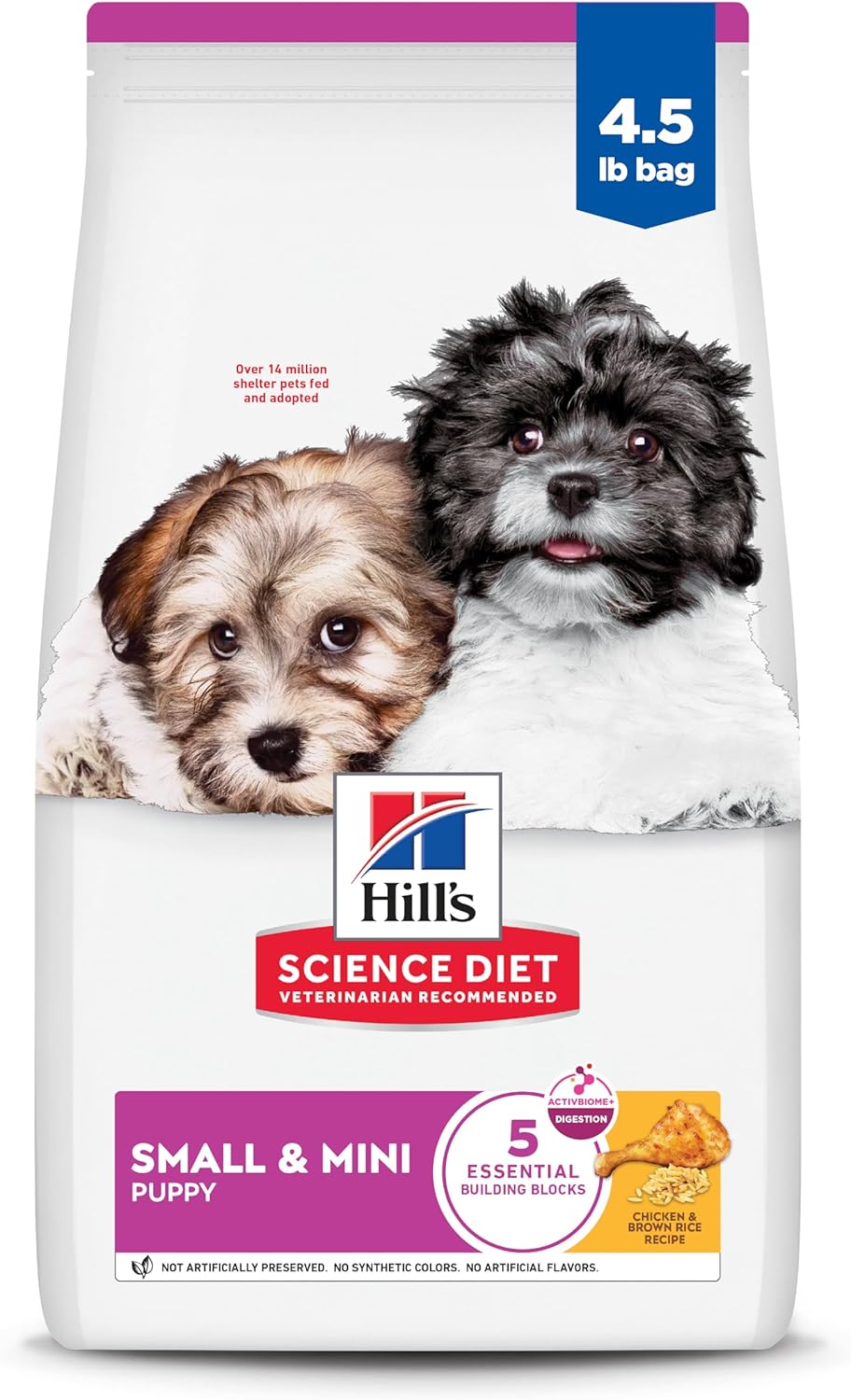
Hill's Science Diet Puppy Small & Mini
Best Small-Breed Dog Food
| Flavor | Chicken & Brown Rice |
|---|---|
| Age Range Description | Puppy |
| Specific Uses For Product | Small & Mini Breeds Puppy Premium Nutrition |
| Unit Count | 72 Ounce |
Hill's Science Diet Puppy Small & Mini is a dry kibble formulated specifically for toy and small-breed puppies, combining concentrated calories, high-quality proteins, and nutrients aimed at early development. The small nibble size and calorie density make it convenient for frequent small meals and help meet the higher metabolic needs of little puppies. Notable features include DHA and fish oil for brain and eye development, balanced minerals to support growing bones and teeth, a special antioxidant blend for immune support, and prebiotic fibers to aid digestion. In practice the food is used as a complete diet from weaning through the puppy stage with feeding amounts adjusted to body condition; the bag includes feeding guidelines and the manufacturer recommends transitioning over seven days. Limitations are that the ingredient list includes grains and several plant proteins, so owners preferring grain-free or novel-protein formulas for allergy management may need alternatives, and the 4.5 lb bag size may require frequent repurchasing for multi-puppy households. For most small-breed puppies this provides a vet-focused, nutrient-dense base for growth.
Best for: Buyers seeking a veterinary-recommended, nutrient-dense puppy formula tailored to toy and small breeds who prioritize brain, bone, and immune development in early life.
Less Ideal for: Owners who need a grain-free, limited-ingredient, or novel-protein diet for food sensitivities should look at specialized alternatives.
- Kibble sized for small and toy breed mouths
- Contains DHA and fish oil to support brain and eye development
- Antioxidant blend and vitamins to support immune health
- Prebiotic fibers to support digestion and gut microbiome
- Formulated with concentrated calories and high quality proteins for growth
- Contains grains and common plant proteins that may not suit dogs with specific food sensitivities
- Smaller 4.5 lb bag may require frequent repurchase for multiple puppies
Verdict: The best small-breed dog food designed for tiny mouths and faster metabolisms, with appropriately sized kibble and concentrated nutrition for small puppies.
Hill's Science Diet Puppy Sensitive Stomach & Skin
Best Sensitive-Stomach Dog Food

| Flavor | Salmon & Brown Rice |
|---|---|
| Age Range Description | Puppy |
| Item Form | Dry Food |
| Unit Count | 64 Ounce |
| Animal Food Diet Type | Limited Ingredient |
Hill's Science Diet Puppy Sensitive Stomach & Skin is a dry puppy formula designed to reduce digestive upsets while supporting skin and coat during growth. It is used as an everyday puppy food or as a transitional diet when pups have mild stomach sensitivity; feeding instructions on the bag guide gradual switching. The recipe lists salmon as the first ingredient and includes prebiotic fiber to support a balanced gut microbiome, plus DHA from fish oil for brain and eye development and vitamin E and omega fatty acids for skin health. Practical benefits include easier digestion for sensitive puppies, nutrients targeted at immune and cognitive development, and a single-source fish protein focus that can simplify ingredient tracking. Limitations are that it is a dry kibble so dogs that require wet food or very limited-ingredient veterinary prescriptions may need other options, and the formula still contains multiple grains and added ingredients that some owners avoiding certain grains or novel-protein approaches might not prefer.
Best for: Buyers who prioritize a vet-recommended, digestive-friendly everyday puppy food that also supports skin and coat health for growing dogs.
Less Ideal for: Owners seeking a strict novel-protein, grain-free, or veterinary-prescription elimination diet should consider specialized formulas instead.
- Prebiotic fiber to support gut microbiome and help reduce occasional digestive upset
- Salmon is the first ingredient, providing a high-quality fish protein and DHA for development
- Added vitamin E and omega fatty acids to nourish skin and promote a healthy coat
- Clinically proven antioxidants including vitamins C and E to support immune health
- Contains multiple grains and shared protein sources, so not a novel-protein or grain-free prescription option
- Dry kibble format may not suit puppies needing canned diets or strict veterinary therapeutic feeds
Verdict: The best sensitive-stomach dog food for puppies prone to digestive upset, featuring limited ingredients, gentle proteins, and prebiotics or easily digestible carbohydrates to reduce GI reactions.
Choosing the Right Dog Food Mini Schnauzer Puppy: Key Factors to Consider
Protein Quality and Source
Protein is the foundation of growth for a puppy. High-quality animal proteins provide the amino acids required for muscle development, organ formation, and immune function.
For mini schnauzer puppies, choose foods that list a named meat source near the top of the ingredient list and avoid vague terms that make it hard to assess quality. The digestibility of the protein also matters because poorly digestible protein can increase stool volume and reduce nutrient uptake. Look for formulations that balance lean protein with healthy fats to support steady growth without excess weight gain.
Kibble Size and Texture
Kibble that is too large or too hard can frustrate a tiny puppy and lead to gulping or poor chewing. Properly sized pellets encourage chewing, slow intake, and reduce choking risk.
Texture affects dental health and palatability. Softer nuggets may be preferable for very young puppies or those with small jaws, while slightly firmer kibble can help with early dental abrasion. Consider how easy the kibble is to break into training treats or to moisten for transitioning from milk to solid food.
Calorie Density and Controlled Growth
Mini schnauzers are a small breed with a different growth trajectory than larger dogs. Foods that are overly calorie-dense can promote rapid weight gain, which stresses developing bones and joints.
Choose puppy formulas that provide balanced calories for small-breed growth: enough energy to support activity and development but not so much that the puppy gains excess body fat. Feeding guidelines and the ability to fine-tune portion sizes help you manage steady, healthy growth over the puppy months.
Essential Fatty Acids and DHA
Omega-3 fatty acids, especially DHA, play a key role in brain and eye development during the early months. Adequate DHA supports cognitive development and visual acuity in puppies.
Look for puppy foods that specify sources of omega-3s or include added DHA. A sensible balance of omega-6 and omega-3 also supports healthy skin and coat, which is important for mini schnauzers prone to dermatologic sensitivities.
Digestive Support and Stool Quality
Puppies have sensitive digestive systems that adapt as they transition to solid food. Ingredients that support smooth digestion reduce episodes of loose stool and gas, making housetraining easier.
Seek formulas with gentle fiber sources, probiotics or prebiotic fibers, and limited hard-to-digest fillers. Consistent stool quality indicates good nutrient absorption and overall tolerance, which simplifies feeding and care for busy owners.
Micronutrients and Growth-stage Balance
Vitamins, minerals, and correct calcium-to-phosphorus ratios are essential for proper skeletal and immune development. Puppy formulas should be formulated to meet life-stage nutrient profiles so that growing bones and organs receive appropriate micronutrient support.
Avoid products that lack clear nutrient guarantees for puppies. Balanced micronutrients reduce the risk of developmental problems and support robust immune responses as the puppy encounters new environments and vaccines.
How Much Should I Feed a Mini Schnauzer Puppy and How Often?
Feeding frequency and portion size change quickly during the first year. Young puppies generally need three to four meals a day to keep energy steady and to avoid large gaps between feeds. As the puppy matures to about six months, you can transition to two meals a day.
Portion sizes depend on the food's calorie density and your puppy's activity level. Use the feeding chart on the package as a starting point, then track body condition and weight weekly. Adjust portions in small increments to maintain a lean, slightly tuck-waisted profile rather than letting the puppy get too plump.
- Start with multiple small meals and reduce frequency gradually.
- Weigh or measure food to keep portions consistent.
- Monitor body condition, not just weight, when adjusting portions.
When and How to Transition From Puppy Food to Adult Food
Most small breeds reach near-adult size sooner than larger breeds. A mini schnauzer puppy can often transition to adult maintenance food between nine and twelve months, depending on growth and veterinarian advice. Look for signs such as slowed growth on a growth chart and consistent body condition before switching.
Transition gradually over 7 to 10 days by mixing increasing amounts of the new food with the current puppy food. Watch for changes in appetite, stool quality, or energy levels during the switch and adjust the pace if digestive upset occurs.
- Consult your veterinarian before making the change.
- Use a 7 to 10 day gradual swap to avoid GI upset.
- Base timing on growth milestones rather than calendar age alone.
What to Do if Your Puppy Has a Sensitive Stomach
If your mini schnauzer puppy shows signs of digestive sensitivity, such as frequent loose stools or gassiness, start by simplifying the diet to a single, easily digestible protein source and limited ingredients. Avoid abrupt diet changes and introduce any new formula slowly.
Consider foods that include probiotics or prebiotic fibers to support a healthy gut microbiome. If symptoms persist for more than a few days, consult a veterinarian to rule out parasites, infections, or food intolerances before making permanent diet changes.
- Try a limited-ingredient, single-protein formula temporarily.
- Introduce functional fibers and probiotics to stabilize digestion.
- Seek veterinary advice for persistent or severe symptoms.
How to Choose Treats and Training Snacks Without Overfeeding
Training relies on frequent rewards, so choose low-calorie, nutrient-light treats that can be given several times per session without blowing daily caloric targets. You can also reserve a portion of the daily meal kibble for use as training treats to control total intake precisely.
Break larger treats into small pieces to stretch their value during training. Track treat calories as part of the daily allotment and reduce meal portions slightly on heavy training days to keep total calories in range.
- Use kibble pieces or very small treats for frequent reinforcement.
- Count treat calories toward the daily total and adjust meals.
- Opt for treats that do not contain strong flavorings that could cause picky preferences.
Signs a Puppy Food Is Not Agreeing with Your Mini Schnauzer
Watch for changes in stool consistency, frequency, and color as the earliest indicators of poor tolerance. Other signs include decreased appetite, lethargy, itching, or recurrent ear problems, which can sometimes be diet-related.
If you notice these signs shortly after a diet change, revert to the previous tolerated food and consult your veterinarian. Persistent problems may require an elimination approach or veterinary testing to identify sensitivities.
- Monitor stool daily for the first two weeks after switching foods.
- Note changes in skin condition or energy levels alongside digestive signs.
- Consult a veterinarian if problems continue beyond a few days.
How We Chose the Best Dog Food Mini Schnauzer Puppy
We selected products based on criteria directly tied to healthy growth and daily care for mini schnauzer puppies. First, macronutrient balance: we prioritized puppy foods formulated with higher-quality animal protein levels appropriate for growing puppies and a carbohydrate profile matched to small-breed energy needs. Second, digestibility: ingredients and processing that support gentle digestion, including limited fillers and sources of prebiotic fiber, were favored. Third, nutrient density and life-stage formulation: options designed specifically for puppy growth phases and that supply DHA, calcium-to-phosphorus balance, and essential vitamins ranked higher. Fourth, kibble size and texture: we evaluated whether the texture and pellet size suit small mouths and encourage efficient chewing. Fifth, safety and transparency: clear ingredient listings and third-party nutrient guarantees were considered positive factors. We excluded adult-formula foods and generic large-breed puppy formulas that do not address mini schnauzer-specific needs. We also filtered out diets that lacked adequate life-stage nutrient guarantees or had ambiguous ingredient sourcing. The final list balances growth-supporting nutrition with manageable kibble size and digestibility to meet the practical needs of mini schnauzer puppy owners.
Our full evaluation process is outlined in our review methodology.
FAQ
Can I feed a small-breed puppy formula to my mini schnauzer puppy?
Often small-breed puppy formulas are appropriate because they are calorie-dense and have kibble sized for small mouths. However, you should confirm the formula's nutrient profile and feeding recommendations match your puppy's growth needs and adjust portions accordingly.
Is grain-free food necessary for a mini schnauzer puppy?
Grain-free diets are not necessary for most puppies. They can be helpful if your puppy shows a diagnosed intolerance to specific grains. For most puppies, whole grains provide digestible energy and fiber that support healthy growth.
How important is DHA in puppy food for cognitive development?
DHA plays a meaningful role in early brain and eye development and is commonly included in puppy formulations. While it is not the only nutrient that supports development, diets containing DHA can contribute to optimal cognitive and visual growth.
Should I add supplements to my puppy's food?
Supplements are usually not necessary if you feed a balanced, life-stage puppy formula that meets nutrient guidelines. Adding supplements without veterinary guidance can unbalance mineral ratios, so consult your veterinarian before introducing any extra vitamins or minerals.
What is the best way to handle picky eating in a puppy?
Picky eating is often a phase. Try establishing consistent meal times, avoiding free-feeding, and offering the food for a short window. If pickiness continues, ensure the food is fresh, rule out dental pain or illness, and consult your veterinarian for targeted advice.
Final Verdict
For mini schnauzer puppies, prioritize a puppy formula that balances high-quality animal protein, appropriate calorie density, and kibble size suited to small mouths. Digestibility, DHA content, and correct micronutrient ratios should guide your choice more than trends or marketing claims. Monitor growth and body condition, adjust portions as needed, and consult your veterinarian if digestion or growth patterns raise concerns. With attention to these core factors, you can choose a daily food that supports steady, healthy development.

