

Finding the right food for a miniature schnauzer matters for daily energy, digestion, and coat condition. Because this breed has unique dental and metabolic tendencies, the right formula can reduce digestive upset, help maintain a healthy weight, and support that signature beard and wiry coat. This guide highlights seven carefully shortlisted options across common feeding needs for miniature schnauzers, with attention to protein quality, kibble shape, and nutrient balance. Below you will find a clear look at the factors we weighed and practical sections that address feeding frequency, transitioning diets, and handling picky appetites before you view the picks.
Top Picks at a Glance
| Best Overall Food for Miniature Schnauzer A balanced all-around formula suited to most Miniature Schnauzers | ROYAL CANIN Miniature Schnauzer Adult |  |
| Best Budget Food for Miniature Schnauzer An affordable, nutritionally adequate option for cost-conscious owners | IAMS Proactive Health Small Breed 5 lb |  |
| Best Premium Food Higher-end formulas emphasizing top-quality ingredients and features | Open Farm Ancient Grains Small Breed |  |
| Best Grain-Free Food Formulas without grains for dogs with grain sensitivities or preferences | Wellness CORE Small Breed Turkey & Chicken |  |
| Best Limited-Ingredient Food Simpler recipes with fewer components to reduce allergy triggers | Natural Balance Limited Ingredient Salmon & Sweet Potato |  |
| Best Small-Kibble Food Kibble shapes and sizes designed for small jaws and easier chewing | Hill's Science Diet Adult Small Bites |  |
| Best Weight-Management Food Lower-calorie, nutrient-dense recipes to help maintain healthy weight | Hill's Science Diet Perfect Weight Small & Mini |  |
ROYAL CANIN Miniature Schnauzer Adult
Best Overall Food for Miniature Schnauzer

| Flavor | Chicken |
|---|---|
| Age Range Description | Adult |
| Breed Recommendation | Miniature Schnauzer |
| Item Form | Pellet |
| Unit Count | 160 Ounce |
This Royal Canin formula is a breed-specific dry kibble made for adult Miniature Schnauzers and is intended as an everyday complete diet. The kibble has a tailored shape and size to match the Schnauzer's muzzle and scissor bite, which helps small dogs pick up and chew more easily, and the recipe includes targeted nutrients such as vitamin A, EPA and DHA for skin and coat support and specific amino acids to help coat color. The formula also emphasizes weight management, with a balanced nutrient profile for small-breed metabolism, and includes ingredients to support digestion. Practical benefits include easier feeding for picky or small-mouthed dogs, visible coat and skin support over weeks, and a formula designed to help maintain an ideal weight. Limitations are that the ingredient list contains cereals and chicken by-product meal rather than single-source whole meats, and the formula may not suit owners seeking grain-free or novel-protein diets for food sensitivities.
Best for: Buyers who want a daily, breed-tailored dry food that makes feeding easier for Miniature Schnauzers and prioritizes skin, coat, and weight maintenance.
Less Ideal for: Owners whose dogs require grain-free, novel-protein, or limited-ingredient therapeutic diets should consider alternative formulas.
- Kibble shaped and sized for Miniature Schnauzer muzzle and picking behavior
- Nutrients targeted for skin and coat health including vitamin A, EPA and DHA
- Formulated to help manage weight for small-breed adults
- Veterinary diet positioning and breed-specific formulation based on research
- Contains grains and chicken by-product meal rather than single whole-protein sources
- Not suitable for owners seeking grain-free or limited-ingredient diets
Verdict: The best overall food for Miniature Schnauzers that balances appropriate kibble size, protein and fat levels, digestibility, and palatability for day-to-day nutrition.
IAMS Proactive Health Small Breed 5 lb
Best Budget Food for Miniature Schnauzer

| Flavor | Chicken |
|---|---|
| Age Range Description | Adult |
| Item Form | Dry Kibble |
| Unit Count | 80 Ounce |
| Breed Recommendation | Small Breeds |
IAMS Proactive Health Small Breed is a 5 lb dry kibble formulated for adult small dogs and designed to cover everyday nutritional needs without premium pricing. It uses real chicken as the top ingredient, includes a tailored blend of natural fiber and prebiotics for digestion, and adds omega fatty acids and antioxidants to support skin, coat, and immune health. The kibble is described as minichunks that help scrub teeth to reduce plaque, and the recipe lists joint-supporting nutrients like glucosamine precursors and optimal calcium for bone maintenance. Practical benefits include a complete feeding guide for portioning, ingredient transparency with added probiotics and flaxseed, and a size-focused formula for small mouths. Limitations are that the ingredient list includes by-product meal, corn and soy components which some buyers avoid, and the 5 lb bag may require more frequent repurchase for multi-dog households. For owners prioritizing full veterinary-recommended nutrition on a budget, this strikes a straightforward balance between cost and functional benefits.
Best for: Budget-conscious owners of Miniature Schnauzers who want a small-breed formula that delivers complete nutrition and digestive support without a premium ingredient list.
Less Ideal for: Owners who need a limited-ingredient, grain-free, or novel-protein diet for food sensitivities should choose a specialist or veterinary-prescribed formula instead.
- Real chicken listed as the first ingredient
- Tailored small-breed kibble shape and size for easier chewing
- Includes prebiotics and fiber blend to support digestion
- Added omega-3 and omega-6 fatty acids for skin and coat health
- Crunchy kibble that helps reduce plaque buildup on teeth
- Contains chicken by-product meal and common grains/soy rather than limited-ingredient proteins
- Smaller 5 lb bag may be less economical for homes with multiple dogs
Verdict: The best budget food for Miniature Schnauzers that provides essential nutrients and acceptable ingredient quality while keeping price per serving low.
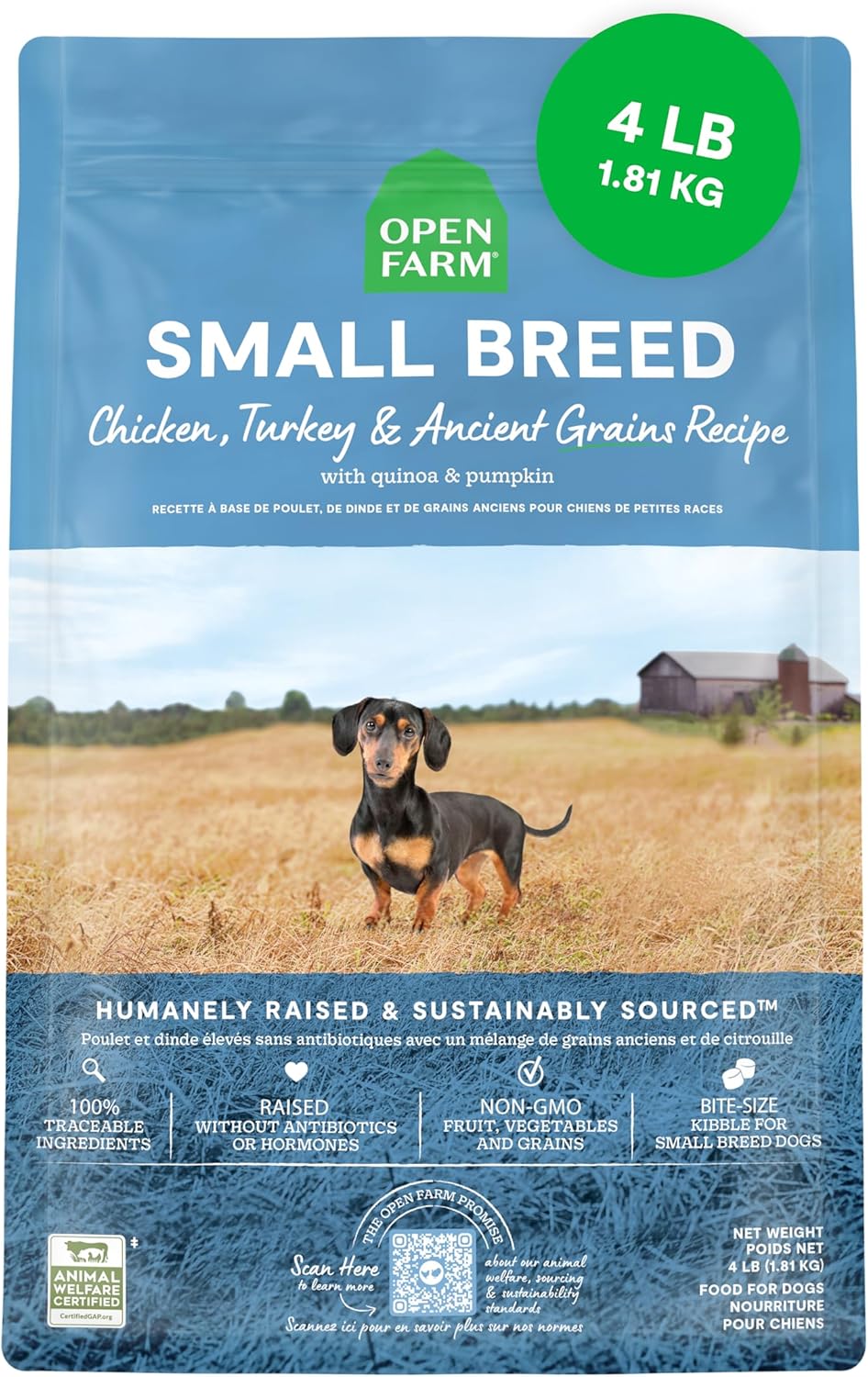
Open Farm Ancient Grains Small Breed
Best Premium Food
| Package Size Name | 4 lb |
|---|---|
| Unit Count | 64 Ounce |
| Age Range Description | All Life Stages |
| Breed Recommendation | Small Breeds |
Open Farm Ancient Grains Small Breed is a 4 lb dry kibble designed as a nutrient-dense, grain-inclusive formula for small dogs and those with sensitive stomachs. It combines humanely raised chicken and turkey with animal meals and ancient grains like barley, oats, and quinoa to deliver a high-protein, highly digestible diet. The recipe includes non-GMO fruits and vegetables plus supplements such as salmon oil for DHA and added vitamins and minerals for a complete feeding. Practical benefits include a focus on ingredient sourcing and traceability, multiple superfoods and probiotics-friendly fibers like dried chicory root, and a small-breed pellet size that suits miniature mouths. Limitations are the 4 lb bag size that may require more frequent repurchasing for multi-dog households and the inclusion of barley and brown rice, so this is not a grain-free option for owners seeking that profile. Also wheat may be present, which could be an issue for dogs with wheat-specific allergies.
Best for: Owners who prioritize premium sourcing and higher-quality animal proteins for a small-breed companion and want transparency about ingredient origins.
Less Ideal for: Families looking specifically for a grain-free or wheat-free formula, or those who prefer larger bulk bag sizes to reduce shopping frequency.
- High animal-protein blend using chicken, turkey and fish meal for muscle maintenance
- Ancient grains and fiber sources support digestibility for sensitive stomachs
- Includes DHA source (salmon oil) and a broad vitamin and mineral mix for complete nutrition
- Uses non-GMO fruits and vegetables and emphasizes ingredient traceability
- Small 4 lb bag may not be economical for multi-dog homes or heavy feeders
- Contains grains and may include wheat, so not suitable for owners seeking grain-free or wheat-free formulas
Verdict: The best premium food for owners willing to pay more for higher-quality proteins, enhanced nutrient profiles, and superior ingredient sourcing.
Wellness CORE Small Breed Turkey & Chicken
Best Grain-Free Food

| Flavor | Turkey Healthy Weight |
|---|---|
| Age Range Description | Adult |
| Item Form | Pellet |
| Special Ingredients | gluten-free, grain-free |
| Unit Count | 64 Ounce |
Wellness CORE Small Breed Turkey & Chicken is a grain-free dry dog food designed for adult small dogs and formulated around high‑quality animal proteins. The small kibble is straightforward to use as an everyday complete diet and is intended to support lean muscle with turkey and chicken listed first, plus added chicken meal for concentrated protein. Practical features include guaranteed omega fatty acids for skin and coat, glucosamine and chondroitin for joint support, and added probiotics and fiber to help digestion. The recipe contains a range of fruits, vegetables, and a salmon and flax omega blend to round out micronutrients rather than relying on grains for carbohydrates. One limitation is the inclusion of multiple legume ingredients such as lentils and peas, which some dogs may find less digestible or that owners may want to avoid for specific dietary reasons. For owners switching to grain-free, the product offers a meat-forward formula in a small kibble size tailored to miniature breeds, but as with any diet change monitor stool quality and overall tolerance during the transition.
Best for: Owners of Miniature Schnauzers who want a meat‑forward, grain‑free daily diet with small kibble and added digestive and joint support, and who prioritize higher protein and healthy fats.
Less Ideal for: Dogs with known sensitivities to legumes or owners seeking a strict grain‑free product made in a dedicated grain‑free facility should consider alternatives or consult a veterinarian.
- High first‑ingredient animal protein (debonded turkey and turkey meal) to support lean muscle
- Small kibble size formulated for small-breed mouths
- Added probiotics and fiber to support digestive health
- Omega blend plus glucosamine and chondroitin for skin, coat, and joint support
- Uses legumes and potatoes as primary carbohydrate sources which some dogs may not tolerate as well
- Manufactured in a facility that also processes grains, so not suitable for strict grain allergy cases
Verdict: The best grain-free food for Miniature Schnauzers that avoids grains while supplying balanced nutrition through alternative carbohydrate and fiber sources.
Natural Balance Limited Ingredient Salmon & Sweet Potato
Best Limited-Ingredient Food

| Flavor | Salmon & Sweet Potato |
|---|---|
| Item Form | Pellet |
| Animal Food Diet Type | Limited Ingredient |
| Unit Count | 64 Ounce |
| Breed Recommendation | Small Breeds |
This Natural Balance Limited Ingredient Salmon & Sweet Potato recipe is a grain-free dry food designed for small-breed adult dogs and dogs with simplified dietary needs. It uses salmon and salmon meal as the primary animal proteins and a short ingredient list intended to reduce exposure to common irritants like corn, wheat, and soy. In everyday use it serves as a complete daily feed for small dogs and can also be used during an elimination trial because the formula focuses on a single animal protein and limited carbohydrate sources such as sweet potato and potato. Practical benefits include ingredients chosen to support digestion and skin and coat health, added vitamins and minerals for balanced nutrition, and convenient bagged packaging for daily feeding. Limitations to note are that this is a small-breed formula so kibble size and nutrient balance are aimed at smaller dogs, and while the ingredient list is simplified it still contains items like yeast, canola oil, and mixed tocopherols that some owners may avoid during strict elimination diets.
Best for: Owners of Miniature Schnauzers who suspect ingredient sensitivities and want a short, single-protein diet tailored to small-breed needs and easy use during an elimination trial.
Less Ideal for: Families needing a truly novel-protein or prescription hypoallergenic formula for medically diagnosed food allergies, or owners of medium and large breeds seeking a different nutrient profile.
- Single primary animal protein (salmon) which simplifies ingredient exposure during elimination trials.
- Grain-free formula with no corn, wheat, or soy listed to reduce common dietary irritants.
- Formulated for small breeds with nutrients to support skin, coat, and digestive health.
- Includes added vitamins, minerals, and salmon meal for balanced daily nutrition.
- Formulated specifically for small breeds, so nutrient profile and kibble size may not suit larger dogs.
- Contains multiple non-protein ingredients (dried yeast, canola oil, mixed tocopherols) that could still trigger sensitivities in highly reactive dogs.
Verdict: The best limited-ingredient food for Miniature Schnauzers with suspected food sensitivities, offering a short ingredient list to simplify elimination and digestion.
Hill's Science Diet Adult Small Bites
Best Small-Kibble Food

| Intended age | Adult 1-6 years |
|---|---|
| Primary ingredient | Chicken |
| Formulation highlights | No artificial colors, flavors, or preservatives |
| Feeding guidance | Package feeding guide; transition over 7 days |
Hill's Science Diet Adult Small Bites is a dry kibble designed for adult dogs that prefer or require smaller, easier-to-chew pieces. It is intended for everyday feeding and uses real chicken as the first ingredient along with grains and added vitamins and minerals to support general health. The small kibble size helps miniature and small-mouthed dogs pick up and chew more comfortably, which can improve acceptance and reduce mealtime frustration. Practical benefits include a complete nutrient profile developed by pet nutritionists and a formula without artificial colors, flavors, or preservatives. Directions recommend following the package feeding guide and transitioning gradually over seven days when switching foods. Limitations are that it is a standard maintenance formula for ages 1 to 6 and not tailored to breed-specific issues like skin or joint support beyond basic nutrition, and some dogs with grain sensitivities will need a grain-free or limited-ingredient alternative.
Best for: Buyers looking for a vet-developed, everyday dry food with bite-sized kibble that is easy for Miniature Schnauzers and other small-mouthed adults to chew and accept.
Less Ideal for: Owners seeking a breed-targeted formula addressing Schnauzer-specific skin, coat, or joint issues or those who need grain-free or limited-ingredient diets should consider alternatives.
- Small kibble size suited to small mouths and easier chewing
- Real chicken listed as the first ingredient for protein
- Formulated by pet nutritionists with added vitamins and minerals for complete adult nutrition
- No artificial colors, flavors, or preservatives listed
- Not a breed-specific formula created for Miniature Schnauzer health concerns
- Contains grains, so not suitable for dogs requiring grain-free diets
Verdict: The best small-kibble food for Miniature Schnauzers that prioritizes bite-sized pieces for comfortable chewing and improved acceptance by small-mouthed dogs.
Hill's Science Diet Perfect Weight Small & Mini
Best Weight-Management Food

| Flavor | Chicken |
|---|---|
| Age Range Description | Adult 1-6 |
| Item Form | Dry Food |
| Specific Uses For Product | Weight Management |
| Unit Count | 64 Ounce |
Hill's Science Diet Adult Perfect Weight Small & Mini is a dry kibble formulated to help small and toy adult dogs lose and maintain weight while supporting lean muscle. It is typically fed as a complete daily diet using the package feeding guide and adjustment over time, and the brand recommends mixing with current food over a week when switching. The formula highlights controlled calories and ingredients like chicken and brown rice, plus added nutrients such as L-carnitine and a blend of vitamins and minerals aimed at metabolic and cellular support. Practical benefits include a vet-focused recipe designed to produce visible weight loss within about 10 weeks for many dogs, easily portioned bag packaging, and flavors that small dogs generally accept. Limitations are that success depends on accurate portion control and activity level, it is focused on adult small breeds so it is not for puppies or large dogs, and owners should consult their veterinarian before starting any weight-management regimen to ensure it fits an individual dog's health needs.
Best for: Owners of adult Miniature Schnauzers who prioritize a vet-developed, calorie-controlled diet to reduce and maintain healthy weight while preserving lean muscle.
Less Ideal for: Do not choose this if your Miniature Schnauzer is a puppy, under medical treatment requiring a different diet, or if you prefer an unregulated homemade feeding plan.
- Formulated specifically for small and toy adult breeds for targeted weight control
- Ingredients and added nutrients (L-carnitine, vitamins, minerals) support metabolism and lean muscle
- Claims visible weight loss within about 10 weeks for many dogs when fed as directed
- Made with natural ingredients and produced in the USA using global ingredients
- Veterinarian-recommended brand with feeding guidance on the package
- Requires strict portion control and activity adjustments to achieve advertised results
- Not formulated for puppies or large-breed dogs, so limited to adult small/mini sizes
- Weight loss results will vary and may require veterinary supervision for dogs with medical issues
Verdict: The best weight-management food for Miniature Schnauzers that provides balanced nutrition with controlled calories and higher satiety to support healthy body weight.
Choosing the Right Dog Food Miniature Schnauzer: Key Factors to Consider
Protein Quality and Digestibility
High-quality protein supplies essential amino acids for muscle maintenance and overall health. For miniature schnauzers, who are active yet compact, moderately high protein helps preserve lean mass without excess calories.
Digestibility reduces stool volume and odor, and it limits digestive upset. Look for named meat sources near the top of the ingredient list and avoid vague descriptors. Novel or easily digestible proteins can help with sensitive stomachs, while a balance of animal and plant proteins can provide a complete amino acid profile.
Fat Source and Omega Balance
Fat is the most calorie-dense macronutrient and a key energy source for small breeds. The right fat level keeps miniature schnauzers lively without contributing to obesity.
Omega-3 and omega-6 fatty acids support skin and coat health, reduce inflammation, and aid cognitive function. Prefer foods that list named fat sources and include marine or flax-derived omega-3s. Excess saturated fats or poorly specified fat sources can lead to unwanted weight gain, so consider the overall calorie density relative to your dog's activity level.
Kibble Size and Dental Considerations
Miniature schnauzers have small mouths and distinctive facial hair that can make eating awkward if kibble pieces are too large or oddly shaped. Appropriately sized, easy-to-pick-up kibble reduces frustration and encourages regular eating.
Dental health is important for small breeds that are prone to tartar buildup. Some formulas include texture or ingredient choices that support dental health. If your dog has existing dental issues, softer or moistened food may be easier to manage, but check that nutritional balance remains complete when altering texture.
Calorie Density and Weight Management
Because miniature schnauzers are small, portion sizes are modest and calories add up quickly. Calorie-dense foods can lead to rapid weight gain if portions are not precisely measured.
Choose a formula with an appropriate calorie-per-cup value for your dog's life stage and activity level. Weight-management formulas can help dogs that are less active or prone to gaining weight, while higher calorie foods suit energetic or growing dogs. Always adjust portion sizes based on body condition rather than feeding guidelines alone.
Ingredient Sensitivities and Common Allergens
Some miniature schnauzers show sensitivity to common ingredients such as beef, dairy, wheat, or soy. Symptoms often include itchiness, digestive upset, or chronic ear issues.
If you suspect a sensitivity, try elimination using a limited-ingredient or single-protein formula and monitor response over several weeks. Grain-free does not automatically mean hypoallergenic, so focus on identifiable protein and carbohydrate sources. Rotating proteins can help, but do so gradually to avoid digestive issues.
Life Stage and Supplemental Nutrients
Puppies, adults, and senior miniature schnauzers have distinct nutrient needs. Puppies require higher protein and calorie density to support growth, while seniors may benefit from joint-supporting nutrients and slightly reduced calories.
Look for formulas labeled for the appropriate life stage and check for essential supplements such as glucosamine, chondroitin, and antioxidants when relevant. Vitamin and mineral balance supports long-term health, so ensure the food is complete and balanced for the target life stage.
How Often Should I Feed a Miniature Schnauzer and What Portion Sizes Work Best?
Most adult miniature schnauzers do well on two meals per day to stabilize energy and help manage hunger. Puppies under six months typically need three to four smaller meals daily due to rapid growth and higher calorie needs.
Portions depend on calorie density, life stage, and activity level. Start with the manufacturer's guideline as a baseline, then adjust based on body condition score. A lean, active miniature schnauzer will require more than a sedentary house pet. Regularly weigh your dog and monitor body condition rather than relying solely on volume measurements.
- Weigh food rather than eyeballing cups for consistent portions.
- Adjust portions gradually over one to two weeks when changing formulas.
- Split daily ration into scheduled meals to prevent overeating.
What to Do when Your Schnauzer Is a Picky Eater
Picky eating can stem from texture preferences, boredom, or underlying medical issues. Try varying the texture between dry kibble and lightly moistened food, or rotate protein sources to maintain interest. Warming food slightly can also increase aroma and palatability.
Avoid frequent feeding of table scraps or strong-flavored toppers, which can create bad habits. If picky behavior is sudden or accompanied by other symptoms such as lethargy or vomiting, consult a veterinarian to rule out health concerns.
- Introduce new foods gradually over 7 to 10 days.
- Use healthy toppers sparingly to prevent dependence.
- Keep a consistent feeding schedule to reinforce appetite cues.
How to Switch Your Miniature Schnauzer to a New Food Safely
Transitioning slowly over at least a week helps prevent digestive upset. Start with 25% new food mixed with 75% current food, and increase the proportion of the new food every two to three days until the switch is complete. Monitor stool quality and appetite throughout the process.
For dogs with sensitive stomachs, extend the transition to two weeks and consider using easily digestible formulations. If diarrhea or vomiting persists after a gradual transition, pause the switch and speak with your veterinarian.
- Track stool consistency during the transition.
- Reduce meal sizes slightly if loose stools develop, then reintroduce full portions as digestion normalizes.
- Avoid sudden ingredient changes or multiple simultaneous diet alterations.
Should a Miniature Schnauzer Be on a Grain-free Diet?
Grain-free diets are sometimes chosen for dogs with proven grain sensitivities, but they are not necessary for most miniature schnauzers. Whole grains can be valuable sources of fiber and nutrients and may support healthy digestion.
If your dog shows signs of a true sensitivity to grains, a limited-ingredient formula that replaces common grains with alternative but balanced carbohydrate sources may be appropriate. Consult your veterinarian before making a long-term grain-free switch to ensure the diet remains nutritionally complete.
- Assess the dog's response rather than following trends.
- Ensure any grain-free option supplies taurine and complete nutrient profiles.
Managing Common Health Concerns Through Diet
Diet can help manage issues such as pancreatitis, urinary stones, or skin allergies, but dietary choices should align with veterinary guidance. For example, lower-fat diets may be recommended for dogs prone to pancreatitis, while increased hydration and specific mineral balances can reduce some urinary stone risks.
For skin and coat issues, look for diets with balanced omega fatty acids and rich in antioxidants. Always coordinate dietary interventions with veterinary recommendations, especially when managing chronic conditions, to ensure the diet supports overall health without unintended consequences.
- Consult a veterinarian for diet changes related to medical conditions.
- Monitor weight and coat condition after dietary adjustments.
- Consider feeding strategies that support dental hygiene if dental disease is present.
How We Chose the Best Dog Food Miniature Schnauzer
We focused on criteria that matter most for feeding miniature schnauzers and used those filters to narrow the field to seven options. Primary evaluation factors included protein quality and digestibility, which influence muscle maintenance and stool consistency; fat source and level, to support coat sheen without promoting excess weight; and carbohydrate type and quantity, because refined carbs can exacerbate weight gain and glycemic swings. We also considered kibble size and shape to accommodate small muzzles and dental health, plus added nutrient support such as omega-3s for skin and coat and joint-supporting ingredients appropriate for small-breed activity. Palatability and common ingredient sensitivities were assessed to flag formulas likely to satisfy picky eaters or those with mild food sensitivities. Exclusions: we excluded formulas that are designed exclusively for therapeutic medical conditions or that lack transparent ingredient sourcing. In short, our list favors complete, breed-appropriate foods with ingredient and formulation characteristics that align with typical miniature schnauzer needs.
Our full evaluation process is outlined in our review methodology.
FAQ
How much protein does a miniature schnauzer need daily?
Protein needs vary by life stage and activity, but adult miniature schnauzers typically do well on a moderate to high protein diet. Look for complete diets with named animal protein sources and consult portion guidelines adjusted for your dog's activity level and body condition.
Can miniature schnauzers eat the same food as other small breeds?
Often yes, provided the formula matches the schnauzer's life stage and calorie needs. Focus on kibble size, calorie density, and nutrients that support skin and dental health rather than breed labels alone when choosing a small-breed formula.
Is feeding wet food better for dental health?
Wet food is gentler and easier to chew but does not provide mechanical cleaning benefits. If you feed wet food regularly, combine it with dental care routines such as brushing or dental chews appropriate for small breeds to help reduce tartar buildup.
How do I know if my schnauzer has a food allergy?
Food allergies often show as chronic itchiness, recurring ear infections, gastrointestinal upset, or skin issues. An elimination trial with a limited-ingredient or novel-protein diet for several weeks can help identify triggers, ideally guided by a veterinarian.
Are supplements necessary for a miniature schnauzer's diet?
Well-formulated complete foods usually provide necessary vitamins and minerals, so supplements are not always required. Supplements such as omega-3s, glucosamine, or probiotic formulas can help specific concerns but should be used under veterinary guidance to avoid nutrient imbalances.
Final Verdict
Prioritize a balanced, digestible formula that matches your miniature schnauzer's life stage, activity level, and any known sensitivities. Pay attention to protein quality, appropriate calorie density, and kibble size to support weight management, dental health, and the breed's distinctive coat. Tradeoffs are common: richer formulas support coat condition but add calories, while limited-ingredient options can ease sensitivities but narrow variety. Choose the option that best aligns with your dog's routine and monitor body condition and coat health, adjusting as needed for a confident, long-term feeding plan.