

If you want to move away from dry food, choosing the right dog food that is not kibble can improve digestion, palatability, and mealtime variety. Swapping formats affects storage, feeding routines, and how well your dog adapts, so it helps to know which options meet your priorities and daily constraints. This guide shortlists the top choices in alternative dog foods and explains the evaluation criteria we used, so you can match a format to your dog's age, chewing ability, and dietary needs. Read on for practical guidance and the key considerations to weigh before switching.
Top Picks at a Glance
| Best Overall Food A well-balanced pick that suits most dogs and households | 360 Pet Nutrition Freeze-Dried Raw Multi-Protein |  |
| Best Budget Food A low-cost option that still meets basic nutritional needs | Optimeal Wet Dog Food Variety Pack |  |
| Best Premium Food Higher-end ingredients and formulation for discerning owners | JustFoodForDogs Pantry Fresh Variety Pack |  |
| Best High-Protein Food Formulations with elevated protein for active or muscular dogs | Stella & Chewy's Freeze-Dried Dinner Patties 5.5 oz |  |
| Best Grain-Free Food Recipes formulated without grains for sensitive systems or preferences | ZIWI Peak Air-Dried Lamb 1 lb |  |
| Best Limited-Ingredient Food Simpler recipes that reduce potential allergens and sensitivities | Natural Balance Limited Ingredient Salmon & Sweet Potato |  |
| Best Wet Food Canned or pouch options offering higher moisture and palatability | Cesar Classic Loaf in Sauce 36ct |  |
360 Pet Nutrition Freeze-Dried Raw Multi-Protein
Best Overall Food

| Flavor | Multi-Protein |
|---|---|
| Item Form | Pellet |
| Age Range Description | Adult |
| Unit Count | 16 Ounce |
| Animal Food Diet Type | Raw |
360 Pet Nutrition Freeze-Dried Raw Multi-Protein delivers concentrated animal protein and organ meats in bite-size freeze-dried pieces that can be served as a complete meal, a kibble topper, or rehydrated with water for a softer texture. The formula lists multiple meats first—beef, chicken, salmon and whitefish—plus liver and heart for additional nutrients, and includes fruits, vegetables, seeds and mixed tocopherols for antioxidant support. Freeze-drying preserves flavor and nutrient density while keeping the product shelf stable and portable for travel or camping. Practical benefits include easy portioning for all breed sizes, versatility as a topper to entice picky eaters, and a grain-free, additive-free ingredient profile aimed at digestibility and skin and coat support. Limitations to consider are that freeze-dried raw is more calorie- and nutrient-dense than standard dry kibble so portion sizes and transition periods need attention, and some dogs with very sensitive stomachs may require a slower introduction. Packaging is a bag format that is convenient but will need airtight storage after opening to maintain crispness.
Best for: Dog owners who want a versatile, nutrient-dense alternative to kibble that balances real animal proteins with whole-food superfoods for everyday feeding or as a meal topper.
Less Ideal for: Owners seeking the lowest-cost staple diet or those who prefer refrigerated fresh/raw diets should consider other options instead.
- Multiple real meats and organ meats listed first for higher-quality protein and nutrient density
- Freeze-dried process preserves raw nutrition and flavor while remaining shelf stable
- Can be used as a complete meal, a topper to improve palatability, or rehydrated for softer texture
- Includes fruits, vegetables, seeds and omega-3 sources for broad micronutrient support
- Bite-size pieces make portioning simple for all breed sizes and travel
- Requires careful portion control and gradual transition due to high nutrient density
- Needs airtight storage after opening to prevent moisture absorption and loss of texture
Verdict: The best overall food balances nutrition, digestibility, ingredient quality, and price so it works for the widest range of dogs and typical pet-owner needs.
Optimeal Wet Dog Food Variety Pack
Best Budget Food

| Flavor | Variety Pack |
|---|---|
| Item Form | Wet |
| Container Type | Pouch |
| Unit Count | 36 Ounce |
| Number of Items | 12 |
Optimeal's Variety Pack wet pouches are a small‑breed wet food designed to be fed as full meals or as toppers over kibble. The pouches contain tender morsels in sauce or aspic across flavors like chicken & beef, chicken & lamb, and liver & turkey, and the formulation emphasizes high animal protein, added fiber, and prebiotic FOS to ease digestion. For everyday use the pouches are convenient to portion and serve, and they provide extra moisture which helps hydration for breeds prone to dry kibble aversion. The recipe highlights omega‑3 and omega‑6 for skin and coat support and lists calcium and phosphorus to back musculoskeletal development. Practical limitations include no detailed guaranteed analysis on the listing and the product is targeted to small breeds so portioning for larger dogs would be impractical; people seeking veterinary therapeutic diets or strict ingredient exclusion should consult labels or a vet. For picky Westies this pack offers palatable, moist meals or mixers that can boost appetite and add variety to a balanced feeding plan.
Best for: Owners of West Highland White Terriers who want a moist, palatable wet food to boost hydration and entice picky eaters while supporting skin, coat, and digestive health.
Less Ideal for: Owners seeking a prescription therapeutic diet, strict single‑ingredient elimination diets, or food sized for medium and large dogs should look elsewhere.
- Formulated for small breeds with high animal protein content to support muscle maintenance
- Comes in convenient single‑serve pouches that work as full meals or toppers
- Includes prebiotic FOS and fiber to support gentle digestion
- Omega‑3 and omega‑6 included to help skin and coat health
- Variety of flavors to improve palatability for picky eaters
- Listing does not show a full guaranteed analysis on the product page
- Pack and formulation are focused on small breeds so not sized for larger dogs
Verdict: The best budget food provides complete nutrition at a lower price point, making it a smart choice for owners prioritizing affordability without sacrificing core dietary requirements.
JustFoodForDogs Pantry Fresh Variety Pack
Best Premium Food

| Flavor | Best Sellers Variety |
|---|---|
| Item Form | Pate |
| Age Range Description | All Life Stages |
| Animal Food Ingredient Claim | Human-Grade |
| Container Type | Carton |
JustFoodForDogs Pantry Fresh Variety Pack delivers shelf-stable, human-grade wet meals in convenient Tetra Pak cartons that can be served as a full meal or mixed into a dog's existing food as a topper. The pack includes beef, chicken, and turkey pate recipes formulated for all life stages and designed to be highly digestible; recipes list recognizable whole-food ingredients like meat, rice, potatoes, and vegetables and are free from preservatives and BPA in packaging. Because the meals are lightly cooked and nutrient-formulated, they can help dogs with digestion, skin and coat health, and provide an easy transition to a fresher diet. Practical benefits include portability for travel and the ability to store unopened cartons for up to two years. Limitations for a limited-ingredient approach are that some recipes include multiple ingredients (potato, whole wheat macaroni in the turkey recipe, and added supplements), so this pack is not strictly single-protein or single-ingredient and may require careful label checking for dogs with specific allergies.
Best for: Pet owners who want fresh, human-grade wet meals that are easy to serve or add to existing food and who prioritize digestibility and natural ingredients over single-ingredient simplicity.
Less Ideal for: Owners strictly eliminating specific allergens or running a single-protein elimination diet who need single-ingredient, minimal-ingredient formulas.
- Human-grade, whole-food ingredient lists that are easy to read
- Shelf-stable Tetra Pak cartons keep meals preservative-free and portable
- Can be used as a complete meal or as a nutrient-dense topper
- Formulated for all life stages and aimed at digestive and skin/coat support
- Not strictly limited-ingredient—some recipes contain multiple starches and additives
- Pack includes three different proteins so single-protein elimination diets require selecting specific cartons
Verdict: The best premium food is for owners who want top-quality ingredients, advanced formulations, and superior sourcing even if it costs more.
Stella & Chewy's Freeze-Dried Dinner Patties 5.5 oz
Best High-Protein Food

| Flavor | Beef |
|---|---|
| Item Form | Freeze Dried Raw Patties |
| Unit Count | 5.5 Ounce |
| Age Range Description | All Life Stages |
| Special Ingredients | grain-free, organic |
Stella & Chewy's Freeze-Dried Raw Dinner Patties are compact, high-protein patties intended to deliver raw-style nutrition without refrigeration. Serve them dry as a convenient complete meal, crumble them over kibble as a topper, or break them into small pieces for training rewards; they also rehydrate quickly with water when a softer texture is preferred. The formula centers on 95% grass-fed beef and organ meats plus organic fruits and vegetables, and includes probiotics and omega fatty acids to support digestion and skin and coat health. Because the patties are freeze-dried, they store easily and portioning is straightforward for owners who want raw nutrition with less mess and planning than fresh raw diets. Limitations include the small 5.5 oz package size, which may require frequent repurchasing for larger dogs, and the higher protein/fat density that may need portion adjustments for calorie-conscious pets. Overall, the product is a versatile raw-style option for dogs that prefer strong meat-forward flavors and for owners who value shelf stability and easy serving.
Best for: Owners who want raw-style, high-protein nutrition with the convenience of shelf-stable portions and flexible serving options for meals, toppers, or treats.
Less Ideal for: People seeking a low-cost staple for large or multiple dogs or those who prefer wet/fresh raw diets that require refrigeration and preparation.
- High meat content with 95% grass-fed beef and organs for raw-like nutrition
- Can be served as a complete meal, crumbled topper, or training treats for flexible use
- Includes probiotics and omega fatty acids to support digestion and skin and coat health
- Freeze-dried format offers long shelf life and simple portioning without refrigeration
- Small 5.5 oz bag size may not be economical for large or multi-dog households
- Dense nutrient and calorie content requires careful portion control for some dogs
Verdict: The best high-protein food suits active dogs or those needing more protein by offering increased animal-based protein levels to support muscle maintenance and energy.
ZIWI Peak Air-Dried Lamb 1 lb
Best Grain-Free Food

| Flavor | Lamb |
|---|---|
| Item Form | Chunk |
| Life Stage | All Life Stages |
| Unit Count | 16 Ounce |
| Guaranteed Analysis (Protein/Fat) | Crude Protein 38% min / Crude Fat 30% min |
ZIWI Peak Air-Dried Lamb is a nutrient-dense, grain-free dog food that uses 96% lamb, organs, bone and New Zealand green mussel gently air-dried to preserve nutrients and flavor. It is marketed as a complete meal or a mixer and is typically used as a primary diet for dogs of all life stages or as a high-value topper to boost nutrition. Notable features include a single novel protein formula, minimal processing with air-drying, natural sources of glucosamine and chondroitin for joint support, and added prebiotic fiber from chicory root to aid digestion. In practice a little goes a long way because of the high calorie and protein density, so feeding portions are smaller than conventional dry kibble and transitions should be gradual. The ingredient list favors ethically sourced, whole-animal proteins and avoids grains, potatoes and legumes, which suits dogs with grain sensitivities or owners seeking limited-ingredient diets. Important trade-offs are the higher calorie density and premium positioning, which means it is more expensive per serving and requires careful portioning to avoid overfeeding or rapid dietary changes that can upset digestion.
Best for: Owners who prioritize grain-free, limited-ingredient diets and want a nutrient-dense air-dried formula to support digestion, skin and joint health.
Less Ideal for: Those seeking a budget-friendly everyday kibble or owners who prefer low-calorie foods for weight management should consider other options.
- High meat content with 96% lamb and organs for strong protein profile
- Air-drying preserves nutrients and flavor better than heavy processing
- Single protein, grain-free recipe suitable for dogs with grain sensitivities
- Natural sources of glucosamine and chondroitin support hip and joint health
- Includes prebiotic fiber and minimal added ingredients for easier digestion
- Very calorie dense so portions must be smaller and monitored closely
- Premium ingredients mean higher cost per feeding compared with standard dry foods
Verdict: The best grain-free food is intended for dogs whose diets benefit from grain-free formulations, emphasizing alternative carbohydrate sources while maintaining complete nutrition.
Natural Balance Limited Ingredient Salmon & Sweet Potato
Best Limited-Ingredient Food

| Flavor | Salmon & Sweet Potato |
|---|---|
| Item Form | Pellet |
| Animal Food Diet Type | Limited Ingredient |
| Unit Count | 64 Ounce |
| Breed Recommendation | Small Breeds |
This Natural Balance Limited Ingredient Salmon & Sweet Potato recipe is a grain-free dry food designed for small-breed adult dogs and dogs with simplified dietary needs. It uses salmon and salmon meal as the primary animal proteins and a short ingredient list intended to reduce exposure to common irritants like corn, wheat, and soy. In everyday use it serves as a complete daily feed for small dogs and can also be used during an elimination trial because the formula focuses on a single animal protein and limited carbohydrate sources such as sweet potato and potato. Practical benefits include ingredients chosen to support digestion and skin and coat health, added vitamins and minerals for balanced nutrition, and convenient bagged packaging for daily feeding. Limitations to note are that this is a small-breed formula so kibble size and nutrient balance are aimed at smaller dogs, and while the ingredient list is simplified it still contains items like yeast, canola oil, and mixed tocopherols that some owners may avoid during strict elimination diets.
Best for: Owners of Miniature Schnauzers who suspect ingredient sensitivities and want a short, single-protein diet tailored to small-breed needs and easy use during an elimination trial.
Less Ideal for: Families needing a truly novel-protein or prescription hypoallergenic formula for medically diagnosed food allergies, or owners of medium and large breeds seeking a different nutrient profile.
- Single primary animal protein (salmon) which simplifies ingredient exposure during elimination trials.
- Grain-free formula with no corn, wheat, or soy listed to reduce common dietary irritants.
- Formulated for small breeds with nutrients to support skin, coat, and digestive health.
- Includes added vitamins, minerals, and salmon meal for balanced daily nutrition.
- Formulated specifically for small breeds, so nutrient profile and kibble size may not suit larger dogs.
- Contains multiple non-protein ingredients (dried yeast, canola oil, mixed tocopherols) that could still trigger sensitivities in highly reactive dogs.
Verdict: The best limited-ingredient food is geared toward dogs with food sensitivities, using fewer ingredients to simplify digestion and make it easier to identify triggers.
Cesar Classic Loaf in Sauce 36ct
Best Wet Food
| Unit Count | 36 Count |
|---|---|
| Item Form | Wet |
| Target Species | Dog |
| Breed Recommendation | Small Breeds |
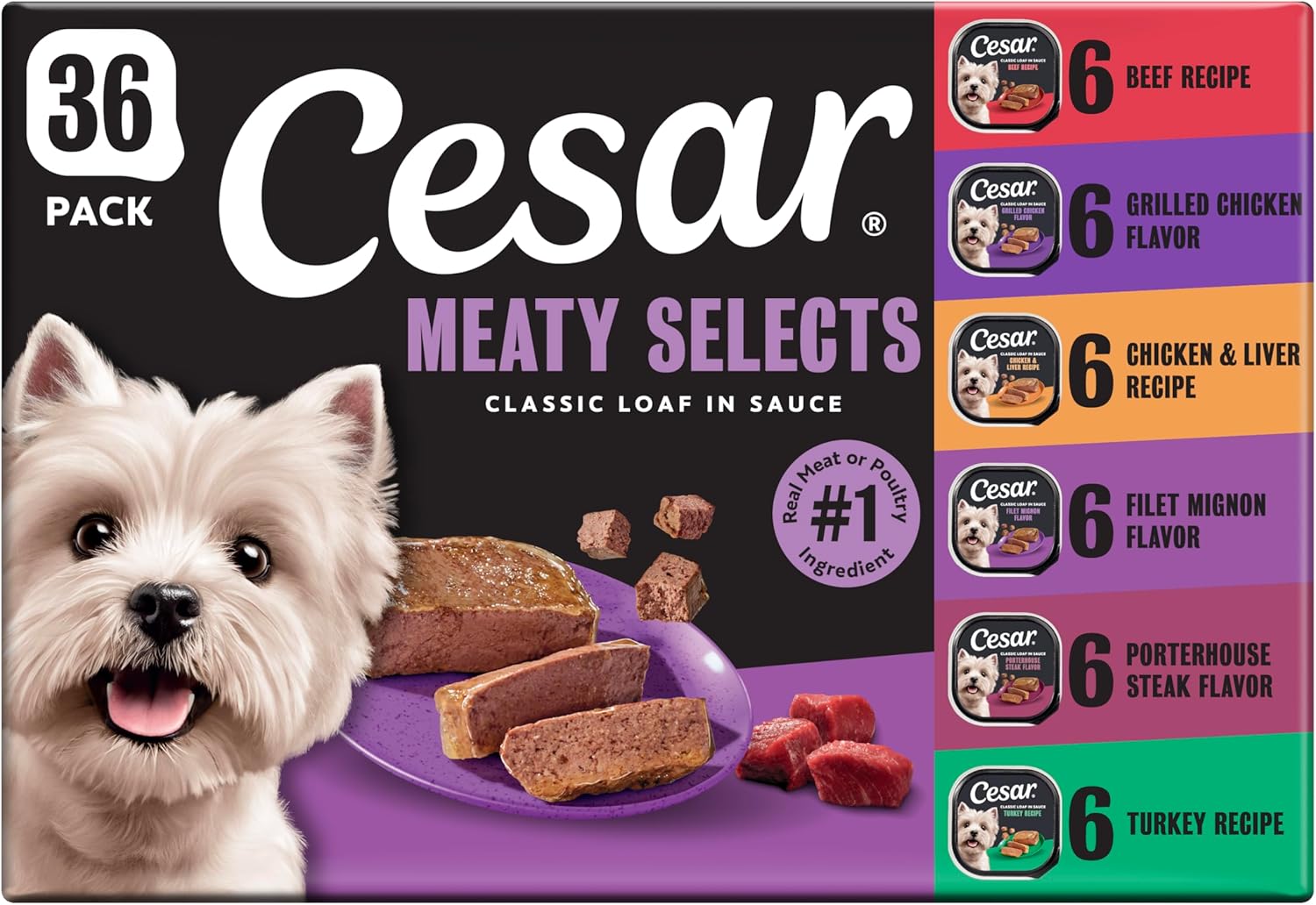
This 36-count pack of Cesar Classic Loaf in Sauce delivers single-serve wet trays with real meat as the first ingredient and a soft loaf texture in a savory sauce. Each tray is designed as a complete, balanced meal for adult dogs or as a topper to add moisture and aroma to dry food, and the peel-away sealed trays make portioning and storage straightforward. The recipes are slow-cooked and marketed as easy to digest, with no artificial flavors and grain-free formulation claims. For multi-dog households the bulk pack reduces shopping frequency and keeps a steady supply on hand, and the variety pack includes several flavors that help with picky eaters. Limitations include small single-serve tray size intended for small breeds so larger dogs will require multiple trays per meal, and the trays must be refrigerated after opening and used quickly. Nutrition follows standard wet-dog-food conventions rather than prescription formulations, so owners with special medical needs should consult their veterinarian.
Best for: Households with multiple dogs or owners who want to buy wet food in bulk to reduce shopping frequency and ensure consistent single-serve portions at mealtimes.
Less Ideal for: Owners who feed large-breed dogs exclusively or who need veterinary prescription diets should consider larger-portion cans or therapeutic formulas instead.
- Large 36-count pack keeps a steady supply for multi-dog households or to cut shopping trips
- Single-serve peel-away trays make portioning and travel convenient
- Real meat listed as the first ingredient and slow-cooked recipes for palatability
- Grain-free formulation and no artificial flavors for dogs with routine sensitivities
- Multiple flavors in the Classic line help satisfy picky eaters
- Trays are small and intended for small-breed servings so larger dogs need several trays per meal
- Once opened trays require refrigeration and short use window
Verdict: The best wet food is ideal for dogs who need extra hydration, have picky appetites, or benefit from a softer texture, delivering full nutrition in a moist, tasty format.
Choosing the Right Dog Food Not Kibble: Key Factors to Consider
Format and Moisture Content
Different non-kibble formats—canned, fresh refrigerated, frozen, freeze-dried, or raw-prepared—have very different moisture levels, and that affects hydration, palatability, and calorie density. Higher moisture foods help dogs that drink less and can be gentler on kidneys and urinary tracts, while lower-moisture alternatives concentrate calories and may require portion adjustments.
You should consider how moisture affects storage and serving. Refrigerated or frozen foods need planning for thawing and keeping portions fresh. Canned foods are shelf-stable before opening but must be refrigerated after. Freeze-dried options are lightweight and often rehydrate quickly, while raw formats demand the most careful handling to avoid contamination.
Nutritional Completeness and Life-stage Profile
Ensure the food is formulated or labeled for the correct life stage—puppy, adult, senior—or is complete and balanced for maintenance. Alternative formats sometimes emphasize fresh ingredients but may not meet nutrient targets without fortification. Look for statements or analysis that indicate the diet meets established nutrient profiles for dogs.
If you feed a homemade-style or lightly processed option, check that essential nutrients like calcium, phosphorus, omega fatty acids, and vitamin levels are present in appropriate ratios. Incomplete feeding over time can cause deficiencies or imbalances, so prioritize options with documented nutrient completeness.
Ingredient Quality and Protein Source
Primary protein source influences digestibility, allergen risk, and palatability. Whole-muscle meats and recognizable animal proteins are often easier for owners to evaluate than complex mixtures of unnamed meat meals. Novel or single-protein options may help dogs with sensitivities, while mixed proteins can support a broader amino acid profile.
Also consider the presence of fillers, artificial additives, and the overall ingredient hierarchy. Better ingredient quality does not guarantee suitability for every dog, but it typically correlates with clearer sourcing and fewer unpredictable fillers that can cause digestive upset.
Handling, Storage, and Food Safety
Non-kibble foods often require more careful handling. Refrigerated and raw options need cold-chain management and safe thawing practices to prevent bacterial growth. Cans and pouches are convenient but require that leftovers be covered and chilled promptly. Freeze-dried products can mitigate spoilage risk but may need rehydration to be palatable for some dogs.
Consider your household's ability to store and safely serve the food. Busy schedules, lack of refrigeration space, or multiple-dog households can make certain formats impractical despite nutritional advantages.
Feeding Logistics and Portion Control
Portioning non-kibble formats can be less straightforward than scooping dry food. Wet and fresh foods often require a kitchen scale for consistent calorie control, especially for weight management. Preportioned trays and measured pouches simplify feeding but can be less flexible.
Think about how easy it will be to measure meals, the frequency of feeding, and whether you will need to mix supplements or toppers. Inconsistent portions can lead to weight gain or nutrient imbalances over time, so choose formats that match your commitment to measuring and tracking intake.
Cost and Long-term Practicality
While cost is often a deciding factor, consider cost alongside convenience and waste. Per-serving price varies widely across formats and can be higher for fresh or refrigerated foods. Also factor in potential waste from opened cans or thawed portions that were not used.
Long-term practicality includes supply reliability and how well the format integrates with your daily routine. A food that offers clear benefits but is impractical to store or prepare may not be sustainable over months or years.
How Do I Transition My Dog From Kibble to a Moist Diet Safely?
Switch gradually over 7 to 14 days to reduce digestive upset. Start by mixing a small amount of the new food with your dog's current kibble, increasing the new food and decreasing the old each day until the transition is complete.
Watch for stool changes, appetite shifts, or signs of intolerance and slow the transition if you see problems. Keep fresh water available, since dogs sometimes adjust their drinking when moisture content changes. If your dog has a sensitive stomach or a medical condition, consult your veterinarian before switching.
- Begin with about 10% new food mixed into meals.
- Double the proportion of new food every 2 to 3 days if tolerance is good.
- Pause or return a step if vomiting or persistent loose stool occurs.
Which Alternative Formats Are Best for Picky Eaters?
Moist formats such as canned, refrigerated fresh, or rehydrated freeze-dried products are often more appealing to picky dogs because of stronger aromas and varied textures. Mixing a small amount of a new moist food into a familiar base can help entice fussy eaters to try it.
Warming a portion slightly can increase aroma and interest but never heat to the point it is hot. Rotate proteins carefully to maintain interest without introducing too many novel ingredients too quickly.
- Canned and fresh options typically have the strongest aroma.
- Freeze-dried can be crumbled over food and rehydrated for texture control.
How Should I Manage Portion Sizes and Calorie Control with Non-kibble Foods?
Because moisture and calorie density vary, use the feeding guide on the package as a starting point but verify with a kitchen scale and body-condition monitoring. Track weight and body condition over several weeks and adjust portions as needed.
For weight loss or gain, consult guidelines for calorie reduction or increase rather than changing feeding frequency alone. If the food does not list calories per serving, contact the manufacturer or use a scale-based approach to estimate calories from macronutrient analysis.
- Weigh meals until you are confident in the correct portion size.
- Reassess body condition every 2 to 4 weeks after switching foods.
Is Raw or Lightly Cooked Food Safe to Feed at Home?
Raw and lightly cooked diets can be nutritionally complete if formulated and supplemented correctly but require strict hygiene to reduce bacterial risk. Handle raw-format food like raw meat for human consumption: wash surfaces, sanitize bowls, and refrigerate promptly.
Household members who are young, elderly, pregnant, or immunocompromised should take extra precautions around raw pet food. Ask the food provider for storage and handling guidance and follow thawing instructions closely.
- Prevent cross-contamination by using dedicated food prep areas.
- Store raw portions in sealed containers and use within recommended timeframes.
Will Switching Formats Help a Dog with Digestive Sensitivity?
Some dogs benefit from higher-moisture, limited-ingredient, or novel-protein formats that reduce gastrointestinal stress and improve stool quality. Foods with added fiber, prebiotics, or probiotics can support gut health, but responses vary by dog.
If your dog has chronic digestive issues, consult a veterinarian before switching. A formal dietary trial can isolate which ingredients or formats are tolerated and which cause problems.
- Consider limited-ingredient or single-protein options for food trials.
- Look for formulas that include digestive supports like probiotics or soluble fiber.
How We Chose the Best Dog Food Not Kibble
We focused on formulations and formats that offer feasible, long-term alternatives to dry kibble. Our selection process prioritized ingredient transparency, nutrient completeness relative to life stage, and practical feeding aspects such as preparation time and storage requirements. We also weighed digestibility indicators, including protein sources and the presence of fiber or probiotics that help sensitive stomachs. Palatability and acceptance were considered based on reported feeding behavior and formulation features that encourage intake. Safety and handling were included by checking packaging that protects freshness and reduces contamination risk. Finally, we excluded products that are strictly treats, single-ingredient supplements, or require complex veterinary prescriptions; we only considered complete and balanced foods suitable for regular feeding. The filters applied: complete nutrition for adult or specified life stages, clear ingredient lists, practical packaging, and formats that are realistic for everyday feeding. We excluded specialized medical-only diets and single-ingredient raw pieces that do not provide a full nutrient profile. Key dimensions that mattered were guaranteed analysis, primary protein source, moisture content, storage needs, and user-friendly serving sizes.
Our full evaluation process is outlined in our review methodology.
FAQ
How quickly can I expect to see changes after switching from kibble?
Some dogs show appetite or stool changes within a few days, while weight and coat improvements may take several weeks. Monitor body condition and stool consistency for at least four weeks to judge effect.
Do moist or fresh foods require different feeding schedules?
The number of daily meals usually stays the same, but you may need to adjust portions because of different calorie densities. Perishable formats might require smaller, more frequent servings to avoid waste.
Can I mix dry kibble with a non-kibble food long-term?
Yes, mixing formats is common and can provide variety, but ensure combined portions meet daily calorie and nutrient targets. Consistency in measuring and tracking calories helps prevent unintended weight changes.
What should I do if my dog refuses the new food?
Slow the transition and try warming the food slightly or adding a small amount of a familiar topper. If refusal continues, attempt a different texture or protein and rule out underlying medical causes with your veterinarian.
Are freeze-dried foods as nutritious as refrigerated fresh options?
Freeze-dried foods can retain much of their nutrient content if processed and formulated correctly, but rehydration and the specific formulation determine final nutrient delivery. Check that the product is complete and balanced for your dog's life stage.
Final Verdict
When choosing dog food that is not kibble, prioritize a format that fits your household logistics while meeting nutritional completeness and your dog's digestive needs. Balance ingredient quality and protein sources with practical concerns like storage, portioning, and safety. Expect a short adaptation period and monitor body condition and stool to fine-tune portions. Focus on sustainable choices you can reliably store and serve, and choose formats that make consistent, measured feeding straightforward. That approach will help you switch confidently and maintain your dog's overall health.

