

If you care for an older small dog that has lost most of its teeth, choosing the right food matters for comfort, nutrition, and long-term health. Dogs in this situation often need softer textures, higher calorie density in smaller portions, and formulas that support dental and digestive health. This guide presents seven shortlisted options that fit those needs and explains how we evaluated texture, nutrient balance, and ease of eating. Use the criteria below to match a feed option to your dog's specific chewing ability and health profile.
Top Picks at a Glance
| Best Overall Food for Older Small Dogs with Few Teeth A well-balanced, easy-to-eat senior formula that fits most small seniors | Bil-Jac Small Breed Senior Dog Food 6 lb |  |
| Best Premium Food Higher-end recipes with superior ingredients and targeted senior support | Nutro Ultra Weight Management Small Breed |  |
| Best Soft-Texture Food Formulated specifically for easy chewing and swallowing by dogs with few teeth | Purina Moist & Meaty Steak Pouches 36ct |  |
| Best Wet Food Moist, palatable recipes that are easy to eat and hydrate seniors | Cesar Classic Loaf in Sauce 3.5 oz |  |
| Best High-Calorie Food Calorie-dense formulas to help underweight seniors maintain healthy body condition | Purina ONE Plus Senior Dry Dog Food 8 lb |  |
Bil-Jac Small Breed Senior Dog Food 6 lb
Best Overall Food for Older Small Dogs with Few Teeth

| Flavor | Chicken |
|---|---|
| Age Range Description | Senior |
| Breed Recommendation | Small Breeds |
| Item Form | Dry Kibble |
| Unit Count | 96 Ounce |
Bil-Jac Small Breed Senior is a dry kibble made specifically for small dogs aged seven and older, offering small, porous bites that are easier for older mouths to chew. It delivers controlled levels of protein and fat to help manage the slower metabolism of seniors while still supporting lean muscle; the formula is slow cooked to retain amino acids. Gentle fiber sources like oatmeal and yams plus canine-specific probiotics promote steadier digestion and firmer stools, which can make house and yard cleanup simpler. The recipe lists chicken and chicken meal as primary protein sources and includes omega fatty acids for skin and coat health. Practical benefits for an older small dog include bite size and texture that suit worn teeth, digestion support for sensitive stomachs, and nutrients targeted at joint and immune support. Limitations are that it contains grains and some by-product meals and preservatives, so owners seeking grain-free or limited-ingredient options or with strict sensitivities should look elsewhere.
Best for: Owners of older small-breed dogs who prioritize kibble texture and digestibility to keep a senior companion comfortable, active, and easy to feed.
Less Ideal for: Families seeking grain-free, limited-ingredient, or single-source protein diets for allergy management should consider other formulas.
- Bites are small, soft, and porous for easier chewing by older small dogs
- Controlled protein and fat levels help manage senior metabolism while supporting lean muscle
- Contains probiotics and gentle fibers to support digestion and firmer stools
- Includes omega 3 and 6 sources to help skin and coat health
- Contains chicken by-products and corn meal rather than single-source novel proteins
- Includes preservatives such as BHA and sodium propionate
Verdict: The best all-around choice for older small dogs with few teeth, balancing nutrient density, palatability, and a soft texture that’s easy to chew.
Nutro Ultra Weight Management Small Breed
Best Premium Food

| Flavor | Chicken, Lamb & Salmon |
|---|---|
| Age Range Description | Adult |
| Item Form | Dry Kibble |
| Special Ingredients | Glucosamine and Chondroitin Sulfate |
| Allergen Information | Corn-Free, Non-GMO, Soy Free, Wheat Free |
Nutro Ultra Weight Management for Small Breed is a dry kibble aimed at adult small dogs that need help losing or maintaining weight while still getting rich nutrition. The recipe uses real chicken as the first ingredient plus lamb and salmon meals to deliver a high-protein profile intended to preserve lean muscle during weight reduction. It includes natural sources of glucosamine and chondroitin for joint support and a 14-superfood medley—whole grains, flaxseed, chia, pumpkin, and berries—for added antioxidants and fiber. Typical use is daily feeding according to the bag's portion guidelines to achieve gradual, healthy weight loss while supporting immune and skin and coat health. Practical benefits include fewer fillers like corn, wheat, and soy, non-GMO ingredient claims, and a targeted nutrient mix for small-breed metabolisms, but buyers should note this is a premium commercial formula rather than a prescription diet, so dogs with specific medical conditions may still need veterinary guidance. The bag format is convenient for regular feeding but requires proper portion control to realize weight-management goals.
Best for: Owners who prioritize ingredient quality and nutrient density for small adult dogs and want a premium, science-informed weight-management food rather than bargain options.
Less Ideal for: Pet parents seeking a veterinary-prescribed therapeutic diet or an ultra-low-cost budget formula should consider other options.
- Real chicken as the first ingredient with additional lamb and salmon proteins for a high-quality protein blend
- Formulated for weight management with tailored protein and fat to support healthy weight loss
- Includes glucosamine and chondroitin precursors to help support joint health in active small dogs
- Contains a medley of whole grains, seeds, fruits, and vegetables to provide antioxidants and fiber
- Free from corn, wheat, and soy and made with non-GMO ingredients
- Not a veterinary prescription diet so may be insufficient for dogs with clinical weight or metabolic disorders
- Packaged as a regular retail kibble with no specialized single-serve portions for travel or trials
Verdict: The best premium food for owners willing to pay more for higher-quality proteins, added joint and cognitive supports, and careful ingredient sourcing for senior small dogs.
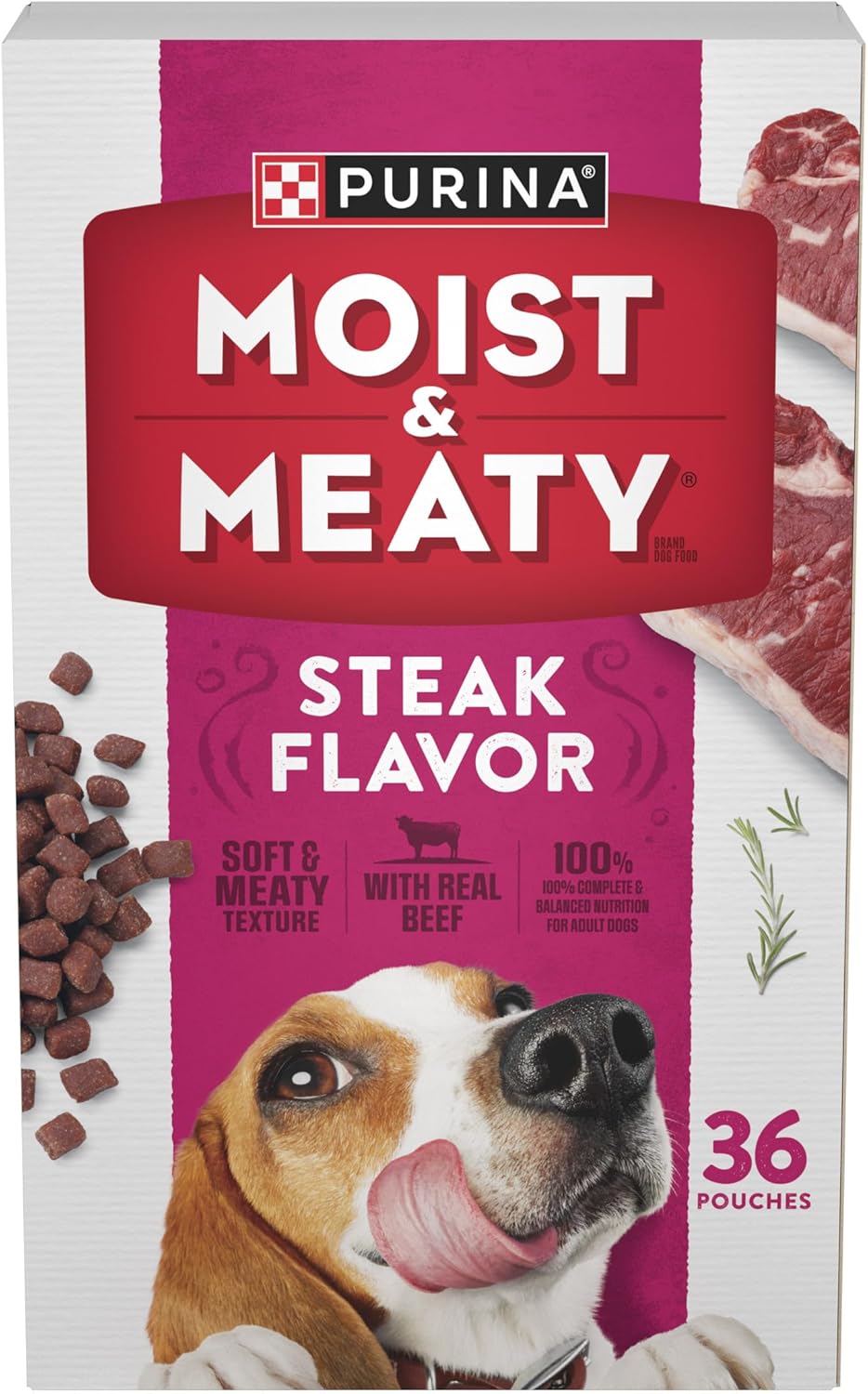
Purina Moist & Meaty Steak Pouches 36ct
Best Soft-Texture Food
| Flavor | Steak |
|---|---|
| Item Form | Chunk |
| Container Type | Pouch |
| Package Size Name | 36 ct. |
| Unit Count | 216 Ounce |
Purina Moist & Meaty Steak Flavor comes in single-serve pouches of soft, meaty chunks intended as quick meals, snacks, or toppers for adult dogs. Each pouch is formulated as a complete and balanced meal and emphasizes palatability with real beef and savory flavor accents that dogs tend to prefer. The stay-fresh pouches make serving simple and reduce mess, and the pouch format also lets you use it as a high-value training treat or to entice picky eaters when mixed with kibble. Ingredient-wise it is a semi-moist product containing beef and meat-derived ingredients plus syrups and preservatives that extend shelf life and texture, so it is not a premium whole-food recipe. It delivers high protein per pouch and convenient portioning, but buyers seeking limited-ingredient diets or grain-free, minimally processed formulas should look elsewhere. For everyday use it is an affordable, palatable option to rotate into meals or use as a topper to boost interest in standard food.
Best for: Buyers who want an affordable, easy-to-serve soft food that reliably appeals to most adult dogs and can be used as meals, toppers, or treats.
Less Ideal for: Owners seeking a grain-free, limited-ingredient, or minimally processed premium formula for medical or allergy reasons should consider alternatives.
- Single-serve pouches for no-mess feeding and easy portioning
- Formulated as a complete and balanced adult dog meal
- High palatability from real beef and meaty texture that entices picky dogs
- Convenient multi-use: meal, topper, or training reward
- Contains syrups, by-product ingredients, and preservatives rather than limited or premium whole-food ingredients
- Not suitable for owners who need grain-free or restricted-ingredient diets
Verdict: The best soft-texture food for dogs that struggle to chew, featuring tender pieces, pate, or softened kibble designed for comfortable eating.
Cesar Classic Loaf in Sauce 3.5 oz
Best Wet Food

| Flavor | Meaty Selects variety pack |
|---|---|
| Item Form | Wet |
| Unit Count | 24 Count |
| Target Species | Dog |
Cesar Classic Loaf in Sauce comes in easy-peel trays of slow-cooked meat loaf-style wet food intended for adult dogs and small breeds. It is typically fed as a standalone meal or used as a topper to add aroma and moisture to dry kibble, which makes it particularly useful for picky eaters or dogs that need extra hydration. The formula lists real beef or chicken as the first ingredient and includes vitamins and minerals to meet adult maintenance needs, while trays are portioned for convenience and refrigeration after opening. Practical benefits include high palatability, soft texture that is simple for small mouths to eat, and versatile use as a meal or mixer to encourage fussy dogs to eat. Limitations include ingredient listings that contain meat by-products and additives such as carrageenan and added color, so owners seeking limited-ingredient or grain-free wet diets should consider alternatives; the single-serving trays also mean you may need multiple trays per day for larger dogs. Overall, this is a convenient, flavorful wet food solution for small adult dogs and for pet parents who want an easy way to boost moisture and appeal of meals.
Best for: Pet owners who need a highly palatable, moisture-rich wet food to entice picky small-breed adult dogs or to add hydration and flavor to dry food.
Less Ideal for: Owners seeking limited-ingredient, grain-free, or additive-free wet diets, or those feeding exclusively large-breed dogs who need larger single-serve portions.
- Real beef or chicken is listed as the first ingredient for strong protein and flavor appeal
- Slow-cooked loaf texture is soft and easy for small mouths to eat
- Convenient peel-away trays make portioning and travel simple
- Designed to be complete and balanced for adult dogs so it can serve as a full meal or a topper
- Contains meat by-products and additives such as carrageenan and added color
- Single 3.5 oz trays may require multiple servings for medium or large dogs
Verdict: The best wet food for older small dogs who need higher moisture and softer bites to improve palatability and ease of eating.
Purina ONE Plus Senior Dry Dog Food 8 lb
Best High-Calorie Food

| Flavor | Chicken |
|---|---|
| Age Range Description | Senior |
| Item Form | Blended, Kibble, Crunchy, Morsels |
| Container Type | Bag |
| Unit Count | 128 Ounce |
Purina ONE +Plus Vibrant Maturity Adult 7+ is a high-protein dry dog food designed to support senior dogs with reduced mobility or dental issues. It uses real chicken as the number one ingredient and combines crunchy kibble with meaty morsels, MCT-rich vegetable oil for cognitive support, natural sources of glucosamine for joint health, and antioxidants for immune support. In practice it is served dry or moistened, and the manufacturer explicitly notes it may be mixed with water to soften the texture, which is useful for seniors with few teeth. The formulation emphasizes digestibility and muscle maintenance while avoiding artificial flavors and fillers, so more of each cup delivers active nutrition. Limitations include being a dry kibble at its core, so owners who need a truly soft or wet-only texture will still need to moisten it or choose canned senior diets, and the ingredient list contains common grains and by-product meals that some buyers may avoid. For its price and availability the bag is a practical choice for owners seeking core senior nutrients without premium pricing.
Best for: Owners who need an affordable senior formula that still delivers targeted nutrients for brain, joint, and muscle support and who are willing to moisten kibble for dogs with limited chewing ability.
Less Ideal for: Pet parents seeking a fully wet or soft-only diet, hypoallergenic grain-free formulas, or those avoiding by-product ingredients should consider other specialty senior options.
- Real chicken is the first ingredient, supporting higher protein for muscle maintenance
- Contains MCT-rich vegetable oil to help promote mental sharpness
- Natural sources of glucosamine and added omegas to support joints and coat
- Can be served dry or moistened, making it adaptable for dogs with few teeth
- Formulated without artificial flavors and without filler ingredients
- Core format is dry kibble so it still requires moistening for dogs that cannot chew
- Includes grains and some by-product meals that some owners avoid for specialized diets
Verdict: The best high-calorie food for older small dogs that need to gain or maintain weight, offering concentrated energy without large meal volumes.
Choosing the Right Dog Food Older Small Few Teeth: Key Factors to Consider
Texture and Form Factor
Texture determines whether an older dog with few teeth can actually eat the food comfortably. Soft pâtés, wet stews, and finely ground kibbles that rehydrate quickly reduce the need for chewing and lower the risk of gagging or frustration. Consider how the food holds together when served; overly watery mixes can be messy and wasteful, while very firm kibbles may be impossible for small mouths.
Also think about how you will serve the food. Some wet foods are ready to serve, while some dry options require soaking or mixing with broth. The chosen form should match your feeding routine and the dog's dexterity so meals are manageable and consistent.
Nutrient Density and Calorie Concentration
Older small dogs with few teeth often eat less per meal, so each bite needs to count. Higher calorie density helps maintain body weight without forcing large portions, which is especially important for dogs prone to muscle loss or weight decline. Look for balanced energy from quality protein and fats so your dog gets sufficient calories in smaller serving sizes.
Make sure calorie concentration aligns with your dog's activity level and body condition. If your pet is less active, a moderate-calorie dense formula may be preferable to avoid unwanted weight gain; conversely, underweight seniors need richer formulations that are still easy to chew.
Protein Quality and Digestibility
High-quality, easily digestible protein supports muscle maintenance and overall health in senior dogs. Proteins that are labeled as identifiable animal sources and that appear earlier in the ingredient list usually provide better amino acid profiles. Highly processed or low-quality protein fillers can be harder to digest, leading to loose stools or reduced nutrient uptake.
For dogs with compromised dentition, consider wet or softened foods where protein is more readily accessible. Digestibility also affects how much of the food's nutrition the dog absorbs, which matters when servings are small.
Fat and Fiber Balance
Fat is an important calorie source and supports palatability, but too much can cause digestive upset in sensitive seniors. Moderate, quality fats help maintain energy while also supporting skin and coat health. Fiber influences stool consistency and gut health; soluble fibers can help with digestion, while insoluble fibers contribute to bulk.
Pay attention to the specific fat and fiber sources and how they affect your dog's stool and comfort. If your dog has a history of pancreatitis or sensitive digestion, prioritize formulas with controlled fat levels and gentle fiber sources.
Palatability and Aroma
A strong aroma and pleasing texture can encourage eating in picky or low-appetite seniors. Older dogs often have reduced senses, so food that smells and tastes appealing will help maintain intake. However, extreme palatability achieved with heavy flavor enhancers may mask ingredient quality or cause overeating in less active dogs.
Observe how your dog responds to small samples before committing to a large supply. Rotating flavors cautiously can prevent boredom without upsetting digestion.
Serving Convenience and Portion Control
Small dogs with dental limitations benefit from foods that are easy to portion and prepare. Single-serve wet pouches, resealable small cans, or dry kibbles designed to rehydrate quickly make mealtimes simpler. Clear feeding guides for small-breed and senior dogs help you measure appropriate portions to maintain weight and muscle mass.
Consider foods that remain stable after opening and are easy to store in small quantities. If you need to soak dry food, choose options that absorb liquid well and maintain a texture your dog can manage without disintegrating completely.
How Do I Transition a Toothless Senior Dog to a Softer Diet?
Transition gradually over 7 to 10 days to reduce digestive upset. Start by replacing a small portion of the current meal with the new softer option and increase the new food each day while decreasing the old one.
If you are converting from dry kibble, try softening the new food with warm water, low-sodium broth, or a prescribed oral supplement to create a palatable, spoonable texture that mimics wet food. Monitor stool quality and appetite during the switch and pause the transition if you see persistent digestive disturbance.
- Begin with a 25 percent new food mix for two to three days.
- Increase to 50 percent for the next two to three days, then 75 percent, then full transition.
- Offer water or broth alongside meals to encourage hydration.
Can I Soften Dry Kibble Safely at Home?
Yes. Soaking kibble in warm water or low-sodium broth for a few minutes creates a softer texture that many toothless dogs can manage. The soaking time depends on the kibble size and the desired consistency.
Keep soaked portions small and serve immediately or refrigerate unused portions for only a short time. Extended storage of moistened food increases the risk of bacterial growth, so prepare fresh batches as needed.
- Use warm liquid for faster softening.
- Avoid adding salty or fatty liquids that could upset digestion.
- Test a small batch first to find the right texture for your dog.
What Feeding Schedule Suits Older Small Dogs with Few Teeth?
Smaller, more frequent meals help maintain calorie intake without requiring large mouthfuls. Aim for two to four small feedings per day depending on your dog's tolerance and energy needs.
Consistent meal times also support digestive rhythm and make it easier to monitor appetite and stool output. If your dog tends to spill or take excessive time, supervise meals to ensure they eat enough and do not inhale food in a way that causes choking.
- Divide daily caloric needs into multiple small portions.
- Offer food in shallow dishes to make access easier for short-muzzled or weak-jawed dogs.
- Observe and adjust frequency based on weight trends and appetite.
How to Manage Weight and Muscle Loss in Seniors with Poor Dentition
Maintaining lean mass is critical in older dogs. Concentrated proteins and moderate healthy fats provide calories and amino acids in smaller volumes, which is useful when chewing is limited. Combine diet changes with gentle, age-appropriate activity to preserve muscle tone.
If your dog is losing weight despite adequate food, consult your veterinarian about possible underlying conditions and whether appetite stimulants or targeted nutritional supplements are appropriate. Routine monitoring of body condition score and weight helps catch declines early.
- Prioritize digestible animal proteins in softer formats.
- Use calorie-dense meals split into small servings to increase intake.
- Consider medical evaluation for unexplained weight loss.
Are Dental Supplements or Texture Aids Useful for Dogs with Few Teeth?
Texture aids such as grinds, toppers, and broths can increase palatability and ease of chewing, and are often useful short-term. Dental supplements that promote oral health may help gums and remaining teeth but will not restore the ability to chew hard food.
Choose texture aids that are low in sodium and fat and formulated for seniors. Use them to improve meal acceptance without relying on heavy flavoring that could cause digestive issues.
- Use toppers sparingly to avoid unbalancing the diet.
- Select supplements with clear ingredient lists and veterinarian guidance when needed.
When Should I See a Veterinarian About Feeding Difficulties?
Seek veterinary advice if your dog refuses food for more than 48 hours, loses significant weight, develops repeated vomiting or diarrhea, or shows signs of oral pain such as dropping food or pawing at the mouth. These signs can indicate dental disease, systemic illness, or other conditions requiring treatment.
A vet can assess whether a specialized therapeutic diet, dental care, or additional diagnostics are necessary and can help you plan a feeding approach that supports the dog's overall health and comfort.
- Monitor appetite, weight, and stool for changes.
- Contact your veterinarian promptly for persistent feeding refusal or sudden health changes.
How We Chose the Best Dog Food Older Small Few Teeth
We started by focusing on products designed for senior small-breed dogs or labeled as suitable for pets with reduced dentition, and then filtered for formulations that address the most common needs for this group. Key evaluation criteria included texture and form factor, nutrient density and calorie concentration, protein quality and digestibility, fat and fiber balance for weight maintenance and stool quality, and ingredient transparency for sensitive pets. We also checked whether products offered added joint or senior-support nutrients when appropriate and reviewed feeding format options that make portioning easier for small mouths. Excluded items included standard adult formulations with no options for softening, treats or supplements sold separately, and large-breed senior foods that do not match small-dog portion needs. The remaining candidates were judged on how well they reduce chewing effort, maintain nutrient intake in smaller servings, and minimize digestive upset. Practical factors such as ease of preparation, stability after opening, and availability in small package sizes were also considered when ranking the shortlist.
Our full evaluation process is outlined in our review methodology.
FAQ
Can older small dogs with few teeth eat wet food exclusively?
Often yes. Many senior small dogs do well on a nutritionally complete wet diet because the texture is easy to manage and calories are concentrated. Ensure the chosen wet food meets senior nutritional needs and monitor weight and stool quality when switching.
Is it safe to feed softened human food to a toothless senior dog?
It depends. Small amounts of plain, cooked lean meats or pureed vegetables can be used temporarily, but human foods often lack balanced nutrients and can be high in sodium or fats. Use veterinarian-approved recipes or balanced commercial options for long-term feeding.
How can I tell if my dog is getting enough nutrients after switching to soft food?
Watch body weight, body condition score, energy levels, and stool consistency. Regular veterinary checkups and occasional bloodwork can confirm adequate nutrition. If you see weight loss or reduced energy, consult your veterinarian for diet adjustments.
Are there risks to over-moistening kibble?
Yes. Overly watery food can dilute nutrient density, increase meal volume beyond what the dog can comfortably eat, and encourage bacterial growth if stored. Soak only as much as needed for immediate feeding and refrigerate or discard leftovers promptly.
Will supplements help a toothless dog eat better?
Certain palatability enhancers and liquid toppers can improve appetite and make food easier to swallow, but supplements do not replace the need for a balanced diet. Use them as an adjunct to a suitably formulated senior small-dog diet and under veterinary guidance if the dog has medical issues.
Final Verdict
For older small dogs with few teeth, prioritize soft, nutrient-dense foods that minimize chewing while delivering high-quality protein and controlled fats. Balance palatability with digestibility and choose serving formats that simplify portion control and reduce waste. Monitor weight, stool, and appetite closely and be prepared to adjust meal frequency and composition based on your dog's response. Ultimately, pick the option that keeps your dog eating reliably and maintaining body condition. If feeding problems or unexplained weight changes occur, consult your veterinarian for tailored advice and diagnostic evaluation.

