

Finding the right food for an older small dog without teeth matters more than ever because diminished chewing ability changes how they eat and digest food. You need options that deliver complete nutrition in an easy-to-eat form while supporting joint health, weight stability, and dental comfort. This guide shortlists the top choices for older small dogs with no teeth and explains why each type made the cut. We evaluated options for texture, nutrient density, and digestibility to highlight practical choices that make mealtimes easier and healthier for senior small dogs. Read on to find the type of formula that fits your dog's appetite and health needs.
Top Picks at a Glance
| Best Overall Food for Older Small Dogs with No Teeth A balanced, easy-to-eat senior formula that fits most needs | Purina Moist & Meaty Steak Pouches 36ct |  |
| Best Budget Food for Older Small Dogs with No Teeth Affordable soft or wet options that don’t sacrifice basic nutrition | WAG Wet Dog Food Cups Variety Pack |  |
| Best Canned Food Thicker wet texture that’s easy to mash and serve to seniors | Purina ONE Senior Turkey & Barley |  |
| Best Pouch or Gravy Food Softer, saucy meals that mix well with water or toppers | Tiki Dog Senior Mousse 3.5oz Pouch 12ct |  |
| Best High-Calorie Food Calorie-dense formulas to help maintain weight in frail seniors | JustFoodForDogs JustFresh Chicken 7-Pack |  |
| Best Easy-Digest Food Gentle, low-irritant recipes for sensitive senior digestive systems | Nutrish Gentle Digestion Paté 13 oz Can |  |
| Best Premium Food Higher-end senior recipes with superior ingredients and palatability | The Honest Kitchen Wholemade Senior 2 lb |  |
Purina Moist & Meaty Steak Pouches 36ct
Best Overall Food for Older Small Dogs with No Teeth
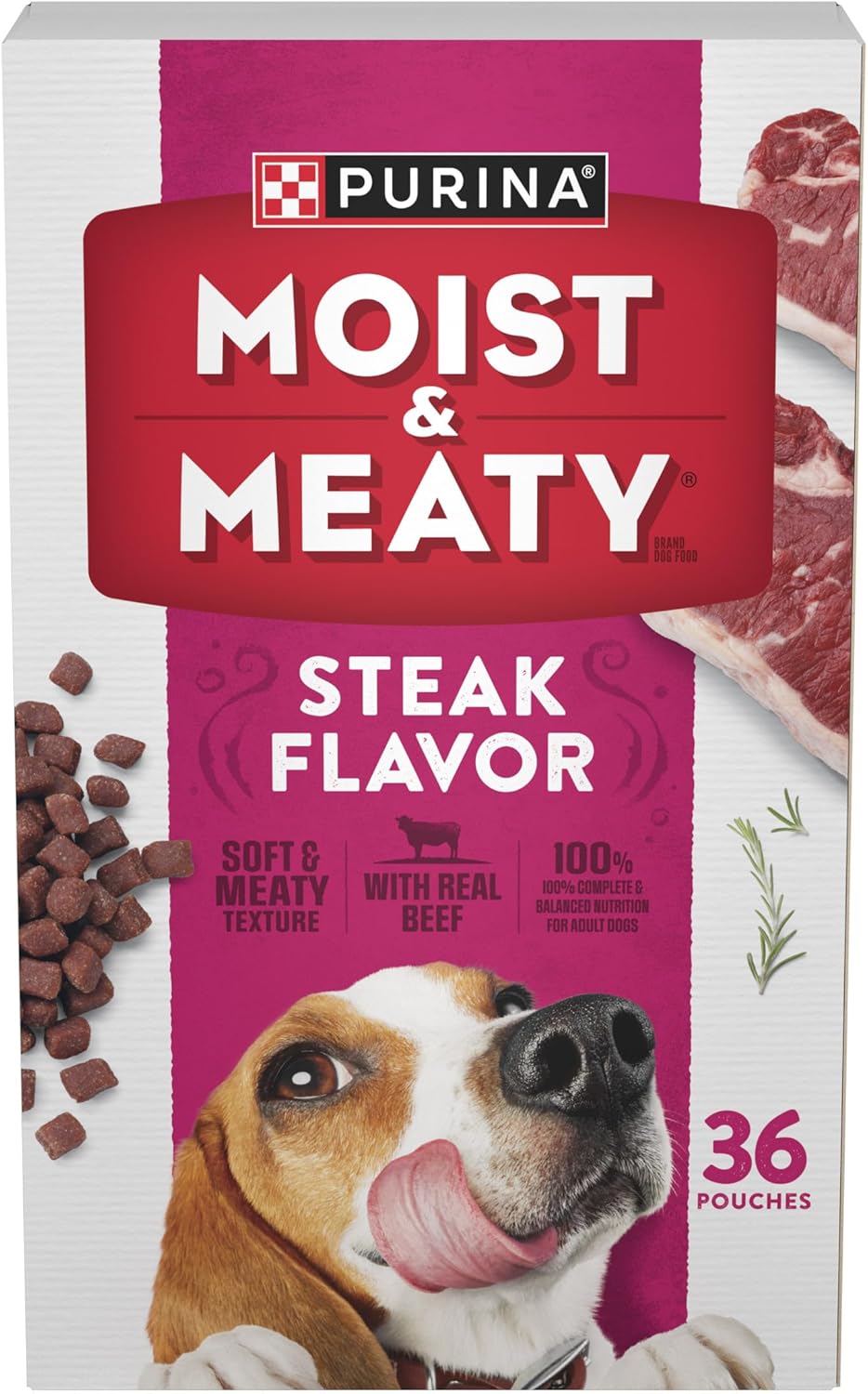
| Flavor | Steak |
|---|---|
| Item Form | Chunk |
| Container Type | Pouch |
| Package Size Name | 36 ct. |
| Unit Count | 216 Ounce |
Purina Moist & Meaty Steak Flavor comes in single-serve pouches of soft, meaty chunks intended as quick meals, snacks, or toppers for adult dogs. Each pouch is formulated as a complete and balanced meal and emphasizes palatability with real beef and savory flavor accents that dogs tend to prefer. The stay-fresh pouches make serving simple and reduce mess, and the pouch format also lets you use it as a high-value training treat or to entice picky eaters when mixed with kibble. Ingredient-wise it is a semi-moist product containing beef and meat-derived ingredients plus syrups and preservatives that extend shelf life and texture, so it is not a premium whole-food recipe. It delivers high protein per pouch and convenient portioning, but buyers seeking limited-ingredient diets or grain-free, minimally processed formulas should look elsewhere. For everyday use it is an affordable, palatable option to rotate into meals or use as a topper to boost interest in standard food.
Best for: Buyers who want an affordable, easy-to-serve soft food that reliably appeals to most adult dogs and can be used as meals, toppers, or treats.
Less Ideal for: Owners seeking a grain-free, limited-ingredient, or minimally processed premium formula for medical or allergy reasons should consider alternatives.
- Single-serve pouches for no-mess feeding and easy portioning
- Formulated as a complete and balanced adult dog meal
- High palatability from real beef and meaty texture that entices picky dogs
- Convenient multi-use: meal, topper, or training reward
- Contains syrups, by-product ingredients, and preservatives rather than limited or premium whole-food ingredients
- Not suitable for owners who need grain-free or restricted-ingredient diets
Verdict: The best overall pick for older small dogs with no teeth, offering a palatable soft texture, balanced senior nutrients, and easy portioning for everyday feeding.
WAG Wet Dog Food Cups Variety Pack
Best Budget Food for Older Small Dogs with No Teeth

| Flavor | Chicken & Beef in Gravy |
|---|---|
| Item Form | Wet |
| Container Type | Cup |
| Unit Count | 42 Ounce |
| Number of Items | 12 |
WAG Wet Dog Food Cups come as a 12-count variety pack of single-serve 3.5 oz cups with recipes using real chicken or beef as the first ingredient and a gravy for palatability. The cups are intended for daily meals or as mix-ins during a transition from one food to another and include ingredients like flaxseed, fish oil, cranberries, and blueberries that support basic nutritional needs. The single-serve cups are convenient for portion control, travel, and avoiding waste from opened cans, and the peel-top container is easy to use. Formulation avoids wheat, corn, soy and artificial colors, which helps with dogs prone to sensitivities, but the product is not labeled with detailed nutrient guarantees on this listing so buyers should confirm it meets any specific veterinary prescription needs. Because the cups are a wet, gravy-style product they are best used as complete meals for adult dogs of all breeds or as a tasty topper to increase intake for picky eaters. The balance here is between affordability and straightforward ingredient sourcing rather than specialized therapeutic nutrition.
Best for: Buyers who need an affordable, everyday wet food that uses real meat and simple ingredients and want single-serve convenience for portion control, travel, or topping dry food.
Less Ideal for: Owners seeking a veterinary-prescribed therapeutic diet or precise guaranteed nutrient breakdown should consider specialty or prescription wet foods instead.
- Real meat listed as the first ingredient in chicken and beef recipes
- Single-serve 3.5 oz cups for easy portioning and reduced food waste
- No added wheat, corn, soy or artificial colors in the formula
- Includes omega and antioxidant sources such as flaxseed, fish oil, cranberries and blueberries
- Product listing does not display full guaranteed analysis on the page so exact nutrient percentages are not visible
- Not formulated or labeled here for specific therapeutic prescriptions
Verdict: The best budget choice for owners who need a soft, toothless-friendly formula that still delivers essential nutrients without a high price tag.
Purina ONE Senior Turkey & Barley
Best Canned Food

| Flavor | Turkey & Barley |
|---|---|
| Age Range Description | Senior |
| Item Form | Pate |
| Unit Count | 156 Ounce |
| Number of Items | 12 |
Purina ONE Plus Senior Turkey & Barley is a pate-style canned diet designed to meet the nutritional needs of mature dogs. It is typically fed as a wet meal or mixed with kibble to increase palatability and moisture intake for older pets. The recipe lists real turkey first and emphasizes high protein to support muscle maintenance in seniors, while oat meal and barley provide easily digestible carbohydrate sources. The formula includes added vitamins, minerals, antioxidants for immune support, and medium-chain triglycerides aimed at promoting alertness and activity. Practical benefits include a soft texture that is easier for aging teeth to eat, no poultry by-products or artificial colors and flavors, and a 12-can pack that suits multi-dog households or regular feeding. Limitations to consider are that this is a general senior formula rather than a veterinary therapeutic diet, so dogs with specific clinical issues like advanced kidney disease or severe food sensitivities may need a prescription option or an elimination diet; calorie density and portioning should be adjusted to individual weight goals. For everyday senior feeding it balances palatability and supportive nutrients in a convenient canned format.
Best for: Buyers who want an everyday senior canned food that prioritizes recognizable meat first, easy-to-eat texture, and supportive nutrients for general aging needs.
Less Ideal for: Owners whose senior dogs require a veterinary therapeutic formula for medical conditions or who need a limited-ingredient diet for confirmed food allergies should look elsewhere.
- Real turkey is the first ingredient for recognizable animal protein
- High protein formula to help support muscle maintenance in older dogs
- Pate texture is soft and easy for seniors with dental wear to eat
- Includes added vitamins, minerals and antioxidants for whole-body support
- Contains MCTs to help support alertness and activity in aging dogs
- Not a prescription therapeutic diet for specific medical conditions
- Pack size and caloric content may require portion adjustments for weight management
Verdict: The best canned food for older small dogs with no teeth when you want a scoopable, moist texture that’s simple to mash and highly palatable.
Tiki Dog Senior Mousse 3.5oz Pouch 12ct
Best Pouch or Gravy Food

| Flavor | Chicken, Beef & Pumpkin |
|---|---|
| Age Range Description | Senior |
| Item Form | Mousse |
| Unit Count | 42 Ounce |
| Number of Items | 12 |
Tiki Dog Senior Mousse is a wet, pouch-format mousse aimed at older, small-breed dogs that have trouble chewing. Each 3.5 oz pouch delivers a soft, smooth texture with shredded chicken and duck pieces in a brothy mousse, making it simple to mash or serve as-is for pets with reduced dentition. The formula emphasizes animal proteins and organ meats for higher protein density, and includes vegetables and superfoods such as pumpkin, sweet potato, kale and flaxseed for added fiber and nutrients. It is grain- and gluten-free and designed to be complete and balanced for small dogs, with feeding guidelines tailored by bodyweight. Practical benefits include easy portioning from single-serve pouches, a texture that hydrates and soothes sensitive mouths, and nutrient variety for seniors. Limitations are that the mousse comes only in single-serving pouches requiring refrigeration after opening and may not suit owners wanting a dryer, kibble-like texture or who need bulk canned portions instead.
Best for: Buyers seeking an easy-to-eat, nutrient-dense wet food for senior small-breed dogs with weakened teeth or chewing strength who prioritize soft texture and high animal-protein ingredients.
Less Ideal for: Owners who want dry kibble, bulk canned formats, or a diet designed for large-breed seniors should consider other options.
- Soft mousse texture eases eating for dogs with limited chewing ability
- Real shredded chicken and duck plus organ meats provide high-quality protein
- Grain-free and gluten-free formulation reduces common filler ingredients
- Single-serve 3.5 oz pouches make portion control and serving convenient
- Requires refrigeration after opening and comes only in small pouches rather than bulk cans or trays
- Not suitable for owners seeking a dry or kibble-style product for senior dogs
Verdict: The best pouch or gravy food for seniors lacking teeth because its loose, saucy consistency is effortless to swallow and appetizing to picky eaters.
JustFoodForDogs JustFresh Chicken 7-Pack
Best High-Calorie Food

| Flavor | Chicken |
|---|---|
| Item Form | Wet |
| Age Range Description | All Life Stages |
| Unit Count | 84 Ounce |
| Number of Items | 7 |
JustFresh Chicken from JustFoodForDogs is a shelf-stable, resealable wet dog food sold in a 7-pack of pouches designed for use as either a complete meal or a topper. Formulated by veterinary nutritionists, the recipe lists recognizable whole-food ingredients such as chicken, oats, brown rice, carrots and kale and is described as 100% human grade and preservative-free. In daily use you can serve it straight from the pouch, mix it with kibble to entice picky eaters, or refrigerate after opening and use within a few days. The pouches are travel and pantry friendly and the resealable finish helps keep opened servings fresh without immediate waste. Practical strengths include the high moisture content for hydration, limited-ingredient labeling for dogs with sensitivities, and packaging sized for short-term serving. The main trade-offs are that fresh-style pouches still require refrigeration after opening and may be more costly per feeding than basic kibble, and dogs used to dry food may take a few meals to transition. For most owners wanting a nutritious, vet-informed fresh option, this balances convenience and quality well.
Best for: Pet parents who want a ready-to-serve, vet-formulated fresh food that improves meal appeal and supports overall health without complicated prep.
Less Ideal for: Owners who need long-term, low-cost bulk feeding or who cannot refrigerate opened food regularly should consider other formats.
- Formulated by veterinary nutritionists with 100% human-grade ingredients
- Resealable, shelf-stable pouches that are pantry friendly until opened
- Versatile use as a complete meal or a topper to encourage picky eaters
- Limited-ingredient, preservative-free recipe suitable for dogs with sensitivities
- High moisture content helps with hydration and digestive ease
- Requires refrigeration and must be used within days after opening
- Higher cost per serving compared with standard dry kibble
Verdict: The best high-calorie food for older small dogs with no teeth who need extra energy to maintain weight, delivered in a soft, easy-to-eat form.
Nutrish Gentle Digestion Paté 13 oz Can
Best Easy-Digest Food

| Flavor | Chicken, Pumpkin & Salmon |
|---|---|
| Item Form | Pate |
| Age Range Description | Adult |
| Unit Count | 156 Ounce |
| Number of Items | 12 |
Nutrish Gentle Digestion Paté is a canned wet dog food designed for dogs that need a smooth, easy-to-eat texture and digestive support. It is built around real chicken as the first ingredient, with pumpkin, peas, and carrots added for fiber to help regulate stools and support gastrointestinal health. You can serve it as a full meal, mix it with dry kibble as a topper, or use it to entice picky eaters. The formula contains no artificial flavors or poultry by-product meal and includes added vitamins and minerals for complete and balanced adult nutrition. Practical benefits include a uniform paté consistency for dogs with dental or chewing issues and fiber-rich ingredients that may ease transitions after dietary upset. Limitations are that it is sold as a multi-can case which may require planning for opened-can storage, and as a wet food it will be more per-serving than some dry diets so you may need to adjust feeding amounts and budget accordingly.
Best for: Buyers seeking a smooth, easy-to-chew wet paté that supports gentle digestion and can be used as a full meal or topper for dogs with sensitive stomachs.
Less Ideal for: Owners who prefer long-term single-can buying or need a complete dry diet solution without refrigerated leftovers should consider other formats.
- Paté texture is smooth and easy for dogs with chewing or dental issues to eat
- Real chicken is listed as the first ingredient for recognizable protein
- Includes pumpkin and vegetables as fiber sources to support digestion
- No artificial flavors or poultry by-product meal in the recipe
- Versatile use as a full meal, topper, or mix-in with dry food
- Comes in multi-can case which requires refrigerated storage after opening
- Wet food has higher per-serving cost and may need portion adjustments
Verdict: The best easy-digest food for older small dogs with no teeth that prioritizes gentle ingredients and simple formulas to reduce stomach upset while remaining soft.
The Honest Kitchen Wholemade Senior 2 lb
Best Premium Food

| Flavor | Chicken, Oat & Salmon |
|---|---|
| Item Form | Granule |
| Age Range Description | Adult |
| Unit Count | 32 Ounce |
The Honest Kitchen Wholemade Senior is a dehydrated, human-grade formula designed to be rehydrated with warm water and served as a complete meal or as a topper. It centers on real ingredients like chicken, oats, salmon, vegetables and fruits, and includes targeted nutrients such as fish oil for DHA, chondroitin, taurine, probiotics and L-carnitine to support joint mobility, brain and heart health, digestion and lean muscle in older dogs. Typical use is simple: measure the granules, add warm water to reconstitute, then serve or mix into your dog's regular bowl or enrichment toys. Benefits include concentrated nutrition that saves storage space, clean ingredient sourcing with no meat meals or common fillers like corn, wheat or soy, and flexibility to use as a full meal or palatable topper. Limitations are that rehydration adds a step compared with kibble and that portioning must be adjusted for small breed seniors since the product is sold by weight and reconstituted volume varies. Also it may be pricier than standard dry foods given the human-grade formulation.
Best for: Buyers seeking a short, transparent ingredient list and senior-focused nutrition for small-breed dogs with sensitive digestion or food sensitivities who need nutrient-dense, easily digestible meals or toppers.
Less Ideal for: Owners who need ready-to-serve, no-prep kibble or who prefer the lowest-cost bulk dry food solutions should look elsewhere.
- Human-grade ingredients with recognizable whole foods as primary components
- Nutrients targeted for senior health including DHA, chondroitin, taurine and probiotics
- Versatile use as a complete rehydrated meal or a nutrient-dense topper
- Dehydrated format concentrates nutrition so less storage space is needed
- Formulated without corn, wheat, soy, meat meals, artificial colors or preservatives
- Requires rehydration which adds prep time compared with dry kibble
- Sold by weight so determining rehydrated serving sizes for small dogs requires attention
Verdict: The best premium food for owners willing to invest in top-quality ingredients, enhanced nutrient profiles, and exceptionally palatable soft textures for toothless seniors.
Choosing the Right Dog Food Older Small No Teeth: Key Factors to Consider
Texture and Mouthfeel
Texture is the single most important practical factor when feeding an older small dog with no teeth. If the food is too firm, the dog cannot consume it comfortably, which can lead to reduced intake and weight loss. Choose foods that are already soft, gravy-based, pate-style, or that reliably break down into a smooth mash after minimal soaking. A cohesive but moist texture helps the dog swallow without working the jaw.
Mouthfeel also affects appetite. Grainy or fibrous textures can irritate sensitive oral tissues or feel unpleasant to a tongue-only eater. Look for formulations that maintain structure enough to spoon-feed while staying moist, because watery or overly runny foods may be difficult for some dogs to latch onto and ingest effectively.
Calorie and Nutrient Density
Older small dogs have limited stomach capacity, so foods need higher calorie and nutrient density to meet daily needs in smaller portions. A calorie-dense formula helps maintain weight without requiring large meal volumes that a toothless dog may struggle to finish. Concentrated sources of energy, balanced with appropriate protein and fat ratios, are important for preserving lean mass.
Nutrient density also affects the practicality of supplemental feeding. If you need to add top-ups for calories or medications, starting with a nutrient-rich base reduces the volume of supplements required. Check for complete and balanced formulations designed for senior life stages to ensure adequate vitamins and minerals in compact servings.
Protein Quality and Digestibility
High-quality, easily digestible protein supports muscle maintenance in senior dogs while reducing digestive strain. As dogs age, their digestive efficiency can decline, so proteins that are well-tolerated and broken down efficiently help prevent gastrointestinal upset and support lean body condition.
Animal-based proteins with clear sourcing or hydrolyzed proteins can be easier to digest for some seniors. Also consider the balance between protein and fat: too much protein without adequate digestive support may cause discomfort, so look for formulas that pair digestible proteins with moderate fats and added digestive aids like prebiotics or gentle fibers.
Joint and Mobility Support
Joint health commonly declines with age, especially in small breeds that often live longer and show signs of stiffness or arthritis. Formulas that include clinically relevant levels of joint-supporting nutrients such as omega-3 fatty acids, glucosamine, and chondroitin can help support comfort and mobility over time.
Even if a dog is not overtly lame, these nutrients support long-term joint resilience. For toothless dogs, these functional ingredients should be present in a form that does not compromise texture or palatability, because the food still needs to be eaten readily to deliver the benefits.
Palatability and Appetite Stimulation
Loss of teeth is often accompanied by reduced appetite from changes in chewing behavior and oral sensitivity. Palatability becomes critical to ensure consistent intake. Aromatic, moist formulas or options that can be warmed or mixed with small amounts of savory broth often entice reluctant eaters.
However, palatability should not come at the expense of nutrition. Avoid options that rely on excessive simple sugars or flavor enhancers that can disrupt digestion. Instead, favor balanced flavor profiles and natural appetizing ingredients that encourage eating while preserving nutrient targets.
Feeding Convenience and Flexibility
Caregivers often need flexible feeding solutions for toothless seniors who may require hand feeding, syringe feeding, or small frequent meals. Foods that can be easily portioned, mashed, or warmed increase caregiver convenience and reduce stress at mealtimes.
Consider how the food behaves when mixed with liquids, whether it stays cohesive on a spoon, and whether it is compatible with common feeding tools. Meal packaging that allows small servings and reseals cleanly is helpful for managing freshness and portion control for picky or small-eating seniors.
How Do I Transition a Toothless Small Dog to a New Soft Food?
Transition gradually over 7 to 10 days by mixing increasing portions of the new soft food with the old diet to avoid digestive upset. Start with a small ratio, such as 75 percent old to 25 percent new, and increase the new portion every two days while watching stool consistency and appetite.
If the dog resists, try warming the food slightly to increase aroma and soften texture further. For dogs that struggle to lap or chew, mash the food to a uniform consistency or add a small amount of warm low-sodium broth to improve palatability and scoopability.
- Watch for signs of intolerance like vomiting or loose stools and slow the transition if they occur.
- Offer small, frequent meals rather than one large meal to match reduced stomach capacity.
Can I Use Supplements or Toppers Safely with Soft Senior Diets?
Yes, but choose supplements formulated for small seniors and ensure they do not alter texture excessively. Oil-based supplements add calories and omega-3s without changing consistency much, while powdered supplements can affect mouthfeel if not fully dissolved.
If using toppers, prioritize nutrient-dense options that complement the base diet rather than dilute it. Check that additions do not contain excess sodium, sugar, or ingredients known to cause digestive upset in older dogs.
- Mix supplements thoroughly to maintain a smooth texture for easy swallowing.
- Consult with a veterinarian before adding joint or digestive supplements to coordinate with the dog's overall nutrient intake.
What Feeding Tools and Techniques Help a Dog with No Teeth?
Spoon feeding, shallow bowls that allow the tongue to scoop, and small silicone feeding dishes can make eating easier. Some dogs prefer being hand-fed or using a shallow plate so they can lap the food rather than attempt to bite it.
For dogs with severe oral sensitivity, very small syringe feeding or feeding meatball-sized portions on the tip of a spoon can ensure adequate intake without discomfort. Always use feeding devices that are cleanable and free of sharp edges.
- Serve food at room temperature or slightly warmed to enhance aroma and ease of licking.
- Offer water separately in a shallow dish; some dogs prefer to drink after small mouthfuls rather than mixing water into every meal.
How to Spot Dehydration and Maintain Hydration when Chewing Is Limited
Toothless dogs can be at higher risk of dehydration if they eat less or avoid wet foods. Watch for dry gums, decreased skin elasticity, and reduced urination. Regularly offer moist foods and provide easy access to fresh water in shallow dishes.
If a dog resists drinking, incorporate hydrating elements like broths or moisture-rich soft foods into meals. For persistent low fluid intake, consult a veterinarian promptly because older dogs dehydrate faster and may need professional support.
- Check hydration daily using a gentle skin tent test and by observing gum moisture.
- Rotate feeding formats between spoonable pates and thicker stews to keep hydration and interest balanced.
Balancing Weight: Preventing Loss While Avoiding Excess
Many older small dogs risk weight loss due to eating difficulty, while others may gain unwanted fat if feedings rely on high-calorie but low-nutrient toppers. Aim for calorically dense, balanced meals that preserve muscle while providing manageable portion sizes.
Monitor body condition regularly and adjust meal frequency and portion sizes accordingly. If weight is falling, add concentrated calories like healthy oils or higher-fat senior formulas; if weight is rising, reduce meal size while increasing protein quality to preserve lean mass.
- Use a body condition score chart to track progress rather than relying solely on scale weight.
- Increase meal frequency to four to six small feedings if a dog is reluctant to finish larger meals.
How We Chose the Best Dog Food Older Small No Teeth
We focused on attributes that directly affect older small dogs with no teeth and applied practical filters to narrow the field. Key evaluation criteria included texture and ease of eating, caloric and nutrient density appropriate for small seniors, protein quality and digestibility, joint-supporting nutrients, and formulation for dental or oral sensitivity. We also examined ingredient transparency and sourcing to prefer straightforward formulations without unnecessary fillers that can reduce nutrient density. Products that relied on hard kibble as their primary eating form were excluded unless they had demonstrated softening solutions or were formulated specifically for toothless seniors. We also excluded formulas aimed primarily at weight loss or high-activity dogs because many senior small dogs need calorie-dense nutrition to maintain weight. Our scoring emphasized real-world feeding practicality, such as ability to be served warm or mashed, palatability for reduced appetite, and presence of supportive nutrients like omega-3s and glucosamine in appropriate amounts for small dogs. The final list reflects options that balance ease of consumption with complete nutrition and manageable ingredient lists. Editorial judgment favored formulas that help owners reduce mealtime stress while addressing common senior concerns such as digestion, joint comfort, and lean muscle maintenance.
Our full evaluation process is outlined in our review methodology.
FAQ
Can a toothless small dog eat canned food alone?
Often yes. Many canned foods offer the soft texture and moisture a toothless small dog needs. Choose formulas with appropriate nutrient density and scoopable texture so the dog can lap or tongue the food easily.
Is soaking dry kibble enough for a dog with no teeth?
Soaking can work if the kibble reliably softens to a smooth consistency, but results vary by formula. For consistent ease of eating, consider pate or stew-style foods designed for spooning or lapping.
How often should I feed a senior small dog with no teeth?
Smaller, more frequent meals often work best because they match reduced stomach capacity and make finishing each portion easier. Aim for three to six small feedings per day based on appetite and veterinarian guidance.
Are homemade diets appropriate for toothless seniors?
Homemade diets can be appropriate if they are complete and balanced for a senior small dog. Work with a veterinarian or a veterinary nutritionist to ensure nutrient adequacy and safe preparation methods, especially to manage calorie density and essential vitamins.
What signs indicate the food texture needs to change?
Refusal to eat, pawing at the mouth, excessive drooling, coughing while eating, or persistent weight loss suggest texture is a problem. Try a softer format or warmed meals and monitor whether appetite and comfort improve.
Final Verdict
Prioritize soft, nutrient-dense options that your older small dog can consume easily and that deliver high-quality protein and supportive nutrients. Focus on texture, calorie density, and digestibility first, then layer in joint support and palatability measures to maintain weight and comfort. Tradeoffs are inevitable: the softest formats are easiest to eat but require attention to nutrient concentration. Choose a feeding approach that maintains steady intake, monitors weight and hydration, and adapts texture and frequency to your dog's changing needs for consistent senior care.

