

If your poodle is scratching, rubbing, or getting recurrent skin irritation, choosing the right food can make a big difference. Poodles commonly show food-related sensitivities that show up as itchy skin, hot spots, or digestive upset. You need options that limit likely triggers while still delivering complete nutrition for a small- to medium-breed, active dog. This guide shortlists the best dog foods for poodles with allergies and explains the criteria we used to evaluate them. Expect picks that prioritize limited ingredients, digestibility, and nutrient balance so you can choose a practical, manageable feeding plan.
Top Picks at a Glance
| Best Overall Food for Poodles with Allergies A balanced, allergy-friendly formula that fits most poodle needs | Hill's Science Diet Sensitive Stomach Small Bites |  |
| Best Budget Food for Poodles with Allergies A low-cost allergy-aware option that covers basic nutritional needs | Jinx Grain Free Dry Dog Food Small Breed |  |
| Best Hypoallergenic Food Formulated to minimize common allergenic proteins and reactions | Hill's Prescription Diet z/d Low Fat Dry Dog Food |  |
| Best Limited-Ingredient Food Short, focused ingredient lists for easier tracking of triggers | Natural Balance Limited Ingredient Duck & Potato 4 lb |  |
| Best Grain-Free Food A grain-free formula for dogs sensitive to grains or carbs | ORIJEN Small Breed Dry Dog Food 10 lb |  |
| Best High-Protein Food Higher protein levels for active poodles that need more muscle support | VICTOR Yukon River Canine 5 lb |  |
| Best Premium Food A higher-end, carefully sourced formula with advanced ingredient vetting | ROYAL CANIN Poodle Adult Dry Dog Food 10 lb |  |
Hill's Science Diet Sensitive Stomach Small Bites
Best Overall Food for Poodles with Allergies

| Flavor | Chicken |
|---|---|
| Age Range Description | Adult 1-6 |
| Item Form | Pellet |
| Specific Uses For Product | Stomach & Skin Sensitivity support Small Kibble |
| Unit Count | 64 Ounce |
Hill's Science Diet Sensitive Stomach & Skin Small Bites is a dry adult formula designed for dogs that have occasional digestive upset and skin sensitivity. The recipe uses high-quality chicken as the first ingredient along with prebiotic fiber to support a balanced gut microbiome and improve nutrient absorption, and it includes vitamin E and omega fatty acids to help maintain skin and coat health. The small kibble size makes it easy for brachycephalic breeds like French Bulldogs to pick up and chew, and the formula emphasizes gentle carbohydrates such as barley and rice rather than heavy legumes. Practical benefits include predictable digestibility, a complete nutrient profile with clinically proven antioxidants, and guidance for transitioning pets to the food. Limitations are that it is not an elimination diet with a novel protein, so dogs with specific protein allergies may need a more restricted formula, and the bag sizes and ingredient list include grains, which some owners prefer to avoid entirely. For many dogs prone to mild-to-moderate stomach sensitivity, this offers a veterinary-backed, easy-to-feed option.
Best for: Owners seeking a veterinarian-recommended, highly digestible daily food for adult dogs that commonly have mild digestive upset and skin sensitivity, especially for breeds that benefit from small kibble.
Less Ideal for: Owners whose dogs require a novel protein or strict limited-ingredient elimination diet for confirmed food allergies should choose a dedicated hypoallergenic formula instead.
- First ingredient is high-quality chicken for consistent protein
- Prebiotic fiber to support gut microbiome and digestibility
- Includes vitamin E and omega fatty acids to support skin and coat
- Small kibble size suited to dogs with short muzzles or picky chewers
- Clinically backed antioxidants to support immune health
- Contains common grains and chicken, so not suitable as a novel-protein elimination diet
- Not marketed as a limited-ingredient formula for dogs with multiple food sensitivities
Verdict: The best overall food for poodles with allergies that balances digestibility, hypoallergenic ingredients, nutrient completeness, and palatability for everyday feeding.
Jinx Grain Free Dry Dog Food Small Breed
Best Budget Food for Poodles with Allergies

| Flavor | Salmon |
|---|---|
| Age Range Description | All Life Stages |
| Item Form | Dry Kibble |
| Specific Uses For Product | Digestive Health |
| Unit Count | 64 Ounce |
Jinx Grain Free Dry Dog Food for Small Breed is a salmon-first, grain-free kibble designed to meet all life stage needs for small dogs. It is typically used as a daily staple meal and is formulated with Atlantic salmon as the primary protein, supplemented by turkey meal, sweet potato and live probiotics to support digestion and immune health. The recipe includes omega-3 and omega-6 sources such as fish oil and flaxseed to promote skin and coat condition, and the kibble size is described as suitable for small mouths. Practical benefits include a limited-ingredient grain-free profile that avoids corn, wheat and soy, a focus on digestibility with fiber-rich sweet potato and added probiotics, and a nutrient balance that meets AAFCO levels for complete feeding. Buyers should note the product is a small 4 lb retail bag which is convenient for trialing new food or serving small households, but frequent purchasers of larger households may prefer bulk sizes for cost and storage efficiency.
Best for: Buyers who want a grain-free, salmon-forward kibble that supports digestion and coat health for small-breed or Cavalier-type dogs and prefer a limited-ingredient profile.
Less Ideal for: Households needing large bulk bags or a lower-calorie, grain-inclusive veterinary diet should consider other options.
- Real Atlantic salmon is listed as the first ingredient for high-quality animal protein
- Formulated for all life stages, including puppies, with AAFCO-compliant nutrition
- Includes live probiotics and fiber sources to support digestion and immune health
- Omega-3 and omega-6 sources (fish oil, flaxseed) to support skin and coat
- Small kibble size suitable for small-breed jaws
- Available in a single 4 lb bag size which may be inconvenient for multi-dog homes
- Grain-free formulas can be higher in calories depending on feeding amounts
Verdict: The best budget food for poodles with allergies that provides affordable, vet-acceptable nutrition and simple, lower-risk ingredients without needless extras.
Hill's Prescription Diet z/d Low Fat Dry Dog Food
Best Hypoallergenic Food

| Flavor | Hydrolyzed Soy |
|---|---|
| Item Form | Dry Food |
| Age Range Description | Adult |
| Animal Food Diet Type | Veterinary Diet |
| Unit Count | 281.6 Ounce |
Hill's Prescription Diet z/d Low Fat Hydrolyzed Soy Recipe is a veterinary therapeutic dry food designed to reduce skin and digestive signs of adverse food reactions by using hydrolyzed soy as its primary protein source and limited carbohydrate ingredients. It is typically fed as an exclusive diet under veterinary guidance to dogs with suspected or confirmed food sensitivities, with feeding transitions recommended over seven days. Notable features include hydrolyzed protein to minimize immune recognition, added essential fatty acids to support skin barrier function, ActivBiome+ technology to support gut microbiome balance and clinically validated antioxidant support for immune health. Practical benefits for poodles prone to allergies are fewer intact animal proteins that commonly trigger reactions and formulation that also helps manage urinary crystal risk. Trade-offs are that this is a prescription veterinary diet so it is intended for use under vet supervision and dogs with strong texture or flavor preferences may need a gradual introduction to accept it.
Best for: Poodle owners seeking a clinically backed hypoallergenic option to control allergic skin and digestive signs and who are willing to feed a veterinary-prescribed, single-diet regimen.
Less Ideal for: Owners who prefer over-the-counter, multi-protein rotation diets or whose dogs have a known soy allergy should consider alternative approaches.
- Hydrolyzed soy protein lowers risk of immune reaction to intact animal proteins
- Formulated to improve skin and coat with added essential fatty acids
- Includes ActivBiome+ prebiotic technology to support gut microbiome and stool normalization
- Clinically oriented formulation developed by veterinarians and nutritionists
- Designed to reduce risk of struvite and calcium oxalate crystals for urinary support
- Available only as a veterinary prescription diet intended for supervised use
- Limited variety of protein sources may not suit dogs with soy-specific sensitivities
Verdict: The best hypoallergenic food for poodles prone to allergic reactions because it uses minimal, carefully chosen protein and carbohydrate sources to reduce sensitivity.
Natural Balance Limited Ingredient Duck & Potato 4 lb
Best Limited-Ingredient Food

| Flavor | Duck & Potato |
|---|---|
| Age Range Description | Adult |
| Item Form | Pellet |
| Animal Food Diet Type | Limited Ingredient |
| Unit Count | 64 Ounce |
This Natural Balance Limited Ingredient Duck & Potato recipe is a small-breed dry kibble built around a single animal protein source to keep ingredient exposure simple for dogs with sensitivities. It is typically used as an everyday adult formula for small poodles or other small breeds, delivering complete nutrition with duck and duck meal as top ingredients and potatoes as the primary carbohydrate. The smaller kibble size and crunchy texture are intended to suit tiny jaws and help with dental abrasion, while the grain-free formulation removes common irritants like corn, wheat, and soy. Practical benefits include a focused ingredient panel that makes it easier to trial and isolate triggers when working with a veterinarian, plus added vitamins, minerals, and omega sources for skin and coat support. Limitations are that it is grain-free and centered on duck, so dogs with duck-specific sensitivities will not benefit and mixing from multiple protein sources is required if you need rotation diets; also the bag is a 4 lb size which may require frequent replenishment for multi-dog households.
Best for: Owners of small poodles seeking a straightforward, limited-ingredient dry food to simplify allergy elimination and support sensitive stomachs under veterinary guidance.
Less Ideal for: People who need a rotation diet with multiple protein sources or owners of poodles with known duck allergies should consider other formulas.
- Single primary animal protein (duck) simplifies elimination trials and reduces potential triggers
- Formulated without corn, wheat, or soy to limit common allergenic ingredients
- Smaller kibble size and crunchy texture tailored to small-breed jaws and dental health
- Includes added vitamins, minerals, and omega sources to support skin, coat, and overall nutrition
- Focused on a single protein so dogs allergic to duck cannot use it
- Small 4 lb bag size may require frequent repurchases for households with multiple dogs
Verdict: The best limited-ingredient food for poodles with allergies that simplifies ingredient exposure so owners and vets can more easily identify and eliminate triggers.
ORIJEN Small Breed Dry Dog Food 10 lb
Best Grain-Free Food

| Flavor | Grain Free Small Breed Dog Recipe |
|---|---|
| Age Range Description | All Life Stages |
| Item Form | Dry Kibble |
| Unit Count | 160 Ounce |
ORIJEN Small Breed is a protein-forward dry kibble designed for small dogs and formulated to mirror ancestral diets by using fresh and raw animal ingredients. It is typically fed twice daily and comes in a small-bite kibble that is easier for small mouths to pick up, with the first ingredients listing multiple fresh or dehydrated poultry and fish sources plus organ meats for nutrient density. The formula emphasizes WholePrey components and reports about 85% animal ingredients from the unprocessed state, which supports muscle maintenance and higher energy needs for active small breeds. The freeze-dried coating boosts palatability, and the recipe excludes common fillers like corn, wheat, soy, and tapioca. Buyers should note this is a grain-free, high-protein diet so portioning should be monitored to maintain weight, and the rich ingredient mix may be more expensive than standard formulas. Transition gradually over 10 to 14 days to reduce digestive upset when switching to this richer diet.
Best for: Boston Terriers or other small, active dogs that need a protein-dense diet to support muscle and energy should consider this food, especially if you prioritize whole-animal ingredients and palatability.
Less Ideal for: Dogs that require a lower-protein or limited-ingredient diet for medical reasons or owners seeking a budget-focused everyday kibble should consider alternatives.
- Very high proportion of animal-based ingredients including fresh and dehydrated meats and organs
- Small-bite kibble shaped for easier eating by small breeds
- Grain-free formula with no corn, wheat, soy or tapioca
- Freeze-dried coating improves palatability and flavor acceptance
- Formulated to support digestive, immune, and skin and coat health
- Rich, high-protein formula may require careful portion control to avoid excess calorie intake
- Grain-free specialty ingredients typically come at a higher price point
Verdict: The best grain-free food for poodles with allergies who react to grains, offering alternative carbohydrate sources while maintaining balanced nutrition.
VICTOR Yukon River Canine 5 lb
Best High-Protein Food

| Flavor | Seafood |
|---|---|
| Age Range Description | All Life Stages |
| Item Form | Dry Kibble |
| Special Ingredients | grain-free |
| Protein | 33% |
VICTOR Grain Free Yukon River Canine is a fish-forward dry kibble designed to deliver a protein-heavy diet for normally active dogs across life stages. It is typically used as a main daily ration for puppies through adults, particularly dogs that are sensitive to other meat proteins or need higher protein for activity and muscle maintenance. The formula lists menhaden fish meal and dehydrated salmon as primary animal proteins, includes sweet potato for fiber, and touts a proprietary VPRO blend of vitamins, minerals, and supplements to support digestion, immune health, and skin and coat. Nutritionally it is dense at about 33% protein and 16% fat, making it well suited for working or active dogs needing calories and amino acids. Practical benefits include being grain-free and produced in a U.S. facility with locally sourced ingredients. Limitations are that the fish-first ingredient profile may not suit dogs with fish allergies and the 5 lb bag size can be less economical for large or very active dogs that go through food quickly compared with larger bulk options.
Best for: Buyers seeking an affordable, protein-forward grain-free kibble to support active dogs, working breeds, or muscle maintenance who prefer fish as the primary protein source.
Less Ideal for: Owners who need large bulk quantities for frequent feeders or who have dogs with known fish allergies should consider other options.
- High protein content (33%) suitable for active or working dogs
- Fish-based primary protein sources for dogs with sensitivities to common meats
- Grain-free formula with added fiber from sweet potato to support digestion
- Includes a vitamin and supplement blend aimed at immune, skin, and coat support
- Small 5 lb bag may be less cost-efficient for large or high-energy dogs
- Fish-forward recipe unsuitable for dogs with fish allergies
Verdict: The best high-protein food for active or underweight poodles with allergies that still uses allergy-conscious protein choices to support lean muscle and energy.
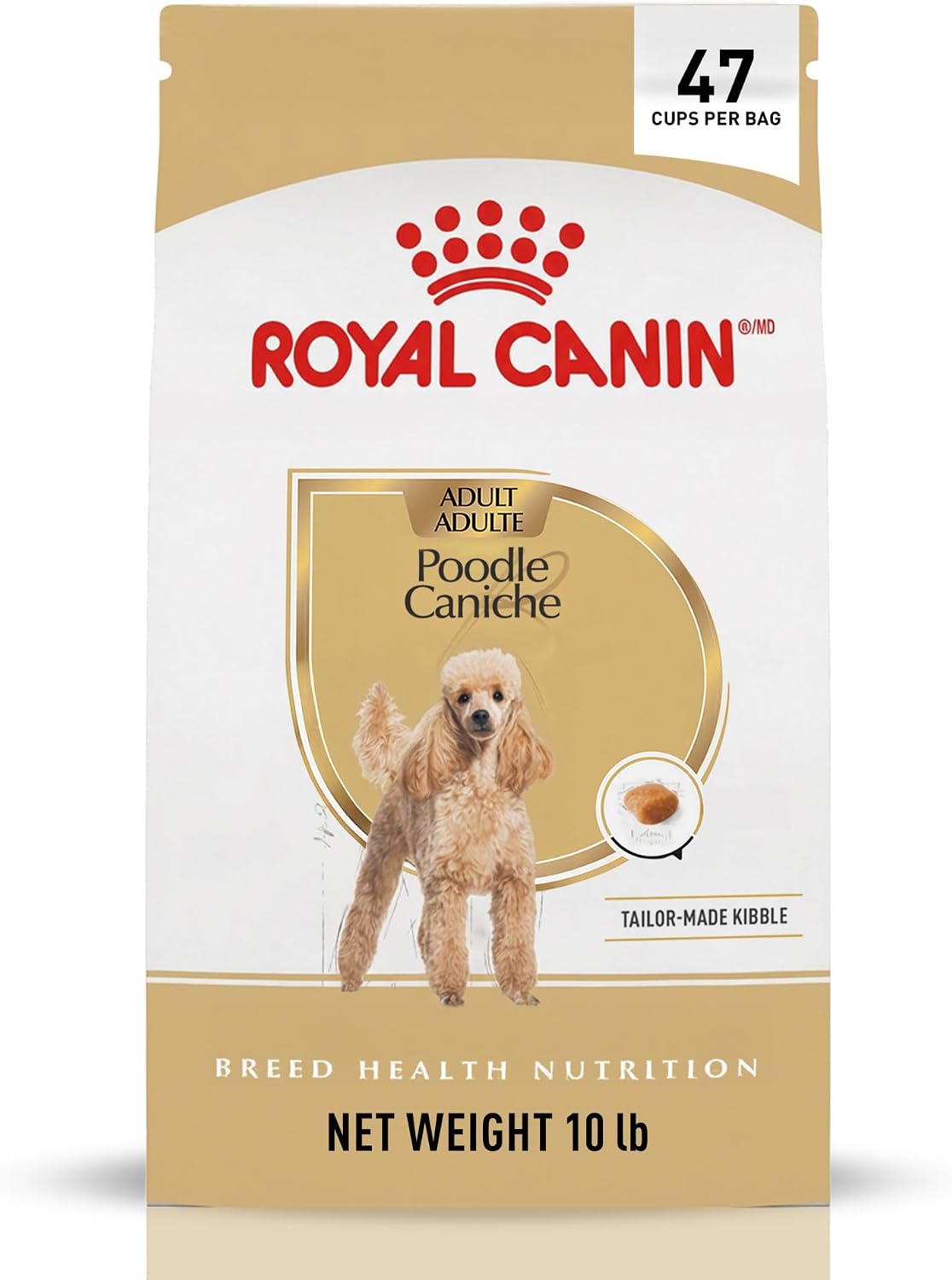
ROYAL CANIN Poodle Adult Dry Dog Food 10 lb
Best Premium Food
| Flavor | Chicken |
|---|---|
| Age Range Description | Adult |
| Item Form | Pellet |
| Unit Count | 160 Ounce |
| Specific Uses For Product | Muscle Care, Skin and Coat Health |
Royal Canin Poodle Adult Dry Dog Food is a breed-targeted kibble designed for adult Poodles that combines a specialized kibble shape with nutrients aimed at skin, coat, muscle and aging support. In daily use you feed it as the primary dry ration for Poodles 10 months and older, introducing it gradually over a week and keeping fresh water available. Notable features include EPA and DHA from fish oil for coat and skin support, a controlled protein level for muscle maintenance, added glucosamine and chondroitin for joint support, and an antioxidant blend for healthy aging. The kibble shape and texture are intended to match a Poodle's muzzle and biting pattern, which can make picking up and chewing easier for the breed. Practical benefits are targeted nutrition that addresses common Poodle needs like coat condition and dental brushing effect from dry food. Limitations are that the ingredient list contains common grains and by-product meal, so owners seeking grain-free or limited-ingredient diets will need a different formula, and this is formulated specifically for Poodles rather than for all breeds or dietary restrictions.
Best for: Owners of adult Standard Poodles who want a ready-made, breed-targeted dry food that supports coat condition, muscle maintenance and healthy aging without custom meal planning.
Less Ideal for: Pet owners looking for grain-free, limited-ingredient, or novel-protein formulas, or those feeding dogs with diagnosed food sensitivities should consider alternative diets.
- Breed-specific kibble shape and texture designed for Poodle muzzle and biting patterns
- Includes EPA and DHA from fish oil to support skin and coat health
- Precise protein level plus added glucosamine and chondroitin to support muscle and joint health
- Antioxidant blend formulated to help healthy aging
- Contains grains and chicken by-product meal, so not suitable for owners seeking grain-free or single-protein diets
- Formulation is breed-specific and may not suit other breeds or dogs with strict dietary restrictions
Verdict: The best premium food for poodles with allergies that prioritizes top-quality, transparently sourced ingredients and rigorous processing standards for owners willing to invest more in specialized care.
Choosing the Right Dog Food Poodle Allergy: Key Factors to Consider
Ingredient Simplicity
Poodles with allergies often react to specific proteins or additives. A shorter ingredient list makes it easier to identify and eliminate problem items. Limited-ingredient diets commonly use a single protein source and a small number of carbohydrate sources, which reduces the number of potential allergens in each meal.
When reading labels, look for whole-food protein sources named specifically rather than vague terms. Avoid foods with a long list of flavors, colors, or preservatives that can trigger sensitivities. Ingredient simplicity also helps if you need to run an elimination diet under veterinary guidance because you can change one element at a time and better isolate the trigger.
Protein Source and Novelty
The protein in your poodle's food is frequently the culprit in food allergies. Choosing single-source proteins or novel proteins that your dog has not been exposed to can reduce immune reactions. Novel proteins include options like duck, venison, or certain fish that the dog may not have eaten previously.
Consider the life-long exposure your poodle has had. If your dog has always eaten common proteins like chicken or beef, a switch to an uncommon protein may help. At the same time, ensure the chosen protein meets the dog's amino acid needs for maintenance and activity so you do not trade intolerance for nutritional gaps.
Digestibility and Gut Support
Highly digestible foods put less strain on the gastrointestinal tract and reduce the risk of loose stools and malabsorption, which often accompany food sensitivities. Ingredients that are easy to digest and appropriate carbohydrate choices help the gut absorb nutrients while minimizing irritation.
Look for prebiotics, moderate fiber, and carbohydrate sources that are gentle on the stomach. Digestive enzyme support and low levels of fermentable sugars can also be helpful. A stable stool and consistent appetite are good indicators a food is digestible for your poodle.
Skin and Coat Nutrient Balance
Allergic reactions commonly show through the skin, so the right balance of nutrients for skin health is essential. Omega-3 and omega-6 fatty acids reduce inflammation and support coat condition, while zinc, vitamin A, and certain B vitamins aid skin repair and barrier function.
Opt for foods that include clinically meaningful levels of these nutrients or list ingredients naturally rich in them, such as fish oil, flaxseed, or specific micronutrient blends. Keep in mind that supplements may be added under veterinary guidance when food alone does not provide adequate support.
Additives and Preservative Profile
Artificial colors, flavors, and some chemical preservatives can provoke or exacerbate allergic reactions in sensitive dogs. Choosing foods with minimal artificial additives reduces the number of compounds that could trigger symptoms.
Prefer foods preserved with natural antioxidants or those using minimal preservatives. Also review flavoring agents and digestives that may be added for palatability, since highly flavored foods can hide problematic ingredients.
Veterinary Oversight and Transition Tolerance
Introducing a new diet to a poodle with allergies should be done thoughtfully, often with veterinary input. A gradual transition over 7 to 14 days reduces digestive upset and makes it easier to notice improvements or setbacks. Veterinary guidance is especially important if your dog has severe dermatitis, secondary infections, or nutritional vulnerabilities.
Your veterinarian can also recommend diagnostic steps such as elimination diets or allergy testing and advise on whether a prescription diet or a controlled home-cooked plan is necessary. Monitor weight, stool quality, and skin condition during the transition to evaluate tolerance.
How Long Before You Expect to See Improvement After Switching Foods?
Skin and digestive improvements often take time. For mild reactions, you may notice reduced itching or better stool quality within two to four weeks after a dietary switch. More entrenched skin problems or chronic allergic dermatitis can take eight to twelve weeks to show marked improvement because the skin and coat need time to heal and inflammation must subside.
If you do not see any improvement after the expected timeframe, consult your veterinarian. Lack of response may indicate the issue is environmental, parasite-related, or requires a stricter elimination protocol rather than a simple brand change.
- Expect early digestive changes in 1 to 2 weeks.
- Allow 8 to 12 weeks for clear skin improvements.
- Follow up with veterinary guidance if no change is observed.
Is a Prescription Diet Necessary for Poodles with Allergies?
Prescription diets can be useful for dogs with severe or persistent allergic reactions because they often use hydrolyzed proteins or highly controlled ingredient lists that are formulated to reduce immune reactivity. However, many poodles respond well to nonprescription limited-ingredient foods or novel-protein commercial diets.
Deciding whether to use a prescription option depends on symptom severity, response to over-the-counter limited diets, and veterinary evaluation. Work with your veterinarian to determine if a prescription route is warranted based on clinical signs and diagnostic findings.
- Prescription diets are typically recommended for moderate to severe cases.
- Nonprescription limited diets may suffice for mild sensitivities.
- Diagnostic tests can guide the need for prescription formulas.
How to Run an Elimination Diet Effectively
An elimination diet systematically removes potential allergens and then reintroduces them one at a time to identify the trigger. Choose a single-source protein and a simple carbohydrate that your poodle has not eaten before. Feed exclusively that diet for a minimum of 8 to 12 weeks while monitoring skin, coat, and stool.
After the elimination phase, reintroduce one ingredient at a time and observe for recurrence of symptoms over a few weeks. Keep a feeding diary and consult your veterinarian throughout the process to ensure nutritional adequacy and correct interpretation of signs.
- Use a single new protein and simple carbohydrate for the elimination phase.
- Maintain the elimination diet for at least 8 weeks, ideally 12.
- Reintroduce ingredients one at a time and monitor for reactions.
Can Supplements Help Manage Allergy Symptoms?
Supplementation can support skin health and reduce inflammation but should complement a careful diet rather than replace it. Fish oil or other omega-3 supplements commonly reduce skin inflammation and improve coat condition. Probiotics can help stabilize gut flora and may reduce gastrointestinal symptoms associated with food intolerances.
Talk to your veterinarian before adding supplements to ensure they are appropriate for your poodle and do not unbalance the overall diet. Quality, dosing, and formulation matter, and some supplements interact with medications used to treat secondary infections or allergies.
- Omega-3 supplements often help skin inflammation.
- Probiotics may support digestive health during dietary transitions.
- Vet approval is recommended before starting supplements.
How to Read Labels for Hidden Allergens
Manufacturers sometimes use umbrella terms or flavorings that can obscure specific ingredients. Look for clearly listed protein sources and avoid ambiguous terms. Also scan ingredient statements for common additives like dairy, eggs, or soy that can be hidden in meat meals or flavor enhancers.
Ingredients are listed by weight, so the first few items make up the bulk of the formula. Pay attention to both named proteins and carbohydrate sources, and be cautious with multi-ingredient foods that combine several protein meals or grain complexes.
- Prioritize explicit ingredient names over generic terms.
- Check for common cross-reactive ingredients like dairy and soy.
- Remember that the first listed ingredients represent the largest portions.
How We Chose the Best Dog Food Poodle Allergy
We evaluated candidate foods using criteria that matter for poodles prone to food sensitivities and allergic skin disease. First, ingredient transparency and limited-ingredient formulations were prioritized, since fewer protein and carbohydrate sources reduce the risk of reactions. Second, digestibility and protein source quality were assessed, favoring single-source or novel proteins that are easier for sensitive dogs to tolerate. Third, dermatological support mattered: levels of omega fatty acids, zinc, and vitamins that support skin and coat health were considered. Fourth, gastrointestinal support was reviewed, including fiber type, prebiotics, and gentle carbohydrate choices to reduce stool issues. Fifth, manufacturing quality and nutrient completeness were considered to ensure foods meet life-stage needs. We excluded foods that rely heavily on generic byproducts, unclear ingredient labeling, or formulations aimed solely at weight loss without skin support. We also filtered out options that lacked complete nutrient profiles for adult maintenance. The final selections reflect a balance of ingredient simplicity, digestibility, and targeted support for skin and digestive health in poodles with allergy concerns.
Our full evaluation process is outlined in our review methodology.
FAQ
How do I know if my poodle's issue is a food allergy or something else?
Food allergies typically present as chronic itching, recurrent ear infections, or digestive upset that responds to dietary change. Environmental allergies often cause seasonal or location-specific symptoms. A veterinary exam and possibly an elimination diet or testing can help distinguish food-related problems from other causes.
Can small breed poodles eat the same formulas as standard poodles?
Nutritional needs are similar across poodle sizes, but caloric density and kibble size can matter. Choose a formula appropriate for your dog's life stage and adjust portion sizes for smaller or larger body weight. Kibble size and texture should suit your poodle's jaw and chewing habit.
Is grain-free food better for poodles with allergies?
Grain-free does not guarantee relief from allergies because dogs are more commonly allergic to proteins than grains. Grain-free diets may help some dogs if grains are the trigger, but they are not a universal solution. Focus first on identifying the specific offending ingredient through an elimination approach.
How should I transition my poodle to a new hypoallergenic food?
Transition gradually over 7 to 14 days by mixing increasing amounts of the new food with the old. Monitor stool quality, appetite, and skin condition during the switch. A slower transition reduces the chance of digestive upset and helps you observe whether the new food is tolerated.
Are homemade diets a safe option for poodles with allergies?
Homemade diets can control ingredients tightly but require careful formulation to meet all nutritional needs. If you consider home-cooked feeding for an allergic poodle, work with a veterinary nutritionist to ensure complete and balanced meals and to avoid nutrient deficiencies or excesses.
Final Verdict
When managing a poodle with allergies, prioritize diets that simplify ingredient exposure, use a single or novel protein, and include nutrients that support skin and digestive health. Be prepared to allow several weeks to evaluate improvement and to work with your veterinarian on an elimination plan or further diagnostics. Balance the benefits of a simpler, more digestible formulation against palatability and practical feeding routines. With a methodical approach and attention to the factors above, you can choose a food that reduces allergic reactions and supports a healthier coat and digestion.

