

If you own a poodle puppy, choosing the right puppy food affects growth, coat condition, and long-term health. Poodle puppies have small mouths, fast metabolisms, and particular needs for balanced protein and fat to support brain and coat development. This guide shortlists the top options for poodle puppies and explains why each made the cut. We evaluated each shortlisted puppy food for nutrient balance, kibble size, and digestive tolerance so you can pick the right daily diet for your poodle puppy. Read on for the key factors that matter and practical feeding guidance.
Top Picks at a Glance
| Best Overall Food for Poodle Puppies A balanced, nutrition-complete pick ideal for most poodle puppies | ROYAL CANIN Poodle Puppy Dry Food 2.5 lb |  |
| Best Budget Food for Poodle Puppies An affordable puppy formula that still meets basic nutritional needs | Pedigree Puppy Dry Dog Food 3.5 lb |  |
| Best Premium Food Higher-end formulations with superior ingredients and quality control | ORIJEN Small Breed Dry Dog Food 10 lb |  |
| Best High-Protein Food Formulas with elevated protein for active or fast-growing pups | Purina Pro Plan Puppy Chicken & Rice 6 lb |  |
| Best Grain-Free Food Recipes without grains for dogs with grain sensitivities or preferences | Taste of the Wild Pacific Stream Puppy 28 lb |  |
| Best Wet Food Canned or pouched puppy diets with higher moisture and palatability | Royal Canin Puppy Loaf in Sauce 13.5 oz (Pack of 12) |  |
ROYAL CANIN Poodle Puppy Dry Food 2.5 lb
Best Overall Food for Poodle Puppies
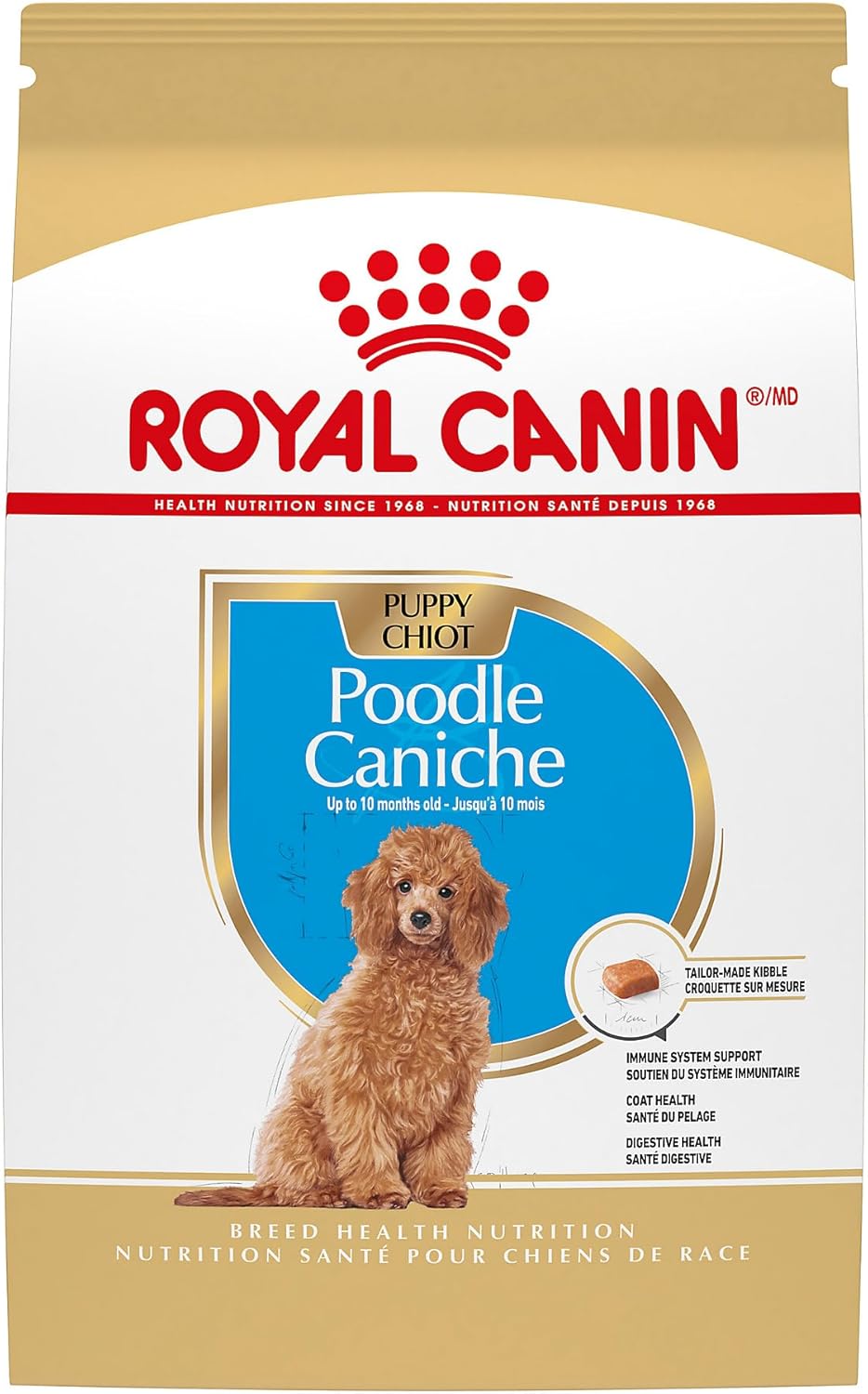
| Flavor | Chicken |
|---|---|
| Age Range Description | Puppy |
| Breed Recommendation | Poodle |
| Unit Count | 40 Ounce |
| Item Form | Pellet |
This Royal Canin Poodle Puppy formula is a breed-targeted dry puppy food designed for Poodles from about 8 weeks to 10 months. The kibble is shaped and sized for a Poodle's muzzle and bite, which makes it easier for small Poodle puppies to pick up and chew during meal times. The recipe emphasizes immune development with an antioxidant complex including vitamin E, and it adds EPA and DHA from fish oil to support skin and coat health for curly Poodle coats. High-quality proteins and prebiotics aim to promote digestive health and more consistent stool quality, while the veterinary-style formulation focuses on growth needs. Because it is a breed-specific, nutrient-dense puppy diet, it is suitable as an everyday growth food but should be switched to the adult Poodle formula around 10 months. The formula lists chicken by-product meal and several cereal ingredients up front, so owners who prefer novel-protein or grain-free diets should be aware of that ingredient profile.
Best for: Poodle owners who want a daily puppy food formulated specifically for the breed’s bite, coat, and growth needs and who prioritize balanced nutrition and digestibility.
Less Ideal for: Owners seeking grain-free, limited-ingredient, or novel-protein puppy diets for allergy management should consider alternative formulas or consult a veterinarian.
- Kibble shape and size tailored to Poodle jaw and muzzle for easier pickup and chewing
- Antioxidant complex with vitamin E supports immune system development
- EPA and DHA from fish oil to support skin and coat health
- Prebiotics and quality proteins formulated to promote digestive health and optimal stool quality
- Contains chicken by-product meal and multiple grains, which may not suit owners seeking novel-protein or grain-free diets
- Available in relatively small bag sizes compared with standard puppy food bulk options
Verdict: The best overall food for poodle puppies that balances appropriate puppy nutrients, digestibility, and palatability for everyday growth and development.
Pedigree Puppy Dry Dog Food 3.5 lb
Best Budget Food for Poodle Puppies

| Flavor | Chicken & Vegetable |
|---|---|
| Age Range Description | Puppy |
| Item Form | Dry Kibble |
| Unit Count | 56 Ounce |
| Animal Food Nutrient Content Claim | High Protein, No Added Sugar |
Pedigree Puppy Dry Dog Food is a straightforward, budget-friendly puppy kibble made from chicken-based protein, grains, and added vitamins and minerals to support growth. You would typically use it as a daily staple while transitioning a young dog from weaning to adult food, following the feeding guide on the package to match your puppy's weight and age. The formula emphasizes high-quality protein sources for muscle development and includes 36 vitamins, minerals, and amino acids intended to support immune health, brain development, and bone strength. In practice this means an owner gets a complete and balanced commercial diet that is easy to portion and serve dry or softened with water for very young pups. Ingredient-wise it contains common commodity grains and by-product meals rather than premium single-source meats, so it delivers required calories and nutrients at a lower cost but not the cleanest ingredient panel. Expect good availability and consistent kibble size, but owners seeking grain-free, novel proteins, or limited-ingredient formulas will need to look elsewhere.
Best for: Value-conscious puppy owners who need an affordable, complete puppy kibble that supports growth and daily feeding routines.
Less Ideal for: Owners who require grain-free, novel-protein, or limited-ingredient veterinary diets for food sensitivities should consider specialty formulas instead.
- Formulated specifically for puppies with nutrients to support growth and immune health
- Contains high-protein sources to support muscle development
- Includes 36 vitamins, minerals, and amino acids for complete and balanced nutrition
- Easy-to-follow feeding guide for age and weight makes portioning simple
- Uses ingredient list with grains and by-product meals rather than single-source premium proteins
- Not suitable for owners seeking grain-free or limited-ingredient diets
Verdict: The best budget food for poodle puppies that delivers required puppy nutrition and acceptable ingredient quality for owners prioritizing low cost.
ORIJEN Small Breed Dry Dog Food 10 lb
Best Premium Food

| Flavor | Grain Free Small Breed Dog Recipe |
|---|---|
| Age Range Description | All Life Stages |
| Item Form | Dry Kibble |
| Unit Count | 160 Ounce |
ORIJEN Small Breed is a protein-forward dry kibble designed for small dogs and formulated to mirror ancestral diets by using fresh and raw animal ingredients. It is typically fed twice daily and comes in a small-bite kibble that is easier for small mouths to pick up, with the first ingredients listing multiple fresh or dehydrated poultry and fish sources plus organ meats for nutrient density. The formula emphasizes WholePrey components and reports about 85% animal ingredients from the unprocessed state, which supports muscle maintenance and higher energy needs for active small breeds. The freeze-dried coating boosts palatability, and the recipe excludes common fillers like corn, wheat, soy, and tapioca. Buyers should note this is a grain-free, high-protein diet so portioning should be monitored to maintain weight, and the rich ingredient mix may be more expensive than standard formulas. Transition gradually over 10 to 14 days to reduce digestive upset when switching to this richer diet.
Best for: Boston Terriers or other small, active dogs that need a protein-dense diet to support muscle and energy should consider this food, especially if you prioritize whole-animal ingredients and palatability.
Less Ideal for: Dogs that require a lower-protein or limited-ingredient diet for medical reasons or owners seeking a budget-focused everyday kibble should consider alternatives.
- Very high proportion of animal-based ingredients including fresh and dehydrated meats and organs
- Small-bite kibble shaped for easier eating by small breeds
- Grain-free formula with no corn, wheat, soy or tapioca
- Freeze-dried coating improves palatability and flavor acceptance
- Formulated to support digestive, immune, and skin and coat health
- Rich, high-protein formula may require careful portion control to avoid excess calorie intake
- Grain-free specialty ingredients typically come at a higher price point
Verdict: The best premium food for owners willing to invest in higher-quality ingredients, advanced formulations, and stricter sourcing standards for long-term puppy health.
Purina Pro Plan Puppy Chicken & Rice 6 lb
Best High-Protein Food

| Flavor | Chicken & Rice |
|---|---|
| Age Range Description | Puppy |
| Item Form | Dry |
| Specific Uses For Product | Hip and Joint Support |
| Animal Food Nutrient Content Claim | High Protein |
Purina Pro Plan High Protein Dry Puppy Food Chicken & Rice is a puppy formula designed to support active growth with real chicken as the primary protein source. It is typically fed as a daily dry kibble for puppies and can be offered moistened during weaning or fed dry as puppies mature. Notable features include DHA from fish oil to support brain and vision development, added calcium and phosphorus for bone and tooth growth, live probiotics for digestive health, and antioxidants to support immune development. In practice this formula helps build lean muscle and provides concentrated nutrients for puppies that need higher protein intake, and its digestible recipe reduces the chance of stomach upset during diet transitions. Limitations include the presence of some by-product meals and grain ingredients, which may be less suitable for owners seeking grain-free or novel-protein diets, and the ingredient list includes salts and common additives that some sensitive puppies may not tolerate. Feeding amounts should be adjusted as puppies grow and you may want to consult your veterinarian for breed-specific needs.
Best for: Buyers looking to support active, growing puppies with a higher-protein, vet-backed kibble that emphasizes muscle development and digestive support.
Less Ideal for: Owners seeking a grain-free, novel-protein, or limited-ingredient puppy diet for allergy-prone dogs should consider specialized formulas instead.
- Real chicken listed as the first ingredient for bioavailable animal protein
- Includes DHA from fish oil to support brain and vision development
- Live probiotics and highly digestible formula to ease digestion and stool quality
- Added calcium, phosphorus and minerals to support bone and tooth growth
- Contains poultry by-product meal and common grains rather than novel or grain-free sources
- Includes multiple added ingredients and preservatives that some owners may avoid
Verdict: The best high-protein food for puppies that need extra protein to support lean muscle growth, higher energy levels, and active play.
Taste of the Wild Pacific Stream Puppy 28 lb
Best Grain-Free Food

| Flavor | Smoke-Flavored Salmon |
|---|---|
| Protein | 27% (high-protein) |
| Age Range | Puppy, nursing or pregnant mothers |
| Item Form | Dry Kibble |
| Ingredient Claim | Grain-Free |
Taste of the Wild Pacific Stream Puppy is a grain-free dry kibble formulated for growing puppies and nursing mothers, using fish-based proteins and smoked salmon flavor to deliver a high-protein diet. It is typically fed as a complete everyday food and includes species-specific probiotics and prebiotics to support digestion, plus omega fatty acids and antioxidant-rich fruits and vegetables for skin, coat, immune and joint support. Practical benefits include a 27% protein level to support lean muscle and energy needs, salmon and fish meal as first ingredients for palatability, and recommended feeding guidance for adjusting portions by activity and growth. Limitations to consider are the grain-free formulation itself, which some vets caution about for certain breeds or heart-health concerns, and the single primary protein source may not suit puppies with fish-specific allergies. The large 28 lb bag is convenient for multi-puppy households or long-term feeding but requires proper storage to maintain freshness.
Best for: Buyers seeking a grain-free, fish-based growth formula for puppies that need a high-protein diet and better digestive support through probiotics.
Less Ideal for: Owners who prefer grain-inclusive diets or whose puppies have known fish allergies or dietary sensitivities should consider other formulas.
- Real fish is the first ingredient for strong protein and flavor
- 27% crude protein supports growth and lean muscle development
- Includes species-specific probiotics and prebiotics for digestive health
- Contains omega fatty acids and antioxidant-rich fruits and vegetables for skin, coat and immune support
- Grain-free recipe may not be appropriate for all puppies given ongoing veterinary guidance on grain-free diets
- Single fish-forward protein could trigger issues for puppies with fish allergies
Verdict: The best grain-free food for puppies when owners prefer or need a grain-free ingredient profile to manage specific digestive or dietary concerns.
Royal Canin Puppy Loaf in Sauce 13.5 oz (Pack of 12)
Best Wet Food

| Flavor | Chicken |
|---|---|
| Item Form | Pate |
| Age Range Description | Puppy |
| Number of Items | 12 |
| Unit Count | 162 Ounce |
Royal Canin Puppy Loaf in Sauce is a wet pate-style puppy food designed to provide targeted nutrition during rapid growth. It is typically used as a complete meal for young puppies or mixed with Royal Canin dry kibble to add moisture and palatability for picky eaters. The formula includes highly digestible proteins, fish oil, beet pulp, and a complex of antioxidants aimed at supporting digestion and a developing immune system, making it useful during dietary transitions and periods of high energy demand. The loaf-in-sauce texture is easy for small mouths to lap up and tends to be appetizing for fussy pups or those needing extra hydration. As a veterinary-style diet focused on growth, it emphasizes nutrient balance rather than novel ingredients or grain-free claims. Buyers should note this is a puppy-specific formula intended for the puppy life stage and comes in a case pack, which may be more than needed for single-puppy households unless you freeze or stock appropriately.
Best for: Owners who want a puppy-specific wet food that reliably stimulates appetite, supports digestion and immunity, and mixes well with dry kibble for Bulldogs in the puppy growth window.
Less Ideal for: Buyers seeking single-ingredient, limited-ingredient, or novel-protein wet foods for food-sensitive puppies should consider specialist formulas instead.
- Formulated specifically for puppies to support growth and development
- Includes antioxidants and probiotics-supporting ingredients for immune and digestive health
- Loaf-in-sauce texture is highly palatable and easy for small puppies to eat
- Can be fed alone or mixed with dry kibble to boost moisture and appeal
- Sold in a 12-can case which may be more than needed for small households
- Ingredients list includes by-products and common fillers rather than novel single-protein sources
Verdict: The best wet food for puppies that benefit from higher moisture content, stronger aroma, and softer texture to encourage eating and support hydration.
Choosing the Right Dog Food Poodle Puppy: Key Factors to Consider
Protein Quality and Amount
Protein fuels tissue growth and supports the development of muscles and organs in a growing poodle puppy. Look for named animal protein sources listed near the top of the ingredient panel and a guaranteed analysis that shows sufficient crude protein for growth-stage feeding.
Beyond total protein, digestibility matters. Highly digestible proteins yield usable amino acids with less metabolic waste, which helps maintain stool quality and reduces digestive upset. Avoid vague "meat by-product" listings when possible and prefer whole-muscle sources or clearly identified meals that supply essential amino acids.
Kibble Size and Texture
Poodle puppies have relatively small jaws and developing teeth, so kibble size and texture are significant for safe, comfortable eating. Kibble that is too large or very hard can discourage eating or strain immature teeth; very small dry pieces can be inhaled or crumbled.
Opt for kibble designed for small-breed puppies or shapes that break easily in the mouth while still encouraging chewing. Consider how you'll serve food—some owners moisten dry kibble briefly for very young pups or use split feeding for transitioning from weaning diets.
Fat Content and Fatty Acid Profile
Dietary fat supplies concentrated energy for active poodle puppies and supports healthy brain development and skin and coat condition. The overall fat percentage should be appropriate for growth while not being so high that it causes loose stools or rapid weight gain.
Pay attention to the fatty acid profile, particularly sources of omega-3 and omega-6 fatty acids. These support coat sheen and skin health. Ingredients like fish oil or flaxseed provide beneficial long-chain fatty acids, and antioxidant support in the formula can help protect developing tissues.
Digestive Tolerance and Stool Quality
A food that causes frequent diarrhea or very loose stools is hard to manage and may signal poor ingredient digestibility or sensitivities. Look for formulas with gentle carbohydrate sources, prebiotics or probiotics, and moderate fiber to help maintain consistent stool quality.
Transitioning slowly between foods and choosing formulas with clean ingredient lists can reduce the risk of digestive upset. If your puppy has a history of sensitive digestion, choose a limited-ingredient or specialized digestive formula and work with your veterinarian on any prolonged issues.
Vitamins, Minerals, and Bone Growth Balance
Proper bone and joint development requires the right balance of calcium, phosphorus, and vitamin D. Puppy foods should provide growth-stage nutrient ratios that support skeletal development without promoting overly rapid bone growth, which can be a concern in some small breeds.
Also consider antioxidants and micronutrients that support immune function and overall development. A complete, balanced puppy formula will list a vitamin and mineral mix tailored to growth needs rather than relying on ad hoc supplementation.
Palatability and Acceptance
Even the most nutritious formula is ineffective if a puppy will not eat it reliably. Palatability is influenced by protein type, fat level, texture, and aroma. Puppies often prefer richer aromas and softer textures but individual preferences vary.
If a puppy is a picky eater, trial-size packages or gradual mixing strategies help determine acceptance. Flavors and textures that appeal to a poodle puppy may change as teething progresses, so expect some short-term variation in preferences.
How Much Should I Feed a Poodle Puppy and How Often?
Feeding frequency and portion size depend on age, activity, and body condition. Young poodle puppies typically eat three to four small meals per day to maintain steady energy levels and support growth. As they mature toward adulthood, feeding can be reduced to two meals a day.
Use the feeding chart on the puppy food as a starting point, then adjust portions based on your puppy's body condition and growth rate. Monitor weight and rib coverage: you should be able to feel ribs with a light fat covering but not see pronounced ribs. If in doubt, consult your veterinarian for a tailored feeding plan.
- Puppies under 4 months: 3–4 meals daily
- 4 to 6 months: often transition to 3 meals daily
- After 6 months: many small-breed puppies move to 2 meals daily
When and How to Transition From Puppy Food to Adult Food?
Most small-breed dogs reach adult size earlier than large breeds. For poodle puppies, many owners begin a gradual transition from puppy to adult formulation between 9 and 12 months, depending on growth and body condition. Avoid abrupt switches; blend increasing amounts of the new food with the old over 7 to 10 days.
Watch for changes in appetite, stool quality, or energy during the transition. If you see digestive upset, slow the transition and consider consulting your veterinarian. Continue to monitor weight and adjust daily calories so the puppy does not gain excess fat as activity levels change.
- Typical transition period: 7–10 days
- Adjust based on the puppy's growth and vet advice
What to Do if Your Poodle Puppy Has a Sensitive Stomach?
Start by simplifying the diet: choose a single-protein, limited-ingredient puppy formula with gentle carbohydrate sources. Introduce the new food gradually and keep treats to a minimum while you observe the puppy's tolerance.
If issues persist for more than a few days, consult your veterinarian. They may recommend an elimination trial, stool testing, or a prescription digestive formula. Probiotics and pumpkin fiber can help short-term, but persistent problems merit professional assessment.
- Try limited-ingredient or easily digestible puppy formulas
- Introduce changes gradually and limit new treats during trials
- Seek veterinary advice for ongoing symptoms
How to Support a Healthy Coat and Skin Through Diet?
A balanced diet with adequate protein and the right fatty acids is the foundation for a healthy poodle coat. Ensure the puppy food lists quality protein sources and includes omega-3 and omega-6 fatty acids or named ingredients that supply them.
Supplements are rarely necessary if the food is complete and balanced, but discuss options with your veterinarian if the coat is dry or the skin is irritated. Regular grooming and parasite control also play major roles and should be part of a comprehensive care plan.
- Look for named protein and added sources of omega fatty acids
- Discuss supplementation only after confirming dietary gaps with a vet
Choosing Treats and Toppers Without Upsetting Digestion
Treats and toppers are useful for training and boosting palatability but can upset the gastrointestinal balance if overused. Select small-bite treats formulated for puppies and avoid high-fat human foods or rich scraps that can cause loose stools.
Use toppers sparingly, and opt for single-ingredient or lightly processed options. When introducing any new treat, offer a tiny amount first and watch stool and appetite for the next 24 to 48 hours.
- Limit treats to no more than 10 percent of daily calories
- Prefer low-fat, puppy-formulated treats for training
How We Chose the Best Dog Food Poodle Puppy
We focused on nutritional quality, form factor, digestibility, growth-stage suitability, and safety records when selecting the puppy foods included on this list. Each candidate had to meet baseline standards for essential nutrients, with a full complement of amino acids, appropriate calcium-to-phosphorus ratios, and calorie density suitable for small-breed growth. We prioritized foods formulated specifically for puppies or for small-breed puppies, paying special attention to kibble size and shape so it is easy for poodle puppies to pick up and chew. Digestibility indicators included protein sources, inclusion of probiotics or gentle fiber sources, and absence of ingredients commonly associated with stomach upset. We considered manufacturing quality controls, such as clear ingredient sourcing and plainly listed guaranteed analysis. Foods with recurrent safety concerns, unclear labeling, or that targeted adult dogs only were excluded. Our final selection balances nutrient density, manageable kibble geometry, and features that support coat health and cognitive development.
Our full evaluation process is outlined in our review methodology.
FAQ
How do i know if my poodle puppy is getting enough calories?
Monitor body condition and growth rather than only relying on feeding charts. A well-fed poodle puppy should show steady, proportionate growth and maintain a soft waistline. If the puppy is losing weight or appears lethargic, increase calories moderately and consult your veterinarian.
Are grain-free puppy foods necessary for poodle puppies?
Grain-free diets are not required for most poodle puppies. Many puppies digest grain-containing formulas well. Grain-free options can be useful when a puppy has a specific intolerance, but discuss suspected sensitivities with your veterinarian before switching.
Can i feed wet food, dry kibble, or a mix for my poodle puppy?
All formats can be appropriate. Dry kibble offers dental abrasiveness and convenience, while wet food is often more palatable and easier to chew for some puppies. Mixing wet and dry is common to increase palatability; just maintain balanced total daily calories.
When should i introduce puppy-safe supplements like fish oil?
If the chosen puppy formula already includes omega fatty acids and a complete vitamin profile, additional supplements are usually unnecessary. Consider supplements only if a veterinarian identifies a deficiency or specific need and follow dosing guidance closely.
What signs indicate a food allergy versus a food intolerance?
Food allergies often present with chronic skin issues, persistent itching, and ear problems, while intolerances are more likely to cause gastrointestinal symptoms like diarrhea or vomiting. Both warrant veterinary evaluation, and an elimination diet can help identify the trigger under guidance.
Final Verdict
Prioritize a complete puppy formula that matches the needs of a small-breed poodle: high-quality protein, appropriate fat and calorie density, and kibble geometry suited for small mouths. Balance digestibility and nutrient density to support steady growth without promoting excess weight. Weigh tradeoffs between palatability and digestive tolerance, and transition diets gradually while monitoring body condition and stool. When in doubt, consult your veterinarian to tailor feeding for growth milestones, allergies, or health concerns so you can choose confidently for your poodle puppy.

