

Finding the right food for a poodle matters for coat condition, dental health, and steady energy. Poodles have specific needs tied to size, activity level, and a reputation for sensitive skin and digestion. A well-chosen diet can reduce grooming issues, support a healthy weight, and help keep stool firm without upsetting a sensitive stomach. This guide shortlists the top options in the category and explains the features we prioritized. You will get clear evaluation criteria and practical buying guidance to pick a food that fits your poodle's life stage and lifestyle.
Top Picks at a Glance
| Best Overall Food for Poodle The top all-around formula that suits most poodles' needs | ROYAL CANIN Poodle Adult Dry Dog Food 10 lb |  |
| Best Budget Food for Poodle A low-cost option that still meets basic nutritional needs | Kibbles 'n Bits Mini Bits Bacon & Steak 3.5 lb |  |
| Best Premium Food Higher-end formulas with superior ingredients and targeted benefits | ORIJEN Small Breed Dry Dog Food 10 lb |  |
| Best Grain-Free Food Formulas without grains for grain-sensitive or preference-based diets | Wellness CORE+ Small Breed Dry Dog Food 4 lb |  |
| Best Limited-Ingredient Food Simpler recipes for sensitive stomachs or ingredient intolerances | Natural Balance Limited Ingredient Salmon & Sweet Potato 24 lb |  |
| Best High-Protein Food Protein-forward recipes to support active metabolism and muscle tone | Taste of the Wild Pacific Stream 28 lb |  |
| Best Small-Breed Food Kibble and formulas sized and balanced for smaller mouths | Hill's Science Diet Adult Small & Mini |  |
ROYAL CANIN Poodle Adult Dry Dog Food 10 lb
Best Overall Food for Poodle
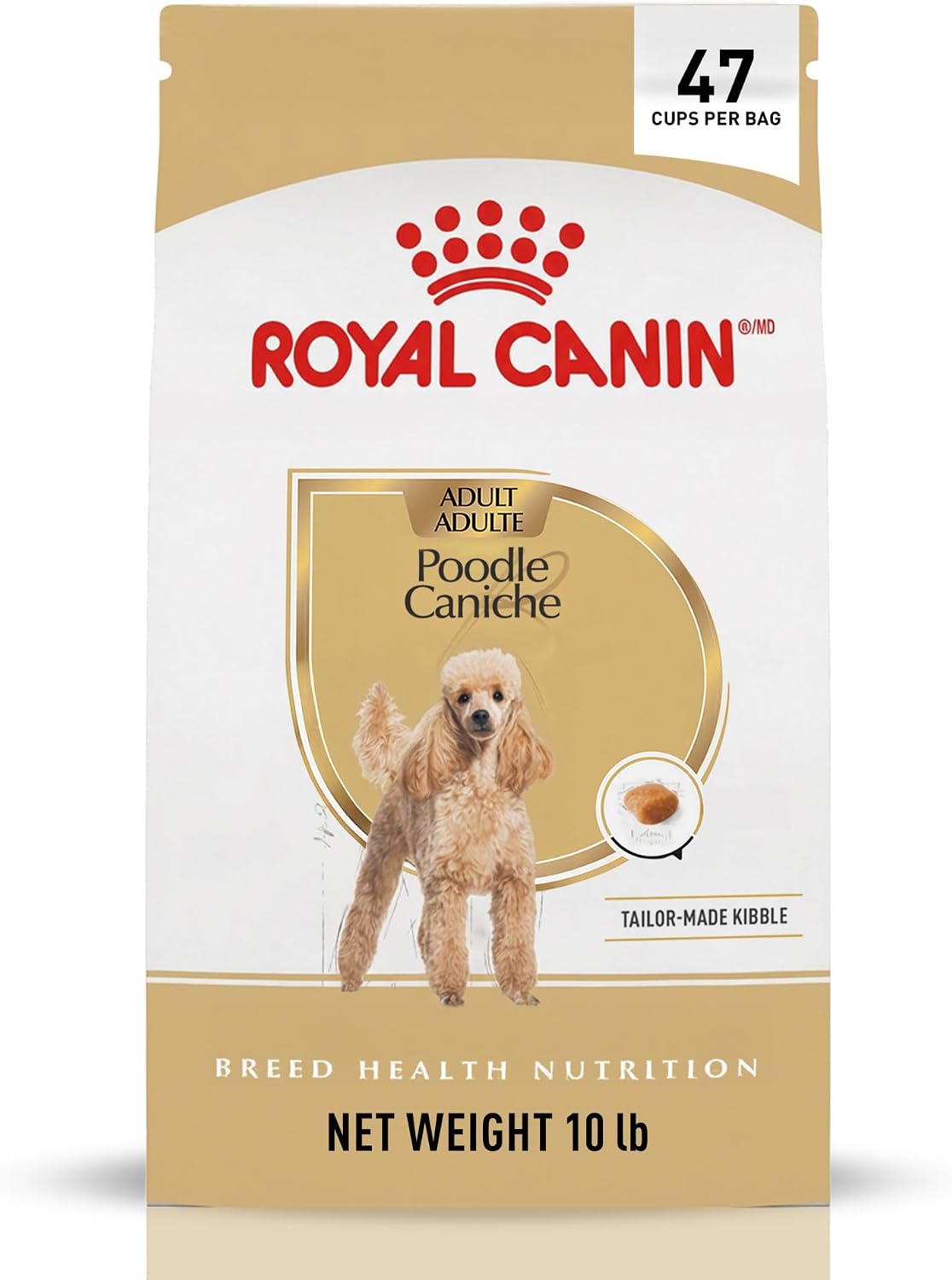
| Flavor | Chicken |
|---|---|
| Age Range Description | Adult |
| Item Form | Pellet |
| Unit Count | 160 Ounce |
| Specific Uses For Product | Muscle Care, Skin and Coat Health |
Royal Canin Poodle Adult Dry Dog Food is a breed-targeted kibble designed for adult Poodles that combines a specialized kibble shape with nutrients aimed at skin, coat, muscle and aging support. In daily use you feed it as the primary dry ration for Poodles 10 months and older, introducing it gradually over a week and keeping fresh water available. Notable features include EPA and DHA from fish oil for coat and skin support, a controlled protein level for muscle maintenance, added glucosamine and chondroitin for joint support, and an antioxidant blend for healthy aging. The kibble shape and texture are intended to match a Poodle's muzzle and biting pattern, which can make picking up and chewing easier for the breed. Practical benefits are targeted nutrition that addresses common Poodle needs like coat condition and dental brushing effect from dry food. Limitations are that the ingredient list contains common grains and by-product meal, so owners seeking grain-free or limited-ingredient diets will need a different formula, and this is formulated specifically for Poodles rather than for all breeds or dietary restrictions.
Best for: Owners of adult Standard Poodles who want a ready-made, breed-targeted dry food that supports coat condition, muscle maintenance and healthy aging without custom meal planning.
Less Ideal for: Pet owners looking for grain-free, limited-ingredient, or novel-protein formulas, or those feeding dogs with diagnosed food sensitivities should consider alternative diets.
- Breed-specific kibble shape and texture designed for Poodle muzzle and biting patterns
- Includes EPA and DHA from fish oil to support skin and coat health
- Precise protein level plus added glucosamine and chondroitin to support muscle and joint health
- Antioxidant blend formulated to help healthy aging
- Contains grains and chicken by-product meal, so not suitable for owners seeking grain-free or single-protein diets
- Formulation is breed-specific and may not suit other breeds or dogs with strict dietary restrictions
Verdict: The best overall food for poodles, balancing nutrient profile, palatability, digestibility, and ingredient quality for everyday health and coat condition.
Kibbles 'n Bits Mini Bits Bacon & Steak 3.5 lb
Best Budget Food for Poodle

| Flavor | Bacon and Steak |
|---|---|
| Life Stage | Adult |
| Breed Size | Small |
| Unit Count | 56 Ounce |
| Item Form | Pellet |
Kibbles 'n Bits Mini Bits Bacon & Steak is a small-breed dry dog food built around bite-sized crunchy kibbles mixed with chewy meaty bits to boost palatability for picky eaters. It is intended for adult small dogs and is served straight from the bag using the provided feeding guide; the mini kibble size makes it easy for small mouths to pick up and chew. The formula emphasizes taste with bacon and steak flavors and includes a mix of grains, meat meals, and added vitamins and minerals to deliver complete and balanced nutrition for adult dogs. Practical benefits include strong taste appeal that can help coax a finicky dog to eat, small pieces that suit toy and small breeds, and easy portioning for daily feeding. Important limitations are its ingredient list, which relies heavily on corn, wheat and soy and includes coloring and preservatives, and that it is not formulated for puppies or dogs with specific ingredient sensitivities. For buyers prioritizing flavor on a budget, this bag offers an economical, convenient option to revive interest at mealtime but owners seeking grain-free or limited-additive recipes should look elsewhere.
Best for: Buyers who need an inexpensive, highly palatable dry food to encourage regular eating in adult small-breed dogs and who prioritize taste and convenience over grain-free or limited-ingredient formulations.
Less Ideal for: Owners looking for grain-free, limited-ingredient, or puppy-specific nutrition, or those managing food allergies or strict ingredient-sensitive diets should consider other formulas.
- Mini kibble size tailored for small mouths and easier chewing
- Crunchy kibble plus chewy meaty bits increases palatability for picky dogs
- Sold in a small 3.5 lb bag that is easy to store and portion
- Complete and balanced for adult small-breed nutrition with added vitamins and minerals
- Formula contains common grains and multiple additives including artificial colors and preservatives
- Not suitable for puppies under one year or dogs with grain/ingredient sensitivities
Verdict: The best budget food for poodles that provides complete, AAFCO-appropriate nutrition and decent digestibility at a lower price point for cost-conscious owners.
ORIJEN Small Breed Dry Dog Food 10 lb
Best Premium Food

| Flavor | Grain Free Small Breed Dog Recipe |
|---|---|
| Age Range Description | All Life Stages |
| Item Form | Dry Kibble |
| Unit Count | 160 Ounce |
ORIJEN Small Breed is a protein-forward dry kibble designed for small dogs and formulated to mirror ancestral diets by using fresh and raw animal ingredients. It is typically fed twice daily and comes in a small-bite kibble that is easier for small mouths to pick up, with the first ingredients listing multiple fresh or dehydrated poultry and fish sources plus organ meats for nutrient density. The formula emphasizes WholePrey components and reports about 85% animal ingredients from the unprocessed state, which supports muscle maintenance and higher energy needs for active small breeds. The freeze-dried coating boosts palatability, and the recipe excludes common fillers like corn, wheat, soy, and tapioca. Buyers should note this is a grain-free, high-protein diet so portioning should be monitored to maintain weight, and the rich ingredient mix may be more expensive than standard formulas. Transition gradually over 10 to 14 days to reduce digestive upset when switching to this richer diet.
Best for: Boston Terriers or other small, active dogs that need a protein-dense diet to support muscle and energy should consider this food, especially if you prioritize whole-animal ingredients and palatability.
Less Ideal for: Dogs that require a lower-protein or limited-ingredient diet for medical reasons or owners seeking a budget-focused everyday kibble should consider alternatives.
- Very high proportion of animal-based ingredients including fresh and dehydrated meats and organs
- Small-bite kibble shaped for easier eating by small breeds
- Grain-free formula with no corn, wheat, soy or tapioca
- Freeze-dried coating improves palatability and flavor acceptance
- Formulated to support digestive, immune, and skin and coat health
- Rich, high-protein formula may require careful portion control to avoid excess calorie intake
- Grain-free specialty ingredients typically come at a higher price point
Verdict: The best premium food for owners willing to invest in higher-quality proteins, advanced nutrient blends, and formulation focused on long-term health and coat quality.
Wellness CORE+ Small Breed Dry Dog Food 4 lb
Best Grain-Free Food

| Flavor | Turkey and Chicken |
|---|---|
| Age Range Description | Adult |
| Special Ingredients | grain-free |
| Unit Count | 64 Ounce |
Wellness CORE+ Small Breed combines high-quality animal proteins in a hard kibble with small freeze-dried turkey pieces to boost taste and protein density for everyday feeding. It is fed as a complete dry ration for adult small dogs and is intended to support lean muscle, energy and coat health; the formula includes added probiotics, balanced fiber and guaranteed glucosamine levels for digestion and joint support. The freeze-dried inclusions add palatability and texture without wet food, and the ingredient panel lists deboned turkey, turkey meal and chicken meal up front. Practical benefits include higher protein per serving for active little dogs and built-in probiotics that can ease sensitive stomachs during diet changes. Limitations are that it is grain-free and manufactured in a facility that also processes grains, so it may not suit owners avoiding any cross-contact, and the 4 lb bag size means more frequent repurchasing for multi-dog households. For Mini Aussies needing elevated animal protein and sustained energy, this formula delivers a protein-forward kibble with extra taste appeal from freeze-dried pieces.
Best for: Buyers seeking a protein-forward small-breed formula to support lean-muscle maintenance and higher activity in compact dogs, especially those who value added palatability from freeze-dried inclusions.
Less Ideal for: Owners who require guaranteed zero cross-contact with grains or who prefer larger bag sizes for households with multiple dogs should consider alternatives.
- High animal-based protein mix with deboned turkey, turkey meal and chicken meal listed first
- Freeze-dried turkey pieces increase palatability and add concentrated protein
- Includes probiotics and fiber to support digestion during diet transitions
- Contains glucosamine and omega fatty acids to support joints and skin/coat health
- Grain-free formula is produced in a facility that also processes grains, so cross-contact is possible
- Small 4 lb bag requires frequent repurchase for active or multiple dogs
Verdict: The best grain-free food for poodles and owners seeking a recipe without grains while still delivering balanced nutrition and digestibility.
Natural Balance Limited Ingredient Salmon & Sweet Potato 24 lb
Best Limited-Ingredient Food

| Flavor | Salmon & Sweet Potato |
|---|---|
| Item Form | Dry |
| Age Range Description | Adult |
| Animal Food Diet Type | Limited Ingredient |
| Package Size Name | 24 lb |
This Natural Balance Limited Ingredient Salmon & Sweet Potato formula is a grain-free dry kibble built around a single animal protein to simplify meals for dogs with sensitivities. It is typically fed as a daily adult diet and is useful for owners doing elimination trials because the ingredient list is intentionally short and excludes corn, wheat, and soy. The recipe lists salmon and salmon meal first, with sweet potatoes and potatoes as digestible carbohydrate sources, plus flaxseed and added vitamins and minerals for complete nutrition. In practice the kibble supports digestion and skin and coat health for many dogs, and the absence of common fillers makes transitions and ingredient tracking easier. Limitations include its grain-free profile, which some veterinarians no longer recommend for all dogs, and that it still contains multiple carbohydrate and oil ingredients so it is not a single-ingredient diet; dogs with severe or veterinary-diagnosed allergies may still require prescription feeding. For poodle owners focused on straightforward ingredient lists and easier elimination testing, this bag is a practical, vet-recommended option to try.
Best for: Poodle owners who need a clear, short ingredient list to troubleshoot suspected food sensitivities and who want a complete adult diet suitable for elimination testing.
Less Ideal for: Owners seeking a single-ingredient or prescription hypoallergenic diet for confirmed allergies, or those preferring grain-inclusive formulas recommended by some vets.
- Single primary animal protein listed first (salmon) simplifies elimination feeding
- Grain-free formula without corn, wheat, or soy that can reduce common irritants
- Includes added vitamins, minerals, and omega-supporting ingredients for skin and coat health
- Large 24 lb bag provides value and fewer trips to restock
- Grain-free formulation may not be appropriate for every dog and should be discussed with a veterinarian
- Contains multiple non-protein carbohydrate ingredients so it is not a single-ingredient diet
Verdict: The best limited-ingredient food for poodles that need minimal components to reduce the risk of food sensitivities and ease digestion.
Taste of the Wild Pacific Stream 28 lb
Best High-Protein Food

| Flavor | Smoke-Flavored Salmon |
|---|---|
| Unit Count | 448 Ounce |
| Age Range | Adult |
| Animal Food Diet Type | Limited Ingredient |
| Allergen Information | Grain-Free |
Taste of the Wild Pacific Stream is a grain-free adult dry kibble that uses real smoke-flavored salmon and fish meal as primary protein sources and delivers about 32% protein for active dogs. It is typically fed as a complete daily diet and includes probiotic strains, fruits and vegetables for antioxidants, and omega fatty acids to support skin and coat—features that make it suitable for dogs with suspected grain sensitivities or owners seeking grain-free formulas. The bagged kibble is designed for all breed sizes and emphasizes digestion support through species-specific probiotics and prebiotic ingredients. Practical benefits include a strong meat-first ingredient list and nutrients aimed at muscle and joint support, but buyers should note it is a higher-protein formula that may not suit dogs needing low-fat or limited-calorie diets and the product is made in a facility that may handle grains so trace amounts are possible. Feeding should be adjusted by activity level and in consultation with a veterinarian for dogs with special dietary needs.
Best for: Owners who want a grain-free adult formula with meat-forward ingredients and added probiotics for digestion, especially for dogs that tolerate higher-protein diets and need skin and coat support.
Less Ideal for: Owners seeking a strictly grain-free guaranteed facility process or those whose dogs require low-fat, therapeutic, or calorie-restricted diets should consider other options.
- Real fish and fish meal listed as first ingredients for high-quality protein
- Grain-free recipe that uses sweet potatoes and peas as digestible carbohydrate sources
- Includes proprietary K9 strain probiotics and prebiotic ingredients to support digestion
- Contains omega fatty acids and antioxidants from fruits and vegetables for skin and coat health
- Produced in a facility that also processes grains, so trace cross-contact is possible
- Higher protein and calorie density may not be ideal for dogs requiring low-calorie or weight-loss diets
Verdict: The best high-protein food for poodles that require greater protein to support activity, lean muscle maintenance, and a healthy body condition.
Hill's Science Diet Adult Small & Mini
Best Small-Breed Food

| Flavor | Chicken & Brown Rice |
|---|---|
| Age Range | Adult 1-6 |
| Item Form | Dry Kibble |
| Unit Count | 72 Ounce |
Hill's Science Diet Adult 1-6 Small & Mini is a dry kibble designed to provide everyday balanced nutrition for small-breed adult dogs. The formula centers on chicken and brown rice with added pumpkin and a blend of prebiotic fibers and antioxidants to support digestion and immune health, while a tailored balance of protein, fat, and carbs helps maintain ideal body weight. Kibble size and texture are intended for small and mini mouths, and the inclusion of ActivBiome+ supports stool quality and gut health in dogs prone to sensitive digestion. This bag also emphasizes natural ingredients and no artificial colors or flavors, which can matter for owners prioritizing basic ingredient quality. The product is focused on daily feeding rather than therapeutic needs, so dogs with specific medical conditions may need a prescription diet instead. Packaging guidance and feeding instructions are on the bag, and transitioning slowly over a week is recommended to avoid digestive upset.
Best for: Owners of Boston Terriers seeking a reliable everyday kibble that supports digestion and weight maintenance with a small-breed appropriate texture.
Less Ideal for: Owners whose Boston Terriers have specific medical needs or who require a therapeutic prescription diet should consult their veterinarian and consider specialized formulas.
- Kibble formulated for small and mini adult mouths and chewing preferences
- Includes pumpkin and prebiotic fibers to support digestion and stool quality
- Formulated to help maintain ideal body weight with a balanced mix of protein, fats, and carbs
- No artificial colors or flavors listed
- Not a veterinary prescription diet for treating specific medical conditions
- Limited to small and mini adult dogs rather than all life stages
Verdict: The best small-breed food for toy and miniature poodles, offering appropriately sized kibble, concentrated nutrients, and calorie density for smaller bodies.
Choosing the Right Dog Food Poodle: Key Factors to Consider
Protein Quality and Source
Protein is the backbone of a dog's diet and matters for muscle maintenance, immune function, and overall energy. For poodles, which can be active and sometimes lean, an easily digested, high-quality animal protein helps preserve lean mass without overloading the digestive system.
Look for named meat sources near the top of the ingredient list and limited use of vague meat by-products. Novel or single-protein options can help identify or avoid sensitivities. For puppy, adult, and senior formulas, check that protein levels align with life-stage needs rather than assuming higher protein is always better.
Fat Profile and Omega Fatty Acids
Fats supply concentrated energy and are essential for coat and skin health—areas poodle owners often prioritize. Omega-3 and omega-6 fatty acids support a glossy coat and can reduce inflammation that contributes to itchy skin.
Evaluate the type of fat listed and the presence of named sources of omega fatty acids, such as fish oil or flax. Too much fat can lead to excess weight in less active poodles, so consider both the percentage of fat in the guaranteed analysis and how it fits your dog's activity level.
Digestibility and Gastrointestinal Support
Many poodles show sensitive digestion, so formulas that promote easy digestion and consistent stool quality matter. Digestible carbohydrate choices, moderate fiber, and prebiotics can stabilize gut function and nutrient absorption.
Look for whole grains or grain-free carbohydrate alternatives that are easy on the gut, inclusion of soluble and insoluble fiber for stool formation, and probiotic or prebiotic ingredients that support a healthy microbiome. Highly processed or ambiguous carbohydrate fillers can contribute to digestive upset.
Kibble Size and Texture
Kibble size affects how comfortably a poodle can pick up and chew food, which influences eating speed and dental wear. Appropriately sized pieces reduce the risk of gulping and choking and make handheld training easier for smaller poodles.
Consider texture as well: some poodles prefer crunchy kibble that helps scrape plaque, while others benefit from softer options due to dental sensitivity or age. Manufacturers that indicate size or provide multiple kibble shapes make it easier to match a formula to your dog's mouth.
Life-stage Formulation and Calorie Density
Puppies, adult, and senior poodles have different calorie and nutrient demands. Puppies need higher calories and definable growth nutrient balances, while seniors often require fewer calories and support for joint health.
Check that the formula is targeted to your dog's life stage and that calorie density aligns with activity level. A high-calorie adult food can cause weight gain in a low-activity poodle, while an underpowered senior formula may not meet maintenance needs for a more active older dog.
Allergen Considerations and Ingredient Simplicity
Food sensitivities can drive skin and digestive problems in poodles. Choosing a formula with a simplified ingredient list or novel protein may help identify triggers and reduce exposure to common allergens.
Look for clear labeling of potential allergens and options that avoid common culprits if your dog has shown sensitivity. Limited-ingredient diets are useful diagnostic steps but must still provide balanced nutrition; avoid elimination choices that sacrifice essential vitamins or fatty acids.
How Much Should I Feed My Poodle and How Often?
Feeding amounts depend on your poodle's size, age, activity level, and the food's calorie density. Use the feeding guideline on the package as a starting point but adjust based on body condition and real-world results. Monitor weight and body shape over several weeks and reduce or increase portions in small increments.
Frequency changes with life stage. Puppies commonly do best with three or four small meals daily, while adult poodles usually thrive on two meals per day to maintain steady energy. Senior dogs may benefit from smaller, more frequent meals if they have reduced appetite or digestive sensitivity.
- Weigh your poodle monthly to track trends rather than relying solely on portion cups.
- Measure food by weight when possible; cup measures vary by kibble density.
- Adjust portions for activity spikes like agility training or reduced activity during rest periods.
What to Do if My Poodle Has a Sensitive Stomach
When digestive upset occurs, change diets gradually over 7 to 10 days, moving a little more each day toward the new formula. For ongoing sensitivity, look for formulas labeled for sensitive digestion with higher digestibility, moderate fiber, and gentle carbohydrate sources.
Consider temporarily switching to a single-protein or limited-ingredient formula to identify triggers. If symptoms persist—such as chronic diarrhea, vomiting, or weight loss—seek veterinary advice to rule out medical causes.
- Introduce new foods slowly and keep a feeding diary to spot correlations.
- Avoid giving table scraps or sudden treats that can mask food reactions.
How to Choose a Food That Supports a Poodle's Coat
Coat health is influenced by overall nutrition and, in particular, by the balance of essential fatty acids. Choose foods that list named sources of omega-3 and omega-6 fats and include adequate total fat for energy and skin support.
Vitamin and mineral balance also contributes to hair growth and skin integrity. Look for formulas that provide full nutrient profiles rather than relying solely on supplemental oils, unless directed by a veterinarian.
- Foods with added omega-3s are beneficial for reducing itch and supporting sheen.
- Ensure protein quality is sufficient to support hair growth and follicle health.
Does Kibble Shape or Texture Matter for Dental Health?
Kibble that encourages chewing can help remove surface tartar, but no dry food alone will replace regular dental care. For poodles, appropriately sized kibble that requires some mastication can be beneficial for plaque control.
Combine a sensible kibble choice with routine dental hygiene: tooth brushing, dental chews suitable for your dog, and regular veterinary dental checks. For dogs with missing teeth or dental pain, softer diets may be necessary.
- Crunchy kibble helps with light abrasion but is not a substitute for brushing.
- Choose kibble size that your poodle can comfortably pick up and chew.
Switching Foods Without Upsetting Your Poodle
Plan a gradual transition spread over at least a week, mixing increasing proportions of the new food into the current diet. Watch stool consistency and appetite during the transition and pause or slow the change if issues appear.
When trying a new formulation for sensitive dogs, introduce it while their routine is stable and avoid other simultaneous changes such as new treats or supplements. This helps isolate the cause if a reaction occurs.
- Start with 10 percent new food and increase by 10 percent daily for a smooth changeover.
- Keep hydration consistent and monitor for appetite loss or digestive signs.
How We Chose the Best Dog Food Poodle
We focused on factors that affect day-to-day wellbeing for poodles and filtered out formulas that did not address common breed concerns. Our selection criteria emphasized digestibility, protein quality, nutrient balance for skin and coat, appropriate kibble size for poodle jaws, and formulas suitable for common life stages. Concretely, we evaluated ingredient transparency and primary protein sources, guaranteed analysis for protein and fat percentages, use of omega fatty acids for coat health, presence of digestible carbohydrates and fiber for stool quality, and whether formulations included joint-supporting nutrients when relevant. Manufacturing quality controls and labeling clarity were also considered. We excluded foods lacking clear ingredient lists, those with incomplete nutrient analysis, and formulas intended exclusively for species other than dogs. Products that did not offer size-appropriate kibble or options for sensitive digestion were deprioritized. The final list balances daily nutrition needs, breed-related concerns, and practical feeding considerations.
Our full evaluation process is outlined in our review methodology.
FAQ
Can poodles eat grain-free diets?
Grain-free diets are an option and can benefit dogs with grain sensitivities, but they are not inherently superior. The important factors are nutrient balance and digestible carbohydrate choices rather than the simple absence of grains.
How do I know if my poodle is getting enough nutrients for coat health?
Look for a shiny, full coat and minimal itching as practical signs. If you are concerned, check the guaranteed analysis for adequate fat and Omega-3 sources and discuss bloodwork with your veterinarian to identify deficiencies.
Is wet food better than dry food for poodles?
Wet food can increase palatability and hydration but does not automatically provide better nutrition. Many owners use a combination of wet and dry to balance dental benefits, calorie needs, and texture preferences while ensuring overall nutrient completeness.
Should I feed different formulas for toy and standard poodles?
Size and life stage drive formula choice more than breed name. Toy and standard poodles have different calorie needs and may prefer different kibble sizes, so choose a formula and portioning that match your dog's weight and activity.
How quickly should I expect coat improvements after changing food?
Coat changes usually take several weeks to a few months because hair growth cycles are gradual. You may notice reduced itchiness or subtle sheen improvements within a month, but full coat regeneration takes longer.
Final Verdict
Focus first on balanced nutrition that matches your poodle's life stage, activity level, and digestive sensitivity. Prioritize high-quality protein, appropriate fat and omega fatty acids for coat health, and kibble size that suits your dog's mouth. Accept tradeoffs between calorie density and weight control, and use a gradual introduction when changing formulas. With those priorities in mind, you can confidently select a food that supports skin and coat, digestion, and long-term vitality for your poodle.

