

As dogs age their digestive systems often slow down or become more sensitive, which makes choosing the right food a meaningful daily decision. You want meals that reduce digestive upset, supply easy-to-absorb nutrients, and support steady energy without taxing a fragile gut. This guide highlights the top shortlisted foods for senior dogs with digestive problems and explains why each made the cut. We evaluated ingredients, digestibility, and gut-supporting nutrients to surface options that ease stomach issues while meeting an older dog's nutritional needs. Read on to compare the features that matter most for digestive health in senior dogs.
Top Picks at a Glance
| Best Overall Food for Senior Dogs with Digestive Problems A balanced, easy-to-digest formula suited to most senior dogs | Hill's Science Diet Senior 7+ Dog Food |  |
| Best Budget Food for Senior Dogs with Digestive Problems A lower-cost option that still supports sensitive senior stomachs | IAMS Healthy Aging Dry Dog Food 5 lb |  |
| Best Limited-Ingredient Food Simple recipes with fewer ingredients to reduce digestive triggers | KOHA Bland Diet Chicken & White Rice |  |
| Best High-Fiber Food Formulas focused on fiber to regulate stools and gut transit | Blue Buffalo True Solutions Digestive Care 4 lb |  |
| Best Low-Fat Food Lower-fat formulas to reduce pancreatitis risk and ease digestion | Hill's Prescription Diet i/d Low Fat Dry Dog Food |  |
| Best Wet Food Moist, palatable options that are gentler on the digestive tract | Royal Canin Digestive Care Wet Dog Food |  |
| Best Premium Easily-Digestible Food Higher-end formulas engineered for maximum digestibility and recovery | Nutro Ultra Senior Dry Dog Food 24 lb |  |
Hill's Science Diet Senior 7+ Dog Food
Best Overall Food for Senior Dogs with Digestive Problems

| Flavor | Chicken, Brown Rice, & Whole Oats |
|---|---|
| Age Range Description | Senior Adult 7+ |
| Item Form | Dry Food |
| Unit Count | 56 Ounce |
| Specific Uses For Product | Digestive Support |
Hill's Science Diet Senior Adult 7+ Perfect Digestion is a dry dog food designed to help older dogs with digestive sensitivity while providing complete nutrition. It pairs high-quality chicken as the primary ingredient with whole grains like brown rice and oats plus pumpkin and a blend of prebiotics called ActivBiome+ to support a balanced gut microbiome and more regular stools. In practice you would feed this as a daily maintenance diet for senior dogs, transitioning gradually over about a week and adjusting portions to maintain weight. The formulation includes added vitamins and clinically studied antioxidants for immune support and lists easy-to-digest carbohydrate sources rather than heavy fillers. Expect better stool consistency for many dogs with mild digestive issues, though dogs with specific protein intolerances or those requiring a prescription elimination diet may still need veterinary guidance. Packaging notes feeding guidelines and storage suggestions, and the product is positioned as a vet-recommended senior option rather than a therapeutic prescription for severe gastrointestinal disease.
Best for: Buyers seeking a vet-recommended, easy-to-digest daily diet to help older dogs with mild to moderate digestive sensitivity and to support overall senior health.
Less Ideal for: Owners whose dogs require a prescription gastrointestinal formula, a novel-protein elimination diet, or strict grain-free nutrition should consider alternative options.
- Formulated for seniors with ActivBiome+ prebiotic blend to support gut microbiome health
- High-quality chicken listed as the first ingredient for digestible protein
- Contains pumpkin and whole grains to promote regularity and stool quality
- Includes clinically studied antioxidants and added vitamins for immune support
- Not a prescription diet for severe or specific gastrointestinal disorders
- Contains multiple grain ingredients which some owners prefer to avoid
Verdict: The best all-around food for senior dogs with digestive problems that balances gentle ingredients, digestibility, nutrient density, and palatability for everyday feeding.
IAMS Healthy Aging Dry Dog Food 5 lb
Best Budget Food for Senior Dogs with Digestive Problems

| Flavor | Chicken |
|---|---|
| Age Range Description | Senior |
| Item Form | Dry Kibble |
| Unit Count | 80 Ounce |
| Specific Uses For Product | Bone Health, Digestive Health, Hip and Joint Support, Immune Support |
IAMS Proactive Health Healthy Aging is a senior-targeted dry kibble that aims to support older dogs with a mix of targeted nutrients and accessible ingredients. It is typically fed as a maintenance diet for senior dogs and includes DHA from marine microalgae for mental and visual sharpness, an antioxidant blend with vitamin E and beta carotene for immune support, and a tailored fiber and prebiotic blend for digestion. The crunchy kibble is intended to help reduce plaque buildup while balanced minerals support vital organs and ingredients like chicken and chicken by-product meal provide the primary protein sources. For budget-conscious owners this 5 lb bag offers a recognizable brand formula with many functional claims you would expect in a senior recipe, though the ingredient list includes by-product meal, grains, and soy which are lower-cost components compared with premium formulas. Expect reliable everyday senior nutrition at a lower price point, but not the grain-free or single-protein ingredient profile found in higher-end options.
Best for: Owners of small-breed senior dogs who need an affordable, purpose-formulated senior diet that covers core needs like joint, immune, and digestive support without premium ingredient costs.
Less Ideal for: Owners seeking grain-free recipes, single-source novel proteins, or a premium limited-ingredient formula for dogs with multiple food sensitivities should look elsewhere.
- Formulated specifically for senior dogs with DHA for cognitive and visual support
- Includes antioxidant blend (vitamin E and beta carotene) to help support immune health
- Tailored fiber and prebiotics to promote healthy digestion
- 5 lb bag size is convenient and budget-friendly for small-breed owners
- Contains chicken by-product meal and common grains rather than single high-end protein sources
- Includes allergens like soy and barley that may not suit sensitive dogs
Verdict: The best budget food for senior dogs with digestive problems that offers gentle digestion and adequate nutrition without the higher price of specialty formulas.
KOHA Bland Diet Chicken & White Rice
Best Limited-Ingredient Food

| Flavor | Chicken |
|---|---|
| Item Form | Wet |
| Specific Uses For Product | Digestive Health, Sensitive Stomach |
| Special Ingredients | Pumpkin |
| Unit Count | 12.5 Ounce |
KOHA Bland Diet Chicken & White Rice is a ready-to-serve, limited-ingredient wet food designed to soothe digestive upset without home cooking. It contains a single animal protein source (chicken) with white rice and pumpkin to promote stool regularity and easy digestion, and the formula is free of common fillers like peas, potatoes, corn, and soy. Use it as a short-term bland diet during flareups or as a daily option for dogs with chronic sensitivity; it also works well as a topper to transition a dog away from richer foods. The bagged pouch format makes serving simple — open and serve — but if your dog needs veterinary-prescribed feeding volumes you should confirm portions with your vet. Ingredients include added vitamins and minerals for completeness, though the restrained ingredient list means fewer flavor options for picky eaters. For owners prioritizing a veterinary-style, minimal-ingredient wet food to troubleshoot or manage GI issues, this product provides a convenient, low-irritant option.
Best for: Owners who need a minimal-ingredient wet food to identify or manage food sensitivities and who want a convenient, bland option for upset stomachs or stool issues.
Less Ideal for: Those seeking highly palatable variety flavors for picky eaters or needing a veterinary-prescribed therapeutic diet for serious medical conditions.
- Single protein source (chicken) for simpler ingredient tracking
- Includes white rice and pumpkin to support digestion and firmer stools
- Free from common fillers and artificial colors or flavors
- Ready-to-serve pouch format for easy feeding or use as a topper
- Formulated to be complete and balanced for daily feeding if needed
- Limited flavor/profile may not appeal to extremely picky dogs
- Not a prescription diet; consult your veterinarian for severe or ongoing GI conditions
Verdict: The best limited-ingredient food for owners who need a short, simple ingredient list to help identify and minimize digestive triggers in senior dogs.
Blue Buffalo True Solutions Digestive Care 4 lb
Best High-Fiber Food

| Flavor | Chicken |
|---|---|
| Age Range Description | Adult |
| Item Form | Dry |
| Special Ingredients | Antioxidant, Prebiotic |
| Container Type | Bag |
Blue Buffalo True Solutions Digestive Care is a 4 lb dry dog food aimed at dogs with sensitive stomachs and digestive issues. It uses real deboned chicken as the first ingredient, added chicken meal for concentrated protein, and a mix of easily digested carbohydrates such as brown rice, oatmeal, barley and potatoes to reduce GI stress. The formula includes prebiotic fiber and multiple probiotic fermentation ingredients to support gut flora, plus vitamins, minerals and omega fatty acids for overall health. In practice this feeds like a standard kibble but with ingredients chosen to be gentle on the tummy and to help maintain stool quality; feeding guidelines cover a wide range of weights so portioning for older dogs is straightforward. Limitations: it is not a limited-protein or hypoallergenic prescription diet, and dogs with specific protein intolerances may still react to chicken or pea components. Buyers should expect a conventional dry kibble texture rather than a therapeutic veterinary diet.
Best for: Geriatric dog owners looking to reduce routine digestive upset with a vet-formulated, easy-to-digest dry food that includes prebiotics and probiotics to support gut health.
Less Ideal for: Owners whose seniors require an elimination, single-protein, or prescription veterinary diet for confirmed food allergies or serious medical conditions should choose a specialized formula instead.
- Real deboned chicken is the first ingredient for a recognizable protein source
- Includes clinically proven prebiotic fiber and multiple probiotic fermentation ingredients to support digestive flora
- Uses highly digestible carbohydrate sources like brown rice, oatmeal and potatoes to reduce GI upset
- Formulated by veterinarians and animal nutritionists with added vitamins and omegas for overall senior support
- Contains several plant-based proteins and peas which can still trigger sensitivities in some dogs
- Not a prescription or single-protein hypoallergenic formula for dogs with diagnosed food allergies
Verdict: The best high-fiber food for senior dogs needing firmer, more regular stools and improved gut motility without upsetting sensitive stomachs.
Hill's Prescription Diet i/d Low Fat Dry Dog Food
Best Low-Fat Food

| Flavor | Chicken |
|---|---|
| Age Range Description | Adult |
| Specific Uses For Product | Sensitive Stomach |
| Animal Food Diet Type | Veterinary Diet |
| Unit Count | 136 Ounce |
Hill's Prescription Diet i/d Low Fat is a veterinary therapeutic dry dog food formulated to calm digestive upsets and support nutrient absorption. It is typically used as an elimination or recovery diet under veterinary guidance for dogs with frequent GI issues or fat-sensitive pancreatitis because the recipe is lower in fat and made to be highly digestible. The formula includes ActivBiome+ prebiotic fiber technology to encourage a healthier gut microbiome, plus added omega fatty acids and antioxidants to support skin, coat, and immune health. In practice it feeds like a standard kibble but is intended to reduce stool volume and frequency of digestive flare-ups when transitioned gradually over about a week. Limitations are that it is a prescription-style veterinary diet intended for clinical use, so long-term feeding decisions should be made with your veterinarian, and the ingredient list contains several by-product meals and grains, which some owners may prefer to avoid for ingredient preferences unrelated to digestibility.
Best for: Owners looking for a vet-formulated, easy-to-digest dry diet for dogs that frequently experience vomiting, loose stool, or fat-sensitive GI conditions who prioritize clinical efficacy over boutique ingredient lists.
Less Ideal for: Owners seeking a grain-free or novel-protein recipe for food allergy testing or those wanting an all-natural ingredient panel without by-products should consider alternative therapeutic options.
- Formulated specifically to manage digestive upsets with a low fat profile
- Includes ActivBiome+ prebiotic fibers to support gut microbiome balance
- Clinically supported nutrients such as omega-3 and omega-6 fatty acids and antioxidants
- Made in the USA and developed by Hill's nutritionists and veterinarians
- Contains chicken by-product meal and grain ingredients that some owners avoid for preference reasons
Verdict: The best low-fat food for senior dogs with fat-sensitive digestion or a history of pancreatitis who need a gentler dietary fat load.
Royal Canin Digestive Care Wet Dog Food
Best Wet Food

| Flavor | Chicken |
|---|---|
| Item Form | Pate |
| Specific Uses For Product | Digestive Health |
| Animal Food Diet Type | Veterinary Diet |
| Number of Items | 12 |
This canned wet formula is designed for adult dogs with sensitive stomachs and is typically fed as a meal or mixed into dry food to increase moisture and improve palatability. The loaf-in-sauce texture and veterinary diet formulation emphasize high digestibility and support for balanced intestinal flora, which helps produce firmer, more regular stools. It is often used by owners as a short-term sensitive-stomach solution or as a regular part of a rotation to add variety and extra hydration, and it pairs easily with the brand's dry Digestive Care kibble. Practical benefits include targeted digestive support from a brand with veterinary formulation and a texture that tends to appeal to picky eaters, while limitations are that it is a veterinary-style diet so buyers should follow feeding guidance and consult a vet for long-term digestive issues, and the ingredient list includes by-products and fillers that some owners prefer to avoid.
Best for: Dog owners seeking a palatable wet option to manage digestive sensitivities or to boost hydration and meal appeal for a Dalmatian that is a picky eater.
Less Ideal for: Owners looking for grain-free or whole-meat-only wet foods, or those who prefer an all-natural ingredient list without by-products.
- Highly digestible formula formulated to support digestive health and balanced intestinal flora
- Loaf-in-sauce texture improves palatability and increases moisture for hydration
- Designed by veterinarians and nutritionists as a veterinary diet targeting sensitive stomachs
- Pairs well with dry food to add variety and help picky eaters accept meals
- Contains meat by-products and some fillers that some owners may wish to avoid
- Veterinary diet approach may require vet guidance for long-term use
Verdict: The best wet food for senior dogs with digestive problems who benefit from softer textures, added hydration, and easier chewing and digestion.
Nutro Ultra Senior Dry Dog Food 24 lb
Best Premium Easily-Digestible Food
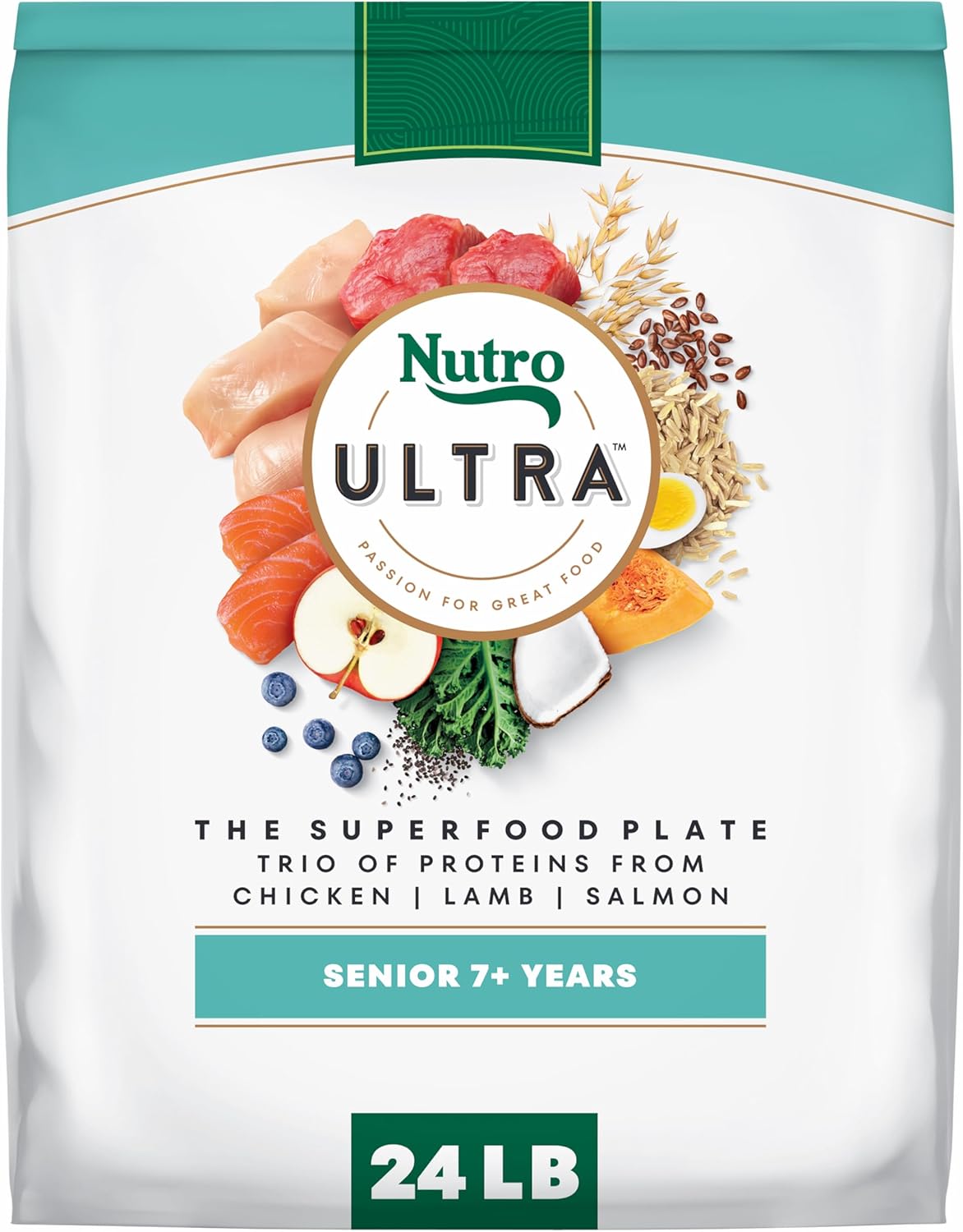
| Flavor | Chicken, Lamb & Salmon |
|---|---|
| Age Range Description | Senior |
| Item Form | Dry Kibble |
| Allergen Information | Corn-Free, Non-GMO, Soy Free, Wheat Free |
| Unit Count | 384 Ounce |
Nutro Ultra Senior High Protein Dry Dog Food is a senior-focused kibble built around real chicken as the #1 ingredient and supplemented with lamb and salmon meals to raise animal-protein content. It is intended for daily feeding of older dogs and aims to support muscle maintenance, joint health, digestion, and immunity through added glucosamine, chondroitin, antioxidants, and a blend of 14 superfoods. In practice this kibble works as a straightforward swap into a senior feeding routine — portion according to weight and monitor tolerance during the first week. The inclusion of natural joint-support ingredients and a higher-protein profile is useful for active seniors that still need muscle and mobility support, while whole grains and fiber sources target digestive health. Limitations to consider are that this is a grain-inclusive formula and sized as a large 24 pound bag, so owners wanting grain-free or single-protein limited-ingredient diets will need a different option. Also, multi-protein formulas can be less suitable for dogs with specific protein intolerances.
Best for: Buyers who prioritize higher animal-protein diets to preserve muscle and energy in active or mobile senior dogs and who want joint-supporting nutrients built into daily food.
Less Ideal for: Owners seeking grain-free, single-protein limited-ingredient diets or those managing strict protein allergies should consider other specialized formulas.
- Real chicken listed as the first ingredient and additional animal proteins from lamb and salmon for higher protein content
- Contains natural sources of glucosamine and chondroitin to support joint health in seniors
- Includes antioxidants and a 14-superfood blend aimed at immune and whole-body support
- Formulated to support digestive health with whole grains and fiber sources
- Not grain-free, so not appropriate for owners seeking grain-free formulas
- Contains multiple animal proteins which may not suit dogs with single-protein sensitivities
Verdict: The best premium, easily-digestible food for owners willing to pay more for advanced ingredient processing, targeted proteins, and formulations that minimize GI irritation.
Choosing the Right Dog Food Senior Digestive Problems: Key Factors to Consider
Protein Source and Digestibility
High-quality protein matters because older dogs need adequate amino acids without excess work for their digestive system. Single, named meat sources are generally easier to evaluate for digestibility than vague protein blends. Gentle proteins like poultry or fish are often tolerated better than unfamiliar red meats for dogs with sensitive stomachs.
Protein digestibility affects how much usable nutrition the dog actually absorbs. Highly digestible proteins reduce the amount of undigested material reaching the colon, which can lower gas, loose stools, and stool volume. For seniors, choose foods that list a clear, high-quality protein near the front of the ingredient list and avoid formulations that rely on indeterminate protein meals or heavy plant-protein loads that some dogs find harder to process.
Fiber Type and Amount
Fiber plays a central role in digestive health but different fibers do different things. Soluble fibers like beet pulp, psyllium, and some prebiotic fibers form a gel that can normalize stool consistency and slow digestion, which helps nutrient absorption. Insoluble fibers add bulk and can speed transit time, which may aggravate certain types of sensitivity.
Balance is key for senior dogs with digestive problems. A moderate total fiber level with a mix leaning toward soluble and fermentable prebiotics supports beneficial gut bacteria and smoother stools. Excessive fiber or the wrong types can worsen gas or loose stools, so pick formulas that specify fiber sources and include measures to support gut flora.
Fat Level and Fatty Acid Profile
Fat concentration affects energy density and stool quality. Too much fat can trigger loose stools or pancreatitis risk in susceptible older dogs, while too little can leave them underweight or lacking essential fatty acids. Look for moderate, controlled fat levels designed for seniors and a clear omega-3 to omega-6 balance.
Long-chain omega-3s such as EPA and DHA help manage low-level intestinal inflammation and support overall health in aging dogs. Formulas that incorporate fish oil or other omega-3 sources can be beneficial for digestion-related inflammation without overloading total dietary fat.
Probiotics, Enzymes, and Digestive Aids
Added probiotics and digestive enzymes can make a meaningful difference for seniors with chronic digestive issues. Probiotics help replenish beneficial bacteria and stabilize stool, while digestive enzymes support the breakdown of proteins, fats, and carbohydrates for better absorption.
Not all formulations include stable, viable probiotic strains or sufficient enzyme levels, so look for products that specify strain types and guarantees of live cultures through shelf life or that include labeled enzyme blends. These adjuncts are often the difference between ongoing sensitivity and steady digestion.
Ingredient Quality and Potential Irritants
Quality ingredients reduce the chance of unpredictable reactions. Whole-food sources and named ingredients provide clarity about what your dog is eating. Conversely, artificial colors, flavors, and certain preservatives can irritate sensitive digestive tracts.
Common dietary irritants vary by dog, so limited-ingredient options or formulas that avoid common triggers like certain grains or additives can be helpful starting points. An elimination approach guided by your veterinarian is often the best way to identify and avoid specific irritants for an individual dog.
Calorie Density and Portion Control
Senior dogs vary widely in activity and metabolic rate, and digestive problems can alter appetite and weight. Calorie density affects how much food a dog must eat to meet energy needs. High calorie density can reduce meal volume for dogs with poor appetite but may worsen stool quality if fat is the main driver.
Choose foods with a sensible calorie profile for your dog's activity level and monitor weight closely. Clear feeding guidelines and reasonable portion sizes make it easier to adjust intake without triggering digestive upset.
How Quickly Should I Expect Improvement After Changing Food?
Response times vary by the underlying cause of the problem and by the new formula. You may see milder improvements in stool consistency and reduced gassiness within a few days, but a full adjustment often takes two to four weeks as gut flora and enzyme activity adapt to the new diet.
If symptoms persist beyond a month or worsen during a careful transition, consult your veterinarian because persistent digestive signs can indicate an underlying medical condition that requires diagnostic testing.
- Start with a gradual transition over 7 to 10 days to reduce the chance of upset.
- Track stool firmness, frequency, and appetite to measure response.
- If adding probiotics, allow several weeks for colony establishment before judging effectiveness.
Is a Limited-ingredient Diet Necessary for Sensitive Senior Dogs?
Limited-ingredient diets can be useful when you suspect food sensitivities because they reduce the number of potential triggers and simplify an elimination trial. For some seniors, fewer ingredients make it easier to identify the culprit and restore normal digestion.
However, limited-ingredient does not automatically mean more digestible. You still need appropriate protein quality, balanced nutrients for the senior life stage, and suitable fiber and fat levels. Use limited-ingredient formulas primarily when there is reason to suspect a specific intolerance.
- Reserve limited-ingredient options for dogs with suspected food sensitivities or after veterinary guidance.
- Ensure the limited formula still meets senior nutritional needs and includes necessary vitamins and minerals.
Should I Use Wet Food, Dry Kibble, or a Mix for Digestive Problems?
Texture choice depends on chewing ability, hydration, and tolerance. Wet food can be gentler on a tender mouth and can increase water intake, which can help with some digestive issues. Kibble can be formulated for digestibility and may be easier to portion for weight control.
A mixed approach often works well: use a primarily digestible kibble formulated for seniors and add small amounts of wet food or warm water to improve palatability and hydration. Monitor for changes in stool quality when switching textures.
- Warm wet food slightly to enhance aroma for picky seniors.
- If dental issues limit chewing, softer textures reduce stress and may improve intake.
How Do Probiotics and Prebiotics Differ and Which Should I Prioritize?
Probiotics are live microorganisms that can help restore balance to the gut microbiome, while prebiotics are fermentable fibers that feed beneficial bacteria already present. Both play roles in stabilizing digestion but operate in complementary ways.
Prioritize probiotics when you need to reintroduce or boost helpful strains after antibiotics or chronic diarrhea. Include prebiotics when the goal is to support long-term microbiome health. Many well-formulated senior foods include both, which is ideal for sustained digestive support.
- Look for specified probiotic strains and colony-forming unit counts when possible.
- Prebiotics such as FOS or inulin can be helpful but watch for excess fermentable fiber that increases gas in sensitive dogs.
When Should I Seek Veterinary Testing for Chronic Digestive Issues?
Seek veterinary evaluation if digestive symptoms persist beyond a careful diet transition, or if your dog shows weight loss, persistent vomiting, blood in stool, severe lethargy, or other systemic signs. These can indicate conditions such as exocrine pancreatic insufficiency, inflammatory bowel disease, or other organ dysfunction.
A veterinarian can run targeted tests and recommend dietary strategies that pair with medical treatment. Dietary management is powerful, but it should be part of a broader diagnostic plan when issues are chronic or severe.
- Document symptom timeline and any diet changes to facilitate veterinary assessment.
- Ask about stool analysis, bloodwork, and imaging if symptoms are unexplained or progressive.
How We Chose the Best Dog Food Senior Digestive Problems
We selected products using criteria focused specifically on digestive health for senior dogs. First, we prioritized digestibility metrics: foods with high-quality, easily digested protein sources and carbohydrate choices that are gentle on the gut. Second, we looked for fiber blend and prebiotic content shown to support stable stool quality and beneficial gut bacteria. Third, formulations were assessed for calorie density and nutrient balance appropriate for older dogs, including omega fatty acids for inflammation management and adequate vitamins and minerals for maintenance. We also considered ingredient transparency, limiting artificial additives that can aggravate sensitive stomachs, and the inclusion of digestive enzymes or probiotics where relevant. Texture and kibble size were noted because chewing ability and ease of eating affect older pets. We excluded foods with vague labeling, proprietary blends that obscure key protein or fiber sources, and formulas intended primarily for other life stages. Final selections reflect products that meet these digestive-focused filters while providing balanced senior nutrition.
Our full evaluation process is outlined in our review methodology.
FAQ
How long should i transition my senior dog to a new digestive formula?
Transition gradually over seven to ten days, increasing the new food each day. For dogs with very sensitive stomachs, extend the transition to two weeks and monitor stool quality closely.
Can supplements replace a digestive-supporting senior formula?
Supplements like probiotics, digestive enzymes, or omega-3s can support digestion but usually do not replace a complete, balanced senior formula. Use supplements to complement a suitable base diet and consult your veterinarian before starting new products.
Are grain-free diets better for seniors with digestive problems?
Grain-free is not inherently better for digestion. Some dogs tolerate grains fine, and whole grains can provide digestible carbohydrates and fiber. Choose diets based on ingredient quality and individual tolerance rather than assuming grain-free is superior.
Will switching to a senior formula fix looser stools?
Switching to a formula designed for senior dogs and sensitive digestion often improves stool consistency, but results depend on the cause. If loose stools continue after a careful transition, veterinary evaluation is advised to rule out medical causes.
Is wet food more digestible than dry for older dogs?
Wet food can be easier to chew and may be gentler on appetite, but digestibility depends on the formula, not texture alone. Assess nutrient balance, protein quality, and fat levels when judging digestibility rather than assuming wet equals better.
Final Verdict
Prioritize formulas that balance highly digestible protein, moderate fat, and a carefully chosen fiber mix when selecting food for a senior dog with digestive problems. Look for added digestive aids such as probiotics or enzymes and clear labeling so you can assess ingredient quality and suitability. Accept that tradeoffs exist: denser calories help underweight dogs but can affect stool quality, and limited-ingredient formulas simplify elimination trials but must still meet senior nutrient needs. Use gradual transitions, monitor response, and consult your veterinarian when problems persist to choose the most appropriate long-term option.

