

Feeding a standard poodle puppy the right food in the first year sets the foundation for lifelong health. Because standard poodles grow into large, active adults with a dense coat and long limbs, their puppies benefit from diets that support steady bone growth, lean muscle development, and skin and coat health. You need options that balance energy with joint-friendly nutrients and easy-to-digest proteins. This guide shortlists six top choices for Standard Puppy food and explains the evaluation criteria used to select them, including protein quality, calcium-to-phosphorus balance, digestive tolerance, and nutrient density. Read on to find the best fits for your puppy's life stage and growth pattern before the product list below.
Top Picks at a Glance
| Best Overall Food for Standard Poodle Puppy A balanced, all-around puppy formula suited to most poodle needs | Royal Canin Poodle Puppy Dry Dog Food 2.5 lb |  |
| Best Budget Food for Standard Poodle Puppy A lower-cost puppy formula that still covers essential growth needs | Royal Canin X-Small Puppy Dry Food 3 lb |  |
| Best High-Protein Food Formulas focused on higher protein to support active, growing puppies | Purina Pro Plan Puppy Chicken & Rice 6 lb |  |
| Best Grain-Free Food Grain-free recipes for owners avoiding grains or seeking alternate carbs | Nulo FreeStyle Small Breed Salmon & Lentils |  |
| Best Limited-Ingredient Food Simpler recipes with fewer ingredients for sensitive digestive systems | Nature's Protection Puppy Dry Food White Fish 3.3 lb |  |
| Best Premium Food Higher-end puppy formulas emphasizing quality ingredients and research-backed nutrition | Stella & Chewy's SuperBlends Puppy Chicken & Salmon 21 lb |  |
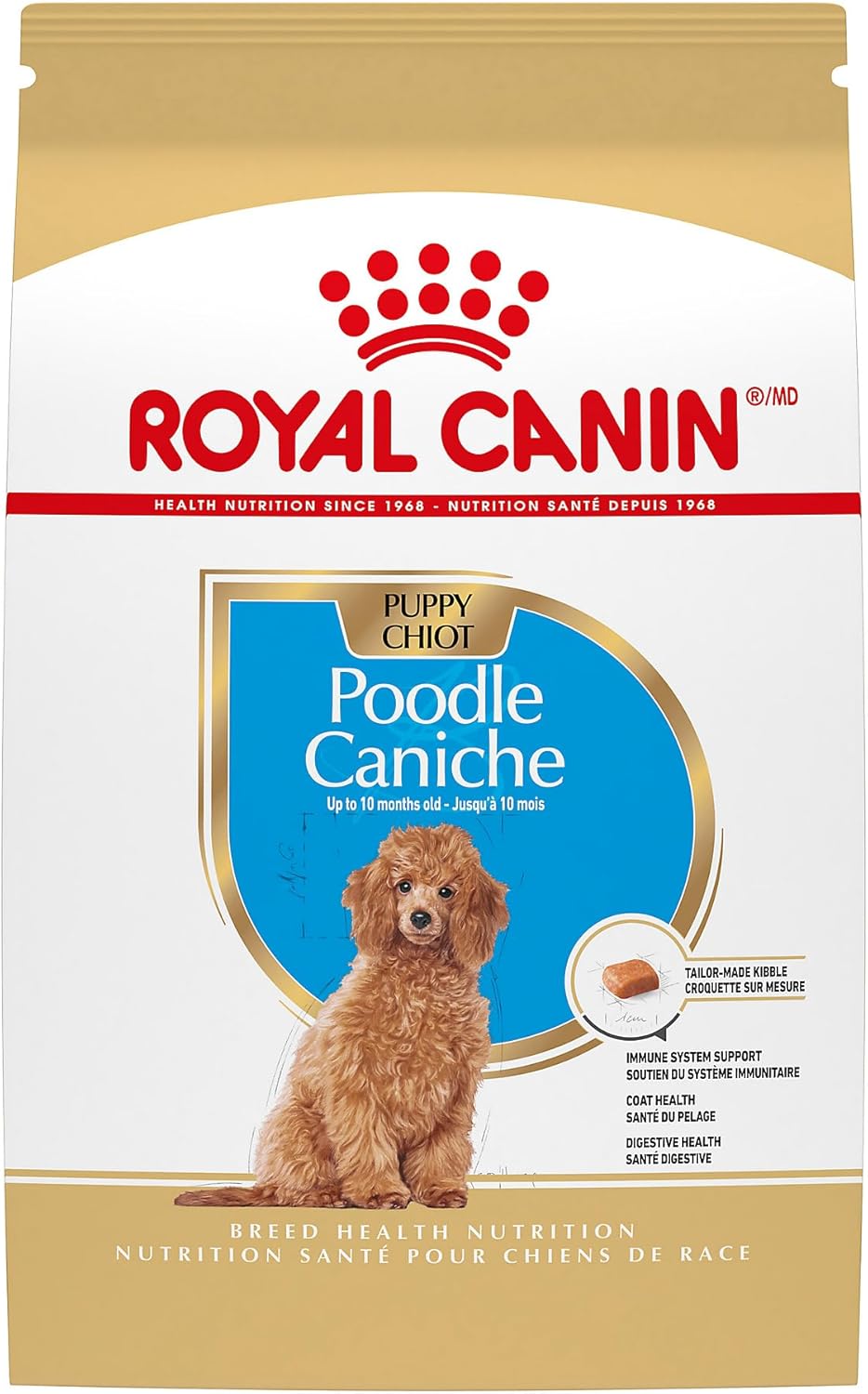
Royal Canin Poodle Puppy Dry Dog Food 2.5 lb
Best Overall Food for Standard Poodle Puppy
| Flavor | Chicken |
|---|---|
| Age Range Description | Puppy |
| Item Form | Pellet |
| Unit Count | 40 Ounce |
| Breed Recommendation | Poodle |
Royal Canin Poodle Puppy is a breed-targeted dry formula that delivers balanced growth nutrition for Poodle puppies through 10 months. The bag contains small, specially shaped kibble sized for Poodles' muzzles and jaw structure, which makes it easier for toy and small Poodle puppies to pick up and chew during everyday meals. The recipe emphasizes immune support with an antioxidant complex including vitamin E, and provides EPA and DHA from fish oil for skin and coat development, plus high-quality proteins and prebiotics to support digestion and stool quality. In practice this is a straightforward, convenience-focused diet for owners who want a puppy food tuned to a Poodle's typical needs rather than a generic puppy formula. Limitations are that it is breed-specific rather than tailored to individual sensitivities and includes ingredients like chicken by-product meal and grains, so owners seeking grain-free or novel-protein diets should look elsewhere.
Best for: Buyers of Toy or small Poodle puppies who want a complete, everyday dry food formulated for the breed and sized kibble that is easy for young Poodles to eat.
Less Ideal for: Owners whose puppies require grain-free formulas, novel proteins, or veterinary therapeutic diets for allergies or medical conditions should consider alternatives.
- Kibble shaped and sized for Poodle muzzle and bite patterns to aid pickup and chewing
- Antioxidant complex with vitamin E supports developing immune system
- EPA and DHA from fish oil to promote healthy skin and curly coat development
- Contains prebiotics and high-quality proteins to support digestion and stool quality
- Contains chicken by-product meal and common grains, which may not suit dogs with specific ingredient sensitivities
- Breed-specific focus means less flexibility for mixed-breed puppies or those needing specialized therapeutic diets
Verdict: The best overall food for a Standard Poodle puppy, offering an optimal balance of growth nutrients, digestibility, and palatability for typical puppy development.
Royal Canin X-Small Puppy Dry Food 3 lb
Best Budget Food for Standard Poodle Puppy

| Age Range | Puppy 2 to 10 months |
|---|---|
| Breed Size Recommendation | X-Small / Small breeds |
| Item Form | Kibble |
| Flavor | Chicken & Vegetable |
| Unit Count | 48 Ounce |
Royal Canin X-Small Puppy is a dry kibble made specifically for extra-small breed puppies, with a crunchy, tiny kibble designed to be easy for very small mouths to pick up and chew. It is intended for puppies 2 to 10 months with an expected adult weight under about 8 pounds and is used as a daily complete diet or mixed with Royal Canin wet puppy formulas for texture variety. The formula highlights DHA and omega-3s for brain development, antioxidants for immune support, and a blend of prebiotics and digestible proteins to promote gut health. Practical benefits include portion-sized nutrition tailored to high energy needs during growth and a kibble texture that can help dental health by encouraging chewing. Limitations are that it is sized and balanced for extra-small breeds only, so growing puppies expected to exceed the target adult weight will need a different formula, and the ingredient list includes grains and by-product meal which some buyers may avoid. The 3 lb bag is convenient for trialing a Westie puppy but may require more frequent repurchase than larger bags for multi-puppy households.
Best for: Owners of West Highland Terrier puppies and other very small-mouthed breeds who prioritize kibble size and targeted growth-stage nutrition to make feeding and chewing comfortable.
Less Ideal for: Owners whose puppies are expected to exceed the formula's target adult weight or buyers seeking grain-free or novel-protein ingredient lists should consider alternative formulations.
- Kibble sized and shaped for very small mouths to make eating easier for Westie puppies
- Contains DHA and omega-3 fatty acids to support brain development
- Includes prebiotics and highly digestible proteins to promote healthy digestion
- Antioxidants like vitamins E and C to support immune system development
- Available in a 3 lb bag that is practical for testing or small-breed households
- Formulation uses poultry by-product meal and grains, which some owners prefer to avoid
- Sized specifically for extra-small breeds so not suitable if the puppy will grow beyond the target adult weight
Verdict: The best budget food for a Standard Poodle puppy that provides adequate protein, calories, and basic nutrient profiles for healthy growth without a high price tag.
Purina Pro Plan Puppy Chicken & Rice 6 lb
Best High-Protein Food

| Flavor | Chicken & Rice |
|---|---|
| Age Range Description | Puppy |
| Item Form | Dry |
| Specific Uses For Product | Hip and Joint Support |
| Animal Food Nutrient Content Claim | High Protein |
Purina Pro Plan High Protein Dry Puppy Food Chicken & Rice is a puppy formula designed to support active growth with real chicken as the primary protein source. It is typically fed as a daily dry kibble for puppies and can be offered moistened during weaning or fed dry as puppies mature. Notable features include DHA from fish oil to support brain and vision development, added calcium and phosphorus for bone and tooth growth, live probiotics for digestive health, and antioxidants to support immune development. In practice this formula helps build lean muscle and provides concentrated nutrients for puppies that need higher protein intake, and its digestible recipe reduces the chance of stomach upset during diet transitions. Limitations include the presence of some by-product meals and grain ingredients, which may be less suitable for owners seeking grain-free or novel-protein diets, and the ingredient list includes salts and common additives that some sensitive puppies may not tolerate. Feeding amounts should be adjusted as puppies grow and you may want to consult your veterinarian for breed-specific needs.
Best for: Buyers looking to support active, growing puppies with a higher-protein, vet-backed kibble that emphasizes muscle development and digestive support.
Less Ideal for: Owners seeking a grain-free, novel-protein, or limited-ingredient puppy diet for allergy-prone dogs should consider specialized formulas instead.
- Real chicken listed as the first ingredient for bioavailable animal protein
- Includes DHA from fish oil to support brain and vision development
- Live probiotics and highly digestible formula to ease digestion and stool quality
- Added calcium, phosphorus and minerals to support bone and tooth growth
- Contains poultry by-product meal and common grains rather than novel or grain-free sources
- Includes multiple added ingredients and preservatives that some owners may avoid
Verdict: The best high-protein food for puppy owners who want extra protein to support muscle development and higher activity levels in growing Standard Poodles.
Nulo FreeStyle Small Breed Salmon & Lentils
Best Grain-Free Food

| Flavor | Salmon & Lentils |
|---|---|
| Item Form | Dry |
| Breed Recommendation | Small Breeds |
| Package Size | 6 lb Bag |
| Special Ingredients | Probiotic |
Nulo FreeStyle Small Breed Salmon & Lentils is a grain-free kibble designed for toy and small-breed puppies and adults. It uses deboned salmon and other animal meals to deliver a high proportion of animal-sourced protein and smaller kibble sized for little mouths. The formula includes omega fatty acids for skin and coat health, taurine and essential amino acids for heart support, and BC30 probiotics plus prebiotic fibers aimed at improving digestion and nutrient absorption. It excludes common fillers and several potential allergens such as grains, chicken, eggs, and artificial colors or preservatives, which can help dogs with grain sensitivities. Feeding follows standard daily portion guidance for small dogs, and the product emphasizes steady energy and lean-muscle support for active little dogs. Limitations are that it is grain-free and higher in animal protein, which may not be necessary or ideal for every Havanese depending on individual medical advice, and owners should confirm portions with their veterinarian for weight management and specific health needs.
Best for: Owners of Havanese who want a grain-free recipe tailored to small mouths and who prioritize animal-based protein, coat support, and digestive-friendly probiotics.
Less Ideal for: Owners whose dogs are on veterinary-prescribed grain-inclusive or low-protein diets, or those who prefer formulas with whole grains for long-term weight management.
- High ratio of animal-based protein with deboned salmon first for lean muscle support
- Smaller kibble size suited to small and toy breed mouths
- Includes omega-3 and omega-6 fatty acids to support skin and coat condition
- Contains BC30 probiotics and prebiotic fibers to help digestive health and nutrient absorption
- Grain-free formulation may not be appropriate for dogs that do better on whole grains or specific veterinary diets
- Higher protein, calorie content requires careful portion control to avoid weight gain
Verdict: The best grain-free food for puppy owners preferring carbohydrate sources other than grains or managing suspected grain sensitivities, while still meeting growth nutrient needs.
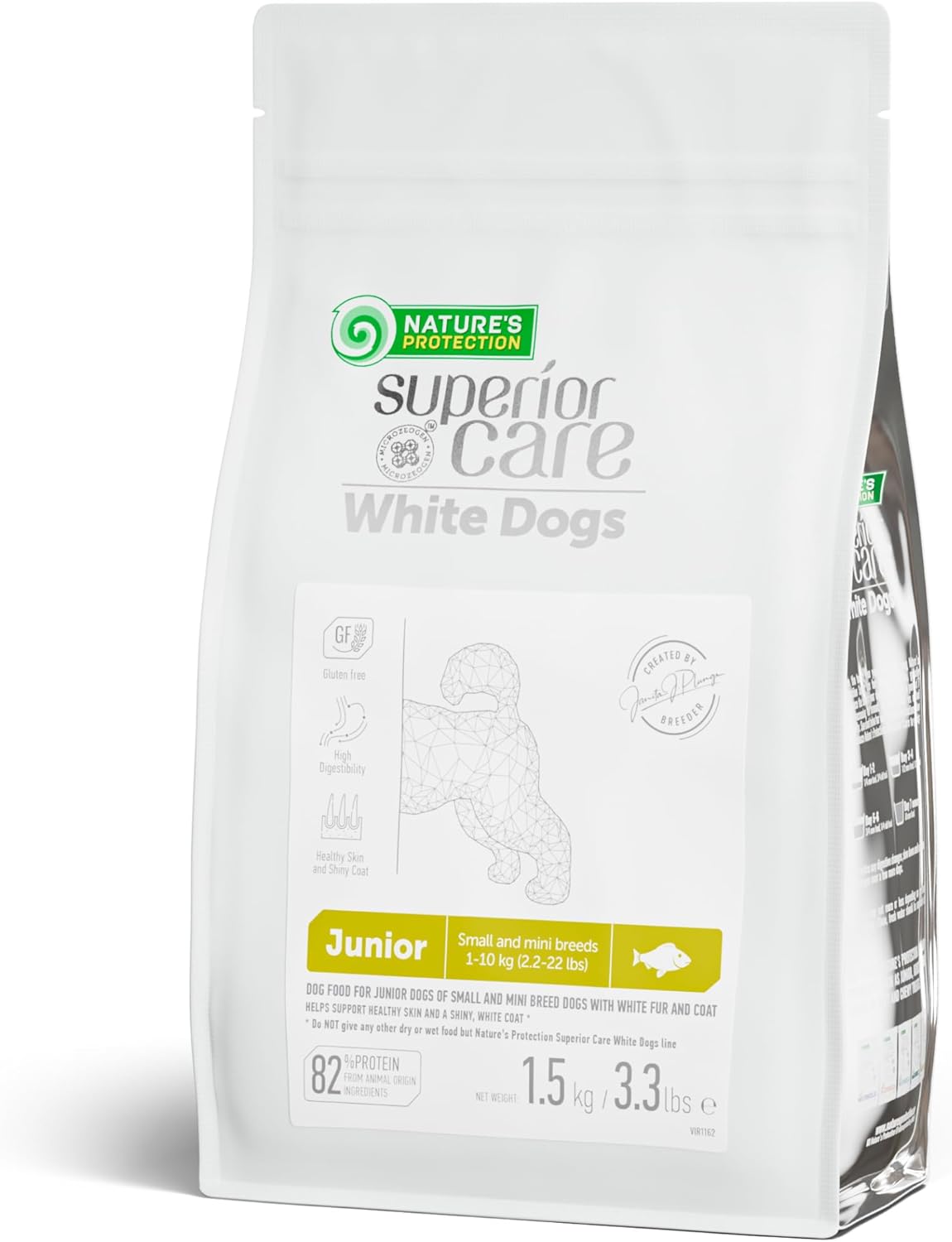
Nature's Protection Puppy Dry Food White Fish 3.3 lb
Best Limited-Ingredient Food
| Flavor | Ocean Whitefish |
|---|---|
| Age Range Description | Puppy |
| Breed Recommendation | Small Breeds |
| Unit Count | 52.8 Ounce |
| Allergen Information | Allergen-Free, Gluten Free, Hypoallergenic |
This Nature's Protection puppy formula is a small-breed dry kibble that uses white fish meal as its first ingredient and targets puppies aged roughly 3–12 months. It is designed for sensitive skin and coat concerns with Microzeogen, salmon oil and flaxseed to boost omega fatty acids, plus added DHA and calcium to support brain development and bone growth. The recipe is grain-free, gluten free and excludes common proteins such as beef and pork, which makes it straightforward to use when diagnosing food sensitivities or reducing exposure to allergens. Kibble size and portion guidance are tuned for small breeds, and the bag size is convenient for trialing a new diet without long-term commitment. Limitations to note are that the ingredient list still contains multiple plant-based ingredients and additives like beet pulp and mixed tocopherols, so it is not a single-protein or ultra-minimal formula; owners tracking strict elimination diets may need a prescription or home-prepared option. Feeding requires the usual gradual transition and portion adjustments by age and weight.
Best for: Buyers who need a puppy formula with a simplified animal-protein focus and gentle coat-support ingredients for small-breed puppies, especially when trying to narrow potential triggers without jumping to a prescription diet.
Less Ideal for: Owners requiring an ultra-minimal or single-ingredient elimination diet for diagnosed food allergies or those who need a prescription therapeutic formula.
- White fish meal listed first for a single primary animal protein source
- Formulated for small-breed puppies with kibble and portion guidance for growth stages
- Includes DHA, calcium and omega fatty acids to support brain, bone and coat health
- Grain-free, gluten-free and marketed as hypoallergenic to reduce common irritants
- Smaller 3.3 lb bag size makes it easy to trial for puppies with sensitivities
- Ingredient list still contains several plant ingredients and additives so it is not an extremely short limited-ingredient diet
- Not a veterinary prescription diet for diagnosed food allergies
Verdict: The best limited-ingredient food for Standard Poodle puppies with food sensitivities or suspected ingredient triggers, delivering essential nutrients with a simplified ingredient list.
Stella & Chewy's SuperBlends Puppy Chicken & Salmon 21 lb
Best Premium Food

| Flavor | Chicken & Salmon |
|---|---|
| Item Form | Pellet |
| Age Range Description | Baby |
| Allergen Information | Corn-Free, Pea-Free, Potato-Free, Preservative-Free, Soy Free |
| Unit Count | 336 Ounce |
Stella & Chewy's SuperBlends Puppy Cage-Free Chicken & Wild-Caught Salmon is a dry kibble that uses a raw-coating and superfood blend to boost flavor and nutrient density for growing puppies. It is intended as a complete and balanced meal, with oven-baked small-batch production, bone broth for taste, and added probiotics, prebiotics, and antioxidant-rich fruits and vegetables to support digestion and immune health. Typical use is as a daily staple for puppies, following the feeding chart and transitioning over 7 to 10 days; the recipe targets multiple needs including skin and coat, joint support through New Zealand green mussel, and omega-rich fats from salmon and salmon oil. Practical benefits include high protein variety from responsibly sourced meats, a mix of grains and fiber for stool quality, and probiotic strains to help sensitive tummies. Limitations are that it is a grain-containing formula (oatmeal, barley, quinoa) which some owners avoid, and its nutrient profile and larger bag size may be more than needed for very small litters or single-puppy households focused strictly on minimal-ingredient diets.
Best for: Owners who prioritize high-quality ingredients, targeted developmental nutrition, and palatability for a growing puppy and are willing to pay for a premium, nutrient-dense daily kibble.
Less Ideal for: Those seeking a strict grain-free or minimal-ingredient formula, or households that prefer smaller package sizes and frequent rotation of formulas.
- Raw-coated kibble and bone broth for strong palatability likely to entice picky puppies
- Includes multiple probiotic strains and prebiotic source for digestive support
- Contains varied proteins including cage-free chicken and wild-caught salmon for balanced amino acids and omega fats
- Packed with antioxidant-rich superfoods and vegetables to support immune and overall development
- Contains grains (oatmeal, barley, quinoa) which is not suitable for grain-free preferences
- Large 21 lb bag may be more than needed for single puppies or households with limited storage
Verdict: The best premium food for owners willing to invest in top-tier ingredients, manufacturing standards, and targeted nutrient profiles for optimal puppy development.
Choosing the Right Dog Food Standard Poodle Puppy: Key Factors to Consider
Protein Quality and Source
Protein is the primary building block for a growing puppy's muscles and organs. High-quality animal proteins, such as meat or fish meals and named muscle meals, provide essential amino acids that support lean tissue growth and are generally more digestible than unspecified protein sources. Consistent protein quality helps maintain steady growth without forcing excess caloric intake.
For standard poodle puppies, who develop larger frames and active musculature, choose foods that list a named animal protein near the top of the ingredient list and include a reasonable guaranteed crude protein on the label. Puppies that struggle with digestibility may benefit from single-source or novel animal proteins, while those with normal tolerance do well on mixed animal protein formulas that provide a broader amino acid profile.
Calcium, Phosphorus, and Growth-control Ratios
Bone development in large-breed puppies is sensitive to mineral balance and growth rate. The ratio of calcium to phosphorus and controlled overall mineral levels influence how bones mineralize during rapid growth phases. Excessive calcium or an imbalanced ratio can increase the risk of developmental orthopedic disease in large breeds.
Look for formulas that state appropriate calcium and phosphorus levels for growth and explicitly note large-breed or controlled-growth suitability. Avoid feeds formulated for small or toy puppies where mineral levels and calorie density are designed for faster growth. Controlled calorie density helps ensure a steady, moderate growth rate rather than overly rapid weight gain.
Digestive Tolerance and Stool Quality
Digestibility affects nutrient absorption and how your puppy feels day to day. Highly digestible diets reduce stool volume and improve nutrient uptake, which is important when feeding measured portions to manage growth. Ingredients like prebiotic fibers, single-source proteins, and moderate fat levels can improve digestive tolerance.
If your puppy has a sensitive stomach or loose stools, prioritize formulas that mention probiotics, prebiotics, or tested digestibility. Changes in kibble size, recipe composition, or protein source can affect stool consistency, so expect a short adjustment period when you switch foods. Feeding schedules and gradual transitions are also important to maintain stool quality.
Energy Density and Feeding Practicality
Puppies need enough calories to support growth and play, but too many calories can encourage overly rapid growth in large breeds. Energy density determines how much food you must feed to meet nutrient needs without overloading calories. Formulas designed for large-breed puppies often have moderate energy density and clear feeding guides to help you portion correctly.
Consider how many meals per day your puppy will eat and how easy the kibble is to portion and store. High-calorie puppy foods may seem economical by volume but can lead to unintentional overfeeding. Choose a formula that fits your feeding routine and provides clear guidance for weight and age-based portions.
Joint and Skeletal Support Ingredients
Large breeds benefit from early support of joint and cartilage health while their skeletal system develops. Ingredients such as glucosamine, chondroitin, and adequate omega-3 fatty acids support cartilage formation and reduce inflammation. These ingredients will not prevent all orthopedic problems but can contribute to healthier development alongside proper growth rates and weight control.
When evaluating foods, check for added joint-support nutrients and consider overall nutrient balance. These ingredients are especially helpful in formulas aimed at large-breed puppies, where the combined approach of controlled growth and targeted support reduces stress on developing joints.
Skin and Coat Nutrition
Standard poodles have dense, often curly coats that reflect overall health. Essential fatty acids, vitamin A, zinc, and biotin contribute to skin integrity and a healthy coat. A formula that supports coat condition helps reduce dryness, flaking, and excessive shedding during growth.
Look for balanced omega-6 to omega-3 ratios and sources of bioavailable vitamins and minerals. Puppies with known skin sensitivities may benefit from limited-ingredient or grain-inclusive formulas if a specific allergen is suspected, and monitoring coat condition over several weeks is important after any diet change.
How Many Calories Should a Standard Poodle Puppy Eat Each Day?
Calorie needs vary by age, activity level, and growth rate, but standard poodle puppies typically require moderate to high energy during active growth phases. Follow the feeding chart on the product label as a starting point, then adjust portions based on steady weight gain rather than rapid jumps. Aim for a measured, gradual increase in body weight consistent with healthy growth curves for large-breed puppies.
Split daily calories into three to four meals for younger puppies to support steady energy and reduce the risk of digestive upset. As your puppy matures, transition to fewer meals while monitoring weight and body condition score. If you are unsure whether your puppy is gaining appropriately, consult a veterinarian for growth targets and feeding adjustments.
- Start with label feeding guidelines and adjust by body condition
- Feed 3–4 meals per day for young puppies, then reduce to 2–3 as they grow
- Monitor weight weekly and adjust portions gradually
When Should I Switch From Puppy to Adult Food?
Standard poodles usually reach physical maturity later than small breeds. Most large-breed dogs transition from puppy to adult maintenance between 12 and 18 months, depending on growth rate and final adult size. Wait until growth has slowed and body proportions look consistent rather than switching at a fixed calendar age alone.
Consult your veterinarian to confirm skeletal maturity and ideal timing for transition. Switching too early may deny finishing nutrients needed for bone and muscle development, while switching too late can contribute to excess calorie intake if the adult maintenance formula is more calorie-dense.
- Typical transition window: 12–18 months for large breeds
- Base timing on growth rate and veterinary guidance
- Make transitions gradual over 7–10 days to avoid digestive upset
Can Food Help with Common Poodle Puppy Digestive Issues?
Yes. Ingredients and formulation can influence digestive health. Diets that include prebiotics, probiotics, easily digestible proteins, and moderate fat levels tend to produce firmer stools and fewer episodes of loose stool. For puppies with recurring digestive troubles, incremental ingredient changes and veterinary input help identify intolerances or sensitivities.
Avoid rapid diet switches and ensure consistent feeding times. If digestive issues persist, your veterinarian may suggest a limited-ingredient diet, hydrolyzed protein formula, or diagnostic testing to rule out parasites or underlying medical conditions.
- Look for proven probiotics or prebiotics on the ingredient panel
- Consider single-protein-source formulas if you suspect a sensitivity
- Introduce any new food gradually over several days
What Kibble Size and Texture Suits a Standard Poodle Puppy?
Kibble size should match your puppy's mouth and chewing ability. Standard poodle puppies need a kibble that is not too large to chew comfortably but sturdy enough to encourage chewing and dental abrasion. Many large-breed puppy foods use medium-to-large kibble shapes that balance ease of pickup with chewing engagement.
If your puppy is a picky eater or has trouble chewing hard kibble, consider options with smaller or more compressed kibble pieces or wet-mix alternatives to improve palatability while still delivering balanced nutrients. Always observe chewing behavior and adjust as needed to prevent gulping or choking.
- Choose kibble that is easy for puppy mouths to manipulate
- Monitor chewing to prevent rapid gulping
- Try moistened kibble for picky eaters or teething puppies
How to Transition Your Standard Poodle Puppy to a New Food Safely
A gradual transition minimizes digestive upset. Start by mixing a small proportion of the new food into the current diet and incrementally increase the new food over 7 to 10 days. Watch for changes in stool, appetite, and energy. If problems appear, slow the transition and consult a veterinarian if issues persist.
Plan transitions around life events such as vaccinations or travel to avoid overlapping stressors. Keep feeding portions consistent calorie-wise during the switch to avoid unintended weight changes, and use a bathroom log to detect subtle changes in stool quality or frequency.
- Mix new food gradually over 7–10 days
- Keep daily calories consistent during the transition
- Track stool quality and appetite during the change
Are Grain-free Diets Appropriate for Standard Poodle Puppies?
Grain-free diets are not inherently better or worse for poodle puppies. Some puppies do well on grain-free recipes for digestive reasons or ingredient preferences, while others thrive on grain-inclusive formulas. The critical factor is overall nutrient balance and whether the diet provides appropriate protein, fats, vitamins, and minerals for growth.
Because certain grain-free formulations have been scrutinized for heart-related concerns in some contexts, focus on diets with complete and balanced nutrient profiles and documented feeding guidelines. If you consider a grain-free option, discuss it with your veterinarian and monitor cardiac and general health as part of routine checkups.
- Choose based on tolerance and nutrient profile rather than marketing
- Ensure complete nutrient balance regardless of grain content
- Monitor veterinary checkups for heart and overall health
How We Chose the Best Dog Food Standard Poodle Puppy
We prioritized factors that matter specifically for standard poodle puppies and filtered out adult and general small-breed formulas. Our selection process focused on measurable nutritional features and real-world suitability for large-breed puppy growth. Key evaluation criteria included protein quality and source, since high-quality animal proteins support lean muscle development and are easier for many puppies to digest; calorie density and feeding practicality, to ensure steady weight gain without overfeeding; calcium-to-phosphorus ratio and controlled mineral levels to support proper bone growth and reduce risk of developmental orthopedic issues; inclusion of joint-supporting nutrients such as glucosamine or appropriate omega fatty acids, helpful for large-breed skeletal health; digestibility and ingredient transparency, favoring formulas with identifiable proteins and prebiotics or fiber for stool quality; and coat and skin support from omega-3 and omega-6 fatty acids and biotin. We excluded adult, maintenance, or toy/small-breed puppy formulas and any diets lacking clear nutrient analysis for growth. Products without published feeding guidelines for large-breed puppies or without guaranteed analysis for critical minerals were not considered. The final list balances growth needs, digestibility, and practical feeding for standard poodle puppies.
Our full evaluation process is outlined in our review methodology.
FAQ
How much protein does a standard poodle puppy need?
Puppies generally need higher protein than adult dogs to support growth. Aim for formulas with a clearly stated moderate to high protein content from named animal sources. Exact grams per day depend on calorie intake and age, so use the product feeding guide and adjust for growth and condition.
Should I look for foods labeled for large-breed puppies?
Yes. Large-breed puppy formulas are formulated to slow growth slightly and control calcium and phosphorus levels to support proper bone development. These formulations can help reduce the risk of excessive growth-related stress on joints for breeds expected to reach a large adult size.
Is wet food okay for my standard poodle puppy?
Wet food can be used as a supplement for palatability or to help with hydration and picky eaters. It can also be mixed with kibble during transitions. Ensure the overall diet remains balanced for growth, and consider portion adjustments since wet food often has different calorie density.
When should I add joint supplements?
Many veterinarians recommend considering joint-supporting nutrients during growth if your puppy has risk factors or if a vet identifies early joint concerns. However, routine supplementation is not always necessary if the food already includes appropriate levels of glucosamine, chondroitin, and omega-3s. Discuss timing with your veterinarian.
Can I feed a single-protein diet to prevent allergies?
Single-protein or limited-ingredient diets can help identify or manage suspected food sensitivities. They are useful diagnostic tools but are not automatically better for all puppies. Use them under veterinary guidance if you suspect a food-related skin or digestive issue.
Final Verdict
Choose a puppy food that balances quality protein, controlled calorie density, and appropriate mineral ratios to support steady growth in a standard poodle. Prioritize digestibility and joint-supporting nutrients while monitoring weight and coat condition over time. Expect tradeoffs between calorie density and feeding volume: formulas that slow growth may require slightly larger portions to meet calorie needs, while denser foods are easier to portion but increase the risk of rapid gain. Base decisions on your puppy's growth pattern and veterinary guidance to choose the best long-term feeding plan.

