

Feeding a german shepherd the right food matters for energy, growth, and long-term joint health. These dogs have high activity levels and unique nutritional needs across life stages, so picking a formula that balances protein, fat, and joint-supporting nutrients makes a noticeable difference in daily vitality and mobility. This guide shortlists the top options for german shepherds, focusing on ingredients and formulation choices that drive digestion, muscle maintenance, and hip and elbow support. Below you will find our top picks along with the evaluation criteria used to select them and practical buying advice to help you choose the right food for your dog.
Top Picks at a Glance
| Best Overall Food for German Shepherds A balanced, all-around formula tuned to large active dogs | ROYAL CANIN German Shepherd Adult 30 lb |  |
| Best Budget Food for German Shepherds An affordable formula that covers core nutrition without extras | Pedigree Large Breed Adult Dry Dog Food 16 lb |  |
| Best High-Protein Food Higher protein ratios suitable for active or working dogs | VICTOR Hi-Pro Plus Dry Dog Food 30 lb |  |
| Best Large-Breed Food Formulated for size, joint health, and appropriate calorie density | Hill's Science Diet Large Breed |  |
| Best Grain-Free Food A grain-free formula for dogs with grain sensitivities or preferences | ORIJEN Original Dry Dog Food 4.5 lb |  |
| Best Limited-Ingredient Food Simpler recipes to reduce common allergens and digestive triggers | Natural Balance Limited Ingredient Dry Dog Food |  |
| Best Puppy Food Nutrient-dense options sized for growth and developmental needs | ROYAL CANIN German Shepherd Puppy Dry Dog Food 30 lb |  |
ROYAL CANIN German Shepherd Adult 30 lb
Best Overall Food for German Shepherds

| Flavor | Chicken |
|---|---|
| Age Range Description | Adult |
| Item Form | Pellet |
| Breed Recommendation | German Shepherd |
| Animal Food Diet Type | Veterinary Diet |
Royal Canin German Shepherd Adult is a breed-targeted kibble designed for purebred German Shepherds 15 months and older. The formula combines highly digestible proteins and specific fibers to promote digestive health, while added EPA/DHA from fish oil and exclusive nutrients support skin and coat condition. Glucosamine and chondroitin are included to help maintain bone and joint health in large, active dogs, and the kibble shape is tailored to the breed's long muzzle to encourage comfortable chewing. Typically fed as an everyday maintenance diet, this food works well for owners who want a complete, balanced option formulated around common German Shepherd needs rather than a generic adult formula. Limitations to note are the primary protein source listed as chicken by-product meal rather than whole muscle meat and that the ingredient list includes grains and corn, which some owners avoid. For dogs with specific allergies or those needing novel-protein diets, a veterinary or limited-ingredient alternative may be preferable.
Best for: Owners who want a ready-to-feed everyday diet tailored to the nutritional and chewing needs of adult German Shepherds and who prioritize breed-specific support for digestion, skin, and joints.
Less Ideal for: Owners seeking grain-free, novel-protein, or elimination diets for food sensitivities should consider specialized veterinary or limited-ingredient formulas instead.
- Formulated specifically for German Shepherds with kibble shape tuned to muzzle and teeth
- Includes glucosamine and chondroitin to support large-breed joint and bone health
- EPA and DHA from fish oil plus nutrients aimed at maintaining skin and coat
- Highly digestible proteins and fiber blend to support digestive health
- Primary listed protein is chicken by-product meal rather than whole-muscle meat
- Contains grains and corn, so not suitable for grain-free or some limited-ingredient plans
Verdict: The best overall food for German Shepherds that balances high-quality protein, joint-supporting nutrients, digestibility, and practical feeding options for everyday health.
Pedigree Large Breed Adult Dry Dog Food 16 lb
Best Budget Food for German Shepherds

| Flavor | Chicken & Vegetable |
|---|---|
| Age Range Description | Adult |
| Breed Recommendation | Large Breeds |
| Item Form | Dry Kibble |
| Unit Count | 256 Ounce |
Pedigree Large Breed Adult Dry Dog Food is an everyday kibble aimed at supporting large-breed adult dogs with a balance of vitamins, minerals and protein. You feed it as a daily maintenance diet; the bag includes a feeding guide sized for heavier dogs and instructions for transitioning from a previous food. The formula lists chicken by-product meal and meat and bone meal among its protein sources, and it contains added glucosamine and chondroitin intended to support joint health, plus prebiotic fiber for digestion and omega-6 fatty acids for skin and coat. Practical benefits include widely available packaging and a recipe that covers basic nutritional needs without specialty ingredients. Limitations are that protein sources are mixed meals rather than single-source fresh meat, the ingredient list includes common allergens like soy and wheat, and it contains some artificial colorants and preservatives that owners avoiding those ingredients will want to note.
Best for: Owners of German Shepherds seeking an affordable, no-frills daily maintenance kibble that provides joint support and basic large-breed nutrition without specialty ingredients.
Less Ideal for: Owners who want high-quality single-source meats, grain-free recipes, or those managing specific food allergies should consider higher-end or prescription options instead.
- Formulated specifically for large-breed adults with feeding guidance for heavy dogs
- Contains glucosamine and chondroitin to help support joint health
- Includes prebiotic fiber and added vitamins and minerals for daily nutrition
- Omega-6 fatty acids and zinc to support skin and coat condition
- Uses by-product and meal-based protein sources rather than whole-muscle meat
- Contains common allergens (soy, wheat) and artificial colorants
Verdict: The best budget food for German Shepherds that provides complete, safe daily nutrition and decent ingredient quality for owners prioritizing cost.
VICTOR Hi-Pro Plus Dry Dog Food 30 lb
Best High-Protein Food

| Protein | 30% (approx) |
|---|---|
| Fat | 20% (approx) |
| Life Stage | All Life Stages (except growth of large size dogs 70 lb+ adult) |
| Form | Kibble |
| Unit Count | 480 Ounce |
VICTOR Hi-Pro Plus is a nutrient-dense dry kibble aimed at active dogs, puppies, and breeding females that need extra calories and protein. The formula delivers about 30% protein and 20% fat from a blend of beef, chicken, pork, and fish meals, and includes the brand's VPRO blend of vitamins, minerals, prebiotics and probiotics for digestion and immunity. In practice this food is used as an everyday maintenance or growth diet for puppies and high-energy dogs, or as a feeding option during pregnancy and lactation when caloric needs rise. The presence of hip and joint supplements and added DHA from fish meal supports development in growing dogs, while gluten-free grains provide about 10% of protein contribution. Buyers should note the product statement that it meets AAFCO profiles for all life stages except growth of very large breed dogs over 70 lb adult size, so portioning and long-term calcium-phosphorus balance should be monitored for giant-breed puppies. The bag is made and sourced in the U.S., and the dense nutrient profile makes it practical for owners needing a concentrated, high-protein puppy feeding without switching between puppy and performance formulas.
Best for: Puppy owners who need a concentrated, high-protein kibble to support active growth, reproduction, or high energy demands and who prioritize complete nutrition in a single bag.
Less Ideal for: Owners of giant-breed puppies that require explicitly balanced large-breed growth formulas or caretakers seeking a grain-free recipe for allergy elimination should look elsewhere.
- High protein (about 30%) and high fat (about 20%) to support energy and lean-tissue development
- Multi-meat protein sources (beef, chicken, pork, fish) for amino acid variety
- Includes VPRO blend with vitamins, minerals, prebiotics and probiotics for digestion and immune support
- Formulated for all life stages which simplifies feeding for households with mixed ages (except very large-breed growth)
- Made in the USA with regionally sourced ingredients
- Not recommended for growth of very large breed dogs (70 lb adult or more) per manufacturer guidance
- Contains gluten-free grains so it is not grain-free for owners seeking that profile
Verdict: The best high-protein food for German Shepherds that supports muscle maintenance and energy needs with elevated animal-based protein as a priority.
Hill's Science Diet Large Breed
Best Large-Breed Food

| Flavor | Chicken & Barley |
|---|---|
| Age range | Adult 1-5 |
| Item form | Pellet |
| Unit count | 240 Ounce |
Hill's Science Diet Large Breed is a dry kibble designed for adult large dogs and formulated to support joint health, lean muscle, skin and digestive function. It is typically used as an everyday maintenance diet for large-breed adults and contains high-quality protein, glucosamine and chondroitin for joint support, plus omega-6 fatty acids and vitamin E for coat health. The formula also includes prebiotic fibers and antioxidants (ActivBiome+) to promote digestion and immune health. Practical benefits include a nutrient profile aimed at supporting the higher calorie and musculoskeletal needs of big dogs and a kibble profile intended for large muzzles and chewing. Trade-offs are that this is a maintenance diet rather than a therapeutic prescription food, so dogs with advanced joint disease, weight-management needs, or food sensitivities may require a veterinarian-recommended alternative, and feeding should be adjusted by monitoring body condition.
Best for: Buyers seeking a vet-recommended everyday dry food that supports joint health, digestion, and coat condition in active large-breed adult dogs, especially when choosing a reliable maintenance diet.
Less Ideal for: Owners whose dogs need a prescription therapeutic diet for medical conditions, strict grain-free formulas, or novel-protein elimination diets should consider other specialized options.
- Formulated specifically for large-breed adults with nutrient balance for size-related needs
- Includes glucosamine and chondroitin to help support joint health and mobility
- High-quality protein to help build and maintain lean muscle
- Added prebiotic fibers and antioxidants to support digestion and immune health
- Omega-6 and vitamin E blend to promote healthy skin and a shiny coat
- Not a veterinary prescription formula for dogs with diagnosed orthopedic disease or special medical needs
- Contains common grains and animal-derived ingredients that may not suit dogs with specific food sensitivities
Verdict: The best large-breed food for German Shepherds that addresses joint-support ingredients, controlled calorie density, and nutrient ratios suited to bigger frames.
ORIJEN Original Dry Dog Food 4.5 lb
Best Grain-Free Food

| Flavor | Original Recipe |
|---|---|
| Age Range Description | All Life Stages |
| Item Form | Granule |
| Unit Count | 72 Ounce |
ORIJEN Original is a protein-forward, grain-free kibble designed to mirror ancestral diets by using fresh or raw meats, organs, and whole fish as primary ingredients. It is typically used as a main diet for dogs of all life stages and is especially suited to active breeds that benefit from higher protein and fat. Notable features include a reported 85 percent fresh or raw animal ingredient content, WholePrey components (organs and bones) for naturally occurring nutrients, and a blend of fruits, vegetables, and botanicals for added micronutrients. In practice this yields a dense, nutrient-rich food that can support lean muscle maintenance, skin and coat health, and digestive function when transitioned gradually. Limitations include its grain-free formulation, which some owners may avoid based on current veterinary guidance, and the richer nutrient profile that may require careful portion control for less active or weight-sensitive dogs. The bag size is modest, so frequent repurchase or multi-bag storage may be necessary for larger or multi-dog households.
Best for: Owners who prioritize premium, meat-rich formulas and want a biologically appropriate, nutrient-dense diet for active or working breeds like Australian Shepherds.
Less Ideal for: Owners seeking a grain-inclusive or lower-protein maintenance diet for sedentary or weight-prone dogs should consider other options.
- Very high proportion of fresh or raw animal ingredients listed as primary components
- WholePrey approach includes organs and bones to supply naturally occurring vitamins and minerals
- Formulated for all life stages with added omega fatty acids to support skin and coat
- Contains fruits, vegetables, and botanicals for additional micronutrients and digestive support
- Grain-free formulation may not align with some recent veterinary recommendations
- Rich, high-protein recipe can lead to overfeeding if portions are not adjusted for lower activity dogs
Verdict: The best grain-free food for German Shepherds who need or prefer diets without common cereal grains while still getting balanced nutrition.
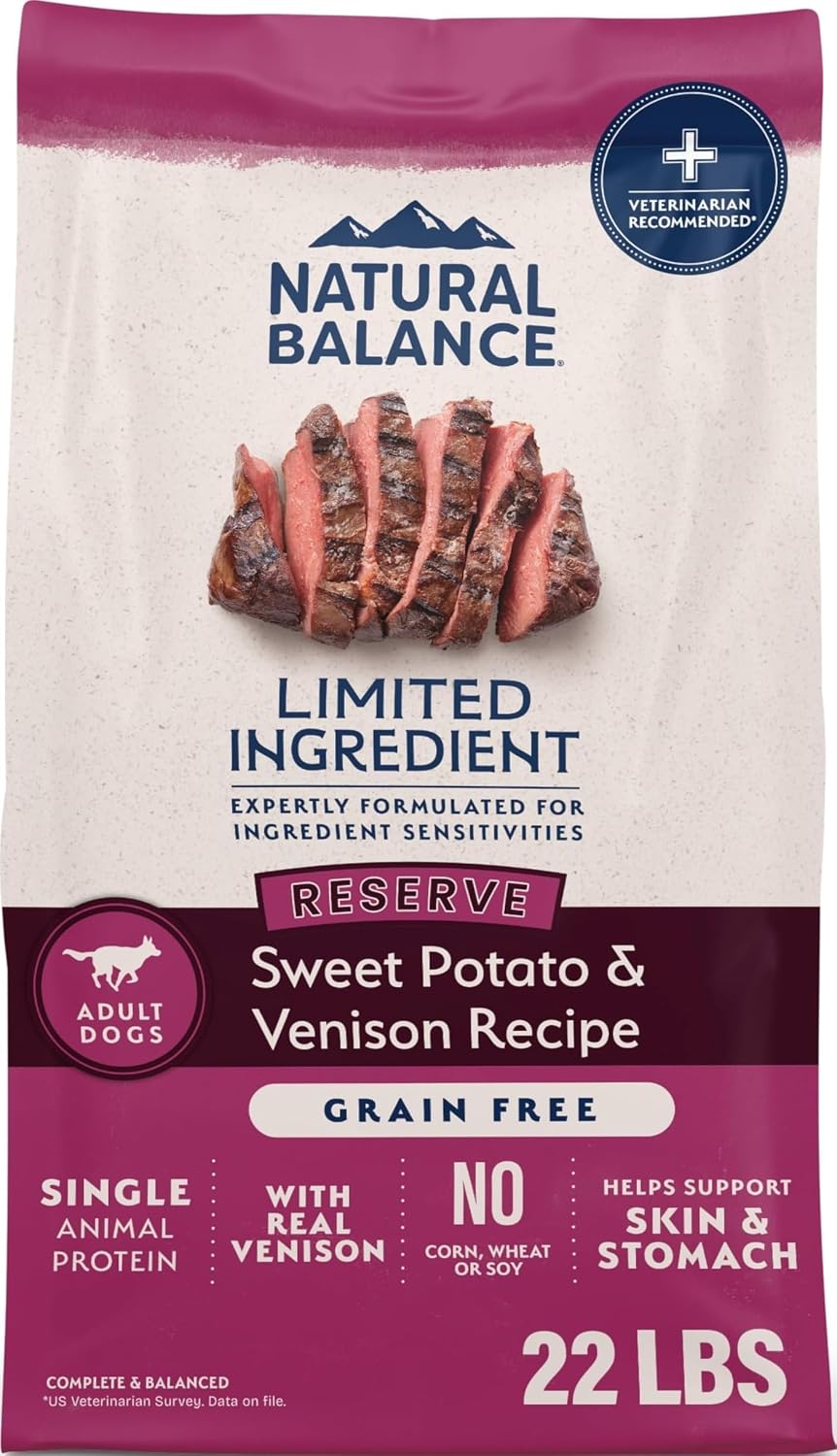
Natural Balance Limited Ingredient Dry Dog Food
Best Limited-Ingredient Food
| Flavor | Sweet Potato & Venison |
|---|---|
| Age Range Description | Adult |
| Item Form | Pellet |
| Animal Food Diet Type | Limited Ingredient |
| Allergen Information | Corn-Free, Grain-Free, Soy Free |
This limited-ingredient dry formula uses reserve venison as the primary animal protein and a short ingredient profile intended to reduce exposure to common irritants. It is typically fed as an everyday dry kibble for adult dogs that need simplified nutrition or have digestive or skin sensitivities. Notable features include single animal protein focus, grain-free formulation, and added vitamins, minerals, and omega sources like salmon oil and flaxseed to support skin and coat. Practical benefits include easier elimination diet trials because of the simplified recipe, potentially gentler digestion thanks to digestible carbohydrate sources like sweet potato, and a complete nutrient profile for regular feeding. Limitations to consider are that it is grain-free and contains ingredients like pea protein and potato protein that some elimination protocols exclude, and dogs with specific diagnosed allergies should still be guided by a veterinarian. Bagged packaging makes it convenient for daily service but introduces the usual shelf-life and freshness considerations once opened.
Best for: Buyers seeking a shorter, single-protein dry food to trial for dogs with suspected ingredient sensitivities or sensitive digestion who want a complete, everyday kibble.
Less Ideal for: Owners who need a strictly hydrolyzed or veterinarian-prescribed hypoallergenic diet, or who require a formula without any pulse or potato-derived ingredients.
- Single primary animal protein (venison) simplifies elimination diets
- Grain-free and formulated without corn, wheat, or soy
- Includes added vitamins, minerals, and omega sources for skin and coat support
- Designed for dogs with sensitive stomachs and ingredient sensitivities
- Contains plant proteins (pea protein, potato protein) that some elimination plans avoid
- Grain-free formulation may not be necessary for all dogs and can be higher in certain carbs
Verdict: The best limited-ingredient food for German Shepherds with food sensitivities, focusing on a short ingredient list to simplify diagnosis and digestion.
ROYAL CANIN German Shepherd Puppy Dry Dog Food 30 lb
Best Puppy Food

| Flavor | Chicken |
|---|---|
| Age Range Description | Puppy |
| Breed Recommendation | German Shepherd |
| Package Size | 30 lb Bag |
| Item Form | Pellet |
Royal Canin German Shepherd Puppy is a breed-targeted dry kibble designed for purebred German Shepherd puppies from 8 weeks to 15 months. The formula uses a specialized kibble shape sized for a German Shepherd puppy's jaw and encourages chewing while delivering highly digestible proteins and specific fibers to support stool quality and digestive health. The recipe includes an antioxidant complex with vitamin E for immune development and adds glucosamine and chondroitin to help bone and joint support during rapid growth. Ingredients list shows protein sources like chicken meal and chicken by-product meal and includes functional additives such as fish oil, fructooligosaccharides, and marine microalgae oil. Practical benefits are steady, targeted nutrition that simplifies feeding a growing German Shepherd puppy and helps address breed tendencies for joint and digestive concerns. Limitations are that the ingredient mix includes some by-product meals and cereals rather than only whole-muscle proteins, so buyers prioritizing novel or grain-free formulas may prefer other options.
Best for: Buyers who want a science-backed, breed-specific complete dry food that balances growth needs, joint support, and digestive health for German Shepherd puppies.
Less Ideal for: Owners seeking a novel-protein, grain-free, or limited-ingredient puppy diet for food-sensitive dogs should consider alternative formulas.
- Breed-specific kibble shape and texture sized for German Shepherd puppy jaws
- Contains glucosamine and chondroitin to support bone and joint development
- Antioxidant complex with vitamin E to help immune system development
- Highly digestible proteins and fibers to promote digestive health and stool quality
- Includes chicken by-product meal and cereal grains rather than only whole-muscle proteins
- Not a grain-free or limited-ingredient formula for puppies with specific sensitivities
Verdict: The best puppy food for German Shepherds that provides elevated calories, controlled calcium/phosphorus ratios, and growth-focused nutrients to support large-breed development.
Choosing the Right Dog Food German Shepherd: Key Factors to Consider
Protein Quality and Amount
Protein supplies the amino acids german shepherds need for muscle maintenance, immune function, and tissue repair. Look for named animal proteins listed first in the ingredient statement rather than vague meat by-products or unspecified meals.
The required protein level varies with age and activity. Puppies and working adults usually need higher protein percentages to support growth and recovery, while older or less active dogs may do better with maintenance-level protein that preserves lean mass without promoting excess weight. Consider how protein is sourced and whether the formula provides digestible proteins that your dog tolerates.
Joint-supporting Nutrients
German shepherds commonly face hip and elbow issues, so joint-supporting nutrients are an important purchasing factor. Formulas that include glucosamine and chondroitin or higher levels of EPA and DHA can help support cartilage health and reduce inflammation over time.
When evaluating foods, check amounts where provided and whether the manufacturer pairs these nutrients with a nutrient-dense base that supports overall bone and muscle health. Remember that dietary support is complementary to veterinary care and lifestyle measures like appropriate exercise and weight control.
Digestibility and Gastrointestinal Tolerance
A food that is highly digestible reduces stool volume, supports nutrient uptake, and helps prevent chronic digestive upset. Ingredients such as highly digestible animal proteins, moderate fiber, and prebiotic sources can improve stool quality and gut comfort.
Some german shepherds have sensitivities to specific proteins or grains. If your dog shows recurrent digestive issues, choose a formula designed for sensitive stomachs or one that limits ingredient complexity to a few identifiable protein and carbohydrate sources.
Calorie Density and Fat Profile
Calorie density determines portion sizes and influences weight management. Active german shepherds need a higher calorie intake, while less active or senior dogs need fewer calories to avoid weight gain. Check the kcal per cup or per kilogram to compare energy density across foods.
Fat provides concentrated energy and supports skin and coat health. Look for sources of healthy fats and a favorable ratio of omega-6 to omega-3 fatty acids. Adequate levels of EPA and DHA contribute to anti-inflammatory effects that can benefit joints and skin.
Life-stage and Size Formulation
Nutrient requirements change from puppy to adult to senior. Puppy formulas typically provide higher calories, calcium, and phosphorus to support growth, while adult and senior formulas shift focus toward maintenance, controlled calories, and joint support.
Because german shepherds are a large-breed dog, consider formulas labeled for large-breed puppies or adults, which often have adjusted calcium-to-phosphorus ratios and controlled growth profiles to reduce the risk of developmental orthopedic issues.
Ingredient Transparency and Added Functional Ingredients
Clear labeling helps you understand what your dog is actually eating and whether the formula includes functional extras. Look for named protein sources, clear carbohydrate choices, and disclosed supplemental ingredients such as probiotics, antioxidants, or chelated minerals.
Functional ingredients can support immunity, coat health, or digestive balance, but they should complement a solid nutritional foundation rather than substitute for it. Avoid formulas that hide key components behind vague terminology or omit guaranteed analysis data.
How Much Should I Feed My German Shepherd at Different Life Stages?
Feeding amounts depend on age, activity level, and the specific calorie density of the food. Puppies require more frequent feeding and higher calories per pound of body weight to support rapid growth, while adult german shepherds typically do well on two meals per day adjusted to maintain a lean, active body condition.
For seniors, watch body condition and adjust portions downward if activity decreases. Always follow the feeding guidelines on the package as a starting point, then adjust based on your dog's body condition score, workload, and veterinary advice.
- Puppies: more calories per pound, multiple meals daily.
- Adults: two meals daily, adjust for activity.
- Seniors: lower calorie needs, focus on joint support and lean mass preservation.
What Ingredients Commonly Trigger Sensitivities in German Shepherds?
Common triggers include certain protein sources such as beef or dairy and some grain ingredients for dogs with specific intolerances. Food sensitivities often present as chronic ear infections, itchy skin, or gastrointestinal upset rather than immediate allergic reactions.
If you suspect a sensitivity, try an elimination approach with guidance from your veterinarian: switch to a single-protein or limited-ingredient formula and monitor improvements over several weeks before reintroducing potential triggers.
- Typical culprits: specific proteins, dairy, and sometimes wheat or corn.
- Management strategy: single-protein or limited-ingredient diets and veterinary-guided elimination trials.
Do German Shepherds Need Grain-free Food?
Most german shepherds do not require a grain-free diet unless they have a diagnosed grain intolerance. Whole grains provide digestible carbohydrates, fiber, and micronutrients that support energy needs and gut health.
Choose grain-free only when there is a confirmed sensitivity because these formulas replace grains with alternative carbohydrate sources that must still meet your dog's nutritional needs. Discuss any major dietary changes with your veterinarian to ensure the diet remains complete and balanced.
- Grain-free may be appropriate for diagnosed sensitivities.
- Whole grains can be a healthy, digestible carbohydrate source for many german shepherds.
How to Transition Your German Shepherd to a New Food
Switch foods gradually over 7 to 10 days to reduce the risk of digestive upset. Start with a small proportion of the new food mixed into the old and slowly increase the new ratio while decreasing the old food.
Monitor stool quality, appetite, and energy during the transition. If you see persistent diarrhea, vomiting, or loss of appetite, pause the transition and consult your veterinarian.
- 7–10 day gradual switch: start with 25% new, 75% old, then increase.
- Watch for changes in stool, coat, and energy as indicators of tolerance.
Should I Use Supplements for Joint Health Alongside Food?
Supplements such as glucosamine, chondroitin, and omega-3 fatty acids can support joint health, particularly for large-breed dogs. Food that already contains these nutrients may reduce the need for additional supplementation, but many owners add targeted supplements when joint disease risk is high or symptoms appear.
Check with your veterinarian before adding supplements to confirm appropriate dosing and to avoid unnecessary or duplicative supplementation. Quality and bioavailability vary between products, so veterinary guidance helps ensure safe, effective choices.
- Consider supplements when joint support is needed beyond what the food provides.
- Veterinary consultation helps set dosing and avoid overlaps with dietary levels.
How We Chose the Best Dog Food German Shepherd
We prioritized formulas that meet the specific physiological and lifestyle needs of german shepherds. Evaluation focused on protein quality and level, since german shepherds need high-quality amino acids for muscle maintenance and recovery. We also looked for evidence of joint-supporting nutrients such as glucosamine and chondroitin, or omega-3 fatty acids, because hip and elbow health is a common concern in the breed. Digestibility and ingredient transparency were key filters: we favored foods listing identifiable animal proteins early in the ingredient list and formulas designed for sensitive stomachs when applicable. Calorie density and fat profile mattered as well, because german shepherds are active and need energy without excessive weight gain. We assessed life-stage suitability and whether the formulation matched needs for puppies, adults, or seniors. We excluded products with incomplete ingredient information, unclear protein sources, or formulas lacking clear nutrient profiles for joint support and essential fatty acids. Our final list reflects a balance of nutrient density, ingredient clarity, and formulation choices that align with german shepherd health priorities.
Our full evaluation process is outlined in our review methodology.
FAQ
At what age should a german shepherd switch from puppy to adult food?
Large-breed german shepherds typically transition from puppy to adult food around 12 to 18 months, depending on growth and maturity. Consult your veterinarian to time the switch based on body condition and skeletal maturity rather than calendar age alone.
How can i tell if a food is causing digestive upset?
Signs include loose stools, increased stool frequency, vomiting, changes in appetite, or flatulence. If these signs appear after a diet change, try a gradual transition or a limited-ingredient formula and consult your veterinarian if symptoms persist.
Are higher-protein foods always better for german shepherds?
Higher-protein foods benefit growing puppies and active adults by supporting muscle maintenance and recovery. However, protein needs depend on life stage and activity; seniors or less active dogs may do better on moderate protein levels to prevent excessive weight gain while preserving lean mass.
What role do omega-3 fatty acids play in a german shepherd's diet?
Omega-3 fatty acids, particularly EPA and DHA, help reduce inflammation, support joint health, and promote skin and coat condition. They are beneficial for large-breed dogs prone to joint issues and for maintaining overall inflammatory balance.
How important is calorie density when comparing dog foods?
Calorie density affects portion size and weight management. Active german shepherds need higher calorie intake per pound, while less active or aging dogs need fewer calories. Compare kcal per cup or per kilogram and adjust feeding volumes based on your dog's activity and body condition.
Final Verdict
When choosing food for a german shepherd, prioritize high-quality, digestible protein, joint-supporting nutrients, and an appropriate calorie density for your dog's life stage and activity level. Ingredient transparency and life-stage formulation for large breeds help reduce developmental and weight-management risks. Balance the tradeoffs between higher-calorie, performance-focused formulas and more conservative maintenance diets based on your dog's workload and health status. Focus on long-term mobility and lean-mass preservation when you evaluate options, and use veterinary guidance for major dietary changes or when adding supplements.

