

Picking the right food for a toy breed puppy matters more than you might think. Small-breed pups have faster metabolisms, tiny mouths, and different nutrient needs than larger puppies, so the wrong formula can leave them undernourished or struggling with digestion. This guide covers the top shortlisted options for toy breed puppies and explains the criteria we used to evaluate them. You will find options chosen for concentrated calorie delivery, appropriate protein and fat levels, and bite-sized kibble designed for small jaws. Read on for the factors that matter and practical guidance to help you pick a daily diet that supports steady growth and healthy development.
Top Picks at a Glance
| Best Overall Food for Toy Breed Puppies A balanced, age-appropriate formula optimized for tiny mouths and growth | Hill's Science Diet Puppy Small & Mini |  |
| Best Budget Food for Toy Breed Puppies A low-cost puppy formula that still meets basic nutritional needs | Pedigree Puppy Dry Dog Food 3.5 lb |  |
| Best Premium Food Higher-end formulas with superior ingredients and targeted nutrition | Royal Canin Small Puppy Dry Dog Food 14 lb |  |
| Best High-Protein Food Formulas with elevated protein to support muscle and active growth | Diamond Puppy High Protein 6lb |  |
| Best Grain-Free Food A grain-free formulation for owners preferring limited or no grains | Nulo FreeStyle Small Breed Salmon & Lentils |  |
| Best Small-Kibble Food Tiny, easy-to-chew kibble made specifically for small mouths | Royal Canin X-Small Puppy Dry Food 3 lb |  |
| Best Sensitive-Stomach Food Gentle formulas designed for digestive sensitivity and food transition | Purina Pro Plan Puppy Sensitive Salmon 4 lb |  |
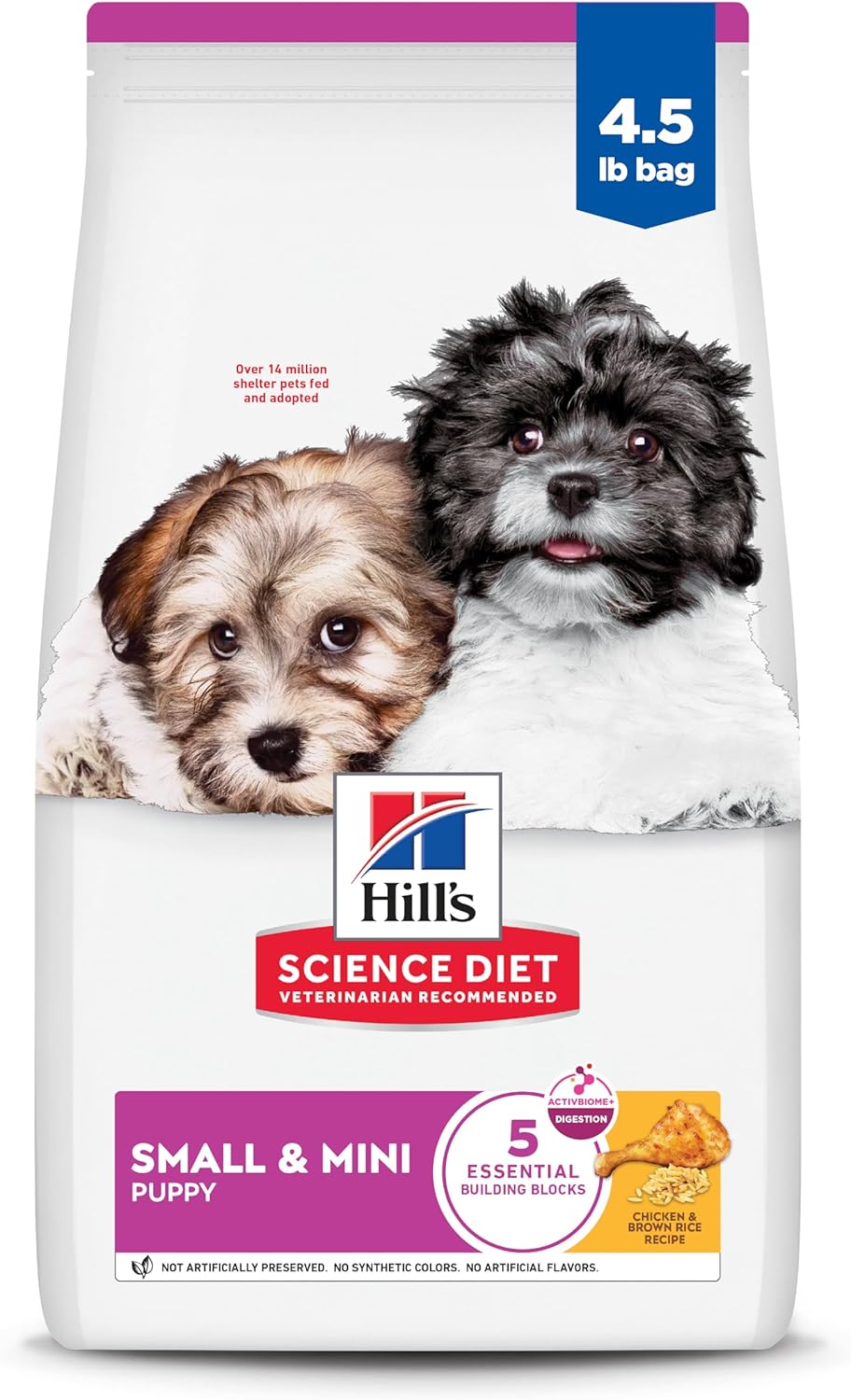
Hill's Science Diet Puppy Small & Mini
Best Overall Food for Toy Breed Puppies
| Flavor | Chicken & Brown Rice |
|---|---|
| Age Range Description | Puppy |
| Specific Uses For Product | Small & Mini Breeds Puppy Premium Nutrition |
| Unit Count | 72 Ounce |
Hill's Science Diet Puppy Small & Mini is a dry kibble formulated specifically for toy and small-breed puppies, combining concentrated calories, high-quality proteins, and nutrients aimed at early development. The small nibble size and calorie density make it convenient for frequent small meals and help meet the higher metabolic needs of little puppies. Notable features include DHA and fish oil for brain and eye development, balanced minerals to support growing bones and teeth, a special antioxidant blend for immune support, and prebiotic fibers to aid digestion. In practice the food is used as a complete diet from weaning through the puppy stage with feeding amounts adjusted to body condition; the bag includes feeding guidelines and the manufacturer recommends transitioning over seven days. Limitations are that the ingredient list includes grains and several plant proteins, so owners preferring grain-free or novel-protein formulas for allergy management may need alternatives, and the 4.5 lb bag size may require frequent repurchasing for multi-puppy households. For most small-breed puppies this provides a vet-focused, nutrient-dense base for growth.
Best for: Buyers seeking a veterinary-recommended, nutrient-dense puppy formula tailored to toy and small breeds who prioritize brain, bone, and immune development in early life.
Less Ideal for: Owners who need a grain-free, limited-ingredient, or novel-protein diet for food sensitivities should look at specialized alternatives.
- Kibble sized for small and toy breed mouths
- Contains DHA and fish oil to support brain and eye development
- Antioxidant blend and vitamins to support immune health
- Prebiotic fibers to support digestion and gut microbiome
- Formulated with concentrated calories and high quality proteins for growth
- Contains grains and common plant proteins that may not suit dogs with specific food sensitivities
- Smaller 4.5 lb bag may require frequent repurchase for multiple puppies
Verdict: The best overall choice for toy breed puppies that balances calorie density, essential nutrients, and kibble size to support healthy growth and easy chewing.
Pedigree Puppy Dry Dog Food 3.5 lb
Best Budget Food for Toy Breed Puppies

| Flavor | Chicken & Vegetable |
|---|---|
| Age Range Description | Puppy |
| Item Form | Dry Kibble |
| Unit Count | 56 Ounce |
| Animal Food Nutrient Content Claim | High Protein, No Added Sugar |
Pedigree Puppy Dry Dog Food is a straightforward, budget-friendly puppy kibble made from chicken-based protein, grains, and added vitamins and minerals to support growth. You would typically use it as a daily staple while transitioning a young dog from weaning to adult food, following the feeding guide on the package to match your puppy's weight and age. The formula emphasizes high-quality protein sources for muscle development and includes 36 vitamins, minerals, and amino acids intended to support immune health, brain development, and bone strength. In practice this means an owner gets a complete and balanced commercial diet that is easy to portion and serve dry or softened with water for very young pups. Ingredient-wise it contains common commodity grains and by-product meals rather than premium single-source meats, so it delivers required calories and nutrients at a lower cost but not the cleanest ingredient panel. Expect good availability and consistent kibble size, but owners seeking grain-free, novel proteins, or limited-ingredient formulas will need to look elsewhere.
Best for: Value-conscious puppy owners who need an affordable, complete puppy kibble that supports growth and daily feeding routines.
Less Ideal for: Owners who require grain-free, novel-protein, or limited-ingredient veterinary diets for food sensitivities should consider specialty formulas instead.
- Formulated specifically for puppies with nutrients to support growth and immune health
- Contains high-protein sources to support muscle development
- Includes 36 vitamins, minerals, and amino acids for complete and balanced nutrition
- Easy-to-follow feeding guide for age and weight makes portioning simple
- Uses ingredient list with grains and by-product meals rather than single-source premium proteins
- Not suitable for owners seeking grain-free or limited-ingredient diets
Verdict: The best budget pick for owners who need an affordable feeding option that still provides complete puppy nutrition and appropriate kibble size for toy breeds.
Royal Canin Small Puppy Dry Dog Food 14 lb
Best Premium Food

| Flavor | Chicken |
|---|---|
| Age Range Description | Puppy |
| Breed Recommendation | Small Breeds |
| Unit Count | 224 Ounce |
Royal Canin Small Breed Puppy Dry Dog Food is a complete kibble formulated for puppies expected to reach 9–22 pounds as adults. The recipe pairs crunchy, small-size kibble with targeted nutrients like DHA and omega-3s for brain development, antioxidants for immune support, and prebiotics plus highly digestible proteins to promote healthy digestion. It is typically fed as a sole dry diet or mixed with Royal Canin Small Puppy wet food for added variety, and the kibble size and texture make it easy for toy and small-breed puppies to pick up and chew. Practical benefits include a formula backed by breed-and-size-specific research, a focus on energy needs during growth, and ingredients chosen to support stool quality and gut tolerance during transitions. Limitations are that the ingredient list includes by-product meals and cereal grains rather than single-source premium whole meats, so buyers seeking novel proteins or grain-free, human-grade ingredient panels may prefer alternative premium options.
Best for: Small-breed puppy owners who prioritize science-backed, size-targeted nutrition to support rapid development and digestive tolerance during the first months of growth.
Less Ideal for: Owners seeking human-grade ingredient lists, grain-free diets, or single-source novel proteins should consider specialty premium formulas instead.
- Kibble sized and textured for small-breed puppy chewing and intake
- Includes DHA and omega-3s to support brain development
- Contains prebiotics and highly digestible proteins for better digestion
- Antioxidant blend for immune system support
- Designed specifically for puppies with targeted energy and growth nutrients
- Uses chicken by-product meal and cereal grains rather than single-source whole muscle proteins
- Not a grain-free or novel-protein formula for allergy-sensitive puppies
Verdict: The best premium food for owners willing to invest in higher-quality proteins, more precise nutrient profiles, and premium ingredient sourcing for optimal puppy development.
Diamond Puppy High Protein 6lb
Best High-Protein Food

| Flavor | Puppy |
|---|---|
| Item Form | Dry Kibble |
| Special Ingredients | Chicken, Flaxseed, Fish Meal, Salmon Oil |
| Unit Count | 96 Ounce |
Diamond Puppy High Protein is a puppy kibble formulated to support growth with chicken protein listed as the first ingredient and a nutrient package targeted at brain, vision and bone development. It is used as a daily feeding for puppies and is also suitable for pregnant or nursing adults; the bag contains smaller kibble suited to young mouths. Notable features include DHA from salmon oil for neural and visual development, a probiotic blend and antioxidants to support digestion and immune health, and higher protein and fat levels to fuel growth. Ingredients list includes chicken by-product meal, whole grains, flaxseed and fish meal, so you get concentrated protein sources alongside grains and added functional fats. Practical benefits are straightforward nutrition designed by veterinarians, family-owned U.S. manufacturing, and an emphasis on value for owners who need a complete high-protein puppy diet on a budget. Limitations include the use of by-product meal and grain ingredients for some buyers who prefer single-source or grain-free recipes, and limited packaging size choices compared with larger bulk bags for heavy feeders.
Best for: Cost-conscious puppy owners who need a complete, higher-protein growth formula that supports brain and bone development without a high price tag.
Less Ideal for: Owners seeking grain-free or single-source whole-muscle protein formulas, or those who prefer novel protein recipes for allergy-prone puppies.
- Chicken protein is listed first for muscle-building support
- Includes DHA from salmon oil to support brain and vision development
- Contains a probiotic blend and antioxidants to aid digestion and immune health
- Smaller kibble size formulated for puppies and suitable for pregnant or nursing adults
- Uses chicken by-product meal and mixed grain ingredients rather than single whole-muscle protein sources
- Limited bag size may require more frequent repurchasing for fast-growing litters
Verdict: The best high-protein food for growing puppies that need extra amino acids for lean muscle development and sustained energy.
Nulo FreeStyle Small Breed Salmon & Lentils
Best Grain-Free Food

| Flavor | Salmon & Lentils |
|---|---|
| Item Form | Dry |
| Breed Recommendation | Small Breeds |
| Package Size | 6 lb Bag |
| Special Ingredients | Probiotic |
Nulo FreeStyle Small Breed Salmon & Lentils is a grain-free kibble designed for toy and small-breed puppies and adults. It uses deboned salmon and other animal meals to deliver a high proportion of animal-sourced protein and smaller kibble sized for little mouths. The formula includes omega fatty acids for skin and coat health, taurine and essential amino acids for heart support, and BC30 probiotics plus prebiotic fibers aimed at improving digestion and nutrient absorption. It excludes common fillers and several potential allergens such as grains, chicken, eggs, and artificial colors or preservatives, which can help dogs with grain sensitivities. Feeding follows standard daily portion guidance for small dogs, and the product emphasizes steady energy and lean-muscle support for active little dogs. Limitations are that it is grain-free and higher in animal protein, which may not be necessary or ideal for every Havanese depending on individual medical advice, and owners should confirm portions with their veterinarian for weight management and specific health needs.
Best for: Owners of Havanese who want a grain-free recipe tailored to small mouths and who prioritize animal-based protein, coat support, and digestive-friendly probiotics.
Less Ideal for: Owners whose dogs are on veterinary-prescribed grain-inclusive or low-protein diets, or those who prefer formulas with whole grains for long-term weight management.
- High ratio of animal-based protein with deboned salmon first for lean muscle support
- Smaller kibble size suited to small and toy breed mouths
- Includes omega-3 and omega-6 fatty acids to support skin and coat condition
- Contains BC30 probiotics and prebiotic fibers to help digestive health and nutrient absorption
- Grain-free formulation may not be appropriate for dogs that do better on whole grains or specific veterinary diets
- Higher protein, calorie content requires careful portion control to avoid weight gain
Verdict: The best grain-free food for puppies whose caregivers prefer grain-free recipes or who need alternatives to common grain ingredients.
Royal Canin X-Small Puppy Dry Food 3 lb
Best Small-Kibble Food

| Age Range | Puppy 2 to 10 months |
|---|---|
| Breed Size Recommendation | X-Small / Small breeds |
| Item Form | Kibble |
| Flavor | Chicken & Vegetable |
| Unit Count | 48 Ounce |
Royal Canin X-Small Puppy is a dry kibble made specifically for extra-small breed puppies, with a crunchy, tiny kibble designed to be easy for very small mouths to pick up and chew. It is intended for puppies 2 to 10 months with an expected adult weight under about 8 pounds and is used as a daily complete diet or mixed with Royal Canin wet puppy formulas for texture variety. The formula highlights DHA and omega-3s for brain development, antioxidants for immune support, and a blend of prebiotics and digestible proteins to promote gut health. Practical benefits include portion-sized nutrition tailored to high energy needs during growth and a kibble texture that can help dental health by encouraging chewing. Limitations are that it is sized and balanced for extra-small breeds only, so growing puppies expected to exceed the target adult weight will need a different formula, and the ingredient list includes grains and by-product meal which some buyers may avoid. The 3 lb bag is convenient for trialing a Westie puppy but may require more frequent repurchase than larger bags for multi-puppy households.
Best for: Owners of West Highland Terrier puppies and other very small-mouthed breeds who prioritize kibble size and targeted growth-stage nutrition to make feeding and chewing comfortable.
Less Ideal for: Owners whose puppies are expected to exceed the formula's target adult weight or buyers seeking grain-free or novel-protein ingredient lists should consider alternative formulations.
- Kibble sized and shaped for very small mouths to make eating easier for Westie puppies
- Contains DHA and omega-3 fatty acids to support brain development
- Includes prebiotics and highly digestible proteins to promote healthy digestion
- Antioxidants like vitamins E and C to support immune system development
- Available in a 3 lb bag that is practical for testing or small-breed households
- Formulation uses poultry by-product meal and grains, which some owners prefer to avoid
- Sized specifically for extra-small breeds so not suitable if the puppy will grow beyond the target adult weight
Verdict: The best small-kibble food for toy breed puppies that struggle with larger pieces and need bite-sized morsels for comfortable chewing and safer eating.
Purina Pro Plan Puppy Sensitive Salmon 4 lb
Best Sensitive-Stomach Food

| Flavor | Salmon & Rice |
|---|---|
| Item Form | Dry |
| Manufacturer recommended age | 1 month and up |
| Unit Count | 64 Ounce |
Purina Pro Plan Sensitive Skin & Stomach Puppy Salmon & Rice is a dry puppy formula designed to support digestive health and skin development in young dogs. It uses real salmon as the first ingredient and includes rice and other easily digestible carbohydrates to help maintain stool quality, while added live probiotics and natural prebiotic fiber promote healthy gut bacteria. The formula also supplies DHA from fish oil for brain and vision development, omega-6 fatty acids and vitamin A for skin and coat, and a blend of vitamins and minerals for overall growth. In everyday use you would feed smaller, frequent meals for young puppies and follow the gradual transition guidance to avoid upset tummies. Practical strengths are the focus on digestive tolerance and targeted nutrients for growth, but the 4 lb bag size means more frequent repurchase for multi-puppy households and the recipe is not grain-free. For buyers prioritizing a high-fiber, probiotic-supported puppy diet that still delivers complete growth nutrition, this is a reliable option.
Best for: Pet owners who want a balanced, growth-focused puppy food that emphasizes digestive tolerance and gut support for everyday feeding.
Less Ideal for: Owners specifically seeking grain-free or limited-ingredient elimination diets should consider alternative formulas designed for those needs.
- Real salmon as the first ingredient for animal protein and omega fatty acids
- Guaranteed live probiotics plus natural prebiotic fiber to support digestion
- Includes DHA from fish oil to support brain and vision development
- Formulated to nourish skin and coat with omega-6s and vitamin A
- 4 lb bag may require frequent replacement for larger or multiple puppies
- Contains grains so not suitable for owners seeking grain-free recipes
Verdict: The best sensitive-stomach food for puppies with digestive issues or picky digestion, formulated with gentle ingredients and easy-to-digest nutrients to reduce upset.
Choosing the Right Dog Food Toy Breed Puppy: Key Factors to Consider
Kibble Size and Texture
Small puppies have proportionally tiny mouths and immature chewing ability. Bite-sized kibble that is soft enough to crush yet durable enough to maintain shape makes mealtimes easier and reduces the risk of gagging or inadequate intake.
Texture also affects palatability and saliva production. Very hard, oversized pieces can discourage eating or lead to gulping, while overly soft or powdery food may create a mess and complicate measured feeding. Look for products that explicitly note toy-breed or small-breed kibble sizing and avoid regular adult pieces designed for larger mouths.
Calorie Density and Feeding Volume
Toy breed puppies burn calories quickly and often require more calories per pound than larger puppies. Because their stomachs are small, a calorie-dense food lets them meet daily energy and growth needs without needing large meal volumes.
Feeding guidelines should be realistic for the puppy's size; overly dilute diets force frequent, small meals that complicate house training and scheduling. Check label calorie information and choose formulas that provide concentrated energy while still balancing protein and fat to support lean growth.
Protein Quality and Levels
Adequate, high-quality protein supports muscle development and overall growth during the rapid puppy phase. For toy breed puppies, protein should come from named animal sources when possible, and levels should match life-stage growth requirements to avoid lean tissue loss.
Very low-protein formulas can hinder growth, while excessively high-protein levels without appropriate calorie balance may be unnecessary. Consider both the protein percentage and the digestibility; highly digestible proteins make better use of the limited stomach capacity of toy pups.
Digestive Tolerance and Ingredient Choices
Puppy digestive systems are still developing and can be sensitive to rich or unfamiliar ingredients. Simple, easily digested carbohydrates and prebiotic fiber help maintain stool quality and nutrient absorption. Ingredients associated with common food sensitivities should be considered carefully if the puppy shows signs of intolerance.
Added probiotics or gentle fiber sources can support gut health, but abrupt diet changes should still be avoided. Selecting formulas formulated for puppies and labeled as easily digestible reduces the risk of gastrointestinal upset in the early months.
Essential Fatty Acids and Micronutrients
Omega-3 and omega-6 fatty acids support brain development, vision, and skin and coat health in growing puppies. Toy breeds can show skin sensitivity, so balanced fatty acid inclusion is important for both internal development and external condition.
Micronutrients such as calcium, phosphorus, and vitamin D must be in proper ratios for safe bone growth. Over- or under-supplementation can lead to developmental issues. Choose foods formulated for growth that list balanced vitamin and mineral profiles appropriate for small-breed puppies.
Palatability and Appetite Management
Even the most nutritious formula is only effective if the puppy will eat it consistently. Palatability affects early feeding success and weight gain. For small breeds with selective appetites, aroma, texture, and mild flavoring can make a measurable difference.
However, palatability should not come at the expense of nutrition; avoid formulas that rely heavily on artificial flavors or excessive fat to mask poor-quality ingredients. Look for balanced recipes designed to appeal to small-breed palates without encouraging overconsumption.
How Often Should I Feed a Toy Breed Puppy and How Much at Each Meal?
Toy breed puppies typically need more frequent meals than larger pups because of their higher metabolisms and limited stomach capacity. Most owners start with three to four small meals per day until around four months of age, then transition to two or three meals daily depending on growth and veterinary guidance. Meal frequency helps maintain steady blood glucose and prevents energy dips that can lead to hypoglycemia in very small puppies.
Bullets are not allowed in paragraphs; use bullets field for lists.
- Start with 3 to 4 feedings per day for young puppies, shifting to 2–3 feedings as they mature.
- Use feeding charts on the label as a starting point, then adjust based on body condition and appetite.
- Weigh your puppy regularly and consult your veterinarian if weight gain is too slow or too fast.
What if My Toy Puppy Has a Sensitive Stomach?
If your puppy shows loose stools, vomiting, or poor weight gain, choose a formula labeled for sensitive digestion or with limited ingredient formatting. Gradual diet transitions over 7–10 days reduce shock to the gut. Look for recipes with digestible carbohydrates, moderate fat levels, and added prebiotics or probiotics to support healthy microbial balance.
If symptoms persist after a careful diet change and gradual transition, consult your veterinarian to rule out underlying medical causes such as parasites, infections, or pancreatitis.
- Introduce new food slowly, mixing increasing amounts over several days.
- Avoid abrupt treats or table scraps during transitions.
- Keep a feeding log to track patterns in stool and appetite.
Do Toy Breed Puppies Need Different Nutrient Ratios than Larger Puppies?
Yes. While overall growth requirements are similar, toy breed puppies often need higher calorie density and slightly different macronutrient balancing to support rapid metabolism without requiring large meal volumes. Protein and fat should be sufficient to support lean mass and energy, while calcium and phosphorus must be balanced to avoid skeletal issues. Pay attention to life-stage labeling and nutrient guarantees to ensure the formula meets growth requirements.
- Look for formulas formulated for growth with calorie density suited to small breeds.
- Avoid adult maintenance diets during the growth phase.
- Monitor body condition to ensure nutrient ratios are supporting steady, healthy gain.
Transitioning From Puppy Food to Adult Small-breed Formulas
The move to adult maintenance typically occurs between 9 and 12 months for many toy breeds, but the exact timing depends on the individual dog's growth and your veterinarian's advice. Transition gradually over a week to 10 days by mixing increasing amounts of the adult formula into the puppy food. This helps prevent digestive upset and maintains appetite during the switch.
If the puppy is still filling out at a later age or the veterinarian recommends extended growth feeding, follow their guidance rather than a fixed timeline. Watch for changes in weight, energy, and coat condition during and after the transition.
- Start the transition when growth plates are near closure or as advised by your vet.
- Swap progressively over 7–10 days to minimize gastrointestinal upset.
- Adjust portion sizes to reflect the adult formula's calorie density and the dog's activity level.
Managing Treats, Training Rewards, and Supplementation
Treats and training rewards contribute to daily calorie totals and can quickly unbalance feeding plans for small puppies. Use tiny, low-calorie training treats or break treats into small pieces to avoid overfeeding. When introducing supplements, such as skin-and-coat oils or joint support, check that overall calorie and nutrient totals remain balanced for growth.
Avoid multiple supplemental sources of the same nutrients that could cause excesses. Consult your veterinarian before adding any vitamin or mineral supplements, especially calcium or vitamin D, which impact bone development.
- Factor treat calories into daily totals and reduce meal portions accordingly.
- Use training treats specifically sized for toy breeds.
- Consult a veterinarian before adding growth supplements.
How We Chose the Best Dog Food Toy Breed Puppy
Our selection started with formulas marketed specifically for toy or small-breed puppies and then applied practical filters to find well-rounded daily diets. We prioritized nutrient profiles that meet life-stage requirements, focusing on protein quality, fat content, and calorie density appropriate for very small pups. Digestibility and ingredient transparency were next: we favored recipes with recognizable protein sources and supportive carbohydrate choices that are gentle on immature digestive systems. Kibble size and texture were evaluated for chewability and ease of intake by tiny mouths. We also weighed formulation details such as added omega fatty acids for skin and coat, and included vitamins and minerals to support bone and cognitive development. We excluded adult maintenance formulas, treats, and single-ingredient supplements from consideration. Foods that lacked clear life-stage labeling or that did not provide complete and balanced nutrition for growth were not included. The final list reflects a balance of nutrient adequacy, small-breed suitability, and practical feeding considerations for owners of toy breed puppies.
Our full evaluation process is outlined in our review methodology.
FAQ
How can I tell if my toy puppy is getting enough calories?
Monitor steady weight gain and a healthy body condition score. Small puppies should gain consistently week to week; check with your veterinarian if weight stalls or the puppy appears lethargic. Tracking meal intake and using formula calorie information helps ensure daily needs are met.
Is wet food better than dry for toy breed puppies?
Both can be appropriate. Wet food can be easier for tiny mouths and boosts hydration, while dry kibble helps with convenience and dental abrasion. Choose a formula intended for growth and sized appropriately, and consider mixing textures if it helps appetite and digestion.
When should I switch from a puppy formula to an adult small-breed food?
Most toy breeds transition between 9 and 12 months, but timing depends on individual growth and veterinary input. Use physical development and body condition rather than a calendar date to decide when to switch.
What if my puppy refuses a recommended puppy food?
Try gradual mixing with the current diet, offer small warm-up of meals to increase aroma, or try a different texture. Rule out medical causes if appetite remains poor and consult your veterinarian for guidance.
Are grain-free diets safe for toy breed puppies?
Grain-free recipes can be safe if they meet complete and balanced growth standards, but they are not inherently superior. Evaluate ingredient quality, nutrient balance, and digestive tolerance rather than relying solely on grain-free labeling.
Final Verdict
Choose a diet that balances calorie density, digestible protein, and appropriate micronutrients while matching kibble size to your puppy's mouth. Prioritize formulas designed for growth and small-breed anatomy, and be prepared to adjust portioning and meal frequency as the puppy develops. Regularly monitor weight and stool quality and consult a veterinarian for personalized timing of the switch to adult food. With attention to these tradeoffs, you can pick a practical, nourishing diet that supports steady development in toy breed puppies.

