

Picking dog food with clean, transparent ingredients makes a real difference in your dog's daily health and energy. You want food that supplies digestible protein, balanced fats, and essential vitamins without unnecessary fillers or vague ingredient claims. This guide shortlists the top picks for dog food with best ingredients and explains how each option fares on core nutrition and ingredient clarity. Below you will find our top selections along with the criteria we used to vet them, plus practical guidance on choosing the right ingredient profile for your dog's age, activity level, and digestive sensitivity.
Top Picks at a Glance
| Best Budget Dog Food An affordable option that still meets basic nutritional needs | Jinx Grain Free Dry Dog Food Salmon 4lb |  |
| Best Grain-Free Dog Food Formulas without grains for pets with grain sensitivities or owner preference | ACANA Butchers Favorites Dry Dog Food 4 lb |  |
| Best High-Protein Dog Food Higher protein content for active dogs or muscle maintenance needs | Taste of the Wild High Prairie 28 lb |  |
| Best Limited-Ingredient Dog Food Simpler recipes with fewer ingredients for sensitive stomachs | Natural Balance Limited Ingredient Salmon & Sweet Potato |  |
| Best Wet Dog Food Canned or pouches that add moisture and palatability to meals | Cesar Classic Loaf in Sauce 36ct |  |
| Best Premium Dog Food Higher-end formulations with top-grade ingredients and sourcing transparency | The Honest Kitchen Wholemade Chicken 10 lb |  |
Jinx Grain Free Dry Dog Food Salmon 4lb
Best Budget Dog Food

| Flavor | Salmon |
|---|---|
| Age Range Description | All Life Stages |
| Item Form | Kibble |
| Special Ingredients | Carrot, Probiotic, Sweet Potato |
| Unit Count | 64 Ounce |
Jinx Grain Free Dry Dog Food is a 4 pound, grain-free kibble built around real Atlantic salmon as the first ingredient and formulated for puppies through seniors. It is typically fed as a daily complete diet and works as a single food or mixed with toppers; feeding guidelines on the bag let you divide daily rations into two meals. Notable features include live patented probiotics, fiber-rich sweet potato and functional superfoods like carrots and flaxseed for skin, coat, and digestive support. The recipe lists salmon and fish meal for animal protein and a mix of legumes and grains alternatives for carbohydrate and fiber sources. Practical benefits include high protein for muscle support, omega fatty acids for coat health, and formulas intended for all life stages so you can use the same bag across ages. Limitations to consider are the presence of legumes and peas which some dogs find less digestible or may trigger sensitivities, and the bag size is small for multi-dog households so purchases will be more frequent for larger dogs.
Best for: Buyers who must keep monthly food costs low but want a grain-free, salmon-forward formula that supports coat and digestive health across life stages.
Less Ideal for: Owners seeking limited-ingredient or novel-protein diets for dogs with diagnosed food sensitivities should consider specialist therapeutic or single-protein formulas instead.
- Real salmon as the first ingredient for high-quality animal protein
- Formulated for all life stages so one recipe fits puppies through seniors
- Includes live patented probiotics to support digestion
- Omega-3 and omega-6 sources for skin and coat health
- Grain-free recipe with added superfoods and no corn, wheat, or soy
- Small 4 lb bag requires more frequent repurchase for medium or large dogs
- Contains legumes and peas which may not suit dogs with certain sensitivities
Verdict: The best budget dog food gives cost-conscious buyers a nutritionally complete formula with decent ingredient quality and consistent feeding results without premium pricing.
ACANA Butchers Favorites Dry Dog Food 4 lb
Best Grain-Free Dog Food

| Flavor | Beef |
|---|---|
| Item Form | Dry Kibble |
| Age Range Description | Adult |
| Special Ingredients | Probiotic |
| Unit Count | 64 Ounce |
ACANA Butcher's Favorites Farm-Raised Beef & Liver is a grain-free dry formula that combines crunchy kibble with protein-rich tender pieces to appeal to picky eaters. It is designed for adult dogs and emphasizes animal ingredients — the recipe lists fresh beef, beef meal, pork meal and beef liver up front, with plant ingredients like peas and lentils for balance. The inclusion of probiotics, fish oil and flaxseed targets digestive health and skin and coat condition while keeping sugar out of the formula. In practice this food works well as a full meal or mixed into other kibble to improve palatability for dogs that prefer meatier textures. Buyers should note the formula is grain-free and legume-forward, which some dogs tolerate well but others with specific dietary needs may not. The 4 lb bag is convenient for trying the recipe before committing to a larger size, but frequent buyers will want to compare available bag sizes and feeding costs. Overall, this is a high-protein, flavor-forward grain-free option for dogs that respond to meat-first recipes.
Best for: Buyers who need a grain-free, meat-forward dry food to tempt selective adult dogs and want a smaller bag to test acceptance before switching permanently.
Less Ideal for: Owners who prefer grain-inclusive recipes for allergy management or who need large economical bags for multiple or large dogs should consider other options.
- High animal-ingredient content with fresh beef, beef liver and pork listed prominently
- Mix of crunchy kibble and tender jerky-style pieces to entice finicky eaters
- Includes probiotics and omega sources for digestive and coat support
- Formulated for adult maintenance and targets weight and skin benefits
- Grain-free and legume-rich formulation may not suit dogs with specific sensitivities or veterinary grain recommendations
- Small 4 lb bag is good for trial but may be less economical for long-term feeding
Verdict: The best grain-free dog food is ideal for dogs whose diets avoid grains, offering alternative carbohydrate sources while maintaining complete nutrient profiles.
Taste of the Wild High Prairie 28 lb
Best High-Protein Dog Food

| Flavor | Roasted Bison & Roasted Venison |
|---|---|
| Age Range Description | Adult |
| Item Form | Kibble |
| Allergen Information | Grain-Free |
| Unit Count | 448 Ounce |
Taste of the Wild High Prairie is a grain-free kibble built around real roasted meat as the first ingredient and a declared 32% protein level, aimed at supporting active adult dogs. It is typically used as a daily maintenance or performance food for energetic breeds and working dogs, providing concentrated calories and protein for muscle maintenance and recovery. The formula includes roasted bison and venison plus supplementary meats and fish meal, and it lists species-specific probiotic strains and a mix of fruits and vegetables for antioxidants and digestive support. Practical benefits include dense, meat-forward nutrition suitable for dogs with high energy needs and added probiotics to help digestion during heavy workloads. Limitations are that it is grain-free, which some owners avoid due to regulatory questions about cardiac health in certain dogs, and the rich recipe may be too calorie-dense for less active or weight-sensitive pets, requiring careful portion control. Also, ingredient sources include some novel proteins that could trigger sensitivities in dogs with specific allergies.
Best for: Active, high-energy owners and handlers who need a meat-forward, high-protein kibble to support muscle maintenance and sustained activity in working or sport-focused dogs.
Less Ideal for: Owners of low-activity, easily overweight dogs or dogs with grain sensitivities that specifically require grain-inclusive diets should consider other options.
- Real roasted meat listed first for strong animal-protein profile
- High declared protein level (around 32%) to support muscle maintenance
- Includes proprietary K9 probiotic strains for digestive and immune support
- Supplemented with fruits and vegetables for antioxidants and omega fatty acids for skin and coat health
- Grain-free formulation may not be recommended for all dogs due to ongoing concerns about heart health links
- Calorie-dense recipe can cause weight gain if portions are not adjusted for less active dogs
Verdict: The best high-protein dog food suits active, working, or muscle-maintenance needs by providing elevated animal-based protein levels and balanced supporting nutrients.
Natural Balance Limited Ingredient Salmon & Sweet Potato
Best Limited-Ingredient Dog Food

| Flavor | Salmon & Sweet Potato |
|---|---|
| Item Form | Pellet |
| Animal Food Diet Type | Limited Ingredient |
| Unit Count | 64 Ounce |
| Breed Recommendation | Small Breeds |
This Natural Balance Limited Ingredient Salmon & Sweet Potato recipe is a grain-free dry food designed for small-breed adult dogs and dogs with simplified dietary needs. It uses salmon and salmon meal as the primary animal proteins and a short ingredient list intended to reduce exposure to common irritants like corn, wheat, and soy. In everyday use it serves as a complete daily feed for small dogs and can also be used during an elimination trial because the formula focuses on a single animal protein and limited carbohydrate sources such as sweet potato and potato. Practical benefits include ingredients chosen to support digestion and skin and coat health, added vitamins and minerals for balanced nutrition, and convenient bagged packaging for daily feeding. Limitations to note are that this is a small-breed formula so kibble size and nutrient balance are aimed at smaller dogs, and while the ingredient list is simplified it still contains items like yeast, canola oil, and mixed tocopherols that some owners may avoid during strict elimination diets.
Best for: Owners of Miniature Schnauzers who suspect ingredient sensitivities and want a short, single-protein diet tailored to small-breed needs and easy use during an elimination trial.
Less Ideal for: Families needing a truly novel-protein or prescription hypoallergenic formula for medically diagnosed food allergies, or owners of medium and large breeds seeking a different nutrient profile.
- Single primary animal protein (salmon) which simplifies ingredient exposure during elimination trials.
- Grain-free formula with no corn, wheat, or soy listed to reduce common dietary irritants.
- Formulated for small breeds with nutrients to support skin, coat, and digestive health.
- Includes added vitamins, minerals, and salmon meal for balanced daily nutrition.
- Formulated specifically for small breeds, so nutrient profile and kibble size may not suit larger dogs.
- Contains multiple non-protein ingredients (dried yeast, canola oil, mixed tocopherols) that could still trigger sensitivities in highly reactive dogs.
Verdict: The best limited-ingredient dog food is designed for dogs with food sensitivities or allergies, using a short, simple ingredient list to minimize triggers while staying nutritionally complete.
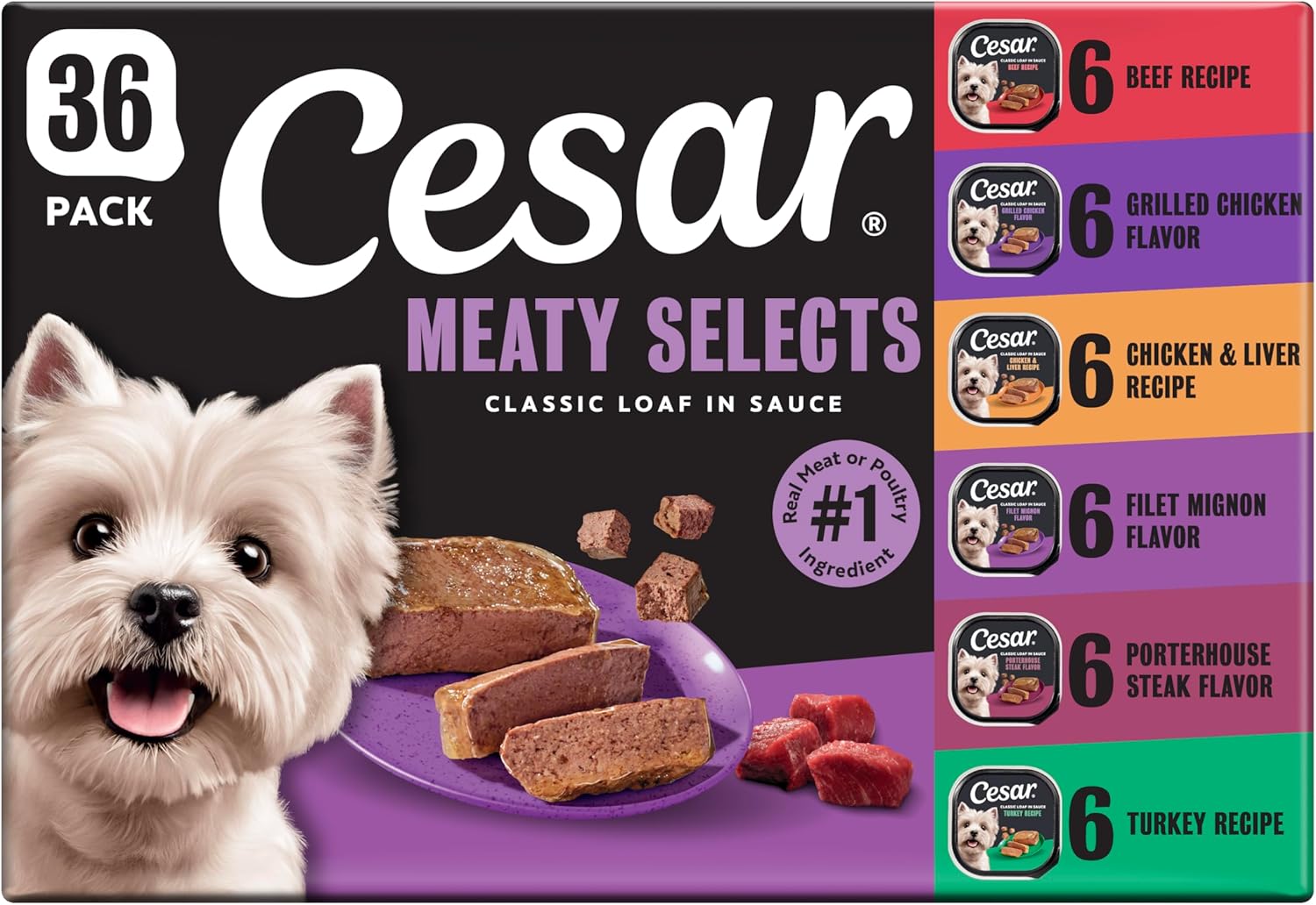
Cesar Classic Loaf in Sauce 36ct
Best Wet Dog Food
| Unit Count | 36 Count |
|---|---|
| Item Form | Wet |
| Target Species | Dog |
| Breed Recommendation | Small Breeds |
This 36-count pack of Cesar Classic Loaf in Sauce delivers single-serve wet trays with real meat as the first ingredient and a soft loaf texture in a savory sauce. Each tray is designed as a complete, balanced meal for adult dogs or as a topper to add moisture and aroma to dry food, and the peel-away sealed trays make portioning and storage straightforward. The recipes are slow-cooked and marketed as easy to digest, with no artificial flavors and grain-free formulation claims. For multi-dog households the bulk pack reduces shopping frequency and keeps a steady supply on hand, and the variety pack includes several flavors that help with picky eaters. Limitations include small single-serve tray size intended for small breeds so larger dogs will require multiple trays per meal, and the trays must be refrigerated after opening and used quickly. Nutrition follows standard wet-dog-food conventions rather than prescription formulations, so owners with special medical needs should consult their veterinarian.
Best for: Households with multiple dogs or owners who want to buy wet food in bulk to reduce shopping frequency and ensure consistent single-serve portions at mealtimes.
Less Ideal for: Owners who feed large-breed dogs exclusively or who need veterinary prescription diets should consider larger-portion cans or therapeutic formulas instead.
- Large 36-count pack keeps a steady supply for multi-dog households or to cut shopping trips
- Single-serve peel-away trays make portioning and travel convenient
- Real meat listed as the first ingredient and slow-cooked recipes for palatability
- Grain-free formulation and no artificial flavors for dogs with routine sensitivities
- Multiple flavors in the Classic line help satisfy picky eaters
- Trays are small and intended for small-breed servings so larger dogs need several trays per meal
- Once opened trays require refrigeration and short use window
Verdict: The best wet dog food is a moist, highly palatable option that boosts hydration and appetite, making it a good choice for picky eaters or dogs needing extra moisture.
The Honest Kitchen Wholemade Chicken 10 lb
Best Premium Dog Food

| Flavor | Chicken |
|---|---|
| Item Form | Granule |
| Animal Food Ingredient Claim | Human-Grade |
| Number of Items | 1 |
| Unit Count | 160 Ounce |
The Honest Kitchen Wholemade Whole Grain Chicken is a dehydrated, human-grade dog food that concentrates whole ingredients like cage-free chicken, oats, carrots and bananas into a shelf-stable box that you rehydrate with warm water in about three minutes. It is typically used as a complete daily meal, a meal topper, or mixed into enrichment toys, and its compact form makes it convenient for home, travel or camping. Notable features include human-grade sourcing, an ingredient list without meat meals or common fillers, and directions that make portioning for puppies and adults straightforward. Practically, the food provides a hydrating, easily digestible option that can support skin, coat and digestion thanks to fiber-rich whole grains and added fish oil and vitamins. The main trade-offs are higher cost compared with standard kibble and the need to prepare servings with water rather than scoop-and-serve dry, which adds a small time requirement and reduces grab-and-go convenience for some owners.
Best for: Owners who prioritize higher-quality, human-grade ingredients and are willing to pay more for improved sourcing and nutrition, or who want a nutrient-dense, rehydratable option for home feeding and travel.
Less Ideal for: People looking for the cheapest, no-prep kibble or those who need entirely dry, scoop-and-serve food for unpredictable schedules or multi-dog households where prep time must be minimal.
- Human-grade ingredients with cage-free chicken as the first ingredient
- Dehydrated format is shelf-stable and compact for travel or limited storage
- No meat meals, corn, wheat, soy, artificial preservatives, colors, or flavors
- Easy preparation — mixes with warm water and is ready in about three minutes
- More expensive per feeding than typical dry kibble
- Requires mixing with warm water before serving, which is less convenient for quick feedings
Verdict: The best premium dog food is aimed at owners willing to pay more for superior ingredient quality, rigorous sourcing standards, and advanced nutritional formulations.
Choosing the Right Dog Food Ingredients: Key Factors to Consider
Primary Protein Source
The first handful of ingredients reveal where most of the food's calories and amino acids come from. Foods that list a named meat, fish, or poultry product first usually provide more usable protein than those that start with grains or vague meat meals.
For dogs with sensitivities, single-source proteins or novel proteins can reduce chances of reaction. Also consider whether the protein is fresh, dried, or a rendered meal—each has different nutrient density and digestibility, which affects portion size and stool quality.
Carbohydrate and Fiber Sources
Carbohydrates supply digestible energy and help shape kibble texture, but not all carbs are equal. Whole grains, legumes, and single-ingredient tubers provide fiber and micronutrients, while refined grains and fillers contribute less nutrition.
Fiber sources matter for stool quality and gut health. Soluble fibers and prebiotic fibers support beneficial gut bacteria and help with digestion, while insoluble fibers add bulk and can aid dogs that need weight management. Match carb and fiber choices to your dog's tolerance and energy needs.
Fat Type and Omega Balance
Fats deliver concentrated energy and are essential for skin, coat, and cellular function. Look for named animal fats or plant oils and explicit sources of omega-3 fatty acids, such as fish oil or algal oil, rather than unspecified 'fat' listings.
The ratio of omega-6 to omega-3 influences inflammation and coat health. Foods that include an omega-3 source are better for dogs with inflammatory conditions or dull coats. Consider the overall fat percentage relative to your dog's activity level so you do not overfeed calories.
Vitamins, Minerals, and Supplementation
A complete dog food must supply essential vitamins and minerals in bioavailable forms. Check that the guaranteed analysis and ingredient statements include vitamin and mineral premixes, but also look for natural sources of micronutrients like liver or kelp.
Specific additives such as chelated minerals, named probiotics, or a source of antioxidants can be beneficial. However, too many synthetic additives or obscure ingredient names can complicate assessing true nutritional value.
Ingredient Transparency and Sourcing
Transparent labels and clear sourcing build trust and make it easier to evaluate quality. Foods that name ingredient origins, specify cuts of meat, and avoid proprietary blends allow you to see exactly what is in each serving.
Sourcing matters for consistency; predictable ingredient sources reduce batch-to-batch variation. If you care about production standards, look for foods that disclose where their primary ingredients are sourced and processed.
Digestive Supports and Allergens
Ingredients that support digestion—like prebiotic fibers, probiotics, and moderately fermentable fibers—can improve nutrient absorption and stool quality. For dogs prone to sensitivities, fewer ingredient lines and the absence of common allergens can reduce the risk of reactions.
Consider whether the food includes common allergenic ingredients such as certain grains or multiple protein sources. For dogs with chronic digestive issues, a simpler ingredient panel and added digestive enzymes or probiotics may be beneficial.
How Do I Read an Ingredient List to Spot Quality?
Start with the top five ingredients; they provide the bulk of the nutrition. Look for named proteins and avoid vague terms like unspecified meat or meat byproduct. Note the order: ingredients are listed by weight before cooking, so fresh meat can appear higher than concentrated meat meals even if the finished kibble is protein-dense.
Next, scan for unnecessary fillers and artificial additives. Shorter, clearer lists that include recognizable whole foods are easier to evaluate. Finally, check the guaranteed analysis for crude protein, fat, and fiber to make sure the ingredient impression matches the promised nutrient profile.
- Top-listed named protein is a strong indicator of usable protein.
- Recognizable carbohydrate and fiber sources are preferable to vague fillers.
- Match guaranteed analysis numbers to ingredient expectations.
What Ingredient Swaps Help Dogs with Sensitivities?
If your dog shows signs of food sensitivity, try a food with a single, novel protein source or limited ingredient formulations that reduce the number of potential triggers. Switching from multiple protein sources to one clear protein can simplify allergen identification.
Also consider gentle carbohydrate options such as sweet potato or single-grain formulas, and look for added digestive supports like probiotics and moderate fiber levels to ease transition and reduce stool issues.
- Choose single-protein or limited-ingredient foods.
- Prefer named carbohydrate sources instead of blends of refined grains.
- Look for probiotic or fiber support to aid digestion.
How Important Is Ingredient Processing and Kibble Form?
Processing affects nutrient bioavailability and digestibility. Less intensive processing methods can preserve heat-sensitive nutrients, while highly processed formulas may rely more on synthetic vitamins and minerals to meet nutrient targets.
Kibble shape and density also matter for portion control and palatability. Denser kibbles may be more calorie-packed per cup, which influences how you measure portions for weight management or active dogs.
- Less processed ingredients can mean better nutrient retention.
- Check caloric density when adjusting serving sizes.
- Kibble form influences palatability and feeding convenience.
What Role Do Added Omega-3s and Antioxidants Play?
Omega-3 fatty acids support skin, coat, and joint health, and they help modulate inflammation. Foods that list a named omega-3 source, such as fish oil, are more likely to deliver meaningful benefits than those with generic 'fat' listings.
Antioxidants from fruits, vegetables, or named extracts support long-term cellular health and immune function. While not a cure-all, these ingredients can contribute to overall resilience as part of a balanced diet.
- Look for explicit omega-3 sources for anti-inflammatory support.
- Natural antioxidant sources add nutritional value beyond basic vitamins.
- Consider life stage when weighing antioxidant needs.
How Should I Transition My Dog to a New Ingredient-focused Food?
Transition gradually over 7 to 10 days, increasing the new food and decreasing the old each day. Monitor stool quality, appetite, and energy levels; minor digestive changes are normal but prolonged diarrhea or vomiting indicates the food may not agree with your dog.
For dogs with sensitive stomachs, extend the transition period and feed smaller, more frequent meals. Keep hydration steady and avoid adding new treats or table scraps during the switch.
- Use a 7 to 10 day gradual transition schedule.
- Watch for consistent stool form and stable appetite.
- Slow the process for dogs with known sensitivities.
How We Chose the Best Dog Food Ingredients
We focused on ingredient transparency and nutritional soundness when selecting the foods on this list. Our evaluation prioritized whole identifiable protein sources listed near the top of the ingredient panel, clear named fats and carbohydrate sources, and inclusion of essential vitamins and minerals in recognizable forms. We also considered whether foods used minimally processed, limited filler ingredients and avoided vague catchall terms. Other important filters were formulation balance for life stage (puppy, adult, senior), presence of digestive supports such as prebiotics or gentle fiber, and straightforward labeling for allergy-conscious owners. We excluded foods that lacked clear sourcing information, relied heavily on unnamed meat meals or byproducts, or used excess artificial colors and flavors. Final selections reflect a balance of ingredient quality, nutrient completeness, and label transparency. We did not include homemade recipes or veterinary-prescription diets in this roundup, focusing instead on widely available complete foods that meet typical nutritional needs.
Our full evaluation process is outlined in our review methodology.
FAQ
Are named meat meals worse than fresh meat listed first?
Not necessarily. Meat meals are concentrated sources of protein and can be highly nutritious, but they differ from fresh meat by water content and nutrient density. Check guaranteed analysis and the overall ingredient panel to understand how protein is provided.
Do grain-free foods always have better ingredients?
No. Grain-free simply swaps grain carbohydrates for alternatives like potatoes or legumes. Ingredient quality depends on the total composition, protein sources, and nutrient balance rather than the absence or presence of grains alone.
How much omega-3 should a typical adult dog receive?
Needs vary by size and condition, but foods that include a named omega-3 source are more likely to supply beneficial amounts. If you have a specific condition such as joint disease or skin problems, consult your veterinarian for tailored omega-3 dosing.
Can healthy dogs eat limited-ingredient foods long term?
Often yes. Limited-ingredient foods can provide complete nutrition if formulated to meet life-stage requirements. However, ensure the formula supplies all essential vitamins and minerals and monitor for signs of imbalance over time.
Should I prioritize ingredient simplicity or nutrient density?
Balance both. Simpler ingredient panels reduce exposure to potential allergens and make assessment easier, while nutrient density ensures your dog receives sufficient calories and micronutrients. Choose the combination that fits your dog's activity level and health profile.
Final Verdict
Prioritize clear, named protein sources, appropriate fat and carbohydrate choices, and visible micronutrient support when choosing dog food with the best ingredients. Balance ingredient simplicity against nutrient density to match your dog's life stage, activity level, and digestive tolerance. Focus on label transparency and nutrient targets rather than marketing claims. Doing so will help you select a food that delivers consistent nutrition and supports your dog's long-term health.

