

Feeding a yellow lab puppy the right food lays the foundation for healthy growth, strong bones, and predictable energy levels. Labradors have fast growth and high activity as puppies, so a diet that balances protein, fat, and key micronutrients helps them build muscle, support joint development, and avoid excess weight. This guide shortlists the top options for yellow lab puppies across feeding types and ingredient focuses. We looked for formulas that support steady weight gain, good stool quality, and the specific nutrient needs of large-breed puppies. Below you will find our top picks and the criteria we used to evaluate them, followed by practical buying guidance to help you choose the best fit for your pup.
Top Picks at a Glance
| Best Overall Food for Yellow Lab Puppy A well-rounded formula meeting growth, nutrition, and palatability needs | Hill's Science Diet Puppy Large Breed |  |
| Best Budget Food for Yellow Lab Puppy A low-cost puppy formula that still delivers essential nutrition | Nutrish Puppy Chicken & Brown Rice 5 lb |  |
| Best Premium Food Higher-end formulas with superior ingredients and manufacturing quality | ORIJEN Puppy Large Dry Dog Food 23.5 lb |  |
| Best Grain-Free Food A formula without grains for dogs with grain sensitivities | Taste of the Wild Pacific Stream Puppy 28 lb |  |
| Best High-Protein Food A protein-forward recipe to support muscle development and activity | Purina Pro Plan Puppy Chicken & Rice 6 lb |  |
| Best Sensitive-Stomach Food Gentle, highly digestible formulas for puppies with GI sensitivities | Hill's Science Diet Puppy Sensitive Stomach & Skin |  |
| Best Bulk Bag Food Larger-size packaging for multi-puppy households or long-term savings | Diamond Naturals Large Breed Puppy Lamb & Rice 40 lb |  |
Hill's Science Diet Puppy Large Breed
Best Overall Food for Yellow Lab Puppy

| Flavor | Chicken & Brown Rice |
|---|---|
| Age Range Description | Puppy |
| Breed Recommendation | Large Breeds |
| Item Form | Dry Food |
| Unit Count | 440 Ounce |
Hill's Science Diet Puppy Large Breed Chicken & Brown Rice is a dry formula designed to meet the nutritional needs of growing large-breed puppies. It is typically fed as the main daily kibble and is formulated with controlled levels of minerals for bone support, DHA and fish oil for brain and eye development, high-quality protein for muscle growth, and a prebiotic fiber blend for digestive health. In practice, this means you can follow the package feeding guide or your vet's recommendation to promote steady growth while monitoring body condition and adjusting portions. Notable features include a nutrient profile aimed at balanced bone development and an antioxidant blend to support the developing immune system. The recipe is made with recognizable ingredients such as chicken and brown rice, and comes in a large bag size suitable for multi-puppy households or extended feeding. Limitations are that owners should measure portions carefully to manage calorie intake and consult their veterinarian about specific calcium-to-phosphorus needs for breeds prone to rapid growth or joint issues, since individual puppies vary in growth rate and activity level.
Best for: Owners of large-breed puppies who prioritize steady, vet-aligned growth and want a nutrient-balanced, vet-recommended kibble to support bone, muscle, and brain development.
Less Ideal for: Breeders or owners seeking a breed-specific prescription formula for medically managed growth or puppies with confirmed ingredient allergies should consider alternatives.
- Controlled mineral balance to support steady bone growth in large-breed puppies
- Includes DHA and fish oil for brain and eye development
- High-quality protein to support developing muscles
- Prebiotic fiber blend to support digestion and gut microbiome
- Available in large bag sizes suitable for extended feeding
- Not tailored to a specific breed so veterinary guidance is recommended for individual calcium and calorie needs
- Contains grains and plant proteins, which may not suit puppies with specific ingredient sensitivities
Verdict: The best overall food for a Yellow Lab puppy that balances complete puppy nutrition, appropriate calorie density, digestibility, and flavor to support healthy growth and development.
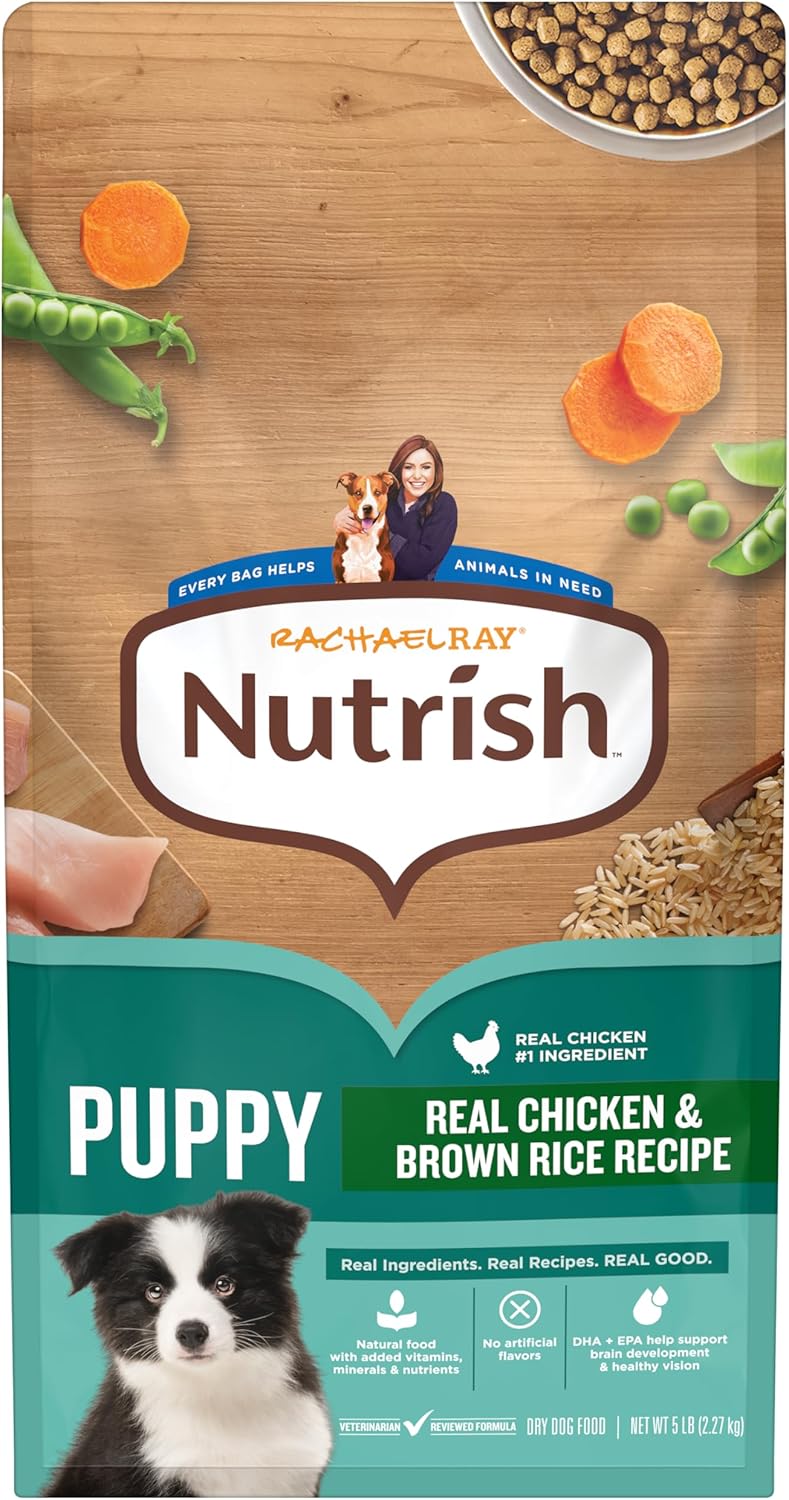
Nutrish Puppy Chicken & Brown Rice 5 lb
Best Budget Food for Yellow Lab Puppy
| Flavor | Chicken |
|---|---|
| Age Range Description | Puppy |
| Item Form | Chunk |
| Unit Count | 80 Ounce |
This 5 lb bag of Rachael Ray Nutrish Puppy Chicken & Brown Rice is a straightforward, budget-minded dry food formulated for growing puppies. It uses real chicken as the number one ingredient, plus chicken meal and brown rice to provide a familiar protein-and-grain base, and includes DHA and EPA from fish oil for brain and vision support. The kibble is intended for daily feeding and can be moistened for younger pups; feeding charts on the bag guide portion sizes by age and weight. The recipe is free of added artificial colors and flavors and is made in the USA with globally sourced ingredients, which helps reassure buyers focused on basic ingredient standards. On the downside the formula contains common fillers like corn and soybean meal and includes multiple grain ingredients, so it is not suited to owners seeking grain-free or hyper-premium limited-ingredient diets. For budget-conscious puppy owners who want a complete, vet-reviewed staple with developmental nutrients, this delivers reliable nutrition without specialty pricing.
Best for: Puppy owners on a tight budget who still want a complete, vet-reviewed dry food with developmental nutrients and recognizable primary ingredients.
Less Ideal for: Owners seeking grain-free, limited-ingredient, or premium boutique puppy formulas should consider alternatives with different ingredient profiles.
- Real chicken listed as the first ingredient for primary animal protein
- Includes DHA and EPA (menhaden fish oil) to support brain and vision development
- Veterinarian-reviewed formula and feeding guide tailored for growing puppies
- No added artificial colors or flavors and made in the USA
- Contains grain and common plant-based fillers such as corn and soybean meal
- Smaller 5 lb bag requires more frequent repurchasing for multi-puppy households
Verdict: The best budget food for a Yellow Lab puppy that stretches your dollars while providing the core nutrients and caloric levels needed for steady puppy growth.
ORIJEN Puppy Large Dry Dog Food 23.5 lb
Best Premium Food

| Flavor | Puppy Recipe |
|---|---|
| Item Form | Pellet |
| Dog Breed Size | Large |
| Unit Count | 376 Ounce |
| Animal Food Diet Type | Veterinary Diet |
This 23.5 lb ORIJEN Puppy Large formula is a high-protein, grain-free dry kibble designed to support rapid growth and development in large-breed puppies. It uses a WholePrey philosophy, listing fresh or raw animal ingredients first and including organs and bone-derived nutrients to supply naturally occurring vitamins and minerals. The recipe delivers concentrated animal protein sources such as chicken, turkey, salmon and herring and includes a freeze-dried coating to boost palatability. In practice it is fed twice daily with portion adjustments based on your puppy's weight, and the brand advises a 10- to 14-day transition from previous food. Practical benefits include a formula tailored for brain, skin and coat health and an emphasis on fewer synthetic additives due to nutrient-dense whole ingredients. Limitations to consider are the grain-free composition and high protein density, which may not suit puppies with certain veterinary-prescribed diets or owners seeking lower-protein, grain-included options, and the large wholesale bag size may be more than needed for small households or short feeding windows.
Best for: Owners who prioritize premium, biologically oriented ingredients and want a nutrient-dense puppy formula to support optimal growth and development in large-breed dogs.
Less Ideal for: Owners looking for grain-inclusive, lower-protein puppy diets or who need a veterinary-prescribed formula for specific health issues should consider alternatives.
- High animal-ingredient content with first five ingredients listed as fresh or raw meats and fish
- WholePrey inclusion of organs and bones provides a range of naturally occurring nutrients
- Formulated specifically for large-breed puppies to support growth and development
- Freeze-dried coating increases palatability to encourage eating during training or transitions
- Grain-free, high-protein formula may not be appropriate for puppies on certain veterinary diets
- Large 23.5 lb bag can be bulky and may be excessive for multi-bag turnover households
Verdict: The best premium food for owners who want top-tier ingredients, stricter quality control, and targeted nutrients to support optimal growth and long-term health.
Taste of the Wild Pacific Stream Puppy 28 lb
Best Grain-Free Food

| Flavor | Smoke-Flavored Salmon |
|---|---|
| Protein | 27% (high-protein) |
| Age Range | Puppy, nursing or pregnant mothers |
| Item Form | Dry Kibble |
| Ingredient Claim | Grain-Free |
Taste of the Wild Pacific Stream Puppy is a grain-free dry kibble formulated for growing puppies and nursing mothers, using fish-based proteins and smoked salmon flavor to deliver a high-protein diet. It is typically fed as a complete everyday food and includes species-specific probiotics and prebiotics to support digestion, plus omega fatty acids and antioxidant-rich fruits and vegetables for skin, coat, immune and joint support. Practical benefits include a 27% protein level to support lean muscle and energy needs, salmon and fish meal as first ingredients for palatability, and recommended feeding guidance for adjusting portions by activity and growth. Limitations to consider are the grain-free formulation itself, which some vets caution about for certain breeds or heart-health concerns, and the single primary protein source may not suit puppies with fish-specific allergies. The large 28 lb bag is convenient for multi-puppy households or long-term feeding but requires proper storage to maintain freshness.
Best for: Buyers seeking a grain-free, fish-based growth formula for puppies that need a high-protein diet and better digestive support through probiotics.
Less Ideal for: Owners who prefer grain-inclusive diets or whose puppies have known fish allergies or dietary sensitivities should consider other formulas.
- Real fish is the first ingredient for strong protein and flavor
- 27% crude protein supports growth and lean muscle development
- Includes species-specific probiotics and prebiotics for digestive health
- Contains omega fatty acids and antioxidant-rich fruits and vegetables for skin, coat and immune support
- Grain-free recipe may not be appropriate for all puppies given ongoing veterinary guidance on grain-free diets
- Single fish-forward protein could trigger issues for puppies with fish allergies
Verdict: The best grain-free food for puppies that need or benefit from grain-free diets, offering alternative carbohydrate sources while meeting complete puppy nutrient requirements.
Purina Pro Plan Puppy Chicken & Rice 6 lb
Best High-Protein Food

| Flavor | Chicken & Rice |
|---|---|
| Age Range Description | Puppy |
| Item Form | Dry |
| Specific Uses For Product | Hip and Joint Support |
| Animal Food Nutrient Content Claim | High Protein |
Purina Pro Plan High Protein Dry Puppy Food Chicken & Rice is a puppy formula designed to support active growth with real chicken as the primary protein source. It is typically fed as a daily dry kibble for puppies and can be offered moistened during weaning or fed dry as puppies mature. Notable features include DHA from fish oil to support brain and vision development, added calcium and phosphorus for bone and tooth growth, live probiotics for digestive health, and antioxidants to support immune development. In practice this formula helps build lean muscle and provides concentrated nutrients for puppies that need higher protein intake, and its digestible recipe reduces the chance of stomach upset during diet transitions. Limitations include the presence of some by-product meals and grain ingredients, which may be less suitable for owners seeking grain-free or novel-protein diets, and the ingredient list includes salts and common additives that some sensitive puppies may not tolerate. Feeding amounts should be adjusted as puppies grow and you may want to consult your veterinarian for breed-specific needs.
Best for: Buyers looking to support active, growing puppies with a higher-protein, vet-backed kibble that emphasizes muscle development and digestive support.
Less Ideal for: Owners seeking a grain-free, novel-protein, or limited-ingredient puppy diet for allergy-prone dogs should consider specialized formulas instead.
- Real chicken listed as the first ingredient for bioavailable animal protein
- Includes DHA from fish oil to support brain and vision development
- Live probiotics and highly digestible formula to ease digestion and stool quality
- Added calcium, phosphorus and minerals to support bone and tooth growth
- Contains poultry by-product meal and common grains rather than novel or grain-free sources
- Includes multiple added ingredients and preservatives that some owners may avoid
Verdict: The best high-protein food for active or fast-growing Yellow Lab puppies that require extra protein to support lean muscle growth and energy needs.
Hill's Science Diet Puppy Sensitive Stomach & Skin
Best Sensitive-Stomach Food

| Flavor | Salmon & Brown Rice |
|---|---|
| Age Range Description | Puppy |
| Item Form | Dry Food |
| Unit Count | 64 Ounce |
| Animal Food Diet Type | Limited Ingredient |
Hill's Science Diet Puppy Sensitive Stomach & Skin is a dry puppy formula designed to reduce digestive upsets while supporting skin and coat during growth. It is used as an everyday puppy food or as a transitional diet when pups have mild stomach sensitivity; feeding instructions on the bag guide gradual switching. The recipe lists salmon as the first ingredient and includes prebiotic fiber to support a balanced gut microbiome, plus DHA from fish oil for brain and eye development and vitamin E and omega fatty acids for skin health. Practical benefits include easier digestion for sensitive puppies, nutrients targeted at immune and cognitive development, and a single-source fish protein focus that can simplify ingredient tracking. Limitations are that it is a dry kibble so dogs that require wet food or very limited-ingredient veterinary prescriptions may need other options, and the formula still contains multiple grains and added ingredients that some owners avoiding certain grains or novel-protein approaches might not prefer.
Best for: Buyers who prioritize a vet-recommended, digestive-friendly everyday puppy food that also supports skin and coat health for growing dogs.
Less Ideal for: Owners seeking a strict novel-protein, grain-free, or veterinary-prescription elimination diet should consider specialized formulas instead.
- Prebiotic fiber to support gut microbiome and help reduce occasional digestive upset
- Salmon is the first ingredient, providing a high-quality fish protein and DHA for development
- Added vitamin E and omega fatty acids to nourish skin and promote a healthy coat
- Clinically proven antioxidants including vitamins C and E to support immune health
- Contains multiple grains and shared protein sources, so not a novel-protein or grain-free prescription option
- Dry kibble format may not suit puppies needing canned diets or strict veterinary therapeutic feeds
Verdict: The best sensitive-stomach food for Yellow Lab puppies prone to upset tummies, formulated for easy digestion and reduced ingredients that commonly trigger gastrointestinal issues.
Diamond Naturals Large Breed Puppy Lamb & Rice 40 lb
Best Bulk Bag Food

| Flavor | Lamb & Rice – Puppy |
|---|---|
| Age Range Description | Puppy |
| Breed Recommendation | Large Breeds |
| Special Ingredients | grain-free |
| Unit Count | 640 Ounce |
Diamond Naturals Large Breed Puppy Lamb & Rice is a large-bag dry kibble formulated to support growth in large-breed puppies. It uses real lamb and lamb meal as primary protein sources and includes DHA from salmon oil for brain and vision development, plus added probiotics for digestive and immune support. The formula lists a mix of whole grains, vegetables, fruits, and a suite of vitamins and minerals intended to balance puppy growth while L-carnitine helps support healthy body condition. In practical use the 40 pound bag reduces repurchase frequency for multi-puppy households or owners who prefer buying in bulk, and the inclusion of probiotics and omega fatty acids addresses common puppy digestive and skin/coat needs. Buyers should note this product is breed-size specific for large puppies and is not grain-free despite a “special ingredients” note; also ingredient lists include multiple meals and grains which some owners may avoid for specific dietary plans. The bag format is standard for dry food and will require appropriate storage to maintain freshness once opened.
Best for: Buyers who need a cost-effective, large package of nutritionally complete food for growing large-breed puppies and who prioritize fewer repurchases and digestive support.
Less Ideal for: Owners feeding small-breed puppies, dogs on grain-free or very limited-ingredient diets, or those who prefer single-protein or novel-protein recipes should look elsewhere.
- Real lamb is the first ingredient for a named animal protein source
- Contains DHA (salmon oil) to support brain and vision development
- Added probiotics to support digestive health and immune function
- Large 40 lb bag reduces repurchase frequency for multi-puppy households
- Not grain-free despite some marketing terms
- Formulated specifically for large-breed puppies so not appropriate for small-breed growth needs
Verdict: The best bulk bag food for owners who want larger quantities to save per feeding and simplify storage for growing puppies while maintaining balanced nutrition.
Choosing the Right Dog Food Yellow Lab Puppy: Key Factors to Consider
Protein Quality and Level
Protein is the building block for muscle in a growing lab puppy. Look for named animal proteins high on the ingredient list, which supply complete amino acid profiles that puppies need for tissue growth and repair.
The right protein level supports steady muscle development without promoting overly rapid growth that can stress developing joints. Also consider digestibility: more digestible protein sources result in better nutrient uptake and smaller, firmer stools, which makes feeding more efficient and easier to manage.
Calcium and Phosphorus Balance
Calcium and phosphorus govern bone mineralization and joint formation during rapid skeletal growth. For large-breed puppies, the ratio and absolute amounts matter more than single nutrient claims because too much calcium can lead to abnormal bone growth.
Choose formulas formulated for large-breed puppies or those that list controlled mineral levels. Proper balance reduces the risk of developmental orthopedic issues and supports long-term mobility in an active breed like the Labrador.
Calorie Density and Growth Pacing
Calorie density affects how quickly a puppy gains weight. Foods that are too calorie-dense can cause rapid weight gain and excessive stress on growing bones and joints, while foods that are too low in calories may not support healthy development.
Aim for a diet designed to promote steady growth appropriate for a large-breed puppy, and use feeding guidelines as a starting point, adjusting portions based on body condition and activity. Regular monitoring of weight and body condition will help you fine-tune intake.
Essential Fatty Acids and Brain Development
Long-chain omega-3 fatty acids, particularly DHA, support early brain and vision development in puppies. Omega-6 fatty acids contribute to skin and coat health, which is often noticeable in yellow-coated lab puppies.
A formula that includes these fatty acids at levels appropriate for puppy life stages helps cognitive development and produces a glossy coat. Fat sources should be stable and from identifiable ingredients to ensure consistent nutrient delivery.
Digestive Tolerance and Stool Quality
Digestive tolerance affects daily comfort and household management. Ingredients that promote good digestibility—such as specific protein sources, moderate fiber, and added prebiotics or probiotics—can reduce flatulence and lead to firmer, more predictable stools.
Consider how a formula performs for pups with sensitive stomachs, and plan any diet switch gradually over several days to a week to minimize digestive upset.
Joint-supporting Nutrients
Because lab puppies grow quickly and will be very active, early support for joint health is important. Ingredients like controlled calories, proper mineral balance, and targeted supplements such as glucosamine and chondroitin can support joint structure and function as the puppy matures.
While not every puppy requires supplemental joint compounds in the first months, choosing a formula that considers joint health reduces cumulative stress on developing cartilage and helps preserve mobility into adulthood.
How Much Should I Feed My Yellow Lab Puppy at Each Stage?
Feeding amounts change rapidly in the first year. Puppies have different calorie needs at 8 weeks, 4 months, and 6 to 12 months. Start with the manufacturer feeding chart as a baseline, then adjust based on your puppy's body condition and activity level. Monitor ribs, waist, and overall energy to guide portion changes.
Smaller, more frequent meals during the first months help steady blood sugar and reduce begging. At about 6 months many owners transition to two meals per day. If your puppy is gaining weight too quickly, reduce portions or switch to a lower-calorie growth formula to pace skeletal development.
- Weigh or measure food for consistent feeding.
- Check body condition monthly and adjust portions.
- Split daily ration into multiple meals for younger puppies.
What Ingredients Indicate a Higher-quality Puppy Food?
Higher-quality formulas tend to list a named animal protein as the first ingredient, include whole-food carbohydrate sources, and avoid vague ingredient listings. Look for a guaranteed analysis that shows adequate protein and fat for growth, plus specified mineral levels for large-breed development.
Added nutrients such as DHA, vitamin D in reasonable amounts, and probiotic cultures are positive signs. Transparent labeling that specifies nutrient sources and levels helps you compare formulas and understand what you are feeding your pup.
- First ingredient: named meat or meat meal.
- Presence of DHA and listed omega fatty acids.
- Clear calcium and phosphorus levels or large-breed formulation.
How to Switch Your Puppy to a New Food Safely
Introduce a new food gradually over 5 to 7 days by mixing increasing proportions of the new formula with the current food. Begin with 25 percent new food and 75 percent old, then move to 50/50, 75/25, and finally 100 percent. Watch for appetite, stool changes, and energy level during the transition.
If your puppy shows signs of digestive upset such as loose stools or decreased appetite, slow the transition or consult your veterinarian. For puppies with known sensitivities consider a more gradual transition or professional dietary guidance.
- Use a 5 to 7 day transition schedule.
- Pause progression if significant digestive symptoms occur.
- Keep fresh water available at all times during the switch.
Do Large-breed Puppy Formulas Differ From Regular Puppy Foods?
Yes. Large-breed puppy formulas are designed with controlled calorie density and specific mineral ratios to reduce the risk of rapid skeletal growth and developmental orthopedic disease. They may also moderate calcium content relative to total calories, a key factor for safe bone development in larger breeds.
If your yellow lab puppy is expected to reach large adult size, a large-breed formulation can be beneficial during the rapid growth phase. After skeletal maturity, transitioning to an appropriate adult maintenance diet is recommended.
- Look for large-breed designation or controlled mineral levels.
- These formulas help pace growth and support joint health.
How Can I Tell if a Food Is Working Well for My Puppy?
Signs a diet is working include steady weight gain along breed growth curves, consistent energy, healthy coat condition, and firm stool quality. Regular veterinary checks and growth monitoring help confirm that the diet supports normal development.
If you notice persistent diarrhea, vomiting, hair loss, or lethargy after a diet change, consult your veterinarian. Occasional minor digestive changes are common during changes, but ongoing problems usually indicate the food is not the right match.
- Monitor weight and body condition regularly.
- Healthy coat and consistent stools are positive indicators.
- Consult a vet for persistent digestive or energy issues.
How We Chose the Best Dog Food Yellow Lab Puppy
We selected entries by focusing on nutrient profiles and formulation details that matter most for growing large-breed puppies. Key evaluation criteria included protein quality and level to support lean muscle growth; controlled calcium and phosphorus ratios to protect joint and bone development; and calorie density appropriate for an active lab puppy so growth is steady rather than accelerated. We also checked for digestibility indicators such as named animal proteins, fiber balance, and the presence of probiotics or prebiotic fiber that can improve stool consistency and nutrient absorption. Additionally, we considered inclusion of essential fatty acids, especially DHA, for brain and vision development, plus omega-6 for healthy coat condition. Safety and manufacturing transparency were part of the filter: we prioritized formulas with clear ingredient lists and established nutritional analysis. We excluded adult maintenance feeds, treats-only products, and diets expressly formulated for small breeds or unrelated medical conditions. The final shortlist reflects products that balance growth-supporting nutrition with digestive tolerance and joint health considerations specific to lab puppies.
Our full evaluation process is outlined in our review methodology.
FAQ
When should I switch my yellow lab puppy from puppy food to adult food?
Most lab puppies reach skeletal maturity between 12 and 18 months. Transitioning typically begins around 12 months for many labs, but exact timing depends on growth rate and veterinary advice. Use body condition and veterinary guidance rather than a fixed age alone.
Is grain-free food necessary for yellow lab puppies?
Grain-free diets are not inherently necessary for most puppies and are usually chosen for specific diagnosed sensitivities. Many pups do well on diets with digestible grains. Consult your veterinarian before choosing grain-free options for a puppy.
How important is DHA in puppy food for cognitive development?
DHA supports early brain and vision development and is commonly included in quality puppy formulas. While it is beneficial, it is one of several nutrients needed for healthy development, so evaluate the overall nutrient profile rather than a single ingredient.
Can I feed a lab puppy adult dog food in a pinch?
Occasional short-term feeding of adult food will not usually cause harm, but adult formulas may lack the balanced protein, fat, and micronutrients needed for optimal growth. Prolonged use can affect growth and should be avoided unless directed by a veterinarian.
What should I do if my puppy has loose stools after changing food?
Slow the transition and reduce the proportion of new food, then advance more gradually. Ensure hydration is adequate and monitor color and frequency. If loose stools persist beyond a few days or are accompanied by other symptoms, seek veterinary advice.
Final Verdict
Prioritize steady, balanced growth when choosing food for a yellow lab puppy. Focus on digestible, named protein sources, controlled calorie density, and appropriate calcium and phosphorus levels to support healthy bone and joint development. Include formulas that provide DHA and omega fatty acids for cognitive and coat health, and monitor your puppy's body condition to adjust portions as needed. The right choice balances growth pacing with nutrient density. Use feeding guidelines as a starting point, watch your puppy's condition, and consult your veterinarian for individualized adjustments so you can choose confidently for long-term health.

