

Finding the right food for a young German shepherd matters because this breed grows quickly, needs higher protein, and benefits from nutrients that support joint development and healthy weight. You want a formula that supplies concentrated energy for active puppies while also delivering vitamins, minerals, and controlled calcium to support steady bone growth. This guide narrows the field to the top shortlisted foods formulated specifically for young German shepherds and explains the nutrition and ingredient considerations that informed our picks. Read on to understand the key decision points and what to expect from each type of puppy and junior formula.
Top Picks at a Glance
| Best Overall Food for Young German Shepherd The best all-around option tailored to growing large-breed puppies | ROYAL CANIN German Shepherd Puppy Dry Dog Food 30 lb |  |
| Best Budget Food for Young German Shepherd A low-cost formula that still meets basic growth needs | Purina Pro Plan Large Breed Puppy Chicken & Rice 34 lb |  |
| Best Premium Food Higher-end recipes with superior ingredients and formulation care | Fromm Large Breed Puppy Gold 30 lb |  |
| Best High-Protein Food Formulated with extra protein to support muscle development | Bully Max Puppy Food 24/14 |  |
| Best Large-Breed Puppy Food Designed specifically for the unique needs of big-breed puppies | Hill's Science Diet Puppy Large Breed |  |
| Best Grain-Free Food A grain-free recipe for dogs with grain sensitivities or owner preference | Diamond Puppy High Protein 6lb |  |
| Best Limited-Ingredient Food Simpler recipes for easier digestion and reduced allergy triggers | Diamond Naturals Large Breed Puppy Lamb & Rice 40 lb |  |
ROYAL CANIN German Shepherd Puppy Dry Dog Food 30 lb
Best Overall Food for Young German Shepherd

| Flavor | Chicken |
|---|---|
| Age Range Description | Puppy |
| Breed Recommendation | German Shepherd |
| Package Size | 30 lb Bag |
| Item Form | Pellet |
Royal Canin German Shepherd Puppy is a breed-targeted dry kibble designed for purebred German Shepherd puppies from 8 weeks to 15 months. The formula uses a specialized kibble shape sized for a German Shepherd puppy's jaw and encourages chewing while delivering highly digestible proteins and specific fibers to support stool quality and digestive health. The recipe includes an antioxidant complex with vitamin E for immune development and adds glucosamine and chondroitin to help bone and joint support during rapid growth. Ingredients list shows protein sources like chicken meal and chicken by-product meal and includes functional additives such as fish oil, fructooligosaccharides, and marine microalgae oil. Practical benefits are steady, targeted nutrition that simplifies feeding a growing German Shepherd puppy and helps address breed tendencies for joint and digestive concerns. Limitations are that the ingredient mix includes some by-product meals and cereals rather than only whole-muscle proteins, so buyers prioritizing novel or grain-free formulas may prefer other options.
Best for: Buyers who want a science-backed, breed-specific complete dry food that balances growth needs, joint support, and digestive health for German Shepherd puppies.
Less Ideal for: Owners seeking a novel-protein, grain-free, or limited-ingredient puppy diet for food-sensitive dogs should consider alternative formulas.
- Breed-specific kibble shape and texture sized for German Shepherd puppy jaws
- Contains glucosamine and chondroitin to support bone and joint development
- Antioxidant complex with vitamin E to help immune system development
- Highly digestible proteins and fibers to promote digestive health and stool quality
- Includes chicken by-product meal and cereal grains rather than only whole-muscle proteins
- Not a grain-free or limited-ingredient formula for puppies with specific sensitivities
Verdict: The best overall food for young German Shepherds balances appropriate calories, growth-phase nutrients, joint-support ingredients, and digestibility for steady, healthy development.
Purina Pro Plan Large Breed Puppy Chicken & Rice 34 lb
Best Budget Food for Young German Shepherd

| Weight | 34 lb |
|---|---|
| Flavor | Chicken & Rice |
| Breed recommendation | Large Breeds |
| Item form | Dry |
| Animal food nutrient content claim | High Protein |
Purina Pro Plan Large Breed Puppy Chicken & Rice is a high-protein dry formula designed to support growth and development in puppies expected to exceed 50 pounds as adults. It is typically fed as a staple kibble for large-breed puppies and can be served moistened for weaning puppies or dry for older pups. The formula lists real chicken first, includes DHA from fish oil to support brain and vision development, and delivers added vitamins and omega-6s for skin and coat health. Glucosamine-containing ingredients and targeted nutrients aim to support bone and joint development in fast-growing large-breed dogs. In practical use the 34 lb bag reduces the need for frequent repurchasing and simplifies feeding schedules for multi-puppy or high-consumption households. Potential limitations are that it is a calorie-dense, large-breed puppy formula so portion control is important to avoid overfeeding, and some ingredient choices include grain and by-product meals which some buyers avoid. Feed according to the bag chart and consult your veterinarian when transitioning or adjusting amounts for ideal growth.
Best for: Buyers with large-breed puppies who need a vet-backed, growth-focused formula supplied in large bags to cut repurchase frequency and lower cost per serving.
Less Ideal for: Owners who prefer grain-free or limited-ingredient diets, or those who want boutique single-protein formulations should consider alternatives.
- Large 34 lb bag reduces frequency of reorders for busy households
- Real chicken listed as the first ingredient for protein-focused growth
- Contains DHA from fish oil to support brain and vision development
- Includes glucosamine sources and nutrients targeted for bone and joint development
- Contains grain and poultry by-product meal which some owners prefer to avoid
- Calorie-dense formulation requires careful portion control to prevent excess growth
Verdict: The best budget food for young German Shepherds provides necessary protein, calories, and essential vitamins and minerals at a lower price without compromising core growth requirements.
Fromm Large Breed Puppy Gold 30 lb
Best Premium Food

| Flavor | Chicken |
|---|---|
| Age Range Description | Puppy |
| Breed Recommendation | Large Breeds |
| Unit Count | 480 Ounce |
| Special Ingredients | Chicken, Chicken Meal |
Fromm Large Breed Puppy Gold is a dry kibble formulated specifically for puppies expected to mature above 50 pounds, using chicken, chicken meal and other animal proteins as leading ingredients. It is intended for daily feeding to support growth and development and includes added probiotics and salmon oil to aid digestion and support coat health. The recipe uses whole grains and a mix of proteins (chicken, duck, lamb) for palatability and balanced amino acids, and the manufacturer highlights formulation to meet AAFCO profiles for growth and gestation/lactation. Practical benefits for large‑breed pups include a recipe designed to manage slower, steadier growth with nutrient levels tuned for large breeds, plus probiotic support for sensitive stomachs. Limitations to note are that the bag lists whole grains and multiple protein sources rather than a single limited ingredient, which may not suit puppies with specific grain or protein sensitivities, and bag handling and storage are typical concerns with a 30 lb size for smaller households.
Best for: Buyers seeking a nutritionally complete large-breed puppy formula that emphasizes controlled growth and digestive support for growing giant or large-breed puppies.
Less Ideal for: Owners who need a grain-free or single-protein limited ingredient diet, or who prefer smaller bag sizes for storage and freshness.
- Formulated specifically for large breed puppies to support steady, size-appropriate growth
- High-quality animal proteins listed first for amino acid and muscle support
- Includes probiotics to aid digestion and salmon oil to support skin and coat
- Made to meet AAFCO nutrient profiles for growth and gestation/lactation
- Contains multiple grains and proteins so not ideal for limited-ingredient or grain-free elimination diets
- 30 lb bag may be bulky for small households to store and keep fresh
Verdict: The best premium food delivers higher-quality proteins, advanced nutrient formulations, and better ingredient sourcing for owners willing to invest in optimal growth and long-term health.
Bully Max Puppy Food 24/14
Best High-Protein Food

| Crude Protein | 24% |
|---|---|
| Crude Fat | 14% |
| Calories | 419 cal/cup |
| Primary Flavor | Lamb |
Bully Max Puppy Food is a meat-forward dry kibble designed to support healthy muscle growth, energy needs, and digestive health in growing puppies. It supplies 24% protein and 14% fat with 419 calories per cup, so it is typically used as a primary daily diet for puppies that need extra calories and protein during growth phases. Notable features include lamb meal as the first ingredient, added pork and fish meal for concentrated animal protein, and a TruMune postbiotic blend alongside prebiotics and probiotics to support gut health and immune development. Practical benefits include concentrated nutrition for steady weight gain and muscle development, formula gentleness for sensitive stomachs, and omega fatty acids for skin and coat support. Important limitations are that the formula is calorie-dense so portioning must be monitored to avoid excessive weight gain in less active puppies, and some owners may prefer a chicken-inclusive protein if lamb/pork is not suitable for their dog. It is best used with a feeding plan adjusted for breed, activity, and growth rate.
Best for: Puppy owners seeking a high-protein, calorically rich formula to support muscle development and growth, especially for puppies that benefit from digestive support.
Less Ideal for: Owners who need a lower-calorie or lower-protein puppy food for less active or quickly maturing breeds should consider gentler formulations instead.
- High protein (24%) and calorie density (419 cal/cup) to support muscle growth and energy
- Lamb meal listed as the first ingredient for concentrated animal protein
- Includes TruMune postbiotics plus prebiotics and probiotics for digestive and immune support
- Formulated without corn, wheat, soy, or artificial colors and suitable for sensitive stomachs
- High calorie density requires careful portion control to prevent overfeeding
- Chicken-free formulation may not suit puppies that tolerate or need chicken-based diets
Verdict: The best high-protein food is ideal for active growing dogs that need extra amino acids for lean-muscle development and sustained energy during rapid growth phases.
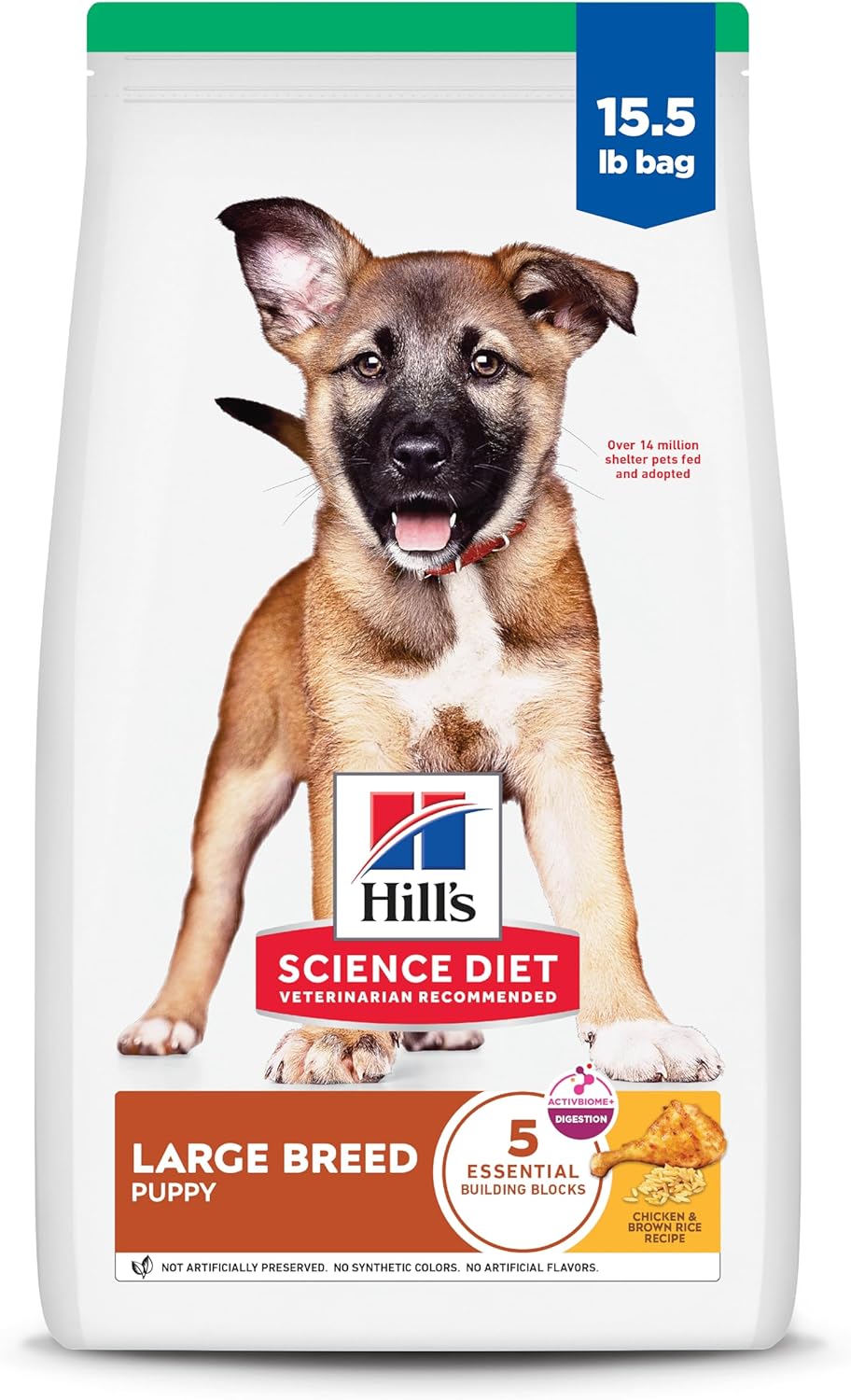
Hill's Science Diet Puppy Large Breed
Best Large-Breed Puppy Food
| Flavor | Chicken & Brown Rice |
|---|---|
| Age Range Description | Puppy |
| Breed Recommendation | Large Breeds |
| Item Form | Dry Food |
| Special Ingredients | all-natural |
Hill's Science Diet Puppy Large Breed Chicken & Brown Rice is a dry formula designed to support the specific growth needs of large-breed puppies. It is used as an everyday maintenance diet during the rapid growth phase, providing controlled calcium levels for measured bone development and high-quality protein to support muscle growth. The formula includes marine algae oil as a DHA source for brain and eye development, a blend of prebiotic fibers to support digestive health, and antioxidants to bolster the developing immune system. In practice the kibble is intended to be fed following the package feeding guide and gradually introduced over a 7-day transition when switching foods. This product focuses on growth-stage nutrition rather than therapeutic joint repair so it does not list added glucosamine or chondroitin explicitly, and buyers should monitor weight to avoid excess calories during growth. For owners of very large breeds like Great Danes, the controlled calcium and balanced nutrient profile make this a sensible foundational diet to help promote appropriate skeletal development and overall puppy health.
Best for: Buyers raising very large-breed puppies who prioritize controlled skeletal development and foundational, vet-recommended growth nutrition for long-term joint health.
Less Ideal for: Owners seeking a therapeutic formula specifically concentrated on joint repair with added glucosamine or chondroitin should consider veterinary prescription joint-support diets instead.
- Formulated with controlled calcium to support appropriate bone growth in large-breed puppies
- Includes marine algae oil providing DHA for brain and eye development
- Prebiotic fiber blend supports digestive health and nutrient absorption
- Antioxidant blend helps strengthen the developing immune system
- Does not explicitly list glucosamine or chondroitin for targeted joint repair
- Higher calorie density may require careful portion control to prevent excess weight gain
Verdict: The best large-breed puppy food supports controlled, steady growth with the right calcium-to-phosphorus balance and nutrient profile to protect developing joints and bones.
Diamond Puppy High Protein 6lb
Best Grain-Free Food

| Flavor | Puppy |
|---|---|
| Item Form | Dry Kibble |
| Special Ingredients | Chicken, Flaxseed, Fish Meal, Salmon Oil |
| Unit Count | 96 Ounce |
Diamond Puppy High Protein is a puppy kibble formulated to support growth with chicken protein listed as the first ingredient and a nutrient package targeted at brain, vision and bone development. It is used as a daily feeding for puppies and is also suitable for pregnant or nursing adults; the bag contains smaller kibble suited to young mouths. Notable features include DHA from salmon oil for neural and visual development, a probiotic blend and antioxidants to support digestion and immune health, and higher protein and fat levels to fuel growth. Ingredients list includes chicken by-product meal, whole grains, flaxseed and fish meal, so you get concentrated protein sources alongside grains and added functional fats. Practical benefits are straightforward nutrition designed by veterinarians, family-owned U.S. manufacturing, and an emphasis on value for owners who need a complete high-protein puppy diet on a budget. Limitations include the use of by-product meal and grain ingredients for some buyers who prefer single-source or grain-free recipes, and limited packaging size choices compared with larger bulk bags for heavy feeders.
Best for: Cost-conscious puppy owners who need a complete, higher-protein growth formula that supports brain and bone development without a high price tag.
Less Ideal for: Owners seeking grain-free or single-source whole-muscle protein formulas, or those who prefer novel protein recipes for allergy-prone puppies.
- Chicken protein is listed first for muscle-building support
- Includes DHA from salmon oil to support brain and vision development
- Contains a probiotic blend and antioxidants to aid digestion and immune health
- Smaller kibble size formulated for puppies and suitable for pregnant or nursing adults
- Uses chicken by-product meal and mixed grain ingredients rather than single whole-muscle protein sources
- Limited bag size may require more frequent repurchasing for fast-growing litters
Verdict: The best grain-free food suits puppies who have grain intolerances or whose owners prefer grain-free diets, providing alternative carbohydrate and energy sources while meeting growth needs.
Diamond Naturals Large Breed Puppy Lamb & Rice 40 lb
Best Limited-Ingredient Food

| Flavor | Lamb & Rice – Puppy |
|---|---|
| Age Range Description | Puppy |
| Breed Recommendation | Large Breeds |
| Special Ingredients | grain-free |
| Unit Count | 640 Ounce |
Diamond Naturals Large Breed Puppy Lamb & Rice is a large-bag dry kibble formulated to support growth in large-breed puppies. It uses real lamb and lamb meal as primary protein sources and includes DHA from salmon oil for brain and vision development, plus added probiotics for digestive and immune support. The formula lists a mix of whole grains, vegetables, fruits, and a suite of vitamins and minerals intended to balance puppy growth while L-carnitine helps support healthy body condition. In practical use the 40 pound bag reduces repurchase frequency for multi-puppy households or owners who prefer buying in bulk, and the inclusion of probiotics and omega fatty acids addresses common puppy digestive and skin/coat needs. Buyers should note this product is breed-size specific for large puppies and is not grain-free despite a “special ingredients” note; also ingredient lists include multiple meals and grains which some owners may avoid for specific dietary plans. The bag format is standard for dry food and will require appropriate storage to maintain freshness once opened.
Best for: Buyers who need a cost-effective, large package of nutritionally complete food for growing large-breed puppies and who prioritize fewer repurchases and digestive support.
Less Ideal for: Owners feeding small-breed puppies, dogs on grain-free or very limited-ingredient diets, or those who prefer single-protein or novel-protein recipes should look elsewhere.
- Real lamb is the first ingredient for a named animal protein source
- Contains DHA (salmon oil) to support brain and vision development
- Added probiotics to support digestive health and immune function
- Large 40 lb bag reduces repurchase frequency for multi-puppy households
- Not grain-free despite some marketing terms
- Formulated specifically for large-breed puppies so not appropriate for small-breed growth needs
Verdict: The best limited-ingredient food is formulated with fewer components to minimize potential allergens and digestive upset while still supplying complete nutrition for growing dogs.
Choosing the Right Dog Food Young German Shepherd: Key Factors to Consider
Protein Quality and Level
Protein fuels muscle development and overall growth. For young German shepherds you want concentrated, named animal proteins listed early in the ingredient panel rather than vague meat meals or unspecified protein blends. Higher protein percentages help maintain lean muscle as puppies gain size and activity increases.
Too much low-quality protein can stress immature kidneys, while too little protein can lead to poor-muscle development and lower activity. Balance is key: pick formulas that specify the protein source and provide an analysis appropriate for large-breed puppy growth, and consider how feeding guidelines translate to daily grams of protein as the dog grows.
Controlled Calcium and Phosphorus
Bone and joint development in large-breed puppies depends on properly balanced minerals. Calcium and phosphorus must be present in amounts and ratios that support steady bone formation without accelerating growth plates.
Excessive calcium, especially combined with rapid weight gain, can contribute to skeletal problems. Look for formulas that target large-breed growth with guaranteed mineral levels and clear feeding instructions to help avoid overfeeding. When switching formulas, adjust portion sizes gradually and monitor growth to stay within recommended weight targets for the breed.
Joint-supporting Nutrients
German shepherds are predisposed to joint stress as they mature, so early nutritional support can help preserve cartilage and mobility. Ingredients such as glucosamine, chondroitin, and long-chain omega-3 fatty acids support joint structure and help manage inflammation.
Not every puppy formula includes therapeutic levels of these nutrients, so consider the amounts listed and whether supplemental support will be needed later. Good baseline levels in a young-dog formula can ease the transition into adult maintenance diets and reduce the likelihood of early mobility issues when combined with appropriate exercise and weight control.
Calorie Density and Growth Rate Control
Calorie density affects how quickly a puppy gains weight. Young German shepherds need steady, controlled growth to avoid excess stress on developing joints. Formulas designed for large-breed puppies often have moderate calorie density and feeding guidelines that aim to keep weight gain gradual.
High-calorie puppy diets intended for small breeds can lead to too-rapid growth in a large-breed puppy. Assess kcal per cup or per kilogram where available and follow breed-specific feeding charts. Regularly monitor body condition and adjust portions to maintain a lean, yet growing, physique.
Digestibility and Gastrointestinal Tolerance
A digestible formula reduces stool volume and improves nutrient uptake. Young dogs can have sensitive stomachs, and digestibility affects how well they absorb proteins, fats, and essential micronutrients.
Ingredients that support digestion, such as probiotic inclusions, prebiotic fibers, and named carbohydrate sources, can improve stool quality and nutrient absorption. If your puppy experiences loose stool or flatulence, consider switching to a more digestible formula and consult guidance on transition practices to minimize digestive upset.
Kibble Size, Texture, and Palatability
Kibble design matters for feeding comfort and intake. Young German shepherds benefit from kibble that is large enough to encourage chewing but not so large that it is hard for a puppy to manage. Texture and flavor influence acceptance, especially during teething and growth spurts.
Many formulas design kibble shapes to promote slower eating and reduce gulping. Palatability should be balanced with nutritional goals; highly flavorful formulations may increase intake but can also encourage overeating if portions are not controlled. Choose a texture and size suited to your puppy's mouth and monitor feeding behavior.
How Much Should I Feed a Young German Shepherd Each Day?
Daily portions depend on the puppy's age, current weight, activity level, and the calorie density of the chosen food. Large-breed feeding charts provide a useful starting point, but you should adjust amounts to maintain a steady growth curve rather than rapid gain.
Divide daily food into multiple meals—typically three to four feedings for younger puppies—so energy intake is steady and digestion is easier. As the puppy approaches adulthood, you can reduce to two meals a day while tracking body condition to avoid overfeeding.
- Use the kcal per cup figure to calculate total daily calories.
- Weigh the puppy monthly and compare to breed growth expectations.
- Adjust portions if the puppy appears underweight or gains weight too quickly.
When Should I Transition From Puppy to Adult Food?
Large-breed German shepherds often mature slower than small breeds; most transition points occur between 12 and 24 months depending on individual growth. Watch skeletal maturity and body condition rather than an arbitrary age: if your dog is still lanky and gaining height, delay the switch to adult maintenance.
When you do transition, do it gradually over 7 to 10 days to reduce digestive upset, mixing increasing proportions of the new food into the old. Monitor weight and energy as the macronutrient balance may differ between puppy and adult formulas.
- Transition once growth rate slows and the dog approaches adult height.
- Adjust feeding amounts after transition to avoid excess calorie intake.
Can Diet Help Prevent Hip and Elbow Problems?
Nutrition cannot guarantee prevention of hereditary joint conditions, but diet plays a supporting role. Managing growth speed, maintaining lean body weight, and providing baseline levels of joint-supporting nutrients can reduce undue stress on developing joints.
Make sure calcium and phosphorus are balanced for large-breed growth, control calorie intake to avoid obesity, and choose formulas with omega-3s and joint-supporting compounds when available. Pair nutritional strategies with age-appropriate exercise and routine veterinary checks to monitor joint health.
- Avoid over-supplementing calcium unless recommended by a veterinarian.
- Keep puppies active with controlled, low-impact play rather than high-impact sports.
What Ingredients Help with Coat, Skin, and Immune Development?
Essential fatty acids, particularly long-chain omega-3s, support skin and coat condition while also helping modulate inflammation. Adequate levels of vitamin A, zinc, and biotin support skin health and hair growth. Antioxidants such as vitamin E and certain polyphenols contribute to immune development.
Look for named sources of omega-3s on the ingredient list and a comprehensive vitamin and mineral premix. If the puppy has visible skin issues or dull coat, consult a veterinarian to rule out allergies or nutritional gaps before switching diets.
- Omega-3 fatty acids promote healthy skin and a glossy coat.
- Antioxidants support developing immune function in growing puppies.
Is Grain-free Food Necessary for Young German Shepherds?
Grain-free diets are not inherently superior for most puppies. Unless your puppy has a diagnosed grain intolerance, whole grains can provide digestible carbohydrates and fiber that support healthy digestion and sustained energy.
If you suspect a food sensitivity, a limited-ingredient trial under veterinary guidance can help identify triggers. Prioritize digestibility and nutritional balance over the absence of grains unless a specific medical reason exists.
- Whole grains can be a useful energy and fiber source for growing puppies.
- Reserve grain-free options for cases with confirmed grain sensitivities.
How We Chose the Best Dog Food Young German Shepherd
We evaluated candidate foods using a set of practical, breed-specific criteria that reflect how young German shepherds grow and perform. We prioritized complete formulas with high-quality protein sources appropriate for large-breed puppies, and we checked nutrient profiles for controlled calcium-to-phosphorus ratios and appropriate calorie density to support steady growth without excess weight gain. Joint-supporting ingredients such as glucosamine and chondroitin, plus omega-3 fatty acids, were weighed for their potential to support cartilage and mobility during rapid development. We also considered digestibility markers, including named animal proteins and easily digestible carbohydrate sources, and we reviewed vitamin and mineral premixes to ensure coverage of essential micronutrients. Palatability and kibble size were evaluated in terms of feeding ease and chew comfort for growing mouths. Finally, we excluded any formulas that did not provide breed-appropriate feeding guidelines or that lacked transparent ingredient lists and guaranteed analysis. The result is a shortlist of balanced, well-documented foods suited to young German shepherds based on nutrition, growth control, joint support, digestibility, and practical feeding guidance.
Our full evaluation process is outlined in our review methodology.
FAQ
How quickly should a young German shepherd gain weight?
Growth rates vary, but steady monthly increases that follow large-breed growth charts are ideal. Rapid spikes in weight can stress bones and joints, while too-slow growth may indicate inadequate nutrition or underlying health issues.
Are supplements necessary for a young German shepherd on a complete diet?
Most complete diets formulated for large-breed puppies provide necessary vitamins and minerals, so routine supplementation is usually unnecessary. Supplements may be considered for specific issues under veterinary guidance, particularly for joint support or diagnosed deficiencies.
What signs suggest a food switch is needed?
Watch for persistent loose stool, poor coat condition, loss of appetite, excessive weight gain, or signs of discomfort. If these persist after a gradual transition, evaluate the formula and consult a veterinarian to rule out medical causes.
Can I feed the same food throughout growth and adulthood?
Many owners switch from a large-breed puppy formula to an adult maintenance diet once growth slows and skeletal maturity approaches. Some long-term maintenance formulas exist for active adults, but continue monitoring body condition and adjust portions as activity changes.
How should I manage feeding during growth plate vulnerability stages?
Limit high-impact exercise and control calorie intake to prevent excessive weight. Follow large-breed feeding recommendations to avoid rapid growth and provide joint-supporting nutrients to help protect developing cartilage.
Final Verdict
Focus on balanced nutrition that supports steady growth, joint development, and digestibility when choosing food for a young German shepherd. Prioritize named, high-quality protein sources, controlled calcium-to-phosphorus ratios, appropriate calorie density, and baseline joint-supporting nutrients. Monitor body condition and growth regularly and adjust portions or transition timing based on how the individual puppy develops. With these priorities in mind, you can pick a formula that supports healthy, active development while minimizing avoidable joint and weight problems.

