

If you have a dog that chews through collars and straps, picking a harness built to resist chewing makes daily walks and training much less stressful. A chew-resistant harness protects the attachment points and body straps that dogs most often target while also providing a secure, comfortable fit for active behavior. This guide looks at the top shortlisted harnesses for chewers and explains why each design feature matters for durability, fit, and handling. Below you will find the best-reviewed harness styles for dogs that chew, plus clear buying factors and practical care tips to help you choose the right long-lasting harness.
Top Picks at a Glance
| Best Overall Harness A reliable, well-rounded harness that fits most dogs and uses | ICEFANG Tactical Dog Harness X-Large |  |
| Best Budget Harness An affordable harness that still delivers basic fit and durability | rabbitgoo No Pull Dog Harness Large |  |
| Best Premium Harness Higher-end materials and features for owners seeking long-term value | KONG Max Padded Chest Plate Harness Medium |  |
| Best Heavy-Duty Harness Built for strong pullers with reinforced stitching and tough hardware | JVA Pro Tactical Dog Harness XL |  |
| Best No-Pull Harness Specialized design that helps reduce pulling with better control | PetSafe Easy Walk Harness Medium |  |
| Best Reflective Harness High-visibility trims and reflective detailing for safer low-light walks | PHOEPET No Pull Dog Harness Large |  |
| Best Lightweight Harness Minimal bulk, breathable materials, and comfort for active dogs | Ruffwear Hi & Light Harness Small |  |
ICEFANG Tactical Dog Harness X-Large
Best Overall Harness

| Size | X-Large (Pack of 1) |
|---|---|
| Material Type | Nylon |
| Closure Type | Buckle, Hook, Loop |
| Dog Breed Size | Large |
This ICEFANG tactical harness is built for active, strong dogs and handlers who need a rugged, service-style pack. It uses reinforced seams, two aluminum metal buckles at the neck plus plastic chest buckles, five adjustment points and heavy webbing to create a snug, secure fit that resists escape. The harness includes a front anti-pull D-ring to discourage lunging and a rear V-ring for normal leash attachment, plus a stitched-in handle for close control or lifting. MOLLE/PALS webbing on the sides and loop panels let you add pouches, medical kits, or ID patches for working dogs or long hikes. Practical downsides are that the harness is substantial so it can feel bulky on less muscular dogs and care requires hand washing only, and buyers should measure carefully to get the right fit. For teams that need a durable, gear-carrying, control-oriented harness this model delivers the reinforced hardware and attachment points expected for heavy use.
Best for: Buyers who need a rugged, work-ready harness for dogs that pull, do search-and-rescue, patrol, or frequently encounter rough outdoor conditions and want secure hardware and gear-carrying options.
Less Ideal for: Owners seeking a minimal, lightweight everyday harness for small or sedentary dogs or those who prefer machine-washable covers should consider softer, lower-profile alternatives.
- Reinforced stitching and multiple adjustment points for a secure, escape-resistant fit
- Two aluminum metal buckles at the neck plus sturdy chest buckles for stronger fastenings
- Front anti-pull D-ring plus rear V-ring and a control handle for versatile leash control
- Integrated MOLLE/PALS strips and loop panels allow carrying pouches, patches, or small gear
- Durable nylon webbing suited to training, hiking, and working situations
- Bulkier profile that may feel heavy or restrictive on slim or low-energy dogs
- Requires hand washing only, which adds care time
Verdict: The best overall harness balances comfort, fit adjustability, durable construction, and easy on/off for the widest range of dogs and owners.
rabbitgoo No Pull Dog Harness Large
Best Budget Harness

| Dog Breed Size | Large |
|---|---|
| Weight Range | 15-45 kg |
| Closure Type | Buckle |
| Material Type | Polyester |
| Size | Large |
The rabbitgoo No Pull Dog Harness is a step‑over vest-style harness built for everyday walks and basic training with medium to large breeds. It uses a front chest clip to help redirect forward motion when a dog lunges and a rear D-ring for casual walking or jogging, plus two metal leash attachments for versatile control. The harness is made from polyester oxford with padded air-mesh lining to reduce chafing and keep dogs cooler during activity, and reflective strips improve visibility in low light. Four adjustable straps and quick-release buckles let you fine-tune the fit, while a top handle gives instant lift or extra control getting in and out of vehicles. Practical limits are its non-chewproof construction and that very strong pullers may need a more specialized training harness or head halter; accurate sizing is important because the vest design can shift on dogs with unusual body shapes. For most owners seeking a comfortable, durable, and easy-to-adjust no-pull option for everyday walks, this covers the essentials well.
Best for: Owners of medium to large active dogs who want a comfortable, easy-to-adjust harness that provides reliable no-pull control for daily walks and light training.
Less Ideal for: People who need a heavy-duty, chewproof restraint or handlers working with extremely strong pullers who require professional training tools.
- Front chest clip redirects forward momentum for basic no-pull control
- Padded air-mesh lining offers breathable comfort and reduces rubbing
- Two metal leash attachments (front and back) for training and everyday use
- Multiple adjustment points and quick-release buckles make fitting and removal fast
- Reflective strips and top handle add safety and short-term lift/control
- Not designed to resist chewing or heavy abrasion
- May not fully stop very strong, sustained pullers without additional training
Verdict: The best budget harness gives owners reliable everyday use and acceptable comfort without unnecessary features or a high price tag.
KONG Max Padded Chest Plate Harness Medium
Best Premium Harness

| Size | Medium |
|---|---|
| Material Type | Nylon |
| Closure Type | Buckle |
| Pet Type | Dog |
The KONG Max Ultra Durable Padded Chest Plate Harness is a padded, adjustable harness built for everyday walks where comfort and control matter. It uses a neoprene-lined chest plate and top handle to reduce pressure on the dog and give handlers a secure grip for quick corrections or lifting. The harness includes metal D-rings at the front and back so you can attach a leash for either front-clip or back-clip control, and heavy-duty metal buckles and sturdy nylon webbing that point to a focus on durability. In practice it suits medium-breed dogs that pull or need more guidance because the wide padded chest spreads pressure and the quick-control handle helps in traffic situations. The harness is hand-wash only and sizing requires measuring for a proper fit, and while the hardware is robust the design is not explicitly chew-proof so very persistent chewers may eventually wear straps or neoprene. For owners prioritizing build quality and comfort over bargain pricing, it is a solid, well-featured choice.
Best for: Owners who want a premium-feeling, durable harness with padded comfort and reliable hardware for everyday walks and situations that need extra control.
Less Ideal for: People whose dogs are aggressive chewers or who need a harness that can be frequently machine-washed should consider other specialized options.
- Neoprene-padded chest plate and top handle for increased dog comfort and easier handler control
- Metal D-rings at front and back for versatile leash attachment
- Heavy-duty metal buckles and durable nylon construction for longer service life
- Fully adjustable fit to accommodate a range of medium dog body shapes
- Not marketed or guaranteed as chew-proof, so very determined chewers may damage straps or padding
- Hand-wash only care requires extra maintenance compared with machine-washable options
Verdict: The best premium harness offers superior build quality, advanced comfort features, and refined hardware for owners willing to invest in durability and fit.
JVA Pro Tactical Dog Harness XL
Best Heavy-Duty Harness

| Material Type | 1700D Nylon |
|---|---|
| Closure Type | Metal Buckle |
| Size | Extra Large (XL) |
| Included Components | Metal Buckles, D-rings, Hook-and-loop Patches |
This JVA Pro tactical dog harness is built for hard-use dogs and handlers who need a chew-resistant, reliable vest. Constructed from 1700D nylon with breathable air-mesh underpad and four solid metal buckles, the harness stays secure while distributing pressure to the shoulders rather than the neck. It includes both front and back metal D-rings so you can train no-pull behavior with the front clip or use the back clip for everyday walks, and removable hook-and-loop patches add a personal or service ID option. The MOLLE-style panels and heavy-duty stitching give it a military look and extra attachment points for pouches or accessories. Expect a snug, supportive fit on large and extra-large breeds when sized to the published measurements, but the harness is fairly substantial and may feel bulky on dogs not used to tactical gear. Care is hand wash only and buyers should follow the sizing chart rather than weight estimates for the best fit.
Best for: Buyers who need a robust, bite-resistant harness for large working or active companion dogs and prioritize durability and secure hardware over lightweight convenience.
Less Ideal for: Owners of small breeds, dogs that are sensitive to restrictive gear, or those who prefer lightweight, machine-washable everyday harnesses should consider softer, slimmer alternatives.
- Highly durable 1700D nylon construction resists chewing and abrasion
- Four solid metal buckles and metal D-rings provide secure closures and attachment points
- Front and back leash clips support no-pull training plus regular walking
- Removable hook-and-loop patches for ID or customization
- Breathable air-mesh underpad improves comfort during longer wear
- Bulkier, heavier design that can feel restrictive on smaller or less active dogs
- Hand wash only care recommendation may be less convenient than machine-washable harnesses
Verdict: The best heavy-duty harness is designed to withstand strong pulling and frequent use with reinforced construction and rugged attachment points.
PetSafe Easy Walk Harness Medium
Best No-Pull Harness

| Material Type | Nylon |
|---|---|
| Weight Range | 20-50 lbs (9-23 kg) |
| Closure Type | Snap |
| Size | Medium |
The PetSafe Easy Walk Harness is a straightforward front-clip harness designed to reduce pulling by redirecting force to the dog's shoulders instead of the neck. It uses a patented martingale loop on the chest strap so that when a dog lunges the loop tightens slightly and helps steer the dog toward the handler, making it useful for training walks and everyday control. The harness is lightweight with relatively low coverage, which keeps dogs cooler and improves breathability on longer outings, and the nylon construction and metal sliders make it durable for frequent use. Fit is simplified by a contrasting belly strap and quick-snap closure, though accurate measuring is important since the system relies on a snug fit to function correctly. Limitations include minimal padding for dogs sensitive to strap pressure and a design that primarily addresses leash manners rather than providing heavy-duty restraint for very strong or reactive dogs. For owners focused on consistent training and reliable no-pull performance, this harness balances simplicity and durability well.
Best for: Owners who want a durable, training-focused no-pull harness to improve leash manners and maintain everyday control during walks.
Less Ideal for: People needing a heavily padded or tactical restraint for very strong, reactive, or frequently escaping dogs should consider purpose-built control harnesses instead.
- Front-chest martingale loop redirects pulling without putting pressure on the neck
- Lightweight, low-coverage design improves breathability for active dogs
- Nylon construction with metal adjusters is durable for regular walks
- Quick-snap shoulder strap and contrasting belly strap make fitting fast and intuitive
- Minimal padding may be uncomfortable for dogs that dislike direct strap pressure
- Front-clip design reduces pulling but is not a substitute for a heavy-duty control harness for very strong dogs
Verdict: The best no-pull harness minimizes pulling through strategic leash attachment points and control features while remaining comfortable for regular walks.
PHOEPET No Pull Dog Harness Large
Best Reflective Harness
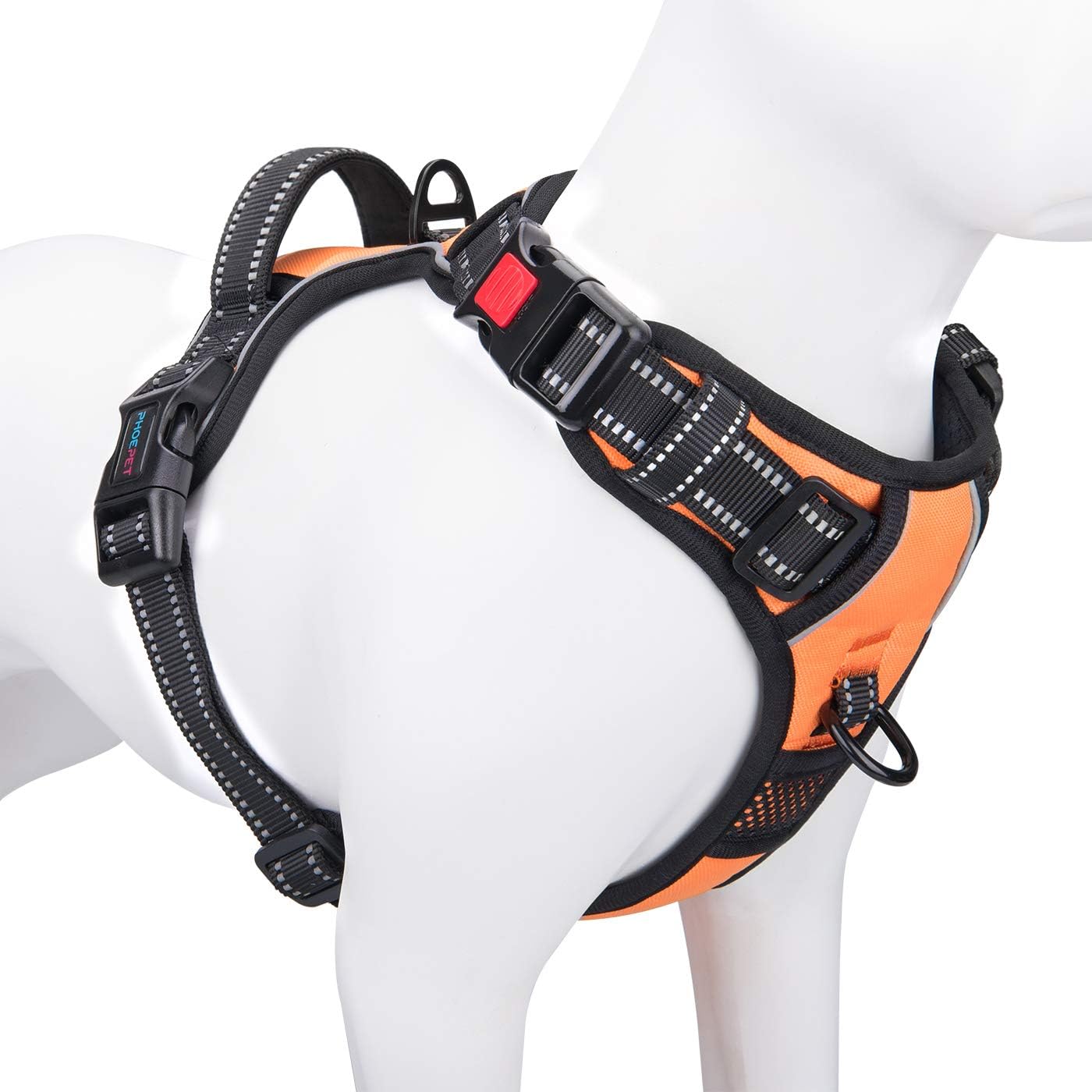
| Material Type | Breathable Air Mesh with Padded Cushion, Durable Oxford Surface, Metal D-Ring, Nylon, Plastic |
|---|---|
| Closure Type | Buckle |
| Dog Breed Size | Large |
| Product Care Instructions | Hand Wash Only |
The PHOEPET No Pull Dog Harness is a padded vest-style harness designed for everyday walks and control with a focus on visibility and durability. It slips on without going over the head thanks to three quick-release buckles including a lockable neck buckle, and it uses breathable air mesh with a durable Oxford outer to stand up to regular use. Two metal D-rings let you choose a front or back leash attachment for no-pull training or routine walking, and a soft padded handle on the back gives short-range control and helps lift dogs into a vehicle. Reflective trim improves nighttime visibility and the harness is hand-washable for easy maintenance. The harness is well suited to active large dogs, but the padded mesh and multiple buckles add bulk compared with minimalist straps and it requires correct adjustment to avoid chafing on long hikes. Construction and features favor safety and control rather than ultralight travel.
Best for: Buyers who prioritize nighttime visibility and robust construction for larger, active dogs that need extra control during walks and training.
Less Ideal for: Owners who want an ultralight or minimalist harness for travel or fast hikes should consider simpler strap-style options instead.
- Reflective trim for improved nighttime visibility
- Two sturdy metal leash rings for front or back attachment
- Padded breathable mesh with durable Oxford outer for comfort and durability
- Back handle provides short-range control and assists lifting
- Three quick-release buckles including a lockable neck buckle for easy on/off
- Bulkier and heavier than minimalist strap harnesses
- Hand wash only care may be less convenient for frequent cleaning
Verdict: The best reflective harness improves nighttime and low-light visibility with reflective panels or trims without compromising fit or comfort.
Ruffwear Hi & Light Harness Small
Best Lightweight Harness

| Size | Small |
|---|---|
| Material Type | Polyester |
| Closure Type | Clip |
| Item Highlight | Lightweight, Minimalist, Low-Profile Fit, Debris-Resistant Liner, Two Leash Attachment Points, ID Pocket and Reflective Trim |
The Ruffwear Hi & Light is a featherlight vest-style harness built for small, active dogs and puppies who need a barely-there feel without sacrificing control. It fits close to the body with four adjustment points so you can fine-tune a snug, escape-resistant fit, and offers two leash attachment options: an anodized aluminum V-ring on the back for normal walks and a reinforced webbing loop on the chest for extra steering or training. The harness uses breathable, debris-resistant liner materials and reflective trim for low-light visibility, and includes a small ID pocket for tags or waste bags. Practical benefits include low weight for running or long hikes, a streamlined profile that reduces snagging, and simple clip closures for quick on and off. Trade-offs are minimal but include limited padding compared with heavier, support-focused harnesses and sizing that requires accurate girth measurement to ensure comfort and security.
Best for: Active owners of small dogs or puppies who want a barely-there harness for running, hiking, and everyday walks while keeping a secure, adjustable fit.
Less Ideal for: Owners who need heavy-duty lift support, extensive padding for large or injured dogs, or universal one-size convenience should consider other harness styles.
- Very lightweight, reducing fatigue during runs and long walks
- Four points of adjustment for a secure, low-profile fit
- Two leash attachment options (back V-ring and front webbing loop) for versatility
- Breathable, debris-resistant liner with reflective trim for low-light safety
- Built-in ID pocket for tags or small essentials
- Minimal padding so it offers less load distribution than supportive, heavier harnesses
- Sizing requires accurate girth measurement to avoid fit issues
Verdict: The best lightweight harness suits active or warmer-weather dogs by prioritizing breathability, low weight, and unhindered movement while maintaining secure fit.
Choosing the Right Dog Harness Chewer: Key Factors to Consider
Material Strength and Abrasion Resistance
The base fabric and webbing determine how long a harness will survive under persistent chewing. Look for tightly woven, high-denier webbing or layered fabrics that resist fraying and tearing when exposed to teeth.
Abrasion-resistant coatings or a protective outer layer slow down bite penetration and make it harder for a dog to find a purchase point. Materials also affect weight and flexibility, so choose a fabric that balances toughness with enough compliance to allow natural movement.
Buckle and Fastener Durability
Buckles and quick-release hardware are frequent failure points if a dog targets them. Metal hardware or heavy-duty polymer clasps rated for higher loads are less likely to break under bite pressure than thin plastic components.
Pay attention to the placement of buckles. Designs that position fasteners away from a dog's mouth or use protected closures reduce the chance of chewing damage. Reinforced stitching around attachment points also prevents hardware from pulling free when stressed.
Reinforcement at Common Chew Points
Dogs typically attack the loop where the leash attaches and exposed strap sections under the chest or along the back. Effective harnesses include extra layers, protective sleeves, or abrasion panels over these areas to block direct access.
Reinforcements may be sewn-in pads, welded overlays, or replaceable covers. Consider how easily any protective element can be inspected and replaced without discarding the entire harness.
Adjustability and Fit Control
A well-adjusted harness minimizes loose straps that invite chewing. Multiple adjustment points let you shape the harness to your dog's body so it sits snugly without chafing and leaves less exposed material for the dog to bite.
Proper fit also improves control and prevents shifting that could expose vulnerable seams. Check that adjustment hardware is robust and that the strap ends tuck away or secure in a way that keeps them out of reach.
Comfort and Ergonomic Design
Durability is essential, but a harness that causes discomfort will be chewed sooner. Look for padded contact areas, breathable fabrics, and designs that distribute pressure across the chest and shoulders rather than the throat.
Breathable materials and smooth seams reduce rubbing and hot spots that can lead to anxious behavior and increased chewing. Comfort features help ensure a dog accepts the harness long-term, improving both safety and longevity.
Maintenance, Cleaning, and Repairability
Chew-resistant harnesses still get dirty and may suffer superficial damage over time. Choose designs that withstand regular washing and use materials that do not degrade with cleaning products or saltwater.
Repairability extends service life: harnesses with replaceable straps, modular padding, or readily available spare parts can be maintained rather than replaced. Consider how easy it is to inspect seams and fasteners for wear and to perform simple repairs at home.
How Tight Should a Harness Be for a Dog That Chews?
Aim for a snug fit that prevents significant movement without restricting breathing or shoulder motion. You should be able to slide two fingers between the harness and your dog at key points, but not enough slack that the dog can grab and pull at the straps.
Adjust the chest and belly straps independently to eliminate loose loops. If strap ends remain long after tightening, secure them under keepers or trim and melt synthetic ends where appropriate to stop fraying.
- Check fit after the dog moves or shakes; harnesses can shift during activity.
- Reassess fit regularly for growing puppies or weight changes.
What Features Reduce the Chance a Dog Will Chew Its Harness?
Features that block access are most effective: covered leash rings, welded or recessed buckles, and protective sleeves over straps make locating a biting point more difficult. Low-profile hardware that sits close to the body is less tempting than protruding buckles.
Positive reinforcement and supervised training also reduce chewing. Treats, distraction toys, and gradual desensitization to wearing the harness limit destructive behavior more reliably than any single design feature.
- Choose harnesses with leash attachment points located on the back or front but reinforced with plates or thick webbing.
- Look for strap covers that snap or zip on so you can replace them if chewed.
Cleaning and Care Tips to Preserve Chew Resistance
Regular cleaning removes saliva and debris that can degrade fabrics over time. Follow manufacturer cleaning instructions, but in general use mild detergent, rinse thoroughly, and air dry to preserve material strength.
Inspect the harness after each wash for loosened stitching or weakened fibers. Promptly repair or replace components that show bite damage to prevent sudden failure during use.
- Spot-treat stubborn stains before washing to avoid repeated cycles that stress fabric.
- Store harnesses out of reach and rotate between backup units when possible to extend life.
When Is a Chew-proof Harness Not Enough?
Some dogs have intense oral fixation or anxiety-driven chewing that no harness alone will stop. If chewing persists despite reinforced gear and behavioral interventions, consult a trainer or behaviorist to address underlying causes.
Also consider that very aggressive chewing can damage hardware invisibly. Regularly check load-bearing points and do not rely solely on visual inspection if your dog is an extreme chewer.
- Combine durable gear with training and enrichment to reduce chewing behavior.
- Replace any harness with compromised integrity even if damage seems minor.
How to Choose the Right Size and Style for Your Dog
Measure girth, neck, and the distance between the shoulder blades. Different harness shapes fit differently on deep-chested versus narrow-bodied dogs, so prioritize the harness geometry that matches your dog's build.
Consider a front-clip style if you want to discourage pulling, or a back-clip setup for routine walking if control is adequate. For chewers, ensure the chosen style offers reinforced attachment areas and minimal loose material.
- If between sizes, opt for the larger size only if the harness has multiple secure adjustment points.
- Test movement by walking and having the dog lie down to confirm the harness does not shift into accessible positions.
How We Chose the Best Dog Harness Chewer
We selected harnesses that meet high standards for durability, safety, and practical day-to-day use by dogs prone to chewing. Our editorial filters prioritized materials and construction proven to resist teeth and abrasion, focusing on reinforced webbing, heavy-duty buckles, and protective layering at the most vulnerable points. We also evaluated harness geometry and adjustability to ensure a stable, secure fit that reduces rubbing and access to straps while a dog is active. Key evaluation criteria included material strength and abrasion resistance, buckle and fastener durability, strap and pad reinforcement at common chew points, adjustability for preventing excess slack, and overall ergonomic fit for comfort during walks and play. We also considered ease of cleaning and whether designs include replaceable components to extend service life. Excluded from the list were harnesses that sacrifice fit or safety for toughness, designs with untested exotic materials, and products lacking clear reinforcement at chew-prone areas. The final choices balanced chew resistance with humane fit, handler control, and user-friendly maintenance.
Our full evaluation process is outlined in our review methodology.
FAQ
Can any harness be made chew-resistant with covers?
Covers can add a layer of protection but they work best when paired with a harness that already has strong webbing and robust hardware. Thin or weak base materials will still fail eventually even with covers.
Are metal buckles better than plastic for chewers?
Metal buckles are typically more resistant to bite damage than thin plastic ones, but placement and protection matter too. A protected plastic buckle set away from the dog's mouth may outperform an exposed metal buckle.
How often should I inspect a harness used by a chewer?
Inspect the harness before each walk for new fraying, loose stitching, or compromised buckles. More thorough checks after washing or heavy use help catch wear before it becomes a safety issue.
Is there a difference between a chew-resistant harness and a chew-proof harness?
Nothing is truly indestructible. 'Chew-resistant' means the design slows damage and extends usable life, whereas 'chew-proof' implies indestructibility, which is unrealistic for all but a few very heavy-duty solutions that may sacrifice comfort.
Should I train my dog to stop chewing the harness?
Yes, training complements durable gear. Positive reinforcement, supervised wearing sessions, and providing chew alternatives reduce the behavior more effectively than relying on gear alone.
Final Verdict
Prioritize durable materials, protected hardware, and a snug ergonomic fit when choosing a harness for a dog that chews. Reinforcements at leash attachment points and exposed straps will lengthen service life, but comfort and adjustability are equally important to prevent the dog from seeking out the harness as a chew target. Combine the right harness with consistent training, management, and routine inspections. That approach balances safety and longevity and helps you choose a solution that keeps your dog secure and comfortable while minimizing damage over time.

