

If you struggle with a dog that pulls, the right harness can change daily walks from a battle into a manageable routine. A harness designed to discourage pulling redistributes pressure away from the neck, improves handler leverage, and gives you more consistent control without causing pain or restricting movement. This guide covers seven top harnesses shortlisted for dogs that pull, focusing on fit, leash connection styles, and features that reduce forward lunging. Below you will find clear buying criteria and practical tips to help you pick the harness that best suits your dog and walking style.
Top Picks at a Glance
| Best Overall Harness for Not Pulling A dependable all-around no-pull harness that works for most dogs | PetSafe Easy Walk Harness Medium |  |
| Best Budget Harness for Not Pulling A low-cost no-pull option that still controls leash pulling | Bolux No-Pull Dog Harness Small |  |
| Best Premium Harness A higher-end harness with superior materials and refined features | Ruffwear Front Range Dog Harness Small |  |
| Best Front-Clip Harness Designed with a front leash attachment to discourage forward pulling | PLUTUS PET No Pull Dog Harness |  |
| Best Back-Clip Harness Simple leash attachment on the back for everyday walking comfort | Best Pet Supplies Voyager Step-in Air Harness Medium |  |
| Best Heavy-Duty Harness Built for strong pullers with reinforced fabric and hardware | KNK Heavy Duty Dog Harness |  |
| Best Reflective Harness Enhanced visibility for safer early-morning or evening walks | IVY&LANE No Pull Dog Harness Medium |  |
PetSafe Easy Walk Harness Medium
Best Overall Harness for Not Pulling

| Material Type | Nylon |
|---|---|
| Weight Range | 20-50 lbs (9-23 kg) |
| Closure Type | Snap |
| Size | Medium |
The PetSafe Easy Walk Harness is a straightforward front-clip harness designed to reduce pulling by redirecting force to the dog's shoulders instead of the neck. It uses a patented martingale loop on the chest strap so that when a dog lunges the loop tightens slightly and helps steer the dog toward the handler, making it useful for training walks and everyday control. The harness is lightweight with relatively low coverage, which keeps dogs cooler and improves breathability on longer outings, and the nylon construction and metal sliders make it durable for frequent use. Fit is simplified by a contrasting belly strap and quick-snap closure, though accurate measuring is important since the system relies on a snug fit to function correctly. Limitations include minimal padding for dogs sensitive to strap pressure and a design that primarily addresses leash manners rather than providing heavy-duty restraint for very strong or reactive dogs. For owners focused on consistent training and reliable no-pull performance, this harness balances simplicity and durability well.
Best for: Owners who want a durable, training-focused no-pull harness to improve leash manners and maintain everyday control during walks.
Less Ideal for: People needing a heavily padded or tactical restraint for very strong, reactive, or frequently escaping dogs should consider purpose-built control harnesses instead.
- Front-chest martingale loop redirects pulling without putting pressure on the neck
- Lightweight, low-coverage design improves breathability for active dogs
- Nylon construction with metal adjusters is durable for regular walks
- Quick-snap shoulder strap and contrasting belly strap make fitting fast and intuitive
- Minimal padding may be uncomfortable for dogs that dislike direct strap pressure
- Front-clip design reduces pulling but is not a substitute for a heavy-duty control harness for very strong dogs
Verdict: The best overall harness for not pulling, balancing effective leash control, comfortable fit, and durable construction for everyday walks and training.
Bolux No-Pull Dog Harness Small
Best Budget Harness for Not Pulling
| Closure Type | Buckle |
|---|---|
| Dog Breed Size | Small |
| Weight Range | 11-20 lbs |
| Material Type | Polyester |
| Product Care Instructions | Machine Wash |
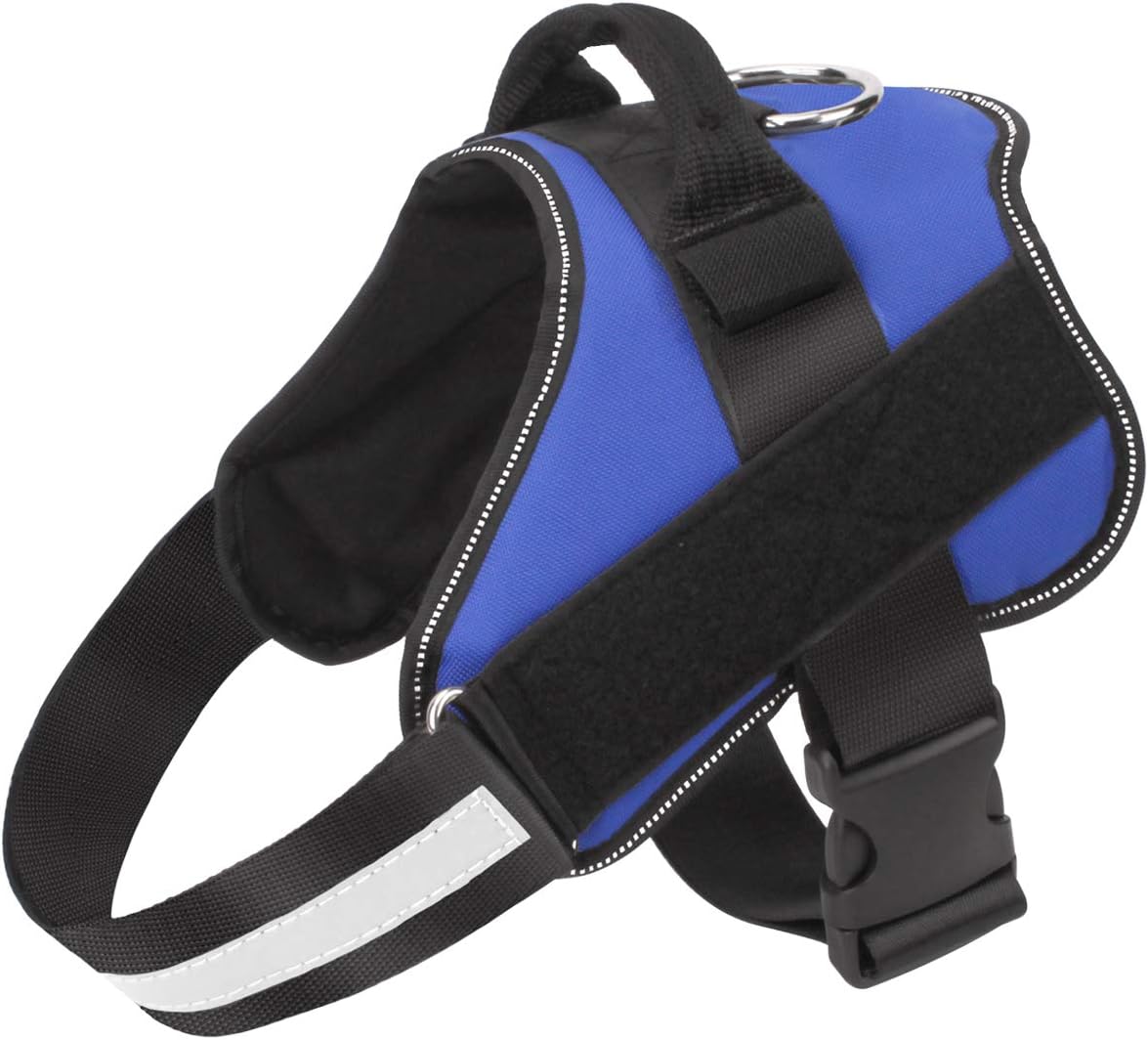
The Bolux no-pull dog harness is a vest-style harness intended to reduce pulling by distributing pressure across the dog's chest and body while providing a secure attachment point for a leash. It is typically used for daily walking, light training sessions and outdoor activities where control and visibility matter. Notable features include an adjustable chest strap with a snap-on buckle, a sturdy nylon top handle for close control, a D-ring for leash attachment and reflective trim for low-light visibility. The breathable polyester construction and machine-washable care instructions make it easy to clean after muddy walks. As a budget option it delivers the core training functions—no-pull design, handle control and reflective safety—without premium padding or heavy-duty hardware, so it works best for small dogs in the 11 to 20 pound range rather than heavy pullers. Sizing can feel fiddly on dogs near the upper or lower end of the size range, so measure carefully before buying.
Best for: Buyers who prioritize practical training features and visibility on a tight budget and need a simple, functional harness for small dogs.
Less Ideal for: Anyone with a large dog, a strong puller, or who wants heavy padding and heavy-duty hardware for rugged use should consider a sturdier, higher-end harness.
- No-pull vest design spreads pressure to reduce choking.
- Reflective trim increases visibility on early morning or evening walks.
- Top nylon handle gives quick close control for training or crowded areas.
- Machine-washable polyester makes cleanup simple.
- Adjustable chest strap with snap buckle allows basic fit customization.
- Not built for strong pullers or large dogs due to light hardware and slim construction.
- Limited padding compared with premium harnesses, which may be less comfortable on long hikes.
Verdict: The best budget harness for not pulling for owners who need an affordable, reliable solution that reduces pulling without sacrificing basic comfort or safety.
Ruffwear Front Range Dog Harness Small
Best Premium Harness

| Leash attachment points | Back V-ring + Chest webbing |
|---|---|
| Adjustment points | 4 Points |
| Material Type | Polyester |
| Closure Type | Pull On |
The Ruffwear Front Range harness is a well-built, comfortable everyday harness that combines a back V-ring and a reinforced chest webbing attachment for redirecting pullers. It is foam padded across the chest and belly to reduce chafing during longer outings and includes four adjustment points plus side-release buckles for a secure, tunable fit. The harness also has reflective trim and a dedicated loop for an accessory light to improve visibility on early morning or evening walks, and an ID pocket for small tags. In practice it performs as a reliable daily-walk harness that eases leash control without harsh pressure on the throat, and the padding and adjustment options make it pleasant for hikes or extended wear. Trade-offs are that it is a basic halter-style configuration rather than a specialized front-clip no-pull system with mechanical leverage, and the polyester construction requires hand washing to stay clean. For owners who value build quality, fit, and comfort in a premium package, this harness delivers a durable, user-friendly option.
Best for: Owners who prioritize premium construction, refined fit, and extra comfort for daily walks, hikes, and longer wear and are willing to pay more for those qualities.
Less Ideal for: People who need a mechanical front-clip leverage system specifically for strong, persistent pullers or who prefer a harness that is machine washable.
- Two leash attachment points (aluminum back V-ring plus reinforced chest webbing) for versatile control and training
- Closed-cell foam padding on chest and belly to reduce chafing during long wear
- Four adjustment points and side-release buckles enable a customized, secure fit
- Reflective trim and light loop increase low-light visibility
- Not a specialized leverage front-clip no-pull design so very strong pullers may need an alternative
- Requires hand wash care rather than being machine washable
Verdict: The best premium harness for buyers who want top-quality materials, advanced fit adjustments, and extra comfort features worth the higher price.
PLUTUS PET No Pull Dog Harness
Best Front-Clip Harness

| Material Type | Nylon, Plastic |
|---|---|
| Closure Type | Buckle |
| Size | M: chest 19.7"-25.2" |
| Product Care Instructions | Hand Wash Only |
This PLUTUS PET harness is built for daily walks and basic no-pull training while prioritizing soft contact against the dog. It uses breathable mesh padding on the chest and back straps so pressure spreads over a wider area, which helps reduce rubbing and chafing during longer outings. The front D-ring supports no-pull correction and the rear O-ring is convenient for relaxed walking or attaching accessories, while a short handle on the back gives extra control when you need it. The step-in, single-buckle fit is fast to put on and adjustable for a range of girths, and reflective stitching improves low-light visibility. Practical limitations: the harness is nylon-based with plastic hardware rather than all-metal fittings, so very strong pullers may prefer heavier-duty tactical styles, and careful sizing is required to avoid pressure points on deep-chested breeds. For dogs that need gentler pressure distribution and everyday comfort, it performs well as a lightweight, breathable option.
Best for: Buyers seeking a soft, well-padded harness that reduces rubbing and distributes pressure for more comfortable daily walks and basic training.
Less Ideal for: Owners looking for a heavy-duty, all-metal tactical harness or a specialized control system for extremely strong or reactive dogs should consider sturdier alternatives.
- Breathable mesh padding spreads pressure and reduces rubbing for more comfortable walks
- Front D-ring enables no-pull training while rear O-ring is for casual walking
- Quick step-in design with a single buckle makes it fast to put on and remove
- Reflective thread increases visibility on early morning or evening walks
- Adjustable straps accommodate a range of chest girths
- Plastic hardware and nylon webbing are less robust than metal tactical fittings for very strong pullers
- Not a purpose-built harness for heavy-duty service or extreme-control situations
Verdict: The best front-clip harness for owners focused on immediate pulling reduction, using the chest attachment point to steer and redirect a dog’s forward motion.
Best Pet Supplies Voyager Step-in Air Harness Medium
Best Back-Clip Harness

| Size | M (Chest: 16 – 18") |
|---|---|
| Material Type | Air mesh |
| Closure Type | Buckle, Double Ring, Hook & Loop |
| Weight Range | 15 lbs – 18 lbs |
The Voyager Step-in Air Harness is a low-profile vest-style harness built for everyday walks in warm weather and travel. It uses soft air mesh to keep the harness breathable and fast-drying, and a step-in design that clips closed with a buckle plus hook-and-loop and double D-ring attachments for leash security. The reflective bands improve visibility for early morning or evening outings, and the harness is easy to put on by letting the dog step in and fastening the clip. Practical benefits include a very light feel on the dog, quick drying after wet conditions, and a multi-layer closure system that reduces the chance of accidental release. Limitations to consider are that sizing must be measured carefully since the listing notes sizes do not correlate directly to breed or weight, it is intended for small to medium dogs rather than large breeds, and the simple mesh construction offers less padding or load distribution for strong pullers compared with heavier duty harnesses.
Best for: Owners seeking a low-bulk, breathable harness for travel, training, or warm-weather walks who prioritize light weight and comfort over heavy-duty control.
Less Ideal for: People who need a heavy-duty no-pull harness for large or very strong dogs or those who require extensive padding and load distribution for long hikes.
- Very lightweight breathable air mesh for warm-weather comfort and quick drying
- Step-in design that is simple and fast to put on
- Triple security closures: hook-and-loop, buckle, and double D-rings for leash attachment
- Reflective bands increase low-light visibility
- Compatible with cats and small to medium dogs so versatile for travel
- Not designed for large breeds or heavy pullers
- Requires careful measuring for the correct fit since size is chest-based rather than breed/weight-based
Verdict: The best back-clip harness for pet owners who prioritize easy on/off, comfort on casual walks, and straightforward leash handling over aggressive no-pull control.
KNK Heavy Duty Dog Harness
Best Heavy-Duty Harness

| Size | Medium, Large and Extra Large |
|---|---|
| Closure Type | Buckle, Clip |
| Material Type | Metal, Polyester, Webbing |
| Neck Girth | 24" to 34" |
| Chest Girth | 29" to 45" |
This KNK harness is built for powerful, active dogs and translates its heavy-duty claims into practical control and durability. It uses 2-inch ultra-strong webbing, welded D-rings and O-rings, and metal adjusters so the hardware resists bending or slipping during strong pulls, while a padded chest panel spreads pressure for comfort. The front-clip no-pull attachment helps redirect pulling without locking shoulder movement, and a rear D-ring gives a standard leash option for regular walks. The step-in design and quick buckles make it easy to don and adjust, and the locking-style adjusters keep straps from loosening on the move. Expect a sturdy feel that suits training, hiking, and high-activity days, though the harness is optimized for medium to XXL sizes and may be bulkier than lighter everyday harnesses. It requires hand washing and air drying to preserve materials. For English Bulldogs that need reinforced hardware and rugged construction, this harness provides the strength and control those dogs demand while keeping comfort in mind.
Best for: Buyers of English Bulldogs who need a reinforced, no-pull harness that stands up to strong pulling and frequent high-activity use and who prioritize hardware strength and durability.
Less Ideal for: Owners seeking an ultra-lightweight or minimalist harness for short, casual walks or those who prefer machine-washable textile gear should consider other options.
- Welded metal D-rings and O-rings for high-strength leash attachment
- Ultra-strong 2-inch webbing and reinforced one-piece strap design resist tearing
- Padded chest panel distributes pressure and reduces neck strain
- Front-clip no-pull plus rear leash attachment offers training flexibility
- Locking metal adjusters keep fit secure during activity
- Designed for medium to extra-large sizes and may be bulky on compact builds
- Requires hand wash and air dry care rather than machine cleaning
Verdict: The best heavy-duty harness for owners of powerful or large dogs who need extra-robust construction, strong buckles, and secure attachment points to manage pulling safely.
IVY&LANE No Pull Dog Harness Medium
Best Reflective Harness

| Closure Type | Buckle |
|---|---|
| Dog Breed Size | Medium |
| Weight Range | 20lbs-48lbs |
| Included Components | harness,leash,seat belt,storage strap |
This IVY&LANE vest harness is built for evening and low-light walks while also helping reduce pulling. It includes a front no-pull clip to discourage forward lunging and a back clip for routine walking or car restraint, and both clips are alloy one-piece molded hardware for durable attachment. The vest has embedded 360 degree reflective strips for improved visibility and a lockable neck buckle plus four adjustable webbings so you can dial in a snug, no-choke fit. The set arrives with a leash, retractable-style seat belt, and a storage strap which makes it convenient for car travel and hanging the gear when not in use. Breathable Oxford-style material and a soft top handle make short hikes and daily strolls more comfortable, but the harness is hand-wash only and the included seat belt is a basic adjustable strap rather than a crash-tested automotive tether. For owners who need a reflective, easy-on harness that helps correct pulling, this covers the essentials with solid value.
Best for: Owners who regularly walk in low-light conditions and prioritize added visibility plus a harness that helps reduce pulling while remaining easy to put on.
Less Ideal for: People seeking a certified crash-tested car tether or a machine-washable harness should consider other options.
- 360 degree reflective strips increase visibility from all angles in low light
- Front no-pull clip helps discourage lunging while back clip retains normal leash use
- Three-buckle neck design makes it easier to put on without forcing over the head
- Includes leash, adjustable seat belt and storage strap so you get a complete walk and travel kit
- Seat belt is a basic adjustable strap and not a certified crash-tested car restraint
- Hand wash only care may be less convenient than machine-washable options
Verdict: The best reflective harness for owners who walk in low-light conditions and want added visibility and safety features while still addressing pulling behavior.
Choosing the Right Dog Harness Not Pulling: Key Factors to Consider
Leash Attachment Style
Where the leash attaches determines how force is transferred when a dog pulls and directly affects how effective the harness is at discouraging forward lunges. Front-clip attachments redirect momentum toward the side or chest, which reduces forward pulling and gives you better steering. Back-clip attachments keep tension on the shoulders and are more comfortable for calmer walkers but are less effective for dogs that habitually rush forward.
Some harnesses offer dual-clip systems so you can start with front-clip control while training and move to a back clip for regular walks once pulling is reduced. Consider whether the harness provides quick-connect clips or multiple attachment points so you can adapt the leash setup as your dog improves.
Fit and Adjustability
A harness that does not fit well can slip, rub, or allow the dog to wriggle free, which undermines any anti-pull function. Look for harnesses with multiple adjustment points around the chest and neck to achieve a snug but comfortable fit. Proper fit keeps the leash attachment aligned with the dog's center of mass and prevents the harness from shifting when tension is applied.
Pay attention to range of sizes and how the manufacturer measures dogs. When a harness lists broad size ranges but few adjustment options, it can be hard to fine-tune the fit. Adjustable straps with durable buckles and clear sizing guidance make it easier to get a secure setup that works consistently during training and everyday walks.
Padding and Material
Materials and padding determine both comfort and durability. Dense, breathable padding at contact points reduces chafing and distributes pressure across a wider area, which is important when redirecting force from the neck to the chest or torso. Lightweight mesh or ventilated fabrics help with temperature control in warmer weather, while robust nylon webbing stands up better to repeated pulling and outdoor use.
Consider how easy the fabric is to clean, especially if you walk in muddy or wet conditions. Stiffer materials can provide better control and shape but may need more break-in time; soft padded harnesses are comfortable from the start but need reinforcement at stress points to avoid premature wear.
Hardware Quality and Reinforcement
The strength and placement of D-rings, buckles, and stitching determine whether a harness can withstand sudden pulls without failing. Metal D-rings and reinforced attachment points resist bending and spreading, which keeps the leash connection secure under load. Buckles should be sturdy and lock reliably to prevent accidental release during a walk.
Inspect reinforcement where straps meet the webbing and around any load-bearing seams. Poor hardware or single-stitched seams are common failure points on low-quality harnesses. Choosing a harness with visible reinforcement increases safety and longevity, especially for dogs that are still learning to walk politely.
Ease of Use and Training Compatibility
If a harness is complicated to put on or adjust, owners may avoid using it, slowing progress with pulling behavior. Look for harnesses that allow one-person on-off and quick adjustments. Features like quick-release buckles, step-in designs, and clear strap routing save time and reduce frustration during walks or training sessions.
Also consider whether the harness supports your training approach. Harnesses with front-clip attachment points are useful for leash-based redirection, while designs that accept a front and back clip let you transition as the dog improves. A harness that integrates well with positive reinforcement training will be more effective over the long term.
Reflectivity and Visibility
Visibility features are important if you walk in low light or near traffic. Reflective trim, high-visibility colors, or attachment loops for lights enhance safety by making your dog easier to see from a distance. Good visibility does not stop pulling, but it reduces risk and helps you manage walks during dawn, dusk, or nighttime.
Choose reflective elements that are well integrated into the harness and do not rub against the dog's skin. Visibility that interferes with comfort or fit reduces the harness's effectiveness, so balance reflectivity with practical wearability for regular use.
How Should a Non-pulling Harness Fit My Dog?
A proper fit keeps the harness stable without restricting breathing or shoulder movement. The chest strap should sit low enough to avoid the throat but high enough to prevent the harness from sliding back toward the shoulders when tension is applied. You should be able to fit two fingers under the straps at key points to confirm a snug, comfortable fit.
Check for rubbing after a few short walks and re-adjust if you see hotspots. A harness that shifts requires re-evaluation of sizing or adjustment points rather than relying on tighter tightening, which can cause discomfort.
- Chest strap should not press on the windpipe.
- Should allow natural shoulder motion while walking.
- Multiple adjustment points help achieve a secure fit.
Which Leash Attachment Works Best when Training to Stop Pulling?
Front-clip attachments are generally more effective for teaching dogs not to pull because they redirect forward momentum and give you leverage to turn the dog toward you. Use a front-clip with consistent training cues and reward calm behavior to build better leash manners. Back clips are fine for maintenance walks once pulling is reduced.
If you want flexibility, choose a harness with both front and back clips so you can switch attachment points based on training progress and walking conditions.
- Front clip: better for redirection and training.
- Back clip: more comfortable for steady walkers.
- Dual-clip: adaptable for training progression.
Can a Harness Harm My Dog if Used Incorrectly?
Improper fit, incorrect attachment placement, or overly tight adjustments can cause chafing, restrict movement, or concentrate pressure on sensitive areas. Always follow sizing instructions and monitor skin and coat under the harness during the first several uses. If you see signs of irritation, adjust the harness or choose a different style with better padding.
Avoid using a harness as a long-term restraint without breaks. For dogs that pull intensely, combine a properly fitted harness with structured training rather than relying solely on hardware to stop the behavior.
- Watch for hotspots and adjust straps accordingly.
- Use padding or different materials if rubbing occurs.
- Combine hardware with positive training methods.
What Training Steps Work Best with a Non-pulling Harness?
Pair the harness with consistent leash-handling and reward-based training. Start indoors or in a low-distraction environment, attaching the leash to the front clip and rewarding your dog for walking beside you without tension. Use short sessions, gradually increasing duration and introducing outdoor distractions as the dog improves.
Reinforce attention with treats or a marker signal when the dog responds to redirection. If the dog pulls, pause or change direction instead of giving forward movement as a reward. Over time you can transition to the back clip for normal walks once pulling behavior decreases.
- Begin in low-distraction settings.
- Reward calm, loose-leash walking immediately.
- Use redirection and direction changes to discourage pulling.
How Do I Choose the Right Size when My Dog Is Between Measurements?
When sizing falls between two options, prefer the larger size if the harness offers ample adjustability; an overly tight harness can cause chafing and restrict movement. Check whether the harness has additional adjustment points to compensate. If the larger size still leaves too much slack, a smaller size may be acceptable if it allows proper strap placement without constriction.
Measure at the widest part of the chest and around the neck where the harness will sit, and consult the sizing instructions closely. Plan for winter coats if you expect to wear the harness over thicker fur.
- Measure chest girth at the widest point.
- Account for seasonal coat changes.
- Choose size based on adjustability and strap placement.
Should I Prioritize Durability or Lightweight Comfort?
Balance is key. Durability matters for dogs that pull or for owners who walk frequently in rough conditions, since hardware and stitching will experience more stress. Lightweight comfort matters for daily wear and for dogs that need breathable materials in warm climates. Evaluate how and where you walk and how intense the pulling behavior is to decide which attribute should weigh more heavily.
In many cases, look for harnesses that combine sturdy reinforcement at load points with lighter, padded panels for comfort. This hybrid approach reduces failure risk while keeping the dog comfortable on regular walks.
- Durable hardware for strong, active dogs.
- Breathable padding for daily comfort.
- Hybrid designs give the best of both worlds.
How We Chose the Best Dog Harness Not Pulling
We evaluated harnesses that are specifically aimed at reducing pulling and improving leash control. Key filters included secure leash attachment options that change force direction, multiple fit adjustments to minimize slipping and chafing, and sturdier construction where stress is concentrated. Comfort features such as padded straps, breathable materials, and ergonomic shapes were weighed to ensure the harness can be worn for regular walks without soreness. We prioritized harnesses with a range of size options and detailed sizing guidance so owners can get a proper fit. Hardware quality, including rust-resistant D-rings and reinforced stitching at load points, was used to assess long-term reliability. Ease of use was considered: harnesses that allow quick on-off and simple adjustments scored higher because owners are more likely to use them consistently. We excluded designs intended only for towing, sporting competitions, or temporary restraint that do not address pulling behavior. Products with unclear sizing or minimal adjustability were also removed. The final picks reflect a balance of leash control, comfort, durability, and real-world practicality for everyday walks.
Our full evaluation process is outlined in our review methodology.
FAQ
Will a harness alone stop my dog from pulling?
A harness can make pulling less harmful and give you better control, but it is most effective when combined with consistent training. Behavioral change comes from practicing loose-leash walking, rewarding calm responses, and using the harness attachment that supports your training goals.
Is a front-clip harness better for small or large dogs?
Front-clip harnesses can work for dogs of any size because they redirect momentum rather than relying on sheer strength. The key is correct fit and appropriate leash handling; small dogs may need gentler redirection while large dogs provide more leverage when the front clip is engaged.
How long should I let my dog wear a harness each day?
Wear time depends on comfort and activity. For walks and training sessions, short periods are appropriate and you should check the dog for any rubbing afterward. If the harness is well-fitted and comfortable, it can be used for daily walks, but it is wise to remove it when the dog is unsupervised for long stretches to prevent chafing.
Can a harness be used with a head-collar or other training tool?
Many owners combine tools depending on training goals, but you should ensure both devices are fitted correctly and do not restrict breathing or movement. Use one new tool at a time to avoid confusing the dog, and consult a trainer if you are unsure about combining devices.
How do I prevent my dog from slipping out of the harness?
Ensure multiple adjustment points are tightened correctly and that straps sit in the recommended positions. Some harnesses include belly straps or anti-escape designs that reduce slipping. If escape remains a problem, reassess sizing and strap routing rather than simply tightening straps excessively.
Final Verdict
Choosing a harness to reduce pulling means balancing control, comfort, and a reliable fit. Prioritize a harness with the attachment style that matches your training goals, adjustable sizing that prevents slipping, and reinforced hardware that will stand up to repeated pulls. Pay attention to padding and breathable materials so the harness can be worn comfortably during regular walks. Combine a properly fitted harness with short, consistent training sessions and positive reinforcement to see the best results. Focus on fit and functionality first; the right harness will make training easier and walks more enjoyable for both you and your dog.

