

If you want smoother walks and a safer way to teach loose-leash walking, the right harness can make a big difference. A purpose-built harness for leash training redistributes pressure off the neck, gives you better steering and control, and reduces the risk of accidental injury during correction. This guide covers seven carefully shortlisted harnesses that work well for leash training, and explains the practical factors that matter when you are teaching leash manners. Below we summarize why each pick made the list and what to check when choosing a harness for training, so you can pick the best fit for your dog and your training style.
Top Picks at a Glance
| Best Overall Harness A versatile, well-rounded harness that fits most dogs and needs | rabbitgoo Dog Harness Medium |  |
| Best Budget Harness An affordable harness that covers basics without extra frills | AMTOR Small Dog Harness Small |  |
| Best Premium Harness Higher-end materials and features for long-term comfort and durability | Carhartt No Pull Dog Harness Large |  |
| Best No-Pull Harness Designed to reduce pulling and improve leash control during walks | PetSafe Easy Walk Harness Medium |  |
| Best Heavy-Duty Harness Built for strong pullers, working dogs, or rugged outdoor use | AUROTH Tactical Dog Harness Large |  |
| Best Reflective Harness High-visibility trim and reflective panels for safer low-light walks | PHOEPET No Pull Dog Harness Medium |  |
| Best Easy-On Harness Simple step-in or quick-clip design for fast, fuss-free use | rabbitgoo Dog Harness Large |  |
rabbitgoo Dog Harness Medium
Best Overall Harness

| Closure Type | Buckle |
|---|---|
| Dog Breed Size | Medium |
| Weight Range | 10-25 kg |
| Material Type | Polyester |
The rabbitgoo medium dog harness is a no-pull vest style designed for everyday walks, training, and short car rides. It slips over the head and secures with quick-release buckles and four adjustable straps so you can fine-tune the fit; a padded chest and breathable mesh help keep active dogs comfortable while pressure is distributed across the torso rather than the neck. Two metal leash attachment points give you a front-clip option to reduce pulling and a back-clip for relaxed walking, and the reinforced top handle provides a quick way to grab or steady your dog. Reflective strips improve visibility on low-light outings. In use the harness performs like a solid midweight everyday harness: durable polyester construction and reinforced hardware stand up to regular use, but it is not chew proof and the company recommends removing it between activities. Sizing requires checking chest and neck measurements carefully because a secure fit is important for the no-pull function.
Best for: Buyers wanting a durable, everyday harness that balances control and comfort for medium-breed dogs and who plan to use it for regular walks, training, and travel.
Less Ideal for: Owners of heavy chewers or dogs that need an all-day wearable or escape-proof solution should look at purpose-built tactical or escape-proof harnesses instead.
- Two leash clips (front and back) for training and casual walks
- Padded chest and breathable mesh for comfort during activity
- Adjustable design with four straps and quick-release buckles for a secure fit
- Reinforced top handle and metal hardware for immediate control and durability
- Reflective strips for improved low-light visibility
- Not chew-resistant so it can be damaged by determined chewers
- Manufacturer advises not to leave the harness on the dog all day
Verdict: The best overall harness is the all-purpose choice that balances comfort, fit adjustability, leash control, and durable construction for everyday walks and training.
AMTOR Small Dog Harness Small
Best Budget Harness
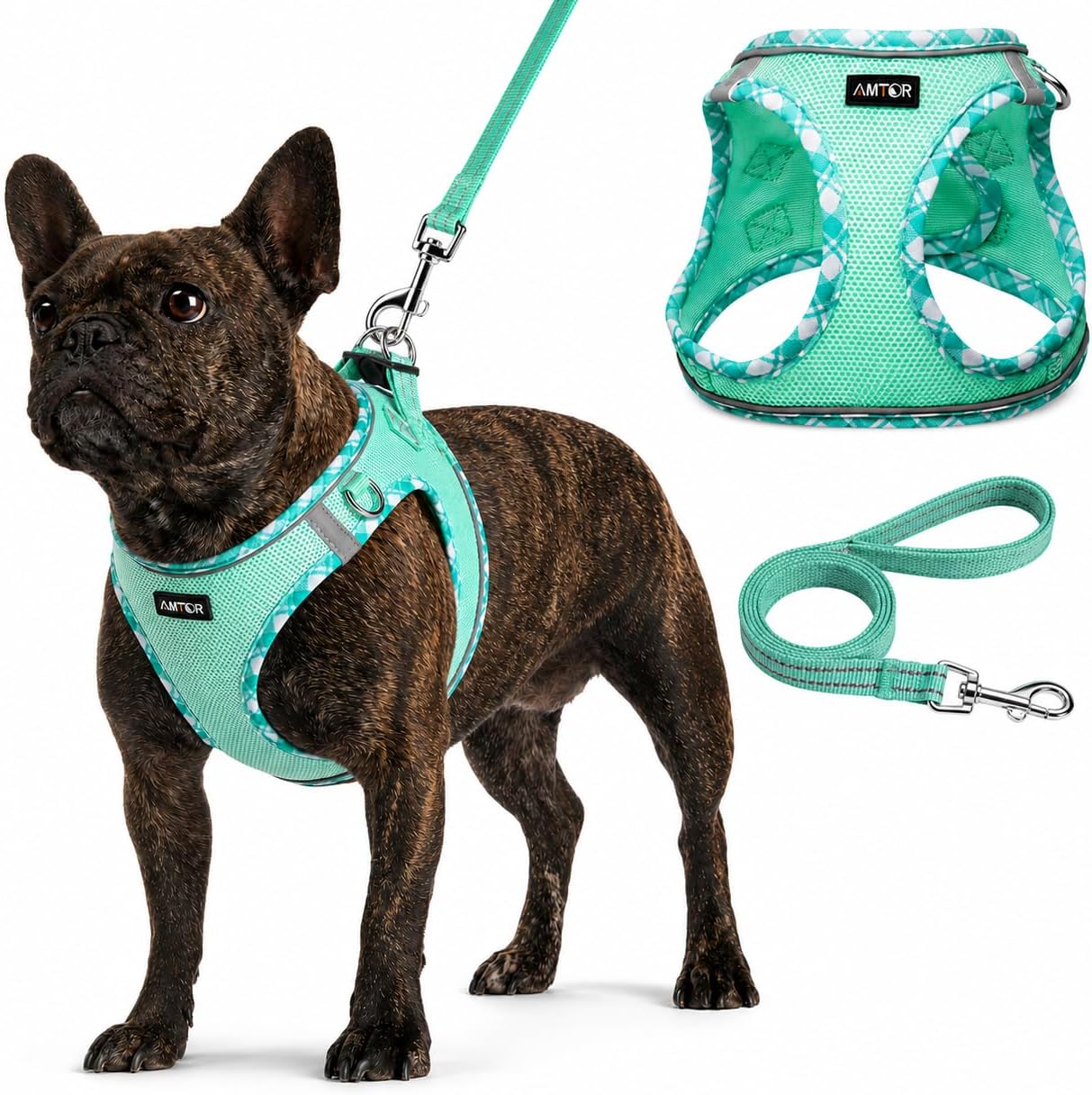
| Size | Small (Chest:13.1"-14.5") |
|---|---|
| Material Type | Mesh |
| Closure Type | Hook & Loop |
| Included Components | Small Dog Harness with Leash Set |
This AMTOR small dog harness is a budget-friendly step-in vest with a matching leash, built for everyday walks and basic training. You put your puppy's front legs into the openings, secure the hook-and-loop straps and snap the buckle, then clip the leash to one of the D-rings. The soft, breathable mesh and padded chest area help reduce rubbing and distribute pressure away from the neck, which makes it gentler for puppies learning to walk on leash. Reflective strips around the vest improve low-light visibility and the leash includes a cushioned handle for more comfortable grip during short training sessions. The harness uses a hook-and-loop closure plus a buckle, so fit is adjustable but not as precise as multi-strap or no-pull front-clip systems, and the materials are lightweight rather than heavy-duty. For the price it delivers solid comfort and basic control, but owners wanting stronger long-term durability or advanced no-pull performance may prefer a sturdier, higher-end model.
Best for: Owners who need an affordable, easy-to-use harness for teaching leash manners and regular short walks with a growing puppy.
Less Ideal for: People training strong pullers or seeking heavy-duty, long-lasting hardware for daily intense use should consider a sturdier training harness instead.
- Step-in design is quick to put on and reduces handling stress for puppies
- Breathable mesh and padding increase comfort and reduce chafing during walks
- Reflective 360° strips improve visibility in low light
- Includes a matching leash with a padded handle for easier grip
- Hook-and-loop plus buckle gives simple, adjustable fit
- Fit adjustability is basic and may not suit dogs that need precise sizing
- Lightweight materials are less rugged than higher-end harnesses
Verdict: The best budget harness gives pet owners a reliable, comfortable fit and functional leash attachment at a low price, ideal for cost-conscious shoppers.
Carhartt No Pull Dog Harness Large
Best Premium Harness

| Material Type | Mesh, Nylon |
|---|---|
| Closure Type | Buckle |
| Size | Large |
| Included Components | No Pull Harness |
The Carhartt No Pull Dog Harness is built for active dogs and everyday use, combining rugged 500-denier polyester with a martingale-style chest strap to reduce pulling. It fits over the head in a yoke style and has fully adjustable chest and belly straps so you can dial in a secure fit as your Lab puppy grows. The spacer mesh backing improves breathability and a quick control handle plus a sturdy metal D-ring give straightforward leash control for training and walks. Rain Defender DWR treatment helps the harness shed light moisture and retain its shape after wet outings, and reflective low-light stitching boosts visibility for early morning or evening walks. Expect a durable, workwear-inspired harness that emphasizes longevity and control rather than ultralight padding; hand wash care is recommended. For very young puppies under a growth stage or owners prioritizing plush padding, this harness may feel more utilitarian than cushioned alternatives.
Best for: Owners who want a long-lasting, training-capable harness that stands up to regular outdoor use and will grow with an active Lab puppy.
Less Ideal for: Owners seeking a very soft, heavily padded harness for short indoor use or those who need a machine-washable, ultra-cushioned option.
- Durable 500-denier polyester with DWR for light water resistance
- Martingale chest strap reduces forward pulling for easier control
- Fully adjustable yoke-style fit accommodates growth
- Reflective stitching improves visibility in low light
- Quick control handle and sturdy D-ring for secure leash attachment
- More utilitarian padding than plush comfort-focused harnesses
- Hand wash only rather than machine washable
Verdict: The best premium harness is for owners willing to pay more for superior fabrics, reinforced hardware, thoughtful padding, and refined fit features that last.
PetSafe Easy Walk Harness Medium
Best No-Pull Harness

| Material Type | Nylon |
|---|---|
| Weight Range | 20-50 lbs (9-23 kg) |
| Closure Type | Snap |
| Size | Medium |
The PetSafe Easy Walk Harness is a straightforward front-clip harness designed to reduce pulling by redirecting force to the dog's shoulders instead of the neck. It uses a patented martingale loop on the chest strap so that when a dog lunges the loop tightens slightly and helps steer the dog toward the handler, making it useful for training walks and everyday control. The harness is lightweight with relatively low coverage, which keeps dogs cooler and improves breathability on longer outings, and the nylon construction and metal sliders make it durable for frequent use. Fit is simplified by a contrasting belly strap and quick-snap closure, though accurate measuring is important since the system relies on a snug fit to function correctly. Limitations include minimal padding for dogs sensitive to strap pressure and a design that primarily addresses leash manners rather than providing heavy-duty restraint for very strong or reactive dogs. For owners focused on consistent training and reliable no-pull performance, this harness balances simplicity and durability well.
Best for: Owners who want a durable, training-focused no-pull harness to improve leash manners and maintain everyday control during walks.
Less Ideal for: People needing a heavily padded or tactical restraint for very strong, reactive, or frequently escaping dogs should consider purpose-built control harnesses instead.
- Front-chest martingale loop redirects pulling without putting pressure on the neck
- Lightweight, low-coverage design improves breathability for active dogs
- Nylon construction with metal adjusters is durable for regular walks
- Quick-snap shoulder strap and contrasting belly strap make fitting fast and intuitive
- Minimal padding may be uncomfortable for dogs that dislike direct strap pressure
- Front-clip design reduces pulling but is not a substitute for a heavy-duty control harness for very strong dogs
Verdict: The best no-pull harness prioritizes front-clip or anti-pull designs and leash leverage to discourage pulling while keeping the dog comfortable and safe.
AUROTH Tactical Dog Harness Large
Best Heavy-Duty Harness

| Material Type | Breathable Air Mesh with Soft Padded Cotton Cushion, Nylon |
|---|---|
| Weight Range | 45-80 lbs |
| Closure Type | Buckle |
| Size | L (Neck:18-29", Chest:24-37") |
This vest-style harness is built for active, strong dogs and everyday outdoor use. It combines breathable padded mesh with durable nylon oxford and reinforced stitching, giving a comfortable fit while resisting wear from pulling and rough play. The harness is secured with two quick-release buckles and four adjustment points to fine-tune neck and chest fit, and it offers both front and back metal leash attachment rings for no-pull training and regular walks. A reinforced top handle helps with short-term control in crowds or over obstacles, and reflective trim increases visibility on low-light outings. The MOLLE-style panels and Velcro area accept patches or accessories, which is handy for working dogs or longer hikes. Limitations to note are that sizing runs broad so measuring carefully is important, and the heavy-duty materials add weight compared with minimalist harnesses, which may be noticeable on smaller or low-energy dogs.
Best for: Buyers who need a rugged harness that still prioritizes dog comfort—people with powerful, active, or working large dogs who want durable materials plus padding and control features.
Less Ideal for: Owners of very small breeds, elderly dogs with low mobility, or anyone seeking a minimalist lightweight harness focused only on short neighborhood walks.
- Durable construction with reinforced stitching and strong metal leash rings for heavy use
- Padded breathable mesh and multiple adjustment points for a secure, comfortable fit
- Front and back leash attachment for training no-pull behavior and casual walking
- Sturdy top handle provides immediate control in crowded or hazardous situations
- Reflective strips and MOLLE/Velcro panel for visibility and accessory attachment
- Heavier and bulkier than simple webbing harnesses, which may not suit very small or low-activity dogs
- Sizing requires careful measurement to get the correct fit for large-breed shapes
Verdict: The best heavy-duty harness is a rugged, reinforced option with high-strength webbing and hardware engineered to withstand strong dogs and demanding activities.
PHOEPET No Pull Dog Harness Medium
Best Reflective Harness

| Size | Medium |
|---|---|
| Closure Type | Buckle |
| Material Type | Oxford Cloth Nylon Fabric |
| Care | Hand Wash Only |
The PHOEPET No Pull Dog Harness is a vest-style harness designed to reduce pulling by offering both a front chest clip and a back clip, plus a soft training handle for close control. It is typically put on using three quick-release buckles so you do not have to pull it over the dog's head, and the adjustable straps let you fine-tune fit for medium dogs. Reflective trim improves visibility on low-light walks and two metal leash rings give you the option to prioritize steering with the front clip or casual walks with the back clip. The harness is made from oxford cloth and nylon with POM buckles and is hand-washable, which keeps it lightweight and easy to clean but means the fabric and buckles are simpler than heavy-duty tactical gear. Practical limits include a medium sizing focus that requires checking measurements for stocky or short-neck breeds and a simpler buckle and strap system that may not suit extremely strong pullers without training. For French bulldogs, the front clip plus padded handle make managing short, powerful lunges easier while keeping control comfortable for the handler.
Best for: Owners who need stronger steering and pull reduction on daily walks and want a harness that is quick to put on, visible in low light, and easy to control at close range.
Less Ideal for: Handlers who require heavy-duty, service-grade hardware or precise custom fit for unusually shaped dogs should consider sturdier or specialty harnesses.
- Front and back metal leash attachment points for reduced pulling and steering control
- Three quick-release buckles allow easy on/off without going over the head
- Reflective material improves visibility on evening or early-morning walks
- Soft top handle gives short-distance control and helps lift or steady the dog
- Lightweight, hand-washable oxford nylon construction is easy to maintain
- Medium sizing may not accommodate very stocky or very short-necked French Bulldogs without careful measuring
- Materials and buckles are lightweight and not intended for heavy-duty or working-dog demands
Verdict: The best reflective harness improves nighttime and low-light visibility with reflective trim and bright accents while maintaining a secure, comfortable fit.
rabbitgoo Dog Harness Large
Best Easy-On Harness

| Size | Large |
|---|---|
| Material Type | Polyester |
| Closure Type | Buckle |
| Dog Breed Size | Large |
This rabbitgoo harness is built for fast, fuss-free fitting and control on walks. It uses three quick-release buckles so you can open the harness, slip it onto a wiggly dog and snap it closed without forcing a head entry, which saves time for busy routines or handlers with limited mobility. The vest combines breathable mesh and soft padding for all-day comfort, and reflective strips improve visibility on evening walks. Two metal leash attachments give options: a front clip to reduce pulling and a back clip for casual walking or jogging, while a reinforced top handle offers extra control for lifting or quick restraint. Practical details include four adjustable straps for a tailored fit, sturdy metal hardware, and a lockable neck buckle to discourage accidental release. Limitations to note are the polyester construction is not chew-proof and the harness must be hand-washed per care instructions, so it may need more upkeep than simpler nylon straps.
Best for: Owners who need the quickest, least-fussy harness to get a wriggly or impatient dog ready for a walk, or handlers who value easy on/off and speed when gearing up.
Less Ideal for: People whose dogs habitually chew gear or who want a completely machine-washable harness should consider different heavy-duty or washable options.
- Three quick-release buckles enable very fast on/off without slipping the harness over the head
- Front and back metal leash clips let you switch between anti-pull control and regular walking
- Soft padded mesh vest with breathable lining for comfort on longer outings
- Reflective strips increase nighttime visibility
- Top handle and sturdy metal hardware provide secure short-term restraint and lifting support
- Not chew-proof, so unsuitable if your dog constantly nibbles gear
- Requires handwashing rather than machine wash for care
Verdict: The best easy-on harness is a quick-fit option with step-in or one-click closures that make putting the harness on and off fast and stress-free for owners and dogs.
Choosing the Right Dog Harness Leash Training: Key Factors to Consider
Attachment Points and Control
Where the leash attaches determines how much steering and correction you can apply. Front-clip attachment points help redirect a pulling dog toward you, making it easier to interrupt forward momentum and teach loose-leash behavior. Dual-clip harnesses that offer both front and back options provide flexibility to change the handling style as training progresses.
Choose a harness with strong, well-placed attachment rings that sit in the intended location when the harness is fitted. Poorly placed rings can cause the leash to pull at an awkward angle, which reduces training effectiveness and can create new pressure points.
Adjustability and Proper Fit
A harness must be adjustable enough to get a snug, secure fit for different body shapes. Look for multiple cinch points around the neck, chest, and girth so you can fine-tune the fit and avoid shifting during movement. A loose harness shifts and concentrates force where you do not want it, while an overly tight harness can restrict breathing and movement.
Measure your dog and check the harness' adjustment range before committing. During training, recheck fit frequently because active dogs can work padding and straps out of position, and you need a consistent setup for reliable cues.
Padding and Comfort
Comfort matters because a dog that tolerates the harness is easier to train. Padding across contact points reduces chafing and pressure marks during walks and sudden corrections. Breathable liners help prevent overheating and skin irritation, especially for dogs that wear a harness for longer sessions.
Padding should be durable and securely fixed so it does not bunch up and create hotspots. Consider the dog's coat type too: thick-coated dogs may need less surface padding while short-coated dogs benefit from softer, wider contact areas to spread pressure.
Durability of Materials and Hardware
Training involves repeated tension and stress on straps, buckles, and rings. High-tensile webbing, reinforced stitching, and metal D-rings or welded connectors last longer and maintain consistent performance. Low-quality plastic buckles can fail under sudden loads, which creates safety risks during walks or corrections.
Assess the harness for corrosion-resistant metal parts if you walk in wet conditions or near salt water. Durability also affects long-term value: a well-built harness stays reliable through multiple training phases and seasons.
Ease of Use During Training
Quick on-off features and simple adjusters reduce friction in training sessions. If putting the harness on is a battle, your dog and you will be less likely to practice short, frequent sessions that are most effective for behavior change. Buckles that snap in easily, step-in designs that align naturally with the dog's limbs, and clear visual guides for adjustment make training more efficient.
Also consider how easy it is to change leash attachment points mid-walk. Some harnesses include easy-access clips or quick-release levers that let you switch from front to back attachment without removing the harness.
Visibility and Reflective Details
Visible and reflective trim improves safety during early morning or evening training walks. Reflective piping or panels increase the chance drivers and cyclists will spot you, and bright colors help you spot your dog in low light. These visibility features do not affect training mechanics directly but support safer practice sessions in varied environments.
Choose harnesses with secure and well-stitched reflective elements; surface-printed reflectivity can wear off faster than embedded reflective fabric.
How Do Front-clip and Back-clip Attachments Change Leash Training?
Front-clip attachments provide immediate directional feedback by steering the dog toward you when tension is applied, which interrupts forward pulling and encourages attention. This is useful for initial leash training because it lets you shape movement with minimal force.
Back-clip attachments are better for long walks and for dogs that already know loose-leash skills because they offer a natural alignment and are typically more comfortable for the dog. Many trainers recommend starting with front-clip control for teaching leash manners, then transitioning to back-clip use as behavior improves.
- Front clip: effective for redirecting and interrupting pulling
- Back clip: more comfortable for steady walking once training is established
- Dual clip: lets you adapt handling style without changing equipment
What Size and Fit Checks Should I Perform Before Training?
Start by measuring the widest part of the chest and the girth behind the front legs, and compare those numbers to the harness size chart. Once fitted, you should be able to slide two fingers under the strap at key points; the harness should not rotate when the dog moves.
Watch the dog walk and trot after fitting to ensure the harness stays in place and does not rub at the armpits. Recheck after a few minutes of movement because padding and straps can settle differently once the dog is active.
- Measure chest and girth before choosing a size
- Two-finger rule for a secure but comfortable fit
- Observe movement for slipping or rubbing during the first walk
Can a Harness Teach a Dog Not to Pull on the Leash?
A harness is a training tool that changes how you apply pressure and how the dog experiences correction. When used with consistent cues and reinforcement, a front-clip harness makes it easier to interrupt pulling and reward attention because the handler has more control over the dog's direction.
However, the harness alone will not stop pulling. It must be used with a consistent training plan that rewards loose-leash behavior, uses clear timing, and gradually increases expectations. Positive reinforcement for offering attention and walking beside you speeds learning when combined with the right hardware.
- Use harness plus consistent reinforcement for best results
- Harness helps apply clearer directional cues without neck pressure
- Training time varies with dog temperament and prior habits
How to Introduce a Harness to a Hesitant Dog
Introduce the harness gradually with positive associations. Let the dog sniff the harness, reward calm interest with treats, and practice short periods of wearing it indoors before going outside. Fast, repeated practice helps build acceptance without creating negative associations.
Start with short, low-distraction sessions. Put the harness on for a minute or two, then remove it and reward the dog. Increase duration as the dog remains comfortable, and only add leash pressure once the dog is relaxed wearing the harness.
- Use treats and calm praise during initial introductions
- Short sessions that gradually increase duration prevent anxiety
- Add leash pressure only after the dog accepts the harness calmly
Maintenance and Cleaning Tips to Extend Harness Life
Regular inspection for frayed webbing, loose stitching, and worn hardware keeps the harness safe. Address small issues promptly; replace any corroded or weakened metal parts and repair or retire harnesses with significant wear.
Many harnesses are machine washable on a gentle cycle but check care guidance; air drying preserves padding and hardware. For stubborn dirt, hand wash with a mild detergent, rinse thoroughly, and reshape while damp so straps do not dry twisted.
- Inspect before each season for wear and damage
- Follow washing instructions and air dry to protect padding
- Store in a dry place away from direct sunlight to prevent UV degradation
How We Chose the Best Dog Harness Leash Training
We selected harnesses that suit leash training by applying criteria that matter for control, safety, and real-world usability. Primary filters included secure attachment points for front-clip or dual-clip use, proven adjustability to achieve a snug but non-restrictive fit across chest and girth, and durable materials and hardware able to tolerate repeated use during daily walks and training sessions. Comfort features such as padded contact areas and breathability were required to reduce rubbing and encourage acceptance during longer sessions. Ease of on-off and quick adjustment mechanisms were considered to help owners manage short training bursts and transition between loose-leash and controlled walking. We also prioritized designs that allow clear, consistent pressure cues without concentrating force on the trachea. Items were excluded if they lacked sufficient adjustment for a secure fit, used thin webbing that could bite into skin, or relied on single flimsy clips that compromise safety during sudden pulls. We favored products that balance human handling needs and canine comfort, and that suit repeated training use rather than occasional walks. Final selection focused on functional performance rather than decorative features or single-use gimmicks.
Our full evaluation process is outlined in our review methodology.
FAQ
Is a harness better than a collar for leash training?
Often a harness is safer because it avoids concentrated pressure on the neck, which can cause injury. For many dogs, a front-clip harness offers more effective steering for training than a collar alone, but collars still have roles for identification and short, controlled use.
How long should a dog wear a harness during training sessions?
Usually start with short sessions of five to fifteen minutes and gradually increase duration as the dog becomes comfortable. Monitor for signs of rubbing or discomfort and give breaks to let the skin recover if you do longer repeated sessions.
Can harnesses prevent all pulling behaviors?
No. Harnesses change how pulling is managed and can make training easier, but eliminating pulling requires consistent behavioral training, reinforcement, and practice. The harness is a tool to help you apply consistent cues safely.
Should I switch attachment points during a single walk?
It depends on your training plan. Switching from front to back clip can be useful to test progress, but avoid frequent mid-walk changes that confuse the dog. Make changes during planned transitions, not constantly during a single outing.
Are padded harnesses better for all dogs?
Not always. Padded harnesses increase comfort for many dogs, but for some working dogs or short-coated breeds, excessive padding can trap heat or shift. Choose padding type and thickness that suit the dog's coat and activity level.
Final Verdict
When choosing a harness for leash training, prioritize secure attachment points, adjustability, and durable hardware so you can give clear, consistent cues without risking neck injury. Comfort features and ease of use matter because they determine how readily your dog accepts the harness and how often you will practice. Balance the tradeoff between maximum control and long-term comfort: start with front-clip control during initial training and move to back-clip use as the dog masters loose-leash skills. Use the factors discussed here to match a harness to your dog's body and training plan so you can progress confidently.

