

If your dog has a neck injury, the wrong harness can make a small problem worse. You need a harness that minimizes pressure on the neck, transfers load to the chest, and offers secure, adjustable fit so walks stay safe and comfortable. This guide shortlists seven top harnesses chosen for those goals and explains which features matter most for injured or sensitive necks. Below you will find our selected options plus practical guidance on fit, adjustments, and daily care to help you pick the right harness for recovery and routine use.
Top Picks at a Glance
| Best Overall Harness Top all-around choice balancing support, comfort, and neck protection | PetSafe Easy Walk Harness Medium/Large |  |
| Best Budget Harness Affordable harness that still provides basic support and safety | Bolux No-Pull Dog Harness Small |  |
| Best Premium Harness Higher-end build with premium materials and thoughtful features | Ruffwear Flagline Dog Harness Medium |  |
| Best Front-Clip Harness Front-clip design that discourages pulling and protects the neck | rabbitgoo Easy On 3-Buckle Harness Large |  |
| Best Padded Harness Extra cushioning around chest and neck for sensitive dogs | PLUTUS PET No Pull Dog Harness |  |
| Best Lightweight Harness Low-profile, breathable option for comfort during recovery and walks | Best Pet Supplies Voyager Step-In Air Harness Small |  |
| Best Adjustable Harness Multiple adjustments for a customized, secure fit on varied bodies | Timos 3-Buckle Dog Harness Medium |  |
PetSafe Easy Walk Harness Medium/Large
Best Overall Harness

| Material Type | Nylon |
|---|---|
| Closure Type | Buckle |
| Dog Breed Size | Large |
| Included Components | 1 PetSafe Easy Walk Harness, Fitting Guide |
The PetSafe Easy Walk harness is a front-attachment, martingale-style harness intended to reduce pulling by tightening gently across the shoulders when a dog lunges. You clip the leash to the front O-ring on the chest strap to redirect forward motion toward you rather than the neck, and the patented martingale loop applies gradual shoulder pressure rather than an abrupt correction. Its low-coverage nylon construction keeps the harness light and breathable for daily walks and hikes, and the quick-snap belly strap in a contrasting color makes it easy to put on and adjust. The harness is durable and easy to clean by hand wash, and metal sliders let you fine-tune fit across the shoulder and girth. Limitations include minimal padding and a simple nylon build, so it is less comfortable for long-term forceful restraint compared with heavily padded alternatives, and proper sizing is important to prevent shifting during activity. For most owners wanting a proven, trainer-recommended no-pull solution for routine walks, this harness offers an effective balance of control, simplicity, and durability.
Best for: Buyers who want a straightforward, trainer-endorsed no-pull solution for everyday walks and basic training that prioritizes leash control and a lightweight fit.
Less Ideal for: Owners who need heavy-duty restraint, extensive padding for sensitive dogs, or a harness built for pulling sports should consider more supportive, padded alternatives.
- Front-chest leash clip with patented martingale loop redirects pulling without applying pressure to the throat
- Lightweight, low-coverage design stays breathable for active dogs and warm-weather walks
- Quick-snap belly strap and metal sliders allow fast fitting and straightforward size adjustments
- Durable nylon construction made for regular outdoor use and simple hand-wash care
- Minimal padding compared with plush or padded harnesses may feel less comfortable on long outings
- Not intended for heavy restraint or activities requiring extra back or chest support
Verdict: The best all-around harness that balances low-neck pressure, reliable control, comfortable fit, and durable construction for most dogs recovering from or prone to neck injury.
Bolux No-Pull Dog Harness Small
Best Budget Harness
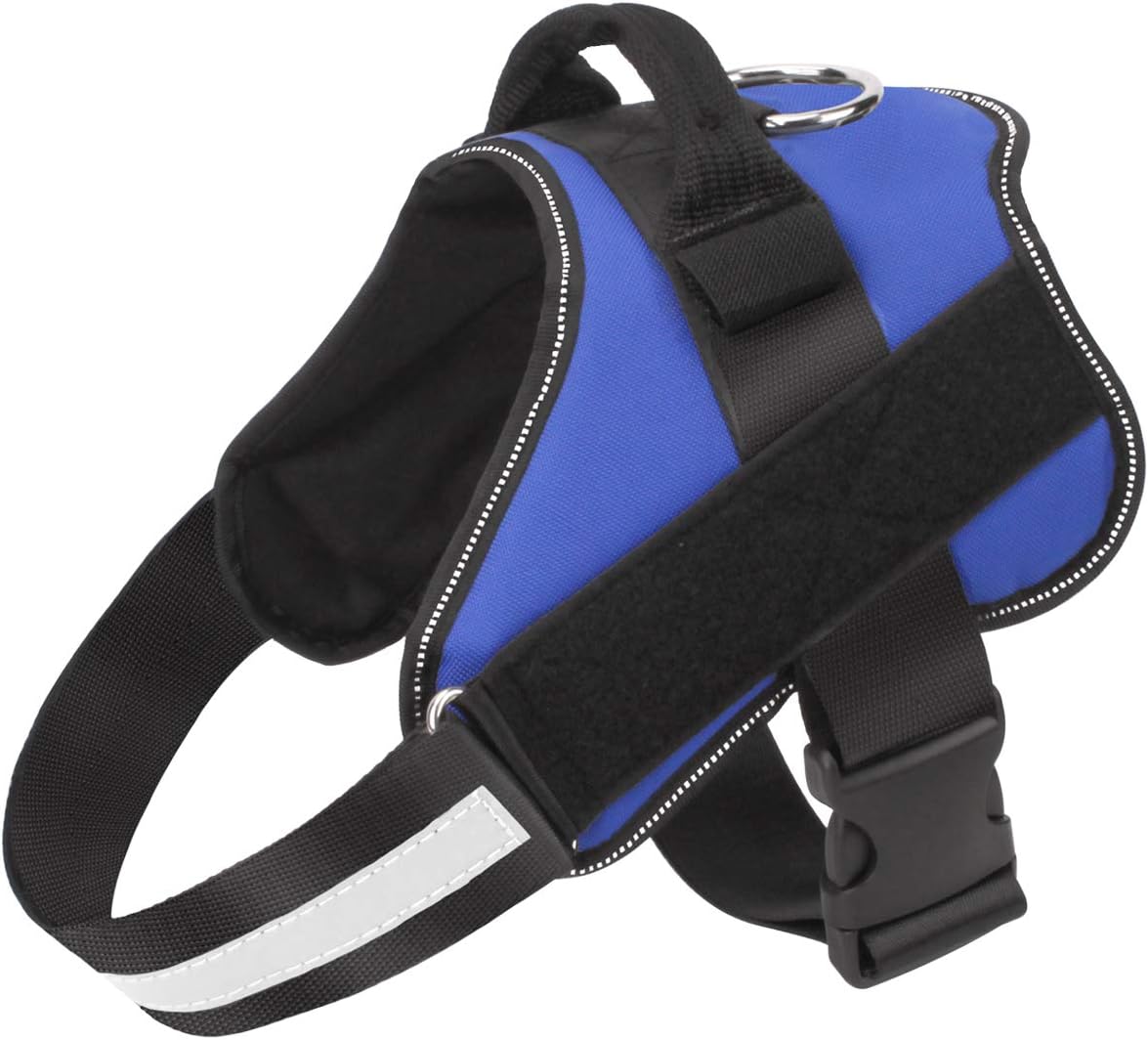
| Closure Type | Buckle |
|---|---|
| Dog Breed Size | Small |
| Weight Range | 11-20 lbs |
| Material Type | Polyester |
| Product Care Instructions | Machine Wash |
The Bolux no-pull dog harness is a vest-style harness intended to reduce pulling by distributing pressure across the dog's chest and body while providing a secure attachment point for a leash. It is typically used for daily walking, light training sessions and outdoor activities where control and visibility matter. Notable features include an adjustable chest strap with a snap-on buckle, a sturdy nylon top handle for close control, a D-ring for leash attachment and reflective trim for low-light visibility. The breathable polyester construction and machine-washable care instructions make it easy to clean after muddy walks. As a budget option it delivers the core training functions—no-pull design, handle control and reflective safety—without premium padding or heavy-duty hardware, so it works best for small dogs in the 11 to 20 pound range rather than heavy pullers. Sizing can feel fiddly on dogs near the upper or lower end of the size range, so measure carefully before buying.
Best for: Buyers who prioritize practical training features and visibility on a tight budget and need a simple, functional harness for small dogs.
Less Ideal for: Anyone with a large dog, a strong puller, or who wants heavy padding and heavy-duty hardware for rugged use should consider a sturdier, higher-end harness.
- No-pull vest design spreads pressure to reduce choking.
- Reflective trim increases visibility on early morning or evening walks.
- Top nylon handle gives quick close control for training or crowded areas.
- Machine-washable polyester makes cleanup simple.
- Adjustable chest strap with snap buckle allows basic fit customization.
- Not built for strong pullers or large dogs due to light hardware and slim construction.
- Limited padding compared with premium harnesses, which may be less comfortable on long hikes.
Verdict: The best low-cost harness that offers adequate fit, reasonable padding, and reduced neck strain for budget-conscious pet owners without sacrificing essential safety.
Ruffwear Flagline Dog Harness Medium
Best Premium Harness

| Material Type | Polyester |
|---|---|
| Leash Attachment Points | 3 |
| Adjustment Points | 6 |
| Item Weight | 6.88 ounces |
The Ruffwear Flagline is a low-profile, adventure-oriented harness built to keep active dogs comfortable while giving owners control. It sits close to the body with a debris-resistant liner and six adjustment points so you can fine-tune fit for walks, hikes, or runs. The harness includes a padded top handle and reinforced belly panel for lift and assist tasks like getting a dog into a car or over obstacles, and three leash attachment points (V-ring on back plus two front/rear loops) let you switch between no-pull guidance and rear‑clip walking. Construction uses durable polyester with thoughtful reinforcement at stress points, so it feels like a premium, long-lasting piece of gear rather than a lightweight fashion harness. Trade-offs are that the minimalist cut prioritizes mobility over heavy-duty load carrying, so it is not meant as a full body lift for injured dogs or very large working loads, and buyers should follow the sizing guidance carefully to avoid fit issues. For owners who want a refined, durable harness for regular outdoor activity, the Flagline balances comfort, control, and build quality well.
Best for: Owners who prioritize long-lasting materials, refined fit, and mobility for frequent outdoor activity and want a harness that performs consistently on hikes, runs, and everyday adventures.
Less Ideal for: People who need a harness primarily for heavy-duty lifting, rehabilitation support, or to restrain very large powerful dogs during vehicle transport should consider a more supportive model.
- Lightweight, low-profile design that preserves mobility during hikes and runs
- Six adjustment points for a customized, stay-put fit across different body shapes
- Padded top handle and reinforced belly panel for confident lift and assist
- Three leash attachment points for versatile control and no-pull training
- Debris-resistant liner and durable polyester construction for long-term outdoor use
- Not designed for heavy full-body lifting or sustained load bearing
- Minimalist profile means less padding and coverage compared with full-coverage support harnesses
Verdict: The best premium harness for owners willing to invest in superior padding, reinforced hardware, and ergonomic design that maximizes comfort and minimizes neck stress.
rabbitgoo Easy On 3-Buckle Harness Large
Best Front-Clip Harness

| Closure Type | Buckle |
|---|---|
| Dog Breed Size | Large |
| Material Type | Nylon, Polyester |
| Product Care Instructions | Hand Wash Only |
| Size | Large |
This rabbitgoo Easy On harness is designed to make fitting and daily walks simpler for large dogs. The three-buckle design lets you fasten the neck and two side closures instead of slipping the harness over the head, which speeds up putting it on and reduces stress for dogs that dislike overhead fitting. It combines a soft padded interior and inner air mesh for breathability and comfort, plus ripstop Oxford on the outside for durability. You get both a front clip for no-pull training and a back clip for casual walking, plus two metal leash rings and a wide top handle for extra control when lifting or guiding. Four adjustable sliders and flexible straps let you fine-tune the fit, and reflective trim improves visibility on evening walks. Limitations to note are that the harness is not chew-proof and requires hand washing, and sizing still needs careful checking against the listed neck and chest ranges to get the right fit.
Best for: Owners who need a harness they can easily fine-tune for a large dog that dislikes overhead fitting or has a tricky body shape, and who prioritize comfort and control for regular walks and outdoor activity.
Less Ideal for: People looking for a chew-proof, machine-washable service harness or those who need a minimalist single-clip training setup should consider alternatives.
- Three quick-release buckles for faster, less stressful on/off
- Front and back metal leash rings for training and everyday walking
- Soft padded air-mesh interior for breathability and comfort
- Multiple adjustable sliders for a customizable fit
- Reflective trim and a wide top handle for night visibility and added control
- Not chew-resistant so avoid use with dogs that chew hardware
- Requires hand washing rather than machine laundering
Verdict: The best front-clip harness for dogs that pull or need reduced neck pressure, since the front attachment redirects force away from the throat and helps control momentum.
PLUTUS PET No Pull Dog Harness
Best Padded Harness

| Material Type | Nylon, Plastic |
|---|---|
| Closure Type | Buckle |
| Size | M: chest 19.7"-25.2" |
| Product Care Instructions | Hand Wash Only |
This PLUTUS PET harness is built for daily walks and basic no-pull training while prioritizing soft contact against the dog. It uses breathable mesh padding on the chest and back straps so pressure spreads over a wider area, which helps reduce rubbing and chafing during longer outings. The front D-ring supports no-pull correction and the rear O-ring is convenient for relaxed walking or attaching accessories, while a short handle on the back gives extra control when you need it. The step-in, single-buckle fit is fast to put on and adjustable for a range of girths, and reflective stitching improves low-light visibility. Practical limitations: the harness is nylon-based with plastic hardware rather than all-metal fittings, so very strong pullers may prefer heavier-duty tactical styles, and careful sizing is required to avoid pressure points on deep-chested breeds. For dogs that need gentler pressure distribution and everyday comfort, it performs well as a lightweight, breathable option.
Best for: Buyers seeking a soft, well-padded harness that reduces rubbing and distributes pressure for more comfortable daily walks and basic training.
Less Ideal for: Owners looking for a heavy-duty, all-metal tactical harness or a specialized control system for extremely strong or reactive dogs should consider sturdier alternatives.
- Breathable mesh padding spreads pressure and reduces rubbing for more comfortable walks
- Front D-ring enables no-pull training while rear O-ring is for casual walking
- Quick step-in design with a single buckle makes it fast to put on and remove
- Reflective thread increases visibility on early morning or evening walks
- Adjustable straps accommodate a range of chest girths
- Plastic hardware and nylon webbing are less robust than metal tactical fittings for very strong pullers
- Not a purpose-built harness for heavy-duty service or extreme-control situations
Verdict: The best padded harness for dogs with neck or throat sensitivity, providing thicker, strategically placed cushioning to distribute pressure and prevent irritation.
Best Pet Supplies Voyager Step-In Air Harness Small
Best Lightweight Harness

| Material Type | Air mesh |
|---|---|
| Closure Type | Buckle, Double Ring, Hook & Loop |
| Weight Range | 10 lbs – 14 lbs |
| Pet Type | Dog |
| Product Care Instructions | Machine Wash |
The Voyager Step-In Air is a low-profile, breathable vest harness built for small dogs and warm-weather walks. It uses soft air mesh that dries quickly and keeps dogs comfortable on hot days, while the step-in design and simple buckle closure make it fast to put on and take off. The harness includes reflective bands for improved visibility during low-light walks and double D-rings plus a hook-and-loop panel and buckle for redundant security when attaching a leash. Because it is designed specifically for smaller breeds and lighter weight ranges, it feels minimally bulky and lets active pups move naturally without overheating. Expect an easy-care product too since the mesh is machine-washable. The main limitation is sizing: the fit relies on measuring chest circumference rather than breed or weight, so precise measurement is important to avoid chafing or a loose fit, and this harness is not intended for large or very strong pullers.
Best for: Buyers who want a minimal, breathable harness for small dogs or hot-weather walks and prioritize comfort and low bulk over heavy-duty control.
Less Ideal for: People needing a heavy-duty no-pull solution for large or strong dogs or those who prefer harnesses sized by weight or breed rather than chest measurement.
- Very lightweight breathable air mesh keeps dogs cool in hot weather
- Step-in design and simple buckle make it fast and easy to put on
- Reflective bands increase visibility for early morning or evening walks
- Multiple attachment and closure points (hook-and-loop, buckle, double D-rings) add security
- Machine washable for easy cleaning
- Sizing is chest-measurement dependent so requires careful measuring to get the right fit
- Not built for large dogs or heavy pullers
Verdict: The best lightweight harness for dogs that need minimal bulk and gentle support, offering breathable materials and a low-profile fit that reduces strain on the neck.
Timos 3-Buckle Dog Harness Medium
Best Adjustable Harness

| Size | Medium |
|---|---|
| Material Type | 1600D Oxford, Mesh, Nylon |
| Included Components | 3 Buckle,2 Metal Clips |
| Closure Type | Buckle |
The Timos 3-Buckle Dog Harness is a padded vest-style harness designed to give precise fit and reduce pressure on the neck. It uses four adjustable straps (two at the neck, two at the chest) and a lockable neck snap so you can fine-tune the fit and keep the harness from sliding or putting pressure on the throat. The harness has a breathable mesh lining and 1600D oxford outer fabric with soft sponge padding for comfort during longer walks or after neck injuries. For control it offers a front clip to discourage pulling and a back D-ring for casual walking, plus a sturdy top handle for short-term restraint or helping a dog into a car. High-visibility reflective strips and metal hardware add durability and safety in low light, but the harness is not chew-proof and heavier on very small breeds. Sizing requires careful measuring to get the neck position right for neck-injury recovery, and the multiple straps make initial adjustment a bit fiddly, but once set it provides a stable, neck-protective fit.
Best for: Owners who prioritize an exact, adjustable fit to protect a dog recovering from or prone to neck injuries and who want options to shift load away from the throat.
Less Ideal for: People with very small toy breeds who need an ultra-lightweight harness or owners whose dogs are aggressive chewers requiring chew-proof gear.
- Multiple adjustment points (two neck and two chest straps) allow a precise, customized fit to avoid rubbing or pressure on the throat
- Padded breathable mesh and 1600D oxford exterior provide comfort and abrasion resistance for sensitive necks
- Front clip for no-pull training plus back D-ring give options for low-neck-pressure control
- Lockable neck snap and three quick-release buckles make on/off easier without forcing the harness over the head
- Reflective strips and sturdy metal hardware improve nighttime visibility and durability
- Not chew-resistant, so unsuitable for strong chewers
- Can be bulky for very small breeds despite medium sizing
- Initial fitting takes time because of multiple straps and sliders
Verdict: The best adjustable harness for owners who need precise fit options to avoid rubbing or pressure points, ensuring the harness sits correctly and protects the neck.
Choosing the Right Dog Harness Neck Injury: Key Factors to Consider
Load Distribution
How a harness spreads pulling force determines how much pressure reaches the neck. A design that routes force across the chest and shoulders gives the neck a chance to heal and reduces repeated microtrauma.
Look for broader chest panels and Y-shaped or vest-style patterns that avoid concentrated straps over the throat. The better the distribution, the less the harness relies on a single strap that can press into sensitive tissue.
Leash Attachment Location
Where you clip the leash affects how much torque is applied to the neck. Back clips tend to direct force toward the torso and away from the neck, while front clips can pivot the head and create upward pressure on the throat.
For neck injuries, prioritize back or dual-attachment systems that allow you to control motion without jerking the neck. If a front clip is present, use it cautiously and combine with training to avoid head-forward pulls.
Adjustability and Fit
A harness must be neither loose nor overly tight. Multiple adjustment points let you fine-tune fit to prevent slipping, chafing, and pressure concentrations. A poor fit can allow the harness to shift, returning load to the neck despite a supportive design.
Check for both girth and chest adjustments and, when possible, shoulder or neckline cinches. Ease of adjustment matters for owners who need to swap or reposition the harness frequently during recovery.
Padding and Contact Materials
Padding cushions and distributes pressure across contact areas, protecting fragile skin and reducing localized pain. Soft, breathable padding helps prevent rubbing and hot spots during longer walks.
Materials that are low-friction and quick-drying are preferable, especially for dogs with postoperative care or sensitive skin. Avoid rough webbing or seams that sit where the harness contacts the throat or shoulders.
Security and Closure Design
Secure closures prevent the harness from coming loose and exposing the neck to unexpected loads. Buckles should be reliable and positioned so tightening cannot cause extra neck pressure when the dog pulls.
Look for redundant closures or reinforced stitching in critical areas. Ease of donning and doffing matters too, since repeated handling should not cause discomfort or awkward pressure on the dog's neck during adjustments.
Mobility and Range of Motion
A harness should allow natural shoulder and forelimb movement while still limiting harmful head motion. Overly restrictive designs can create compensatory gait changes that stress other joints; too permissive designs may not protect the neck.
Balance is key: the harness should stabilize the neck region without preventing normal walking mechanics or causing strain elsewhere.
How Do I Measure My Dog for a Neck-injury Friendly Harness?
Measure your dog while they are standing naturally. Take a snug girth measurement around the widest part of the ribcage just behind the front legs, and note neck circumference where a collar would normally sit. Some vest-style harnesses also require chest length or shoulder span measurements; follow the manufacturer measurement guide if available.
Allow enough room to slide two fingers under straps for comfort, but avoid excess slack that lets the harness twist. Accurate measurements reduce the chance of having to return or adjust a harness that does not protect the neck as intended.
- Girth: widest part of ribcage, snug but not tight
- Neck: where a collar would sit, for harnesses that touch the neckline
- Check for chest length if the harness covers the sternum area
Can I Use a Front-clip Harness Safely After a Neck Injury?
Front-clip harnesses change steering dynamics and can be useful for training or reducing pulling in some dogs, but they are not ideal immediately after neck trauma. Front attachment points can encourage head-turning and upward pressure that stresses cervical structures.
If you need the benefits of a front clip for behavior work, choose a harness with both front and back attachments and use the back clip for routine walks while reserving the front clip for short, supervised training sessions once cleared by a vet or rehabilitation professional.
- Prefer back-clip attachment for everyday walking during recovery
- Use front-clip only under professional guidance and short sessions
What Fitting Mistakes Make Neck Problems Worse?
Common errors include using a harness that is too loose, allowing it to ride up toward the throat, and fastening straps too tightly across the neckline. Both can concentrate pressure on sensitive areas. Another frequent issue is relying on a single adjustment point: if the harness shifts, the load path can move to the neck.
Also avoid harnesses with thin straps that dig into the skin or with prominent seams where they contact the throat. Regularly inspect for red marks or changes in gait that signal discomfort, and adjust or stop use if issues arise.
- Too loose: harness shifts and transfers load to the neck
- Too tight across the neckline: creates direct pressure on injury site
- Thin straps or rough seams: increase rubbing and irritation
How Should You Handle Leash Training While Protecting the Neck?
Reinforce loose-leash walking using short, frequent sessions with positive reinforcement. Teach your dog to walk beside you using reward-based cues rather than relying on constant tension. For dogs with a neck injury, work in low-distraction areas and keep sessions short to avoid accidental jerks.
Consider using a two-point control system temporarily: a front or low-chest attachment combined with a back clip can help manage sudden lunges while minimizing neck torque. Always prioritize gradual progress and consult a professional trainer or vet if pulling persists.
- Keep sessions short and low-distraction
- Use reward-based cues to reduce pulling
- Use dual-attachment setups cautiously to limit sudden neck torque
Caring for the Harness During Recovery
Maintain cleanliness and inspect padding daily. Sweat, dirt, and hair can build up and increase friction, which may irritate healing skin. Most soft harnesses tolerate gentle machine washing on a delicate cycle or hand washing; let them air dry fully before reuse.
Check for wear in stitching, buckles, and attachment rings. Replace or retire a harness that loses shape or shows exposed seams to keep contact areas soft and supportive during recovery.
- Wash gently and air dry to preserve padding
- Inspect stitching and hardware before each use
- Rotate between two harnesses if one needs frequent washing
How We Chose the Best Dog Harness Neck Injury
We prioritized features that directly reduce neck strain and improve control during regular walks and rehabilitation. Key evaluation criteria included load distribution (how well the harness routes force away from the neck to the chest and shoulders), adjustability (number and range of fit points to get a snug, non-slipping fit), and materials (soft, low-friction fabrics and padding over contact points to avoid rubbing or pressure spots). We also assessed fastening systems for security and ease of use, leash attachment placement for optimal steering without neck torque, and durability under normal daily use. We excluded designs that rely on neck pressure or single-point front pulls, since those increase strain on cervical areas. Very lightweight or unstable harnesses that risk shifting under load were also removed. Our selection favors harnesses that make tradeoffs visible and sensible for dogs needing neck protection, focusing on practical features that matter to owners and caregivers during recovery and everyday activity.
Our full evaluation process is outlined in our review methodology.
FAQ
Will any harness protect a dog's neck after surgery?
Not all harnesses are suitable. You need a design that transfers force away from the neck to the chest and shoulders, with padding and adjustability to avoid pressure on scars. Always follow your veterinarian's post-surgical guidance before using a harness.
How tight should a harness be on a dog with a neck injury?
Aim for a snug fit where you can comfortably fit two fingers between the harness and the dog. It should not be so tight that it restricts breathing or so loose that it can slip and contact the throat. Recheck fit after the dog moves around.
Can I put a leash on a collar instead of a harness during recovery?
Using a collar places more direct force on the neck and is generally discouraged for injured dogs. A properly fitted harness is safer because it spreads load to the torso. Consult your veterinarian before using a collar for leash control during recovery.
How soon after a neck injury can my dog wear a harness again?
Timing depends on the injury type and veterinary advice. Some dogs can use a harness immediately if it reduces neck loading, while others need to wait until tissues have healed. Always get clearance from a veterinarian before resuming normal walks.
Are there harness materials better for sensitive skin?
Yes. Soft, breathable fabrics with smooth padding reduce rubbing and hot spots. Look for seamless chest panels and flat webbing where straps contact the body. Quick-drying materials help keep the area clean and comfortable.
Final Verdict
Focus on load distribution, secure yet adjustable fit, and soft contact materials when choosing a harness for neck injury. Back-clip or dual-attachment designs that allow you to avoid neck torque will usually be safer for routine walks, while front attachments should be used only for controlled training and with professional guidance. Prioritize features that prevent slippage and reduce pressure over the throat, and consult your veterinarian about timing and specific restrictions. With careful selection and proper fitting, a harness can help protect the neck while keeping daily life and rehabilitation progress moving forward.

