

Finding the right dog harness makes daily walks, training sessions, and outings safer and more comfortable for both you and your dog. A well-chosen harness reduces strain on the neck, improves control without choking, and can minimize pulling or darting behavior. This guide shortlists the top harnesses available and explains the practical tradeoffs that matter when you pick one. We evaluate fit, adjustability, ease of use, and durability so you can decide which harness style will work best for your dog and routines.
Top Picks at a Glance
| Best Overall Harness The best all-around harness for most dogs and owners | Ruffwear Front Range Dog Harness Medium | 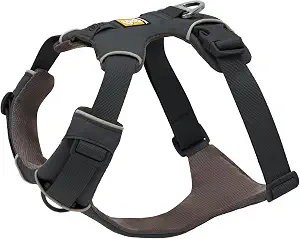 |
| Best Budget Harness A low-cost harness that covers essentials without frills | matilor Step-In Dog Harness Medium |  |
| Best Premium Harness A higher-end harness with superior materials and extras | EzyDog Drive Harness Medium |  |
| Best Lightweight Harness A minimal, low-bulk harness for easy all-day wear | Voyager Step-in Flex Harness Medium |  |
| Best No-Pull Harness Harness designed to reduce pulling and improve leash control | rabbitgoo No Pull Dog Harness Large |  |
| Best Reflective Harness A harness with strong visibility features for near-dark walks | noxgear LightHound Harness Large |  |
| Best Heavy-Duty Harness Built for strong, large, or very active dogs needing toughness | OneTigris Tactical Dog Harness Large |  |
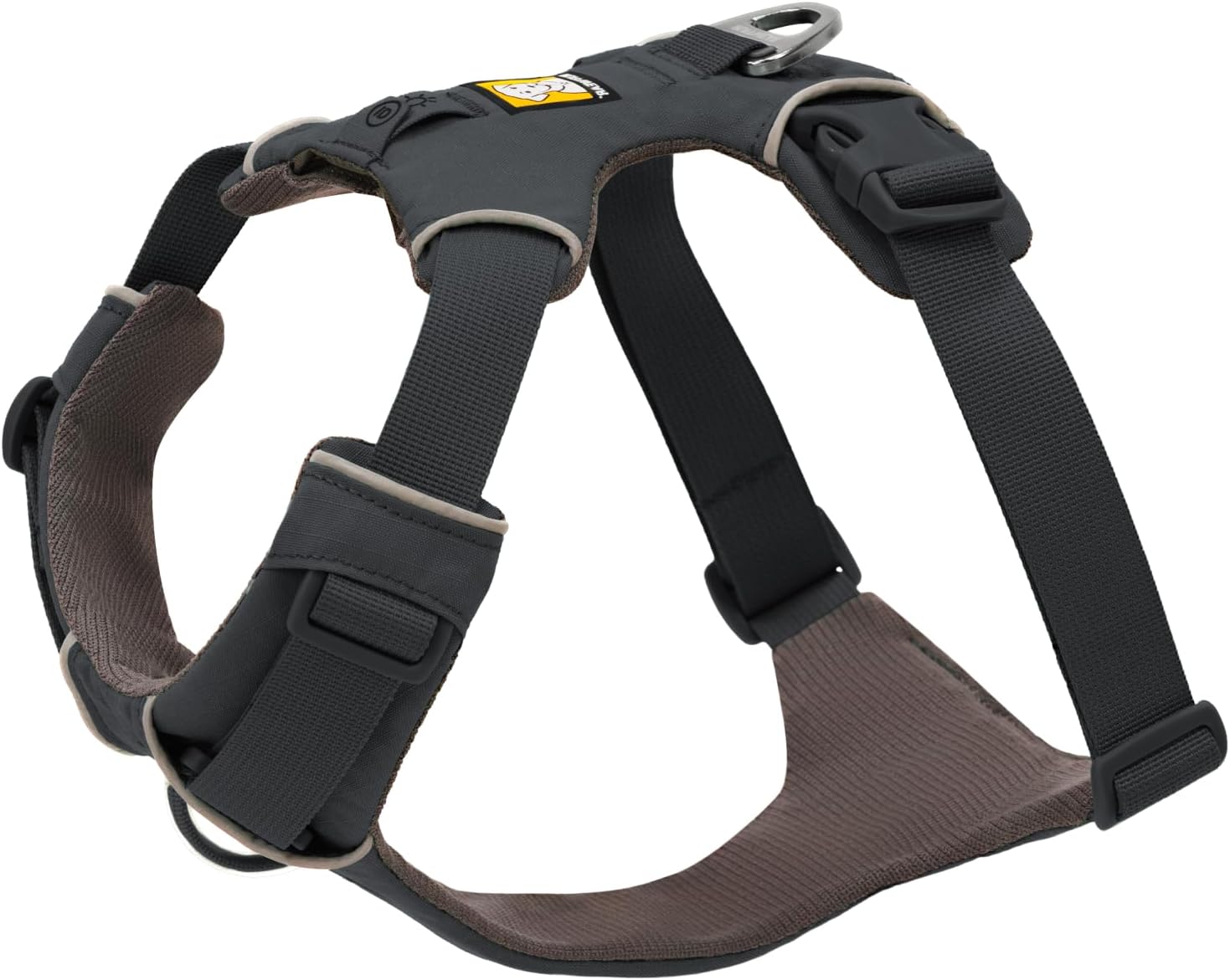
Ruffwear Front Range Dog Harness Medium
Best Overall Harness
| Closure Type | Pull On |
|---|---|
| Material Type | Polyester |
| Adjustment Points | 4 Points |
| Leash Points | Back + Chest (2) |
The Ruffwear Front Range harness is a purpose-built everyday harness that prioritizes a comfortable, secure fit for regular walks, hikes, and outings. It uses closed-cell foam padding across the chest and belly panels to reduce chafing during extended wear, and four points of adjustment plus side-release buckles make it straightforward to dial in a snug fit for a variety of body shapes. Two leash attachment options—an aluminum V-ring on the back and a reinforced chest webbing point—give you flexibility for casual walking or front-clip control when redirecting pullers. Reflective trim and a light-ready loop increase visibility for dawn or dusk use, and an integrated ID pocket is a handy touch. The harness is polyester with hand-wash care and does not include a full-body lift handle, so it is optimized for everyday control rather than heavy lifting or vehicle restraint. Sizing guidance and fit videos help reduce returns, but owners of dogs that need extra rescue-style support may prefer a different model with full-body lift features.
Best for: Dog owners who want a durable, comfortable harness for everyday walks, hikes, and general outdoor use and value an easy-to-fit design with visible safety features.
Less Ideal for: People who need a harness primarily for lifting, vehicle restraint, or heavy-duty rescue-style support should look at harnesses with full-body lift or seatbelt-specific designs.
- Foam-padded chest and belly panels reduce chafing during long wear
- Four points of adjustment and side-release buckles for a customizable, secure fit
- Two leash attachment points (back V-ring and chest webbing) for walking and redirecting
- Reflective trim and light loop improve low-light visibility
- Built-in ID pocket adds convenient tag or information storage
- No full-body lift handle or vehicle-specific restraint features for heavy support or car travel
- Requires hand washing for care rather than machine washable
Verdict: The best overall harness balances comfort, fit adjustability, safety features, and durable construction to suit the widest range of dogs and everyday walks.
matilor Step-In Dog Harness Medium
Best Budget Harness

| Size | Medium (Chest 13.5''-16.5'', Weight 10-15 lb) |
|---|---|
| Material Type | Mesh |
| Closure Type | Buckle |
| Machine Washable | Yes |
| Includes | 1 harness + 1 leash |
This matilor step-in harness is a lightweight, breathable vest-style harness intended to make walks quick and low-stress for small dogs and puppies. The step-in design lets you put it on by guiding the dog's legs through the openings and fastening the chest buckle, which is simpler and less invasive than overhead styles for short-nosed breeds that dislike head handling. The air-mesh construction is soft, quick-dry, and machine washable, helping keep a pug comfortable in warm weather and easy to clean after outdoor play. Safety features include a double D‑ring on the back, a sturdy buckle with a safety lock, and a reflective trim for visibility on evening walks. The harness ships as a two-piece set with a leash that has a foam handle and a 360° swivel hook to reduce tangling. Limitations: the sizing runs small and is focused on smaller breeds, so careful measurement is necessary for stocky or broad-chested pugs, and the vest-style fit will not redirect heavy pulling like a front-clip no-pull harness can.
Best for: Owners of pugs and other small, short-nosed dogs who want a simple, low-stress harness that is easy to put on and comfortable for everyday walks and travel.
Less Ideal for: People with large, strong pullers or owners who need a front-clip training harness for leash-reactive behavior should consider other styles.
- Step-in layout that is quick and low-stress to put on and remove
- Breathable air-mesh fabric that is lightweight and machine washable
- Includes leash with foam handle and 360° swivel hook to reduce tangling
- Safety lock on buckle plus double D-ring for secure leash attachment
- Reflective elements for better night visibility
- Sizing targets small breeds and may not fit broader-chested pugs without careful measuring
- Vest-style design is not optimized to stop strong pulling the way a front-clip no-pull harness is
Verdict: The best budget harness provides reliable fit and basic comfort at a low price for owners prioritizing value over premium features.
EzyDog Drive Harness Medium
Best Premium Harness

| Size | Medium |
|---|---|
| Closure Type | Buckle |
| Dog Breed Size | Large |
| Material Type | Aluminum |
The EzyDog Drive is a purpose-built car harness that prioritizes safety and durability for traveling dogs. It uses vehicle-tested seat belt webbing, reinforced crosslink stitching and aluminum hardware so it connects directly to your car's seat belt and is certified to the US FMVSS 213 crash standard. The molded, padded chest plate and EVA ventilation make longer rides more comfortable, and the dual SR buckle system plus a numbered sizing scheme make initial fitting straightforward and repeatable. Dual steel D-rings let you attach a leash for pit stops without swapping gear. In practical use the harness is best as a travel restraint rather than an everyday walking harness because of its heavier construction and seat-belt integration, and it requires hand washing. If you want a factory-tested solution focused on crash protection and long-term strength, the Drive delivers, though its build is heavier and a bit more involved to fit than simple sport harnesses.
Best for: Owners who want a high-end, travel-focused harness built from premium materials and reinforced hardware to maximize crash protection and longevity during car trips.
Less Ideal for: People who need a lightweight, minimalist harness for daily walks or who prefer machine-washable fabric options.
- FMVSS 213 crash-tested certification for vehicle safety
- Constructed with genuine seat belt webbing and Crosslink reinforced stitching
- Molded padded chest plate with EVA ventilation for ride comfort
- Dual SR buckle closure and numbered sizing for consistent fit
- Dual steel D-rings for leash attachment during stops
- Heavier, more robust construction makes it less suited for daily walking-only use
- Requires hand washing rather than machine laundering
Verdict: The best premium harness delivers top-tier materials, advanced padding and hardware, and refined fit for owners willing to invest in long-term comfort and durability.
Voyager Step-in Flex Harness Medium
Best Lightweight Harness

| Closure Type | Buckle, Double Ring |
|---|---|
| Dog Breed Size | Medium |
| Weight Range | 18lbs-25lbs |
| Material Type | Nylon, Polyester |
| Included Components | 1 x Dog harness |
The Voyager Step-in Flex is a lightweight, step-in vest harness designed for everyday walks and active outings. Dogs step into the padded mesh body, the back buckle secures in seconds, and side straps adjust to fine-tune fit across the chest and girth. The breathable air mesh construction and low mass make it comfortable for warm-weather use and longer walks, while the reflective bands increase visibility on morning or evening trips. Its no-pull design redirects pressure across the chest rather than the neck, which helps reduce tugging without adding bulk. Practical details include quick-dry materials that tolerate wet weather and hand-wash care for easy maintenance. Limitations are its simpler closure system and lighter fabrication, which are well suited to medium, calm to moderately active dogs but may not resist sustained heavy pulling or provide the leash control of a reinforced front-clip working harness.
Best for: Buyers wanting a low-profile, breathable harness for active days and hot-weather walks who prioritize minimal weight and easy on/off for a medium dog.
Less Ideal for: Owners who need a heavy-duty control harness for strong pullers or who prefer reinforced front-clip training systems should consider sturdier alternatives.
- Very lightweight breathable air mesh keeps dogs cooler during activity
- Step-in, quick-clip design makes harnessing fast and low-stress
- Adjustable straps allow a closer, customizable fit across chest and girth
- 3M Scotchlite reflective bands improve visibility in low light conditions
- Quick-dry materials are easy to hand wash and maintain
- Lightweight construction is not intended for strong pullers or heavy-duty restraint
- Hand wash only care may be less convenient than machine-washable options
Verdict: The best lightweight harness is streamlined and low-profile to minimize weight and restriction, ideal for active dogs or hot-weather use.
rabbitgoo No Pull Dog Harness Large
Best No-Pull Harness

| Dog Breed Size | Large |
|---|---|
| Weight Range | 15-45 kg |
| Closure Type | Buckle |
| Material Type | Polyester |
| Size | Large |
The rabbitgoo No Pull Dog Harness is a step‑over vest-style harness built for everyday walks and basic training with medium to large breeds. It uses a front chest clip to help redirect forward motion when a dog lunges and a rear D-ring for casual walking or jogging, plus two metal leash attachments for versatile control. The harness is made from polyester oxford with padded air-mesh lining to reduce chafing and keep dogs cooler during activity, and reflective strips improve visibility in low light. Four adjustable straps and quick-release buckles let you fine-tune the fit, while a top handle gives instant lift or extra control getting in and out of vehicles. Practical limits are its non-chewproof construction and that very strong pullers may need a more specialized training harness or head halter; accurate sizing is important because the vest design can shift on dogs with unusual body shapes. For most owners seeking a comfortable, durable, and easy-to-adjust no-pull option for everyday walks, this covers the essentials well.
Best for: Owners of medium to large active dogs who want a comfortable, easy-to-adjust harness that provides reliable no-pull control for daily walks and light training.
Less Ideal for: People who need a heavy-duty, chewproof restraint or handlers working with extremely strong pullers who require professional training tools.
- Front chest clip redirects forward momentum for basic no-pull control
- Padded air-mesh lining offers breathable comfort and reduces rubbing
- Two metal leash attachments (front and back) for training and everyday use
- Multiple adjustment points and quick-release buckles make fitting and removal fast
- Reflective strips and top handle add safety and short-term lift/control
- Not designed to resist chewing or heavy abrasion
- May not fully stop very strong, sustained pullers without additional training
Verdict: The best no-pull harness uses strategic leash attachment points and design to discourage forward pulling and give owners better control on walks.
noxgear LightHound Harness Large
Best Reflective Harness

| Size | Large |
|---|---|
| Weight Range | 40-95 lbs |
| Material Type | Cordura, Nylon, Silicon |
| Battery | 1 Lithium Polymer battery required |
| Run Time | Up to 12 Hours |
The noxgear LightHound is a wearable illuminated vest-style harness designed to keep dogs visible in low-light conditions. It uses flexible fiber-optic cables and integrated LEDs with eight solid colors and six flashing/fade modes to provide true 360 degree illumination, and a 3M reflective bias adds passive reflectivity. The light module is rechargeable by USB and provides up to 12 hours of run time per charge, and it can be removed so the Cordura nylon harness can be machine washed. The harness is adjustable at the neck and chest, has reinforced stitching and was pull tested to withstand substantial force, and it includes a leash attachment for routine walks. Practical benefits include highly visible night-time walks, easy mode selection with a single button, weather resistance for rain and cold, and straightforward cleaning. Limitations are that the light module must be recharged periodically and the harness should not be submerged for swimming, so you may need to remove the light for water activities.
Best for: Owners who walk their dogs at dawn, dusk, or night and prioritize being seen by drivers and cyclists to reduce risk in low-light conditions.
Less Ideal for: People who need a harness for swimming or continuous wet environments where a removable light would be inconvenient, or buyers who prefer a no-maintenance reflector-only solution.
- Bright fiber-optic LEDs plus 3M reflective material provide 360° visibility in multiple solid and flashing modes
- USB-rechargeable light with up to 12 hours of illumination per charge
- Durable Cordura nylon construction with reinforced stitching and pull-tested strength
- Removable light module allows machine washing of the harness
- Light module is not waterproof for submersion so it must be removed for swimming
- Requires periodic recharging which adds one more maintenance step
Verdict: The best reflective harness includes high-visibility trim or panels and reliable hardware to increase safety during low-light walks and early mornings.
OneTigris Tactical Dog Harness Large
Best Heavy-Duty Harness

| Material Type | Nylon |
|---|---|
| Closure Type | Buckle |
| Dog Breed Size | Large |
| Included Components | Harness |
The OneTigris Tactical Dog Harness is a rugged vest harness intended for large, active dogs that need firm control and modular attachment points. It uses 1000D nylon and reinforced stitching with four quick-release buckles so you can get the harness on and off quickly while keeping adjustments secure. A padded top handle and a front leash attachment provide short‑range control and anti‑pull leverage during training, while side MOLLE straps and large hook‑and‑loop panels let you add ID patches or small pouches for gear. The harness is adjustable at the neck and chest with tri‑glide sliders to tune fit across the size range. Practical benefits include durable materials that resist abrasion and a structured shape that stays in place during walks or hikes. Important limitations are that it is not designed to carry heavy loads via the handle and the manufacturer warns it is not chew or scratch proof, so very destructive dogs may wear it out faster than milder chewers.
Best for: Buyers who need a rugged, control‑focused harness for strong, energetic large dogs and want modular panels to carry ID or small training pouches.
Less Ideal for: Owners looking for a soft, lightweight everyday harness for small breeds or for dogs that habitually chew gear should consider a different, more bite‑resistant option.
- Military‑grade 1000D nylon construction for abrasion resistance and durability
- Multiple attachment options including top handle and front leash ring for control and anti‑pull training
- MOLLE webbing and large hook‑and‑loop panels for ID patches or small pouches
- Four quick‑release buckles and adjustable tri‑glide straps for secure, customizable fit
- Not intended to bear heavy loads from the handle so avoid lifting the dog by the grab strap
- Not chew‑proof or scratch‑proof, so may degrade with heavy chewing or rough use
Verdict: The best heavy-duty harness is made with reinforced stitching, rugged materials, and strong hardware to withstand strong pullers and frequent heavy use.
Choosing the Right Dog Harness: Key Factors to Consider
Fit and Sizing
Correct fit is the most important factor because a poorly fitting harness can rub, restrict movement, or allow a dog to slip free. Measure girth and neck dimensions and compare them to the manufacturer's size range rather than guessing by breed. Look for harness shapes that distribute pressure across the chest and shoulders instead of concentrating it on the throat.
Adjustable straps are valuable because they let you fine-tune the fit as a dog grows, gains, or loses weight. Consider harnesses with multiple adjustment points so you can adapt the fit around the chest and behind the front legs independently. A harness that fits well should allow two fingers between strap and dog at key contact points for comfort and security.
Attachment Points and Control
Where the leash attaches affects how much control you have and how your dog moves. Front-clip attachments help reduce pulling by redirecting the dog's momentum, which is useful during training. Back-clip attachments are simpler for calm walkers and everyday use because they allow more natural movement, but they offer less anti-pull leverage.
Some harnesses have both front and back rings or a tethering option that lets you switch between control modes. Think about your usual walking context and whether you need a harness optimized for training, everyday walks, hiking, or a combination of activities.
Adjustability and Closure Type
Easy-to-use closures and multiple adjustment points make putting the harness on and taking it off faster and less stressful. Quick-release buckles can speed up application, but they must be sturdy and well-placed to avoid accidental opening. Step-in or overhead designs each have pros and cons; step-in styles are often quicker for dogs that tolerate stepping into gear, while overhead harnesses can be faster for dogs that tolerate being lifted over the shoulders.
Look for straps that stay put once adjusted and hardware that resists bending or cracking. The ideal closure balances convenience with a secure hold that will not loosen with movement or play.
Material and Breathability
Material choices affect comfort, durability, and temperature regulation. Breathable mesh and soft padding reduce chafing and overheating during warm-weather walks or high-activity sessions. Heavy-duty webbing and reinforced stitching improve longevity for active dogs and those that spend lots of time outdoors.
Also consider how the harness behaves when wet. Quick-drying fabrics are easier to clean and less likely to retain odor. Reflective trim or high-visibility panels can be useful for early morning or evening walks but should not replace good fit and secure attachments.
Padding and Comfort
Padding around the chest, shoulders, and belly can prevent pressure points and rubbing on longer outings. Thicker padding helps distribute force from sudden tugs, which is important for dogs that pull intermittently. However, excessive padding can add bulk and heat, so balance cushioning with breathable construction for active or warm-weather use.
Pay attention to the placement of padding. Areas that contact sensitive skin or fur-bearing seams need soft, flexible materials to avoid chafing. Removable or machine-washable padding is an added convenience for maintenance.
Maintenance and Durability
A harness that is easy to clean and resists wear will remain safe and comfortable longer. Look for materials that withstand regular washing without losing shape or weakening webbing. Metal or reinforced D-rings and robust stitching points reduce the risk of failure over time.
Consider whether the harness requires hand-washing or can go in a machine on a gentle cycle. Fast-drying fabrics minimize downtime between uses and reduce the chance of mildew or lingering odors after outdoor adventures.
Which Harness Style Is Best for a Dog That Pulls?
If your dog regularly pulls, a harness with a front-clip attachment gives you more control by turning a forward tug into a lateral cue that helps steer the dog back toward you. Using a front-clip harness alongside consistent leash-training techniques makes it easier to reduce pulling over time.
Expect some tradeoffs: front-clip harnesses can feel less natural to dogs initially, and they do not eliminate the need for training. Combining a front-clip harness with positive reinforcement and short practice sessions yields the best results.
- Front-clip for training and redirecting pulls
- Back-clip for calm walkers and freer movement
- Dual-clip harnesses give flexibility across situations
How Do I Size a Harness Correctly?
Measure the widest part of your dog's chest (girth) and note neck circumference. Compare those measurements to a manufacturer's size chart rather than relying on breed or weight alone. If your dog is between sizes, choose based on body shape and adjustability; wide-chested dogs usually need more girth room, while deep-chested but narrow dogs may fit a smaller cut.
After fitting, check that straps sit flat and do not twist, and that you can fit two fingers between strap and skin at key contact points. Walk the dog briefly and recheck the fit, since movement can reveal pinching or slipping that was not obvious when standing still.
- Measure girth at the ribcage for most accurate sizing
- Confirm fit during movement, not just at rest
Can a Harness Help with Hiking and Outdoor Activities?
Yes. For hikes and outdoor adventures, prioritize harnesses with durable webbing, reinforced attachment points, and comfortable padding that will not trap heat. Look for models that offer at least one secure back ring for tethering during brief holds and a handle for extra control on steep terrain or to assist a dog over obstacles.
Also consider visibility and packability. Reflective trim helps in low light, and harnesses that pack compactly are easier to carry when not in use. Quick-drying fabrics are valuable if water crossings are likely.
- Handle on the harness aids control on difficult terrain
- Reinforced rings and robust stitching for rugged use
- Breathable materials reduce overheating during activity
What Safety Features Matter Most?
Secure hardware, like solid buckles and reinforced D-rings, is the foundation of a safe harness. Weak or brittle plastic can fail under stress, so choose designs with well-anchored attachment points. Buckles should be easy to operate but not so loose that they can open unintentionally during play or a tug.
Reflective trim or high-visibility colors improve safety in low-light conditions, but these are supplemental to a harness that fits correctly and uses strong attachment points. Regularly inspect stitching and hardware for wear, particularly if your dog is active or spends a lot of time outdoors.
- Reinforced attachment points reduce failure risk
- Sturdy, well-placed buckles prevent accidental release
- Visibility features help in low light but do not replace fit checks
How to Transition a Dog to Wearing a Harness
Introduce the harness gradually using short, positive sessions. Let your dog sniff the harness, reward calm behavior, and place the harness on for only a few moments at first. Gradually increase wear time and pair harness sessions with walks or play so the harness becomes associated with positive experiences.
If a dog resists, check fit and weight distribution; sometimes repositioning padding or adjusting straps reduces discomfort. Patience and consistent rewards are key—avoid forcing the harness on repeatedly, because that can create a negative association.
- Start with short, rewarded sessions
- Increase wear time progressively
- Check and adjust fit if the dog shows discomfort
Are There Harness Features That Make Everyday Use Easier?
Quick-release buckles, multiple adjustment points, and a simple step-in or overhead design can shave minutes off daily routines. A grab handle on the back can be very practical for lifting or steadying your dog during vet visits or crowded situations. Machine-washable materials and quick-drying fabrics reduce maintenance time between outings.
Consider harnesses with modular features, such as removable pads or replaceable straps, if you want the flexibility to swap parts after heavy use. Small conveniences add up when you use the harness every day.
- Grab handle for quick control
- Machine-washable or quick-drying materials
- Multiple adjustments for repeatable fit
How We Chose the Best Dog Harness
We focused on features and qualities that directly affect safety, comfort, and everyday usability when assembling this list. Key evaluation criteria included: fit and sizing range to ensure a close, non-restrictive fit across breeds and body shapes; adjustability and closure design to simplify on-off use and reduce pressure points; durability of materials and stitching to stand up to regular outdoor use; leash attachment options and placement to support control, training, or specific behavior needs; padding and breathability to keep dogs comfortable during long walks or active play; and cleaning and maintenance ease for owners. We prioritized products that delivered clear, measurable benefits in those areas based on available specifications and typical user priorities. Items were excluded if they lacked basic size guidance, had limited or non-adjustable fit, or used low-quality fastenings that could fail under normal use. Our picks favor harnesses that give owners practical options for common walking and training scenarios rather than niche or novelty features.
Our full evaluation process is outlined in our review methodology.
FAQ
Will a harness stop my dog from pulling?
A harness with a front-clip attachment can reduce pulling by redirecting the dog's momentum, but it does not replace consistent training. Combining a front-clip harness with positive reinforcement and leash-work yields better long-term results.
How often should I check my dog's harness for wear?
Inspect the harness regularly, ideally before each walk for active dogs, and at least monthly for occasional use. Look for frayed webbing, loose stitching, and any hardware that wiggles or shows cracks.
Is a padded harness better than a webbing-only harness?
Padded harnesses provide extra comfort and reduce chafing on long walks, while webbing-only designs tend to be lighter and dry faster. Choose based on activity level and climate: padded for comfort during long outings, simpler webbing for water or hot-weather use.
Can I leave a harness on my dog all day?
It is generally better to remove a harness when the dog is unattended for long periods, as straps can rub or catch and the dog might get entangled. For short supervised intervals, leaving a well-fitted harness on is usually fine.
How do I know if my harness is the right size after a few weeks?
Re-measure girth and neck periodically, especially for growing dogs or those with changing weight. If you notice rubbing, slipping, or difficulty fitting two fingers under straps, readjust or try a different size to maintain a secure, comfortable fit.
Final Verdict
Prioritize fit, secure attachment points, and the right clip placement for how you walk and train your dog. Decide whether you need a front-clip option for pulling or a simpler back-clip setup for everyday calm walks, and balance padding with breathability for the climates and activities you do most. Ultimately, a harness that fits well, uses strong hardware, and matches your routine will deliver the best combination of safety and comfort.

