

If you and your dog spend time on trails or logging miles around town, the right harness can make every outing safer and more comfortable. A running and hiking harness should keep your dog secure without restricting movement, resist abrasion from brush and rocks, and offer control during sudden pulls or encounters with wildlife. This guide shortlists the top harnesses designed for active dogs and evaluates them by fit, durability, ventilation, and features that matter on the trail. Read on to find options suited to different body shapes and activity levels, plus practical tips for fit and care before you head out.
Top Picks at a Glance
| Best Overall Harness A versatile, well-rounded harness that fits most running and hiking dogs | Ruffwear Front Range Dog Harness Medium |  |
| Best Budget Harness A low-cost harness that still provides safe, reliable performance on trails | PHOEPET No Pull Dog Harness Medium |  |
| Best Premium Harness A higher-end harness with advanced materials and refined fit details | Non-stop dogwear Freemotion Harness 5.0 Size 6 |  |
| Best Lightweight Harness A minimal, low-bulk harness designed for speed and unrestricted movement | Ruffwear Hi & Light Dog Harness Medium |  |
| Best Heavy-Duty Harness A rugged, reinforced harness built for tough terrain and powerful dogs | Wolfgang Heavy Duty Dog Harness Medium |  |
| Best Reflective Harness A harness with high-visibility reflective trim for low-light safety | tobeDRI No Pull Dog Harness Large |  |
| Best No-Pull Harness A control-focused harness that reduces pulling without causing discomfort | PetSafe Easy Walk Harness Medium |  |
Ruffwear Front Range Dog Harness Medium
Best Overall Harness

| Closure Type | Pull On |
|---|---|
| Material Type | Polyester |
| Adjustment Points | 4 Points |
| Leash Attachment | Back V-ring + Chest webbing |
The Ruffwear Front Range harness is a daily-use vest that pairs padded comfort with practical control features. It uses closed-cell foam in the chest and belly panels for cushioning during long walks or hikes, and four adjustment points plus side-release buckles let you dial in a secure fit across many body shapes. Two leash attachment options — an aluminum V-ring on the back and a reinforced chest/webbing point — give you the choice of standard rear lead walking or front-clip redirection for dogs that pull. Reflective trim and a light loop increase visibility for low-light outings, and a small ID pocket adds convenience. The harness is hand-wash only and constructed from polyester, so it is durable but requires occasional care to stay clean. The design favors everyday comfort and control rather than heavy-duty lifting or vehicle restraint, so buyers wanting rescue-style support or seatbelt-certified car anchors may need a different model. For most owners looking for an adjustable, comfortable harness for regular walks and hikes, this balances fit, durability, and practical features very well.
Best for: Owners who want a comfortable, adjustable harness for everyday walks, hikes, and general outdoor use and prioritize a secure fit and visibility over heavy-duty rescue features.
Less Ideal for: People who need a harness specifically for vehicle restraint, full-body lifting, or intensive working/rescue applications should consider purpose-built alternatives.
- Foam-padded chest and belly panels provide cushioning to reduce chafing on long outings
- Four points of adjustment and side-release buckles allow a customizable, secure fit
- Two leash attachment points (back aluminum V-ring and reinforced chest webbing) offer both standard and front-clip control
- Reflective trim and a dedicated light loop improve visibility in low-light conditions
- Hand wash only care may be less convenient than machine-washable options
- Not designed for heavy vehicle restraint or full-body lifting
Verdict: The best overall harness balances comfort, secure fit, mobility, and breathable materials for most runners and hikers without specialty trade-offs.
PHOEPET No Pull Dog Harness Medium
Best Budget Harness

| Size | Medium |
|---|---|
| Closure Type | Buckle |
| Material Type | Oxford Cloth Nylon Fabric |
| Care | Hand Wash Only |
The PHOEPET No Pull Dog Harness is a vest-style harness designed to reduce pulling by offering both a front chest clip and a back clip, plus a soft training handle for close control. It is typically put on using three quick-release buckles so you do not have to pull it over the dog's head, and the adjustable straps let you fine-tune fit for medium dogs. Reflective trim improves visibility on low-light walks and two metal leash rings give you the option to prioritize steering with the front clip or casual walks with the back clip. The harness is made from oxford cloth and nylon with POM buckles and is hand-washable, which keeps it lightweight and easy to clean but means the fabric and buckles are simpler than heavy-duty tactical gear. Practical limits include a medium sizing focus that requires checking measurements for stocky or short-neck breeds and a simpler buckle and strap system that may not suit extremely strong pullers without training. For French bulldogs, the front clip plus padded handle make managing short, powerful lunges easier while keeping control comfortable for the handler.
Best for: Owners who need stronger steering and pull reduction on daily walks and want a harness that is quick to put on, visible in low light, and easy to control at close range.
Less Ideal for: Handlers who require heavy-duty, service-grade hardware or precise custom fit for unusually shaped dogs should consider sturdier or specialty harnesses.
- Front and back metal leash attachment points for reduced pulling and steering control
- Three quick-release buckles allow easy on/off without going over the head
- Reflective material improves visibility on evening or early-morning walks
- Soft top handle gives short-distance control and helps lift or steady the dog
- Lightweight, hand-washable oxford nylon construction is easy to maintain
- Medium sizing may not accommodate very stocky or very short-necked French Bulldogs without careful measuring
- Materials and buckles are lightweight and not intended for heavy-duty or working-dog demands
Verdict: The best budget harness gives owners a dependable, comfortable, and secure option for running and hiking at a lower price without sacrificing essential safety features.
Non-stop dogwear Freemotion Harness 5.0 Size 6
Best Premium Harness

| Material Type | Nylon |
|---|---|
| Closure Type | Buckle |
| Dog Breed Size | Large |
| Size | 6 |
| Care | Machine Wash (max 30 °C) |
The Non-stop dogwear Freemotion Harness 5.0 is a purpose-built pulling harness for active dogs and handlers who do running, biking, or ski-joring. It uses a Y-shaped neck design and side pull attachment to keep the shoulders clear so the dog can move naturally while pulling, and padded neck openings add stability during motion. Built from nylon with reflective piping and a rear reflective loop, it improves low-light visibility and can accept a small safety light for night outings. The harness is adjustable with buckles and hook-and-loop closures so you can fine-tune fit, and the manufacturer recommends measuring against the size chart for the correct size. Practical care is simple: rinse off after use and machine wash at 30°C when needed, but do not tumble dry. Limitations include that leash attachment should not be on the reflective loop because it is not load-bearing, and the harness focuses on pulling and sports rather than daily leash control or no-pull correction. For owners who prioritize durable, sport-oriented construction and comfort on frequent long runs or trail sessions, this harness performs well; casual walkers may find it more specialized than necessary.
Best for: Owners who do frequent running, biking, or dog-powered sports and want a rugged, sport-oriented harness built for comfort and longevity during heavy outdoor use.
Less Ideal for: People looking primarily for a simple walk-and-traffic control harness or a no-pull training solution should consider different styles.
- Ergonomic Y-shaped neck keeps shoulders free for natural running stride
- Side-pull design distributes force evenly for efficient pulling
- Padded neck openings and adjustable straps for a secure, comfortable fit during activity
- 3M reflective piping and loop improve visibility in low light
- Machine-washable nylon construction made for regular outdoor use
- Reflective loop is not load-bearing so you cannot use it as the main leash attachment
- Specialized pulling design is less suited to basic no-pull control or everyday casual walks
Verdict: The best premium harness is for owners willing to pay more for superior construction, advanced fabrics, enhanced comfort, and longevity during frequent outdoor use.
Ruffwear Hi & Light Dog Harness Medium
Best Lightweight Harness

| Material Type | Polyester |
|---|---|
| Closure Type | Buckle |
| Adjust Points | 4 Points |
| Leash Points | Front and Back (2) |
The Ruffwear Hi & Light is a featherlight, low-profile harness aimed at active dogs and runners who want minimal bulk without losing control. It secures with four adjustment points and a buckle closure so you can dial in a snug fit that resists slipping during fast movement, and it includes both a reinforced front leash attachment and an aluminum V-ring on the back for training or steadying control. The harness is built from lightweight polyester with a debris-resistant liner and reflective trim, which keeps weight down while adding visibility on early-morning or evening runs. An integrated ID pocket is a practical touch for longer outings. Because it is minimalist, the harness offers limited lift-assist and no heavy-duty padding, so it favors dogs that do well with a close-to-body fit rather than handlers who need maximum support for strong pullers or lifting. Sizing guidance and fit videos help get an accurate fit for long-distance use where chafing and shifting matter most.
Best for: Runners and active owners who prioritize minimal weight and low bulk so their dog can move freely on long-distance or high-speed outings.
Less Ideal for: People who need a harness that provides heavy-duty lift, extensive padding, or maximum control for very strong or reactive dogs should consider a more supportive model.
- Very low weight and slim profile for endurance running and fast activity
- Multiple adjustment points (four) for a secure, escape-resistant fit
- Two leash attachment points (front reinforced and rear aluminum V-ring) for training versatility
- Debris-resistant liner and reflective trim improve comfort and visibility on trails
- Integrated ID pocket provides on-run identification storage
- Minimal padding and no lift-assist so it is not suited for handlers needing lifting support
- Designed for lighter, close-fit use and may not control very strong pullers effectively
Verdict: The best lightweight harness suits active dogs and runners who prioritize minimal weight and maximum freedom of movement on long runs or hikes.
Wolfgang Heavy Duty Dog Harness Medium
Best Heavy-Duty Harness

| Material Type | Polyester |
|---|---|
| Closure Type | Buckle |
| Weight Range | 1-800 lbs |
| Product Care Instructions | Hand Wash Only |
This Wolfgang heavy-duty harness is built for active dogs that pull and for owners who take their pets running or hiking. It uses abrasion-resistant polyester webbing, reinforced stitching, and welded powder-coated D-rings to provide a secure leash attachment that the brand rates for over 800 pounds of pull strength. The harness fastens with quick-release nylon buckles and offers multiple adjustment points so you can fine-tune fit for comfort and control during longer outings. UV- and stain-resistant materials help it stay serviceable on trails and in wet weather, and the low weight and simple buckle closure make it easy to put on and remove. Expect a reliable, rugged harness that prioritizes strength and durability, though the basic halter-style design does not include extra padding or reflective trim, so you may want added visibility or cushioning for night runs or very long hikes.
Best for: Active owners who prioritize a rugged, high-strength harness for hiking, trail running, or training strong pullers and who value long-lasting construction over extra comfort features.
Less Ideal for: Owners who need padded shoulder or chest protection, integrated reflectivity, or a specialized no-pull front-clip design should consider alternatives built for those needs.
- Heavy-duty polyester webbing and reinforced stitching for long-term durability
- Welded, powder-coated steel D-ring offers a secure leash attachment rated for high pull strength
- Adjustable fit with multiple sizing options to tailor comfort and control
- UV- and stain-resistant materials suitable for outdoor use
- Quick-release nylon buckles make it easy to put on and remove
- No built-in padding for extra comfort on long runs or against heavy pulling
- Lacks reflective elements for low-light visibility
Verdict: The best heavy-duty harness is built with stronger webbing, reinforced hardware, and durable stitching to handle strong pullers and rugged outdoor conditions.
tobeDRI No Pull Dog Harness Large
Best Reflective Harness
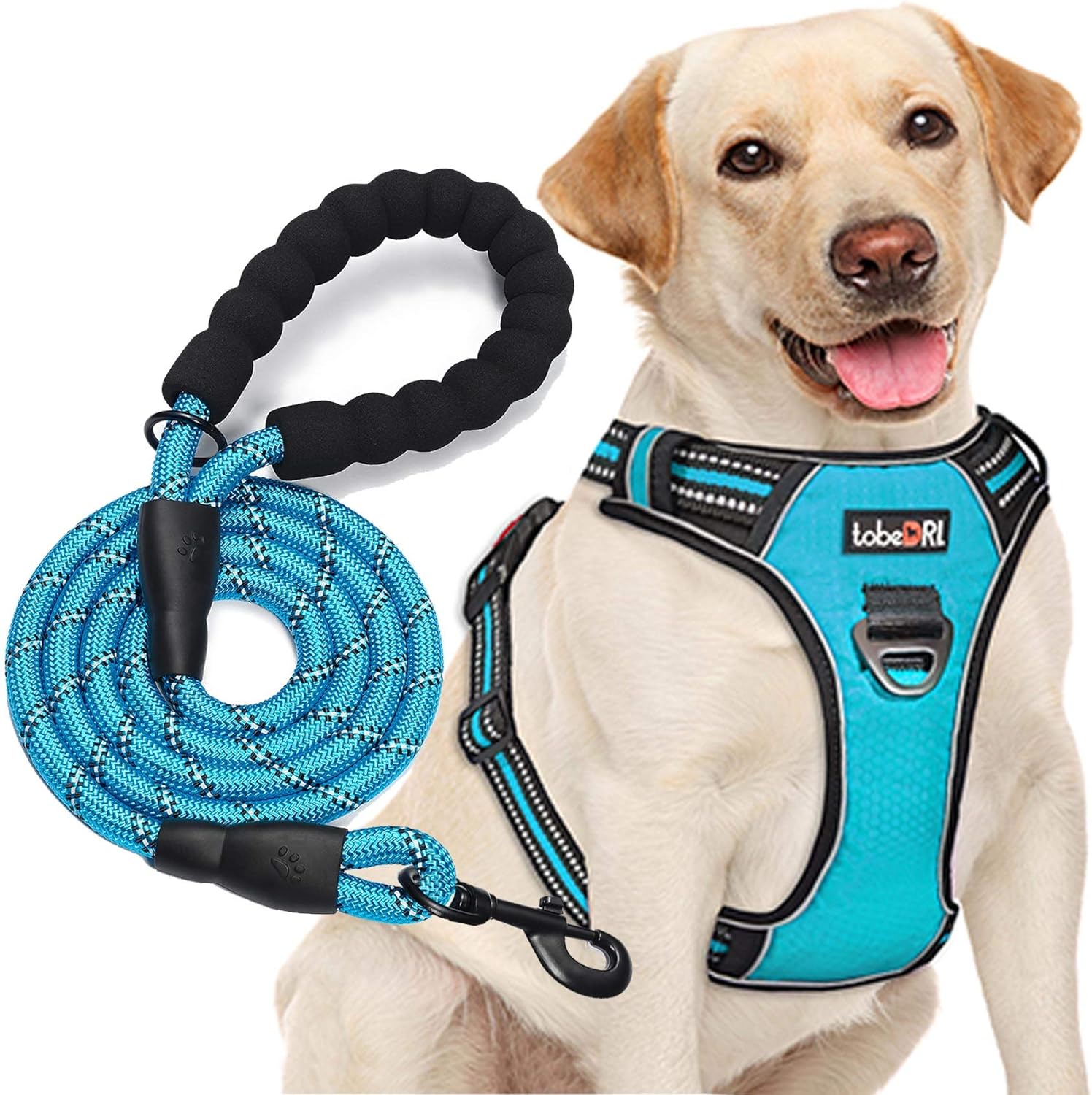
| Material Type | Neoprene, Nylon, Plastic, Polyester |
|---|---|
| Closure Type | Buckle |
| Dog Breed Size | Large |
| Included Components | dog leash |
This tobeDRI harness is built for everyday walks with large dogs and emphasizes control and visibility. It uses two metal delta rings—one front clip to discourage pulling and one back clip for relaxed walking—so you can switch attachment points depending on training or leash-walking needs. The harness fastens with quick snap buckles that include a locking feature to reduce accidental release, and four adjusters let you fine-tune fit around the neck and chest. Materials combine breathable mesh and high-density nylon oxford with neoprene padding for comfort, and reflective stitching improves visibility during low-light walks. It is machine washable and comes with a heavy-duty 5ft leash, while metal hardware is described as rust-proof. Limitations are that fit depends on accurate sizing for large breeds and the harness does not list heavy-duty reinforcement ratings for very strong pullers, so very powerful dogs may still require a dedicated training system or harness rated for high loads.
Best for: Owners of medium to large dogs who prioritize improved visibility and a no-pull option for dawn, dusk, or night walks and want a comfortable, adjustable harness for regular outdoor use.
Less Ideal for: People looking for a harness with a certified load or professional-grade training hardware for very strong pullers should consider purpose-built training harnesses instead.
- Front and back metal delta rings let you switch between no-pull control and relaxed walking
- Reflective stitching increases visibility for dawn, dusk, and nighttime walks
- Neoprene padding and breathable mesh improve comfort for long wear
- Locking snap buckles and multiple adjusters provide a secure, customized fit
- Machine washable with rust-proof metal hardware for easy maintenance
- Sizing must be accurate for large breeds to ensure effectiveness
- Not specified or rated for extreme pulling forces from very powerful dogs
Verdict: The best reflective harness enhances visibility for early-morning or evening runs and hikes, helping keep dogs and owners safer in low-light conditions.
PetSafe Easy Walk Harness Medium
Best No-Pull Harness

| Material Type | Nylon |
|---|---|
| Weight Range | 20-50 lbs (9-23 kg) |
| Closure Type | Snap |
| Size | Medium |
The PetSafe Easy Walk Harness is a straightforward front-clip harness designed to reduce pulling by redirecting force to the dog's shoulders instead of the neck. It uses a patented martingale loop on the chest strap so that when a dog lunges the loop tightens slightly and helps steer the dog toward the handler, making it useful for training walks and everyday control. The harness is lightweight with relatively low coverage, which keeps dogs cooler and improves breathability on longer outings, and the nylon construction and metal sliders make it durable for frequent use. Fit is simplified by a contrasting belly strap and quick-snap closure, though accurate measuring is important since the system relies on a snug fit to function correctly. Limitations include minimal padding for dogs sensitive to strap pressure and a design that primarily addresses leash manners rather than providing heavy-duty restraint for very strong or reactive dogs. For owners focused on consistent training and reliable no-pull performance, this harness balances simplicity and durability well.
Best for: Owners who want a durable, training-focused no-pull harness to improve leash manners and maintain everyday control during walks.
Less Ideal for: People needing a heavily padded or tactical restraint for very strong, reactive, or frequently escaping dogs should consider purpose-built control harnesses instead.
- Front-chest martingale loop redirects pulling without putting pressure on the neck
- Lightweight, low-coverage design improves breathability for active dogs
- Nylon construction with metal adjusters is durable for regular walks
- Quick-snap shoulder strap and contrasting belly strap make fitting fast and intuitive
- Minimal padding may be uncomfortable for dogs that dislike direct strap pressure
- Front-clip design reduces pulling but is not a substitute for a heavy-duty control harness for very strong dogs
Verdict: The best no-pull harness is designed to discourage pulling with thoughtful control points and padding so owners can manage leash manners during active outings without hurting the dog.
Choosing the Right Dog Harness Running Hiking: Key Factors to Consider
Fit and Adjustability
A proper fit is the single most important factor for a running and hiking harness. A harness that fits well stays put during high-energy activity, prevents chafing, and distributes force away from the throat and spine. Look for multiple adjustment points—typically at the neck, chest, and sometimes the belly—so you can fine-tune the fit for your dog's unique body shape.
Adjustment tolerance matters because a harness that is tight in one position but loose in another will rub or shift when your dog runs. Check that straps remain secure under load and that buckles sit where they will not press into the dog during movement. A snug, stable fit also reduces the risk of the dog wriggling free on narrow trails or during encounters with wildlife.
Material Durability and Abrasion Resistance
Running and hiking subjects gear to dirt, rocks, branches, and frequent contact with gravel and brush. Durable webbing and reinforced stitching prevent premature wear and failure. Materials like tightly woven nylon or polyester webbing with protective edge bindings help the harness resist cuts and fraying.
Hardware quality is part of durability. Look for corrosion-resistant metal or high-strength polymer buckles and D-rings that can handle dynamic loads. Reinforced attachment points and double-stitched seams at high-stress areas extend service life on rough trails.
Comfort and Padding Placement
Comfort on long runs or hikes depends on where padding is applied and how pressure is distributed. Padding across the chest and belly can prevent digging and chafing, but excessive bulk can trap heat or rub against the front legs. Well-placed, low-profile padding cushions contact points while preserving freedom of movement.
The contact surface should be smooth and shaped to match your dog's anatomy. Breathable padding materials and mesh panels help manage sweat and reduce hotspots on long outings. Properly designed padding reduces the chance of raw spots developing after repeated use.
Leash Attachment and Control Options
Different activities and dog behaviors call for specific leash attachment points. A front-clip attachment helps redirect pulling and offers more steering control during runs, while a back-clip is convenient for calm walking and quick transitions. Some harnesses provide both clips or a separate handle for close control on technical trail sections.
Consider whether you need a reinforced top handle for assisting your dog over obstacles or for short-term restraint. Attachment hardware should be placed where it does not twist straps or alter the harness fit under load. Ease of clipping and unclipping a leash while on the trail is also a practical factor.
Breathability and Weight
Lightweight construction reduces fatigue for both you and your dog, but it must be balanced with durability. Breathable panels and low-mass materials help keep your dog cooler during sustained aerobic activity. Mesh panels, perforated foam, or open-frame designs increase airflow without compromising structure.
Overly heavy harnesses can hinder gait and add strain on long outings, especially for small or lean breeds. Aim for a harness that feels minimal on the dog while still offering the necessary support and hardware for safety.
Visibility and Trail Practicality
Visibility features such as reflective trim or attachment points for small lights improve safety during low-light runs or dawn and dusk hikes. Bright accent colors can also help you spot your dog quickly when the trail turns dense. Practical design elements include grab handles, easy-to-clean surfaces, and low-profile buckles that do not catch on brush.
Think about how the harness performs day-to-day: can mud and debris be rinsed away, do fasteners resist dirt buildup, and does the harness stay functional after repeated exposure to water and grit? These practical considerations affect how reliable the harness is over many outings.
How Do I Measure My Dog for a Running and Hiking Harness?
Measure the widest part of your dog's chest behind the front legs and the circumference of the neck at the base. Use a soft tape measure and allow space for two fingers between the tape and the dog for a comfortable snug fit. For some harness designs, a girth plus an estimate of body length helps select the correct size.
After selecting a size, adjust all straps so the harness sits stable without restricting shoulder movement. Test fit by letting your dog move and by simulating a quick tug on a leash to see if the harness shifts or tightens into sensitive areas.
- Measure chest girth and neck circumference accurately.
- Allow a two-finger clearance for comfort.
- Confirm fit by observing movement and simulating leash pressure.
Should I Choose a Front-clip, Back-clip, or Dual-clip Harness for Active Use?
Front-clip attachments help discourage pulling by redirecting the dog's forward momentum and giving you more steering control, which can be useful on busy trails or during training runs. Back clips are convenient for easy leash attachment and typically put less strain on the harness structure during steady running.
Dual-clip harnesses combine both options and are versatile for owners who switch between training runs and relaxed hikes. Consider whether you need a handle near the back for lifting or helping your dog over obstacles; this feature can be handy on technical terrain.
- Front-clip: better for pullers and steering.
- Back-clip: simple and streamlined for steady runs.
- Dual-clip: most versatile for mixed activities.
How Do I Prevent Chafing and Hotspots on Long Outings?
Prevent chafing by ensuring the harness fits correctly and that padding sits evenly against the chest and belly. Grooming the contact areas and keeping them free of trapped dirt or moisture reduces friction. For dogs that sweat a lot, choose a harness with breathable mesh or moisture-wicking padding.
Check skin under the harness regularly on long hikes and after multi-day trips. If you notice redness, adjust strap positions or consider protective balm on repeat friction points. Rotating between two harnesses can also help reduce wear on the same spot of skin.
- Keep contact areas clean and dry.
- Use breathable materials and well-placed padding.
- Inspect skin regularly and shift straps if irritation appears.
Can a Harness Double as a Pack for Carrying Small Loads?
Some running and hiking harnesses are designed to accept lightweight saddlebags or modular pockets, allowing dogs to carry essentials like water, collapsible bowls, or first-aid items. If you plan to add load, ensure the harness has reinforced attachment points and that weight is balanced evenly between sides.
Avoid overloading. Even strong harnesses can alter gait and increase fatigue when carrying substantial weight. As a general guideline, small loads for short stretches can be fine, but test with gradual increases in training before trusting the harness on longer trips.
- Use only harnesses rated for load carrying and attach weight evenly.
- Start with light loads and monitor your dog's gait and comfort.
- Avoid adding weight that exceeds a small percentage of the dog's body mass.
How Should I Care for a Harness After Muddy or Wet Hikes?
Rinse off mud and debris as soon as possible, using fresh water to prevent grit from abrading the webbing. For more thorough cleaning, use mild soap and hand wash or a gentle machine cycle if the manufacturer's materials allow. Air dry completely before storing to prevent mildew and hardware corrosion.
Inspect buckles and stitching after heavy use. Replace a harness if straps show significant fraying or if hardware fails to lock securely. Regular maintenance extends the life of the harness and keeps it reliable on future outings.
- Rinse mud away promptly and use mild detergent for deeper cleaning.
- Air dry completely before storing.
- Check hardware and stitching regularly for wear.
What Safety Tips Should I Follow when Running or Hiking with a Harnessed Dog?
Keep your dog leashed on shared trails and use a harness with secure attachment points to reduce the chance of escape. Carry basic first-aid items and know how to safely help your dog over difficult obstacles with a handle or supportive lift if needed. Pay attention to temperature and pace to avoid overheating during strenuous runs.
Carry identification and consider reflective trim or a small light for low-light conditions. Be mindful of local wildlife and trail etiquette; a well-fitted harness gives you control to manage encounters and keep both you and your dog safe.
- Always secure leash attachments and carry identification.
- Monitor temperature and pace to prevent overheating.
- Use reflective elements for dawn or dusk outings.
How We Chose the Best Dog Harness Running Hiking
We focused on features that directly affect safety, comfort, and longevity for active use. Primary evaluation criteria included secure fit and adjustability to accommodate different dog shapes; material durability and abrasion resistance for repeated exposure to brush and rocky terrain; breathability and padding placement to reduce chafing on long runs and hikes; leash attachment options and control features for handling sudden movement; and weight and packability for multi-hour outings. We also considered ease of cleaning and hardware quality, since metal or reinforced polymer buckles and reinforced stitching matter on rugged routes. Products were excluded if they lacked meaningful adjustment, used thin or non-breathable webbing, or showed inconsistent sizing options that make a secure fit unlikely. We prioritized harnesses with clear size guidance and user-adjustable points. The final shortlist favors designs that balance control with comfort rather than purely aesthetic features. Editorial judgment emphasized real-world durability and practical details that matter when running or hiking with a dog.
Our full evaluation process is outlined in our review methodology.
FAQ
How tight should a running and hiking harness be?
A harness should be snug but not restrictive. You should be able to fit two fingers between the strap and your dog's body. Check movement and breathing with the harness on, and simulate leash pressure to ensure the harness does not shift into sensitive areas.
Can dogs wear the same harness for both running and hiking?
Often yes. Many harnesses that provide a secure fit, breathable materials, and durable hardware are suitable for both activities. Choose a model with versatile attachment points and comfortable padding to handle the demands of both running and trail use.
Is a handle on the harness necessary for hiking?
A handle is not always necessary but can be very useful on technical trails for quickly supporting or lifting your dog. It also helps with close control in tight spots. If you frequently encounter steep or rough terrain, opt for a harness with a reinforced top handle.
How do I know if a harness is too heavy for my dog?
A harness is likely too heavy if it noticeably alters your dog's gait, causes early fatigue, or seems cumbersome during normal movement. Lightweight designs with minimal but durable hardware are best for long-distance activity, especially for smaller or lean breeds.
Can a harness prevent pulling while running?
A front-clip harness can reduce forward pulling by steering the dog and discouraging momentum-driven lunges, but effectiveness varies by training and individual behavior. Harness design helps with control, but consistent training remains important for long-term pulling issues.
Final Verdict
Prioritize a harness that fits securely, distributes pressure comfortably, and uses durable materials suited to repeated exposure on trails. Think about the activities you do most—steady miles, technical hikes, or mixed sessions—and choose features that address those needs: breathable padding for long runs, reinforced hardware for rugged terrain, and attachment options for control. Accept some tradeoffs between weight and durability. A lighter harness improves performance on long runs but must still offer reliable buckles and stitching. Focus on fit and adjustability first; a well-adjusted harness will make the biggest difference in comfort and safety for active outings.

