

If you walk a small dog that tends to pull, the right harness makes everyday outings safer and more comfortable for both of you. A harness designed for small pullers redistributes leash pressure away from the neck, offers better steering, and reduces the risk of injury on sudden tugs. In this guide we shortlisted the top options for small dogs that pull and focused on fit, leash control, and comfort under real-world use. Below you will find the top picks and straightforward advice for choosing a harness that keeps pulling in check while fitting small body types. Read on to see which features matter most and how each choice balances control and comfort.
Top Picks at a Glance
| Best Overall Harness for Small Dogs That Pull The best all-around harness for small dogs that tend to pull | rabbitgoo Dog Harness Small |  |
| Best Budget Harness for Small Dogs That Pull A low-cost harness that still offers control and decent durability | Bolux No-Pull Dog Harness Small |  |
| Best Premium Harness Higher-end construction, advanced features, and superior comfort for pets | Ruffwear Front Range Dog Harness Small |  |
| Best No-Pull Harness Designed to reduce pulling with pressure distribution and control points | PetSafe Easy Walk Harness Small |  |
| Best Front-Clip Harness Front leash attachment for steering and easier leash training control | Halti Front Control Harness Small |  |
| Best Lightweight Harness Low-profile, minimal-weight design suited to small or toy breeds | Best Pet Supplies Voyager Step-In Air Harness Small |  |
| Best Adjustable Harness Multiple adjustment points for a customized fit across body shapes | TUG No-Pull Dog Harness Small |  |
rabbitgoo Dog Harness Small
Best Overall Harness for Small Dogs That Pull

| Closure Type | Buckle |
|---|---|
| Dog Breed Size | Small |
| Material Type | Polyester |
| Included Components | Harness |
The rabbitgoo Dog Harness is a step-in style no-pull vest designed for small dogs and puppies that need a secure, adjustable fit. It slips over the head and secures with two quick-release buckles while four adjustable straps let you fine-tune chest and girth sizing as puppies grow. Two leash attachment points give you options for training or casual walks: a front clip to discourage pulling and a back clip for relaxed walking or jogging. Soft padding and breathable mesh reduce rubbing during longer outings, and reinforced buckles plus a padded top handle provide confident control for traffic or crowded situations. Reflective strips improve low-light visibility for early morning or evening walks. Limitations include that it is not chew-proof and the manufacturer advises it is not intended for all-day wear, so very active chewers or dogs that need continuous confinement may require a different solution. Overall, it is a practical, adjustable harness that balances comfort and control for growing puppies and small breeds.
Best for: Buyers who need a harness that can be repeatedly adjusted as a puppy grows and who prioritize ease of fitting, comfort, and training control during daily walks.
Less Ideal for: Owners looking for a chew-resistant, all-day wearable restraint or those who need a harness for very large or powerful dogs should consider heavier duty alternatives.
- Multiple adjustment points for chest and girth to accommodate growth
- Front and back leash clips for training and casual walks
- Soft padded design with breathable mesh to reduce chafing
- Padded top handle and reinforced buckles for quick control and security
- Reflective strips for improved visibility in low light
- Not chew-proof so unsuitable for heavy chewers
- Manufacturer recommends against all-day continuous wear
Verdict: The best overall harness for small dogs that pull, balancing fit, control, comfort, and durable construction so owners get reliable everyday handling and reduced tugging.
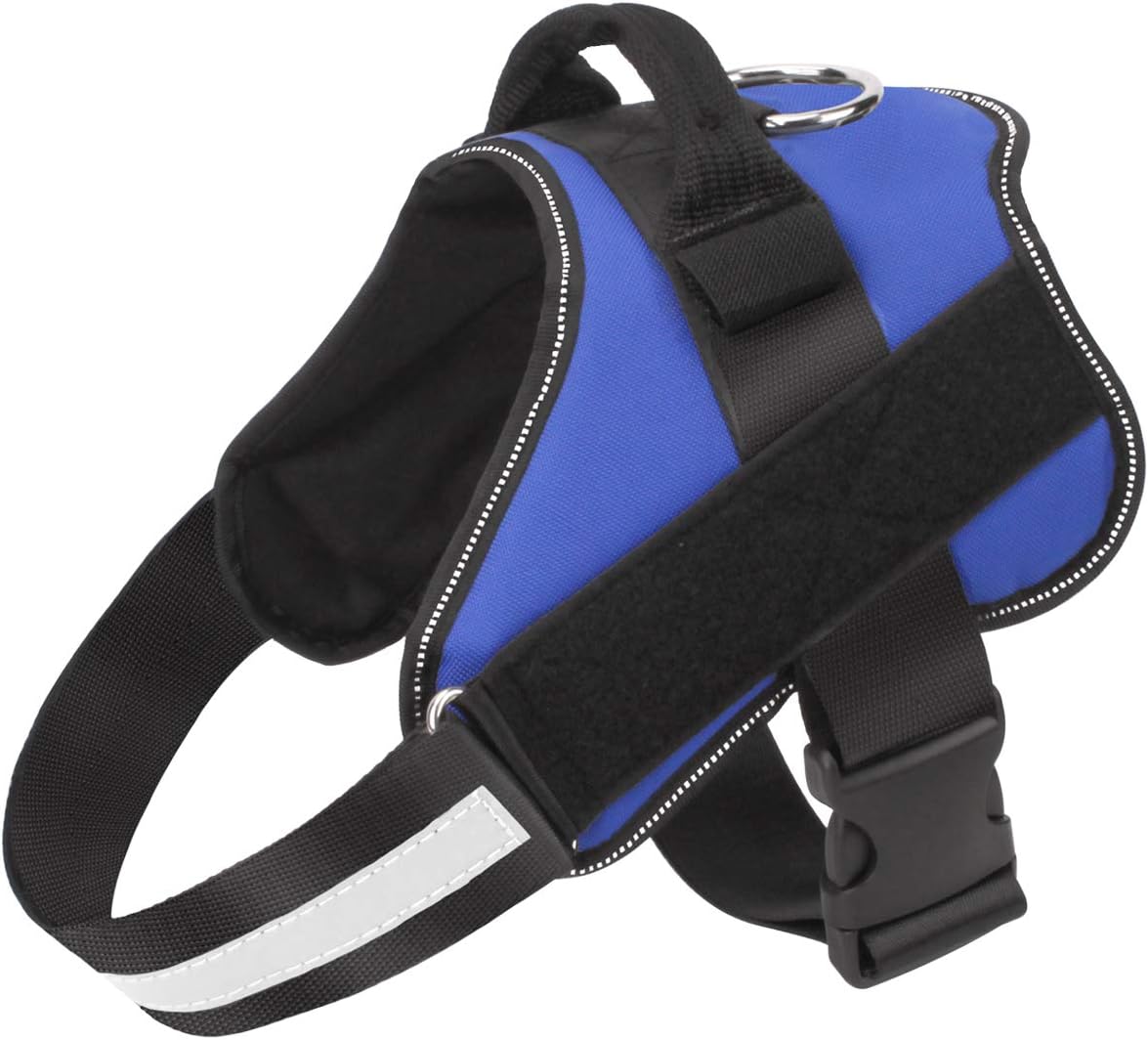
Bolux No-Pull Dog Harness Small
Best Budget Harness for Small Dogs That Pull
| Dog Breed Size | Small |
|---|---|
| Weight Range | 11-20 lbs |
| Closure Type | Buckle |
| Material Type | Polyester |
| Product Care Instructions | Machine Wash |
The Bolux No-Pull Dog Harness is a budget-friendly vest harness built to reduce choking and give owners more control when walking small dogs that pull. It fastens with a snap buckle and adjustable chest strap so you can tune the fit as a puppy grows, and the padded vest spreads pressure across the body rather than the neck. A reinforced D-ring on top accepts a leash and a sturdy nylon handle gives short-leash control in crowded areas or quick corrections during training. Reflective trim increases visibility for low-light walks and the polyester shell is machine washable for easy cleaning. On the downside the materials are basic polyester and webbing rather than heavy-duty tactical webbing, so it will show wear faster under very strong, persistent pulling, and fit can be fiddly on dogs with atypical body shapes. For owners seeking simple, effective no-pull control for small breeds at a low price, this harness covers the essentials without extras like a front-connection leash clip or padded belly strap hardware.
Best for: Budget-conscious owners of small, active breeds who need a straightforward no-pull solution for daily walks and light training without paying for heavy-duty hardware.
Less Ideal for: Owners of very strong pullers or dogs that escape standard vests should consider sturdier, reinforced harnesses or models with front-clip training options instead.
- Vest design spreads pressure away from the neck to reduce choking
- Adjustable snap-buckle chest strap for a customizable fit
- Top D-ring plus a reinforced handle for short-leash control and quick restraint
- Reflective trim improves visibility on early morning or evening walks
- Machine washable polyester makes cleanup simple
- Basic polyester and webbing may wear sooner under heavy, sustained pulling
- No dedicated front-clip option for tighter no-pull control during training
Verdict: The best budget harness for small dogs that pull, offering effective no-fuss control and acceptable materials at a price-conscious point without sacrificing basic safety.
Ruffwear Front Range Dog Harness Small
Best Premium Harness

| Leash attachment points | Back V-ring + Chest webbing |
|---|---|
| Adjustment points | 4 Points |
| Material Type | Polyester |
| Closure Type | Pull On |
The Ruffwear Front Range harness is a well-built, comfortable everyday harness that combines a back V-ring and a reinforced chest webbing attachment for redirecting pullers. It is foam padded across the chest and belly to reduce chafing during longer outings and includes four adjustment points plus side-release buckles for a secure, tunable fit. The harness also has reflective trim and a dedicated loop for an accessory light to improve visibility on early morning or evening walks, and an ID pocket for small tags. In practice it performs as a reliable daily-walk harness that eases leash control without harsh pressure on the throat, and the padding and adjustment options make it pleasant for hikes or extended wear. Trade-offs are that it is a basic halter-style configuration rather than a specialized front-clip no-pull system with mechanical leverage, and the polyester construction requires hand washing to stay clean. For owners who value build quality, fit, and comfort in a premium package, this harness delivers a durable, user-friendly option.
Best for: Owners who prioritize premium construction, refined fit, and extra comfort for daily walks, hikes, and longer wear and are willing to pay more for those qualities.
Less Ideal for: People who need a mechanical front-clip leverage system specifically for strong, persistent pullers or who prefer a harness that is machine washable.
- Two leash attachment points (aluminum back V-ring plus reinforced chest webbing) for versatile control and training
- Closed-cell foam padding on chest and belly to reduce chafing during long wear
- Four adjustment points and side-release buckles enable a customized, secure fit
- Reflective trim and light loop increase low-light visibility
- Not a specialized leverage front-clip no-pull design so very strong pullers may need an alternative
- Requires hand wash care rather than being machine washable
Verdict: The best premium harness for owners who want top-tier materials, refined fit, and extra comfort features that justify a higher price for daily use.
PetSafe Easy Walk Harness Small
Best No-Pull Harness

| Closure Type | Buckle |
|---|---|
| Material Type | Nylon |
| Included Components | Easy Walk Harness, Quick Start Guide |
| Dog Breed Size | Small |
The PetSafe Easy Walk is a front-clip no-pull harness built to reduce leash pulling by shifting pressure to the shoulders rather than the neck. It uses a patented martingale loop on the chest strap that tightens slightly as the dog lunges, redirecting the dog toward you when the leash is attached to the front O-ring. Because it rests across the chest with minimal coverage, the harness is lightweight and breathable, which is helpful for small dogs and for use on warm-weather walks or hikes. Quick-snap shoulder straps and a contrasting belly strap make it straightforward to put on and adjust, and the nylon construction is durable for everyday use. Important limitations are that the front-clip design relies on handler technique and leash positioning to be most effective, and the martingale loop creates gradual shoulder pressure rather than an immediate stop, so very strong pullers may still require training or a different control system. For small breeds this harness balances comfort and pull control without loading the throat or adding bulk.
Best for: Owners of small dogs who want a purpose-built, low-profile harness that discourages pulling by redirecting force to the shoulders while staying lightweight and breathable for everyday walks.
Less Ideal for: Handlers seeking an immediate locking stop for large, extremely strong pullers or those who prefer rear-clip control for off-leash activities should consider other systems or combine this harness with training tools.
- Front chest leash clip with patented martingale loop redirects pulling without pressure on the throat
- Lightweight, low-coverage design improves breathability and comfort for small dogs
- Quick-snap shoulder strap and contrasting belly strap simplify fitting and orientation
- Durable nylon construction suited for regular walks and outdoor use
- Front-clip system depends on handler technique and may be less effective alone for very strong pullers
- Provides gradual shoulder pressure rather than an abrupt stop, so behavior training is still necessary
Verdict: The best no-pull harness for owners focused on minimizing leash pulling through purposeful straps, clip placement, and leverage without harming the dog.
Halti Front Control Harness Small
Best Front-Clip Harness

| Size | Small |
|---|---|
| Closure Type | Clip |
| Material Type | Neoprene, Nylon |
| Dog Breed Size | Small |
| Included Components | 1 Front Control Harness |
The Halti Front Control Harness is a lightweight, neoprene-padded front-clip harness built to redirect a dog's forward motion by steering from the chest and shoulders. You put it on like a standard harness and attach the lead to the front clip to guide turns and discourage lunging during walks; an added safety clip secures the harness to the dog's collar. The padded shoulder straps and multiple adjustment points make it comfortable for small dogs while keeping the harness snug without rubbing. It is hand-wash only and sized for small breeds, so it works best for persistent pullers or dogs that dislike headcollars and need a kinder steering-style option. Limitations include a focus on small dogs only and no crash-tested car-safety features, so it is not intended as a travel restraint. For everyday training walks it offers clear steering feedback and is simple to use once fitted correctly.
Best for: Buyers who want a steering-style front-clip solution to teach small dogs better leash manners without using a headcollar, and who prioritize comfort and easy adjustment during training walks.
Less Ideal for: Owners looking for a harness to restrain dogs in vehicles, or people with medium and large breeds who need stronger, crash-tested travel harnesses.
- Front-clip design redirects chest-forward pulling into gentle steering
- Neoprene-padded shoulder straps for added comfort during walks
- Multiple adjustment points for a secure, customizable fit
- Includes safety clip to attach to collar for backup security
- Lightweight construction suited to small breeds and regular use
- Sized specifically for small breeds so not suitable for medium or large dogs
- Requires hand washing for cleaning rather than machine washable
- Not designed or marketed as a car travel or crash-tested restraint
Verdict: The best front-clip harness for handlers who prefer a steering-style attachment that redirects forward motion and helps teach better leash manners.
Best Pet Supplies Voyager Step-In Air Harness Small
Best Lightweight Harness

| Material Type | Air mesh |
|---|---|
| Closure Type | Buckle, Double Ring, Hook & Loop |
| Weight Range | 10 lbs – 14 lbs |
| Pet Type | Dog |
| Product Care Instructions | Machine Wash |
The Voyager Step-In Air is a low-profile, breathable vest harness built for small dogs and warm-weather walks. It uses soft air mesh that dries quickly and keeps dogs comfortable on hot days, while the step-in design and simple buckle closure make it fast to put on and take off. The harness includes reflective bands for improved visibility during low-light walks and double D-rings plus a hook-and-loop panel and buckle for redundant security when attaching a leash. Because it is designed specifically for smaller breeds and lighter weight ranges, it feels minimally bulky and lets active pups move naturally without overheating. Expect an easy-care product too since the mesh is machine-washable. The main limitation is sizing: the fit relies on measuring chest circumference rather than breed or weight, so precise measurement is important to avoid chafing or a loose fit, and this harness is not intended for large or very strong pullers.
Best for: Buyers who want a minimal, breathable harness for small dogs or hot-weather walks and prioritize comfort and low bulk over heavy-duty control.
Less Ideal for: People needing a heavy-duty no-pull solution for large or strong dogs or those who prefer harnesses sized by weight or breed rather than chest measurement.
- Very lightweight breathable air mesh keeps dogs cool in hot weather
- Step-in design and simple buckle make it fast and easy to put on
- Reflective bands increase visibility for early morning or evening walks
- Multiple attachment and closure points (hook-and-loop, buckle, double D-rings) add security
- Machine washable for easy cleaning
- Sizing is chest-measurement dependent so requires careful measuring to get the right fit
- Not built for large dogs or heavy pullers
Verdict: The best lightweight harness for small dogs that need a barely-there fit that won’t weigh them down while still providing secure control.
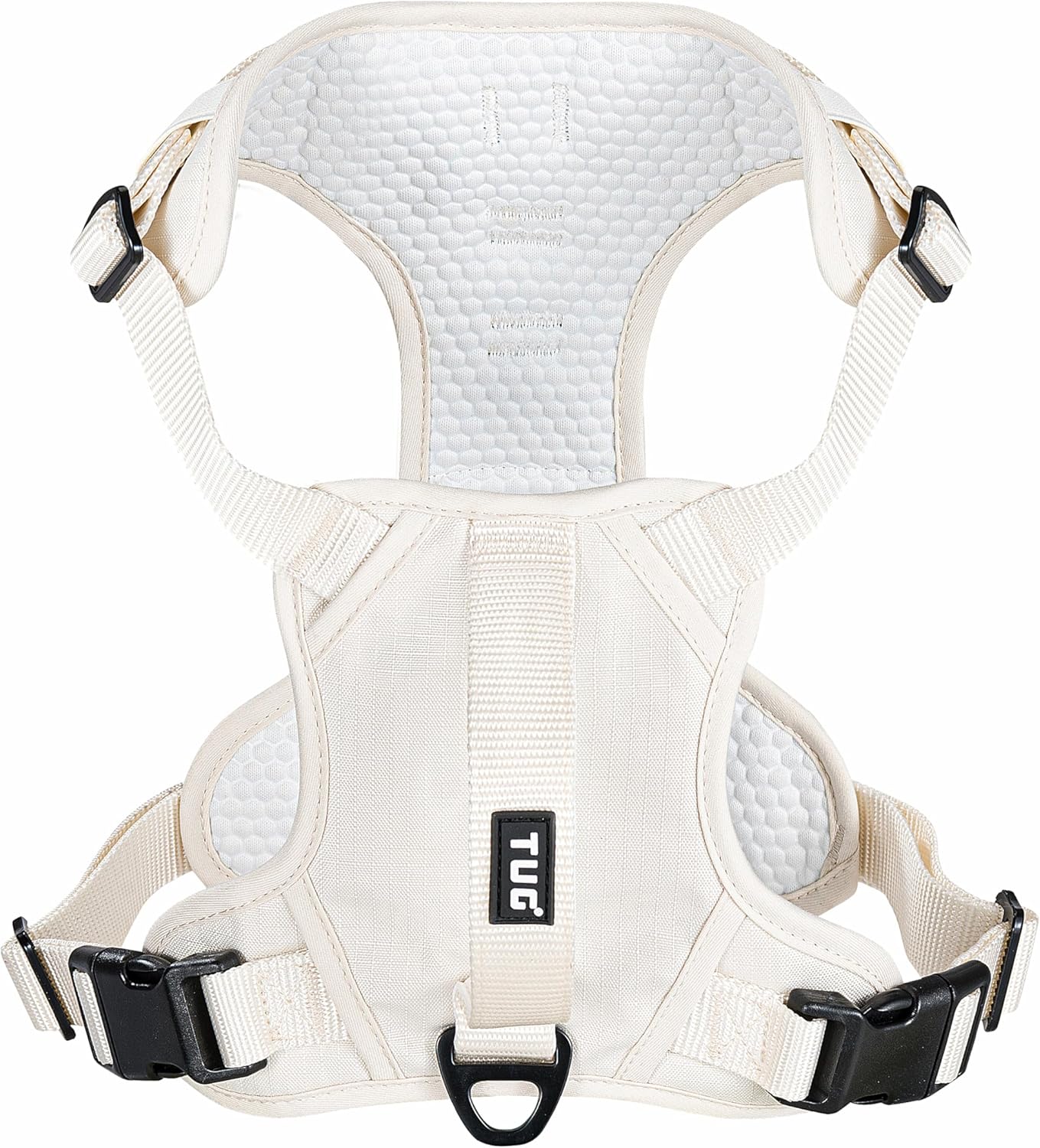
TUG No-Pull Dog Harness Small
Best Adjustable Harness
| Closure Type | Buckle |
|---|---|
| Material Type | Neoprene, Nylon, Polyester |
| Included Components | Dog Harness |
| Dog Breed Size | Small |
The TUG No-Pull Dog Harness is a small, adjustable vest-style harness designed to reduce pulling while keeping your dog comfortable on walks. It uses a front leash clip to redirect a dog's forward momentum and a rear clip for conventional control, so you can switch between training and normal walking without changing gear. The harness has a water-resistant padded interior and a padded back handle that gives short-range control when you need to steady your dog in crowds or at curbs. Adjustable straps let you fine-tune the fit for growing or thick-coated small dogs, and the nylon shell appears durable for regular outdoor use. Practical limitations include hand-wash-only care and that the small size is targeted at smaller breeds, so sizing still needs to be checked carefully to avoid chafing or looseness. Overall it's a straightforward, adjustable option that balances comfort with no-pull functionality for small dogs that tug on leash.
Best for: Owners of small dogs who need a highly adjustable harness to manage pulling while accommodating coat thickness or changing body shape, and who value a padded, water-resistant build for regular outdoor use.
Less Ideal for: People looking for a machine-washable harness or owners of medium to large breeds who need higher load-rated hardware and sizing beyond small.
- Dual leash attachment points for front no-pull training and rear traditional control
- Water-resistant padded interior improves comfort on longer walks and in damp conditions
- Padded back handle provides quick, close control in busy situations
- Adjustable straps allow a customizable fit for growing or thick-coated small dogs
- Durable nylon shell resists everyday wear from pulling and outdoor use
- Requires hand washing only, which is less convenient than machine-washable options
- Only offered in sizes that must be matched carefully to avoid fit issues
Verdict: The best adjustable harness for owners who need a customizable fit to accommodate growing, thicker-coated, or unusually shaped small dogs for safer walks.
Choosing the Right Dog Harness Small Pulling: Key Factors to Consider
Fit and Sizing for Small Anatomy
Size accuracy matters more with small dogs because a few inches of difference can change how a harness distributes pressure. Choose a harness with multiple adjustment points that allow you to fine-tune around a compact neck and a narrow chest. Adjustable straps reduce chafing and prevent rubbing in sensitive areas like armpits.
Measure both neck and chest girth and check manufacturer sizing ranges carefully. A harness that looks adjustable but has limited range can slip or cause pressure hotspots when a small dog pulls. Also consider the harness profile: low-profile designs sit closer to the body and are less likely to snag during play or in tight spaces.
Leash Attachment and Control Mechanics
How and where the leash attaches is the primary factor in how effectively a harness controls pulling. Front-clip attachments redirect forward momentum and can reduce pulling by steering the dog to the side. Back-clip attachments are simpler and more comfortable for calm walkers but give less leverage on pullers.
Dual-clip or convertible systems let you switch between front and back connections depending on the walk. For persistent or strong pulling in a small dog, a front-clip design or a harness that pairs a front clip with a no-pull chest strap is often most effective. Consider how easily you can reach and change attachment points while handling your dog.
Padding and Materials for Comfort
Small dogs have more delicate skin and less body mass to cushion pressure, so soft, breathable padding matters. Look for harnesses with smooth, moisture-wicking linings and strategically placed foam or mesh pads that prevent rubbing where straps contact the chest and armpits.
Durable outer materials prevent tearing and keep hardware from digging into the coat. Materials should balance sturdiness with flexibility so the harness moves with the dog rather than chafing. Removable or machine-washable fabrics simplify maintenance after muddy walks or rainy days.
Adjustment Hardware and Closure Reliability
Secure, easy-to-use buckles and sliders make fitting faster and reduce the chance of accidental release during a walk. For small dogs that pull, hardware must hold under sudden loads without slipping. Metal or heavy-duty polymer buckles and reinforced stitching at stress points extend longevity.
Adjustment sliders should be easy to move but lock reliably. Ratcheting or quick-fit designs can speed up handling but check that they truly stay in place under tension. Also inspect strap widths and edges; thin, sharp straps can cut into small dogs, while overly wide straps may not fit right on petite frames.
Control Versus Comfort Tradeoffs
Maximizing control often increases restraint, which can make a harness feel more restrictive to a small dog. Decide where you want to sit on that spectrum: some designs prioritize redirection and limit forward motion, while others prioritize a relaxed fit and freedom of movement.
Assess whether a more controlling harness still allows natural gait and does not inhibit breathing or swallowing when pressure is applied. If walks involve training or frequent corrections, choose a system that balances corrective mechanics with padding and fit to keep the dog comfortable during repeated use.
Safety Details and Visibility
Small dogs are harder to see, especially near dusk, so reflective trim or high-visibility colors improve safety on roads and trails. Attachment points should be reinforced so they do not deform or fail under stress. Look for fabrics and threads rated for outdoor use to prevent premature fraying.
Consider additional safety features like a handle on the back for quick restraint, a D-ring positioned for consistent leash angle, and tags or loops for identification. Reflective piping should be placed where it remains visible even when the harness shifts during movement.
Which Harness Attachment Works Best for a Small Dog That Pulls?
Front-clip attachments are commonly recommended for dogs that pull because they change the direction of force and make forward pulling less effective. For small dogs, a front clip mounted near the chest center tends to steer the dog toward you with minimal neck pressure.
Back clips are easier to manage and are fine for mostly calm walkers, but they provide less leverage for stopping or redirecting a strong pull. Convertible harnesses let you experiment with both positions so you can match the attachment to your dog's behavior and your training plan.
- Front-clip: better for redirecting forward momentum.
- Back-clip: comfortable for calm or leash-trained small dogs.
- Dual-clip: versatile for mixed walking and training needs.
How to Measure Your Small Dog for the Right Harness
Use a soft tape measure to record neck circumference and the widest part of the ribcage behind the front legs. Measure snugly but not tight; you should be able to fit two fingers between the tape and your dog's body. If a size sits between two ranges, choose the larger one and use the harness adjustments to refine the fit.
Also note your dog's coat thickness. A fluffy coat can affect how a harness sits, so measure after the dog is groomed to the typical length you keep between trims. Keep the manufacturer's size chart handy and follow any brand-specific measuring tips for small breeds.
- Measure neck and chest girth with a soft tape.
- Allow two fingers' clearance when fitting.
- Account for coat thickness and grooming.
Can a Harness Prevent Injury From Pulling?
A well-fitted harness redistributes force across the chest and shoulders rather than the neck, which reduces the risk of tracheal damage and spinal strain caused by repeated pulling. For small dogs with fragile throats, this redistribution is especially important.
However, no harness removes all risk if a dog pulls aggressively. Combine an appropriate harness with training that addresses the root cause of pulling and consider short, controlled walks while you build leash manners.
- Proper fit reduces neck and throat stress.
- Harnesses lower but do not eliminate injury risk from hard pulling.
- Pair harness use with consistent leash training.
How to Introduce a Harness to a Nervous Small Dog
Start slowly by letting your dog sniff and interact with the harness before any attempt to put it on. Reward calm behavior with treats and praise so the harness gains a positive association. Gradually progress to slipping the harness on for short periods indoors, and increase wear time as the dog relaxes.
Practice walking in a low-distraction environment at first. If your small dog resists, break the process into smaller steps and use high-value treats or a favorite toy to reward cooperation. Patience and repetition will make harnessing part of the routine.
- Introduce harness by scent first.
- Use short, reward-based sessions to build comfort.
- Practice indoor steps before outdoor walks.
Maintaining and Cleaning a Small-dog Harness
Regularly check straps, buckles, and stitching for wear that could affect safety. Spot-clean dirt and salt after wet walks, and follow care instructions for machine washing if the harness allows. Air-dry to preserve padding and hardware.
Rotate through routine inspections to catch early signs of abrasion or fraying. Replacing a worn harness is safer than risking a failure while out on a walk.
- Inspect seams and hardware monthly.
- Follow washing instructions to protect padding.
- Air-dry harnesses to maintain shape and integrity.
How We Chose the Best Dog Harness Small Pulling
We selected products by applying practical, dog-focused criteria that matter for small dogs that pull. Our evaluation prioritized secure fit and adjustability to accommodate small neck and chest proportions, and we favored harnesses with leash attachment points engineered to manage forward pulling forces. We assessed construction quality and materials for durability and resistance to rubbing on delicate skin, plus breathable padding to keep small dogs comfortable on regular walks. Control mechanics were another key filter: we looked for harnesses offering front-clip, dual-clip, or no-pull specific designs with clear mechanical advantages for redirecting pulling. Ease of use was considered, including how simple it is to put on and take off a wriggly small dog and how well fasteners hold up over repeated use. Safety features such as reflective trim and secure buckles were included when relevant. We excluded waist belts, head collars, and products designed primarily for training or sporting use rather than everyday leash control. Items that lacked clear sizing options for small breeds or had poor breathability were also removed from consideration. The final list reflects a balance of fit, leash control effectiveness, comfort, and real-world usability for small dogs that pull.
Our full evaluation process is outlined in our review methodology.
FAQ
Will a no-pull harness stop all pulling instantly?
No single harness guarantees instant stopping of pulling. No-pull designs can reduce pulling by redirecting movement, but combining a suitable harness with consistent leash training produces the best long-term results.
Is a front-clip harness uncomfortable for a small dog?
Front-clip harnesses are not inherently uncomfortable if sized and padded correctly. Proper fit and soft materials prevent chafing, while the front clip helps manage pulling without putting pressure on the neck.
How tight should a harness be on a small dog?
A harness should be snug enough to prevent slipping but loose enough to allow two fingers to slide between the strap and the dog's body. That balance keeps the harness secure while avoiding pressure points.
Can harnesses cause chafing under the armpits?
Yes, thin or stiff straps can rub in the armpit area, especially during long walks. Choose harnesses with smooth, well-placed padding and rounded edges to minimize friction and check for proper adjustment.
Should I use a handle on the harness for small dogs?
A handle can be useful for quick restraint or helping a small dog over obstacles. Use it sparingly to avoid encouraging grabbing the dog by the torso during regular walking, and ensure the handle is securely stitched and positioned.
Final Verdict
When choosing a harness for a small dog that pulls, prioritize secure fit, appropriate attachment mechanics, and gentle padding. The most effective options balance control with comfort so the dog can move naturally while you maintain safer, more manageable walks. Decide whether redirection or comfort is your main goal and select a harness that offers the right mix of adjustability and leash attachment points. With correct sizing, gradual introduction, and consistent practice, a well-chosen harness can make walks calmer and safer for both you and your small dog.

