

If your dog races ahead or leans hard against the leash, a targeted no-pull harness can make walks calmer and safer for both of you. The right harness redirects force away from the neck, improves steering, and reduces the chance of injury from sudden lunges. This guide presents seven shortlisted harnesses that are designed specifically to prevent pulling and suit a range of sizes and activity levels. We evaluated fit, attachment options, and how each design distributes pressure so you can pick the harness that best matches your dog and walking style.
Top Picks at a Glance
| Best Overall Harness The best all-around harness for stopping pulling and everyday walks | Ruffwear Front Range Dog Harness Small |  |
| Best Budget Harness A low-cost harness that still helps cut down leash pulling | Amazon Basics No-Pull Dog Harness Medium |  |
| Best No-Pull Harness Designed specifically to discourage and redirect pulling behavior on walks | rabbitgoo Dog Harness Medium |  |
| Best Front-Clip Harness Front-attachment design for greater steering and immediate pull reduction | PetSafe Easy Walk Harness Medium |  |
| Best Heavy-Duty Harness Reinforced build and tough materials for strong or active dogs | KNK Heavy Duty Dog Harness |  |
| Best Adjustable Harness Multiple adjustment points for a precise, secure fit across sizes | tobeDRI No Pull Dog Harness Large |  |
| Best Premium Harness Higher-end materials and features for owners seeking extra quality | Fei & Eve Cloud Dog Harness Medium |  |
Ruffwear Front Range Dog Harness Small
Best Overall Harness

| Leash attachment points | Back V-ring + Chest webbing |
|---|---|
| Adjustment points | 4 Points |
| Material Type | Polyester |
| Closure Type | Pull On |
The Ruffwear Front Range harness is a well-built, comfortable everyday harness that combines a back V-ring and a reinforced chest webbing attachment for redirecting pullers. It is foam padded across the chest and belly to reduce chafing during longer outings and includes four adjustment points plus side-release buckles for a secure, tunable fit. The harness also has reflective trim and a dedicated loop for an accessory light to improve visibility on early morning or evening walks, and an ID pocket for small tags. In practice it performs as a reliable daily-walk harness that eases leash control without harsh pressure on the throat, and the padding and adjustment options make it pleasant for hikes or extended wear. Trade-offs are that it is a basic halter-style configuration rather than a specialized front-clip no-pull system with mechanical leverage, and the polyester construction requires hand washing to stay clean. For owners who value build quality, fit, and comfort in a premium package, this harness delivers a durable, user-friendly option.
Best for: Owners who prioritize premium construction, refined fit, and extra comfort for daily walks, hikes, and longer wear and are willing to pay more for those qualities.
Less Ideal for: People who need a mechanical front-clip leverage system specifically for strong, persistent pullers or who prefer a harness that is machine washable.
- Two leash attachment points (aluminum back V-ring plus reinforced chest webbing) for versatile control and training
- Closed-cell foam padding on chest and belly to reduce chafing during long wear
- Four adjustment points and side-release buckles enable a customized, secure fit
- Reflective trim and light loop increase low-light visibility
- Not a specialized leverage front-clip no-pull design so very strong pullers may need an alternative
- Requires hand wash care rather than being machine washable
Verdict: The best overall harness balances no-pull control, comfort, fit adjustability, and durable construction to suit most dogs and everyday walking needs.
Amazon Basics No-Pull Dog Harness Medium
Best Budget Harness

| Size | Medium |
|---|---|
| Closure Type | Buckle |
| Material Type | Polyester |
| Product Care Instructions | Hand Wash Only |
This Amazon Basics no-pull vest harness is a simple, budget-friendly harness built for everyday leash walks and basic pull control. It fastens with a buckle and uses an adjustable webbing system to tune fit across the chest and belly, while soft padding helps reduce chafing on short outings. The no-pull construction shifts pressure away from the neck so it is gentler than a collar when a dog lunges, and the reflective stripes improve visibility for evening walks. Materials are straightforward polyester with hand-wash care, so it is durable enough for regular casual use but will show wear faster than higher-end fabrics and hardware. Sizing and adjustment work for many medium-shaped dogs, though dogs with unusual body proportions may need more fiddling to get a snug, secure fit. For owners who need a low-cost harness that reduces neck strain and adds basic no-pull control, this is a practical pick, but those wanting heavy-duty hardware or advanced training features should look higher up the range.
Best for: Buyers who want the cheapest practical no-pull harness for everyday short walks and basic training without spending on premium materials.
Less Ideal for: Owners who need a heavy-duty working harness, prolonged outdoor use, or advanced training features should consider more robust alternatives.
- No-pull vest design reduces pressure on the neck compared with a collar
- Adjustable buckles and webbing allow a customizable fit for many medium dogs
- Soft padded lining improves comfort during shorter walks
- Reflective stripes increase visibility for low-light outings
- Simple polyester construction is easy to clean by hand
- Basic polyester and hardware are less durable than premium harnesses
- Not designed for heavy-duty pulling or extended rough use
Verdict: The best budget harness gives owners an affordable option that reduces pulling and holds up for regular use without premium materials or extras.
rabbitgoo Dog Harness Medium
Best No-Pull Harness

| Closure Type | Buckle |
|---|---|
| Dog Breed Size | Medium |
| Weight Range | 10-25 kg |
| Material Type | Polyester |
The rabbitgoo medium dog harness is a no-pull vest style designed for everyday walks, training, and short car rides. It slips over the head and secures with quick-release buckles and four adjustable straps so you can fine-tune the fit; a padded chest and breathable mesh help keep active dogs comfortable while pressure is distributed across the torso rather than the neck. Two metal leash attachment points give you a front-clip option to reduce pulling and a back-clip for relaxed walking, and the reinforced top handle provides a quick way to grab or steady your dog. Reflective strips improve visibility on low-light outings. In use the harness performs like a solid midweight everyday harness: durable polyester construction and reinforced hardware stand up to regular use, but it is not chew proof and the company recommends removing it between activities. Sizing requires checking chest and neck measurements carefully because a secure fit is important for the no-pull function.
Best for: Buyers wanting a durable, everyday harness that balances control and comfort for medium-breed dogs and who plan to use it for regular walks, training, and travel.
Less Ideal for: Owners of heavy chewers or dogs that need an all-day wearable or escape-proof solution should look at purpose-built tactical or escape-proof harnesses instead.
- Two leash clips (front and back) for training and casual walks
- Padded chest and breathable mesh for comfort during activity
- Adjustable design with four straps and quick-release buckles for a secure fit
- Reinforced top handle and metal hardware for immediate control and durability
- Reflective strips for improved low-light visibility
- Not chew-resistant so it can be damaged by determined chewers
- Manufacturer advises not to leave the harness on the dog all day
Verdict: The best no-pull harness prioritizes leash geometry and control features that reduce a dog’s ability to pull while remaining comfortable for longer walks.
PetSafe Easy Walk Harness Medium
Best Front-Clip Harness

| Material Type | Nylon |
|---|---|
| Weight Range | 20-50 lbs (9-23 kg) |
| Closure Type | Snap |
| Size | Medium |
The PetSafe Easy Walk Harness is a straightforward front-clip harness designed to reduce pulling by redirecting force to the dog's shoulders instead of the neck. It uses a patented martingale loop on the chest strap so that when a dog lunges the loop tightens slightly and helps steer the dog toward the handler, making it useful for training walks and everyday control. The harness is lightweight with relatively low coverage, which keeps dogs cooler and improves breathability on longer outings, and the nylon construction and metal sliders make it durable for frequent use. Fit is simplified by a contrasting belly strap and quick-snap closure, though accurate measuring is important since the system relies on a snug fit to function correctly. Limitations include minimal padding for dogs sensitive to strap pressure and a design that primarily addresses leash manners rather than providing heavy-duty restraint for very strong or reactive dogs. For owners focused on consistent training and reliable no-pull performance, this harness balances simplicity and durability well.
Best for: Owners who want a durable, training-focused no-pull harness to improve leash manners and maintain everyday control during walks.
Less Ideal for: People needing a heavily padded or tactical restraint for very strong, reactive, or frequently escaping dogs should consider purpose-built control harnesses instead.
- Front-chest martingale loop redirects pulling without putting pressure on the neck
- Lightweight, low-coverage design improves breathability for active dogs
- Nylon construction with metal adjusters is durable for regular walks
- Quick-snap shoulder strap and contrasting belly strap make fitting fast and intuitive
- Minimal padding may be uncomfortable for dogs that dislike direct strap pressure
- Front-clip design reduces pulling but is not a substitute for a heavy-duty control harness for very strong dogs
Verdict: The best front-clip harness places the leash attachment at the chest to give owners more steering leverage and quicker correction of pulling behavior.
KNK Heavy Duty Dog Harness
Best Heavy-Duty Harness

| Size | Medium, Large and Extra Large |
|---|---|
| Closure Type | Buckle, Clip |
| Material Type | Metal, Polyester, Webbing |
| Neck Girth | 24" to 34" |
| Chest Girth | 29" to 45" |
This KNK harness is built for powerful, active dogs and translates its heavy-duty claims into practical control and durability. It uses 2-inch ultra-strong webbing, welded D-rings and O-rings, and metal adjusters so the hardware resists bending or slipping during strong pulls, while a padded chest panel spreads pressure for comfort. The front-clip no-pull attachment helps redirect pulling without locking shoulder movement, and a rear D-ring gives a standard leash option for regular walks. The step-in design and quick buckles make it easy to don and adjust, and the locking-style adjusters keep straps from loosening on the move. Expect a sturdy feel that suits training, hiking, and high-activity days, though the harness is optimized for medium to XXL sizes and may be bulkier than lighter everyday harnesses. It requires hand washing and air drying to preserve materials. For English Bulldogs that need reinforced hardware and rugged construction, this harness provides the strength and control those dogs demand while keeping comfort in mind.
Best for: Buyers of English Bulldogs who need a reinforced, no-pull harness that stands up to strong pulling and frequent high-activity use and who prioritize hardware strength and durability.
Less Ideal for: Owners seeking an ultra-lightweight or minimalist harness for short, casual walks or those who prefer machine-washable textile gear should consider other options.
- Welded metal D-rings and O-rings for high-strength leash attachment
- Ultra-strong 2-inch webbing and reinforced one-piece strap design resist tearing
- Padded chest panel distributes pressure and reduces neck strain
- Front-clip no-pull plus rear leash attachment offers training flexibility
- Locking metal adjusters keep fit secure during activity
- Designed for medium to extra-large sizes and may be bulky on compact builds
- Requires hand wash and air dry care rather than machine cleaning
Verdict: The best heavy-duty harness uses reinforced stitching, stronger hardware, and abrasion-resistant materials to withstand strong pullers and rigorous outdoor use.
tobeDRI No Pull Dog Harness Large
Best Adjustable Harness
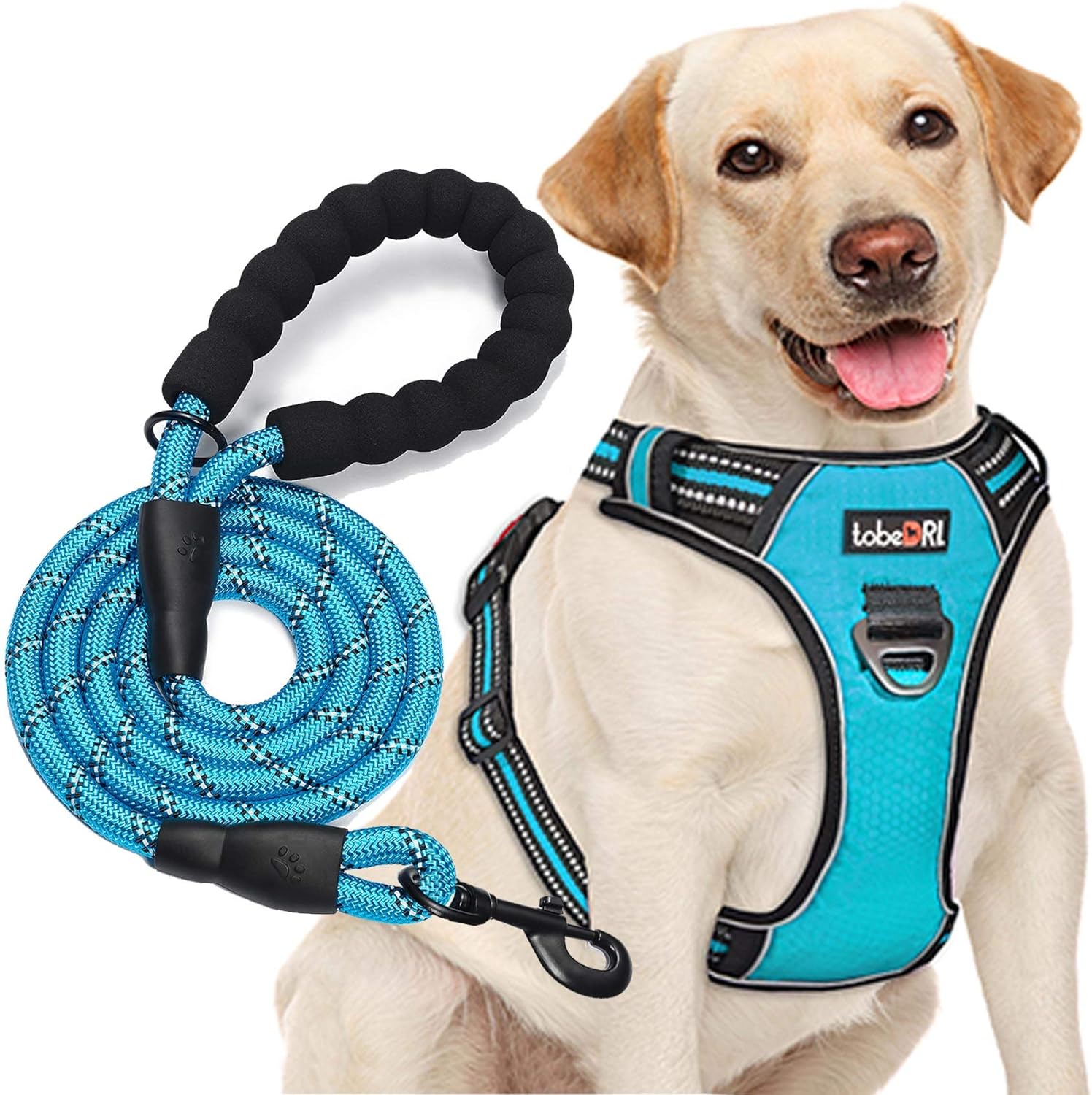
| Material Type | Neoprene, Nylon, Plastic, Polyester |
|---|---|
| Closure Type | Buckle |
| Dog Breed Size | Large |
| Included Components | dog leash |
This tobeDRI harness is built for everyday walks with large dogs and emphasizes control and visibility. It uses two metal delta rings—one front clip to discourage pulling and one back clip for relaxed walking—so you can switch attachment points depending on training or leash-walking needs. The harness fastens with quick snap buckles that include a locking feature to reduce accidental release, and four adjusters let you fine-tune fit around the neck and chest. Materials combine breathable mesh and high-density nylon oxford with neoprene padding for comfort, and reflective stitching improves visibility during low-light walks. It is machine washable and comes with a heavy-duty 5ft leash, while metal hardware is described as rust-proof. Limitations are that fit depends on accurate sizing for large breeds and the harness does not list heavy-duty reinforcement ratings for very strong pullers, so very powerful dogs may still require a dedicated training system or harness rated for high loads.
Best for: Owners of medium to large dogs who prioritize improved visibility and a no-pull option for dawn, dusk, or night walks and want a comfortable, adjustable harness for regular outdoor use.
Less Ideal for: People looking for a harness with a certified load or professional-grade training hardware for very strong pullers should consider purpose-built training harnesses instead.
- Front and back metal delta rings let you switch between no-pull control and relaxed walking
- Reflective stitching increases visibility for dawn, dusk, and nighttime walks
- Neoprene padding and breathable mesh improve comfort for long wear
- Locking snap buckles and multiple adjusters provide a secure, customized fit
- Machine washable with rust-proof metal hardware for easy maintenance
- Sizing must be accurate for large breeds to ensure effectiveness
- Not specified or rated for extreme pulling forces from very powerful dogs
Verdict: The best adjustable harness offers several easy-to-reach adjustment points so owners can achieve a snug, comfortable fit that minimizes chafing and slipping.
Fei & Eve Cloud Dog Harness Medium
Best Premium Harness

| Closure Type | Buckle |
|---|---|
| Weight Range | 20-40 lbs |
| Material Type | Breathable Mesh, Stretch-Knit Fabric & High-Density Padding |
| Leash Clips | 3 Leash Clips |
| Adjustment Points | 4 |
The Fei & Eve Cloud MagEase harness is a padded vest-style harness built to make walks easier and more comfortable for medium dogs that pull. It uses patented MagEase magnetic buckles that snap and lock, letting the harness go on quickly without catching fur, and three leash clips—a front clip to help redirect pulling, a back D-ring for casual walking, and a top hook for hiking. The 4mm high-density cloud padding spreads pressure across the chest while breathable 3D mesh and stretch-knit fabric keep the contact areas ventilated and soft against the coat. Reflective trim adds visibility for low-light outings and multiple adjustment points help fine-tune the fit. Practical benefits include faster on/off, reduced shoulder strain compared with narrow-strap designs, and a harness that suits training and active use. Limitations are that sizing is specific—measure neck and chest and size up if near the top range—and the magnetic buckles, while rated for high pull, add complexity compared with simple metal hardware.
Best for: Buyers who prioritize premium comfort and refined hardware to reduce pulling and make harnessing fast, and who want a durable harness for regular training and outdoor walks.
Less Ideal for: Owners who need a universal one-size-fits-all solution or who prefer extremely minimalist, strap-only harnesses should consider simpler alternatives.
- MagEase magnetic buckles for fast, snag-free closure and a mechanical lock
- Three leash attachment points (front, back, top) for training and versatile control
- High-density 4mm padding spreads load to reduce pressure on shoulders
- Breathable 3D mesh and stretch-knit fabric for comfort and quick drying
- Reflective strips for improved visibility on low-light walks
- Sizing runs specific—may need to size up if near upper measurements
- Magnetic buckle system is more complex than simple metal hardware
Verdict: The best premium harness delivers superior fabrics, hardware, and refined design for owners willing to pay more for enhanced comfort, longevity, and performance.
Choosing the Right Dog Harness No Pull: Key Factors to Consider
Fit and Adjustability
A proper fit is the foundation of any no-pull harness. If the harness is too loose it can rotate or slip, which reduces control and may create dangerous situations near traffic. If it is too tight it can chafe, restrict breathing, or limit natural shoulder movement.
Look for multiple adjustment points around the chest and torso so you can fine-tune the fit as a dog gains or loses weight or changes coat thickness seasonally. Broad adjustable straps and a measured sizing chart help you get a snug, stable fit that positions attachment points where they work best. Proper fit also helps distribute force evenly so pressure is not concentrated on a single point.
Attachment Type and Leash Placement
Attachment placement changes how force is redirected when a dog pulls. Front-clip attachments mounted on the chest turn a dog toward you and interrupt forward momentum, which is useful when teaching loose-leash walking. Rear or back-clip attachments are more comfortable for calm walking and for dogs that do not pull strongly because they let movement feel more natural.
Some harnesses offer dual-clip systems so you can switch between front-clip training and rear-clip comfort. Consider how easily you can clip and unclip the leash and whether the geometry of the attachment will give you the level of steering and correction you need without causing discomfort.
Padding and Materials
Materials affect comfort, breathability, and longevity. Soft padding at contact points reduces rubbing and helps prevent hot spots on sensitive skins or short coats. Breathable fabrics and mesh panels improve airflow during warm-weather walks or long outings.
Durable webbing and reinforced stitching matter for dogs that pull frequently. Hardware such as buckles, rings, and clips should be corrosion-resistant and sized to match the harness and leash loads you expect. Also consider how easy the materials are to wash since a harness used every day will need periodic cleaning.
Range of Motion and Activity Match
A no-pull harness should control forward momentum without restricting natural movement. For active dogs that run, hike, or participate in sports, a slimmer profile with flexible panels preserves shoulder reach and stride length. For casual walkers and urban dogs, a more structured harness that prioritizes control may be acceptable even if it slightly limits movement.
Match the harness style to your dog's activity level: lightweight, breathable designs for endurance and exercise; sturdier, supportive designs for strong pullers or rehabilitation situations.
Ease of Use and Secure Closures
You are more likely to use a harness consistently if it is simple to put on and secure once fastened. Quick-release buckles can save time, but they must stay locked under load. Step-in or overhead styles each have tradeoffs: step-in harnesses can be faster for squirmy dogs, while overhead harnesses can offer a neater fit for certain body shapes.
Check how many buckles and straps you must adjust each time. Fewer adjustments make daily use faster, but you should not sacrifice necessary adjustment points that ensure stability. Also consider whether the harness resists accidental opening under stress.
Training Integration and Behavior Goals
A no-pull harness is often one tool among several for teaching better leash manners. Some designs pair well with specific training methods because they provide gentle steering without punishing the dog. Others offer clip placements that let you trade off between teaching phases and relaxed walks.
Think about how the harness will fit into your training plan. A harness that encourages turning and attention toward you works well during active leash training, while a harness that favors comfort is better once your dog has learned to walk politely.
How Do Front-clip Harnesses Reduce Pulling?
Front-clip harnesses reduce pulling by changing the vector of a dog's forward force. When the leash is attached at the chest, the harness creates a turning motion that redirects the dog's nose toward you, breaking momentum and making it easier to reorient attention.
This design is especially helpful during training sessions because it pairs a physical cue with your verbal or handler cues. However, front-clip options are not always the most comfortable for high-speed activities, so consider swapping to a different clip placement for running or hiking once training progresses.
- Creates a pivot that interrupts forward momentum
- Helps teach loose-leash walking through redirection
- Most effective when combined with consistent training cues
When Should You Choose a Dual-clip Harness?
Choose a dual-clip harness if you want versatility. Dual-clip harnesses provide both front and back attachment points so you can use the front clip for training and the back clip for everyday walks once the dog is calmer. This flexibility reduces the need to buy multiple harnesses for different phases of training.
A dual-clip system also helps owners experiment with what works best for their dog without committing to a single control strategy. Make sure the harness has clearly labeled, easy-to-access clips to switch quickly during outings.
- Offers training and comfort options in one tool
- Good for owners transitioning a dog from training to casual walking
- Look for clearly marked clip positions and solid hardware
Can No-pull Harnesses Cause Chafing and How to Prevent It?
Yes, a poorly fitted or low-quality harness can cause chafing where straps contact the skin or coat. To prevent irritation, choose a harness with soft padding at the chest and belly and ensure straps sit flat against the body without twisting.
Regularly inspect the harness for rough edges, wear, or soiling that can increase friction. Proper sizing, gradual wear-in, and routine cleaning will minimize the risk of hotspots developing during frequent walks.
- Ensure straps lie flat and are not twisted
- Check for rubbing after the first few short walks
- Wash harnesses according to care instructions to remove abrasive dirt
How Do You Measure Your Dog for a Harness?
Measure your dog's girth at the widest part of the ribcage behind the front legs. Also take a neck measurement where a collar usually sits and note the length from the base of the neck to the shoulder. Record your dog's weight and body shape to help pick the right size from a manufacturer's chart.
Compare those measurements to the harness size chart and allow for some adjustability. If your dog is between sizes, choose the size that offers more adjustment range rather than one that fits too tightly out of the box.
- Measure girth around the ribcage, not the neck alone
- Use a flexible tape measure and record dimensions in inches or centimeters
- Allow space for an adjustable fit and seasonal coat changes
What Maintenance Keeps a Harness Working and Comfortable?
Routine maintenance extends lifespan and preserves comfort. Clean the harness regularly following the care instructions to remove sweat, mud, and oils that stiffen fabric. Air dry rather than using high heat to avoid warping plastic buckles or degrading webbing.
Inspect hardware and stitching frequently for signs of wear and replace the harness if any structural component is compromised. Small repairs can sometimes be made, but a damaged harness should not be used for controlling a strong puller.
- Rinse or machine-wash when allowed, then air dry
- Check buckles and D-rings before each outing
- Replace if stitching frays or hardware bends
Which Harness Shapes Best Suit Different Body Types?
Dogs with deep chests and narrow waists may need a harness with more chest coverage and multiple adjustment points to prevent rotation. Short-backed or barrel-chested dogs benefit from designs that avoid pressure near the sternum and allow for unrestricted rib expansion.
Small breeds require proportionally scaled hardware and softer padding to avoid heavy, restrictive feel. For athletic breeds, look for slim, contoured shapes that preserve shoulder extension and stride.
- Deep-chested dogs: look for wide chest panels and robust adjustment
- Barrel-chested dogs: choose designs that do not compress the ribcage
- Small dogs: lightweight materials and smaller hardware improve comfort
How We Chose the Best Dog Harness No Pull
We prioritized features that matter most for stopping leash pulling while protecting a dog's comfort and mobility. First, fit range and adjustability were essential: a harness that cannot be adjusted to a dog's unique proportions will either chafe or fail to control pulling. Second, anti-pull design and leash-attachment placement were evaluated so we favored harnesses that offer front-clip or dual-clip options engineered to redirect forward momentum. Third, materials and padding were considered to ensure long-term wearability and minimize rubbing at pressure points. Fourth, ease of use and secure closures were weighed because a complex harness that is hard to put on will reduce consistent use. Finally, durability and cleaning were included to ensure the harnesses hold up through repeated walks and washings. We excluded products that rely solely on punitive measures or that lack clear size ranges and adjustment points. Overall, the list reflects harnesses that balance gentle control, comfort, and sturdiness for everyday walking and training.
Our full evaluation process is outlined in our review methodology.
FAQ
Will a no-pull harness stop my dog from pulling immediately?
A no-pull harness can reduce pulling right away by redirecting force, but lasting behavior change usually requires consistent training. Use the harness with positive reinforcement and practice loose-leash techniques to see sustained improvement.
Is a front-clip harness safe for strong pullers?
Front-clip harnesses are safe when properly fitted, but extremely strong pullers may need sturdy materials and reinforced hardware. In some cases, combining a well-fitted harness with training or consulting a professional trainer yields the best results.
Can puppies wear no-pull harnesses?
Puppies can wear no-pull harnesses once they have stable proportions, but choose a lightweight, adjustable model designed for growth. Avoid harnesses that restrict natural movement or put pressure on developing joints.
How tight should a harness be?
A harness should be snug enough that it does not shift side to side but loose enough to fit two fingers between the strap and the dog's body. That balance prevents chafing while ensuring the harness remains stable under load.
Can a no-pull harness replace training?
A harness is a tool that aids training but does not replace it. It helps manage behavior during walks, making training easier and safer, but consistent reinforcement and practice are required to change pulling long-term.
Final Verdict
Prioritize fit and attachment options when choosing a no-pull harness. The most effective harnesses combine appropriate sizing, secure hardware, and clip placement that matches your training goals. Expect tradeoffs between absolute control and freedom of movement: stronger control designs may limit stride, while more comfortable designs may be better for casual walks. Decide which tradeoffs you can live with based on your dog's strength, activity level, and training plan. Use the harness consistently as part of a reinforcement-based approach, and replace any harness that shows structural wear to maintain safety and reliable performance.

