

If your dog pulls, lunges, or gets overstimulated on walks, the right head collar can make daily outings safer and more manageable. A properly fitted head collar shifts leash pressure away from the throat and encourages your dog to turn toward you rather than forward. This guide shortlists the top options in the head collar category and explains the practical differences that matter for everyday use. We evaluated ease of fit, comfort, durability, and control so you can pick a solution that suits your dog's size and behavior.
Top Picks at a Glance
| Best Overall Head Collar A reliable, well-rounded head collar for most dogs and walks | PetSafe Gentle Leader Headcollar Medium |  |
| Best Budget Head Collar A low-cost option that still provides basic control and fit | Coastal Walk 'n Train Head Halter Medium |  |
| Best Premium Head Collar A higher-end pick with upgraded materials and refined fit features | Halti Optifit Headcollar Large |  |
| Best Heavy‑Duty Head Collar Built for strong pullers with tougher hardware and fabrics | GoodBoy Dog Head Halter Size 3 |  |
| Best Padded Comfort Head Collar Extra padding and softer fabrics to reduce rubbing and pressure | BARKLESS Soft Dog Head Collar M |  |
| Best Adjustable Fit Head Collar Multiple adjustment points to customize fit for different breeds | Halti Optifit Headcollar Small |  |
| Best Reflective Safety Head Collar Visibility-focused design with reflective trim for low-light walks | Wintchuk Reflective Head Collar M |  |
PetSafe Gentle Leader Headcollar Medium
Best Overall Head Collar

| Breed Recommendation | Medium Breeds |
|---|---|
| Material Type | Neoprene, Nylon |
| Closure Type | Snap |
| Size | Medium |
The PetSafe Gentle Leader is a simple, behavior-focused headcollar that redirects a dog's forward momentum by guiding the head toward the handler, which reduces pulling on walks. It is typically used in place of a standard collar: fit the neck strap high behind the ears, slip the padded neoprene loop over the snout, clip the quick-snap buckle, and attach a leash to the center ring under the chin. Notable features include a quick-snap buckle for fast on and off, an adjustable nose loop with a snap clamp for secure fit, and minimal straps to keep the dog cool while wearing it. In practice the Gentle Leader lets dogs eat, pant, and play normally while giving owners clearer control and making training walks calmer. Limitations are that it requires careful measuring and fitting to avoid rubbing or rotation, and it will not work for dogs with very short snouts like pugs and bulldogs. New users should acclimate their dog off-leash to the nose loop first and follow the fitting directions for the best results.
Best for: Buyers who want a reliable everyday no-pull solution that prioritizes control and comfort for routine walks and training sessions.
Less Ideal for: Owners seeking a hands-off anti-pull device for brachycephalic breeds or those who do not want to fit and train a head-based tool.
- Effectively reduces pulling by guiding the head rather than forcing the neck
- Padded neoprene nose loop improves comfort during extended wear
- Quick-snap buckle and adjustable nose loop make fitting and removal fast
- Minimal strap design keeps the dog cooler and reduces bulk
- Requires careful measurement and fitting to avoid chafing or rotation
- Not suitable for breeds with very short snouts
Verdict: The best overall head collar balances fit adjustability, durable materials, and handler control for everyday walks and basic training.
Coastal Walk 'n Train Head Halter Medium
Best Budget Head Collar

| Material Type | Nylon |
|---|---|
| Closure Type | Snap |
| Dog Breed Size | Medium |
| Item Type Name | Walk 'n Train Head Halter, Black, Medium |
The Coastal Walk 'n Train is a straightforward nylon head halter that guides a dog's head to reduce pulling during walks. You fit the loop over the snout and secure the side straps and snap buckle, then clip the safety loop to the dog's regular collar for added security. In practice it provides immediate directional control and helps interrupt leash-reactive lunges without complex setup. Construction is simple but practical: washable nylon webbing, metal attachment loops, and a quick-release plastic buckle make it lightweight and easy to clean. The medium size suits many average adult dogs and the design leaves room for breathing and panting. Limitations are its basic hardware and mass-market fit, so very strong pullers or dogs that resist halters may need a heavier-duty or more padded option; some owners also report an adjustment period while the dog accepts the snout loop. For occasional training and budget-conscious buyers who want effective no-pull control, this halter delivers predictable results at a modest build quality.
Best for: Buyers who want an affordable, no-frills head collar for occasional training and better leash control without paying for heavy-duty or premium features.
Less Ideal for: Owners who need a long-term heavy-duty solution for very strong pullers or who prefer padded, premium comfort designs should look elsewhere.
- Simple, effective head-control design that reduces pulling
- Washable nylon webbing is lightweight and easy to clean
- Quick-release snap plus safety loop adds a backup security connection
- Metal loops provide a secure leash attachment point
- Basic plastic buckle and light construction may not suit very strong pullers
- Minimal padding can be uncomfortable for dogs sensitive to pressure
Verdict: The best budget head collar gives owners effective no-pull control and acceptable durability at a lower price point for occasional use.
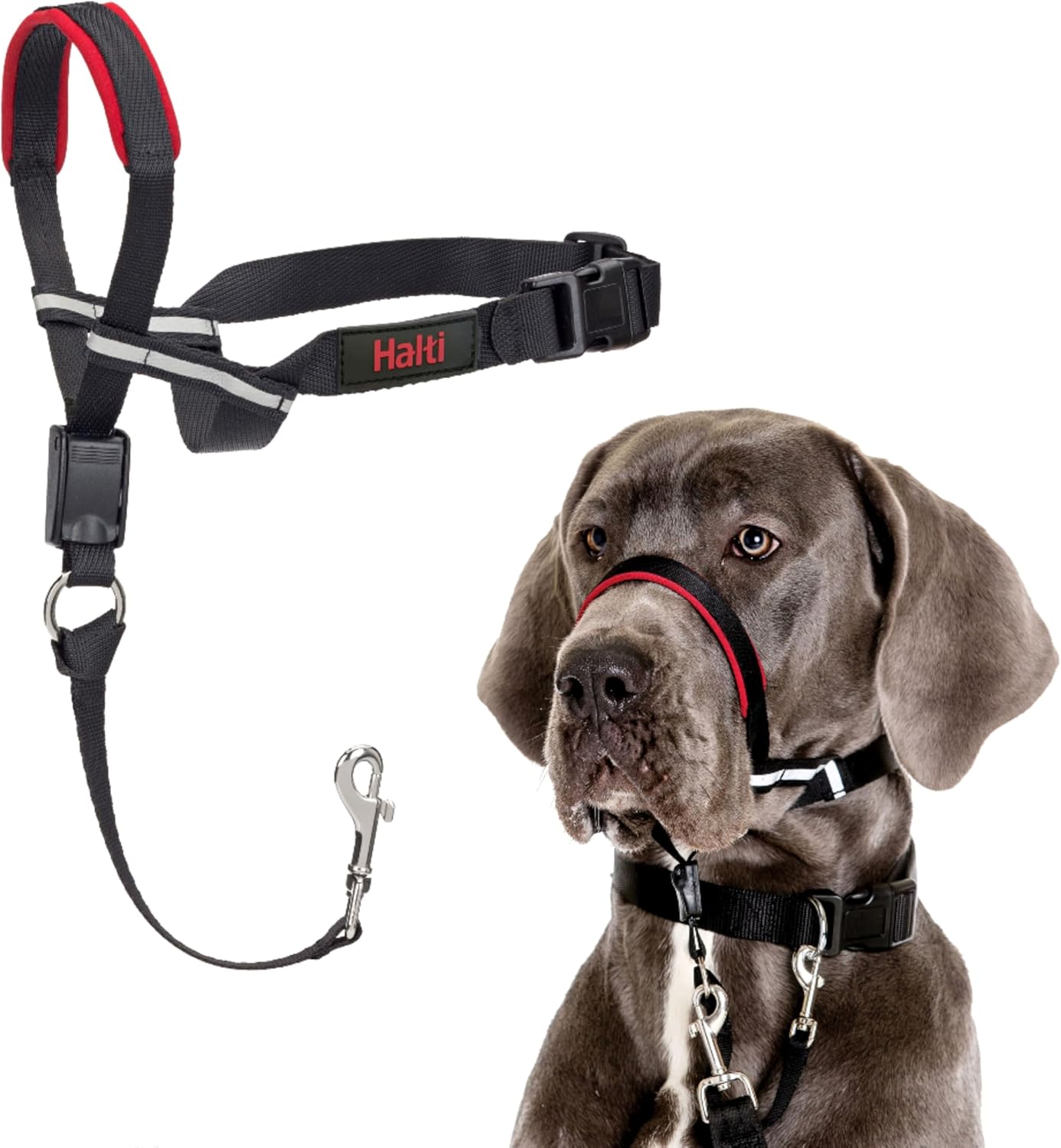
Halti Optifit Headcollar Large
Best Premium Head Collar
| Breed Recommendation | All Breeds |
|---|---|
| Size | Large |
| Material Type | Nylon |
| Closure Type | Pull On |
The Halti Optifit Headcollar is an adjustable gentle lead built to stop dogs from pulling by guiding the head rather than yanking on the neck. It is typically used for on-leash walks and training sessions where you need better control without harsh corrections. The Optifit model adds an adjustable nose band and cheek straps secured with a camlock so you can dial in the fit for dogs with unusual snouts or for growing animals that fall between sizes. Lightweight nylon webbing and a padded nose band improve comfort and the reflective cheek straps increase visibility during low-light walks. A safety link attaches to the dog's collar so the headcollar is an aid rather than the only restraint. Expect practical benefits like easier steering, reduced leash pulling, and a fit that accommodates more head shapes, but you will need a short adjustment period so your dog accepts the headcollar and you should use it as a training aid rather than a long-term tether.
Best for: Buyers who need exact adjustability to fit dogs with nonstandard snouts or dogs that are still growing and want a humane way to reduce pulling during walks.
Less Ideal for: Owners who prefer harness-only control methods or who need a product for continuous unsupervised restraint should consider other options.
- Adjustable nose band and cheek straps for a tailored fit to varied head shapes
- Padded nose band and lightweight nylon reduce discomfort during use
- Reflective cheek straps improve visibility in low-light conditions
- Includes safety link to attach to collar for added security
- Simple camlock closure makes size changes quick and secure
- Requires an acclimation period for many dogs before comfortable use
- Not intended as a restraint for unsupervised containment
Verdict: The best premium head collar offers superior materials, advanced fit adjustments, and extra comfort for owners willing to invest in long-term performance.
GoodBoy Dog Head Halter Size 3
Best Heavy‑Duty Head Collar

| Size | Size 3 (Pack of 1) |
|---|---|
| Material Type | Neoprene, Nylon, Plastic |
| Included Components | Training Guide |
| Closure Type | Buckle |
The GoodBoy Dog Head Halter is a padded, nylon headcollar built to give owners more steering control and reduce heavy pulling on walks. It fits over the dog's snout and around the neck, with an adjustable snout loop, side straps, and a neck strap plus a safety strap that clips to the regular collar to prevent the halter from dangling. Soft neoprene padding and reflective stitching improve comfort and visibility for evening walks, while a quick-release buckle and metal clip under the chin make on/off and fit adjustments straightforward. The included training guide helps owners introduce the halter so dogs accept it without panic. This model is robustly stitched and uses durable materials, so it stands up to frequent use, but it is not intended as a muzzle and will not fit short-snouted breeds. Sizing requires careful measuring of snout and neck and the brand recommends choosing the smaller size when between measurements to ensure secure fit and steering effectiveness.
Best for: Buyers who need a durable, control-focused headcollar for strong dogs and prioritize secure fit and long‑lasting materials for frequent walks and training.
Less Ideal for: Owners seeking a muzzle or a solution for brachycephalic or very small toy breeds should look elsewhere.
- Padded neoprene and soft lining for improved dog comfort
- Safety strap attaches to regular collar to prevent dangling
- Adjustable straps and quick-release buckle for easier fitting
- Durable nylon construction and reinforced stitching for frequent use
- Reflective stitching increases visibility in low light
- Not suitable for short-snouted breeds and very small toy dogs
Verdict: The best heavy‑duty head collar is designed for powerful dogs, featuring reinforced straps, strong buckles, and rugged construction to withstand hard use.
BARKLESS Soft Dog Head Collar M
Best Padded Comfort Head Collar

| Material Type | Nylon |
|---|---|
| Size | M (Snout 8"-11") |
| Dog Breed Size | Medium |
| Closure Type | Buckle |
The BARKLESS Soft Dog Head Collar is a padded no-pull halter made to redirect a dog's head for easier control during walks and training. It fits by looping around the snout and behind the head, using an adjustable shoulder strap, quick-release buckle, and safety link that lets you clip a leash for added security. Plush soft nose padding and wide nylon straps reduce rubbing on the muzzle, while reflective stitching increases visibility on low-light walks. Practical benefits include easier steering of lunging dogs without placing force on the throat and straightforward on/off via the snap buckle. The collar is intended for stepwise introduction with treats and short sessions so dogs acclimate, and the manufacturer warns against leaving it on unsupervised or using it as a toy. Limitations are that it is sized for medium dogs with a specified snout and neck circumference and is not recommended for short-nosed breeds, so careful measuring is required before buying.
Best for: Buyers who prioritize reducing muzzle rubbing and need a gentler head-collar option for sensitive-faced dogs during training and walks.
Less Ideal for: Owners seeking an all-day wearable restraint or those with brachycephalic breeds should choose a different solution.
- Soft padded nose piece reduces chafing and improves comfort during wear
- Adjustable straps and quick-release buckle make fitting and removal fast
- Reflective stitching increases visibility on evening or early-morning walks
- Includes safety link so leash can be attached for extra security during outings
- Sized for medium dogs only and not suitable for short-nosed breeds
- Should not be left on unsupervised which limits all-day use
Verdict: The best padded comfort head collar minimizes chafing and distributes pressure more gently for dogs with sensitive faces or skin.
Halti Optifit Headcollar Small
Best Adjustable Fit Head Collar

| Size | Small |
|---|---|
| Material Type | Nylon |
| Included Components | 2 Halti Optifit Headcollar |
| Closure Type | Pull On |
The Halti Optifit is a headcollar training aid that gently steers a dog by controlling head direction, which reduces pulling during walks. It is typically used as a no-pull tool during leash walks and training sessions, attaching around the muzzle and behind the ears with an additional safety link to the regular collar. Notable features include an adjustable noseband and cheek straps with a camlock for secure, fine-tuned fitting, padding on the noseband for added comfort, reflective side webbing for low-light visibility, and lightweight nylon construction that does not block panting, eating, or drinking. In practice the multiple adjustment points make it straightforward to tailor the fit for different head shapes, and the safety link adds peace of mind if the headcollar slips. Limitations are that it requires an acclimation period for many dogs and owners should follow the included fitting instructions to avoid incorrect placement; it is a training aid rather than a substitute for basic leash control skills.
Best for: Buyers who want a headcollar with easy, precise adjustments to fit a variety of dog head shapes and who are ready to use it as a training aid during walks.
Less Ideal for: Owners who prefer harness-style no-pull solutions or who cannot spend time acclimating their dog to a headcollar should consider other options.
- Multiple adjustment points (noseband and cheek straps) allow a secure, customized fit for different head shapes
- Padded noseband improves comfort during use
- Lightweight nylon construction permits normal panting, eating, and drinking
- Reflective side webbing increases visibility in low light
- Includes a safety link to attach to the dog’s collar for added security
- Requires patient, guided acclimation for dogs unfamiliar with headcollars
- Not intended as a replacement for leash training and proper handling
Verdict: The best adjustable fit head collar provides several easy-to-use adjustment points so owners can achieve a secure, comfortable fit across many head shapes.
Wintchuk Reflective Head Collar M
Best Reflective Safety Head Collar

| Material Type | Nylon |
|---|---|
| Closure Type | Buckle |
| Size | M |
| Pattern | Solid, Green |
This Wintchuk head collar is designed to improve control on walks while adding visibility for low-light outings. It fits over the dog's head with an adjustable padded nose loop and a quick-release neck strap so you can put it on and take it off in minutes. Reflective threads run along the straps to make the dog more visible on early-morning or evening walks, and the padded nose loop is intended to reduce rubbing while still allowing panting, eating, and drinking. Made from nylon with a buckle closure, the halter offers a firm but humane no-pull option for medium-size dogs and is sold in multiple sizes for a tailored fit. Limitations include it is not suitable for short-snouted breeds and proper sizing is important because an incorrect fit can reduce effectiveness and comfort. The collar is simple, lightweight, and practical for owners who need better control and visibility on nighttime walks.
Best for: Buyers who prioritize safer low-light walks and want a simple, humane no-pull solution that still lets their dog pant and drink.
Less Ideal for: Owners of brachycephalic or very short-snouted breeds and people who prefer a different style of training tool such as front-clip harnesses.
- Reflective stitching increases visibility during early-morning or evening walks
- Padded nose loop allows panting, eating, and drinking while reducing abrasion
- Adjustable nylon straps and quick-release buckle for easier on/off and a customized fit
- Lightweight construction makes it comfortable for everyday use
- Not suitable for short-snouted breeds
- Effectiveness depends on correct sizing and adjustment
Verdict: The best reflective safety head collar enhances nighttime visibility while maintaining fit and control for evening or early-morning outings.
Choosing the Right Dog Head Collar: Key Factors to Consider
Fit and Sizing Range
A correct fit is the most important factor. Head collars that are too loose can slip off, while those that are too tight can rub the sensitive muzzle and create anxiety. Look for multiple adjustment points so the noseband sits low on the face without pressing on the eyes and the crown strap sits snug behind the ears without pinching.
Measurement guidance matters because dogs vary widely in snout length and head shape. Adjustable designs with clear size markers reduce trial and error and make a single collar usable through growth or minor weight changes.
Comfort and Padding
Materials that contact the dog's nose, cheeks, and crown should be soft and low-friction. Padded nosebands prevent chafing during turns, and smooth webbing reduces hot spots under straps. Breathable materials are preferable for hot-weather walks to avoid sweat-related irritation.
Comfort affects acceptance: dogs are more likely to wear a collar willingly if it does not rub or trap fur. Consider collars with molded or foam-padded sections where straps contact bone or sensitive skin.
Control Mechanics and Leash Attachment
Different head collars use the noseband and crown strap to leverage the head for redirection. The leash attachment location and whether the design allows for single- or dual-point control changes how quickly you can redirect attention. Some designs have a front ring that guides the head turn, while others rely on a slip action for subtle correction.
Choose a control style that matches your training approach and strength. For strong pullers, a design that gives immediate, consistent directional control with minimal force is preferable; for mild pullers, a gentler attachment that encourages engagement works well.
Ease of Put-on and Take-off
A head collar that is cumbersome to put on will reduce consistency in use. Look for designs with simple buckles, quick-release clips, or a single-step over-the-head fit that can be done calmly on the sidewalk. Clear alignment cues on the collar help you position straps correctly on the first try.
Fast, predictable application is also safer in busy environments where you need to get control quickly. Consider whether you can fit the collar while holding the leash or if a second person is required.
Durability and Weather Resistance
Collars are exposed to saliva, dirt, and moisture, so materials should resist degradation and hardware should resist corrosion. Reinforced stitching, solid rivets, and metal rings rated for canine use extend service life. Look for webbing and padding that maintain shape after repeated wetting and drying.
A durable collar saves time and reduces the chance of mid-walk failures. Consider maintenance needs too: collars that are easy to wipe clean or machine-wash are more practical for active dogs.
Safety Features and Training Compatibility
Safety features include breakaway elements where appropriate, secondary retention straps to prevent slippage, and a design that avoids concentrated pressure on the throat. The collar should be compatible with positive reinforcement training and not require aversive handling to be effective.
Also consider whether the collar allows gradual introduction and short practice sessions. Collars that permit controlled, low-force redirection are easier to pair with treats and verbal cues for lasting behavior change.
How Do I Introduce a Head Collar so My Dog Accepts It?
Introduce the head collar gradually and positively. Start by letting your dog sniff the collar and reward interest with a treat so the collar is associated with good things.
Next, slip the collar on for a few seconds at a time while offering calm praise and treats. Keep sessions short and increase duration only after your dog remains relaxed. Combine wearing the collar with low-distraction activities such as feeding or gentle indoor play before attempting walks.
- Begin with short, frequent sessions indoors.
- Give treats while the collar is in place to build positive association.
- Avoid forcing the collar on for long periods at first.
Can a Head Collar Hurt My Dog's Nose or Eyes?
A properly fitted head collar should not touch the eyes or apply painful pressure. Problems arise when the noseband rides too high, is overtightened, or is made from abrasive material. Use fit checks to ensure a low, comfortable noseband position and proper padding where contact occurs.
If you see signs of irritation, rubbing, or avoidance behavior, stop use and reassess fit and material. Swelling or persistent soreness warrants a pause in use and consultation with a veterinarian or qualified trainer.
- Position the noseband low and adjust crown straps to avoid upward pull.
- Use padded, smooth materials to minimize skin irritation.
- Monitor the dog during early walks for any signs of distress.
Which Size and Shape Suits Short-muzzled Versus Long-muzzled Dogs?
Short-muzzled breeds need a wider fit and sometimes special noseband shapes so pressure is distributed comfortably across the face. Long-muzzled dogs benefit from narrower, adjustable nosebands that sit farther forward without impeding panting.
Measure both snout circumference and distance from the nose bridge to the back of the head before choosing a size. Many designs offer multiple adjustment points to accommodate these anatomical differences; prioritize models with clear size guidance and overlap in adjustment for growth or seasonal weight changes.
- Measure snout circumference and head length for accurate sizing.
- Choose wider, padded nosebands for short-muzzled dogs.
- Ensure straps do not block panting or interfere with the mouth.
How Should You Use a Head Collar During Training Walks?
Use the head collar as a management tool to reduce pulling while pairing it with reward-based training. When the dog turns toward you, mark the behavior and reward promptly to reinforce attention. Keep leash corrections minimal; the goal is to redirect the head, not to apply force.
Start with short, structured walks that include frequent opportunities to reward attention. Over time, phase in greater freedom as the dog learns to orient to you without reliance on continuous physical guidance.
- Reward head turns and attention with treats or praise.
- Avoid jerking the leash; use gentle guidance instead.
- Incorporate short training intervals during walks to build reliable behaviors.
Maintenance: How to Care for a Head Collar
Regular cleaning prevents odor buildup and material breakdown. Wipe down webbing and metal parts after wet or muddy walks and follow manufacturer cleaning recommendations when available. Allow padding to dry completely before storage to prevent mildew.
Periodically inspect stitching, buckles, and rings for wear and replace the collar if any structural elements are compromised. Keep spare hardware or replacement components on hand if the design allows modular repairs.
- Wipe off dirt and dry padding after wet use.
- Check seams and hardware monthly for signs of wear.
- Store the collar in a dry place away from direct sunlight when not in use.
How We Chose the Best Dog Head Collar
We prioritized products that help owners gain control without causing stress or injury. Our selection criteria emphasized secure, adjustable fit across sizes, soft contact points to prevent chafing, and hardware durability for reliable anchoring. We also looked for intuitive on-dog adjustments so fit can be refined quickly, materials that tolerate outdoor conditions, and designs that facilitate safe redirection rather than harsh correction. Exclusions: items that require advanced handling techniques, designs that concentrate force on the throat, or products intended solely for training professionals were excluded. We did not include novelty or single-purpose collars that lack clear sizing ranges. Key evaluation dimensions: fit range and adjustability, padding and material comfort, leash attachment location and control mechanics, ease of putting on and taking off, overall build quality and corrosion resistance, and user-focused safety features such as breakaway elements or redundant straps. These filters helped narrow a broad market to the most practical, everyday choices for typical pet owners.
Our full evaluation process is outlined in our review methodology.
FAQ
Will my dog still be able to pant and drink with a head collar on?
Usually yes. Properly fitted head collars leave the mouth and nostrils free so dogs can pant and drink. Ensure the noseband sits comfortably and does not press the muzzle closed; adjust or remove the collar during rest or heavy activity if needed.
Can puppies wear head collars or do I need to wait until adulthood?
Puppies can wear head collars if the size and fit are appropriate. Choose models with small sizing and introduce them gradually. Avoid leaving a head collar on unsupervised for long periods while a puppy is still growing rapidly.
How do I know if a head collar is fitted correctly?
A correct fit has the noseband sitting low on the face, the crown strap snug but not tight behind the ears, and no contact with the eyes. The dog should be able to open its mouth and pant comfortably. If the dog shows persistent head shaking or avoidance, refit the collar.
Are there dogs that should not use a head collar?
Dogs with certain respiratory issues, neck injuries, or extreme fear responses may not be good candidates for head collars. In those cases, consult a veterinarian or a qualified trainer for alternative management strategies.
Can a head collar be used with a harness or is it one or the other?
A head collar can be used alongside a harness for added control and safety. Combining a head collar for redirection with a well-fitted harness for leash attachment allows you to control head direction while distributing load away from the body.
Final Verdict
Prioritize fit, comfort, and control mechanics when choosing a dog head collar. A well-fitted collar that uses padded, adjustable contact points can reduce pulling and improve walkability without causing discomfort. Balance durability and ease of use with a training approach that rewards attention rather than relying on force. Choose a collar you can fit reliably and introduce gradually so you and your dog can gain the benefits of calmer, safer walks with predictable, humane handling.

