

Picking the right kennel for a puppy shapes daily routines, housetraining progress, and how confident your puppy becomes when left alone. The wrong size or an awkward layout can slow training, cause stress, or create escape opportunities. The options shortlisted here are the most practical picks for young dogs, chosen for safety, size flexibility, and ease of cleaning. You will find kennels that suit different living situations, whether you need a compact indoor crate for apartment life or a sturdier option for garage or porch time. Below we cover the key features we evaluated so you can match a kennel to your puppy's needs and household habits.
Top Picks at a Glance
| Best Overall Kennel The best all-around kennel that suits most puppy owners' needs | MidWest iCrate 24-Inch Single Door |  |
| Best Budget Kennel A low-cost kennel that still meets basic safety and comfort needs | DUMOS 24 Inch Dog Crate |  |
| Best Compact Kennel A smaller-footprint kennel for tight spaces and smaller puppies | BestPet Dog Crate 18" |  |
| Best Easy-Clean Kennel Designed for quick cleanup with removable trays and wipeable surfaces | Amazon Basics Foldable Metal Dog Crate 24" |  |
| Best Premium Kennel A higher-end kennel offering superior materials, finish, and extra features | Viviendo Dog Crate Furniture |  |
MidWest iCrate 24-Inch Single Door
Best Overall Kennel
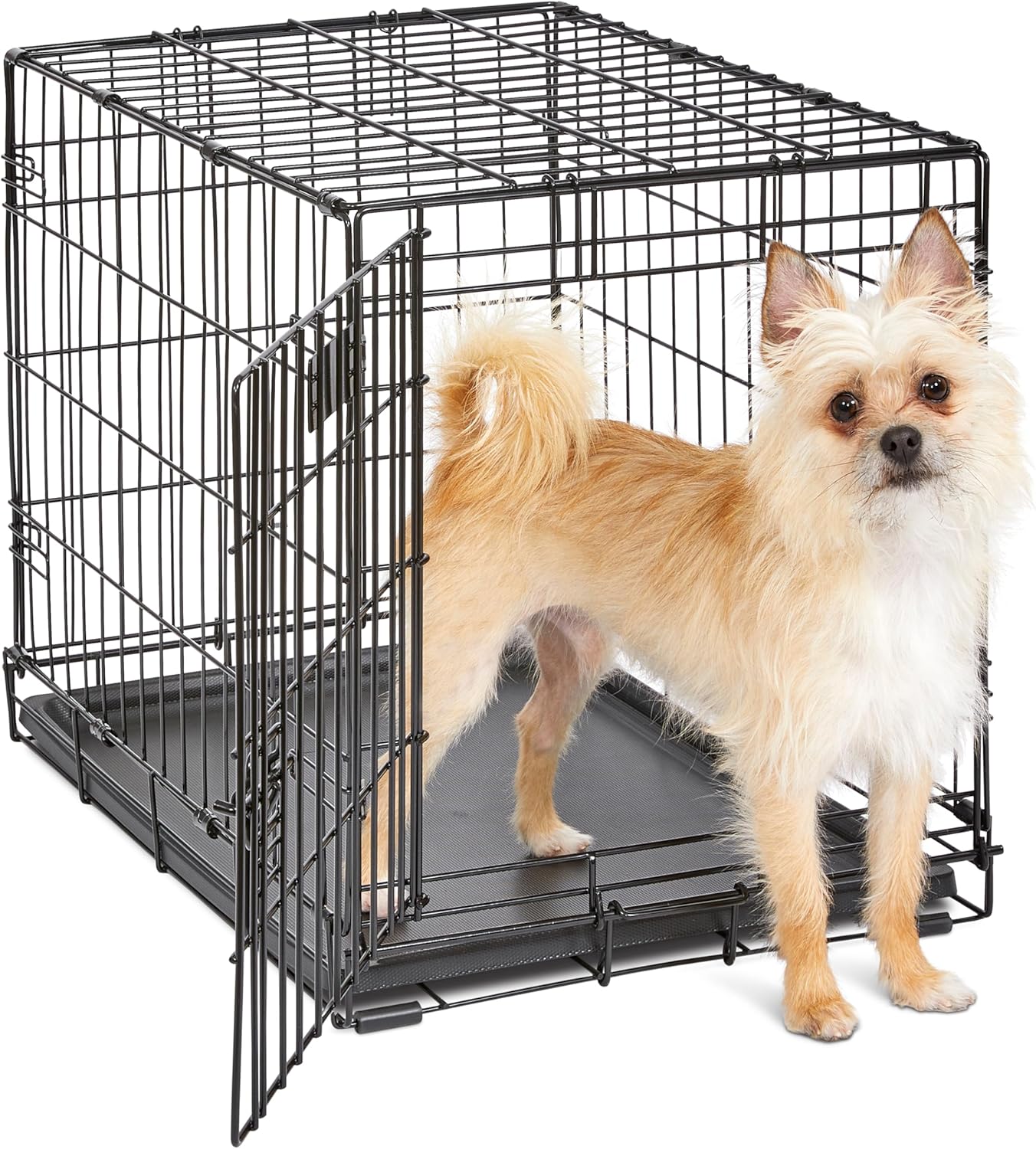
| Breed recommendation | Small (12-20 lbs) |
|---|---|
| Included components | Divider, Removable Tray |
| Number of doors | 2 |
| Gap size | 1.5 inches |
The MidWest iCrate is a straightforward, durable wire crate designed for puppy and small-dog use. It folds flat for storage and travel, sets up without tools, and includes a removable leak-proof tray and rubber feet that make daily cleanup and floor protection simple. Security features such as a slide-bolt latch with a patented Paw Block and locking tips improve escape resistance compared with basic wire crates, and the divider panel lets you shrink the interior for a growing puppy. The low threshold and larger openings make it easier for puppies to enter and exit during crate training, while the carry handle and relatively lightweight construction help with moving the crate between rooms. Trade-offs are the basic metal-wire styling and lack of sound-absorbing panels, so it will not mask noise as well as soft-sided or more heavily padded options, and very active chewers may eventually damage the wire. For everyday house training and short-term confinement, the iCrate balances safety, convenience, and value.
Best for: Buyers who want a practical, durable crate for everyday crate training and short-term confinement that can grow with a puppy and is easy to clean and move around the home.
Less Ideal for: People seeking a noise-dampening, heavily padded den-style crate or a solution for dogs that are destructive chewers should consider other crate types.
- Fold-flat, tool-free setup and portable carry handle for easy moving and storage
- Divider panel included to adjust interior space as a puppy grows
- Leak-proof removable tray makes cleaning fast and sanitary
- Slide-bolt latch with Paw Block and locking tips increases escape resistance
- Precision-welded metal wire with black e-coat finish resists rust for long-term use
- Metal wire construction offers minimal sound insulation or cushioning
- Not suited for heavy chewers who can bend or damage wire panels
Verdict: The best overall kennel balances safety, size options, ventilation, and ease of use to serve most puppies and households reliably.
DUMOS 24 Inch Dog Crate
Best Budget Kennel

| Material Type | Metal |
|---|---|
| Number of Doors | 1 |
| Additional Features | Easy to Clean, Foldable, Portable |
| Specific Uses For Product | Indoor, Outdoor |
This DUMOS 24-inch dog crate is a straightforward, no-frills option for house training and short-term containment. Its metal wire frame with a black protective finish and rounded corners gives a basic level of durability while reducing sharp edges that could injure a curious puppy. The single large door and low threshold make access easy, and the heavy-duty sliding bolt latch holds the door closed against pawing. Cleaning is simplified by a removable plastic tray with a raised lip to help contain messes, and the whole unit wipes clean. The crate folds flat to under 3 inches and includes a carrying handle, so it is easy to store or move between rooms and to bring on short trips. Expect a simple, lightweight kennel suited to small breeds rather than a heavy-duty long-term solution, and note there are no divider panels or extra accessories for extended confinement or multiple growth stages.
Best for: Owners who want an affordable, portable crate for house training and short-term use with small puppies and dogs, prioritizing easy cleaning and simple secure containment.
Less Ideal for: People who need a long-term, heavy-duty kennel, chewer-proof solution, or a crate that accommodates a growing puppy through divider adjustments.
- Foldable design collapses flat for easy storage and transport
- Removable plastic pan with deep lip simplifies cleanup and contains spills
- Rounded corners and protective finish reduce sharp edges and resist rust
- Single large door with heavy-duty sliding bolt latch for secure closure
- No divider panel for adjusting interior space as a puppy grows
- Basic metal wire construction is lightweight and not intended for heavy chewers
Verdict: The best budget kennel gives puppy owners a safe, functional kennel at a low price while maintaining acceptable durability and comfort.
BestPet Dog Crate 18"
Best Compact Kennel
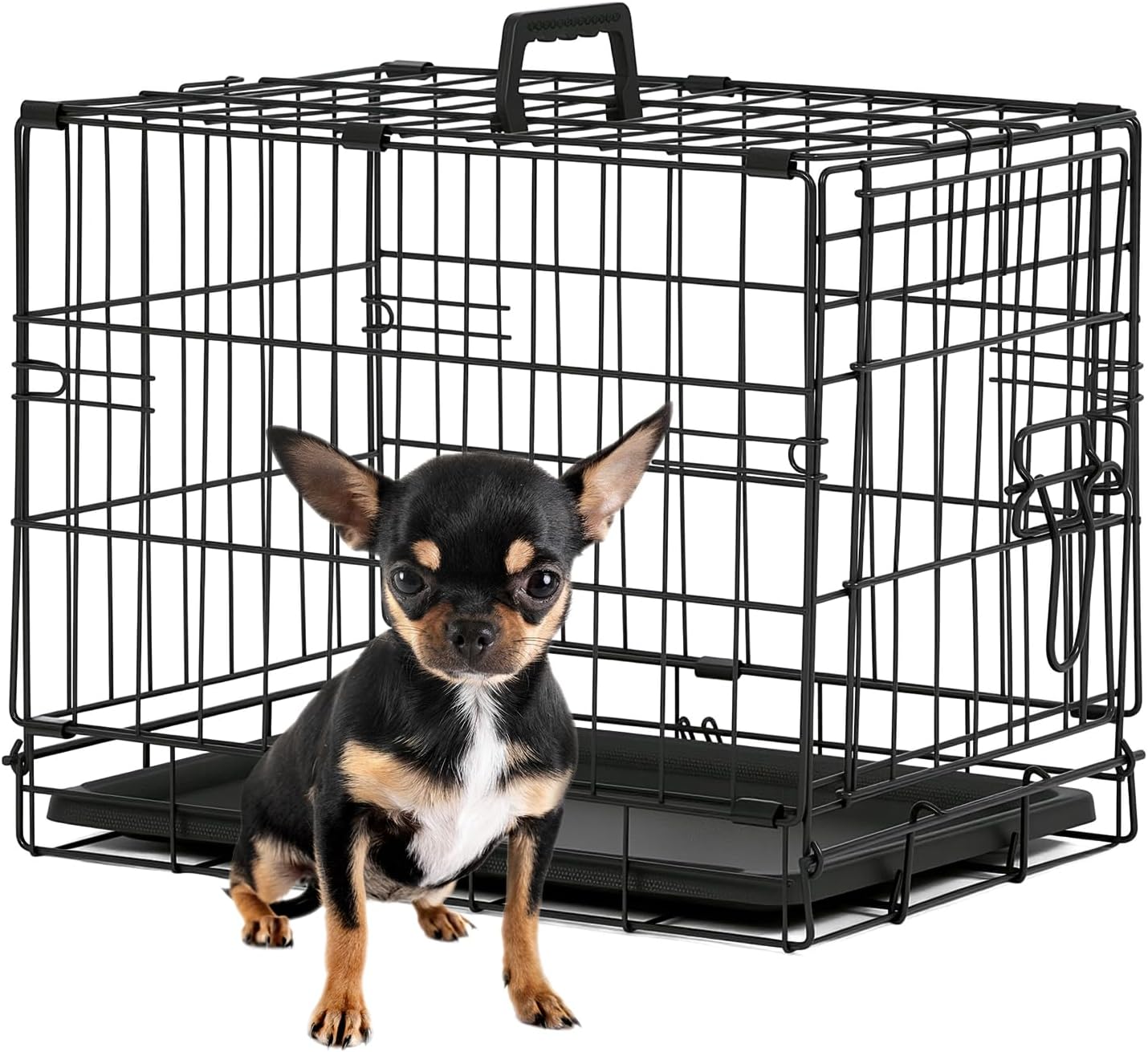
| Breed Recommendation | for Small Breeds |
|---|---|
| Specific Uses For Product | Indoor, Outdoor |
| Material Type | Alloy Steel |
| Included Components | dog crate+Manual |
This BestPet 18" foldable metal crate is a straightforward, budget-friendly kennel for small dogs and puppies. It sets up and folds down without tools and includes a plastic carry handle for moving the folded crate, which makes it convenient for travel or occasional use. The wire construction provides good ventilation and visibility while reinforced corners and double slide-bolt latches help keep an energetic pup contained. A removable ABS tray captures messes and lifts out for easy cleaning. Expect a basic build rather than heavy-duty hardware—the alloy steel frame is lightweight and rust-resistant but not meant for extreme chewers or highly destructive dogs. The single-door layout is simple to use but limits placement options compared with double-door models. Overall, this crate covers essential safety and portability needs at a low cost and is best suited to short-term confinement, travel, and training for small, calm dogs.
Best for: Owners of small, well-behaved dogs or puppies who need an affordable, portable crate for training, short confinement, or travel.
Less Ideal for: People with large breeds, extremely strong or destructive dogs, or those who want premium features like double doors, heavier-gauge steel, or integrated travel locks.
- Tool-free setup and fold-down for easy storage and travel
- Removable ABS tray that is leakproof and simple to clean
- Reinforced corners and dual slide-bolt latches improve security
- Lightweight, rust-resistant wire construction for everyday indoor or outdoor use
- Lightweight frame is not designed for heavy chewers or large, aggressive dogs
- Single-door design reduces placement flexibility compared with double-door crates
Verdict: The best compact kennel fits easily in apartments or small rooms while still providing a secure, comfortable space for a puppy.
Amazon Basics Foldable Metal Dog Crate 24"
Best Easy-Clean Kennel

| Specific Uses For Product | Indoor |
|---|---|
| Breed Recommendation | Small Breeds |
| Number of Doors | 1 |
| Included Components | Divider |
| Material Type | Metal |
This Amazon Basics 24" foldable metal wire crate is a straightforward, space-conscious option for housing a small dog or puppy indoors. It assembles quickly, folds flat for storage or transport, and includes a top handle so you can move it without disassembly. The removable plastic tray makes spot cleaning simple, while the included divider lets you shrink the interior for younger pups as they grow. The manual door latch is secure for everyday containment and the crate's metal construction uses a high proportion of recycled material. On the practical side it is basic rather than plush: there is no padding or full enclosure for added warmth and the single-door layout limits placement flexibility. The 15 mm gap between wires suits small breeds but would not contain persistent escape artists or larger dogs. For small-space homes this crate balances durability, portability, and easy cleaning, but expect to add bedding or a mat for comfort and consider heavier-duty hardware if your puppy chews or pushes aggressively.
Best for: Buyers needing a compact, easy-to-store containment solution for a small puppy in apartments or homes with limited floor space who prioritize portability and simple cleaning.
Less Ideal for: People who need a heavy-duty crate for larger or destructive dogs, or those who want an insulated, fully enclosed den-style crate without adding bedding or accessories.
- Compact, foldable design for easy storage and transport
- Removable plastic tray speeds up cleaning
- Included divider lets you reduce interior space for young puppies
- Durable metal wire construction with manual latch for secure containment
- Top handle simplifies carrying when folded flat
- Single-door layout can limit placement options in tight rooms
- No built-in padding or insulation so bedding is required for comfort
- Wire gap size and lightweight latch may not deter very persistent chewers
Verdict: The best easy-clean kennel simplifies maintenance with washable liners, removable trays, and surfaces that resist stains and odors for busy households.
Viviendo Dog Crate Furniture
Best Premium Kennel

| Maximum Weight Recommendation | 60 pounds |
|---|---|
| Indoor Outdoor Usage | Indoor |
| Frame Material Type | Metal |
| Top Material Type | Engineered Wood |
| Included Components | Pet Bed, Drawer |
This Viviendo Dog Crate Furniture is a small-breed kennel built to look and function like living room furniture. It combines a metal wire crate framed into an engineered-wood end table with a machine-washable 1.4-inch cushion inside, a silent three-stage drawer for storage, and a built-in power strip with 2 AC outlets, USB‑A and USB‑C ports. In daily use it gives a secure, escape-resistant den for puppies and small dogs thanks to 1-inch bar spacing, heavy-duty wire, and sliding door locks while the tabletop supports lamps or decor and wipes clean after spills. The quiet ball-bearing drawer slides keep storage access from startling anxious dogs, and the included mat removes the need to hunt for a matching pad. Expect straightforward assembly with labeled parts and tools; the unit is intended for indoor use and supports 60 lbs on top. The trade-offs are that it is sized for small and some medium breeds only, requires assembly, and uses engineered wood instead of solid hardwood if you prefer premium natural materials.
Best for: Buyers who want a high-end, multi-functional indoor kennel that blends into home decor and prioritize safety, quiet operation, and built-in convenience features over raw materials like solid wood.
Less Ideal for: People who need a large or heavy-duty travel kennel, or those wanting a solid-wood heirloom piece should consider different options.
- Integrated charging station with AC, USB‑A and USB‑C ports removes need for extra cords on bedside or end table setups
- Included machine-washable cushioned mat fits the crate so you do not need to buy a separate bed
- 1-inch bar spacing and secure sliding locks reduce risk of head entrapment and escapes for small breeds and puppies
- Silent three-stage ball-bearing drawer slides provide quiet storage access that will not disturb resting pets
- Waterproof, scratch-resistant top panel wipes clean and supports household items up to 60 lbs
- Engineered wood construction rather than solid hardwood may not match buyers seeking premium natural lumber
- Interior is sized for small to some medium dogs only, limiting use as a long-term kennel for larger breeds
Verdict: The best premium kennel is for owners willing to pay more for top-tier materials, refined build quality, enhanced comfort, and convenient features.
Choosing the Right Dog Kennel Puppy: Key Factors to Consider
Size and Growth Adaptability
Puppies grow quickly, so picking a kennel that fits current needs while allowing staged expansion matters. A properly sized kennel should let a puppy stand up, turn around, and lie down comfortably without excess empty space that encourages bathroom accidents.
Look for kennels with divider panels or multiple size options so you can reduce the usable space during housetraining and expand it as the puppy grows. Measure your puppy's current height and length and check the manufacturer's recommended size ranges to avoid an ill-fitting crate that will need replacement too soon.
Secure Latching and Safety Features
A puppy that chews or tests doors requires reliable latches that resist accidental openings. Simple sliding or spring-loaded latches that sit flush with the door reduce snag points and keep paws and noses safe.
Consider kennel frames without sharp edges, with rounded corners, and with close bar spacing to prevent nose or paw entrapment. Safety also includes stable construction so the kennel does not tip when a puppy jumps or leans against a side.
Materials and Chew Resistance
Materials determine durability and how well the kennel withstands puppy teeth and claws. Metal kennels with sturdy coatings resist bending and chewing better than flimsy wire, while heavy-duty plastics can be lightweight but must be thick enough to avoid cracking.
Also consider finishes that are non-toxic and corrosion-resistant, especially if the kennel will be used outdoors or in damp environments. Removable panels or reinforced areas near doors help prevent common damage points caused by persistent chewing.
Cleaning and Maintenance
Puppies create more messes while housetraining and teething, so quick cleaning matters. Kennels with removable trays, washable liners, or smooth surfaces that wipe clean speed routine maintenance and reduce odors.
Avoid designs with hard-to-reach corners or permanently attached fabric that cannot be washed. Dishwasher-safe trays or liner-friendly floors are added conveniences that save time and keep the environment healthier for the puppy.
Ventilation and Visibility
Good airflow helps regulate temperature and reduce smells, while visibility reassures a puppy and lets you monitor behavior without opening the door. Look for evenly spaced vents or wire panels that provide cross-ventilation and sightlines.
Too many solid panels can trap heat and increase anxiety, while too few openings reduce comfort. Balanced ventilation is especially important if the kennel will be placed in an enclosed room or used for naps throughout the day.
Portability and Storage
Owners often move kennels between rooms or travel with puppies, so portability is a practical consideration. Fold-flat or collapsible kennels simplify transport and storage, and built-in handles or lightweight construction make relocation easier.
However, portable designs must still maintain secure latching and structural stability when set up. Consider whether the kennel's assembly and breakdown process fits your routine and how much space you have for long-term storage.
How Large Should a Kennel Be for a Puppy at Different Stages?
Match kennel size to the puppy's current dimensions, not its adult size, then plan expansion. For the youngest puppies, a more compact space helps with housetraining because it discourages using one end for sleeping and the other for elimination.
Use a divider or move up one size as the puppy reaches growth milestones. When the puppy can stand and turn easily in its current space for several weeks, it is usually time to consider the next size up.
- Measure shoulder height and nose-to-base length before buying.
- A divider provides the best short-term solution to extend a single kennel's useful life.
- Avoid excessive empty space during intense housetraining stages.
Can I Use a Kennel Indoors and Outdoors?
Some kennels are designed for both indoor resting and supervised outdoor use, but exposure to weather shortens the life of many materials. If you plan outdoor use, choose options with rust-resistant coatings and UV-stable plastics.
Place outdoor kennels in a sheltered area and avoid direct sun or rain. Indoors, select a model that fits the room footprint and allows airflow without blocking pathways.
- Ensure the floor material is weather-appropriate if used outdoors.
- Bring the puppy inside overnight in cooler months for comfort and safety.
What Makes Housetraining Easier with a Kennel?
Consistency and appropriate size are the two biggest factors that help crate-based housetraining. A kennel that is too big encourages puppies to separate sleeping and elimination areas, while one that is too small can cause stress and discomfort.
Pair a properly sized kennel with a predictable schedule for potty breaks, feedings, and supervised play to speed learning. Keep the kennel comfortable with bedding that is easy to remove and wash so accidents can be cleaned quickly without leaving lingering smells.
- Use short confinement periods at first and increase gradually.
- Avoid using the kennel as punishment to maintain positive associations.
How to Make the Kennel Comfortable and Safe for a Teething Puppy?
Provide chew-appropriate toys and durable bedding that resists shredding to reduce destructive chewing inside the kennel. Soft, washable bedding that tucks away from the door and vents reduces the risk of chewing-related damage.
Inspect latches, seams, and corners regularly for wear. Replace any small or loose items that could become choking hazards and choose non-toxic materials for all bedding and toys kept inside the kennel.
- Rotate chew toys to maintain interest and prevent boredom.
- Avoid loose stuffing inside the kennel unless you supervise closely.
What Accessories Are Worth Adding to a Puppy Kennel?
Accessories can improve comfort and usability, but pick items that are sized appropriately and easy to clean. Removable trays, washable mats, divider panels, and clip-on water bottles are common additions that support daily care.
Avoid cluttering the kennel with too many items, which can reduce usable space and complicate cleaning. Choose accessories that attach securely and do not interfere with doors or ventilation.
- A washable mat or towel provides comfort and quick cleanup.
- Divider panels extend usefulness as the puppy grows.
When Should I Stop Using a Kennel for My Dog?
Many dogs benefit from kennel use well into adulthood for travel and temporary confinement, but long-term continuous confinement is not healthy. Transition away from routine crate confinement if the dog consistently shows calm behavior and reliable house manners.
Use judgment based on the dog's behavior and lifestyle. If the kennel becomes a source of stress rather than a safe retreat, move toward supervised freedom with clear boundaries in the home.
- Aim for the kennel to be a positive space the dog chooses occasionally.
- Maintain periodic supervised kennel time for travel readiness even after full freedom is granted.
How We Chose the Best Dog Kennel Puppy
We prioritized features that matter most for puppies and for owners managing housetraining, safety, and daily maintenance. Primary evaluation criteria included size adaptability for growing puppies, structural safety and secure latching, ventilation and visibility, ease of cleaning and rust resistance, and portability or fold-flat storage for owners who move the kennel frequently. We also considered materials that withstand chewing and scratching without sharp edges, and whether the design supports crate training routines such as separating sleeping and feeding areas. Products were excluded if they lacked secure door latches, had poor airflow, or offered no clear sizing guidance for common puppy weight and height ranges. We did not include options that are clearly intended only for adult dogs without any puppy-size adjustments. Our selection favors practical, durable designs that simplify daily care and reduce common training setbacks. Finally, we weighed owner-focused attributes like assembly complexity and whether the kennel supports washable bedding or removable trays for rapid cleanup.
Our full evaluation process is outlined in our review methodology.
FAQ
How long can a puppy stay in a kennel at one time?
Puppies should have short confinement periods based on age. Very young puppies need more frequent potty breaks and should not be left for long stretches, while older puppies can handle gradually longer intervals. Use age, bladder control, and behavior as your guide rather than a fixed limit.
Is wire or plastic better for a puppy kennel?
Wire kennels offer visibility and ventilation, while plastic crates provide more enclosed warmth and a den-like feel. The best choice depends on your puppy's temperament, the need for airflow, and whether chew resistance is a priority.
Can a kennel help with separation anxiety?
A kennel can be a helpful part of a broader plan to manage separation anxiety by creating a consistent, comforting space. It works best combined with gradual desensitization, scheduled departures, and enrichment rather than as the sole strategy.
How should I clean a kennel after accidents?
Remove solid waste and washable bedding immediately, then use a pet-safe cleaner and warm water to clean surfaces. Removable trays and liners speed the process; allow components to dry fully before returning bedding to prevent odors and mildew.
Do I need a special mattress for a puppy kennel?
A washable, low-profile mat that fits the kennel is usually sufficient for a puppy. Choose bedding that resists shredding and can be laundered easily; heavy or bulky mattresses can reduce usable space in smaller kennels.
Final Verdict
Choose a kennel that balances current comfort with staged growth, safe construction, and easy maintenance. Prioritize secure latches, proper ventilation, and washable surfaces to support housetraining and daily care. Remember that tradeoffs are inevitable: the most portable model may be less heavy-duty, and the most rugged option may be heavier and harder to move. Decide which attributes fit your routine and the puppy's behavior, and select a kennel that makes housetraining and supervision simpler and safer.

