

When a dog struggles with separation-related stress, the right kennel can make daily departures and alone time less traumatic. A kennel built for separation anxiety focuses on more than containment: it prioritizes comfort, predictable cues, and environmental features that reduce fear and prevent escape. This guide presents seven shortlisted kennels that address those needs, selected for their calming design, safety, and ease of use. Below we explain what mattered in our evaluation and what to look for so you can pick a kennel that helps your dog feel safer at home.
Top Picks at a Glance
| Best Overall Kennel A reliable, well-rounded kennel that suits most anxious dogs | BOLDBONE 54" Heavy Duty Dog Crate |  |
| Best Budget Kennel An affordable kennel that covers basics without breaking the bank | MidWest iCrate Double Door 30-inch | 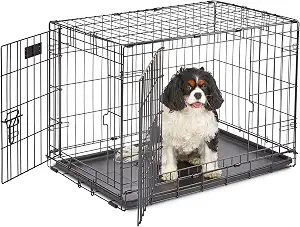 |
| Best Premium Kennel A higher-end kennel with upgraded materials and comfort features | Impact High Anxiety Crate 30" |  |
| Best Large-Capacity Kennel A roomy kennel for bigger breeds or dogs who like to stretch out | KOKOTANGS 54-Inch Dog Crate |  |
| Best Compact Kennel A smaller-footprint kennel designed for apartments and tight spaces | FDW 30" Foldable Dog Crate |  |
| Best Heavy-Duty Kennel A rugged, durable kennel built to withstand escape attempts and chewing | Mammoth Guardian Kennel 36" |  |
| Best Easy-Clean Kennel A kennel designed for quick cleaning after accidents or shed fur | Snuowu 47 Inch Heavy Duty Dog Crate |  |
BOLDBONE 54" Heavy Duty Dog Crate
Best Overall Kennel

| Material Type | Alloy Steel |
|---|---|
| Number of Doors | 2 |
| Number of Levels | 1 |
| Included Components | Divider, Leak-proof Pan, Lockable Caster Wheels, Removable Tray |
This BOLDBONE 54" heavy-duty crate is built to withstand strong, determined dogs while offering a flexible living space thanks to the removable divider. It is made from upgraded 20-gauge steel with reinforced steel tubes and double slide-bolt latches, which helps keep chewers and escape-prone dogs contained. The double-door design and low thresholds make access, feeding, and interaction straightforward, and the pull-out leak-proof tray speeds up cleaning. Four 360-degree caster wheels, two with brakes, let you move or lock the kennel in place for cleaning or repositioning. The powder-coated hammertone finish resists rust and is advertised as non-toxic for safe indoor or outdoor use. Trade-offs are its heavyweight construction which makes initial assembly and placement more demanding, and the crate is large so it requires ample floor space; the product also lacks padded flooring, so you will want a bed or mat for comfort. For homes with large breeds that need a secure, long-lasting enclosure and owners who value durability and easy maintenance, this model delivers practical, heavy-duty performance.
Best for: Buyers who need a rugged, reinforced crate to contain strong or anxious large and giant dogs and want a unit that adapts from puppy to adult with a removable divider.
Less Ideal for: People with very limited space, those who need a lightweight portable travel crate, or owners who prefer a soft-sided or heavily padded indoor-only crate.
- Removable divider allows use as two compartments or one large kennel as dogs grow.
- 20-gauge reinforced steel frame and reinforced tubes provide chewproof, escape-resistant construction.
- Double doors with low thresholds simplify access, feeding, and interaction.
- Pull-out leak-proof tray and removable pan make cleaning fast and hygienic.
- Lockable 360-degree caster wheels make moving and securing the crate easy.
- Heavy, bulky construction makes initial assembly and long-term repositioning more difficult.
- No included padded bedding or floor cushioning, requiring a separate bed for comfort.
Verdict: The best overall kennel for dogs with separation anxiety, balancing sturdy construction, comfort, visibility, and calming features that help reduce stress during alone time.
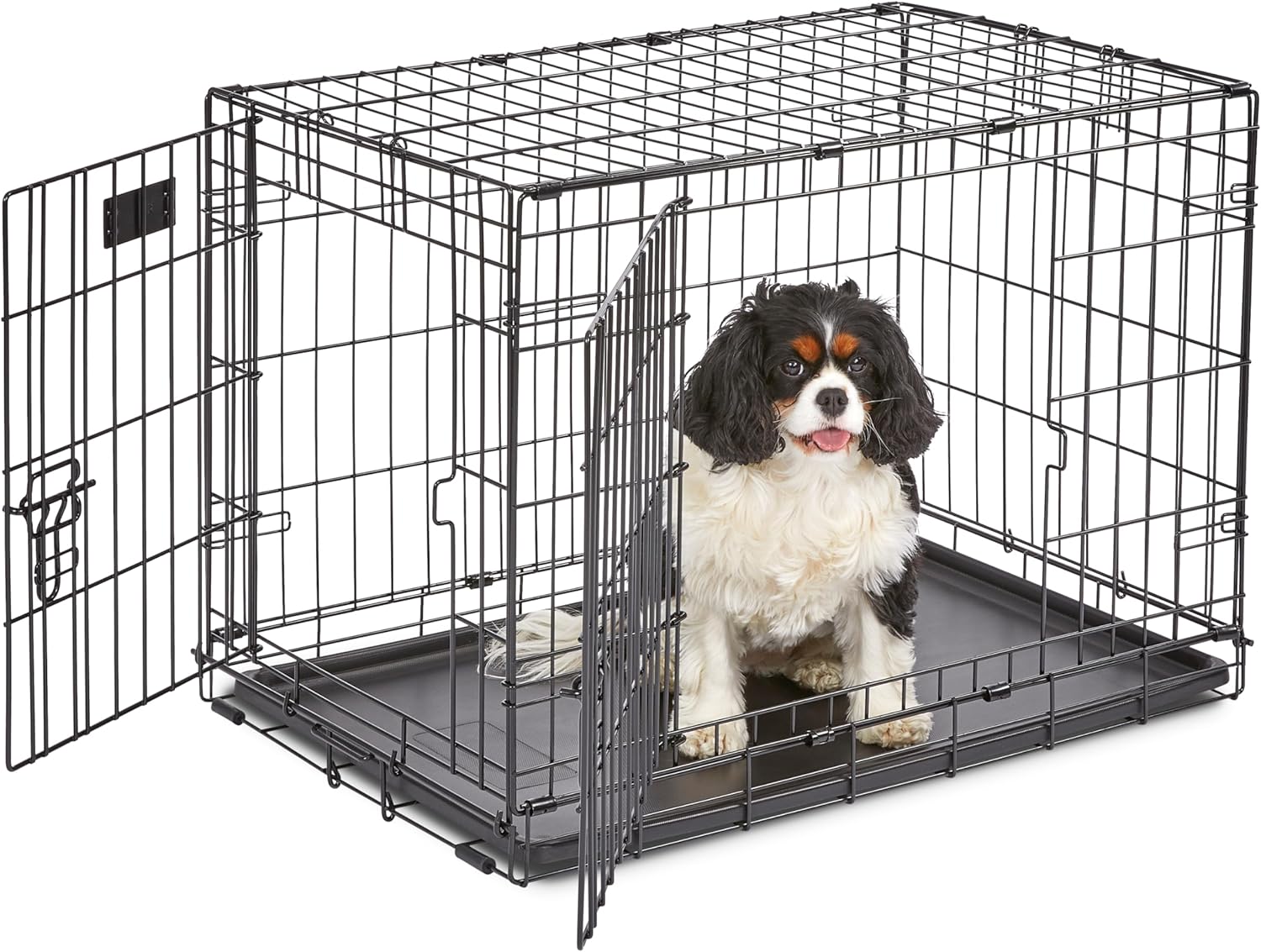
MidWest iCrate Double Door 30-inch
Best Budget Kennel
| Breed recommendation | Medium (21-40 lb) |
|---|---|
| Number of doors | 2 |
| Included components | Divider, Removable Tray |
| Material type | Metal |
The MidWest iCrate is a traditional wire dog crate that gives medium dogs a secure, portable den for home and travel use. It folds flat without tools and includes a carrying handle, so it is easy to move between rooms or pack for trips, and the single-piece leak-proof tray makes clean-up straightforward after travel accidents. The crate ships with a divider panel to adapt for puppies and has front and side doors for flexible placement in a car or hotel room. Security features such as slide-bolt latches with a Paw Block and locking tips reduce escapes and chewing at the latch, which is valuable for anxious dogs that test boundaries. Built from precision-welded metal wire with a rust-resistant black e-coat, it balances durability with a relatively light, foldable design. Limitations are typical for wire crates: it is not soft-sided for airline cargo and offers less sound insulation than fabric options, so anxious dogs that need a darker, cozier den may prefer a covered or soft-sided travel crate instead.
Best for: Traveling owners who move their dog frequently and want a sturdy, easy-to-fold metal crate that sets up quickly and keeps the dog contained during trips.
Less Ideal for: Owners who need a dark, insulated den for severe separation anxiety or an airline-approved soft travel crate should consider covered or soft-sided alternatives.
- Folds flat for tool-free setup and easy transport
- Included divider panel lets the crate grow with a puppy
- Leak-proof removable tray simplifies cleaning during travel
- Slide-bolt latches with Paw Block and locking tips improve security
- Front and side doors provide flexible placement in cars or rooms
- Wire design provides less thermal and acoustic insulation than soft-sided travel crates
- Not suitable as an airline-approved soft crate for checked baggage
Verdict: The best budget kennel for owners who need a safe, functional space for a dog with separation anxiety while keeping costs low and features straightforward.
Impact High Anxiety Crate 30"
Best Premium Kennel

| Material Type | Aluminum |
|---|---|
| Gap Size | 0.5 inches |
| Number of Doors | 1 |
| Additional Features | Durable, Safe, Secure, Stackable |
The Impact High Anxiety Crate is a premium, non‑collapsible aluminum kennel built for dogs that chew, dig, or otherwise try to escape. It is assembled from thick powder‑coated aluminum alloy with reinforced latches including a zinc steel paddle latch plus four butterfly latches, which together create a stiff, bite‑resistant door that resists repeated attack. The crate's smaller 0.5‑inch ventilation holes increase privacy and prevent paws or teeth from reaching through while the higher count of vents maintains airflow, making it a den‑like place that can reduce stress for dogs with separation anxiety. This model does not fold for travel and is not airline compliant, so it functions best as a durable home base rather than a portable option. Buyers should also allow time and patience for assembly and placement due to its solid construction. For owners prioritizing long‑term durability and a calming, escape‑proof space, this crate delivers a factory‑quality enclosure built to last.
Best for: Owners who prioritize a long‑lasting, escape‑proof home crate and are willing to invest in higher build quality to reduce anxiety and destructive escape behavior.
Less Ideal for: People who need a lightweight, foldable, or airline‑approved kennel for travel or frequent transport should look elsewhere.
- Very sturdy heavy‑gauge aluminum construction for long service life
- Multiple robust latches including zinc steel paddle latch for escape resistance
- Smaller 0.5‑inch gap size improves safety and reduces attempts to manipulate the crate
- Privacy‑focused ventilation pattern helps create a calming den while preserving airflow
- Not collapsible or airline compliant so it is not practical for travel or vehicle transport
- Requires assembly and is relatively heavy to move once built
Verdict: The best premium kennel for owners willing to invest in superior build quality, enhanced comfort, and thoughtful calming features to better support an anxious dog.
KOKOTANGS 54-Inch Dog Crate
Best Large-Capacity Kennel

| Overall crate size | 54 x 30 x 46 inches |
|---|---|
| Material | 20-gauge steel; 0.6 inch steel tubes |
| Number of doors | 2 |
| Included features | Adjustable divider; removable tray; lockable casters; 4 locks |
| Max. static load capacity | 300 lb |
This 54-inch KOKOTANGS kennel is a heavy-duty metal enclosure built for large or tall dogs and for owners who need a secure, roomy space for separation training. It uses 20-gauge steel with reinforced 0.6-inch tubes and four stainless locks to resist chewing and escape attempts, and a powder-coated finish helps prevent rust for indoor or occasional outdoor use. The included adjustable divider makes it practical for growing puppies or separating two dogs, while the raised wire floor grid with a slide-out removable tray speeds cleanup. Four 360-degree casters, two lockable, let you reposition the crate for cleaning or room changes without disassembly. Assembly is straightforward since the unit ships partly assembled. Trade-offs are its substantial weight and footprint, which make it less convenient for frequent travel or cramped living spaces, and the metal design offers less soft comfort than padded or fabric options unless you add bedding inside.
Best for: Buyers who need a secure, spacious kennel for large or tall dogs that will spend extended time alone and who prioritize durability and escape resistance during separation training.
Less Ideal for: People who need a portable travel crate or those with very limited indoor space should consider lighter or more compact alternatives.
- Very sturdy 20-gauge steel construction and reinforced tubes resist chewing and escape attempts
- Adjustable divider lets you tailor interior space as a puppy grows or to separate two dogs
- Removable slide-out tray and wire floor grid simplify daily cleaning
- Lockable 360° caster wheels make it possible to move and then secure the heavy crate in place
- Double-door and top access improve feeding, interaction, and training convenience
- Large, heavy footprint that is difficult to relocate without wheels and can dominate indoor space
- Metal interior can be cold or hard so bedding is required for comfort
Verdict: The best large-capacity kennel for large or tall dogs and pets who need extra space to move and settle comfortably while left alone.
FDW 30" Foldable Dog Crate
Best Compact Kennel

| Breed Recommendation | Medium |
|---|---|
| Number of Doors | 2 |
| Material Type | Metal |
| Included Components | dog crate |
| Additional Features | Easy Assembly |
The FDW 30" foldable dog crate is a straightforward metal kennel built for basic containment, training, and travel. Its powder-coated metal wire frame and double-door layout let you access the dog from the front or side, while the removable leak-proof plastic tray makes daily cleaning quick. The crate folds flat for storage or transport and includes a handle for moving it between rooms. Setup is simple and tool-free, which suits temporary setups or owners who need an inexpensive spare crate. The construction is adequate for routine indoor use and for most calm or moderately active small to medium dogs, but very determined chewers or heavy escape artists may test the wire and locks. It lacks padded flooring or integrated bedding, so you will want to add a mat for comfort. The crate balances low cost with useful features like the divider panel and dual doors, making it a practical value pick when you need basic durability and portability rather than premium materials or heavy-duty security.
Best for: Buyers who want a low-cost, no-frills indoor crate that is easy to set up, move, and clean for everyday containment or basic training.
Less Ideal for: Owners needing a heavy-duty, chew-proof kennel or who want an all-in-one crate with integrated cushions and premium finishes.
- Foldable metal frame for easy storage and transport
- Double doors (front and side) for flexible access
- Removable leak-proof plastic tray simplifies cleanup
- Tool-free, quick assembly and included divider for growing puppies
- Powder-coated finish resists rust for indoor or occasional outdoor use
- Not designed for very strong chewers or dogs that push on latches
- No built-in padding or bedding included
Verdict: The best compact kennel for owners in apartments or small homes who need a secure, anxiety-reducing space that fits into limited floor areas.
Mammoth Guardian Kennel 36"
Best Heavy-Duty Kennel

| Size | 36" Guardian (listed dimensions 24 x 26.4 x 36.9 inches) |
|---|---|
| Dog Breed Size | Medium |
| Included Components | Bowl |
| Compatible with Vehicle Type | ATV, Boat, Car, Truck, UTV |
The Mammoth Guardian Kennel is a rugged, travel-focused crate built to keep active dogs secure during road and outdoor adventures. Constructed from durable plastic with a powder-coated steel frame and reinforced corners, it is designed to absorb bumps and minimize vibration when mounted in trucks, SUVs, ATVs, boats, or trailers. The steel-framed door with a three-bolt latch gives a wide opening for easy access and a secure closure, and built-in food and water dishes and detachable wheels simplify long trips and handling. The kennel is marketed as airline-compatible with minor adjustments and can be paired with an optional roll cage for extra protection. Practical benefits include chew-resistant construction and features aimed at reducing stress on the dog during travel, but its weight and bulk mean it is best suited to permanent or semi-permanent installation in vehicles rather than frequent daily moves around the house. Buyers should also plan for the kennel footprint and how they will anchor it in a vehicle since it is substantial and designed for heavy-duty use.
Best for: Owners of strong, active dogs who prioritize a durable, travel-ready kennel that stays secure and protected during off-road driving, hunting trips, and extended vehicle travel.
Less Ideal for: Owners who need a lightweight, frequently portable crate for daily indoor use or those with very limited vehicle cargo space.
- Heavy-duty, chew-resistant plastic body with powder-coated steel frame for impact and vibration resistance
- Steel-framed door with 3-bolt latch provides wide clearance and secure locking
- Built-in food and water dishes and detachable wheels make long trips easier to manage
- Designed for multiple vehicle types and camping or hunting use, with optional roll cage for added security
- Large and heavy, so not convenient for frequent in-home moves or lightweight travel setups
- May require vehicle-specific anchoring and space planning due to its substantial footprint
Verdict: The best heavy-duty kennel for dogs with high energy or escape behaviors, offering reinforced construction and durable materials to keep anxious pets contained safely.
Snuowu 47 Inch Heavy Duty Dog Crate
Best Easy-Clean Kennel

| Material Type | Metal |
|---|---|
| Number of Doors | 1 |
| Number of Levels | 1 |
| Included Components | Removable Tray |
| Dog Breed Size | Large |
This 47-inch heavy-duty metal crate is built for large, strong dogs and focuses on durability and easy cleanup. It uses upgraded steel construction and a slide-out removable tray that catches waste and makes spot cleaning quick, which is helpful during separation training or for dogs that soil occasionally. The crate rolls on four 360-degree casters that lock in place so you can move it to clean under or around the kennel and then secure it during use. The front door has an upgraded multi-lock design intended to keep determined dogs from escaping while still allowing easy access for feeding or comforting the pet. Assembly is described as straightforward with numbered parts and should take around 20 minutes. Trade-offs are its substantial weight and large footprint, which limit portability compared with soft-sided or smaller crates, and it lacks included washable liners or bedding so you will need separate pads for full washable protection.
Best for: Buyers who need a sturdy, easy-to-clean metal crate for separation training and want a removable-tray solution that keeps the kennel sanitary with minimal daily effort.
Less Ideal for: Owners who want a lightweight, collapsible travel crate or those who expect an all-in-one kit with washable liners and bedding included.
- Slide-out removable tray enables fast spot cleaning of solid and liquid messes
- Four 360-degree casters let you move the crate easily and lock it in place
- Upgraded steel construction provides high strength for large or powerful dogs
- Front door with multiple locks increases escape resistance during training
- No included washable liner or bedding is provided
- Heavy and bulky, making it harder to transport or fit in small spaces
Verdict: The best easy-clean kennel for owners who prioritize hygiene and convenience, featuring removable trays, washable surfaces, or wipeable materials to manage messes efficiently.
Choosing the Right Dog Kennel Separation Anxiety: Key Factors to Consider
Calming Interior and Bedding
A kennel used to manage separation anxiety should provide a den-like interior that feels safe. Soft, supportive bedding and textured surfaces help dogs settle and can reduce cortisol spikes during alone time. Choose materials that retain warmth without overheating and that do not shift or bunch when the dog moves. Removable, machine-washable bedding is important for hygiene because frequent cleaning prevents odors that can increase stress.
Some dogs prefer raised pads or bolstered edges that allow them to rest their head and feel enclosed. Look for bedding designed to stay in place inside the kennel and for fabric choices that tolerate repeated washing while retaining shape and softness.
Secure Latches and Escape Prevention
During panic responses, an anxious dog may attempt to force an exit. Solid latching systems and reinforced frames reduce the risk of escape and of the dog injuring itself on a weak door or hinge. Check that doors close cleanly and that latches engage without sharp edges or pinch points. For active escape artists, consider kennels with double-latch designs or recessed mechanisms that an anxious paw cannot manipulate.
The kennel should maintain structural integrity under stress. Welded seams, robust corner joints, and heavy-gauge materials increase durability and lower the chance of failure if the dog scratches or leans hard against the sides.
Ventilation and Visual Control
Good airflow prevents overheating and helps maintain a comfortable microclimate inside the kennel. Ventilation that also allows selective visual blocking can reduce triggers by limiting the dog's view of comings and goings. Panels or covers that provide partial sightline reduction give dogs the sense of a secure den while still permitting some light and airflow.
Avoid designs that are overly exposed if your dog is reactive to outside movement. Conversely, fully enclosed options can feel claustrophobic for some dogs, so pick a balance based on your pet's behavior. Removable panels or adjustable covers give flexibility as the dog's tolerance changes during training.
Size and Fit for Comfort
A properly sized kennel allows the dog to stand, turn, and lie down naturally. Too-small kennels increase stress and can worsen separation anxiety, while oversized kennels may reduce the den-like feeling that comforts some dogs. Measure your dog from nose to tail and shoulder to floor to choose appropriate dimensions.
Consider growth if you have a young dog and whether the kennel will be used for an extended period. Some kennels include dividers to create a smaller space within a larger unit, which helps adapt the interior without swapping products.
Ease of Cleaning and Maintenance
Regular cleaning is part of a kennel routine for an anxious dog to maintain hygiene and reduce lingering stress cues. Kennels with removable trays, washable liners, and surfaces that resist odors cut down on maintenance time and keep the environment inviting. Avoid fabrics that trap moisture or materials that require special cleaning agents.
Durable finishes that resist scratches and corrosion extend service life and keep the kennel safer during vigorous use. Consider how easy it is to reach corners and hardware for routine checks and sanitizing.
Access Points and Owner Interaction
How you interact with your dog while they are in the kennel matters for training. Kennels with multiple access points or top openings allow you to place treats, add calming items, or perform short training exercises without fully opening the main door. This supports gradual desensitization and reward-based conditioning.
Also consider how the kennel fits into your daily routine. Doors that swing in predictable ways and latches you can operate with one hand make quick interactions less disruptive for the dog and easier for the handler, especially when managing timed departures or returns.
How Can I Use a Kennel to Reduce Separation Anxiety?
A kennel becomes a management and training tool when introduced gradually and paired with predictable routines. Start by making the kennel a positive space: feed meals inside, leave short supervised sessions with a door open, and reward calm behavior. Build duration slowly so the dog associates the kennel with safety rather than punishment.
Establish departure cues that are neutral instead of dramatic goodbyes. Use short absences at first and return calmly to avoid reinforcing frantic greetings. Over time, extend solo periods and continue to pair kennel time with calming items like a favorite toy, a chew, or a blanket that carries your scent.
- Begin with door open and short intervals before progressing to closed-door sessions
- Use high-value rewards to encourage voluntary entry and relaxed settling
- Keep departures and arrivals low-key to avoid cueing anxiety
What Type of Bedding and Scents Help Calm an Anxious Dog?
Soft, supportive bedding that allows the dog to curl naturally promotes relaxation. Bolstered beds and nest-style pads create a sheltered feeling that many dogs find comforting. Choose fabrics that are easy to wash and that retain loft after laundering.
Familiar scents from the owner can be soothing. Placing an unwashed t-shirt or a small blanket with your scent inside the kennel gives the dog a calming reference while you are away. Avoid strong artificial fragrances, which can be irritating; subtle, familiar smells work best.
- Prefer machine-washable, quick-dry materials
- Use familiar, lightly scented items rather than strong perfumes or sprays
Should I Cover the Kennel or Use a Privacy Panel?
Covering a kennel partially can recreate a den-like environment and reduce external triggers. Lightweight covers that allow airflow and do not trap heat are ideal. Test coverage gradually to see if your dog settles more quickly or shows signs of discomfort.
Provide an option to uncover the kennel when you are present so the dog does not associate the cover only with isolation. Adjustable solutions let you fine-tune how much visual stimulus the dog experiences as they progress in training.
- Use breathable covers that do not block ventilation
- Introduce covers slowly while supervising for the dog's comfort
How to Size a Kennel for a Growing Dog
Measure your dog's length and height and add space to stand and turn. For puppies, look for kennels with dividers that let you reduce the usable interior while they are small, then remove the divider as they grow. This preserves the den-like feel without forcing an early upgrade.
If you plan to use the kennel long term, prioritize a size that will be comfortable at maturity rather than buying a unit that will quickly become too small. Confirm that the kennel's doorway and internal layout suit the dog's body shape and mobility needs.
- Use a divider for puppies to keep the space cozy
- Confirm door height and width support easy entry and exit
What Safety Checks Should I Do Before Daily Use?
Inspect latches, hinges, and welded seams regularly to ensure nothing has loosened or bent. Replace or repair any damaged hardware before allowing the dog unsupervised time inside. Check bedding for loose threads or pieces that could be ingested and remove chewable items if your dog tends to destroy toys.
Ensure ventilation is unobstructed and that the kennel is placed away from drafts, heat sources, or cords. Place the kennel on a stable, level surface to prevent tipping and to make access predictable for the dog.
- Perform a quick hardware check daily and a more thorough inspection weekly
- Remove small or easily destructible items from the kennel with anxious chewers
How We Chose the Best Dog Kennel Separation Anxiety
We selected kennels using practical, behavior-focused criteria tailored to dogs with separation anxiety. First, we prioritized kennels that offer calming surfaces or accessories because tactile comfort and den-like textures reduce arousal for many anxious dogs. Second, we looked for sturdy construction and secure latching to prevent self-injury or escape attempts during panic episodes. Third, ventilation and sightlines were evaluated to ensure good airflow while offering options to reduce visual triggers. Fourth, we considered features that support routine and training, such as easy cleaning, modular layouts, and compatibility with calming covers or inserts. Fifth, portability and size options mattered so owners can match kennel dimensions to their dog's size and to the home environment. Finally, we assessed ease of use for owners, including assembly, access points, and how simple it is to integrate the kennel into a desensitization plan. We excluded products that were primarily decorative, lacked basic safety features, or were designed only for short-term travel use. The final selection focuses on kennels suitable for repeated daily use during training and management of separation anxiety, prioritizing long-term durability, canine comfort, and features that support positive behavior change.
Our full evaluation process is outlined in our review methodology.
FAQ
Will a kennel make my dog's separation anxiety worse?
A kennel is a tool and can help or hurt depending on how it is used. When introduced gradually with positive reinforcement and paired with comforting items, kennels often reduce anxiety by creating a predictable safe space. If a dog is forced into a kennel abruptly or punished with confinement, stress can increase.
How long can I safely leave my dog in a kennel while working?
Duration depends on the dog's age, health, and training progress. Many adult dogs tolerate several hours if they are trained gradually and have been given exercise beforehand. Puppies and dogs with severe anxiety usually need shorter, supervised intervals and a structured plan to increase alone time over weeks.
Is crate training or kennel training better for separation anxiety?
The terms overlap, but the emphasis matters. Training that focuses on voluntary entry, reward-based settling, and gradual desensitization is most effective. A kennel used only for confinement without training is less likely to help and may worsen anxious responses.
Can I leave calming supplements or chews in the kennel?
Some dogs benefit from safe enrichment items placed in the kennel, but choose chews and supplements carefully. Avoid small items that can be swallowed, and consult your veterinarian before using oral supplements. Items that occupy attention without posing an ingestion risk are preferable.
How do I know if my dog is comfortable in the kennel?
Look for relaxed body language such as soft eyes, normal breathing, and voluntary resting. Signs of discomfort include frantic pacing, excessive salivation, persistent vocalizing, or attempts to escape. If those behaviors occur, shorten sessions and return to earlier training steps.
Final Verdict
A kennel can be a valuable part of a separation anxiety plan when chosen and used with the dog's emotional needs in mind. Prioritize features that promote calmness and safety: a cozy interior, secure construction, proper ventilation, and easy cleaning. Tradeoffs are inevitable — for example, a more secure, heavy-duty kennel may be less portable — so match the features to your dog's behavior and your household routine. Start slowly, use positive reinforcement, and adjust the environment as your dog's tolerance improves. When you focus on predictable cues, comfort, and structural safety, a well-chosen kennel becomes a steady, calming refuge rather than a source of stress.

