

If your dog routinely scoops up harmful items on walks or at home, a muzzle made specifically to prevent eating can reduce risk while you correct the behavior. The right muzzle stops scavenging without blocking panting or causing undue stress, so you can keep outings safe and maintain basic comfort. This guide shortlists five top muzzles to prevent eating and explains the differences that matter for daily use. Below you will find what to prioritize, practical fit and handling tips, and quick answers to common owner questions before you decide.
Top Picks at a Glance
| Best Overall Muzzle The most well-rounded muzzle balancing safety, comfort, and function | Baskerville Ultra Dog Muzzle Size 2 |  |
| Best Budget Muzzle A low-cost muzzle that still safely prevents food ingestion | Evollax Soft Air Mesh Dog Muzzle Large |  |
| Best Anti-Eating Muzzle Specifically designed to stop scavenging, pawing, and gorging behaviors | Mayerzon Mesh Dog Muzzle XS |  |
| Best Adjustable Muzzle Wide-fit options and easy adjustments for different snout sizes | Pawfun Soft Mesh Dog Muzzle L |  |
| Best Breathable Muzzle Ventilated, padded design for comfort during longer wear | Evollax Soft Mesh Dog Muzzle Medium |  |
Baskerville Ultra Dog Muzzle Size 2
Best Overall Muzzle

| Material Type | Thermoplastic Elastomer (TPE) |
|---|---|
| Closure Type | Buckle |
| Breed Recommendation | Small |
| Size | 2 |
The Baskerville Ultra is a basket-style TPE dog muzzle intended for training, handling reactive dogs, and daily walks where preventing biting or scavenging is needed. Its open, humane design lets dogs pant, drink, and accept treats, which makes it comfortable for longer wear and warm-weather use. The muzzle can be heat-shaped with warm water to better match different nose shapes and comes with padded straps, a lockable neck-strap clip and headstrap plus a collar attachment for extra security. Constructed from thermo plastic elastomer it is strong enough to resist biting while staying lightweight and without metal on the face. Important limits: fit is size-dependent so you need to follow the sizing guide and may need to customize the shape, and basket muzzles do not stop all forms of mouth behavior like heavy chewing on very tough objects. For owners who need a breathable, secure muzzle that a dog can still pant and drink in, the Ultra is a practical, real-world choice.
Best for: Buyers who prioritize airflow and comfort during extended wear and need a secure muzzle for reactive or handled dogs will appreciate this design.
Less Ideal for: Owners seeking a muzzle to fully prevent destruction of very tough chews or who need a soft cloth-style muzzle for brief restraint should consider alternatives.
- Basket design allows panting, drinking, and treat delivery during wear
- Heat-shapable for a more customized fit to varied nose shapes
- Padded straps and multiple attachments for a secure, comfortable fit
- Thermoplastic elastomer construction provides strength without metal on the face
- Requires correct sizing and occasional heat shaping to fit well
Verdict: The best all-around muzzle that prevents eating while offering a secure fit, comfortable wear, and reliable materials for everyday use.
Evollax Soft Air Mesh Dog Muzzle Large
Best Budget Muzzle

| Size | Large (7.9"-9.4") |
|---|---|
| Material Type | Premium Mesh |
| Closure Type | Buckle |
| Breed Recommendation | Large Breeds |
The Evollax soft air mesh muzzle is a lightweight, foldable muzzle designed to limit biting, chewing and scavenging while still allowing panting, drinking and receiving treats. It fits snout circumferences of about 7.9" to 9.4" and is built from breathable premium mesh with soft padding around the nose and an adjustable neck strap with quick-release buckle for securing and removing the muzzle quickly. Typical uses are short supervised sessions: grooming, vet trips, nail trims, controlled walks or training introductions where you need a simple restraint rather than heavy-duty protection. Practical benefits include easy cleaning by rinsing or wiping, compact packability for travel, and an airflow-friendly design that keeps dogs comfortable compared with rigid basket muzzles. Important limitations are that mesh is not chew-proof and the design is not suitable for determined chewers or aggressive dogs that need a more robust, structured muzzle; it also does not fit short-snouted breeds and requires careful measuring and gradual training for comfortable wear.
Best for: Buyers who need an inexpensive, functional muzzle for occasional supervised tasks like grooming, vet visits, short walks and basic training where comfort and breathability matter more than heavy-duty restraint.
Less Ideal for: Owners seeking a chew-proof, heavy-duty or long-term containment solution, or those with short‑snouted breeds that require a different muzzle shape.
- Breathable premium mesh with nose padding for comfort and airflow
- Adjustable neck strap with quick-release buckle for fast on/off
- Lightweight, foldable design that is easy to carry and store
- Simple to clean — rinse or wipe after use
- Mesh construction is not chew-resistant and can be damaged if the dog chews
- Intended for short supervised use only, not for heavy-duty protection
Verdict: The best budget muzzle for owners who need an affordable, effective barrier against eating without complex features.
Mayerzon Mesh Dog Muzzle XS
Best Anti-Eating Muzzle

| Item Type Name | Mesh |
|---|---|
| Closure Type | Buckle |
| Breed Recommendation | Extra small |
| Size | XS: Snout:6"-7¼" |
| Material Type | Mesh |
The Mayerzon Mesh Dog Muzzle is a soft, fully enclosed muzzle intended to stop dogs from scavenging, licking wounds, or taking unwanted items while still permitting normal breathing and drinking. It slips on and secures with adjustable forehead and neck straps plus a quick-release buckle, and an elasticized front helps keep the fit snug. The lightweight mesh construction makes it comfortable for short supervised outings and easy to fold and carry in a pocket. Practical benefits include a full-cover design that blocks access to food and small objects, breathable mesh for panting and hydration, and a bottom loop that lets you thread the collar for extra security. Important limitations are that the soft mesh is not bite- or chew-proof, so it is unsuitable for long-term containment or aggressive chewers, and sizing must be accurate for effectiveness—ill-fitting sizes can be pulled off. The product is best used as a supervised anti-scavenging tool for walks, vet visits, grooming, and short recovery periods.
Best for: Owners who need a humane, breathable muzzle to stop scavenging or licking during short supervised walks, vet visits, grooming, or recovery and who will fit and supervise the muzzle closely.
Less Ideal for: People seeking a heavy-duty, chew-proof muzzle for aggressive biters or for leaving on dogs unsupervised should choose a sturdier basket-style option.
- Fully covered mesh blocks access to food and prevents licking or scavenging.
- Breathable design allows panting and drinking while muzzled.
- Adjustable forehead and neck straps plus quick-release buckle for easier fitting and removal.
- Lightweight and foldable for easy transport and short-term use.
- Bottom loop enables threading the collar for additional security.
- Soft mesh construction is not bite- or chew-proof and can be damaged by determined dogs.
- Not intended for long unattended use or for dogs with high bite risk.
Verdict: The best anti-eating muzzle engineered to prevent food intake and scavenging with a design that restricts access while allowing panting.
Pawfun Soft Mesh Dog Muzzle L
Best Adjustable Muzzle
| Size | L (Snout Cir: 10.12) |
|---|---|
| Closure Type | strap |
| Breed Recommendation | Small Breeds, Medium Breeds, Large Breeds |
| Pet Type | Dog |
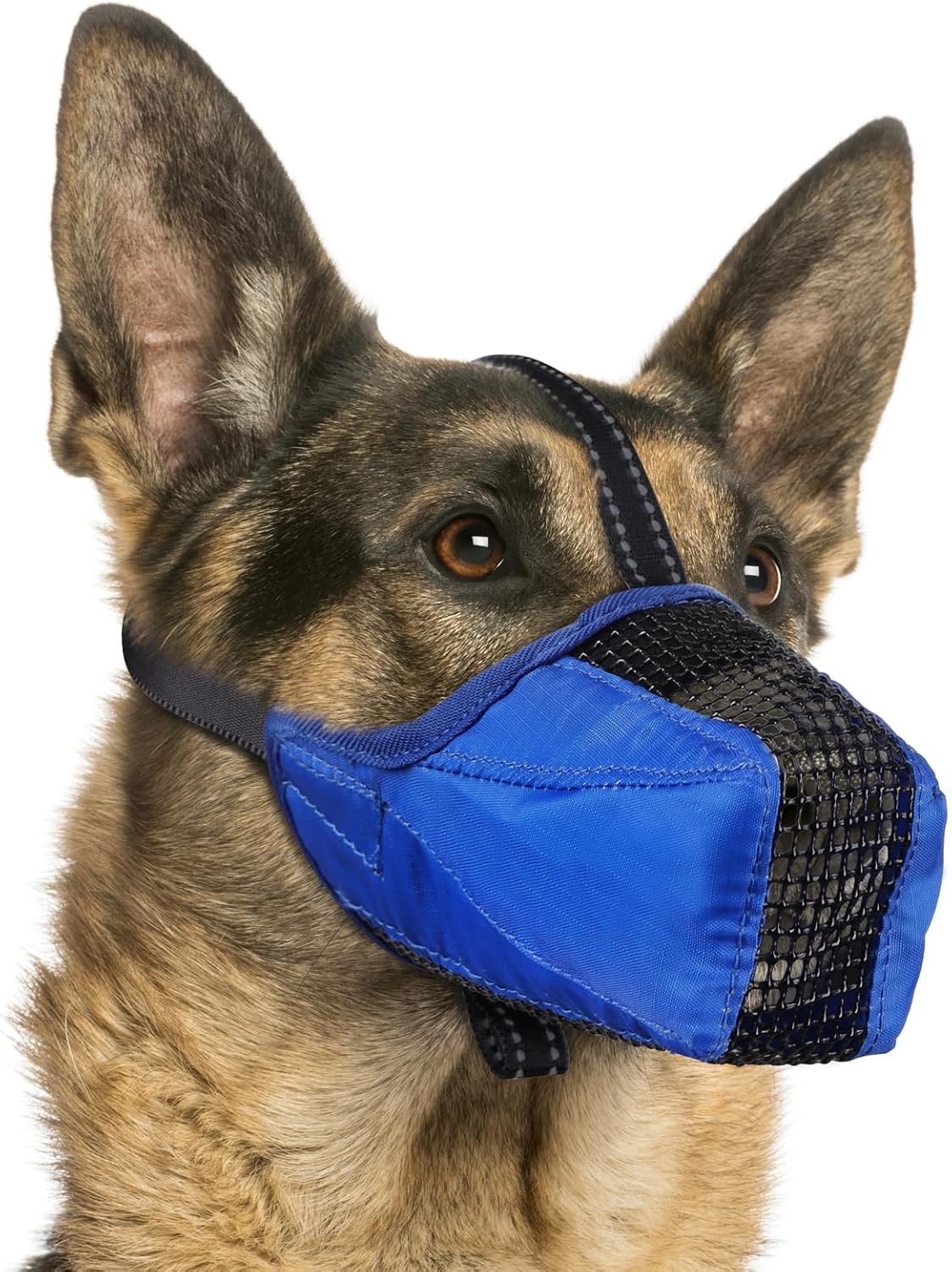
The Pawfun soft mesh muzzle is built for short outings, vet visits, grooming, and training where you need to prevent chewing or scavenging without fully restricting the dog. It fastens with adjustable straps so you can fine-tune the fit for varied snout shapes and growing dogs, and the reinforced nylon mesh and smooth edges aim to reduce rubbing during wear. Because the design leaves room for panting, drinking, and small treats, it works well during supervised sessions and reward-based training. The lightweight construction is comfortable for most dogs for short-to-moderate periods, but the soft mesh is not chew-proof so persistent chewers can damage it over time. Measuring snout circumference and length before ordering is important to get a secure fit and avoid slipping. For preventing eating and scavenging during walks or at the vet, this muzzle strikes a practical balance between control and comfort when used with supervision and correct sizing.
Best for: Owners who need a customizable, comfortable muzzle to stop eating, scavenging, or unwanted biting during vet visits, grooming, walks, or training while still allowing panting and drinking.
Less Ideal for: Dogs that are aggressive chewers or require a rigid, chew-proof muzzle for long unattended periods should consider sturdier, wire or basket-style alternatives.
- Adjustable strap system allows a customizable fit for different snout shapes and growing dogs
- Breathable soft mesh design permits panting, drinking, and taking small treats during training
- Lightweight construction and smooth edges reduce rubbing and improve comfort for short-to-moderate wear
- Reinforced nylon offers daily-use durability compared with plain mesh
- Soft mesh is vulnerable to determined chewing and not suitable as a chew-proof barrier
- Designed for supervised, short-term use rather than continuous long-term restraint
Verdict: The best adjustable muzzle for owners seeking a customizable, secure fit across varying snout shapes and growing dogs.
Evollax Soft Mesh Dog Muzzle Medium
Best Breathable Muzzle

| Breed Recommendation | Medium Breeds |
|---|---|
| Closure Type | Buckle |
| Dog Breed Size | Medium |
| Size | Medium ( 5.5” – 7.8” ) |
The Evollax soft mesh muzzle is a lightweight, foldable muzzle for medium dogs that focuses on airflow and everyday comfort. It is made from breathable mesh with padding around the nose and adjustable straps with a quick-release buckle, so it stays secure for short sessions like vet visits, grooming, nail trims, walks, or controlled training. The design allows panting, drinking, and receiving treats, making it suitable for active dogs who still need to regulate temperature. Cleaning is simple since the mesh can be wiped or rinsed after use, and the muzzle packs flat for carrying on trips. Important limitations are that it is a soft-style muzzle, so it is meant for temporary containment and behavior management rather than heavy-duty restraint, and it is not suitable for short-snouted breeds; accurate measurement is required for a proper fit. Introduce it gradually with positive reinforcement to help your dog accept it for the intended short-term uses.
Best for: Owners who prioritize ventilation and want a muzzle that permits panting, drinking, and short-term use during grooming, vet visits, walks, or training while keeping their dog contained.
Less Ideal for: People needing a heavy-duty or rigid basket muzzle for strong chewers or long periods of continuous restraint should choose a sturdier alternative.
- Breathable mesh construction allows good airflow so dogs can pant and drink
- Soft padding around the nose reduces rubbing and increases comfort
- Quick-release buckle and adjustable neck strap for secure, easy on/off
- Lightweight, foldable design is easy to carry and store
- Easy to clean by wiping or rinsing the mesh material
- Soft mesh design is for temporary use and not intended for heavy-duty restraint
- Not suitable for short-snouted breeds and requires careful measurement
Verdict: The best breathable muzzle for dogs that need airflow and comfort while preventing eating during walks or training.
Choosing the Right Dog Muzzle Eating: Key Factors to Consider
Fit and Sizing
Getting the right size is essential for both effectiveness and comfort. A muzzle that is too loose can slip off or allow a dog to reach food, while one that is too tight can rub, chafe, or restrict breathing.
Measure snout circumference and length accurately, and follow the manufacturer's sizing chart closely. Look for muzzles with adjustable straps and multiple points of adjustment so you can fine-tune the fit. Consider the dog's activity level; an active dog that pulls may need a more secure fit than a calm companion. Check for padding at contact points to minimize rubbing on the nose and behind the ears. When fitting, ensure there is enough space for the dog to pant comfortably, since panting is the primary way dogs cool themselves. Finally, recheck fit after the dog has worn the muzzle a few times because straps can settle and padding can compress.
Breathability and Panting
A muzzle intended to stop eating must still permit unrestricted panting to avoid overheating. Designs with rigid cages or open-frame shapes are often better at keeping an air channel open, while soft closures can collapse against the snout.
Look for models with ventilated panels, mesh with structured support, or cage-like frameworks that maintain space in front of the nose. Evaluate how the design performs during normal activity; the dog should be able to open its mouth enough to pant and drink small amounts if the muzzle allows it. Materials that retain heat or block airflow can create a risk during warm-weather walks or strenuous activity. If you live in a hot climate, prioritize maximum airflow and limit muzzle use to short, supervised periods.
Material and Durability
Materials determine both comfort and how long the muzzle will last under frequent use. Leather and coated fabrics offer durability and a tidy look, while bonded nylon and rubberized plastics can be easier to clean and more water-resistant.
Consider the surface finish where the muzzle contacts fur and skin; rough edges or abrasive seams cause chafing. Harder materials are less likely to be chewed through but may need padding to remain comfortable. Water-resistant or quick-dry materials are useful if your dog encounters wet conditions. Stitching quality, rivets, and reinforced attachment points all contribute to longevity. If the muzzle will be used daily, pick a construction that tolerates repeated donning and cleaning without losing structural integrity.
Adjustability and Security
A muzzle must stay in place during normal movement and when the dog shifts or lunges. Secure attachment points and intuitive adjustment make the muzzle practical for regular use.
Check for multiple adjustment buckles, durable fasteners, and a strap configuration that prevents twisting. A well-designed neck strap and an over-the-head strap help keep the muzzle aligned. Fastening systems should be robust but not overly complex, since you need to be able to remove the muzzle quickly in an emergency. Consider how the muzzle interacts with other gear, such as collars and harnesses, to avoid interference. Security features that prevent the dog from loosening the muzzle by pawing are useful, but also ensure the dog cannot completely remove it while unsupervised.
Comfort Features and Wear Time
Comfort determines whether a dog will tolerate the muzzle for the time you need it to. Padded nose bridges, soft edges, and breathable liners all reduce stress and potential skin irritation.
Think about the expected wear time: short supervised outings require less soft padding than longer training sessions. Some muzzles include quick-release buckles or extra soft inner linings that enhance tolerance during initial training. Avoid designs that concentrate pressure on small areas of the snout or behind the ears. Allowing the dog to acclimate gradually to the muzzle through positive reinforcement increases tolerance and reduces anxiety-associated behaviors. Always plan for supervised use initially so you can monitor comfort and adjust fit.
Ease of Cleaning and Maintenance
Muzzles that prevent eating will inevitably get dirty from outdoor debris and saliva, so easy cleaning matters for hygiene and longevity. Materials that trap odor or absorb moisture require more frequent maintenance.
Choose waterproof or wipe-clean surfaces for heavy outdoor use. Mesh and textile-lined interiors should be removable or quick-drying to avoid mildew. Check whether hardware is corrosion-resistant if the muzzle will be exposed to wet conditions. Simple designs without many nooks are easier to disinfect. Regular cleaning also helps you spot wear early and prevents skin irritation. Consider whether replacement parts such as straps or buckles are available if you expect long-term use.
How Long Can My Dog Safely Wear a Muzzle That Prevents Eating?
Short supervised sessions are the safest approach. For preventing eating during walks or training, limit continuous wear to the length of the outing and watch for signs of stress or difficulty panting. If your dog needs a muzzle for more than 20 to 30 minutes, plan rest breaks where you remove the muzzle in a cool, shaded area and offer water if the design allows.
Extended use indoors or unsupervised is not recommended because muzzles can obscure signs of overheating, prevent normal drinking in some designs, and cause rubbing over time. Use incremental conditioning to build tolerance rather than relying on prolonged wear.
- Check breath rate and behavior frequently during use.
- Remove the muzzle immediately if the dog shows heavy panting, drooling, or attempts to claw it off.
- Keep sessions short when introducing a muzzle for the first few times.
Can Muzzles Allow Drinking While Still Blocking Eating?
Some muzzles are designed to permit small amounts of drinking while still preventing the dog from scooping up food or nonfood items. Cage-style and open-frame muzzles typically let a dog tip a water bowl or lap water from a shallow container. Soft muzzles that close tightly over the snout generally prevent drinking.
If maintaining access to water is important for your use case, choose a design that explicitly allows drinking and test it in a controlled setting before relying on it during longer outings.
- Test drinking with a familiar bowl before leaving the house.
- Offer water during breaks if the muzzle restricts drinking.
- Prefer open designs in hot weather to prevent overheating.
How to Introduce a Muzzle Without Causing Anxiety
Start with short, positive sessions using high-value rewards and a calm environment. Let the dog sniff the muzzle, then reward any relaxed interest. Gradually work up to touching the muzzle to the nose, then to fastening it briefly while continuing to give treats. Keep initial sessions under a minute and increase duration slowly as the dog remains comfortable.
Avoid forcing the muzzle on quickly or using it as a punishment, since that creates a negative association. Use consistent verbal cues and praise to make the experience predictable. If your dog becomes highly stressed, stop the session and try again later with smaller steps.
- Use treats the dog really likes for shaping acceptance.
- Practice putting the muzzle on and taking it off calmly.
- Pair muzzle sessions with short walks or play once tolerance increases.
What to Do if the Dog Keeps Trying to Remove the Muzzle
Persistent attempts to remove a muzzle often mean fit, comfort, or anxiety issues. First, verify the fit and padding; adjust straps so the muzzle stays in place without pinching. Check for chafing or pressure points that could be causing irritation.
If fit is correct, revisit your training plan to desensitize the dog more gradually. Use high-value rewards when the muzzle is worn correctly, and avoid leaving the muzzle on longer than necessary. For some dogs, alternating short muzzle sessions with breaks reduces the urge to paw at it.
- Inspect for loose hardware or worn straps that let the muzzle move.
- Try different padding positions to relieve pressure points.
- Reward calm behavior and end sessions before frustration builds.
Are There Legal or Safety Considerations when Using a Muzzle?
Local regulations sometimes require muzzles in specific contexts, such as transport or certain public spaces. Beyond legal aspects, safety concerns focus on ensuring the dog can breathe and does not overheat. Always supervise a muzzled dog in unfamiliar settings and avoid leaving a dog alone when muzzled.
Use muzzles as a management tool rather than a substitute for training. They reduce the immediate risk of eating hazardous items, but owners should continue working on leash control, obedience, and environmental management to address the root behavior.
- Confirm local rules about muzzling for the situations you expect to use it.
- Do not rely on a muzzle as the only preventive measure for scavenging behavior.
- Seek veterinary advice if the dog shows respiratory distress while muzzled.
How We Chose the Best Dog Muzzle Eating
We selected muzzles that balance effective prevention of eating with everyday safety and wearability. Our evaluation emphasized fit accuracy, breathability, materials and durability, adjustability and comfort features, and ease of use during walks and short supervised time at home. We favored designs that permit panting and drinking when appropriate while still blocking access to food or debris. Excluded from consideration were novelty or restrictive designs that prevent normal breathing or those intended only for transport or veterinary restraint. We also excluded products with inadequate closure systems that can slip loose during normal activity. Selection criteria focused on real-world use: how well a muzzle prevents scavenging without causing overheating or irritation, whether the fit system accommodates common head shapes, how quickly an owner can put it on and remove it safely, and how easy it is to clean. Durability under repeated use and clearly marked sizing guidance were additional deciding factors.
Our full evaluation process is outlined in our review methodology.
FAQ
Will a muzzle stop my dog from scavenging completely?
A properly fitted muzzle designed to prevent eating significantly reduces the chance of scavenging, but no solution is foolproof. Muzzles block direct access to food items at the nose, but owners should still manage the environment and continue training to address the behavior at its source.
Can a dog pant and regulate temperature while wearing these muzzles?
Most well-designed eating-prevention muzzles allow panting, but the degree varies by design. Choose muzzles that maintain space in front of the nose and prioritize ventilated or open-frame constructions when heat or exertion is a concern.
How do I choose the correct size for my dog?
Measure snout length and circumference and compare those numbers to the sizing chart provided with the muzzle. Look for adjustable straps and test fit for both security and the ability to pant. If you are between sizes, lean toward a slightly larger fit that can be tightened rather than one that will pinch.
Is it safe to let my dog wear the muzzle unsupervised?
No. Leaving a dog unsupervised while muzzled is not recommended because the animal could become entangled, injure itself trying to remove the muzzle, or show distress that goes unnoticed. Use muzzles only for supervised management and short controlled periods.
How can I keep the muzzle clean and odor-free?
Use materials that tolerate wiping or rinsing and clean the muzzle after outdoor use. For textile-lined models, follow manufacturer guidance for hand washing and air drying. Regular cleaning prevents odor buildup and reduces the risk of skin irritation.
Final Verdict
Choose a muzzle that balances secure prevention of eating with unrestricted panting and clear, adjustable fit. Prioritize breathability and comfort features if you expect to use the muzzle during walks or active periods, and prefer durable, easy-to-clean materials for frequent use. Remember that a muzzle is a management tool: pair it with training and environmental controls to reduce scavenging over time. With the right fit and a gradual introduction plan, a muzzle can safely reduce immediate risks while you work on long-term behavior change.

