

If you own a small dog, choosing the right puzzle toy can make a big difference in daily enrichment and mealtime behavior. Small breeds often need toys sized for their mouths, puzzles with appropriately scaled rewards, and challenges that match their attention span. This guide shortlists seven top puzzle toys selected for small dogs and explains the key features that affect engagement, safety, and training value. Use the evaluation criteria to pick a toy that fits your dog's skill level and feeding routine before exploring the product options below.
Top Picks at a Glance
| Best Overall Puzzle Toy for Small Dogs A well-rounded pick that suits most small-dog play styles | Outward Hound Nina Ottosson Dog Brick |  |
| Best Budget Puzzle Toy for Small Dogs An affordable option that still entertains and dispenses treats | Outward Hound Treat Tumble Small |  |
| Best Premium Puzzle Toy Higher-end design and materials for long-lasting engagement | Potaroma Dog Puzzle Feeder |  |
| Best Treat-Dispensing Puzzle Toy Designed primarily to release treats for motivation and reward | FOXMM Dog Puzzle Toy S-Level 2 |  |
| Best Durable Puzzle Toy Built to resist chewing and frequent rough use by dogs | WOOF Pupsicle Small |  |
| Best Beginner Puzzle Toy Lower-complexity puzzles that are easy to learn and enjoy | MiBex Dog Puzzle Toy 9900-1Y |  |
| Best Compact Puzzle Toy Smaller-footprint toys sized for small mouths and limited space | ZHIERDE Treat Dispensing Ball Small |  |
Outward Hound Nina Ottosson Dog Brick
Best Overall Puzzle Toy for Small Dogs

| Pet Toy Type | Puzzle |
|---|---|
| Recommended Uses For Product | Indoor, Mental Health, Playing, Training |
| Additional Features | Lightweight, Portable |
| Water Resistance Level | Not Water Resistant |
| Material Type | Plastic |
The Outward Hound Nina Ottosson Dog Brick is a Level 2 interactive puzzle that challenges dogs to lift lids, slide red sliders, and remove bone covers to find hidden treats or kibble. Designed for supervised indoor play, it has multiple treat compartments and several ways to increase or decrease difficulty so you can match the puzzle to your dog's skill level. The plastic construction is lightweight and portable, and the food-safe materials are BPA, PVC, lead, and phthalate-free, making it simple to fill, clean, and reuse. It also doubles as a slow feeder for dogs that bolt their food, turning mealtime into an enrichment session. Limitations include the plastic pieces which are not chew-proof, so the toy requires supervision and is unsuitable for heavy chewers who may disassemble components. For many owners the adjustable challenge, clear learning curve for dogs, and moderate treat capacity make this one of the most versatile puzzle toys available.
Best for: Owners who want a single, versatile puzzle that provides adjustable mental stimulation and can double as a slow feeder during supervised indoor play.
Less Ideal for: Dogs that are aggressive chewers or owners who need an unsupervised, indestructible toy should consider more rugged options.
- Adjustable difficulty with lids, sliders, and removable covers to tailor challenge level
- Multiple treat compartments that also allow use as a slow feeder
- Made from food-safe materials and easy to clean
- Lightweight and portable for indoor supervised play
- Plastic construction is not chew-proof and requires supervision to prevent damage
Verdict: The best overall puzzle toy for small dogs balances appropriate challenge, safe sizing, durable materials, and rewarding treat release to keep small breeds engaged.
Outward Hound Treat Tumble Small
Best Budget Puzzle Toy for Small Dogs

| Pet Toy Type | Puzzle |
|---|---|
| Indoor Outdoor Usage | Indoor |
| Breed Recommendation | All Breed Sizes |
| Additional Features | Lightweight, Portable |
The Outward Hound Treat Tumble Small is a simple treat-dispensing puzzle ball designed to give dogs mental stimulation through rolling and nudging to release treats. You fill the two side openings with small or larger treats and adjust difficulty by treat size—smaller treats fall out faster while larger ones slow the reward. Its one-piece plastic sphere is lightweight and portable, intended for supervised indoor play and short training or enrichment sessions. The ball is food-safe and made without BPA, PVC, lead, or phthalates, and it rinses clean easily with soap and water. As a level 1 puzzle it is best suited to puppies or dogs new to enrichment toys; heavier chewers or dogs that prefer destructive play may remove pieces or break it if unsupervised, and the fixed small openings limit treat shapes and sizes. The design is straightforward with minimal parts, so you get easy setup and predictable dispensing rather than adjustable complexity or advanced puzzle mechanics.
Best for: Owners looking for an affordable, no-frills enrichment toy to introduce puppies or beginners to treat puzzles and add short supervised play sessions.
Less Ideal for: Families with power chewers or dogs that need multi-step puzzles and adjustable difficulty should consider more durable or advanced options.
- Simple, intuitive treat-dispensing action that encourages rolling and mental engagement
- Lightweight, portable one-piece design that is easy to fill and clean
- Made from food-safe materials free of BPA, PVC, lead, and phthalates
- Works as a slow-feeder for kibble and doubles as a basic enrichment toy for training
- Level 1 challenge may be too easy for experienced puzzle-savvy dogs
- Not water resistant and not intended for unsupervised chewing by heavy chewers
- Small fixed openings limit the size and shape of treats that will dispense
Verdict: The best budget puzzle toy for small dogs gives reliable mental stimulation and treat access at a low price while using safe, simple construction for frequent play.
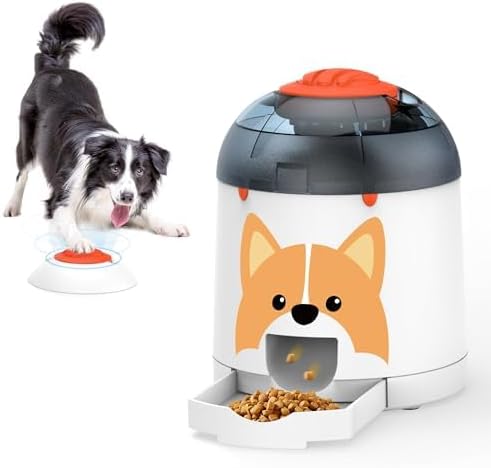
Potaroma Dog Puzzle Feeder
Best Premium Puzzle Toy
| Capacity | 280 ml |
|---|---|
| Operation Mode | Automatic |
| Material Type | Acrylonitrile Butadiene Styrene |
| Product Care Instructions | Hand Wash Only |
The Potaroma Dog Puzzle Feeder is a remote-controlled, USB-rechargeable puzzle toy that combines slow-feeding with interactive training. It holds dry kibble or treats in a 280 ml container and dispenses adjustable portions while offering nine preset sounds plus one recordable message to call your pet. Use it for supervised training or independent enrichment: place it indoors or take it outside within the remote's 80-foot range to encourage paw coordination and problem solving. The unit's ABS/PC and food-grade PP construction aims for durability and hand-wash care makes cleaning straightforward but not dishwasher-safe. Practical benefits include extended engagement through automated dispensing and customizable audio cues, while limitations are its modest capacity for large or multi-dog households and the need to hand wash parts. The feeder is best when used as a premium single-pet enrichment and training tool rather than a bulk food dispenser.
Best for: Buyers who want a well-made, feature-rich enrichment feeder that emphasizes longevity and refined engagement for single dogs and who prioritize durability and training functionality over high capacity.
Less Ideal for: Households feeding multiple large dogs or those who need a high-capacity automatic feeder for unattended long-term dispensing should consider larger-capacity alternatives.
- Adjustable dispensing lets you control portion size for training or slow feeding
- Remote control with an 80-foot range enables outdoor or distance play
- Recordable sound plus nine presets increase engagement and recall
- USB rechargeable design removes the need for frequent battery replacement
- Durable food-grade plastics designed for repeated use and hand washing
- 280 ml capacity is small for large dogs or multiple pets
- Not dishwasher safe so cleaning requires manual effort
Verdict: The best premium puzzle toy offers superior build quality, refined mechanics, and durable, non-toxic materials for owners who want a longer-lasting, more polished interactive toy.
FOXMM Dog Puzzle Toy S-Level 2
Best Treat-Dispensing Puzzle Toy

| Pet Toy Type | Puzzle |
|---|---|
| Breed Recommendation | Medium, Small |
| Indoor Outdoor Usage | Indoor |
| Material Type | Polypropylene |
The FOXMM Dog Puzzle Toy is a lightweight, food-safe polypropylene puzzle that hides treats under sliding pieces so puppies learn to move parts in sequence to reach rewards. Designed for indoor use and labeled S-Level 2, it suits small to medium dogs and can be used during training sessions or as a boredom buster to slow eating and reduce destructive behavior. The built-in squeaker in the center attracts attention and adds an extra layer of engagement while the waterproof, dishwasher-safe construction makes cleanup simple. Because it is a puzzle rather than a chew toy, it excels at extending playtime through repeated problem-solving but will not withstand heavy chewing, so supervision is necessary. The toy is portable and easy to reset for short training rounds, and the simple design keeps costs low while still teaching cause-and-effect and patience in young dogs.
Best for: Puppy owners who want a small, food-reward puzzle that extends training sessions and reinforces correct interactions with treats or kibble.
Less Ideal for: Households with aggressive chewers or puppies that destroy toys quickly should choose a more robust durable option instead.
- Treat-dispensing sliding compartments that reinforce sequential problem-solving
- Food-safe polypropylene construction that is washable and dishwasher-safe
- Compact, lightweight design easy to use for short training sessions and travel
- Built-in squeaker increases engagement and draws attention from puppies
- Not designed for chewing or heavy chewers so it can be damaged if used as a chew toy
- Simple level (S-Level 2) may be too easy for advanced or highly food-motivated puppies
Verdict: The best treat-dispensing puzzle toy reliably releases kibble or small treats in controllable ways to encourage problem-solving and slow feeding for food-motivated small dogs.
WOOF Pupsicle Small
Best Durable Puzzle Toy

| Pet Toy Type | Chew Toy |
|---|---|
| Breed Recommendation | Small Breeds |
| Indoor Outdoor Usage | Indoor |
| Material Type | Rubber |
| Unit Count | 1 Count |
The WOOF Pupsicle Small is a treat-dispensing chew toy made from non-toxic natural rubber that unscrews for easy filling and cleaning. It is used by packing treats or frozen mixes inside the two-piece body, handing it to a small dog, and letting them lick or chew for 30+ minutes of engagement; the weighted base and drool-catching slots help keep mess contained during play. The toy's lightweight, portable design and handwashable construction make it convenient for daily indoor enrichment and short training or calm-down sessions. Because it is rubber and not water resistant, it is better suited to licking and treat-based play than prolonged outdoor or water games, and very powerful chewers may wear it faster than tougher chew-specific products. For owners seeking a premium, thoughtfully designed enrichment toy for puppies and small breeds, the Pupsicle balances safety, cleanability, and long-lasting treat sessions in a compact package.
Best for: Puppy and small-breed owners who prioritize a safe, non-toxic enrichment toy that offers long lick-based engagement and easy cleaning.
Less Ideal for: Owners looking for a heavy-duty chew toy for aggressive chewers or for large-breed chewing sessions should choose a sturdier, chew-specific product instead.
- Made from non-toxic, BPA- and phthalate-free natural rubber
- Opens and unscrews for easy filling and rinsing
- Weighted base and drool-catching slots reduce mess during play
- Designed for extended licking sessions (typically 30+ minutes)
- Lightweight and portable for indoor daily enrichment
- Not designed for heavy chewing or powerful chewers
- Not water resistant so not ideal for water play
- Small size may be too small for larger breeds
Verdict: The best durable puzzle toy is made from tough, chew-resistant materials and reinforced construction for small dogs that play aggressively or tend to gnaw at toys.
MiBex Dog Puzzle Toy 9900-1Y
Best Beginner Puzzle Toy

| Capacity | 0.7 cups |
|---|---|
| Material Type | Acrylonitrile Butadiene Styrene |
| Operation Mode | Manual |
| Target Species | Dog |
This Level 1 puzzle toy is designed to introduce dogs to interactive feeding with two distinct play zones: easy sliding compartments and a slightly harder press-to-open area. You load kibble or small treats in the hidden chambers and let your dog slide and press to reveal snacks, which encourages foraging behavior and slows fast eaters. Made from food-grade ABS, the unit has smooth rounded edges and a non-slip base that helps keep it stable while a dog paws and nudges it. The removable tray lifts out for straightforward cleaning, and the manual operation means no batteries or complex setup. Because it is labeled as beginner-friendly, puzzles are intentionally simple so small dogs can learn cause-and-effect quickly, but the modest capacity and basic mechanisms may not hold the attention of highly food-motivated dogs for long. Supervise initial sessions to ensure durable chewing does not damage the plastic parts.
Best for: Buyers wanting an easy, low-friction introduction to puzzle feeding for small dogs and puppies who need mental stimulation and slower eating.
Less Ideal for: Owners seeking a high-capacity or highly challenging puzzle for expert problem-solvers or large-breed heavy eaters should consider more advanced options.
- Two-stage design eases dogs into puzzle play with progressive difficulty
- Non-slip base provides stability during play
- Removable tray makes cleaning crumbs and food residue simple
- Food-grade ABS construction with rounded edges is gentle on paws and mouth
- Small 0.7 cup capacity may require frequent refills for larger meals
- Simple mechanisms may be too easy for dogs experienced with puzzles
Verdict: The best beginner puzzle toy introduces mentally stimulating play with simple mechanisms and obvious rewards, making it ideal for small dogs new to puzzle play.
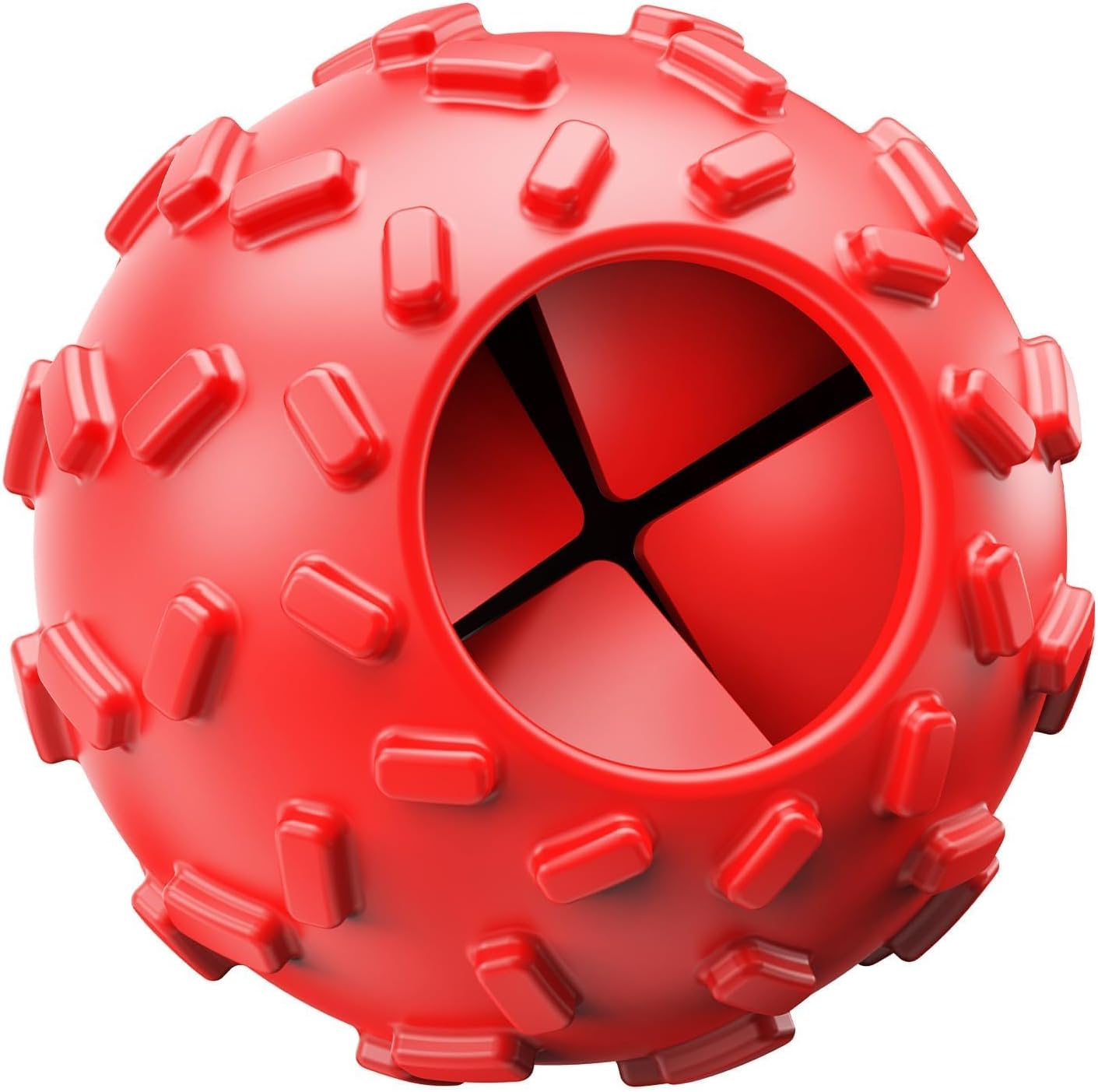
ZHIERDE Treat Dispensing Ball Small
Best Compact Puzzle Toy
| Material Type | Natural Rubber |
|---|---|
| Pet Toy Type | Treat Dispenser Toy |
| Breed Recommendation | Small |
| Indoor Outdoor Usage | Indoor, Outdoor |
This compact treat-dispensing ball turns snacks into an interactive puzzle that keeps small dogs and puppies occupied. Fill the hollow core with kibble or small treats, then let the dog nudge, roll, and paw the ball to release rewards; flexible inner flaps can be trimmed to slow or speed dispensing so the challenge grows with the dog. The textured natural rubber surface gives grip for rolling and fetch, floats for water play, and is easy to rinse clean after use. Its small 2.7-inch size and 3.2-ounce weight make it easy to stash in a travel bag or crate and suitable for apartment play without taking much space. It is not intended for aggressive chewers or continuous heavy gnawing, so expect limited lifespan if a dog chews destructively. Scented options add extra interest but do not change function. For short supervised solo sessions, training, or slow-feeding enrichment, this ball is a practical, portable solution.
Best for: Owners who need a compact, travel-friendly enrichment toy to occupy small dogs or puppies in crates, apartments, or on the go and prioritize portability and adjustable challenge over chew resistance.
Less Ideal for: Households with powerful chewers or dogs that destroy toys quickly should choose a heavier-duty chew toy instead.
- Small, lightweight and highly portable for travel or crate use
- Adjustable inner flaps let you control treat flow for longer-lasting engagement
- Made from natural rubber with a textured surface for grip and easy rinsing
- Floats for versatile indoor, outdoor, or water play
- Not meant for aggressive chewers so durability is limited under heavy chewing
- Small opening limits treat size to kibble or small treats only
Verdict: The best compact puzzle toy is physically sized for small dogs, easy to store and carry, and offers appropriately scaled challenges without overwhelming tiny mouths.
Choosing the Right Dog Puzzle Toy Small Dog: Key Factors to Consider
Size and Opening Dimensions
Small dogs have smaller mouths and shorter reach, so toy size and compartment openings matter a great deal. A puzzle with compartments too large may allow treats to come out too easily, removing the challenge and shortening engagement. Conversely, openings that are too small or narrow can frustrate the dog or create a choking hazard if treats get stuck.
Measure the typical kibble or treat size you plan to use and compare it to the toy's openings and internal well sizes. Look for toys labeled or described for small breeds and check whether removable inserts or adjustable openings are available to tune difficulty and reward flow. Proper sizing improves usability and keeps play sessions productive rather than stressful.
Difficulty and Adjustable Challenge
Different small dogs vary widely in problem-solving skill and patience, so toys should offer graduated difficulty. A toy that is too easy will be exhausted quickly and lose value, while one that is too hard can lead to frustration and disinterest.
Prefer puzzles with multiple settings, removable barriers, or stackable layers that let you start simple and increase complexity as your dog learns. Adjustable challenges also extend the life of a toy by introducing new tasks without buying replacements. Consider how quickly your dog learns and choose a toy that can grow with that dog rather than being a single-use novelty.
Material Safety and Durability
Materials determine both how long a toy lasts and how safe it is during play. For small breeds, lightweight but sturdy plastics, food-safe silicone, and dense rubber are common choices. Avoid brittle plastics that can crack into small pieces and materials with toxic additives.
Check that the toy uses food-grade materials and has smooth, rounded edges to prevent cuts. Durability matters even for light chewers because moving parts and seams are stress points. Examine how components are joined and whether the design minimizes small detachable pieces that a small dog could swallow. Durable construction reduces replacement frequency and lowers accidental ingestion risk.
Cleaning and Maintenance
Puzzle toys that hold food inevitably need regular cleaning to prevent odor buildup and bacterial growth. Ease of cleaning affects whether you will actually maintain the toy and keep it hygienic. Toys with removable inserts, wide access openings, or dishwasher-safe parts are much simpler to care for.
Consider whether crevices trap food or require a brush, and whether rubbery textures attract grease. Toys that are quick to disassemble make rotating treats and deep cleaning practical. Regular maintenance also preserves moving parts and prevents sticky mechanisms that reduce the toy's effectiveness over time.
Stability and Anti-slip Features
Small dogs can be easily frustrated if a toy moves around while they try to manipulate it. Stability matters for paw-and-nose interactions because a toy that slides prevents efficient problem solving and can lead to abandoned play.
Look for toys with rubber bases, low centers of gravity, or suction attachments that keep the puzzle in place during use. A stable toy lets the dog focus on the task rather than wrestling with the device. If a toy is intended for use on different floor types, check how it performs on tile, hardwood, and carpet to ensure consistent behavior.
Versatility and Treat Compatibility
The best puzzle toys accept a range of reward types so you can vary motivation and keep interest high. Some toys accommodate small dry kibble, soft training treats, or bits of fresh food. Versatile internal wells and adjustable dispensers allow you to switch between long-duration feedings and quick training rewards.
Consider whether the toy works with your dog's usual diet and whether you can safely use wet or sticky treats without damaging the mechanism. Toys that accept multiple treat sizes and textures are more adaptable to training needs, dietary restrictions, and changing preferences as your dog matures.
How Do I Match Puzzle Difficulty to My Small Dog's Skill Level?
Begin by observing how your dog approaches toys: do they paw, nudge, or use their snout predominantly? If they show gentle, methodical behavior, start at a medium difficulty and shorten sessions to keep success frequent. For dogs that lose interest quickly, pick puzzles with easily removed barriers or single-step compartments so they experience quick wins and build confidence.
Increase difficulty by hiding treats deeper, using smaller treats, or adding layers to the puzzle. Monitor frustration signals like repeated circling, vocalizing, or abandoning the toy. If those appear, reduce the challenge and reintroduce complexity more gradually.
- Start easy and raise difficulty after multiple successful sessions
- Use small kibble for longer sessions and higher-value treats for brief training
- Watch body language and step back if the dog shows frustration
Can Puzzle Toys Help Slow Down Fast Eaters?
Yes. Many puzzle toys are designed to turn mealtime into a foraging activity, scattering or hiding portions so your dog must work to access food. This naturally slows intake, reduces gulping, and adds mental stimulation that often lessens anxiety-driven eating.
Choose puzzles with multiple small compartments or narrow dispensing holes to extend the time it takes to retrieve a full meal. For very fast eaters, combine a puzzle with a timed feeding routine or split meals across multiple short play sessions.
- Divide daily portions between two or more puzzle sessions
- Prefer puzzles with adjustable flow or removable inserts to control reward rate
Are Soft Rubber or Hard Plastic Toys Better for Small Mouths?
Soft rubber often provides better grip for paws and is gentler on small teeth, making it a good choice for timid or young dogs. Rubber components can also offer slight flex that helps dislodge treats. Hard plastic can last longer under normal play but may be more brittle and transfer more impact to the dog's teeth if the dog chews aggressively.
For most small dogs that are not heavy chewers, a mix of rubber and rigid parts balances durability with comfort. Prioritize toys with smooth, rounded shapes and avoid sharp seams regardless of material.
- Choose rubber for gentle gripping and softer mouths
- Use harder plastics only if the toy is well-constructed and free of brittle joints
How Often Should I Rotate Puzzle Toys to Keep My Dog Interested?
Rotate toys every few days to a week depending on your dog's engagement level. Rotating prevents boredom and preserves novelty, which is a big part of a puzzle toy's value. Keep a small rotation set and introduce a previously hidden toy with a high-value treat to re-spark interest.
Monitor how quickly your dog loses interest; very curious dogs may need more frequent rotation, while less interested dogs might prefer a stable favorite. Clean toys before reintroducing them if they have been stored for a while.
- Start with a two- to three-toy rotation and adjust based on engagement
- Store unused puzzles clean and dry to prevent odors
What Maintenance Keeps Puzzle Toys Working Well?
Regular cleaning prevents residue buildup and ensures moving parts operate smoothly. Disassemble toys when possible and rinse or brush trapped food from crevices. For dishwasher-safe parts, follow the manufacturer's temperature guidance; otherwise, use warm soapy water and a brush.
Check for wear at seams and removable pieces after repeated use. Replace or retire puzzles with broken or missing parts to avoid ingestion hazards. Lubricate sliding components only with food-safe products if necessary and recommended by the toy's care instructions.
- Disassemble and clean after every few uses
- Inspect moving parts for wear and remove damaged toys promptly
How We Chose the Best Dog Puzzle Toy Small Dog
We prioritized puzzle toys that combine size-appropriate design, reliable construction, and adjustable challenge so small dogs stay engaged without frustration. Our selection criteria emphasized safety materials and rounded edges to reduce choking risks, internal compartments sized for small kibble, and mechanisms that operate smoothly for light mouths and paws. We also considered how easy each toy is to clean, whether parts are dishwasher-safe or designed for quick hand washing, and the range of difficulty settings so owners can progress challenges over time. Durability under normal chew and play was assessed, focusing on toys that tolerate repeated nudging and moderate biting rather than heavy chewing. Lastly, we favored toys that support positive feeding habits, such as slowing intake or extending meal duration, and those that encourage problem-solving without requiring advanced dexterity. We excluded toys intended for heavy chewers, oversized dispensers that do not accommodate small kibble, and gadgets that require complex electronic maintenance. Products that rely on fragile components or present known snag and entrapment hazards for small dogs were also filtered out.
Our full evaluation process is outlined in our review methodology.
FAQ
How do I introduce a puzzle toy to a small dog that is nervous?
Introduce the toy gradually with high-value treats placed in easy-to-reach spots so the dog associates the item with reward. Stay nearby, offer encouragement, and keep initial sessions brief and friction-free. Gradually increase challenge once the dog shows comfortable interaction.
Can I use wet or sticky food in puzzle toys made for small dogs?
Some puzzles accept soft foods, but sticky or very wet foods can clog mechanisms and are harder to clean. Use soft food sparingly and only when the toy's care instructions indicate it is safe to do so, then clean promptly afterward.
What signs indicate a puzzle is too hard for my dog?
Signs include repeated abandonment, vocalizing in frustration, pawing without progress, or refusing to engage. If these appear, simplify the puzzle or switch to a lower-difficulty setting and reward small successes to rebuild confidence.
Are there safety concerns specific to small dogs using puzzle toys?
Yes. Small dogs are at greater risk from small detachable parts, narrow crevices that trap treats, and openings that could pinch skin or whiskers. Choose toys sized for small breeds and inspect them regularly for loose pieces or cracks.
How long should a puzzle session last for a small dog?
Sessions typically run from five to twenty minutes depending on the dog's interest and the puzzle's difficulty. Short, frequent sessions are often more effective for maintaining engagement than long, infrequent bouts.
Final Verdict
Pick a puzzle toy that fits your small dog's mouth, attention span, and eating habits. Prioritize size-appropriate openings, adjustable difficulty, and safe, food-grade materials to ensure the toy remains engaging and hygienic. Balance challenge with achievable rewards so your dog builds confidence and stays motivated. Ultimately, the best choice reduces boredom, slows rapid eating when needed, and integrates into your daily routine. Focus on durability, ease of cleaning, and the ability to scale difficulty to get the most value and longest service from any puzzle toy you select.

