

If your dog struggles with itchy skin, allergic reactions, or recurring hot spots, the right shampoo can make daily care more effective and more comfortable. Choosing a formula that soothes inflammation without stripping natural oils helps reduce itching, soothe hot spots, and support healing over time. This guide covers seven shortlisted shampoos that are aimed specifically at allergies and hot spot management. We evaluated each option for gentleness, active ingredients, and suitability for repeated use so you can pick the approach that fits your dog and your routine.
Top Picks at a Glance
| Best Overall Shampoo The top all‑around shampoo for most dogs with skin issues | Douxo S3 PYO Medicated Dog Shampoo 6.7 fl oz |  |
| Best Budget Shampoo A low-cost option that still helps with itching and irritation | Wahl Oatmeal Pet Shampoo 24 oz |  |
| Best Premium Shampoo A higher-end formula focusing on superior ingredients and results | MiconaHex+Triz Shampoo 16 oz |  |
| Best Medicated Shampoo Formulated with active ingredients to treat infection and inflammation | Truseb Ketoconazole Chlorhexidine Shampoo 16 oz |  |
| Best Hypoallergenic Shampoo Fragrance‑free, minimal-ingredient formulas for easily irritated skin | TropiClean OxyMed Hypoallergenic Shampoo 20 oz |  |
| Best Oatmeal Shampoo Soothing oatmeal formulas designed to calm itchy, dry skin | earthbath Oatmeal & Aloe Dog Shampoo 16 fl oz |  |
| Best Concentrated Shampoo Highly concentrated formula that stretches across many baths | Nizoral Ketoconazole Pet Shampoo 16 oz |  |
Douxo S3 PYO Medicated Dog Shampoo 6.7 fl oz
Best Overall Shampoo

| Active ingredients | Chlorhexidine, Ophytrium |
|---|---|
| Liquid Volume | 6.7 fluid ounces |
| Target Species | Dog, Cat |
| Scent Name | Coconut, Vanilla |
| Item Form | Liquid |
Douxo S3 PYO is a medicated liquid shampoo centered on 3% chlorhexidine and 0.5% ophytrium to provide antiseptic cleansing for bacterial and yeast skin infections. It is used by wetting the coat, massaging the shampoo into affected areas, then repeating over the whole body and leaving it on for 5 to 10 minutes before rinsing; dosing guidance is one pump per 4 lb, doubled for long or thick fur. The formula is free from soaps, sulfates, parabens, colorants, nanoparticles, and phthalates and is presented as hypoallergenic, so it is suitable for sensitive skin while offering antiseptic action. Practical benefits include vet-backed active ingredients that can reduce infection-related symptoms within days and a small 6.7 fl oz size that is convenient for targeted treatment or travel. Limitations are the small bottle size for frequent or whole-body use on large dogs and the need to follow contact time and repeat applications to see clinical effect rather than expecting an instant cure.
Best for: Buyers seeking a veterinary-strength topical shampoo to address bacterial or yeast skin issues and who plan to follow a short treatment regimen.
Less Ideal for: Owners wanting an everyday deodorizing or conditioning shampoo for frequent full-body washes or those who need a large-volume product for multiple large dogs.
- Contains 3% chlorhexidine, an antiseptic effective against bacteria and yeast
- Includes 0.5% ophytrium to help soothe and hydrate irritated skin
- Free from soaps, sulfates, parabens, colorants, nanoparticles, and phthalates
- Clear dosing and leave-on directions for targeted treatment
- 6.7 fl oz bottle may be too small for repeated whole-body treatments on large dogs
- Requires prescribed contact time and multiple uses to achieve clinical improvement
Verdict: The best overall shampoo balances gentle cleansing, itch relief, and skin-soothing ingredients to help dogs with allergies and hot spots while working for everyday use.
Wahl Oatmeal Pet Shampoo 24 oz
Best Budget Shampoo

| Unit Count | 24 Fluid Ounces |
|---|---|
| Scent Name | Oatmeal (coconut lime verbena) |
| Product Benefits | Soothing |
| Material Type Free | Sulfate Free; Paraben Free |
| Target Species | Dog |
Wahl Oatmeal Pet Shampoo is a concentrated liquid shampoo designed to gently clean and moisturize dogs and cats with dry or irritated skin. You wet the coat, apply a small amount because the formula is concentrated, work into a rich lather, then rinse thoroughly and towel dry. The formula lists oatmeal, coconut, lime, aloe and lemon verbena and is free of sulfates, parabens, PEG-80 and alcohol, which helps reduce exposure to harsher chemicals and supports skin soothing and itch relief. In practice it produces a thick lather that rinses clean and leaves a mild coconut-lime verbena scent. The concentrate means the 24 fl oz bottle stretches farther than standard shampoos, which lowers cost per bath. Limitations: plant-derived oils can still irritate some sensitive pets, so a patch test is recommended, and it is not marketed as a medicated or long-term clinical therapy for severe dermatological conditions.
Best for: Cost-conscious owners who want a gentle, hypoallergenic-leaning shampoo for routine baths and occasional itch relief without paying for specialty medicated products.
Less Ideal for: Pets with chronic or severe skin disorders that require veterinary-prescribed medicated shampoos or targeted dermatological care.
- Concentrated formula reduces amount needed per bath
- Free of sulfates, parabens, PEG-80 and alcohol for gentler cleansing
- Contains oatmeal and aloe to help soothe dry, itchy skin
- Produces a rich lather that rinses clean and helps remove dirt and odors
- Contains plant-derived oils that may bother a small number of very sensitive pets
- Not a medicated treatment for severe skin conditions
Verdict: The best budget shampoo gives effective basic itch relief and cleansing for pet owners who need an affordable, reliable solution for allergic or hotspot-prone dogs.
MiconaHex+Triz Shampoo 16 oz
Best Premium Shampoo

| Unit Count | 16 Ounce |
|---|---|
| Active Ingredients | 2% miconazole nitrate; 2% chlorhexidine gluconate |
| Target Species | Cat, Dog, Horse |
| Scent Name | Unscented |
| Liquid Volume | 16 fluid ounces |
MiconaHex+Triz Shampoo is a veterinary-strength, unscented shampoo that combines antifungal and antimicrobial actives with barrier-repairing ingredients for animals with bacterial, yeast, or fungal skin issues. It is used like a typical medicated bath: apply to wet coat, work into a lather, leave on for 5 to 10 minutes, and rinse; directions allow use up to four times weekly or as advised by a veterinarian. Key formulation details include 2% miconazole nitrate and 2% chlorhexidine gluconate plus TrizEDTA and ceramides, which means it both targets microbes and helps restore damaged skin. The unscented formula and inclusion of ceramides make it appropriate for scent-sensitive pets and households, and the manufacturer notes it is suitable for dogs, cats, and horses. Important limitations are standard for medicated shampoos: avoid mucous membranes and ingestion, monitor for adverse reactions, and expect that improvement timing varies by case so veterinarian follow-up may be needed. This product is best used as part of a treatment plan for confirmed fungal or bacterial skin problems rather than as an everyday cosmetic shampoo.
Best for: Buyers seeking a fragrance-free, medicated shampoo to treat or manage fungal or bacterial skin conditions in scent-sensitive pets and homes and who will follow veterinary guidance.
Less Ideal for: Owners looking for a regular grooming or deodorizing shampoo or those wanting a pleasant fragrance for routine baths should choose a nonmedicated grooming product instead.
- Contains 2% miconazole nitrate and 2% chlorhexidine gluconate for antifungal and antimicrobial action
- Unscented formulation suitable for scent-sensitive pets and households
- Includes ceramides to support skin barrier repair alongside antimicrobial treatment
- Clear veterinarian-oriented directions for application and frequency
- Not intended for routine cosmetic use; designed as a medicated treatment for specific conditions
- Can irritate eyes and mucous membranes and may be harmful if ingested
Verdict: The best premium shampoo is for owners willing to spend more for advanced soothing ingredients, cleaner formulations, and noticeably improved skin condition for dogs with persistent allergies or hot spots.
Truseb Ketoconazole Chlorhexidine Shampoo 16 oz
Best Medicated Shampoo

| Liquid Volume | 16 fluid ounces |
|---|---|
| Target Species | Cat, Dog, Horses |
| Active Ingredients | Ketoconazole and Chlorhexidine |
| Scent Name | Cucumber Melon Scented |
This Truseb formula combines 2% chlorhexidine and 1% ketoconazole in a liquid shampoo designed to control bacterial and fungal skin problems while leaving a milder, soothing finish from added aloe. It is used like a typical medicated wash: wet the coat, work into a lather, let sit 5 to 10 minutes, then rinse thoroughly; that dwell time helps the active ingredients act on hotspots, yeast, and general irritation. The cucumber melon scent and aloe make rinsed fur smell pleasant and appear shinier, and the directions and concentration match typical veterinary-strength topical treatments so it can replace clinic shampoos for at-home management. Because it is formulated for dogs, cats, and horses, it is versatile for multi-pet households. Limitations are that medicated shampoos can dry skin if overused and this product requires the full contact time to be effective, so it is not a quick rinse-and-go solution and should be used per guidelines or under vet direction for persistent infections.
Best for: Buyers who need topical antimicrobial control in a low-irritation, face-safe formulation for pets that are sensitive to regular shampooing and who are willing to follow a brief contact-time routine.
Less Ideal for: Owners seeking a daily gentle cleanser or a tear-free shampoo for frequent use without veterinary oversight should consider a non-medicated maintenance shampoo instead.
- Veterinary-strength actives with 2% chlorhexidine and 1% ketoconazole to target bacteria and yeast
- Soothing aloe formula and pleasant cucumber melon scent for better tolerability
- Directions recommend 5–10 minute contact time to improve treatment effectiveness
- Labeled safe for use on dogs, cats, and horses which adds versatility for mixed-animal homes
- Requires 5–10 minute contact time so not suited for quick cleanups
- Medicated ingredients can dry or irritate skin if used too frequently without veterinary guidance
Verdict: The best medicated shampoo is intended for dogs needing targeted treatment of bacterial, fungal, or severely inflamed hotspots under guidance from a veterinarian or pet-care professional.
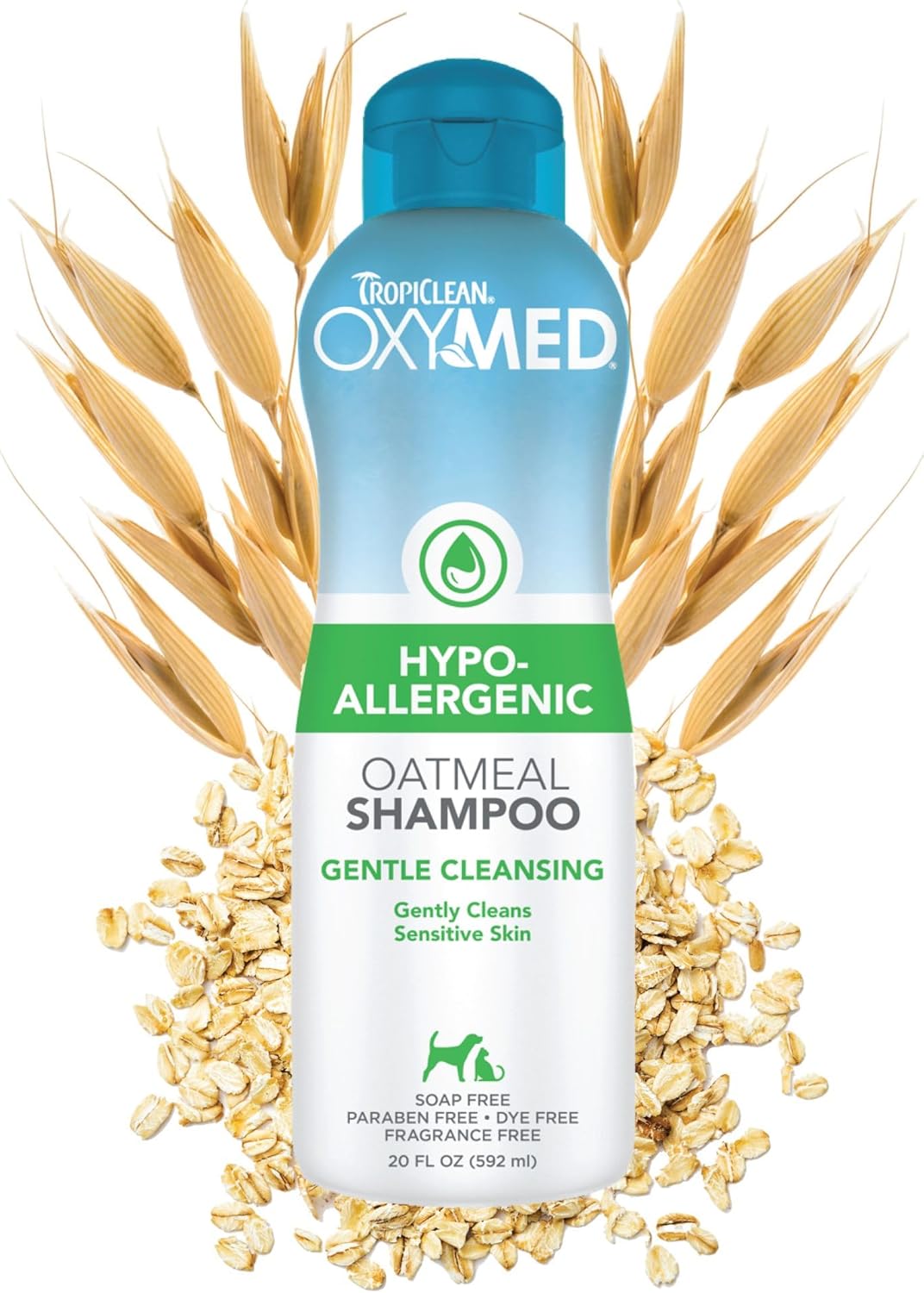
TropiClean OxyMed Hypoallergenic Shampoo 20 oz
Best Hypoallergenic Shampoo
| Liquid Volume | 20 fluid ounces |
|---|---|
| Scent Name | Coconut |
| Target Species | Dog |
| Pet Type | Cat, Dog |
| Item Form | Liquid |
TropiClean OxyMed Hypoallergenic Shampoo is a tear-free, soap-free shampoo designed to calm itching and clean sensitive skin on dogs and cats. It is used like any regular shampoo: wet the coat, lather with a generous amount, massage into the skin, then rinse; the formula includes a mild coconut cleanser, colloidal oatmeal, vitamin E and aloe to help soothe and moisturize while removing dirt and odors. The scent is listed as coconut but the product is marketed as dye free and free of common irritants such as parabens and SLS, which makes it appropriate for pets prone to reactions. Practical benefits include an easy rinse formula that can be used every few weeks per vet guidance and compatibility with the brand's complementary OxyMed soothing treatments for follow-up relief. Limitations are that it is not explicitly labeled fragrance-free and owners with extremely reactive pets should patch test first; frequent weekly bathing is not recommended because even gentle cleansers can dry sensitive skin if overused.
Best for: Buyers prioritizing a gentle, limited-ingredient shampoo for dogs with occasional itching or sensitive skin who want a vet-recommended, rinse-off solution to reduce flare-ups.
Less Ideal for: Owners who need a guaranteed fragrance-free or prescription-strength medicated wash for severe dermatological conditions should consider alternative vet-recommended products.
- Formulated with colloidal oatmeal, vitamin E and aloe to soothe itchy, sensitive skin
- Soap free and free of dyes, parabens and SLS to reduce common irritants
- Tearless, mild coconut cleanser that rinses easily for convenient baths
- Made for both dogs and cats and pairs with other OxyMed calming products
- Not explicitly labeled fragrance-free despite coconut listed as scent
- Not intended for weekly use on all pets since over-bathing can dry skin
Verdict: The best hypoallergenic shampoo suits dogs with highly sensitive skin or multiple allergies by minimizing potential irritants and reducing the chance of flare-ups.
earthbath Oatmeal & Aloe Dog Shampoo 16 fl oz
Best Oatmeal Shampoo

| Scent Name | Vanilla/Almond |
|---|---|
| Item Form | Liquid |
| Target Species | Dog |
| Liquid Volume | 16 fluid ounces |
| Material Type Free | Soap Free |
earthbath Oatmeal & Aloe is a gentle, soap-free shampoo designed to calm irritated skin while cleaning and deodorizing a dog's coat. It is typically used as an everyday or medicated-support wash for puppies and dogs with sensitive or dry skin — apply to a wet coat, lather thoroughly and leave on for at least 90 seconds so the oatmeal and aloe can soothe. The formula is concentrated so a small amount covers most dogs, and it rinses clean without stripping natural oils. Notable features include colloidal oatmeal, organic aloe vera, coconut-based cleansers, vitamin-rich botanicals, and a light vanilla and almond fragrance. Practical benefits are reduced itching, softer fur, and compatibility with topical flea treatments due to its soap-free composition. Limitations: it is not an insecticide so it will not kill fleas on contact and buyers seeking immediate flea eradication should pair it with vet-recommended flea products; the scented vanilla and almond notes, while mild, may still bother dogs extremely sensitive to fragrance.
Best for: Owners looking for a gentle, soothing shampoo for puppies or dogs with sensitive, dry, or itchy skin who prioritize mild, plant-based ingredients and compatibility with topical flea treatments.
Less Ideal for: People who need a product that actively kills fleas or provides ongoing flea control without additional treatments.
- pH-balanced, soap-free formula that is gentle on sensitive skin
- Contains colloidal oatmeal and organic aloe to soothe itching and dryness
- Concentrated formulation so a small amount lathers well and spreads easily
- Compatible with topical flea treatments and designed not to strip them
- Plant-derived cleansers and vitamins for a milder, more natural clean
- Not an insecticidal shampoo so it will not kill fleas or provide long-term flea control
- Contains a mild vanilla and almond fragrance that may still bother very fragrance-sensitive dogs
Verdict: The best oatmeal shampoo is for owners seeking a naturally soothing option that helps reduce itchiness and moisturize dogs prone to dry, irritated skin and hotspots.
Nizoral Ketoconazole Pet Shampoo 16 oz
Best Concentrated Shampoo

| Active ingredients | 1% Ketoconazole, 2% Chlorhexidine Gluconate |
|---|---|
| Unit count | 16 Ounce |
| Target species | Dog |
| Pet type | Cat, Dog |
Nizoral Ketoconazole Pet Shampoo mixes 1% ketoconazole with 2% chlorhexidine gluconate to target fungal and bacterial causes of itching, hot spots, odor, and persistent skin irritation. It is used during bath time: wet the coat, work into a rich lather, let it sit 5–10 minutes, then rinse; the manufacturer recommends initial use 2–3 times per week for up to four weeks before tapering. In practice this formula delivers focused symptomatic relief faster than routine grooming shampoos because it addresses both fungal and bacterial contributors to skin flare-ups. The gel texture lathers well and the scent is described as mild so it does not overwhelm sensitive pets. Important considerations are that medicated shampoos require consistent short-term use and following directions or veterinary guidance, and they are for topical support rather than a cure for underlying systemic issues. For owners needing quicker visible improvement in itching, odor, and inflamed patches, this product provides a practical, veterinarian-aligned option for intensive at-home care.
Best for: Pet owners who want a medicated shampoo that starts reducing yeast-related itching, odor, and inflamed patches within a few washes and are willing to follow a short intensive regimen.
Less Ideal for: Owners looking for an everyday maintenance shampoo for cosmetic cleaning or those who prefer non-medicated, fragrance-free products should consider alternatives.
- Contains 1% ketoconazole and 2% chlorhexidine for combined antifungal and antimicrobial action
- Instructions support short-term intensive use with a 5–10 minute dwell time for efficacy
- Gel formula lathers well for thorough coat and skin contact
- Mild fragrance reduces likelihood of scent sensitivity in pets
- Labeled for use on both dogs and cats, suitable for multi-pet households
- Medicated topical support, not a substitute for veterinary diagnosis or systemic treatment when needed
- Requires repeated applications over weeks for best results
Verdict: The best concentrated shampoo is for buyers who want an economical, long‑lasting option that dilutes down while still delivering effective cleansing and symptom relief for allergic or hotspot-prone dogs.
Choosing the Right Dog Shampoo Allergy Hot Spots: Key Factors to Consider
Active Soothing Ingredients
Look for ingredients that actively reduce inflammation and microbial load without harming healthy tissue. Mild antiseptics and antimicrobial agents can help control secondary infections that often accompany hot spots, while anti-inflammatory components reduce redness and pain.
Because hot spots and allergy-driven lesions are often colonized by bacteria, components that are both soothing and antimicrobial can shorten healing time. However, concentrations matter. Low-to-moderate levels of active agents are usually preferable for frequent bathing to avoid further irritation.
Surfactant Strength and pH Balance
Surfactants remove dirt and allergens but can also strip essential oils if they are too harsh. Choose shampoos formulated with mild surfactants that clean effectively while preserving the skin's natural barrier.
Canine skin has a different pH than human skin, so products balanced for dogs are less likely to disrupt the microbiome and cause rebound dryness or increased sensitivity. Maintaining appropriate pH helps the skin heal and reduces the chance of recurring hotspots.
Moisturizing and Barrier-supporting Ingredients
Hydrating agents such as fatty acids, ceramides, glycerin, and certain plant oils help restore the lipid layer that protects skin from irritants and moisture loss. A restored barrier reduces transepidermal water loss, which can decrease itch intensity and the frequency of flare-ups.
Shampoos that combine gentle cleansing with barrier repair let you bathe more often when needed without compounding dryness. For dogs with chronic issues, look for formulas that explicitly list barrier-supporting components.
Allergen and Irritant Avoidance
Fragrances, dyes, and unnecessary botanical extracts can be sensitizers for allergy-prone dogs. Minimalist formulations or products labeled for sensitive skin reduce the risk of introducing new triggers.
Even natural-sounding additives can provoke reactions in some animals, so simpler formulations are safer for dogs with a history of contact allergies or fragile skin. Check ingredient lists and favor short, transparent formulations when in doubt.
Safety for Use on Compromised Skin
Hot spots are frequently open or oozing, and not all shampoos are appropriate for direct application to those areas. Choose products with instructions that address use on raw lesions and that avoid harsh stinging agents.
Products that recommend rinsing thoroughly and offer guidance on treatment frequency are better suited to owners managing actively irritated skin. When lesions are severe, a veterinarian should be consulted before regular topical use.
Ease of Application and Rinsing
A shampoo that lathers and rinses easily reduces the time the product spends on the skin and makes at-home treatment less stressful for both dog and owner. Formulas that require long contact times can be effective but may not be practical for anxious dogs.
Clear instructions for dilution, contact time, and follow-up care help ensure consistent results and reduce the risk of improper use that could worsen irritation.
How Often Can I Bathe a Dog with Allergies or Hot Spots?
Bathing frequency depends on the severity of symptoms and the shampoo formulation. For mild seasonal itching, weekly or every-other-week bathing with a gentle, moisturizing shampoo is often sufficient. When a dog has active hot spots, short-term increased bathing with a veterinary-recommended soothing shampoo may help control odor, debris, and surface bacteria.
Avoid daily use of strong cleansers because repeated stripping of natural oils can worsen dryness and itch. Follow product guidance on contact time and frequency, and adjust based on your dog's skin response and the advice of your veterinarian.
- Start conservatively and increase frequency only if skin improves.
- Rinse thoroughly to remove residue that can irritate skin.
- Monitor for increased redness or discomfort after bathing.
Can a Shampoo Heal Hot Spots by Itself?
Shampoos can support healing by reducing surface contaminants, soothing inflammation, and creating a better environment for skin repair, but they are rarely a complete treatment for moderate to severe hot spots. Many hot spots are aggravated by underlying issues such as allergies, parasites, or skin fold problems that require separate management.
Use shampoo as part of a broader care plan: cleaning, topical soothing, preventing self-trauma, and addressing the root cause. If a lesion is large, deep, or worsening, consult a veterinarian for targeted treatment.
- Shampoos help control surface bacteria and reduce itch but do not replace medical treatment when infection or systemic issues are present.
- Combine topical cleaning with measures to prevent licking and scratching.
What Ingredients Should I Avoid if My Dog Has Sensitive Skin?
Avoid strong fragrances, artificial dyes, and high concentrations of essential oils or alcohols. Certain botanical extracts can cause contact reactions even though they are marketed as natural. Harsh detergents, like some sulfates, can also increase dryness and irritation.
Instead, opt for short ingredient lists and products formulated for sensitive skin. If you suspect a specific allergen, patch testing a small area or consulting your veterinarian can help identify triggers before full application.
- Common irritants to watch for: synthetic fragrances, colorants, and high-level alcohols.
- Check for plant extracts that have a history of causing contact sensitivity in animals.
How to Treat a Hot Spot at Home Before Seeing a Vet
Begin by trimming hair around the lesion and gently cleaning the area with a mild, non-irritating cleansing solution recommended for dogs. Use a soothing shampoo only if it is safe for use on compromised skin and follow with thorough rinsing and drying. Prevent self-trauma by using an e-collar or barrier sleeve as needed.
Home care can reduce discomfort and slow progression, but it does not replace veterinary assessment when lesions are deep, spreading, or accompanied by systemic signs such as fever or lethargy. If you see pus, heavy bleeding, or rapid worsening, seek professional care promptly.
- Trim and gently clean to remove debris and allow inspection.
- Avoid applying human antiseptics without veterinary guidance.
Should I Use Leave-on Products After Shampooing?
Leave-on conditioners or topical barrier creams can help lock in moisture and protect the skin after bathing, but choose only products formulated for dogs and appropriate for sensitive or compromised skin. Some leave-on products contain high levels of botanicals or fragrances that could trigger reactions, so opt for simple, hypoallergenic formulations.
When using leave-on products on or near hot spots, ensure they are non-irritating and approved for use on broken skin. If in doubt, apply to unaffected areas first and observe for any adverse reaction before treating sensitive spots.
- Use leave-on products sparingly and follow label directions.
- Avoid heavy occlusive products that trap moisture and promote bacterial growth on open lesions.
Managing Recurring Hot Spots: Prevention Strategies
Addressing the underlying cause is the most reliable prevention. Regular flea and parasite control, dietary management for suspected food allergies, and environmental measures to reduce contact allergens can all reduce the chance of recurrence. Maintaining a consistent bathing schedule with a gentle, barrier-supporting shampoo helps keep the skin clean and less reactive.
Also review grooming routines and bedding hygiene, and avoid products that previously caused irritation. For dogs with chronic relapses, a veterinary dermatology consultation can identify triggers and tailor a long-term plan that reduces flare-ups.
- Keep bedding and frequently touched fabrics clean to reduce environmental allergens.
- Monitor for early signs of scratching and intervene promptly with soothing, safe treatments.
How We Chose the Best Dog Shampoo Allergy Hot Spots
We prioritized products designed specifically to address allergy-related itching and hot spot irritation while remaining gentle enough for repeated use. Evaluation criteria included ingredient profiles to identify anti-inflammatory and antimicrobial actives, detergent strength to avoid over-drying, and pH balance appropriate for canine skin. We also considered formulations that support skin barrier repair, such as ceramide or fatty acid content, plus the presence of soothing botanicals that have evidence for calming irritation. We examined scent and additive load to reduce the chance of new allergic triggers, and packaging/user instructions for straightforward at-home application. Products were excluded if they relied on harsh detergents, contained high concentrations of common sensitizers, or lacked clear guidance for use on open or recently irritated areas. The result is a set of shampoos that balance symptom relief, safety for sensitive skin, and practical ease of use.
Our full evaluation process is outlined in our review methodology.
FAQ
Can I use medicated shampoo on an open hot spot?
Some medicated shampoos are formulated for use on compromised skin, but many are intended only for intact skin. Read product instructions carefully and avoid formulations that sting or contain harsh actives on open lesions. When in doubt, consult your veterinarian before applying medicated products to open wounds.
Will more frequent bathing reduce allergy symptoms?
Frequent bathing can remove environmental allergens from the coat and skin and may reduce symptom severity, but effectiveness depends on the shampoo used and the dog's underlying condition. Use gentle, moisturizing formulas and avoid overdoing strong cleansers that can worsen dryness.
Are natural ingredients safer for dogs with allergies?
Not always. Natural ingredients can still be allergens or irritants. Some botanical extracts and essential oils cause contact reactions in sensitive dogs. Look for hypoallergenic formulations and short ingredient lists rather than assuming natural equals safe.
How long before I should expect to see improvement?
Mild improvement in itching or redness may appear within a few days of consistent use with an appropriate shampoo, but complete resolution of hot spots often takes longer and depends on addressing underlying causes. If there is no improvement in a week or if the lesion worsens, seek veterinary advice.
Can puppies use the same allergy and hot spot shampoos as adult dogs?
Puppies have more delicate skin and may require gentler formulations or specific pediatric guidance. Check product labels for age recommendations and consult your veterinarian for suitable options for very young puppies or those with severe skin issues.
Final Verdict
When choosing a shampoo for allergies and hot spots, prioritize gentleness, soothing actives, and ingredients that support the skin barrier. Balance effective cleaning with hydration to avoid worsening dryness and itch. Consider safety for use on compromised skin and minimize potential allergens like fragrances and unnecessary botanicals. Focus on managing the root cause as well as symptoms. A well-chosen shampoo can ease discomfort and support healing, but recurring or severe hot spots merit veterinary assessment to identify and treat underlying triggers.

