

If your dog has ichthyosis, bath time is more than routine grooming — it is a key part of managing dry, scaly skin and preventing secondary irritation. The right dog shampoo for ichthyosis focuses on gentle cleaning, restoring skin hydration, and supporting the skin barrier without harsh irritants. This guide highlights seven well-regarded shampoos shortlisted for their suitability to flaky, thickened skin and explains the criteria used to evaluate them. Below you will find concise product summaries followed by practical buying guidance, what to expect from therapeutic shampoos, and care tips that help you use these products safely and effectively.
Top Picks at a Glance
| Best Overall Shampoo for Ichthyosis The best all-around shampoo choice for dogs with ichthyosis | Douxo S3 SEB Dog Shampoo 16.9 fl oz |  |
| Best Budget Shampoo for Ichthyosis A low-cost shampoo that still addresses flaky, scaly skin | Wahl Oatmeal Pet Shampoo 24 oz |  |
| Best Medicated Shampoo Stronger therapeutic formulas targeting scaling, thickening, or infections | Truseb Ketoconazole Chlorhexidine Shampoo 16 oz |  |
| Best Hypoallergenic Shampoo Fragrance-free, low-irritant formulas for sensitive or reactive skin | TropiClean OxyMed Hypoallergenic Shampoo 20 oz |  |
| Best Moisturizing Shampoo Rich, conditioning formulas that restore moisture to dry, flaky coats | Burt's Bees Oatmeal Dog Shampoo 16 fl oz |  |
| Best Concentrated Shampoo Highly concentrated formulas that stretch a small bottle into many washes | MiconaHex+Triz Shampoo 16 oz |  |
| Best Premium Shampoo Higher-end, clinic-grade or specialty formulas with advanced ingredient blends | Virbac Keratolux Medicated Shampoo 16 oz |  |
Douxo S3 SEB Dog Shampoo 16.9 fl oz
Best Overall Shampoo for Ichthyosis

| Liquid Volume | 16.9 fluid ounces |
|---|---|
| Special Ingredients | Ophytrium 0.5% |
| Item Form | Liquid |
| Material Type Free | Paraben Free, Phthalate Free, Sulfate Free |
| Target Species | dog, cat |
Douxo S3 SEB is a treatment-style shampoo intended for dogs (and cats) with oily, flaky, or seborrheic skin; it is typically used as a medicated wash left on the skin for about 10 minutes to help normalize sebum production and reduce dandruff and odor. The formula centers on 0.5% Ophytrium and Seboliance to soothe irritated skin and remove excess oils while moisturizing and detangling the coat so fur feels softer and looks shinier. It is free from sulfates, parabens, phthalates, colorants, and soaps, which makes it a gentler choice for pets with sensitive skin; directions recommend dosing by weight and rinsing thoroughly after the contact time. Because it is positioned as a clinic-grade product, users can expect stronger dandruff control than everyday grooming shampoos but should follow veterinary guidance for repeated therapeutic use and note that more product or repeated applications may be needed for long or thick coats. The scent is described as fresh and sweet and the 16.9 fl oz size is convenient for multiple treatments.
Best for: Owners looking to pay more for a clinic-grade shampoo that provides enhanced dandruff control and skin-friendly ingredients for pets with oily or flaky skin.
Less Ideal for: People wanting a daily cosmetic or deodorizing shampoo for routine baths rather than a treatment product focused on seborrheic conditions.
- Contains 0.5% Ophytrium to soothe irritated skin and support hydration
- Formulated to reduce excess sebum, dandruff, and unpleasant odors
- Free from sulfates, parabens, phthalates, soaps, and colorants for gentler use
- Leaves coat moisturized and detangled for a softer, shinier finish
- Designed as a therapeutic shampoo so may require veterinary guidance for repeated use
Verdict: The best overall shampoo for ichthyosis that balances active skin-healing ingredients, gentle cleansing, ease of use, and results for most affected dogs.
Wahl Oatmeal Pet Shampoo 24 oz
Best Budget Shampoo for Ichthyosis

| Unit Count | 24 Fluid Ounces |
|---|---|
| Scent Name | Oatmeal (coconut lime verbena) |
| Product Benefits | Soothing |
| Material Type Free | Sulfate Free; Paraben Free |
| Target Species | Dog |
Wahl Oatmeal Pet Shampoo is a concentrated liquid shampoo designed to gently clean and moisturize dogs and cats with dry or irritated skin. You wet the coat, apply a small amount because the formula is concentrated, work into a rich lather, then rinse thoroughly and towel dry. The formula lists oatmeal, coconut, lime, aloe and lemon verbena and is free of sulfates, parabens, PEG-80 and alcohol, which helps reduce exposure to harsher chemicals and supports skin soothing and itch relief. In practice it produces a thick lather that rinses clean and leaves a mild coconut-lime verbena scent. The concentrate means the 24 fl oz bottle stretches farther than standard shampoos, which lowers cost per bath. Limitations: plant-derived oils can still irritate some sensitive pets, so a patch test is recommended, and it is not marketed as a medicated or long-term clinical therapy for severe dermatological conditions.
Best for: Cost-conscious owners who want a gentle, hypoallergenic-leaning shampoo for routine baths and occasional itch relief without paying for specialty medicated products.
Less Ideal for: Pets with chronic or severe skin disorders that require veterinary-prescribed medicated shampoos or targeted dermatological care.
- Concentrated formula reduces amount needed per bath
- Free of sulfates, parabens, PEG-80 and alcohol for gentler cleansing
- Contains oatmeal and aloe to help soothe dry, itchy skin
- Produces a rich lather that rinses clean and helps remove dirt and odors
- Contains plant-derived oils that may bother a small number of very sensitive pets
- Not a medicated treatment for severe skin conditions
Verdict: The best budget shampoo for ichthyosis that provides effective cleansing and basic skin-soothing ingredients at a wallet-friendly price for routine care.
Truseb Ketoconazole Chlorhexidine Shampoo 16 oz
Best Medicated Shampoo

| Unit Count | 16 Fluid Ounces |
|---|---|
| Included Components | Ketoconazole 2% & Chlorhexidine 1% |
| Target Species | Dogs, Cats, Horses |
| Scent Name | Cucumber Melon Scent |
This Truseb medicated shampoo pairs ketoconazole 2% with chlorhexidine 1% to target yeast and bacterial skin problems that resist regular cleaners. It is used like a standard topical wash: wet the coat, lather, let the formula sit for 5–10 minutes, then rinse and repeat if needed. The active antifungal and antimicrobial ingredients make it suitable for treating hot spots, dandruff, paw licking, and other yeast-related irritations, while added aloe helps soothe inflamed skin during treatment. The shampoo is soap-free, paraben-free, and has a light cucumber melon scent to mask odors that often accompany infections. Practical benefits include veterinary-strength actives in a consumer-friendly bottle and clear directions for contact time to increase effectiveness. Limitations are that medicated shampoos require consistent use and contact time to work, and severe or systemic infections will still need veterinary diagnosis and possibly oral medication; some pets with very sensitive skin may need a patch test before full application.
Best for: Buyers who need a topical, vet-strength shampoo to control recurring or stubborn yeast and bacterial skin infections and are willing to follow a multi-step wash routine.
Less Ideal for: People looking for an everyday maintenance shampoo for healthy skin or owners seeking a one-time cure without follow-up veterinary care should look elsewhere.
- Contains ketoconazole 2% and chlorhexidine 1% for targeted antifungal and antimicrobial action
- Directions recommend a 5–10 minute contact time to improve treatment effectiveness
- Soap-free, paraben-free formula with added aloe to soothe irritated skin
- Suitable for multiple species (dogs, cats, horses) for flexible use across animals
- Requires repeated, timed applications to be effective against recurring infections
- Not a substitute for veterinary diagnosis or systemic treatment when infections are severe
Verdict: The best medicated shampoo for owners seeking targeted active ingredients (keratolytic, antifungal, or antibacterial) to directly treat the skin changes associated with ichthyosis.
TropiClean OxyMed Hypoallergenic Shampoo 20 oz
Best Hypoallergenic Shampoo
| Liquid Volume | 20 fluid ounces |
|---|---|
| Scent Name | Coconut |
| Target Species | Dog |
| Pet Type | Cat, Dog |
| Item Form | Liquid |
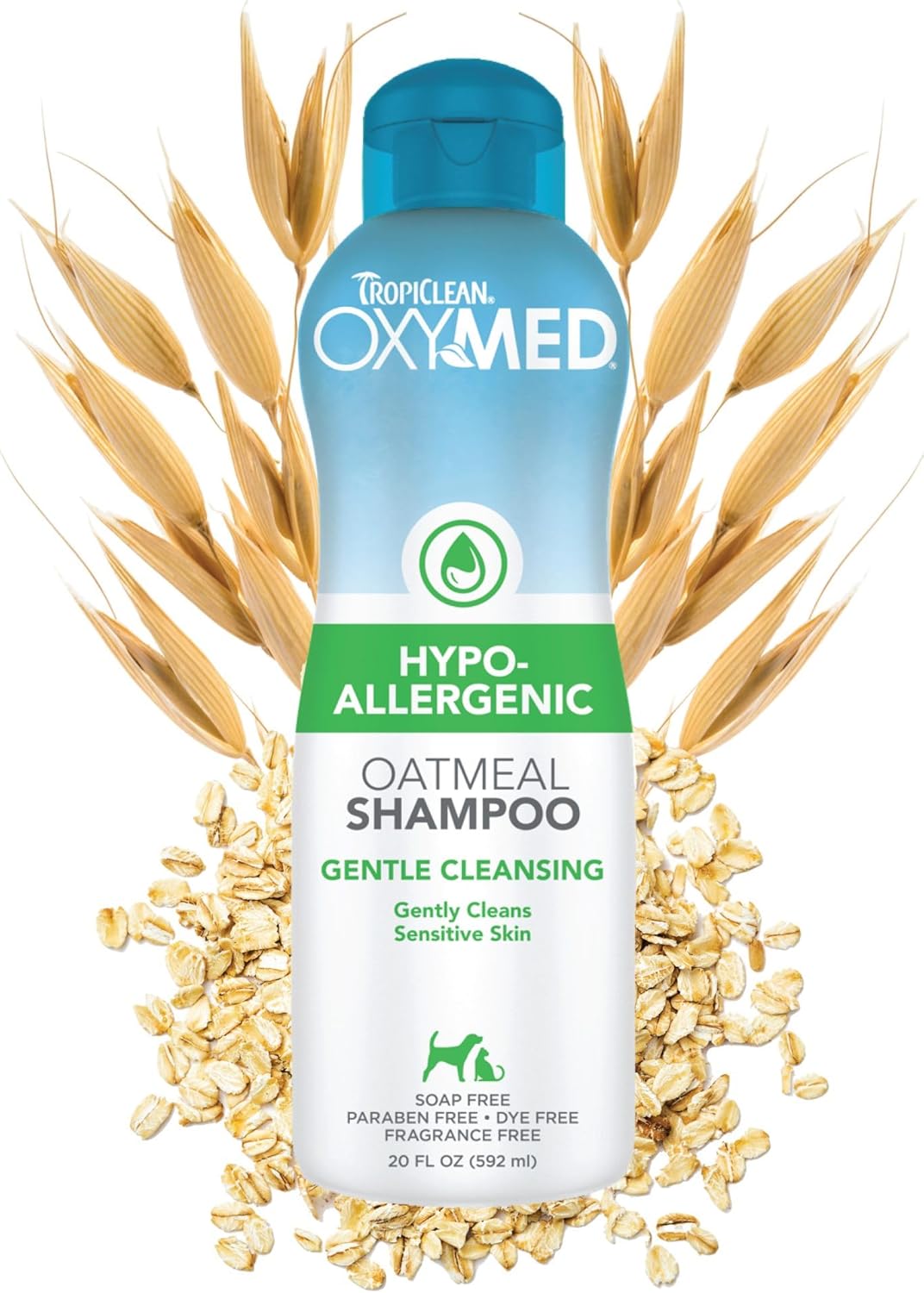
TropiClean OxyMed Hypoallergenic Shampoo is a tear-free, soap-free shampoo designed to calm itching and clean sensitive skin on dogs and cats. It is used like any regular shampoo: wet the coat, lather with a generous amount, massage into the skin, then rinse; the formula includes a mild coconut cleanser, colloidal oatmeal, vitamin E and aloe to help soothe and moisturize while removing dirt and odors. The scent is listed as coconut but the product is marketed as dye free and free of common irritants such as parabens and SLS, which makes it appropriate for pets prone to reactions. Practical benefits include an easy rinse formula that can be used every few weeks per vet guidance and compatibility with the brand's complementary OxyMed soothing treatments for follow-up relief. Limitations are that it is not explicitly labeled fragrance-free and owners with extremely reactive pets should patch test first; frequent weekly bathing is not recommended because even gentle cleansers can dry sensitive skin if overused.
Best for: Buyers prioritizing a gentle, limited-ingredient shampoo for dogs with occasional itching or sensitive skin who want a vet-recommended, rinse-off solution to reduce flare-ups.
Less Ideal for: Owners who need a guaranteed fragrance-free or prescription-strength medicated wash for severe dermatological conditions should consider alternative vet-recommended products.
- Formulated with colloidal oatmeal, vitamin E and aloe to soothe itchy, sensitive skin
- Soap free and free of dyes, parabens and SLS to reduce common irritants
- Tearless, mild coconut cleanser that rinses easily for convenient baths
- Made for both dogs and cats and pairs with other OxyMed calming products
- Not explicitly labeled fragrance-free despite coconut listed as scent
- Not intended for weekly use on all pets since over-bathing can dry skin
Verdict: The best hypoallergenic shampoo for dogs with ichthyosis who also have sensitive or allergy-prone skin and need minimal irritants or fragrances.
Burt's Bees Oatmeal Dog Shampoo 16 fl oz
Best Moisturizing Shampoo

| Scent Name | Unscented |
|---|---|
| Item Form | Liquid |
| Target Species | Dog |
| Liquid Volume | 16 fluid ounces |
| Material Type Free | Sulfate Free;Paraben Free |
Burt's Bees Oatmeal Dog Shampoo is a low‑lather, unscented cleanser designed for regular baths on dogs with dry, itchy, or sensitive skin. You use it like a standard wash-and-rinse shampoo: apply to a wet coat, work from head to tail while avoiding the eyes, then rinse thoroughly. The formula centers on colloidal oat flour to soothe irritated skin and honey plus beeswax to add conditioning, so coats tend to feel softer and easier to brush after a single wash without adding a separate conditioner step. It is pH balanced for canine skin and avoids sulfates, parabens, phthalates, and synthetic colorants, which reduces the chance of irritation and strong fragrance reactions. The bottle's flip cap and low-foam formula make rinsing faster on dogs that dislike baths, though the 16 fl oz size means frequent bathtimes for multiple or large dogs. Ingredients include decyl/lauryl glucosides and glycerin for cleansing and moisture, and preservatives like phenoxyethanol and potassium sorbate are present.
Best for: Owners who prioritize a reliable, mild everyday shampoo that soothes sensitive or itchy skin and rinses easily for routine baths.
Less Ideal for: Those who need a concentrated or large-volume shampoo for frequent bathing of multiple large dogs or who require therapeutic medicated treatments.
- Soothes dry, itchy skin with colloidal oat flour.
- Conditioning honey and beeswax reduce the need for a separate conditioner.
- Formulated without sulfates, parabens, phthalates, or synthetic colorants.
- Unscented, no added synthetic fragrance for scent-sensitive dogs.
- Low‑lather formula rinses quickly to shorten bath time.
- 16 fl oz bottle may be small for multi-dog households or large breeds.
- Contains preservatives such as phenoxyethanol which some owners prefer to avoid.
Verdict: The best moisturizing shampoo for ichthyosis that prioritizes hydration and barrier repair to reduce flaking and improve coat softness over time.
MiconaHex+Triz Shampoo 16 oz
Best Concentrated Shampoo

| Unit Count | 16 Ounce |
|---|---|
| Active Ingredients | 2% miconazole nitrate; 2% chlorhexidine gluconate |
| Target Species | Cat, Dog, Horse |
| Scent Name | Unscented |
| Liquid Volume | 16 fluid ounces |
MiconaHex+Triz Shampoo is a veterinary-strength, unscented shampoo that combines antifungal and antimicrobial actives with barrier-repairing ingredients for animals with bacterial, yeast, or fungal skin issues. It is used like a typical medicated bath: apply to wet coat, work into a lather, leave on for 5 to 10 minutes, and rinse; directions allow use up to four times weekly or as advised by a veterinarian. Key formulation details include 2% miconazole nitrate and 2% chlorhexidine gluconate plus TrizEDTA and ceramides, which means it both targets microbes and helps restore damaged skin. The unscented formula and inclusion of ceramides make it appropriate for scent-sensitive pets and households, and the manufacturer notes it is suitable for dogs, cats, and horses. Important limitations are standard for medicated shampoos: avoid mucous membranes and ingestion, monitor for adverse reactions, and expect that improvement timing varies by case so veterinarian follow-up may be needed. This product is best used as part of a treatment plan for confirmed fungal or bacterial skin problems rather than as an everyday cosmetic shampoo.
Best for: Buyers seeking a fragrance-free, medicated shampoo to treat or manage fungal or bacterial skin conditions in scent-sensitive pets and homes and who will follow veterinary guidance.
Less Ideal for: Owners looking for a regular grooming or deodorizing shampoo or those wanting a pleasant fragrance for routine baths should choose a nonmedicated grooming product instead.
- Contains 2% miconazole nitrate and 2% chlorhexidine gluconate for antifungal and antimicrobial action
- Unscented formulation suitable for scent-sensitive pets and households
- Includes ceramides to support skin barrier repair alongside antimicrobial treatment
- Clear veterinarian-oriented directions for application and frequency
- Not intended for routine cosmetic use; designed as a medicated treatment for specific conditions
- Can irritate eyes and mucous membranes and may be harmful if ingested
Verdict: The best concentrated shampoo for owners who want a cost-effective, long-lasting option that dilutes well while still delivering therapeutic or hydrating benefits.
Virbac Keratolux Medicated Shampoo 16 oz
Best Premium Shampoo

| Package Size Name | 16 oz |
|---|---|
| Liquid Volume | 16 fluid ounces |
| Item Form | Liquid |
| Scent Name | Unscented |
| Special Ingredients | Piroctone Olamine, Tea Tree Oil, S-I-S Technology |
Virbac Keratolux is a tar-free medicated shampoo formulated to remove scales, crusts and excess oil associated with keratoseborrheic conditions and yeast-prone skin. It is used as a therapeutic bath product: lather onto wet coat, work into the skin, rinse and repeat as directed by your veterinarian or the label, with regular use helping to manage sebum production and unpleasant yeasty odors. The formula includes piroctone olamine, tea tree oil, and plant-derived defensin technology to support the skin's microbial balance and reduce fungal and bacterial adherence, while an advanced odor neutralizer leaves coat smelling fresher. In practice the shampoo functions as both an antifungal/antimicrobial treatment and a conditioning cleanser, making coats look cleaner and less greasy after several treatments. Limitations are typical of concentrated medicated washes: it requires careful following of directions and repeated applications for chronic issues, and tea tree oil can be sensitizing in rare cases so spot testing or vet guidance is prudent for sensitive animals.
Best for: Owners who want a veterinary-strength, premium medicated shampoo to treat yeast-prone, oily or crusty skin and are prepared to follow a treatment regimen for visible improvement.
Less Ideal for: Pet owners seeking a daily cosmetic cleanser or a fragrance-forward grooming shampoo should consider a milder non-medicated product instead.
- Contains piroctone olamine, an antifungal agent effective against yeast-associated skin issues
- Formulated to remove scales, crusts and excess oil for visibly cleaner skin and coat
- Includes plant extracts and defensin technology to support natural skin microbial defenses
- Advanced odor neutralizer reduces yeasty and oily smells after bathing
- Requires repeated use and adherence to directions for chronic keratoseborrheic conditions
- Contains tea tree oil, which can cause sensitivity in a small number of animals
Verdict: The best premium shampoo for ichthyosis for owners willing to invest in advanced formulations, veterinarian-grade actives, and superior base ingredients for faster, more noticeable improvements.
Choosing the Right Dog Shampoo Ichthyosis: Key Factors to Consider
Cleansing Gentleness
Dogs with ichthyosis have a compromised skin surface that can be more sensitive to aggressive detergents. A gentle cleanser removes dirt and excess scale without stripping natural oils or disrupting the skin barrier. Look for low-foaming or mild surfactants and avoid strong anionic detergents that can increase dryness and irritation. A gentler product reduces the risk of post-bath flaking and makes follow-up moisturizers more effective.
Frequent or medicated baths may be necessary for some dogs, so a shampoo that cleans without over-drying helps you maintain a regular schedule without causing additional skin damage. Gentle cleansers also tend to rinse easier, reducing residue that could trap irritants against the skin.
Moisturizing and Barrier-support Ingredients
Effective ichthyosis management relies on restoring and maintaining moisture. Ingredients such as glycerin, certain ceramide precursors, and botanical emollients help attract and retain water in the outer skin layers. These ingredients support the skin barrier, reducing scale severity and improving comfort.
Products that combine humectants with light emollients allow moisture to penetrate while leaving a thin protective layer that limits transepidermal water loss between baths. Choosing a shampoo that complements post-bath leave-on moisturizers creates a more complete skin-care routine.
Keratolytic or Exfoliating Agents
Some shampoos include keratolytic agents to help loosen thickened scale and improve skin texture. Ingredients such as mild alpha-hydroxy acids or urea derivatives can reduce scale when used appropriately. These agents must be formulated at concentrations safe for canine skin and balanced with soothing ingredients to prevent stinging or irritation.
Decide whether an occasional keratolytic wash or a maintenance gentle moisturizer better fits your dog's condition. Keratolytics are helpful when scale builds up, but overuse can thin the protective layer if not paired with barrier-supportive ingredients.
pH and Formulation Compatibility
Canine skin has a different pH than human skin, and products formulated for dogs are adjusted accordingly. A shampoo with an appropriate pH helps maintain the normal microbial balance and barrier function. Using a product with the wrong pH can increase dryness or susceptibility to secondary infections.
Also consider whether the formulation is intended for frequent use, medicated baths, or intermittent treatments. Compatibility with other topical products you use, such as leave-on moisturizers or spot treatments, matters for an effective routine and to avoid ingredient clashes that reduce benefit.
Safety and Hypoallergenicity
Dogs with ichthyosis often have skin that reacts to irritants more readily, so minimizing potential allergens and irritants is important. Fragrance-free or low-fragrance formulations reduce the chance of contact sensitivity. Avoid shampoos with known irritant preservatives or high concentrations of essential oils unless you know your pet tolerates them.
Check labels for general safety indicators and for clear usage instructions. A product that explains recommended frequency, rinse times, and when to stop use if irritation appears is safer for at-home management and reduces the risk of adverse reactions.
Veterinary Guidance and Usage Instructions
Because ichthyosis is a chronic skin condition, products that include clear, veterinarian-aligned instructions are more practical. Guidance on dilution, contact time, and follow-up care helps you use a shampoo effectively and safely. Look for explicit directions about how often to bathe, whether to follow with a leave-on moisturizer, and when to seek veterinary follow-up.
Shampoos that note concentration limits for keratolytics or advise on combining with systemic therapies are more useful for long-term management and for communicating with your veterinarian about your dog's routine.
How Often Should I Bathe a Dog with Ichthyosis?
Bath frequency depends on the severity of scaling and how your pet responds to treatment. Mild cases often do well with a maintenance bath every two to four weeks using a gentle moisturizing shampoo, while moderate to severe cases may need medicated or keratolytic baths more frequently under veterinary guidance.
Monitor skin appearance and comfort: if dryness, irritation, or scaling increases between baths, you may need to shorten intervals or add supportive leave-on moisturizers. Always follow product instructions for safe frequency, and consult your veterinarian before increasing the use of medicated shampoos.
- Maintenance: every 2–4 weeks with a mild moisturizing shampoo
- Active scaling: follow veterinarian-recommended medicated schedule
- Avoid daily baths unless specifically instructed
Which Ingredients Should I Avoid for Sensitive, Flaky Skin?
Avoid harsh anionic detergents, high concentrations of alcohol, and strong fragrances, which can worsen dryness and provoke irritation. Certain essential oils and strong preservatives can also trigger contact sensitivities in dogs with compromised skin.
If your dog has a history of contact reactions or very reactive skin, choose fragrance-free, dye-free formulations and introduce new products gradually while watching for redness, itching, or increased flaking.
- Common irritants: strong detergents, synthetic fragrances, high alcohol content
- Safer choices: fragrance-free, dye-free, and veterinarian-formulated products
Should I Use Keratolytic Shampoos Regularly or Only for Flare-ups?
Keratolytic shampoos can be valuable for reducing thick scale during flare-ups, but they are not always suitable for continuous daily use. Regular use of exfoliating agents without adequate moisturizing support can thin the stratum corneum and increase sensitivity.
A practical approach is to use keratolytic washes for short treatment courses to clear buildup, then switch to a maintenance moisturizing shampoo. Follow concentration and frequency guidance included with the product and check with your veterinarian before starting repeated keratolytic treatments.
- Use keratolytics for targeted scale reduction
- Switch to moisturizing maintenance between treatment courses
How Do I Combine Shampooing with Leave-on Moisturizers and Treatments?
Shampooing is the cleansing step; it prepares the skin to receive leave-on moisturizers or topical therapies more effectively. After rinsing and gently towel-drying, apply a veterinarian-recommended moisturizer to lock in hydration. Allow the skin to absorb the product fully before allowing the dog to go outdoors where they might get dirty again.
If you are using medicated topical treatments or systemic therapies, follow timing instructions carefully. Some leave-on products work best immediately after bathing, while others should be applied later to avoid interaction with residual rinse ingredients.
- Towel-dry before applying leave-on moisturizers
- Follow timing advice when combining with medicated treatments
What Signs Mean a Shampoo Is Irritating My Dog's Skin?
Watch for increased redness, persistent scratching, new hotspots, stinging during application, or worsening flaking after use. Mild transient dryness can occur initially, but signs that appear consistently after several uses suggest intolerance.
If you see worrying signs, discontinue the product and rinse the skin thoroughly. Consult your veterinarian for alternative products or further evaluation to rule out secondary infection or an allergic reaction.
- Redness, increased itching, or new sores after use
- Worsening scale rather than improvement over several baths
How We Chose the Best Dog Shampoo Ichthyosis
We limited our evaluation to shampoos specifically formulated for dogs with dry, scaly, or hyperkeratotic skin consistent with ichthyosis. Each candidate had to demonstrate a clear focus on gentle cleansing, barrier support, or keratolytic action rather than just cosmetic fragrance or generic deodorizing. We prioritized formulations with mild surfactants, moisturizing humectants, and ingredients known to reduce scale safely. Our editorial filters included ingredient transparency, veterinarian-friendly active agents, pH appropriate for canine skin, and suitability for repeated or maintenance use. We excluded products that rely primarily on perfumes, harsh detergents, or unproven topical agents likely to irritate compromised skin. We also considered packaging and dosing practicality for consistent at-home use. Evaluation criteria that mattered most were cleansing gentleness, moisturizing and barrier-repair ingredients, presence and type of keratolytics or exfoliants, and overall formulation safety for long-term management. We also assessed user guidance quality and how well the product's intended use matched common ichthyosis care routines.
Our full evaluation process is outlined in our review methodology.
FAQ
Can a dog shampoo alone manage ichthyosis?
Often shampooing is an important part of management but not the only step. Shampoos help control scale and keep skin clean, but moisture maintenance, topical treatments, and sometimes veterinary oversight are usually needed for long-term control.
Are human moisturizers or shampoos safe to use on dogs with ichthyosis?
Human products often have different pH and ingredient profiles and can contain irritants not suitable for canine skin. It is usually better to use products formulated for dogs or to consult your veterinarian before trying a human product.
How long until I see improvement after starting a new shampoo?
You may notice softer skin and reduced scaling within a few baths for moisturizing formulations, while keratolytic products can take several treatments to show visible reduction in thick scale. Consistent use as directed and follow-up with supportive moisturizers speeds visible improvement.
Can medicated shampoos make ichthyosis worse?
If used too frequently or without proper moisturizing follow-up, some medicated or keratolytic shampoos can increase dryness and sensitivity. Using products at recommended intervals and combining them with barrier-supporting care helps avoid this risk.
Is veterinary testing needed before trying a new shampoo?
Testing is not always required for mild cases, but if your dog has severe scaling, secondary infections, or a history of allergic skin disease, veterinary evaluation helps identify the right treatment strategy before starting medicated washes.
Final Verdict
Focus on gentle cleansing and restoring moisture first, and use keratolytic or medicated washes selectively under guidance. Prioritize shampoos that support the skin barrier, have appropriate pH, and include clear usage instructions so you can build a predictable care routine. Balance effectiveness against the risk of irritation, and consult your veterinarian for persistent or severe cases. With the right routine, you can reduce scale and improve your dog's comfort while avoiding treatments that worsen sensitivity.

