

If your dog has recurring bacterial skin infections, selecting the right medicated shampoo matters for comfort and recovery. A purpose-formulated shampoo for pyoderma helps reduce surface bacteria, soothes inflamed skin, and supports topical healing between veterinary treatments. This guide highlights seven well-chosen shampoo options that are appropriate for dogs with pyoderma, explaining the formulation differences and safety considerations you should weigh. Below we cover what makes a shampoo effective against pyoderma, how to use medicated baths safely, and the product features that informed our shortlist.
Top Picks at a Glance
| Best Overall Shampoo for Pyoderma The top all-around therapeutic shampoo for bacterial skin issues | Douxo S3 PYO Medicated Dog Shampoo 6.7 fl oz |  |
| Best Budget Shampoo for Pyoderma A low-cost therapeutic option that still targets bacterial infections | Veterinary Formula Antiseptic & Antifungal Shampoo 16 oz |  |
| Best Premium Shampoo Higher-end therapeutic formula with extra skin-care ingredients and finish | Dechra Miconahex + Triz Shampoo 16 oz |  |
| Best Medicated Shampoo Formulated with prescription-strength or clinic-grade active ingredients | Truseb Ketoconazole Chlorhexidine Shampoo 16 oz |  |
| Best Antibacterial Shampoo Specifically optimized to reduce bacterial load and soothe inflamed skin | Curaseb Chlorhex 4% Shampoo 8 oz |  |
| Best Hypoallergenic Shampoo Gentle, low-irritant formula for dogs with sensitive or reactive skin | Vetericyn FoamCare Medicated Shampoo 16 oz |  |
| Best Concentrated Shampoo Highly concentrated formula for fewer bottles and longer use | Bobbi Panter Soothing Dog Shampoo 14 oz |  |
Douxo S3 PYO Medicated Dog Shampoo 6.7 fl oz
Best Overall Shampoo for Pyoderma

| Active ingredients | Chlorhexidine, Ophytrium |
|---|---|
| Liquid Volume | 6.7 fluid ounces |
| Target Species | Dog, Cat |
| Scent Name | Coconut, Vanilla |
| Item Form | Liquid |
Douxo S3 PYO is a medicated liquid shampoo centered on 3% chlorhexidine and 0.5% ophytrium to provide antiseptic cleansing for bacterial and yeast skin infections. It is used by wetting the coat, massaging the shampoo into affected areas, then repeating over the whole body and leaving it on for 5 to 10 minutes before rinsing; dosing guidance is one pump per 4 lb, doubled for long or thick fur. The formula is free from soaps, sulfates, parabens, colorants, nanoparticles, and phthalates and is presented as hypoallergenic, so it is suitable for sensitive skin while offering antiseptic action. Practical benefits include vet-backed active ingredients that can reduce infection-related symptoms within days and a small 6.7 fl oz size that is convenient for targeted treatment or travel. Limitations are the small bottle size for frequent or whole-body use on large dogs and the need to follow contact time and repeat applications to see clinical effect rather than expecting an instant cure.
Best for: Buyers seeking a veterinary-strength topical shampoo to address bacterial or yeast skin issues and who plan to follow a short treatment regimen.
Less Ideal for: Owners wanting an everyday deodorizing or conditioning shampoo for frequent full-body washes or those who need a large-volume product for multiple large dogs.
- Contains 3% chlorhexidine, an antiseptic effective against bacteria and yeast
- Includes 0.5% ophytrium to help soothe and hydrate irritated skin
- Free from soaps, sulfates, parabens, colorants, nanoparticles, and phthalates
- Clear dosing and leave-on directions for targeted treatment
- 6.7 fl oz bottle may be too small for repeated whole-body treatments on large dogs
- Requires prescribed contact time and multiple uses to achieve clinical improvement
Verdict: The best overall shampoo for pyoderma that balances proven antibacterial ingredients, skin-soothing agents, safe formulation for dogs, and reliable clinical results for most pet owners.
Veterinary Formula Antiseptic & Antifungal Shampoo 16 oz
Best Budget Shampoo for Pyoderma

| Unit Count | 16 Fluid Ounces |
|---|---|
| Target Species | Dog |
| Pet Type | Cat, Dog |
| Scent Name | Citrus |
| Item Form | Liquid |
This Veterinary Formula Clinical Care shampoo is a medicated antiseptic and antifungal formula intended to treat skin issues like scaly, greasy, red, or itchy skin in dogs and cats 12 weeks and older. You wet the coat, work the liquid into a thick lather, and leave it on for 5 to 10 minutes so active ingredients like ketoconazole and benzethonium chloride can act on fungal or bacterial causes; aloe vera and lanolin help soothe and restore moisture while the citrus fragrance masks clinical odors. It is pH-balanced for sensitive skin and free of parabens, dyes, sulfates, and soap, so it can be used twice weekly until skin improves and then weekly for maintenance. Practical benefits include targeted relief for dermatitis and easy at-home application without requiring gloves. Limitations are that it is a medicated product rather than a routine everyday cleanser for pets without skin problems, and pets sensitive to fragrance may prefer an unscented option.
Best for: Owners seeking an effective, easy-to-use medicated shampoo to relieve itching and treat common fungal or bacterial skin problems in their dogs while supporting skin recovery and maintenance.
Less Ideal for: Pet owners who want a fragrance-free cosmetic shampoo for routine grooming or those looking for a nonmedicated daily cleanser for healthy skin.
- Medicated formula (ketoconazole and antiseptic agents) targets fungal and bacterial skin issues
- pH-balanced and free of parabens, dyes, sulfates, and soap for gentler cleansing
- Soothing additives like aloe vera and lanolin help restore moisture and reduce irritation
- Clear directions allow 5–10 minute contact time for active ingredients to work
- Suitable for both dogs and cats 12 weeks and older
- Citrus fragrance may bother scent-sensitive pets or owners
- Not intended as a mild everyday shampoo for pets without skin conditions
Verdict: The best budget shampoo for pyoderma that provides effective antibacterial action and decent skin care at a lower price for cost-conscious pet owners.
Dechra Miconahex + Triz Shampoo 16 oz
Best Premium Shampoo
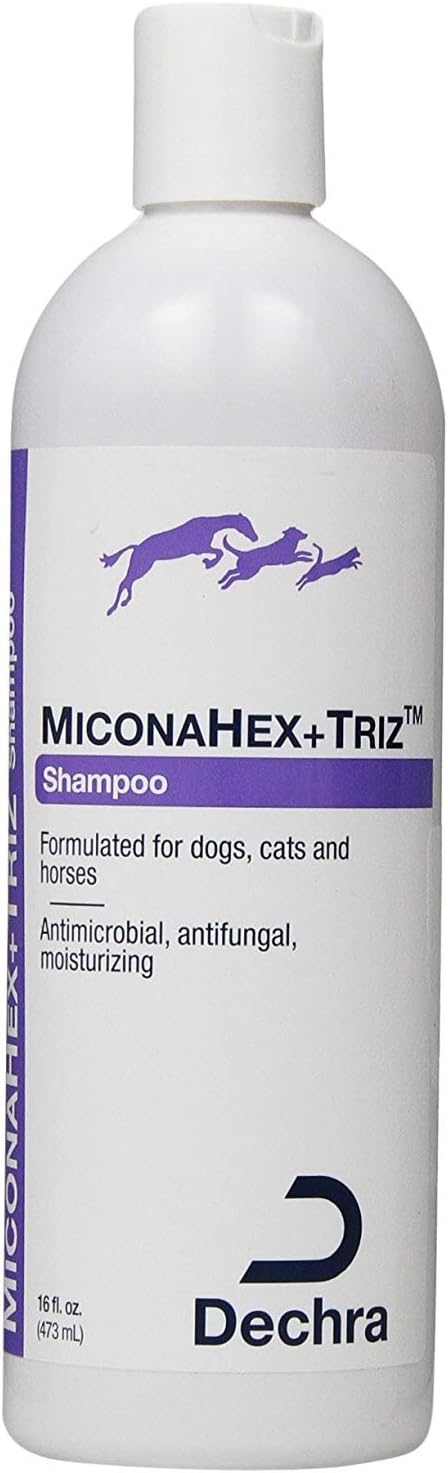
| Active ingredients | 2% Chlorhexidine Gluconate; 2% Miconazole Nitrate |
|---|---|
| Volume | 16 fluid ounces |
| Scent Name | Unscented |
| Special Ingredients | ceramides |
This is a vet-formulated medicated shampoo aimed at treating yeast and bacterial skin issues using 2% miconazole and 2% chlorhexidine plus TrizEDTA to boost antimicrobial activity. It is typically used as a topical wash for affected areas or full-body baths when recommended by a veterinarian, and the ceramides and moisturizing claims help soothe dry, damaged skin during treatment. The formulation includes surfactants for cleansing and small amounts of lavender and lemongrass oils despite the fragrance-free/material-type-free label, so it delivers a more refined sensory profile than basic medicated washes while still focusing on antimicrobial action. Directions and safety notes emphasize veterinary guidance and avoiding eye contact. Limitations are that it is a treatment product rather than an everyday maintenance shampoo and that scented inactive ingredients may bother owners seeking a completely odorless option. Bottle size and single-bottle packaging make it convenient for weekly or as-directed therapeutic use but may be less economical for long-term maintenance on large-breed dogs.
Best for: Buyers who prioritize a veterinarian-grade, clinically active shampoo and are looking for a premium, treatment-focused product to resolve yeast or bacterial skin problems under veterinary guidance.
Less Ideal for: Owners seeking a gentle everyday maintenance shampoo or a guaranteed completely scentless product should consider non-medicated or explicitly fragrance-free alternatives.
- Contains 2% miconazole and 2% chlorhexidine for proven antifungal and antibacterial activity
- Includes TrizEDTA to potentiate disinfectant efficacy against resistant strains
- Added ceramides provide moisturizing and skin barrier support during treatment
- Formulated for multiple species so it is versatile for households with more than one type of pet
- Not intended for routine daily grooming; it is a therapeutic shampoo for active skin conditions
- Label lists fragrance-free yet contains small amounts of botanical oils that may have a light scent
Verdict: The best premium shampoo for owners willing to spend more for advanced formulations that combine potent antibacterial actives with superior conditioners and skin-repair ingredients.
Truseb Ketoconazole Chlorhexidine Shampoo 16 oz
Best Medicated Shampoo

| Liquid Volume | 16 fluid ounces |
|---|---|
| Target Species | Cat, Dog, Horses |
| Active Ingredients | Ketoconazole and Chlorhexidine |
| Scent Name | Cucumber Melon Scented |
This Truseb formula combines 2% chlorhexidine and 1% ketoconazole in a liquid shampoo designed to control bacterial and fungal skin problems while leaving a milder, soothing finish from added aloe. It is used like a typical medicated wash: wet the coat, work into a lather, let sit 5 to 10 minutes, then rinse thoroughly; that dwell time helps the active ingredients act on hotspots, yeast, and general irritation. The cucumber melon scent and aloe make rinsed fur smell pleasant and appear shinier, and the directions and concentration match typical veterinary-strength topical treatments so it can replace clinic shampoos for at-home management. Because it is formulated for dogs, cats, and horses, it is versatile for multi-pet households. Limitations are that medicated shampoos can dry skin if overused and this product requires the full contact time to be effective, so it is not a quick rinse-and-go solution and should be used per guidelines or under vet direction for persistent infections.
Best for: Buyers who need topical antimicrobial control in a low-irritation, face-safe formulation for pets that are sensitive to regular shampooing and who are willing to follow a brief contact-time routine.
Less Ideal for: Owners seeking a daily gentle cleanser or a tear-free shampoo for frequent use without veterinary oversight should consider a non-medicated maintenance shampoo instead.
- Veterinary-strength actives with 2% chlorhexidine and 1% ketoconazole to target bacteria and yeast
- Soothing aloe formula and pleasant cucumber melon scent for better tolerability
- Directions recommend 5–10 minute contact time to improve treatment effectiveness
- Labeled safe for use on dogs, cats, and horses which adds versatility for mixed-animal homes
- Requires 5–10 minute contact time so not suited for quick cleanups
- Medicated ingredients can dry or irritate skin if used too frequently without veterinary guidance
Verdict: The best medicated shampoo for pets that need stronger, targeted therapeutic actives typically recommended by veterinarians to control stubborn or recurrent pyoderma.
Curaseb Chlorhex 4% Shampoo 8 oz
Best Antibacterial Shampoo
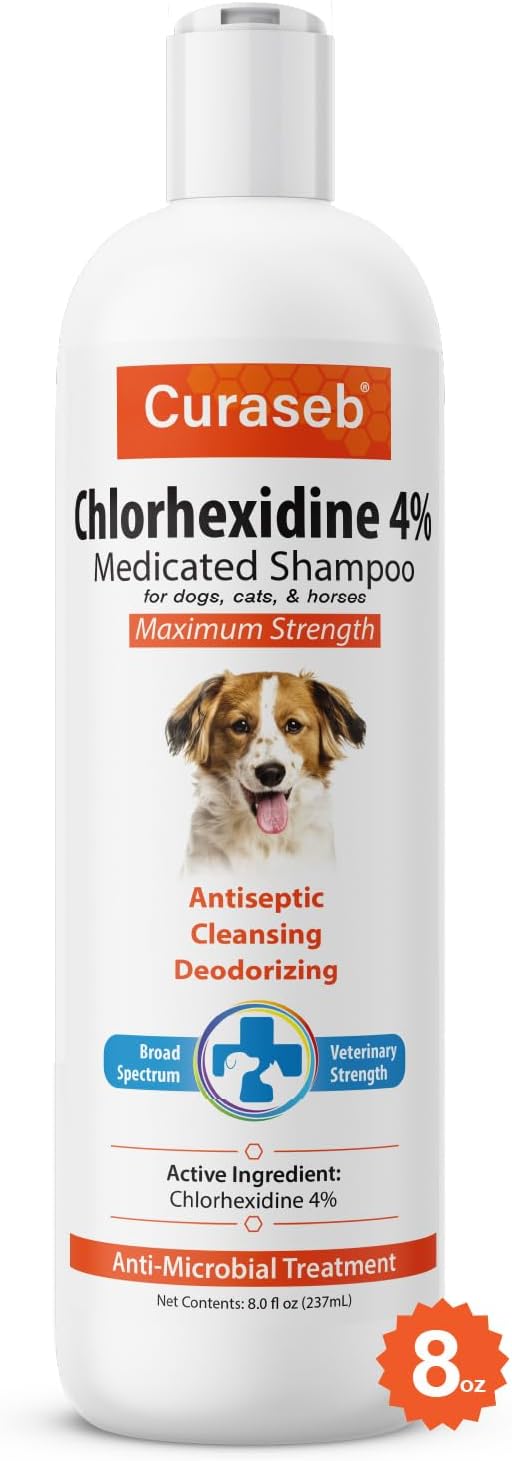
| Unit Count | 8 Fluid Ounces |
|---|---|
| Item Form | Lotion |
| Scent Name | Blueberry |
| Target Species | Dog |
| Age Range Description | All Life Stages |
Curaseb Chlorhex 4% is a veterinary-strength medicated shampoo designed to treat bacterial and fungal skin problems such as pyoderma, hot spots, paw licking, and acne. You use it like a standard pet shampoo: wet the coat, apply and lather the product, leave on according to veterinary guidance, then rinse thoroughly. The key active approach is chlorhexidine at a concentration intended for antimicrobial cleansing, paired with a soothing blueberry-scented lotion base and directions suitable for all life stages. Practical benefits include targeted antibacterial action that helps reduce surface bacteria between veterinary visits and a formulation positioned for sensitive or irritated skin. The 8 oz bottle and lotion form make it easy to concentrate on affected areas, though small bottle size means multiple purchases for larger or chronic cases. As a medicated product it relies on proper dilution and contact time to be effective and should be used under veterinary direction for confirmatory diagnosis and treatment plans.
Best for: Buyers seeking a focused antibacterial shampoo for confirmed bacterial skin infections who prioritize ingredient potency and a product intended for veterinary use.
Less Ideal for: Pet owners looking for an everyday grooming shampoo, fragrance-free options, or large-volume supplies for routine bathing should consider other products.
- Contains chlorhexidine at a vet-strength concentration for antimicrobial action
- Lotion formula is easy to apply and good for targeting specific lesions
- Safe for dogs and cats of all ages per product information
- Blueberry scent helps mask medicated odor after rinsing
- 8 oz bottle may be small for repeated use on larger dogs or long treatment courses
- Label directs to see full ingredients on the bottle so exact excipient details are not listed in the summary
Verdict: The best antibacterial shampoo for pyoderma focused on ingredients and concentrations that effectively reduce bacteria while minimizing irritation for affected skin.
Vetericyn FoamCare Medicated Shampoo 16 oz
Best Hypoallergenic Shampoo

| Item Form | Foam, Spray |
|---|---|
| Scent Name | Fresh |
| Target Species | Cat,Dog |
| Liquid Volume | 16 fluid ounces |
| Material Type Free | Paraben Free |
Vetericyn FoamCare Medicated Shampoo is a spray-on, instant-foaming formula designed to clean, condition, and relieve itching and dermatitis on dogs and cats. You apply it to a wet coat, work it into a lather, then rinse; the foam delivery makes it easy to target face, paws, and problem spots with minimal mess. The formula is paraben-free, sulfate-free, pH-balanced, and contains salicylic acid to help treat flaky, irritated skin and hot spots while leaving the coat conditioned rather than stripped. Its medicated action and gentle base make it suitable for pets with allergy-related itching that tolerate topical treatments, and the spray foam helps control how much product reaches sensitive areas. Limitations: it is not explicitly marketed as tearless, so extra care is still needed around eyes, and pets with severe or open wounds should see a veterinarian before topical medicated use.
Best for: Pet owners seeking a gentle, conditioning medicated shampoo for allergy- or irritation-prone dogs and cats who want a low-mess spray foam they can apply to targeted areas.
Less Ideal for: Owners who need a guaranteed tearless formula for frequent face or eye cleaning or those treating severe skin infections that require prescription-strength therapy.
- Spray-on instant foam lets you target specific areas and reduces product run-off
- Contains salicylic acid to help treat itching, dermatitis, and flaky skin
- Paraben-free and sulfate-free formula with balanced pH to avoid stripping natural oils
- Suitable for both dogs and cats as a conditioning medicated shampoo
- Not explicitly labeled tearless, so caution required near eyes
- Medicated ingredients may not be appropriate for pets with open wounds without veterinary guidance
Verdict: The best hypoallergenic shampoo for pet owners who need an antibacterial option that avoids common irritants, fragrances, and harsh detergents to protect sensitive skin.
Bobbi Panter Soothing Dog Shampoo 14 oz
Best Concentrated Shampoo

| Liquid Volume | 14 fluid ounces |
|---|---|
| Scent Name | Lavender |
| Product Benefits | Anti-Dandruff, Anti-Itch, Softening, Soothing, pH Balanced |
| Material Type Free | Paraben Free, Salt Free |
| Target Species | Dog |
Bobbi Panter Soothing Dog Shampoo is a highly concentrated grooming formula designed to calm irritated or sensitive skin while cleaning coats. You dilute the 14 oz bottle (up to 30:1) before use, then apply to a wet coat, work through, and rinse, which makes the bottle stretch far for multi-dog households or professional use. The blend lists lavender oil, tea tree oil, cucumber extract, oatmeal and aloe to deliver a gentle, moisturizing wash that rinses quickly and is tear-free and pH balanced. It is salt-free and paraben-free, and the manufacturer says it will not strip topical flea treatments. Practical benefits include reduced product waste thanks to the concentrate, a pleasant lavender scent, and ingredients that leave coats soft without heavy residue. Limitations are that very small bottles require correct dilution to avoid overconcentration, and essential oils like tea tree can be sensitizing in rare cases so patch testing on very reactive animals is wise. Follow the dilution directions for best results.
Best for: Households and groomers who prioritize a mild, cost-effective shampoo that stretches a small bottle into many washes while keeping skin calm and coats soft.
Less Ideal for: Owners who prefer ready-to-use, unscented formulations or who need a fragrance-free, essential-oil-free hypoallergenic shampoo for extremely sensitive animals.
- Highly concentrated formula dilutes up to 30:1 to extend use and reduce packaging waste
- Formulated to soothe sensitive skin with lavender, tea tree, oatmeal, cucumber, and aloe
- Salt-free, paraben-free, tear-free and pH balanced for frequent, gentle use
- Rinses quickly and is designed not to strip topical flea treatments
- Must be diluted correctly to avoid skin irritation or ineffective cleaning
- Contains essential oils that can rarely cause sensitivity in very reactive pets
Verdict: The best concentrated shampoo for pet owners who want an economical, dilutable therapeutic option that maintains antibacterial effectiveness while stretching supply and lowering waste.
Choosing the Right Dog Shampoo Pyoderma: Key Factors to Consider
Active Antibacterial Ingredients
The active ingredient determines whether a shampoo can reduce surface bacteria associated with pyoderma. Common effective actives include chlorhexidine and benzoyl peroxide, which have different mechanisms and strengths. Chlorhexidine has broad antibacterial effects and is generally well tolerated on damaged skin when used at appropriate concentrations. Benzoyl peroxide helps remove excess oil and debris while killing bacteria but can be more drying, so it may need follow-up moisturizing care.
Knowing which active is present helps you match the product to the severity of your dog's condition and your veterinarian's treatment plan. Also consider the concentration listed on the label because that affects contact time and expected efficacy. Higher potency may be necessary for stubborn infections but also increases the risk of irritation, so follow usage guidance closely.
pH and Skin Gentleness
Dog skin has a different pH than human skin, and products formulated for canine pH reduce irritation and support the skin barrier. A shampoo that is too alkaline or contains strong anionic surfactants can strip natural oils and worsen pyoderma by damaging the barrier that protects against microbes.
Look for shampoos that advertise balanced pH for dogs and include mild surfactants. Also review the ingredient list for potential irritants such as high concentrations of fragrance or alcohol. Gentler formulations often include mild cleansers combined with antimicrobial actives so you can treat infection without causing further inflammation.
Soothing and Restorative Additives
Ingredients that reduce itch and promote repair can improve comfort while the underlying infection is treated. Soothing agents like oatmeal, aloe, ceramides, or niacinamide help calm inflamed skin and support the lipid barrier recovery after baths.
These restorative additives do not replace veterinary medication when systemic therapy is required, but they can limit scratching and secondary trauma that would otherwise perpetuate infection. Consider products that balance antimicrobial action with skin-repairing ingredients to minimize downtime between treatments.
Contact Time and Application Method
Medicated shampoos often require a specific wet contact time to be effective. Some products must remain on the coat for several minutes to allow actives to work, while others function with a shorter exposure. This affects how practical a shampoo is for a given dog's tolerance and your bathing setup.
Also consider whether the product is applied as a rinse-off shampoo, a leave-on rinse, or a concentrated solution to be diluted. Real-world factors like how well the dog tolerates baths and whether you can keep them still for the required duration influence which product will be most useful.
Rinseability and Residue Risk
Residues left after rinsing can trap moisture and bacteria, potentially worsening skin issues. Highly viscous or heavily conditioned formulas are sometimes harder to rinse fully, so a clear rinse that leaves minimal residue is preferable for managing pyoderma.
Check for formulations described as fast-rinse or easily rinsed and follow the label's rinsing instructions. If follow-up conditioning is needed, choose light, non-comedogenic moisturizers rather than heavy conditioners that could obstruct hair follicles.
Safety for Puppies, Seniors, and Sensitive Dogs
Age and general health affect how a dog tolerates medicated products. Puppies and geriatric dogs often have thinner skin or altered immune responses, and some actives may be contraindicated or require veterinary supervision.
Always confirm suitability for the specific age group, and when in doubt use milder concentrations or consult a veterinarian. Also consider whether the product is labeled for use on dogs with underlying conditions or on those receiving other topical therapies, as interactions can occur.
How Long Should Medicated Shampoo Stay on My Dog?
Contact time depends on the active ingredient and the product instructions. Many antibacterial shampoos recommend a wet contact time of 5 to 10 minutes to let the active penetrate surface oils and reduce bacterial load.
If your dog cannot tolerate long baths, look for products with shorter recommended contact times or discuss alternative application methods with your veterinarian. Always follow label directions and avoid leaving stronger actives on longer than recommended to prevent irritation.
- Chlorhexidine products often specify 5 to 10 minutes of contact time.
- Benzoyl peroxide may require similar timings but can cause more dryness.
- Rinse thoroughly and dry gently to reduce moisture trapped against the skin.
Can I Use Medicated Shampoo with Topical Ointments or Oral Therapy?
Medicated shampoos are often used alongside topical or systemic treatments, but coordination matters. Some topical antibiotics or steroid creams can interact with or be diluted by bathing if applied too soon before or after a shampoo.
Consult your veterinarian about timing. Typically, baths are scheduled between topical applications or after a suitable interval so that both treatments maintain effectiveness.
- Avoid bathing immediately after applying a topical product unless instructed.
- When on oral antibiotics, medicated baths can provide symptomatic relief but do not replace systemic therapy.
What Should I Expect After the First Few Baths?
Improvement in odor, greasiness, and redness is often noticeable after initial treatments, but complete resolution depends on the infection severity and whether systemic therapy is needed. For mild surface pyoderma, repeated medicated baths over a few weeks may clear signs when used as directed.
If you do not see progressive improvement or if the dog's condition worsens, cease the shampoo and consult your veterinarian. Persistent lesions, spreading sores, or systemic signs like fever require professional assessment.
- Short-term relief of itching and odor is common after the first bath.
- Full resolution may need multiple treatments and veterinary oversight.
How to Bathe a Dog with Painful or Inflamed Skin
Prepare everything in advance so the bath is as quick and calm as possible. Use lukewarm water, support the dog gently, and speak soothingly to reduce stress. Apply the medicated shampoo carefully, avoiding excessive rubbing on open sores; instead, let the product sit and work according to instructions.
Pat dry with a soft towel and avoid hot air dryers on high heat, which can further irritate the skin. If the dog has extensive open lesions, get veterinary approval before bathing since some cases require different wound care.
- Use minimal handling on sore areas; let the shampoo act rather than aggressive scrubbing.
- Work in short intervals and reward calm behavior to make future baths easier.
Should I Use a Conditioner After Medicated Baths?
Conditioners can help restore moisture after drying antibacterial shampoos, but choose light, non-comedogenic formulations that do not leave heavy residues. Overly rich conditioners may clog follicles and counteract the antibacterial treatment.
If the dog's coat is dry or brittle after treatment, a gentle conditioning spray or diluted leave-in moisturizer formulated for dogs can improve comfort without adding residue that traps bacteria.
- Avoid heavy, oily conditioners immediately after antibacterial baths.
- Consider spot-conditioning only the longest hair to minimize skin contact.
How We Chose the Best Dog Shampoo Pyoderma
We evaluated products using criteria that reflect practical veterinary concerns for managing canine pyoderma. First, we prioritized active ingredients with documented antibacterial or antimicrobial activity that are appropriate for topical treatment. Second, we assessed overall formulation safety, including pH balance for canine skin, presence of soothing agents to reduce inflammation, and avoidance of harsh detergents that can worsen barrier damage. Third, we considered concentration and recommended contact time to ensure the product can be used effectively during a bath. Fourth, texture and rinseability matter because residues can irritate or trap bacteria; easily rinsed formulas reduce that risk. Fifth, suitability across coat types and age ranges was reviewed so owners can find options that work on short and long coats and on most adult dogs. We excluded products that are solely cosmetic conditioning shampoos without antimicrobial actives, and we excluded formulas labeled only for flea control or general odor control when they lacked antibacterial claims. Our selection favors clinically oriented products and veterinarian-recommended ingredient profiles while keeping routine home use and safety in mind.
Our full evaluation process is outlined in our review methodology.
FAQ
How often should I bathe my dog with a medicated shampoo for pyoderma?
Frequency depends on the product and severity. Many regimens call for bathing every 2 to 3 days initially, then tapering as the skin improves. Follow the product instructions and your veterinarian's advice to avoid over-drying the skin.
Can regular dog shampoo make pyoderma worse?
Some regular shampoos contain strong detergents or fragrances that can strip oils and irritate damaged skin, which may worsen pyoderma. Use formulations designed for sensitive or medicated care when dealing with bacterial skin issues.
Is it safe to use antibacterial shampoo on puppies?
Some antibacterial shampoos are safe for puppies when labeled accordingly, but concentrations and actives matter. Check the label for puppy use and consult your veterinarian for young or fragile animals.
Will medicated baths cure pyoderma on their own?
Medicated baths can significantly reduce surface bacteria and improve symptoms, but they do not always cure deeper or systemic infections. Many cases require concurrent systemic antibiotics or additional veterinary treatment.
What if my dog's skin becomes more irritated after the shampoo?
Stop using the product and rinse the dog thoroughly. Increased irritation can indicate sensitivity to an ingredient or overly frequent bathing. Contact your veterinarian to reassess the treatment plan.
Final Verdict
When managing pyoderma, prioritize a shampoo with an appropriate antibacterial active, balanced pH, and calming additives to protect the skin barrier. Match the product's contact time and rinse characteristics to your dog's tolerance and coat type. Balance efficacy and gentleness: aggressive actives may clear bacteria faster but can increase dryness, while milder formulas need longer or more frequent application. Follow veterinary guidance for combined topical or systemic therapy and choose a regimen that you can apply consistently for the best outcome.

