

If your dog develops a yeast infection, choosing the right shampoo can reduce itching, clear yeast overgrowth, and help restore healthy skin and coat. You want a product that balances antifungal activity with moisturizing ingredients, especially if your pet already has sensitive or inflamed skin. This guide shortlists the top options for treating yeast infections, with picks chosen for their cleansing power, skin tolerance, and ease of use. Read on to understand the evaluation criteria and which features matter most when treating yeast on dogs.
Top Picks at a Glance
| Best Overall Shampoo The top all-purpose shampoo for treating and managing yeast infections | Douxo S3 PYO Chlorhexidine Shampoo 16.9 fl oz |  |
| Best Budget Shampoo An affordable antifungal option that still helps control yeast overgrowth | Veterinary Formula Antiseptic & Antifungal Shampoo 16 oz |  |
| Best Premium Shampoo A higher-end formula with advanced ingredients and extra skin benefits | MiconaHex+Triz Shampoo 16 oz |  |
| Best Medicated Shampoo Clinically focused formulas with active antifungal or antibacterial ingredients | Truseb Ketoconazole Chlorhexidine Shampoo 16 oz |  |
| Best Hypoallergenic Shampoo Gentle, fragrance-free formulas for dogs with sensitive or reactive skin | Douxo S3 Calm Dog Shampoo 6.7 fl oz |  |
| Best Concentrated Shampoo Highly concentrated formulas that stretch further and deliver strong cleaning power | Healthy Skin + Coat Medicated Shampoo 1 Gallon |  |
| Best Conditioning Shampoo Formulas that moisturize and soothe while addressing yeast and odor | Banixx Medicated Shampoo 16 oz |  |
Douxo S3 PYO Chlorhexidine Shampoo 16.9 fl oz
Best Overall Shampoo

| Unit Count | 16.9 Fluid Ounces |
|---|---|
| Liquid Volume | 500 ml |
| Target Species | dog, cat |
| Special Ingredients | chlorhexidine, ophytrium |
| Scent Name | coconut and vanilla |
Douxo S3 PYO Chlorhexidine Shampoo is a veterinarian-formulated antiseptic shampoo designed to target bacterial and yeast skin infections while leaving the coat hydrated. It is typically used by wetting the animal, massaging the shampoo into affected areas and across the whole body, leaving it on for 5 to 10 minutes, then rinsing; dosing guidance is provided by pump per weight to simplify application. The formula contains chlorhexidine for antiseptic action and 0.5% ophytrium to soothe and support skin barrier function, and it is free from soaps, sulfates, parabens, colorants, nanoparticles, and phthalates which reduces irritation risk for sensitive skin. Practical benefits include clinical evidence of results in about a week, vet endorsement, and compatibility for dogs and cats so households with multiple pets can use the same product. Limitations are that sustained management of fungal or bacterial disease may require follow-up treatments or adjunct topical products, and the product's medicated nature means it is intended for therapeutic rather than purely cosmetic use.
Best for: Pet owners seeking a veterinarian-grade, easy-to-use shampoo that reliably treats yeast or bacterial skin issues while being gentle enough for routine therapeutic use.
Less Ideal for: Owners only looking for a regular cosmetic or deodorizing shampoo without medicated active ingredients should consider nonmedicated grooming products instead.
- Contains chlorhexidine for proven antiseptic and antifungal effects
- Includes 0.5% ophytrium to soothe irritated skin and support hydration
- Free from soaps, sulfates, parabens, colorants, nanoparticles, and phthalates
- Vet-formulated and clinically shown to deliver visible results quickly
- Not a one-time cure; may require repeated treatments or pairing with other topical products for chronic conditions
- Medicated scent and formulation may be stronger than cosmetic shampoos
Verdict: The best overall shampoo for yeast infections that balances antifungal effectiveness, gentle cleansing, and skin-friendly ingredients for most dogs.
Veterinary Formula Antiseptic & Antifungal Shampoo 16 oz
Best Budget Shampoo

| Unit Count | 16 Fluid Ounces |
|---|---|
| Target Species | Dog |
| Pet Type | Cat, Dog |
| Scent Name | Citrus |
| Item Form | Liquid |
This Veterinary Formula Clinical Care shampoo is a medicated antiseptic and antifungal formula intended to treat skin issues like scaly, greasy, red, or itchy skin in dogs and cats 12 weeks and older. You wet the coat, work the liquid into a thick lather, and leave it on for 5 to 10 minutes so active ingredients like ketoconazole and benzethonium chloride can act on fungal or bacterial causes; aloe vera and lanolin help soothe and restore moisture while the citrus fragrance masks clinical odors. It is pH-balanced for sensitive skin and free of parabens, dyes, sulfates, and soap, so it can be used twice weekly until skin improves and then weekly for maintenance. Practical benefits include targeted relief for dermatitis and easy at-home application without requiring gloves. Limitations are that it is a medicated product rather than a routine everyday cleanser for pets without skin problems, and pets sensitive to fragrance may prefer an unscented option.
Best for: Owners seeking an effective, easy-to-use medicated shampoo to relieve itching and treat common fungal or bacterial skin problems in their dogs while supporting skin recovery and maintenance.
Less Ideal for: Pet owners who want a fragrance-free cosmetic shampoo for routine grooming or those looking for a nonmedicated daily cleanser for healthy skin.
- Medicated formula (ketoconazole and antiseptic agents) targets fungal and bacterial skin issues
- pH-balanced and free of parabens, dyes, sulfates, and soap for gentler cleansing
- Soothing additives like aloe vera and lanolin help restore moisture and reduce irritation
- Clear directions allow 5–10 minute contact time for active ingredients to work
- Suitable for both dogs and cats 12 weeks and older
- Citrus fragrance may bother scent-sensitive pets or owners
- Not intended as a mild everyday shampoo for pets without skin conditions
Verdict: The best budget shampoo that provides reliable antifungal action and basic skin care at a lower price for cost-conscious pet owners.
MiconaHex+Triz Shampoo 16 oz
Best Premium Shampoo

| Unit Count | 16 Ounce |
|---|---|
| Active Ingredients | 2% miconazole nitrate; 2% chlorhexidine gluconate |
| Target Species | Cat, Dog, Horse |
| Scent Name | Unscented |
| Liquid Volume | 16 fluid ounces |
MiconaHex+Triz Shampoo is a veterinary-strength, unscented shampoo that combines antifungal and antimicrobial actives with barrier-repairing ingredients for animals with bacterial, yeast, or fungal skin issues. It is used like a typical medicated bath: apply to wet coat, work into a lather, leave on for 5 to 10 minutes, and rinse; directions allow use up to four times weekly or as advised by a veterinarian. Key formulation details include 2% miconazole nitrate and 2% chlorhexidine gluconate plus TrizEDTA and ceramides, which means it both targets microbes and helps restore damaged skin. The unscented formula and inclusion of ceramides make it appropriate for scent-sensitive pets and households, and the manufacturer notes it is suitable for dogs, cats, and horses. Important limitations are standard for medicated shampoos: avoid mucous membranes and ingestion, monitor for adverse reactions, and expect that improvement timing varies by case so veterinarian follow-up may be needed. This product is best used as part of a treatment plan for confirmed fungal or bacterial skin problems rather than as an everyday cosmetic shampoo.
Best for: Buyers seeking a fragrance-free, medicated shampoo to treat or manage fungal or bacterial skin conditions in scent-sensitive pets and homes and who will follow veterinary guidance.
Less Ideal for: Owners looking for a regular grooming or deodorizing shampoo or those wanting a pleasant fragrance for routine baths should choose a nonmedicated grooming product instead.
- Contains 2% miconazole nitrate and 2% chlorhexidine gluconate for antifungal and antimicrobial action
- Unscented formulation suitable for scent-sensitive pets and households
- Includes ceramides to support skin barrier repair alongside antimicrobial treatment
- Clear veterinarian-oriented directions for application and frequency
- Not intended for routine cosmetic use; designed as a medicated treatment for specific conditions
- Can irritate eyes and mucous membranes and may be harmful if ingested
Verdict: The best premium shampoo for owners who want stronger formulations, superior botanical or therapeutic additives, and a more luxurious grooming experience while treating yeast.
Truseb Ketoconazole Chlorhexidine Shampoo 16 oz
Best Medicated Shampoo

| Unit Count | 16 Fluid Ounces |
|---|---|
| Included Components | Ketoconazole 2% & Chlorhexidine 1% |
| Target Species | Dogs, Cats, Horses |
| Scent Name | Cucumber Melon Scent |
This Truseb medicated shampoo pairs ketoconazole 2% with chlorhexidine 1% to target yeast and bacterial skin problems that resist regular cleaners. It is used like a standard topical wash: wet the coat, lather, let the formula sit for 5–10 minutes, then rinse and repeat if needed. The active antifungal and antimicrobial ingredients make it suitable for treating hot spots, dandruff, paw licking, and other yeast-related irritations, while added aloe helps soothe inflamed skin during treatment. The shampoo is soap-free, paraben-free, and has a light cucumber melon scent to mask odors that often accompany infections. Practical benefits include veterinary-strength actives in a consumer-friendly bottle and clear directions for contact time to increase effectiveness. Limitations are that medicated shampoos require consistent use and contact time to work, and severe or systemic infections will still need veterinary diagnosis and possibly oral medication; some pets with very sensitive skin may need a patch test before full application.
Best for: Buyers who need a topical, vet-strength shampoo to control recurring or stubborn yeast and bacterial skin infections and are willing to follow a multi-step wash routine.
Less Ideal for: People looking for an everyday maintenance shampoo for healthy skin or owners seeking a one-time cure without follow-up veterinary care should look elsewhere.
- Contains ketoconazole 2% and chlorhexidine 1% for targeted antifungal and antimicrobial action
- Directions recommend a 5–10 minute contact time to improve treatment effectiveness
- Soap-free, paraben-free formula with added aloe to soothe irritated skin
- Suitable for multiple species (dogs, cats, horses) for flexible use across animals
- Requires repeated, timed applications to be effective against recurring infections
- Not a substitute for veterinary diagnosis or systemic treatment when infections are severe
Verdict: The best medicated shampoo for yeast infections when you need targeted antifungal or antimicrobial actives recommended to control stubborn or recurring infections.
Douxo S3 Calm Dog Shampoo 6.7 fl oz
Best Hypoallergenic Shampoo

| Liquid Volume | 6.7 fluid ounces |
|---|---|
| Target Species | dog, cat |
| Special Ingredients | Ophytrium |
| Item Form | Liquid |
| Product Benefits | Anti-Itch |
Douxo S3 Calm is a vet-developed shampoo aimed at dogs (and cats) with itchy, sensitive, or allergic skin. It is used like a standard therapeutic wash: wet the coat, apply one pump per 4 lbs (more for long or thick fur), massage into affected areas and the whole body, leave on 5–10 minutes, then rinse. The formula contains 0.75% Ophytrium to soothe and hydrate skin and chlorhexidine for antimicrobial support, and it is free from soaps, sulfates, parabens, colorants, nanoparticles, and phthalates. Practical benefits include a gentle cleaning action that can reduce scratching within about a week when used as directed, and compatibility with a leave-on Calm mousse for longer relief. Limitations are its small bottle size for larger dogs or frequent use and the need to follow dosing guidance for thick coats; dogs with severe dermatologic conditions may still need prescription treatments or veterinary evaluation. Fragrance is described as fresh and sweet, which some owners may notice after bathing.
Best for: Buyers who want a vet-formulated, gentle shampoo that balances itch relief and routine cleansing for dogs with mild to moderate irritated or allergic skin.
Less Ideal for: Owners seeking an economical bulk supply for frequent full-body washes on large dogs or those needing prescription-strength medical shampoo should consider other options.
- Veterinary-formulated with Ophytrium to soothe and support skin hydration
- Contains chlorhexidine for antibacterial support on irritated skin
- Free from soaps, sulfates, parabens, colorants, nanoparticles, and phthalates
- Directions and dosing tailored by weight for controlled use
- Suitable for both dogs and cats with sensitive skin
- 6.7 fl oz bottle may require frequent repurchase for medium to large dogs
- Not a replacement for prescription therapies for severe skin disease
Verdict: The best hypoallergenic shampoo for dogs whose skin is easily irritated and who need low-irritant, fragrance-free cleansing while managing yeast.
Healthy Skin + Coat Medicated Shampoo 1 Gallon
Best Concentrated Shampoo

| Active Ingredient | 3% Chlorhexidine |
|---|---|
| Item Form | Liquid |
| Target Species | cat, dog |
| Liquid Volume | 1 gallons |
This 1-gallon Healthy Skin + Coat Advanced Medicated Clean Shampoo uses a 3% chlorhexidine formula to cleanse, deodorize, and help relieve mild skin irritation while being suitable for routine use in both home and salon settings. It is designed to be diluted up to 10:1, so a single gallon stretches to multiple baths, making it economical for multi-pet households or grooming businesses. The directions call for working into a rich lather, leaving on the coat for 5 to 10 minutes, then rinsing, which allows the active ingredient time to act on bacteria and mild irritations. Made in the USA and marketed for both dogs and cats, it also lists hydrocortisone in some variants for itch relief and includes conditioning and moisturizing additives to help keep coats manageable after treatment. Important considerations are that it is a medicated product intended for temporary relief of minor issues and should be used as directed by a veterinarian for significant infections, and the concentrated gallon format requires care when measuring dilutions to avoid overuse. For owners seeking salon-scale value with therapeutic action, this product balances potency and concentration effectively.
Best for: Buyers who prioritize economy and want a concentrated, medicated shampoo that dilutes to cover many baths while addressing mild skin concerns in pets.
Less Ideal for: Owners seeking an all-in-one prescription treatment for severe skin infections or those who prefer single-use, ready-to-use bottles instead of concentrated products.
- High 3% chlorhexidine concentration effective against bacteria and mild skin irritations
- Sold in 1-gallon concentrated form that dilutes up to 10:1 for many baths
- Formulated for both dogs and cats and suitable for home or professional grooming use
- Includes conditioning and moisturizing ingredients to help keep coat manageable after treatment
- Gallon concentrate requires careful dilution and measuring to avoid misuse
- Intended for temporary relief of minor skin issues and not a standalone treatment for serious infections
Verdict: The best concentrated shampoo for owners who want a potent, economical formula that lathers well and treats yeast with fewer washes per bottle.
Banixx Medicated Shampoo 16 oz
Best Conditioning Shampoo
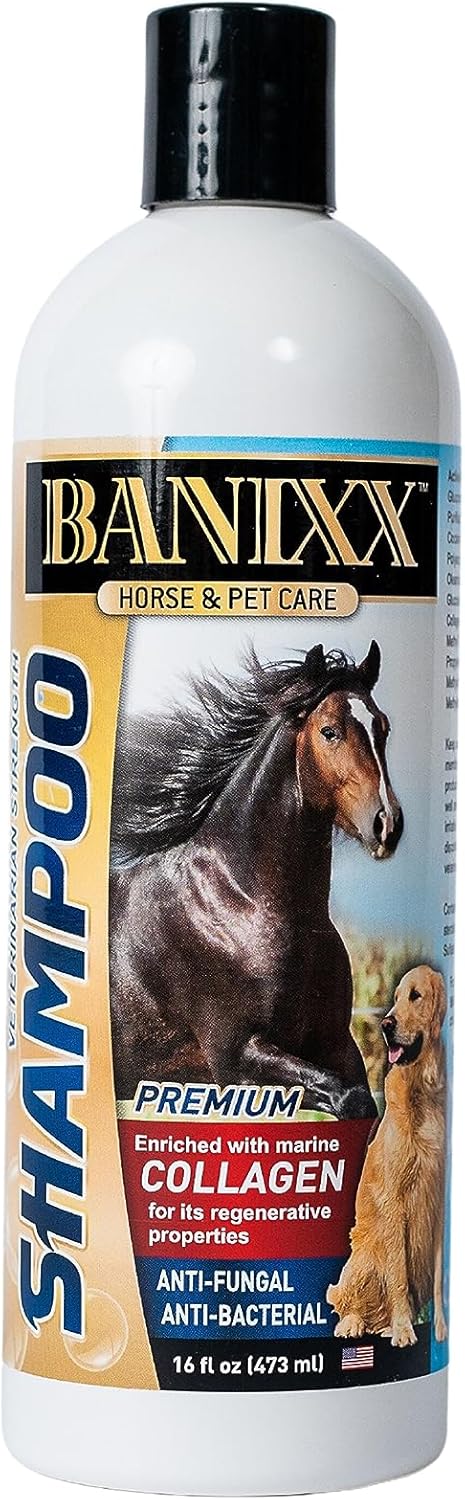
| Liquid Volume | 16 fluid ounces |
|---|---|
| Special Ingredients | Marine Collagen |
| Material Type Free | Soap Free |
| Scent Name | Unscented |
Banixx Medicated Shampoo is a soap-free, medicated cleanser designed to treat fungal and bacterial skin issues in dogs and horses while leaving the coat soft and manageable. It contains 4% chlorhexidine for antimicrobial action and marine collagen to help hydrate and strengthen hair fibers, so it doubles as a conditioning treatment during therapeutic washes. Typical use is a diluted shampoo soak or spot treatment—leave it on the affected area for at least 10 minutes before rinsing to let the active ingredients work. The non-soap surfactants clean without stripping natural oils, which reduces dryness that often accompanies medicated baths, and the formula omits parabens, sulfates, alcohol and steroids. Practical benefits include gentle daily spot use, suitability for sensitive skin, and visible coat smoothing and detangling after rinses. Important limitations are that it is a topical treatment rather than an oral therapy for systemic infections and directions require dilution and contact time for effectiveness, so quick rinses will underdeliver.
Best for: Buyers who need a medicated shampoo that also conditions dry, damaged, or tangled coats and who plan to use therapeutic rinses or spot soaks with proper contact time.
Less Ideal for: Owners seeking an immediate leave-in or spray conditioning product or those who need systemic treatment without concurrent veterinary care should look elsewhere.
- Contains 4% chlorhexidine for reliable antifungal and antibacterial action
- Marine collagen added to moisturize, strengthen hair fibers, and improve coat softness
- Soap-free surfactants clean without stripping natural oils, making it suitable for sensitive or dry skin
- Free of parabens, sulfates, alcohol and steroids, reducing irritation risk
- Requires dilution and at least 10 minutes of contact time, which may be inconvenient for some owners
- Topical shampoo only and should be used alongside veterinary advice for severe or systemic infections
Verdict: The best conditioning shampoo for yeast infections when you also need extra moisturizing, detangling, and soothing benefits for dry or damaged coats.
Choosing the Right Dog Shampoo Yeast Infection: Key Factors to Consider
Antifungal Active Ingredients
Active ingredients are the primary mechanism that reduces yeast populations on the skin. Look for ingredients with established antifungal activity appropriate for topical use on dogs. These ingredients determine how quickly visible yeast-related symptoms, such as odor, redness, and crusting, are reduced.
Concentration and contact time matter. A shampoo with an effective active but no guidance on how long to leave it on may be less useful than a slightly gentler product with clear usage directions. Always follow label instructions and consult a veterinarian when infections are severe or recurrent.
Skin Sensitivity and Irritation Risk
Dogs with yeast infections often have compromised skin barriers, so minimizing irritation is critical. Choose shampoos formulated for sensitive skin that avoid harsh sulfates, strong alcohols, or high levels of fragrance, which can exacerbate itching and inflammation.
Look for soothing, low-irritant bases and ingredients that support repair, such as ceramides or mild emollients. Consider whether the product is labeled hypoallergenic or dermatologist formulated, and test a small area first if your dog has a known allergy history.
Moisturizing and Barrier-support Ingredients
Yeast overgrowth frequently occurs where the skin is moist, folded, or where the barrier is damaged. Shampoos that combine antifungal activity with moisturizers help restore barrier function and reduce the risk of recurrence. Ingredients such as glycerin, plant oils, or ceramide-like lipids can hydrate without leaving heavy residues that trap moisture.
Avoid formulations that leave a greasy film, which can promote yeast growth, but favor those that maintain skin flexibility and resilience after rinsing. Proper post-bath drying and maintenance are equally important to preserve the benefits of moisturizing ingredients.
pH and Formulation Compatibility
Canine skin has a different pH than human skin, and using a product with the correct pH helps maintain the natural microbial balance. Shampoos designed specifically for dogs should have a pH range appropriate for canine skin to avoid further disruption that could favor yeast.
Formulation matters beyond pH: cleansing agents, foaming systems, and how easily the product rinses affect how effectively yeast and debris are removed. Choose a formula that rinses cleanly without requiring excessive scrubbing, which can irritate fragile skin.
Usage Instructions and Frequency
Effective treatment depends not just on ingredients but on how the shampoo is used. Look for products with clear instructions on wetting, lathering, recommended contact time, and how often to repeat baths. Some antifungal agents require longer contact times or repeated use over several weeks to fully control an infection.
Consider how realistic the regimen is for your household. If a product requires lengthy soak times that your dog resists, compliance will suffer. Also evaluate directions about combining with other topical therapies or medicated wipes.
Safety for Puppies and Other Pets in the Home
If you have multiple pets, or a young animal in the household, confirm that the shampoo is labeled safe for puppies or other species that may come in contact with treated animals. Some active ingredients have age or species restrictions or require veterinary approval for young or pregnant animals.
Check for warnings about eye contact and rinse procedures to avoid accidental irritation. When in doubt, consult your veterinarian before use on very young, elderly, or medically compromised animals.
How Quickly Should I Expect Improvement After Starting an Antifungal Shampoo?
Improvement timelines vary depending on the severity of the infection and the active ingredient used. Mild surface yeast issues can show reduced odor and less scratching within a few days, while more established infections often need repeated bathing over two to six weeks to see clear resolution.
If you do not see any improvement after the recommended treatment period, or if the condition worsens, seek veterinary assessment. Effective topical care is often one part of treatment; underlying causes such as allergies or moisture-trapping conformation may also need attention.
- Mild cases: several days to two weeks
- Moderate to severe cases: multiple weeks of scheduled baths
- No improvement or worsening: consult a veterinarian
Can I Use a Medicated Shampoo with Other Topical Treatments?
Combining topical therapies is common, but you should follow label guidance and your veterinarian's instructions. Some medicated rinses and spot-on treatments can be used alongside a shampoo, but timing matters; for example, certain topical medications require the skin to be dry and free of residue.
If you plan to use multiple products, space applications according to directions and monitor the skin for increased irritation. When in doubt, ask your veterinarian whether the active agents are compatible.
- Check for interactions and timing instructions
- Avoid layering multiple potent actives without guidance
- Monitor treated areas for redness or excessive dryness
What Bathing Technique Maximizes Antifungal Effectiveness?
To get the most therapeutic benefit, wet the coat thoroughly, apply shampoo so it reaches the skin, and lather gently. For areas prone to yeast, such as skin folds or between toes, gently work the lather into those spots. Allow the shampoo to remain on the skin for the labeled contact time before rinsing thoroughly.
Rinse completely to remove residues that could trap moisture. After bathing, dry your dog fully, paying special attention to folds and undercoat. Proper technique reduces reinfection risk and improves comfort.
- Wet coat completely before applying shampoo
- Work lather down to the skin, especially in folds
- Leave on for the recommended contact time, then rinse thoroughly
- Dry fully, focusing on moisture-prone areas
How Do Environmental and Grooming Factors Affect Yeast Recurrence?
Moist, warm environments and retained debris create conditions that favor yeast growth. Regular grooming to remove dead hair and moisture, thorough drying after baths or swims, and cleaning bedding and fabric surfaces can reduce recurrence. In short-coated dogs, frequent air circulation helps; in thick-coated breeds, trimming around problem areas may be advisable.
Diet and underlying health issues also influence skin microbial balance. Addressing allergies, endocrine disorders, or persistent moisture sources is often necessary for long-term control of yeast infections.
- Keep skin folds and undercoat dry
- Wash and dry bedding regularly
- Maintain regular grooming and hair trimming in problem areas
- Evaluate diet and health if infections recur frequently
Are Natural or Botanical Ingredients Effective Against Yeast?
Some botanical ingredients have antifungal properties and can be supportive in mild cases or as adjuncts. Tea tree oil, for example, has antimicrobial activity but can be irritating or toxic if used at inappropriate concentrations, so formulations designed for dogs are preferable. Other botanicals may soothe inflammation or reduce odor without directly killing yeast.
When considering natural options, prioritize products with clear concentration information and veterinary approval for canine use. Natural does not automatically mean safe or effective, so follow label directions and monitor the skin response closely.
- Botanicals can be supportive but may irritate sensitive skin
- Choose formulations specifically made for dogs
- Watch for allergic reactions and discontinue if irritation appears
How We Chose the Best Dog Shampoo Yeast Infection
To assemble this list we applied a consistent editorial framework focused on outcomes that matter for managing canine yeast infections. Our primary evaluation criteria were antifungal ingredients and demonstrated yeast-targeting activity, skin tolerance for dogs with sensitive or inflamed skin, formulation and rinsability to ensure effective removal of yeast and residues, and moisturizing and barrier-support components that reduce itch and prevent recurrence. We also considered ease of application, such as lather and contact time recommendations, and safety guidance for use frequency and with topical treatments. We excluded products that lack clear antifungal actives, have highly irritating fragrance or alcohol-forward formulas, or provide no guidance for dogs with compromised skin. The selected shampoos scored well across measurable criteria: ingredient profiles that include recognized antifungal agents or supporting botanicals, pH-appropriate bases, and straightforward usage instructions. We prioritized formulations designed for frequent use or for skin recovery rather than purely cosmetic cleansing.
Our full evaluation process is outlined in our review methodology.
FAQ
How often should I bathe my dog with an antifungal shampoo?
Frequency depends on the product and severity of the infection. Many shampoos recommend twice-weekly baths for a few weeks, then tapering to maintenance as advised. Follow label directions and your veterinarian's timeline to avoid over-drying the skin.
Can I use a human dandruff shampoo on my dog for yeast?
Human dandruff shampoos can contain active ingredients that are too harsh or formulated for a different pH. Some agents may be effective, but using a product labeled for dogs ensures appropriate concentration, pH, and safety guidance. Consult your veterinarian before using human products.
Will regular grooming alone prevent yeast infections?
Regular grooming reduces debris and moisture that encourage yeast, but it may not prevent infections caused by allergies, hormonal imbalances, or persistent moisture. Grooming is an important preventive step but often needs to be combined with targeted treatments when yeast is present.
Is it safe to use antifungal shampoo on puppies or pregnant dogs?
Safety varies by active ingredient and product labeling. Some shampoos are formulated for puppies or pregnant animals, but others are not recommended. Always check label age restrictions and consult a veterinarian for guidance before treating young or pregnant dogs.
What signs mean I should stop using a shampoo and see a vet?
Stop use and seek veterinary care if the skin becomes more red, swollen, blistered, develops open sores, or your dog shows systemic signs such as lethargy or fever. Increased irritation, worsening odor, or lack of improvement after the recommended treatment period also warrant professional evaluation.
Final Verdict
When treating a dog for yeast infection, prioritize a shampoo that pairs effective antifungal action with gentle, skin-supporting ingredients. Balance is key: you want enough potency to reduce yeast while avoiding harsh surfactants or irritants that delay healing. Consider the realistic application routine you can maintain and address environmental or health factors that contribute to recurrence. Focus on products with clear usage directions, appropriate pH and moisturizing support, and a safety profile suitable for your dog. If infections are severe, recurrent, or do not improve within the expected timeframe, consult your veterinarian for a comprehensive plan.

