

Picking the right training toy makes practice more productive and keeps your dog motivated between sessions. The correct toy supports timing, rewards good behavior, and can teach specific skills such as impulse control, fetch reliability, or scent work. This guide shortlists seven top training toys and explains why each type can help in real-world sessions. We evaluated durability, engagement, and ease of cleaning so you can choose options that fit your training goals and how you like to work with your dog.
Top Picks at a Glance
| Best Overall Toy A well-rounded training toy that suits most dogs and goals | Dewonch Flirt Pole 35 in |  |
| Best Budget Toy A low-cost training option that still holds up to play | ASOCEA Dog Tug Toy |  |
| Best Durable Toy Built for heavy chewers and rough daily training sessions | Chew King Supreme Treater Large |  |
| Best Interactive Toy Encourages active engagement and focused training responses | Wobble Wag Giggle Ball |  |
| Best Treat-Dispensing Toy Dispenses treats to reinforce commands and keep dogs motivated | PETSTA Level2 UFO Puzzle Toy |  |
| Best Plush Toy Soft, low-impact option for gentle play and indoor training | Multipet Lamb Chop Plush Toy 10" |  |
| Best Premium Toy Higher-end training toy with superior materials and extra features | VYsTN Fox Interactive Puppy Toy |  |
Dewonch Flirt Pole 35 in
Best Overall Toy

| Pet Toy Type | Exercise Toy |
|---|---|
| Recommended Uses For Product | Outdoor,Pet, Training,Exercise,Teething |
| Indoor Outdoor Usage | Indoor, Outdoor |
| Additional Features | Lightweight, Portable |
| Material Type | Stainless Steel |
The Dewonch Flirt Pole is a simple, handheld training and exercise tool that converts a dog's prey drive into focused sprinting, direction changes, and jumps. Built from 304 stainless steel in two sections, the 35-inch pole assembles by twisting the segments together and gives handlers reach without much running. A strong nylon cord connects a braided fleece lure that is machine washable and intended as a teaser rather than a chew toy. In practice it wears high-energy dogs quickly during short sessions and supports basic obedience work like "leave it" and "drop it." The non-slip rubber handle makes extended play comfortable and the reinforced seams and heavy-duty cord reduce breakage risk compared with flimsy toys, though the fleece lure is not meant for heavy chewing and should be swapped for a leather tug if used with aggressive tugging. Not water resistant and sized for outdoor or indoor use, this pole is most effective in supervised, short bursts of training rather than free unsupervised play.
Best for: Owners who need a high-energy, interactive tool to challenge a Doberman’s chase instincts and provide short, intense training or enrichment sessions.
Less Ideal for: Owners who want an unsupervised chew or long-duration puzzle toy or those who need a waterproof option for wet-weather play.
- Converts prey drive into quick, focused exercise and agility work
- Durable 304 stainless steel two-piece pole for reach and compact storage
- Heavy-duty nylon cord with reinforced seams reduces risk of breakage
- Non-slip rubber handle for comfortable control during active sessions
- Machine-washable braided fleece lure that is replaceable
- Fleece lure is not designed for heavy chewing and can be damaged by aggressive chewers
- Not water resistant so it may corrode over time if left wet
- Limited to supervised short sessions rather than unsupervised playtime
Verdict: The best overall toy for training balances engagement, durability, and safety while working well for a wide range of dogs and common training exercises.
ASOCEA Dog Tug Toy
Best Budget Toy
| Material Type | Jute, Nylon |
|---|---|
| Pet Toy Type | Exercise Toy |
| Indoor Outdoor Usage | Indoor, Outdoor |
| Additional Features | Heavy Duty, Interactive, Squeaker |
| Breed Recommendation | all breed size |
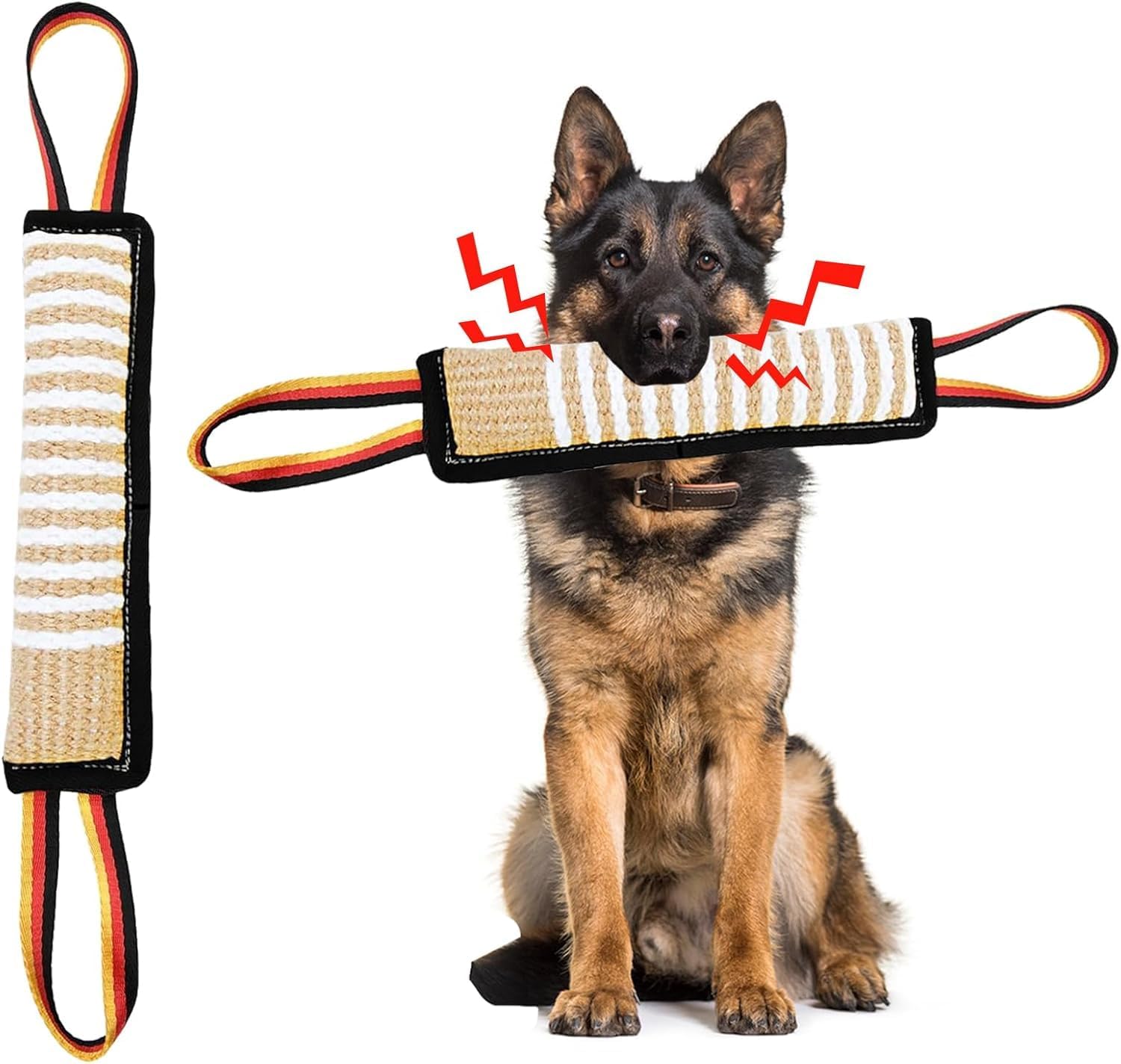
The ASOCEA Dog Tug Toy is a rectangular jute and nylon pull toy with two handles and an internal squeaker intended for tug, fetch, and basic bite-training drills. It is used by holding one handle while the dog grabs the padded jute body, making the squeak attract attention during short training sessions or play breaks. Double-stitched edges and a tough jute surface give it reasonable durability for everyday interactive use, and the lightweight, portable shape makes it easy to toss and carry outdoors. It is advertised for a range of dog sizes but the materials and advice from the brand mean it is best for supervised tugging rather than heavy, persistent chewers. The toy is not water resistant and the handles are meant for the trainer to hold, not for dogs to chew. For owners looking for an inexpensive, engaging training prop the toy covers the essentials, but those needing an extreme-chew solution should choose a purpose-built heavy-duty model instead.
Best for: Budget-conscious owners who want an affordable, effective prop for basic tug, fetch, and reinforcement training during supervised sessions.
Less Ideal for: Owners seeking a chew-proof solution for heavy, aggressive chewers or unsupervised long-term chewing should pick a heavy-duty chew toy instead.
- Built-in squeaker to grab and hold a dog’s attention during training
- Dual handles for secure human grip during tug and controlled drills
- Double-stitched edges and jute surface add everyday durability for interactive play
- Lightweight and portable for indoor or outdoor training sessions
- Not water resistant so it can degrade if left wet
- Not intended for aggressive or persistent chewers
Verdict: The best budget toy gives owners an affordable way to practice basic training and reinforcement without sacrificing basic durability or safety.
Chew King Supreme Treater Large
Best Durable Toy

| Material Type | Natural Rubber |
|---|---|
| Pet Toy Type | Chew Toy |
| Breed Recommendation | Large |
| Water Resistance Level | Not Water Resistant |
The Chew King Supreme Treater Large is a heavy-duty rubber dog toy built for strong chewers that also accepts treats to extend engagement. Made from natural rubber and shaped to retain its form under forceful chewing, it works as a standalone chew, a tug/play object, and a treat-holder for reward-based training or slower feeding. The built-in safety air vent reduces the risk of suction when a dog holds the toy fully in its mouth, and the treater cavity fits kibble or small treats to encourage longer, more mentally stimulating play sessions. It is lightweight and portable for outdoor play but is not water resistant, so wet-weather use or flotation should not be expected. The manufacturer warns no toy is indestructible, so supervision and regular inspection are recommended for power chewers. For aggressive chewers this toy balances durability with enrichment, though extremely destructive dogs may still wear it down over time.
Best for: Buyers wanting a durable treat-dispensing toy that adds mental stimulation for strong-chewing, high-energy dogs who benefit from food-motivated play and training.
Less Ideal for: Owners who need a flotation-capable toy or who have dogs that consistently destroy heavy-duty toys and require specialized indestructible alternatives.
- Constructed from natural rubber for strong chew resistance and shape retention
- Treat-compatible cavity for longer, reward-driven play and training
- Safety air vent reduces suction risk when the toy is held in the mouth
- Available in multiple sizes so you can pick a fit for larger breeds
- Not water resistant which limits wet-weather or pool play
- Not indestructible—may fail with the most extreme chewers
Verdict: The best durable toy is designed to withstand aggressive chewing and frequent handling so you can use it reliably for repetitive training work.
Wobble Wag Giggle Ball
Best Interactive Toy

| Pet Toy Type | Ball |
|---|---|
| Recommended Uses For Product | Exercise, Playing |
| Indoor Outdoor Usage | Indoor, Outdoor |
| Material Type | Ethylene Vinyl Acetate |
The Wobble Wag Giggle Ball is a simple interactive toy that uses internal tubes to produce a giggling sound whenever it wobbles, rolls, or is shaken, which naturally draws dogs into longer play sessions. Intended for solo or guided play, it has multiple clutch pockets so dogs can easily pick it up and carry it, making it useful for fetch, chase, and tug-style engagement. Made from flexible, phthalate-free vinyl the ball stands up to regular play and does not require batteries or maintenance beyond normal cleaning. It works well indoors or outdoors to provide physical exercise and mental stimulation, and the sound-based feedback encourages repeat interactions without owner input. The ball is not advertised as indestructible so very aggressive chewers may wear it down over time, and it is not water resistant which limits use in wet conditions. For owners wanting a low-friction, attention-grabbing toy that promotes independent play and bonding through interactive games, this giggle ball is an effective, low-maintenance option.
Best for: Owners who want a low-maintenance interactive toy to extend playtime and encourage games like fetch and chase that keep pets physically active and mentally engaged.
Less Ideal for: People seeking an indestructible chew toy or a waterproof play option should look for more heavy-duty or water-ready alternatives.
- Giggle sound produced without batteries keeps dogs engaged repeatedly
- Six clutch pockets make it easy for dogs to pick up and carry during fetch or tug
- Flexible phthalate-free vinyl construction resists normal play and rough handling
- Works both indoors and outdoors to provide exercise and mental stimulation
- Not water resistant which reduces suitability for wet play
- May not withstand very aggressive chewers or heavy destructive chewing
Verdict: The best interactive toy promotes problem-solving and sustained attention during training, making it ideal for dogs who learn best through play-driven tasks.
PETSTA Level2 UFO Puzzle Toy
Best Treat-Dispensing Toy

| Pet Toy Type | Puzzle |
|---|---|
| Indoor Outdoor Usage | Indoor |
| Material Type | Polypropylene |
| Dog Breed Size | Large |
The PETSTA Level2 UFO Puzzle Toy is a hands-on enrichment toy that combines sliding puzzles and hidden treat chambers to extend sniffing and foraging play. Dogs push and spin the built-in sliders and press the central squeak button to reveal treats from 16 holes, which encourages problem solving and slows eating sessions to 20 minutes or more for many pets. The toy is lightweight, portable, and made from polypropylene with non-removable components so pieces do not fall off during play, and rubber feet help keep it from sliding across the floor. It is dishwasher safe, making cleanup easy after messy kibble or wet treats. Limitations include its plastic construction, which is not designed for aggressive chewers, and the Level 2 difficulty may be too easy for very advanced puzzle dogs or too hard initially for some puppies without guidance. For owners who supervise short training sessions or want a durable, low-maintenance enrichment option, this toy gives clear, repeatable challenges that reward scent-driven behavior.
Best for: Owners who want a repeatable, scent-driven challenge to keep their dog mentally engaged during supervised play or training sessions.
Less Ideal for: People seeking an unbreakable chew toy for powerful chewers or those who need entirely hands-off unsupervised toys for destructive dogs.
- Combines sliding puzzles and treat dispensing to promote problem solving
- Central squeak and 16-hole design extend engagement and slow feeding
- Non-removable parts reduce small-piece hazards during play
- Rubber anti-slip pads help keep the toy stationary while the pet works
- Dishwasher-safe plastic for easy cleaning after use
- Not intended for aggressive chewers and may be damaged by heavy biting
- Single material plastic construction offers limited durability compared with heavy-duty chew toys
Verdict: The best treat-dispensing toy helps reinforce behaviors by delivering rewards during training sessions, making it useful for food-motivated dogs and longer practice periods.
Multipet Lamb Chop Plush Toy 10"
Best Plush Toy

| Pet Toy Type | Plush |
|---|---|
| Breed Recommendation | Medium, Small |
| Indoor Outdoor Usage | Indoor |
| Included Components | squeaker |
The Multipet Lamb Chop is a soft, 10-inch plush dog toy modeled after the classic character and built for gentle play and snuggling. It features an extra-soft plush exterior and an internal squeaker that encourages interaction without being overly aggressive, making it suited to short play sessions, fetch in small spaces, and cuddling at rest time. The toy is lightweight and sized for small to medium breeds, so it is easy for dogs to carry and for owners to toss indoors. Because construction is typical of plush toys, it performs best with supervised use and dogs that are not heavy chewers; persistent chewers may quickly breach the fabric and reach the squeaker. The straightforward design and licensed character appeal make it a comforting, familiar choice for dogs that prefer softer, squeaky toys rather than durable rubber or rope alternatives.
Best for: Buyers looking for a soft, comforting toy that encourages gentle play and cuddling for small to medium dogs who are not destructive chewers.
Less Ideal for: Owners of strong, persistent chewers or those who need an indestructible toy for unsupervised aggressive play should choose a more durable option.
- Soft, cuddly plush exterior comfortable for snuggling
- Built-in squeaker adds interactive play without complex parts
- Compact 10-inch size that is easy for small and medium dogs to carry
- Licensed Lamb Chop character may appeal to owners looking for a nostalgic design
- Not intended for heavy chewers and can be torn open with sustained chewing
- No reinforced stitching or chew-proof materials for aggressive play
Verdict: The best plush toy is a softer, quieter choice for puppies or gentle players who need low-impact training cues and calming playtime.
VYsTN Fox Interactive Puppy Toy
Best Premium Toy
| Pet Toy Type | Exercise Toy |
|---|---|
| Indoor Outdoor Usage | Indoor, Outdoor |
| Additional Features | Interactive, Lightweight, Portable, Rotating, Vibrating |
| Water Resistance Level | Not Water Resistant |
| Scent Name | Unscented |
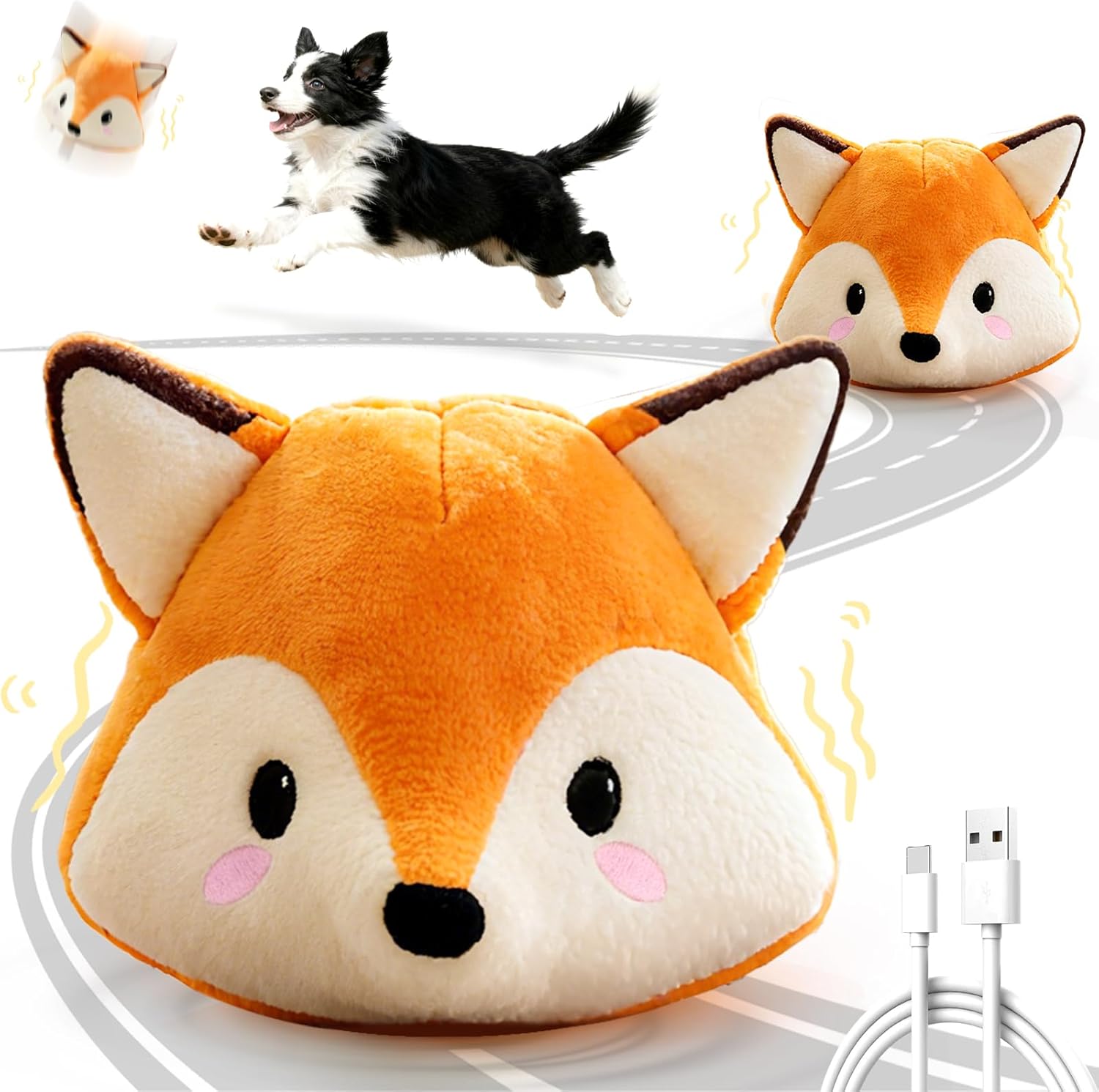
This plush fox is an interactive, rechargeable toy designed to spark a puppy's curiosity and encourage cooperative play. Turn it on and the unit greets you, then begins unpredictable bouncing, vibrating, and light movements that invite chasing and pawing rather than carrying. It also has a short voice-echo feature that responds during pause cycles to reinforce interaction and help puppies associate the toy with social play. The cover is chew-resistant and removable for machine washing, while the electronics are USB rechargeable for up to about three hours of continuous use. Practical benefits include easy cleaning of the exterior, portability for indoor or outdoor supervised play, and moderate durability for teething puppies. Important limitations are that it is not waterproof, not intended for aggressive chewers, and its movement is best on flat hard floors where it can roam freely rather than deep carpet. Supervision is advised during initial introductions and when treats are used inside the Velcro compartment.
Best for: Puppy owners who want a hands-free way to stimulate curiosity and build interactive play sessions with gentle, social cues rather than fetch-or-chew only toys.
Less Ideal for: Households needing a fully waterproof or indestructible chew toy, or owners who cannot supervise early sessions while a puppy adapts to an active electronic toy.
- Unpredictable self-moving and vibrating action encourages chasing and gentle interaction
- USB rechargeable with up to about 3 hours runtime per charge
- Removable, machine-washable plush cover for easy cleaning
- Voice-echo interaction that promotes bonding and cooperative play during pause cycles
- Not water resistant so the core electronics must be kept dry
- Not designed to survive powerful, aggressive chewers
Verdict: The best premium toy is for owners willing to invest in superior build quality, advanced features, or enhanced longevity to support more intensive or specialized training.
Choosing the Right Dog Toy Training: Key Factors to Consider
Durability and Material Safety
Durability matters because training toys are used frequently and often subjected to hard bites, tugs, and repetitive impacts. A toy that falls apart quickly interrupts sessions and creates safety hazards from small pieces. Choose materials that resist tearing while remaining flexible enough to avoid damaging teeth.
Material safety is equally important. Look for non-toxic, phthalate-free plastics or natural rubber rated for pet use. Smooth seams and secure attachments reduce the chance of small parts separating during play.
Size and Chew Strength Match
A toy should match your dog's mouth and chewing style. A toy that is too small can be a choking risk, while an oversized toy may be hard to handle during drills. Consider your dog's chew strength: light-bite toys work for calm retrievers but will degrade quickly with heavy chewers.
Sizing also affects how the toy behaves in fetch and tug exercises. A properly sized toy offers a predictable grip point for both handler and dog, which helps produce consistent training outcomes.
Reward Mechanics and Engagement
Training toys that encourage repeatable, reliable behavior help shape desired responses faster. Some toys are designed to be tossed and returned, others release treats, and some have variable motion that stimulates curiosity. The key is finding a toy whose reward mechanism matches the behavior you are reinforcing.
High engagement keeps sessions lively, but too much unpredictability can distract from cue learning. Choose toys that provide the right balance of novelty and predictability for your dog's temperament.
Ease of Cleaning
Toys used in training will get slobber, dirt, and sometimes food residue on them. Toys that are easy to rinse or dishwasher-safe reduce odor buildup and bacterial growth. Complex toys with internal cavities or electronics are harder to sanitize and may harbor contaminants.
Regular cleaning keeps toys hygienic for both dog and handler and prolongs the product's usable life.
Versatility Across Training Exercises
A versatile training toy stretches your investment across multiple skills such as recall, impulse control, scent work, and tug. Toys that can be used for reward-based fetch, hidden-treat searches, or structured tugging let you layer behaviors without switching tools constantly.
Versatility also matters when your dog's training needs change. A toy that adapts to new drills helps maintain consistent reinforcement methods.
Control and Predictability
During training, predictable toy behavior helps you deliver clear timing of reinforcement. Balls or throwables with consistent bounce and flight paths let you time recalls precisely. Tug toys with stable grips allow controlled tug games that reinforce release cues.
Unpredictable toys can be useful for advanced problem-solving but may impede early-stage cue learning. Choose toys that match the level of control you need for each training phase.
How Do I Use Toys to Reinforce Recall Reliably?
Use a toy that your dog values more than the environment to strengthen recall. Start with short, distraction-free sessions so your dog learns to associate the recall cue with an immediate, high-value play reward. Deliver the toy the instant your dog returns to ensure clear reward timing.
Gradually increase distance and distractions while keeping the toy available only after a successful recall. Swap to lower-energy play once the dog is reliable so the cue generalizes to everyday situations.
- Begin indoors or in a fenced area.
- Use high-value, short play bursts as the primary reward.
- Fade toy-only rewards into variable reinforcement as reliability improves.
What Toys Best Teach Impulse Control and Release?
Tug and hold toys are ideal for teaching controlled grip and release because they require the dog to maintain position while responding to your cues. Practice short holds followed by a release cue and immediate reward to build a clear association.
Structure sessions by alternating calm hold drills and brief, high-energy tugging. Reward releases consistently so the dog learns that letting go is how play continues, not ends.
- Start with low-intensity holds and increase duration gradually.
- Keep releases predictable: cue, treat or toy reward, and resume play.
How to Choose Toys for Heavy Chewers
For dogs that chew aggressively, prioritize dense, abrasion-resistant materials that retain shape. Avoid toys with cushion-like fillings or thin seams that can be shredded. Look for simple designs with no small detachable parts.
Rotate several robust toys so each item gets downtime; this reduces wear and makes individual toys last longer. Always inspect toys regularly and remove any that show structural failure.
- Prefer solid rubber or reinforced braided constructions.
- Inspect seams and attachment points before each session.
Can Toys Support Scent and Search Training?
Yes. Toys that hold small treats or have fabric textures are useful in introducing scent discrimination and hide-and-seek games. Begin by hiding the toy in obvious places and rewarding the dog for locating it, then increase difficulty.
Select toys that are easy to conceal yet provide a consistent scent profile. Toys that absorb odor from treats help dogs learn to associate the toy with reward faster during nose-work drills.
- Use the same toy for scent drills to build a clear association.
- Keep hiding spots varied but solvable to maintain motivation.
What Cleaning Routine Keeps Training Toys Safe?
Establish a weekly cleaning routine for toys used daily and rinse or wash more often if toys are used outdoors or get visibly soiled. Simple rubber and nylon toys usually handle soap and water; follow manufacturer care guidance when available.
Dry toys thoroughly before returning them to rotation to prevent mold. For toys with treat compartments, empty and clean the compartment after each use to avoid residue buildup.
- Rinse after muddy sessions and deep-clean weekly.
- Replace toys that retain odor or show mold growth.
How to Phase Toys as Training Goals Change
Plan toy use in phases: use high-value, engaging toys to shape new behaviors, then transition to lower-intensity toys or intermittent reinforcement as behavior becomes reliable. Phasing helps maintain interest while preventing over-reliance on a single reward type.
Document which toys reliably elicit desired behaviors and rotate to maintain novelty. For long-term maintenance, reserve top-tier toys for proofing or special reinforcement to prevent satiation.
- Start with the most motivating toys, then reduce frequency of use.
- Keep several toy types on hand to target different skills.
How We Chose the Best Dog Toy Training
We focused on attributes that matter in everyday dog training and excluded items designed primarily for passive play or single-use novelty. Selection emphasized toys that tolerate repeated handling and offer predictable responses during training drills. Evaluation criteria included: durability under regular tugging and chewing; reliability of shape and bounce for fetch and recall drills; ability to deliver clear, immediate rewards (for example, toys compatible with treats or that produce a consistent movement); safety of materials for repeated mouthing; ease of cleaning to prevent odor buildup; and adaptability across multiple training tasks such as nose work, impulse control, and recall. We also prioritized toys that work with common reinforcement methods—hand and verbal cues, timed reward delivery, and structured play—rather than toys requiring complex electronics. Items that showed high risk of breaking into swallowable pieces or used unsafe materials were excluded. The final shortlist reflects tools that balance performance, safety, and day-to-day practicality for training sessions.
Our full evaluation process is outlined in our review methodology.
FAQ
How often should I rotate training toys?
Rotate toys every few days to a week depending on how quickly your dog loses interest. Rotation preserves novelty and keeps motivation higher during training sessions.
Can I use the same toy for both play and training?
Often yes. Using the same toy helps some dogs form a strong cue association, but others may lose focus if the toy is overused. Monitor your dog's engagement and reserve the most effective toys for focused training.
Are treat-dispensing toys good for obedience training?
Treat-dispensing toys can reinforce specific behaviors, especially for independent problem-solving and duration work. They are less useful for timing-dependent cues unless the release is immediate and predictable.
What if my dog destroys toys quickly?
If your dog destroys toys quickly, switch to sturdier constructions and increase rotation. Avoid toys with small parts that could be swallowed and remove toys at the first sign of significant damage.
How do I teach a reliable 'drop it' with toys?
Pair a clear verbal release cue with a prompt reward: offer the cue, present a higher-value toy or treat the instant the dog releases, then resume play. Practice short, consistent repetitions to build the behavior.
Final Verdict
Choose training toys that match your dog's bite strength and the behaviors you want to teach. Prioritize durable, safe materials and toys that deliver clear, predictable rewards so timing stays precise during practice. Balance high-engagement toys for shaping new skills with lower-intensity options for proofing and maintenance. With thoughtful rotation, cleaning, and matched reward mechanics, you can use training toys to accelerate learning without creating dependency on a single tool.

