

If you own a Labrador and want better recall, impulse control, or leash manners, picking the right training collar matters. Labs are energetic, food-motivated, and strong, so a collar that delivers predictable cues without causing discomfort makes training faster and safer. This guide shortlists six top training collars suited to common lab behavior and body types and evaluates them on the most useful performance factors. You will find options that focus on humane correction, durable construction, signal range, and ease of use. Read on to see which features to prioritize for long-term success.
Top Picks at a Glance
| Best Overall Training Collar The best all-around choice that fits most Labrador owners' needs | SportDOG FieldTrainer 425X |  |
| Best Budget Training Collar A low-cost option that still delivers dependable basic training features | DDZ Shock Collar P21 |  |
| Best Premium Training Collar A higher-end pick with advanced features and top-quality materials | Garmin Sport PRO Training Collar |  |
| Best Waterproof Training Collar Built to handle wet conditions, baths, and outdoor play reliably | CIUZL C94 Dog Shock Collar |  |
| Best Heavy-Duty Training Collar Robust construction designed for strong pullers and high-activity dogs | BLACKDOG Military Shock Collar OT9 |  |
| Best Compact Training Collar Smaller, lighter units that reduce bulk while maintaining core features | FASHILEAD Ultra-Small Training Collar |  |
SportDOG FieldTrainer 425X
Best Overall Training Collar
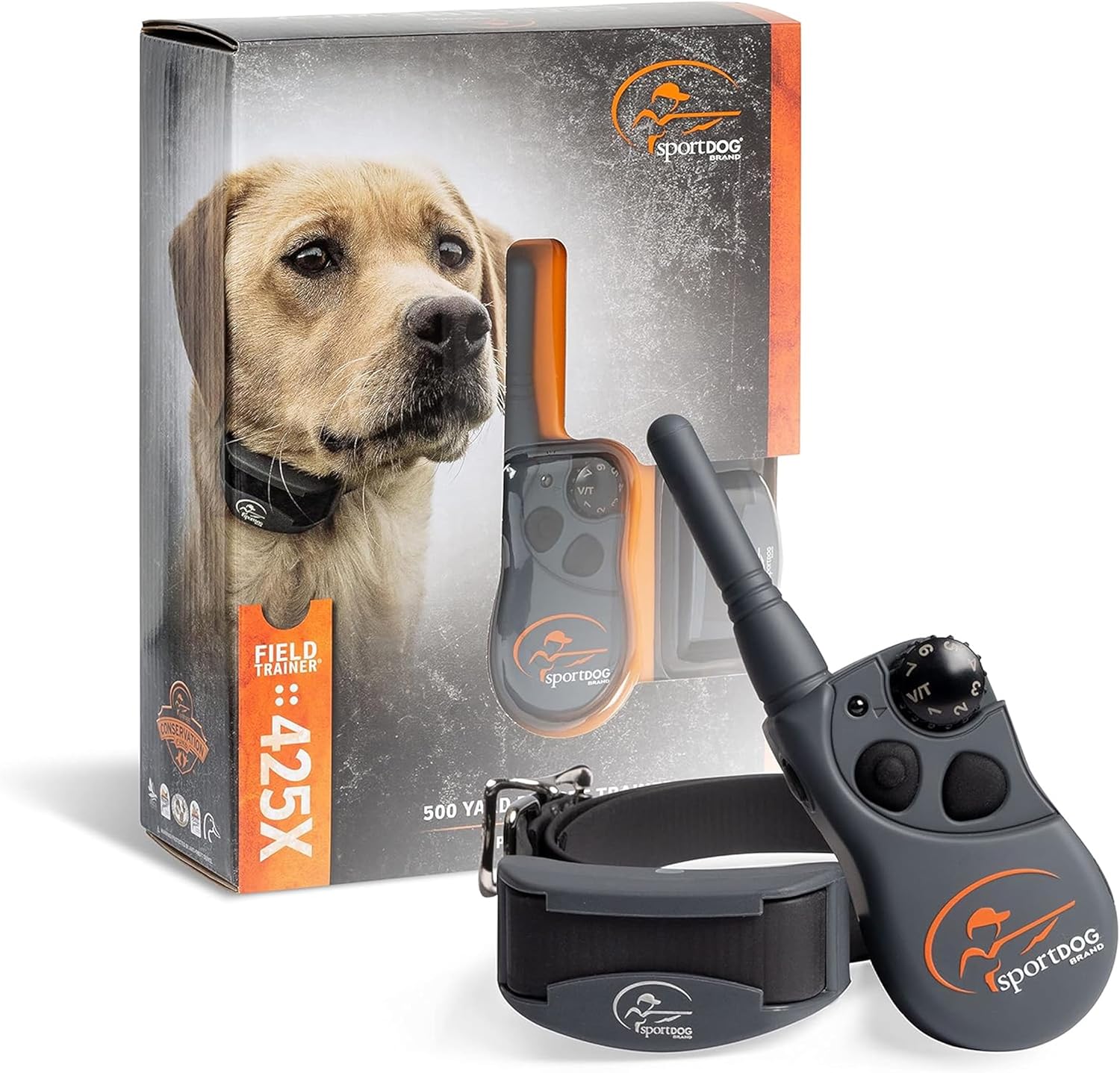
| Range | 500 yards |
|---|---|
| Stimulation levels | 21 levels |
| Modes | Tone, vibration, static |
| Waterproof rating | Submersible to 25 ft |
| Battery | Rechargeable lithium‑ion, 50–70 hours |
The SportDOG FieldTrainer 425X is a compact remote trainer built for off-leash control and field work where reliable, no-look operation matters. The handheld transmitter dials through 21 static-stimulation levels and can also deliver tone or vibration, letting you tailor corrections while you recall or reinforce obedience. Its 500-yard range and expandability to control up to three dogs make it suitable for working dogs in open spaces, and DryTek waterproofing makes both remote and receiver submersible to 25 feet for water training. Rechargeable lithium-ion batteries promise long runtime and a two-hour quick charge, and the included longer contact points help ensure skin contact on thick-coated dogs. On the flip side, the unit is SportDOG's smallest receiver so very large mastiff-type necks may find the housing compact, and advanced users who need half-mile-plus range or OLED-screen feedback might prefer larger models. For Cane Corso owners focused on rugged, repeatable off-leash recall and obedience work, the 425X provides a tough, field-ready baseline with proven durability and customizable stimulation.
Best for: Buyers who need a durable, field-ready e‑collar to reinforce off-leash control and recall for strong, active working dogs and who prioritize waterproofing and consistent, no-look operation.
Less Ideal for: Owners seeking the longest possible range, a larger receiver housing for very wide necks, or a display-equipped transmitter for fine-grained telemetry should consider larger SportDOG models.
- Multiple stimulus modes (tone, vibration, 21 levels of static) for flexible training.
- 500-yard range suitable for most yard and field training scenarios.
- Waterproof DryTek design submersible to 25 feet for wet conditions and water work.
- Rechargeable Li‑ion batteries with long 50–70 hour runtime and quick 2-hour charge.
- Expandable to control up to three dogs with add-on collars.
- Receiver is the brand’s smallest and may sit small on very large or thick-necked mastiff breeds.
- Range and feature set are less advanced than SportDOG’s higher-end half-mile models.
Verdict: The best overall training collar that balances effectiveness, comfort, battery life, and durability for everyday Lab training sessions.
DDZ Shock Collar P21
Best Budget Training Collar

| Range | 2000 ft |
|---|---|
| Waterproof rating | IPX7 |
| Fit range | 15–120 lb |
| Power | Rechargeable batteries |
This DDZ P21 shock collar is a budget-focused remote training system that provides beep, vibration, and adjustable static stimulation across multiple intensity levels plus a built-in flashlight and security lock. In everyday use the handheld remote and receiver pair quickly and the wide claimed 2000 ft range is useful for yard or park training; the collar is rechargeable and the vendor states long standby life so it needs less frequent charging than disposable-battery units. The IPX7 waterproof receiver makes it usable in wet weather and outdoor play, and multiple contact point lengths and silicone caps help fit a range of coat types. Practical limitations to expect are a basic feature set compared with higher-end systems and a learning curve dialing in safe stimulation levels for each dog. For owners focused on straightforward correction and recall work without premium extras, this collar covers the essentials at a low price point.
Best for: Owners seeking an inexpensive, no-frills remote collar that reliably provides basic safety controls and adjustable stimulation for routine outdoor training.
Less Ideal for: People who need advanced tracking, multi-dog telemetry beyond four channels, or professional-level customization and logs should consider higher-end systems instead.
- IPX7 waterproof receiver suitable for rain and wet conditions
- Rechargeable batteries with long standby time to reduce frequent charging
- Includes beep, vibration, and adjustable static modes for graduated training
- 2000 ft claimed remote range useful for open-area training
- Comes with multiple contact point lengths and silicone caps for better fit
- Basic feature set without advanced safety/telemtry found on premium models
- Intensity control requires careful adjustment and user judgment for safety
Verdict: The best budget training collar for owners who want effective basic training functions without paying for extras they won't use.
Garmin Sport PRO Training Collar
Best Premium Training Collar
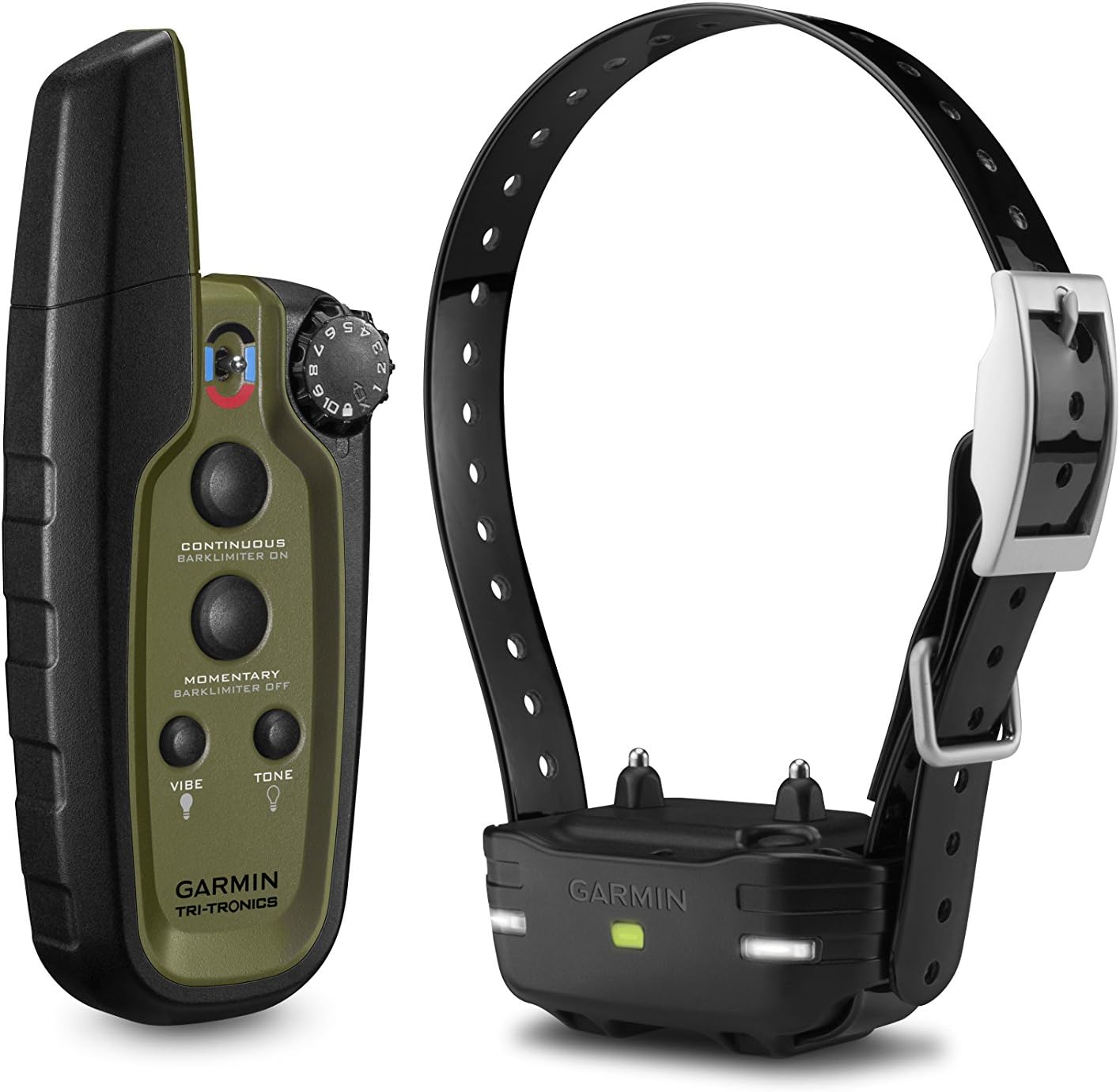
| Range | 3/4 mile |
|---|---|
| Training modes | Tone, Vibration, 10 stimulation levels |
| Dog capacity | Up to 3 dogs |
| Handheld battery life | Up to 60 hours |
| Handheld water rating | IPX7 |
The Garmin Sport PRO bundle pairs a one-handed handheld transmitter with a rechargeable dog device to deliver tone, vibration and 10 levels of static stimulation for training at distances up to three quarters of a mile. The handheld is ergonomically shaped for one-handed, no-look operation and uses a quick-turn dial with positive clicks to step through stimulation levels and auxiliary functions, while four buttons provide momentary and continuous corrections plus vibration and tone. Built-in LED beacon lights help locate a dog in low light and a settable BarkLimiter offers automatic barking control. Both units use rechargeable lithium-ion batteries and the handheld floats, adding practical durability for field use. The dog device accepts long and short stainless steel contact points for wet conditions and the system is rated water-resistant for rugged outdoor use. Limitations include no GPS tracking or advanced smartphone integration and the dog device water rating is lower than the handheld, so fully submerged use is limited.
Best for: Buyers who need a rugged, easy-to-operate remote trainer for active outdoor work and want reliable controls and durable contact hardware for strong, energetic dogs.
Less Ideal for: If you require GPS tracking, smartphone integration, or full waterproofing for underwater use, consider alternatives with those specific features.
- One-handed ergonomic handheld with quick-turn dial for easy level changes
- Up to 3/4 mile range suitable for open-field training
- Rechargeable, user-replaceable lithium-ion batteries for long runtimes
- Interchangeable long and short stainless steel contact points for wet use and durability
- Built-in LED beacon lights and settable BarkLimiter for locating and barking control
- Dog device has lower water rating than the handheld, limiting submerged use
- No GPS location tracking or smartphone app integration
Verdict: The best premium training collar for owners willing to invest in superior build quality, more refinement in controls, and enhanced comfort for long-term use.
CIUZL C94 Dog Shock Collar
Best Waterproof Training Collar

| Range | 3300 ft |
|---|---|
| Waterproof rating | IP67 (receiver) |
| Neck fit | 6 – 26 inches |
| Suitable weight | 8 – 120 pounds |
| Charge time | 2 hours |
The CIUZL C94 is a straightforward training collar that gives basic, adjustable correction options across beep, vibration, and safety shock modes and is built for outdoor use thanks to an IP67 receiver. You use the handheld remote to cue or correct at distances up to 3300 feet, which makes it useful for backyard, park, or beach sessions where you need reliable range. The collar includes two probe lengths and a silicone sleeve to fit both short- and long-haired dogs and the nylon strap adjusts from 6 to 26 inches so it fits large necks. Rechargeable batteries with quick two-hour charge and long standby times mean less frequent charging for the collar and remote, and the built-in light modes help locate a dog at night. Practical limitations are its simple feature set and basic remote ergonomics — there are no advanced training programs or multi-dog channel details in the listing — but for buyers seeking a no-frills, budget-friendly system that covers the essential training functions it performs as expected.
Best for: Buyers wanting an affordable, no-frills training collar for large dogs who prioritize reliable range and basic adjustable stimulation for outdoor recall and behavior work.
Less Ideal for: Owners who need feature-rich professional training tools, programmable multi-dog setups, or premium ergonomics should consider higher-end systems.
- Long remote range up to 3300 ft for open-area training
- Adjustable beep, vibration, and safety shock levels for graduated corrections
- IP67 waterproof receiver suitable for outdoor use
- Rechargeable batteries with short charge time and extended standby
- Includes two probe lengths and silicone sleeves to adapt to different coat types
- Remote is only splash-proof and not fully waterproof
- No advanced training modes or detailed multi-dog channel information provided
Verdict: The best waterproof training collar for Labs that spend time outdoors or in wet conditions and need dependable performance after exposure to water.
BLACKDOG Military Shock Collar OT9
Best Heavy-Duty Training Collar

| Training modes | Beep, Vibration, Safe Shock, Strobe Light |
|---|---|
| Range | 4200ft |
| Waterproof rating | IP67 |
| Power | USB-C fast charge; 90-day claimed runtime (1 hr/day) |
The BLACKDOG OT9 is a rechargeable training collar system aimed at regular use in outdoor conditions. The remote and collar provide four user-selectable modes—beep, vibration, safe shock, and a strobe light—with multiple intensity levels, an LCD on the transmitter for clear mode and battery readouts, and tool-free removable prongs so you can switch to no-shock operation. Its rechargeable design (USB-C fast charge) and claimed 90-day battery life based on one hour of daily use make it convenient for owners who train often and want low running costs compared with disposable batteries. The unit is built to a rugged spec with an IP67 rating and reinforced casing for heavy-duty outdoor use, while the remote flashlight and collar strobe improve night safety. Practical limits: the shock mode is present so careful, informed use is required, and real-world range and battery life will vary with terrain and usage intensity. The system suits hands-on, consistent trainers who need a weatherproof rechargeable collar with visible lighting features.
Best for: Owners who train regularly and prioritize a rechargeable collar that is rugged enough for outdoor use and includes visibility features for night or low-light sessions.
Less Ideal for: People who want a purely positive-reinforcement tool without any static stimulation or those who need a collar-free solution for noise-only behavior control.
- Rechargeable USB-C system with fast charging and long claimed runtime
- Multiple training modes including beep, vibration, and adjustable safe shock levels
- IP67 waterproof build and reinforced casing for rugged outdoor use
- Integrated remote flashlight and collar-mounted strobe for night visibility
- Tool-free removable prongs allow switching to no-shock configuration
- Shock feature requires responsible use and may not suit sensitive or inexperienced handlers
- Real-world range and battery life depend on terrain and usage and may be lower than claims
Verdict: The best heavy-duty training collar for Labs that need extra-strength hardware and tougher materials to withstand strong pulling and frequent use.
FASHILEAD Ultra-Small Training Collar
Best Compact Training Collar

| Range | 2000 ft |
|---|---|
| Modes | Sound, Vibration, Shock |
| Training levels | 32 adjustable levels |
| Water resistance | IPX7 |
This ultra-small FASHILEAD training collar is built specifically for small dogs and aims to deliver effective corrections while minimizing bulk on a pet's neck. The kit pairs a tiny waterproof receiver with a handheld remote that supports sound, vibration and 32 adjustable stimulation levels (16 vibration, 16 shock) so you can fine-tune intensity for sensitive or stubborn dogs. It offers a reported 2000 ft range and a channel switch to control two receivers, which makes it useful for off-leash recall and boundary work in open areas. The receiver is IPX7 water resistant and charges quickly, with claimed long standby times after a 2-hour charge. Practical benefits include the low-profile form factor that stays comfortable for dogs over 5 pounds, a safety lock to prevent accidental activation, and a buckle closure for a secure fit. Limitations include the focus on small-breed fit and the learning curve of dialing in one of many levels; users should introduce modes gradually and monitor the dog's response to avoid overcorrection.
Best for: Buyers who need a low-profile, lightweight collar for everyday wear on small or sensitive dogs and who want precise control over correction intensity during training.
Less Ideal for: Homeowners seeking a collar for large or very strong dogs or handlers who prefer simpler one- or two-level correction systems.
- Extremely small and lightweight receiver designed for dogs from about 5 pounds
- Multiple training modes with 32 adjustable levels for precise intensity control
- Up to 2000 ft control range and two-channel switching for training two dogs
- IPX7 water resistance lets the receiver handle wet weather and splashes
- Quick rechargeable battery with long claimed standby between charges
- Designed primarily for small dogs so not intended for larger breeds
- Many adjustable levels may require time and patience to find the right setting
Verdict: The best compact training collar for owners who want a lower-profile, lighter device that stays comfortable on an energetic Lab without sacrificing essential functionality.
Choosing the Right Dog Training Collar Lab: Key Factors to Consider
Cue Type and Intensity Control
Different collars use vibration, beep, static stimulation, or a combination. For labs, start with low-intensity cues and move up only as needed. Graduated settings let you match the cue strength to your dog's sensitivity, temperament, and training stage.
Multiple intensity levels and separate channels for vibration versus static stimulation give greater finesse. Look for collars that provide predictable, repeatable cues rather than a single all-or-nothing stimulus, because consistent feedback speeds learning and reduces stress.
Fit and Contact Reliability
A collar must sit snuggly enough to maintain contact without chafing. Labs have thick necks and dense coats, so adjustability and longer strap lengths are important. Poor contact leads to missed cues, which confuses the dog and undermines training.
Consider contacts that are insulated or rounded to reduce hotspots. Some collars offer alternative contact sizes or silicone sleeves to improve signal transfer on furry necks. Test fit at the first session to ensure consistent contact during movement and swimming.
Safety Features and Humane Design
Safety matters both ethically and practically. Features such as automatic shutoff after a set number of pulses, lockout intervals between activations, and low-voltage ranges help prevent overstimulation and accidental continuous stimulation.
Humane design also includes clear labeling of intensity levels, user warnings, and options for nonstatic cues. Prioritize collars that allow you to train effectively with the least intrusive stimulus that produces reliable behavior changes.
Range and Signal Reliability
Training outdoors or in open areas requires a reliable remote range. Measured range is useful, but real-world performance through obstacles and around people matters more. For labs who respond at distance, ensure the collar maintains consistent communication throughout the range you plan to work in.
Also consider antenna placement, battery health, and any reported signal lag. A system that drops signal during recall practice can create dangerous situations, so choose devices with a reputation for stable performance in typical park and yard conditions.
Battery Life and Charging Convenience
Long battery life keeps training consistent and avoids interruptions. Labs often require frequent sessions, so both collar and transmitter should offer multi-day runtime under regular use. Fast charging or interchangeable batteries reduce downtime between sessions.
Also factor in battery level indicators and low-battery alerts, which prevent unexpected failures mid-session. Waterproof charging ports or sealed designs are beneficial if the dog swims or trains in wet conditions.
Durability and Weather Resistance
Labs are active swimmers and rough playmates, so collars should resist moisture, dirt, and impact. Materials like robust plastics, stainless hardware, and water-resistant seals extend service life. IP ratings or clear statements about submersion resistance help you match a collar to water-exposed training environments.
Consider strap wear and buckle strength as well. Replaceable straps or modular components make maintenance easier and lengthen a collar's useful life, which matters for active dogs that spend time in ponds, streams, and muddy fields.
How Do Vibration and Tone Modes Compare to Static Stimulation for Labs?
Vibration and tone provide clear, low-stress cues that many labs find easy to associate with commands, especially during early training stages or when working on attention. These modes are usually the first step because they offer a safe, less intrusive way to interrupt unwanted behavior or get attention.
Static stimulation can be effective for reinforcing recall or off-leash control when used at the lowest effective setting and combined with solid reinforcement techniques. Use static cautiously: gradual escalation, brief pulses, and testing on the lowest level are important to avoid confusing or frightening your dog.
- Start with tone or vibration before introducing static stimulation.
- Use short, single pulses rather than prolonged activations.
- Combine cues with positive reinforcement so the dog understands the desired behavior.
Can a Training Collar Be Used Safely on a Swimming Lab?
Many collars are water resistant or waterproof and tolerate swimmers, but not all designs handle repeated submersion. Check the manufacturer's water resistance rating and ensure connectors are sealed or covered. Even waterproof units need regular rinsing and drying after saltwater or chlorinated pool exposure to prevent corrosion.
When using a collar around water, confirm a secure fit so the unit does not slip and lose contact. Always inspect contacts and straps after swimming sessions for signs of wear and to ensure the electrical contacts remain clean and intact.
- Rinse freshwater after lake or pool use and dry thoroughly.
- Verify waterproof rating before consistent water exposure.
- Check strap integrity regularly if the dog swims often.
What Is the Best Way to Size a Collar for a Labrador's Neck?
Measure the dog's neck where the collar will sit, typically just below the ear line and above the shoulder blades. Allow room for two fingers between the collar and the skin for comfort while ensuring the bandline remains snug enough for consistent contact. Labs vary in build, so choose collars with a wide adjustment range.
If a collar comes with optional extender straps or alternate contact sizes, keep those on hand. A proper initial fit prevents chafing and maintains signal reliability during active sessions and swims.
- Measure a few different positions on the neck to account for thick coat areas.
- Start with the collar on the largest comfortable setting and tighten gradually.
- Recheck fit after vigorous play and after water exposure when straps may shift.
How to Introduce a Training Collar Without Causing Fear
Introduce the collar slowly. Let the dog wear it unactivated during calm, positive activities so they associate the device with normal life rather than correction. Pair wearing the collar with high-value rewards and short, fun training games to build a positive connection.
When you begin using cues, start at the lowest intensity and keep sessions short. Reward promptly for correct responses and avoid repeating activations when the dog is uncertain. Consistency and gradual progression prevent fear and accelerate learning.
- Practice collar-on sessions where no stimulation is used to build acceptance.
- Use clicker or marker training together with collar cues for clarity.
- Limit early sessions to a few minutes to keep responses reliable.
Troubleshooting Inconsistent Signals or False Activations
Inconsistent signals often stem from poor contact, low battery, or interference. Confirm the strap is positioned correctly and that the contact points press evenly. Replace or recharge batteries and test the transmitter range in a clear area to isolate environmental interference.
If the collar triggers unexpectedly, check for stuck buttons on the remote, water ingress, or nearby radio-frequency sources. Clean contacts and inspect the strap and housing for damage. Regular maintenance and pre-session checks prevent many false activations.
- Clean contacts with a soft brush and check strap tension before each session.
- Test the transmitter and receiver in different positions to confirm line-of-sight range.
- Keep spares of common consumables like straps and contact screws.
How We Chose the Best Dog Training Collar Lab
We focused on criteria that matter for training medium to large high-energy retrievers. First, cue clarity: collars must deliver a consistent, easily interpreted stimulus so dogs learn faster without confusion. Second, fit and comfort: collars need adjustable sizing and padding or contact options that reduce skin irritation on dense lab fur. Third, safety features: automatic shutoffs, graduated intensity, and low-voltage modes reduce the risk of overstimulation. Fourth, range and signal reliability: remote responsiveness at realistic training distances matters for recalls and off-leash work. Fifth, durability and water resistance: labs often swim and play outdoors, so materials and IP ratings were considered. Sixth, ease of use and ergonomics: simple controls and clear feedback lower the barrier for consistent training. We excluded devices that rely on high-voltage shock-only approaches without graduated settings or safety cutoffs. We also excluded collars intended solely for small breeds or those with poor durability ratings for active outdoor use. The shortlist reflects products that balance humane cueing options, reliable electronics, secure fit for lab necks, and sensible safety controls.
Our full evaluation process is outlined in our review methodology.
FAQ
Will a training collar hurt my Labrador?
When used correctly, collars that offer graduated settings and short pulses do not hurt most dogs. Start at the lowest setting that produces a noticeable, brief response and use the collar alongside positive reinforcement. Avoid prolonged activations and monitor your dog for signs of stress.
How long should lab puppies wear a training collar?
Puppies can wear lightweight training collars for short, supervised sessions once they are physically mature enough for consistent neck placement. Focus on very low-intensity cues and brief training periods, and prioritize positive reinforcement until the puppy reliably responds to basic commands.
Can the collar stay on all day?
It is usually better to limit continuous wear to training periods and supervised activity. Extended nonstop wear increases the chance of irritation, especially on thick fur. Remove the collar regularly to check the skin and strap condition.
Do vibration and tone work as well as static stimulation?
Vibration and tone are effective for attention and many obedience tasks, and they are less intrusive than static stimulation. Some labs respond well to these cues alone, while others need occasional low-level static to reinforce distance control. Use the least intrusive mode that reliably elicits the desired behavior.
How often should I charge the collar and transmitter?
Charge intervals depend on usage, but many users find charging every few days with regular daily sessions keeps batteries healthy. Monitor battery indicators and recharge before long outings. Avoid letting batteries fully deplete frequently to preserve lifecycle.
Final Verdict
Choosing the right training collar for a Labrador means balancing clear communication with comfort and robust safety features. Prioritize collars that offer adjustable, graduated cues, reliable contact on a thick coat, and protective measures like automatic shutoffs and water resistance. Be prepared to trade off maximum remote range for a system you can operate confidently and consistently. With patient, reward-based introduction and conservative use of intensity, a well-chosen training collar can speed learning and improve off-leash reliability without compromising welfare.

