

If your dog struggles with nausea, loose stools, or food sensitivities, choosing the right treat matters for daily rewards and training. You want treats that are kind to the gut, use minimal and transparent ingredients, and support consistent digestion without triggering allergic reactions. This guide shortlists the top treats for sensitive stomachs, focusing on simple formulas, easy-to-digest proteins, and limited-ingredient recipes. We evaluated texture, ingredient clarity, and digestive tolerability to help you pick treats that fit your dog's sensitivity level. Read on to find treats that make training and snacking safer and more predictable.
Top Picks at a Glance
| Best Overall Treat The top all-around choice for dogs with sensitive stomachs | Purina Pro Plan Veterinary Gentle Snackers 8 oz |  |
| Best Budget Treat An affordable option that minimizes stomach upset without high cost | Blue Buffalo Health Bars Pumpkin & Cinnamon 16 oz |  |
| Best Limited-Ingredient Treat Short ingredient lists to reduce triggers and food sensitivities | Waggin' Train Duck Jerky 12 oz |  |
| Best Grain-Free Treat No grains for dogs that react to wheat, corn, or oats | Get Naked Digestive Health Chew Sticks Large |  |
| Best Soft Treat Tender, easy-to-chew treats gentle on digestion and teeth | Hill's Grain Free Soft-Baked Naturals Duck & Pumpkin |  |
| Best Digestive-Support Treat Formulated with probiotics, prebiotics, or enzymes to aid digestion | Royal Canin Gastrointestinal Dog Treats 17.6 oz |  |
| Best Premium Treat Higher-quality ingredients and processing for picky or reactive dogs | Stella & Chewy's Beef Digestive Boost 4.25 oz |  |
Purina Pro Plan Veterinary Gentle Snackers 8 oz
Best Overall Treat

| Item Form | Crunchy |
|---|---|
| Flavor | Unflavored |
| Unit Count | 8 Ounce |
| Animal Food Diet Type | Veterinary Diet |
| Specific Uses For Product | Allergy; Digestive Health; Sensitive Stomach; Weight Control |
These Gentle Snackers are single-hydrolyzed-protein, low-fat crunchy treats designed for dogs with food sensitivities or on a weight-loss plan. They are made with a hydrolyzed soy protein isolate as the single protein source and a short ingredient list centered on carbohydrate and binding ingredients, which helps reduce exposure to common protein triggers. Use them sparingly for training or occasional rewards following the feeding directions—Purina recommends up to 2 treats per 5 pounds and no more than 15 treats daily and keeping treats under 10% of calories. The texture is crunchy, so they work well for quick rewards and dogs that enjoy a bite-sized crisp treat. Notes to consider: hydrolyzed soy is still a processed protein and not suitable if a dog has soy-specific sensitivity, and the formula includes several additives and preservatives that some owners prefer to avoid. For owners seeking a veterinary-formulated, low-fat option with a single hydrolyzed protein to help isolate triggers, these treats are a practical choice.
Best for: Dog owners managing skin or food sensitivities who need a veterinary-formulated treat with a minimal protein profile to help isolate triggers while supporting weight control.
Less Ideal for: Owners whose dogs are allergic to soy or who want completely preservative-free or single-ingredient whole-food treats should consider alternatives.
- Single hydrolyzed protein source to simplify ingredient exposure
- Low fat formulation suitable for weight management plans
- Crunchy, bite-sized texture useful for training and quick rewards
- Veterinary diet formulation aimed at sensitive stomachs and allergy indications
- Contains hydrolyzed soy so not appropriate for dogs with soy-specific allergies
- Includes preservatives and multiple additives some owners may wish to avoid
Verdict: The best overall treat for sensitive stomachs balances gentle ingredients, proven digestibility, pleasant taste, and reliable tolerance across most dogs.
Blue Buffalo Health Bars Pumpkin & Cinnamon 16 oz
Best Budget Treat

| Flavor | Pumpkin & Cinnamon |
|---|---|
| Unit Count | 16 Ounce |
| Item Form | Wafer |
| Special Ingredients | Natural |
| Allergen Information | Corn-Free, Gluten Free, Soy Free |
Blue Buffalo Health Bars Pumpkin & Cinnamon are crunchy, oven-baked dog biscuits designed for intermittent feeding and training rewards. They pair whole grains and pumpkin with flaxseed for omega-3s and include added antioxidants and vitamins intended to support overall health and coat condition. The treats break easily into smaller pieces for use in training sessions and have a pronounced pumpkin and cinnamon aroma dogs tend to find appealing. Ingredient-wise they avoid corn, wheat, and soy and contain no poultry by-product meals or artificial colors, which helps reduce exposure to common irritants for dogs with sensitive stomachs. On the downside these are grain-containing treats (barley, oatmeal, rye) so they are not suitable for dogs that require grain-free diets, and some dogs with specific sensitivities may still react to individual ingredients like canola oil or molasses. The bagged format is convenient but requires a sealed container for long-term freshness. For owners seeking an affordable, easy-to-break, and relatively simple ingredient treat for sensitive stomachs, these deliver practical value in everyday training and snacking.
Best for: Owners seeking an affordable everyday or training treat that limits common irritants and uses recognizable, digestible ingredients for dogs with mild stomach sensitivity.
Less Ideal for: Dogs on a strict grain-free or novel-protein elimination diet or pets with known allergies to any listed ingredients should avoid these and seek a specialized formula.
- No corn, wheat, or soy and no poultry by-product meals
- Oven-baked crunchy texture that breaks easily for training
- Includes pumpkin and flaxseed for added fiber and omega-3 support
- Fortified with antioxidants and vitamins to support overall health
- Contains grains (barley, oatmeal, rye) so not grain-free
- Bag requires resealing or transfer to an airtight container for best freshness
Verdict: The best budget treat that keeps costs low while using simple, mild ingredients and a formulation that most sensitive dogs can handle reliably.
Waggin' Train Duck Jerky 12 oz
Best Limited-Ingredient Treat

| Flavor | Duck |
|---|---|
| Unit Count | 12 Ounce |
| Item Form | Stick |
| Special Ingredients | Prebiotic |
Waggin' Train Duck Jerky is a limited-ingredient, high-protein dog treat made from 100% whole muscle duck breast with vegetable glycerin and dried chicory root (a prebiotic). It is used as an occasional snack or training reward and can be broken into smaller pieces for small dogs. The three-ingredient formula and absence of grains, corn, artificial flavors, and preservatives make it easy to digest for dogs with sensitive stomachs, while the dehydrated, chewy texture provides satisfying chewing without fillers. Practical benefits include strong palatability from real meat, a novel protein option for dogs with common food sensitivities, and prebiotic fiber to support gut health. Important limitations are that jerky treats are calorie-dense so they should be given sparingly and are not a replacement for balanced meals, and very small dogs or dogs that gulp may need pieces softened or closely supervised to avoid choking.
Best for: Buyers seeking a highly palatable, limited-ingredient treat for dogs with food sensitivities who prioritize digestibility and a novel protein option.
Less Ideal for: Owners who need calorie-free or daily-use dental chews or who prefer soft training treats for rapid repeated rewards should consider alternatives.
- Real whole-muscle duck is the first ingredient for true meat flavor and protein.
- Only three ingredients, which reduces exposure to common dietary triggers.
- Includes dried chicory root as a prebiotic to support digestive health.
- Grain-free and corn-free formulation suitable for limited-ingredient diets.
- Pouch format and breakable sticks make portioning and training use convenient.
- Calorie-dense jerky that should be limited to under 10% of daily calories.
- Chewy, firm texture may require supervision or smaller pieces for very small or gulping dogs.
Verdict: The best limited-ingredient treat for owners who need to eliminate common allergens and feed a minimal-ingredient snack that’s easy to track and tolerate.
Get Naked Digestive Health Chew Sticks Large
Best Grain-Free Treat

| Flavor | Chicken |
|---|---|
| Unit Count | 6.6 Ounce |
| Breed Recommendation | Large Breeds |
| Special Ingredients | Grain-free |
| Item Form | Stick |
Get Naked Digestive Health Chew Sticks are grain-free dental treats made to support digestive balance while offering a crunchy chew that helps reduce plaque and tartar. They are typically given as daily functional treats or rewards; each stick delivers Ganeden BC30 probiotic plus chicory root prebiotic to help promote healthy gut flora and improved nutrient absorption. The crunchy stick format provides mechanical cleaning for teeth as dogs chew, which can complement regular dental care. The recipe excludes wheat, corn, soy and artificial colors and flavors, and is positioned as low calorie and limited-ingredient for dogs with sensitive stomachs. Practical benefits include easier digestion for dogs prone to grain reactions and a treat that doubles as light dental support. Important limitations are that these are still chew treats and should be supervised to avoid large pieces, and they are sold in a single pouch size so frequent users will need to repurchase regularly if feeding daily to multiple dogs.
Best for: Buyers seeking a grain-free, limited-ingredient treat to help manage mild food sensitivities while providing light dental benefit for adult large-breed dogs.
Less Ideal for: Owners who need long-lasting heavy-duty chews for powerful chewers or those who prefer single-ingredient freeze-dried treats should consider alternatives.
- Grain-free formula avoids common grain allergens
- Includes Ganeden BC30 probiotic and chicory root prebiotic for digestive support
- Crunchy stick texture helps reduce plaque and tartar during chewing
- Low calorie, limited-ingredient recipe suitable for sensitive stomachs
- Made in the USA with no artificial colors or flavors
- Stick form can break into pieces so supervision is recommended during chewing
- Sold as a single 6.6 oz pouch which may require frequent repurchase for heavy use
Verdict: The best grain-free treat for dogs with grain sensitivities, offering digestible protein and carbohydrate sources without typical cereal ingredients.
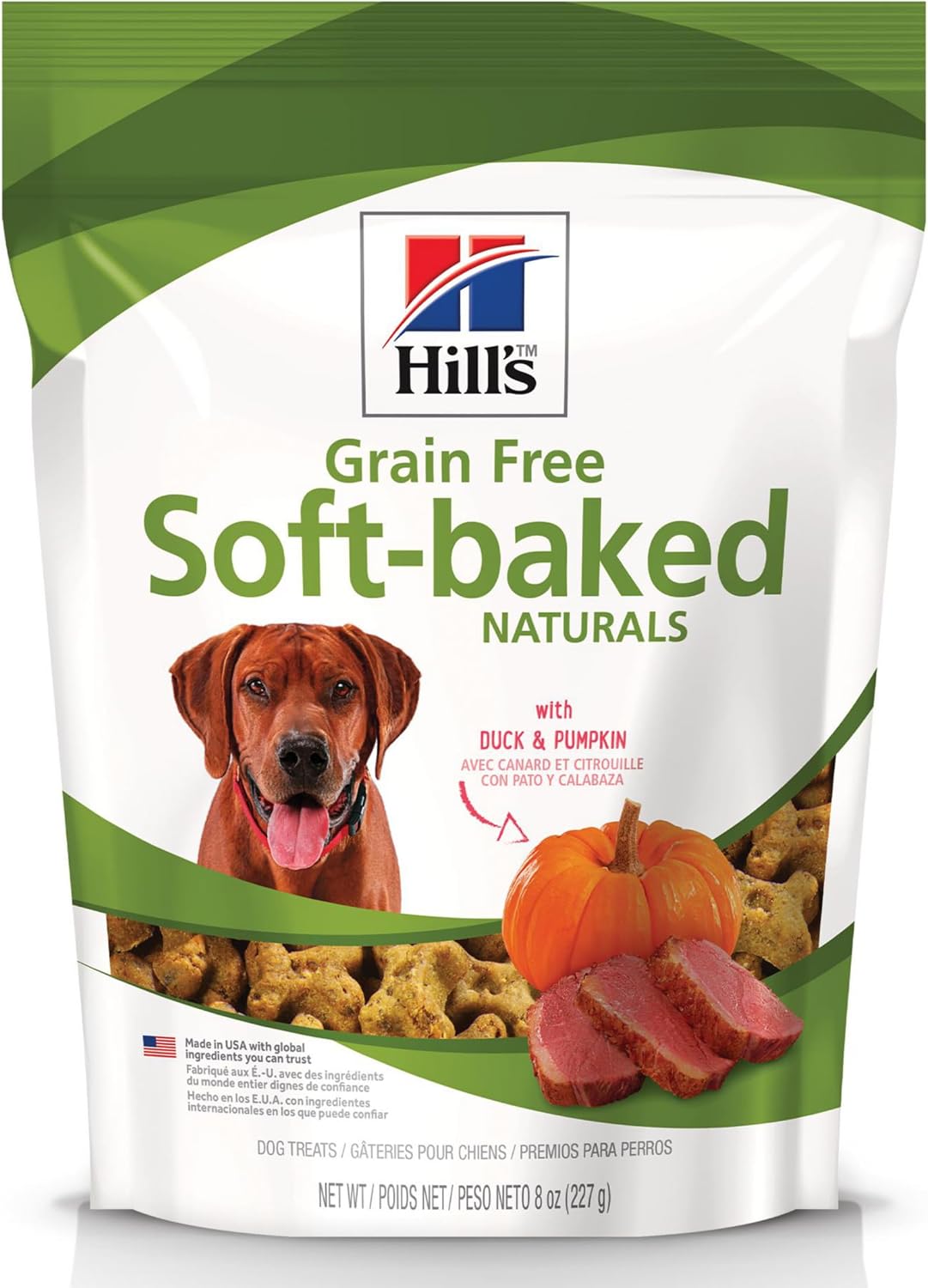
Hill's Grain Free Soft-Baked Naturals Duck & Pumpkin
Best Soft Treat
| Flavor | Duck & Pumpkin |
|---|---|
| Unit Count | 8 Ounce |
| Age Range Description | Adult |
| Special Ingredients | all-natural |
| Animal Food Diet Type | Veterinary Diet |
Hill's Grain Free Soft-Baked Naturals in Duck & Pumpkin are soft, low‑grain treats designed for intermittent feeding and training rewards. The bites are chewy and moist, which makes them easy to break or hide in training pouches and appealing to dogs that prefer softer textures. The recipe lists real duck and pumpkin near the top and omits grains, which helps owners managing wheat or grain sensitivities; ingredients also include potato and peas as carbohydrate sources and mixed tocopherols for freshness. Because they are formulated as treats rather than a full diet, the package directs use as supplemental feeding, so they work best for short training sessions and occasional snacks rather than meal replacement. The bag is an 8 ounce unit, suitable for trialing a new flavor or using for short-term training, but frequent trainers may find the package size small. Made in the USA with no artificial flavors or preservatives claims, these treats balance palatability and a grain-free ingredient set while remaining convenient for everyday rewards.
Best for: Owners seeking a soft, grain-free training treat for dogs with suspected grain sensitivities or who need an easily chewable reward.
Less Ideal for: People who do very high-volume training or need large bulk bags should consider bigger size options or commercial training treats.
- Soft, moist texture that is easy to break for training
- Grain-free formula with real duck and pumpkin listed in ingredients
- Made in the USA and marketed without artificial flavors or preservatives
- Suitable as low-calorie, small training rewards
- Small 8 ounce bag may be insufficient for heavy training use
- Contains peas and potatoes as alternative carbs which some dogs may not tolerate
Verdict: The best soft treat for sensitive-stomach dogs and older pets that need a gentle texture that’s easy to chew and digest.
Royal Canin Gastrointestinal Dog Treats 17.6 oz
Best Digestive-Support Treat

| Flavor | Chicken |
|---|---|
| Item Form | Dry Kibble |
| Age Range Description | Adult |
| Specific Uses For Product | Digestive Health |
| Unit Count | 17.6 Ounce |
Royal Canin Gastrointestinal Dog Treats are small, low-fat dry kibble treats made to complement veterinary gastrointestinal diets and help dogs with digestive sensitivities. They are used as occasional rewards or training treats and are formulated with specific nutrients, a source of fiber and an ingredient list intended to be gentle on the stomach while remaining compatible with Royal Canin GI therapeutic diets. At about 4.5 calories per treat and labeled as veterinary diet treats, they allow owners to reward dogs without significantly adding calories or upsetting a controlled feeding plan. Ingredients like powdered psyllium seed husk and fructooligosaccharides suggest prebiotic fiber that can support stool quality and gut flora, but these treats are not a standalone probiotic supplement so you should follow your veterinarian's guidance for more targeted probiotic or enzyme therapy. The bag format is convenient for storage, though the product is intended specifically as a complement to a prescribed GI feeding program rather than a general daily snack for healthy dogs.
Best for: Owners seeking a vet-formulated treat to use alongside a prescribed gastrointestinal diet or to gently reward dogs with sensitive stomachs and ongoing digestive concerns.
Less Ideal for: Pet owners looking specifically for high-strength probiotic or enzyme supplements or a general-purpose everyday treat for healthy dogs should consider dedicated supplements or regular treats instead.
- Formulated to be compatible with veterinary gastrointestinal diets
- Low fat and low calorie per treat for use during restricted feeding plans
- Contains fiber sources such as psyllium and prebiotic fructooligosaccharides to support digestion
- Veterinary-grade positioning and ingredient selection for dogs with GI issues
- Not marketed as a concentrated probiotic or enzyme supplement so may not replace targeted therapies
- Designed as a complement to a GI prescription diet rather than a standalone daily treat for all dogs
Verdict: The best digestive-support treat for dogs who benefit from added probiotics or enzymes to stabilize gut flora and reduce digestive upset.
Stella & Chewy's Beef Digestive Boost 4.25 oz
Best Premium Treat

| Flavor | Beef (Digestive Boost) |
|---|---|
| Item Form | Freeze Dried Raw |
| Life Stage | All Life Stages |
| Unit Count | 4.25 Ounce |
| Special Ingredients | Flaxseed |
This freeze-dried raw formula is designed as a digestive-support treat or topper and can also serve as a complete meal for small servings. It centers on grass-fed beef with added pumpkin, papaya, coconut flour, flaxseed and multiple probiotic strains to promote regularity, nutrient absorption and firmer stools. High-Pressure Processing preserves raw nutrients while reducing bacterial risk, and the product is grain-free with no artificial preservatives, colors, flavors, hormones or antibiotics. In practice you can break pieces into training rewards, sprinkle as a topper over kibble, or rehydrate for a fuller meal; feeding guidelines give clear portion suggestions by weight. Limitations include the small 4.25 ounce bag size for regular use and the premium ingredient set means this is a higher-cost option compared with standard treats. Dogs with very specific ingredient allergies should still check the full ingredient list before feeding.
Best for: Owners prioritizing digestive relief and high-quality sourcing who want a versatile, nutrient-dense treat or topper for dogs with sensitive stomachs.
Less Ideal for: Shoppers looking for bulk, low-cost training treats or those who need very large servings frequently should consider larger or cheaper alternatives.
- Formulated specifically for digestive support with pumpkin, papaya and multiple probiotic strains
- Freeze-dried raw preserves nutrients and offers flexible feeding as a topper, treat, or rehydrated meal
- Made with grass-fed beef and organic fruits and vegetables with no artificial preservatives or hormones
- Clear feeding directions for using as a meal or topper and safe rehydration guidance
- Small 4.25 oz bag may require frequent repurchase for regular use
- Premium sourcing and formulation make it a higher-cost treat compared with standard options
Verdict: The best premium treat for owners willing to pay more for superior ingredient sourcing, gentle processing, and higher confidence in tolerance for sensitive dogs.
Choosing the Right Dog Treat Sensitive Stomach: Key Factors to Consider
Ingredient Simplicity
Short ingredient lists reduce the chance of an unknown trigger. Look for treats with one or a few whole-food ingredients and avoid long, multi-component recipes. Simple recipes make it easier to trace reactions if your dog has a flare-up and to perform ingredient elimination if needed.
When ingredients are minimal and recognizable, you are less likely to introduce hidden fillers or flavor systems that can irritate digestion. Simpler treats also make it easier to match the treat to a dog's known safe proteins or tolerated carbohydrates.
Protein Source
The type of protein matters for digestibility and allergy risk. Single-protein treats using novel or easily digestible proteins can be gentler for dogs with food sensitivities. If your dog has a known protein intolerance, choose treats that explicitly use the safe protein and avoid cross-ingredient contamination.
Also consider lean, cooked protein forms over processed meat meals when possible, because highly processed proteins can be harder to digest for sensitive dogs.
Fat Content and Richness
High-fat treats can trigger gastrointestinal upset, especially in dogs with pancreatitis history or chronic loose stools. Low- to moderate-fat formulations reduce the chance of an acute digestive reaction and are easier for the pancreas and intestines to process.
Check caloric density as well: lower-fat treats tend to be lower-calorie, which helps maintain weight while still allowing frequent rewards during training without overloading the digestive system.
Fiber Type and Amount
Fiber affects stool consistency and gut transit time. Soluble fibers and gentle prebiotics in modest amounts often help normalize stools and support beneficial gut bacteria. Conversely, excessive or insoluble fiber may worsen gas or cause looser stools in some dogs.
Choose treats where fiber content is balanced and comes from gentle sources such as pumpkin or specific soluble fibers, rather than high amounts of bran or multiple fiber additives that can unpredictably alter digestion.
Texture and Size
Treat texture influences how the treat is eaten and tolerated. Soft, moist, or easily broken treats are better for dogs with digestive trouble because they reduce chewing strain and allow smaller pieces that are easier to digest. Hard, dense treats may be fine for many dogs but can be harder to break into appropriately sized mouthfuls and may contribute to faster ingestion and gastrointestinal upset.
Consider bite-sized pieces for training to limit portion size and to avoid overloading the stomach with larger quantities at once.
Additives and Preservatives
Artificial colors, flavors, and certain preservatives can be triggers for sensitive dogs. Look for treats using natural preservation methods or minimal, well-tolerated preservatives. Read labels for unnecessary additives and avoid treats that rely on complex flavor enhancers.
Natural antioxidant preservatives and refrigeration-dependent fresh formulations can be good options for owners who prefer the cleanest ingredient lists and are willing to manage storage needs.
How Quickly Should I Expect Improvement After Switching Treats?
Changes in stool quality or digestive comfort often show up within a few days, but full stabilization can take several weeks. If a treat is the cause of digestive upset, some dogs will improve in 48 to 72 hours after removing the offending ingredient, while others need a longer adjustment period as the gut microbiome rebalances.
When switching to a gentler treat, monitor stool firmness, frequency, appetite, and energy level. If you see no improvement after two weeks or if symptoms worsen, consult your veterinarian for further guidance.
- Expect some variability based on the dog's baseline sensitivity and recent diet history
- Introduce new treats gradually and feed small amounts initially
- Track changes for at least 10 to 14 days before concluding the new treat is or is not working
Can Treats Be Used During a Digestive Flare or Should They Be Avoided?
During an active digestive flare, it is safest to limit treats to those explicitly formulated for sensitive stomachs and fed in very small portions, or to avoid treats altogether until symptoms settle. Extra food of any kind can prolong or worsen a flare in some dogs.
If you do offer treats during a flare, choose bland, low-fat, and single-ingredient options and reduce total daily feeding amounts to maintain overall caloric balance.
- Preferably pause treats until appetite and stool quality normalize
- If offering treats, use them for essential training only and keep portions minimal
- Work with your veterinarian to rule out medical causes if flares are frequent
How to Test a New Treat Without Risking a Reaction
Start with an elimination approach: feed only the new treat in small quantities while keeping the rest of the diet consistent. Offer a single small portion and observe for 48 to 72 hours for vomiting, diarrhea, itching, or changes in behavior.
If no adverse signs appear, gradually increase the number of treats over a week while still monitoring stool quality. Keep a log of what you fed and when to help identify patterns if an issue emerges.
- Introduce one new treat at a time rather than multiple new items
- Limit trial periods to short, monitored windows and avoid mixing treats with new main-diet foods
- Document portion sizes so you can reproduce or avoid the same exposure later
Are Soft Chews or Freeze-dried Pieces Better for Sensitive Digestion?
Both soft chews and freeze-dried pieces can be appropriate for sensitive dogs, depending on formulation. Soft chews often have added binding agents and may contain glycerin or syrups that some dogs tolerate well and others do not. Freeze-dried pieces are usually single-ingredient protein concentrates and can be very digestible if rehydrated or fed in small pieces.
Evaluate each format on its ingredient list and fat content. For very sensitive dogs, single-ingredient freeze-dried or gently cooked soft treats with minimal additives tend to be the safest options.
- Soft chews: convenient and easy to portion, check for sugar or glycerin
- Freeze-dried: typically single-ingredient and lightweight; consider rehydrating
- Choose based on your dog's chewing ability and tolerance for added binders
Storing and Portioning Sensitive-stomach Treats
Proper storage preserves ingredient integrity and prevents spoilage that could harm digestion. Follow storage instructions and use airtight containers for opened packs to limit oxidation and moisture exposure. Refrigerate fresh or minimally preserved treats when recommended.
Portioning is key for dogs with sensitivities: use small, consistent pieces for training and split larger treats into smaller counts. That controls total daily intake and reduces the digestive burden from a single feeding event.
- Use a pill cutter or kitchen shears to split denser treats into uniform pieces
- Keep a measured number of treats per day to avoid accidental overfeeding
- Label containers with opening dates for fresh or refrigerated treats
How We Chose the Best Dog Treat Sensitive Stomach
We focused on criteria that matter for dogs with digestive sensitivity. First, ingredient simplicity: we prioritized treats with a short, recognizable ingredient list and avoided artificial additives, unnecessary fillers, and complex blends that increase allergy risk. Second, protein source and digestibility: we looked for single, easily digestible proteins and options that avoid common triggers. Third, formulation and texture: treats that are gentle on the stomach often have softer textures or are easy to break into smaller portions, which helps with portion control and reduces digestive load. Fourth, fiber and prebiotic balance: moderate fiber can help normalize stool quality, so we favored treats with appropriate fiber sources rather than excessive amounts. Fifth, manufacturing transparency and labeling: clear sourcing and nutrient information helps owners manage sensitivities more effectively. We excluded treats that rely heavily on artificial flavors, colorants, or multi-ingredient blends with common allergens. We did not include novelty or seasonal treats that are high in sugar or spices. Our final list reflects products that consistently emphasize stomach-friendly composition and practical feeding use for sensitive dogs.
Our full evaluation process is outlined in our review methodology.
FAQ
How often can I give sensitive-stomach treats during training?
Often you can give small sensitive-stomach treats multiple times during a training session, but keep portions tiny. Monitor total daily calories and limit treats to avoid overloading digestion, replacing some kibble meals with training rewards if needed.
Can dogs with food allergies eat single-ingredient treats?
Single-ingredient treats reduce exposure to potential allergens but only help if the single ingredient is not the dog's allergen. Use elimination knowledge to pick a safe protein or carbohydrate and avoid treats with cross-ingredient contamination.
Are homemade treats a good option for sensitive stomachs?
Homemade treats can be a good option because you control ingredients and preparation. Use bland, easily digestible components and avoid rich fats, spices, and complex additives. Consult your veterinarian for portion guidance and to ensure nutritional balance if homemade treats are a large part of the diet.
Should I rehydrate freeze-dried treats for better digestion?
Rehydrating freeze-dried treats can soften them and make them easier to chew and digest, especially for dogs that usually have trouble with dry textures. Use warm water briefly and drain excess moisture before offering small amounts.
What signs indicate a treat is causing digestive problems?
Watch for vomiting, loose or watery stools, increased flatulence, reduced appetite, lethargy, or changes in stool color and frequency. If these signs occur after introducing a treat, stop feeding it and consult your veterinarian if symptoms are severe or persistent.
Final Verdict
Prioritize minimal, transparent ingredient lists, a gentle protein source, and moderate fat and fiber when choosing treats for a sensitive stomach. Small portion sizes, gradual introduction, and attention to texture will reduce the chance of digestive upset and make rewards safer for training and daily use. Balance convenience and ingredient quality based on your dog's specific sensitivities. If symptoms persist despite conservative choices, seek veterinary advice to rule out underlying medical causes and to develop a tailored feeding plan.

