

Picking the right treat toy makes daily enrichment simple and reliable for both short play sessions and longer mental workouts. You want something that holds up to chewing, dispenses treats predictably, and offers adjustable challenge so the toy stays interesting as your dog learns. This guide shortlists the top options in the treat toy category and explains why they made the list. We evaluated durability, reward mechanics, and how each toy supports training and boredom-busting routines.
Top Picks at a Glance
| Best Overall Treat Toy The best all-around treat toy for most dogs and owners | PETSTA Level2 UFO Puzzle Toy |  |
| Best Budget Treat Toy Affordable, reliable treat toy for cost-conscious owners and casual play | ZHIERDE Treat Dispensing Ball Small |  |
| Best Interactive Treat Toy Encourages play and training with puzzles or moving parts | Outward Hound Nina Ottosson Dog Brick |  |
| Best Slow-Dispensing Treat Toy Releases treats gradually to slow eating and extend playtime | KONG Wobbler Large |  |
| Best Compact Treat Toy Small, portable design ideal for travel and small spaces | Outward Hound Lil' Snoop 3.9" |  |
| Best Premium Treat Toy Higher-end materials and features for owners who want the best | West Paw Zogoflex Toppl Small |  |
PETSTA Level2 UFO Puzzle Toy
Best Overall Treat Toy

| Pet Toy Type | Puzzle |
|---|---|
| Indoor Outdoor Usage | Indoor |
| Material Type | Polypropylene |
| Dog Breed Size | Large |
The PETSTA Level2 UFO Puzzle Toy is a hands-on enrichment toy that combines sliding puzzles and hidden treat chambers to extend sniffing and foraging play. Dogs push and spin the built-in sliders and press the central squeak button to reveal treats from 16 holes, which encourages problem solving and slows eating sessions to 20 minutes or more for many pets. The toy is lightweight, portable, and made from polypropylene with non-removable components so pieces do not fall off during play, and rubber feet help keep it from sliding across the floor. It is dishwasher safe, making cleanup easy after messy kibble or wet treats. Limitations include its plastic construction, which is not designed for aggressive chewers, and the Level 2 difficulty may be too easy for very advanced puzzle dogs or too hard initially for some puppies without guidance. For owners who supervise short training sessions or want a durable, low-maintenance enrichment option, this toy gives clear, repeatable challenges that reward scent-driven behavior.
Best for: Owners who want a repeatable, scent-driven challenge to keep their dog mentally engaged during supervised play or training sessions.
Less Ideal for: People seeking an unbreakable chew toy for powerful chewers or those who need entirely hands-off unsupervised toys for destructive dogs.
- Combines sliding puzzles and treat dispensing to promote problem solving
- Central squeak and 16-hole design extend engagement and slow feeding
- Non-removable parts reduce small-piece hazards during play
- Rubber anti-slip pads help keep the toy stationary while the pet works
- Dishwasher-safe plastic for easy cleaning after use
- Not intended for aggressive chewers and may be damaged by heavy biting
- Single material plastic construction offers limited durability compared with heavy-duty chew toys
Verdict: The best all-around treat toy that balances engagement, safety, durability, and easy cleaning for everyday play.
ZHIERDE Treat Dispensing Ball Small
Best Budget Treat Toy
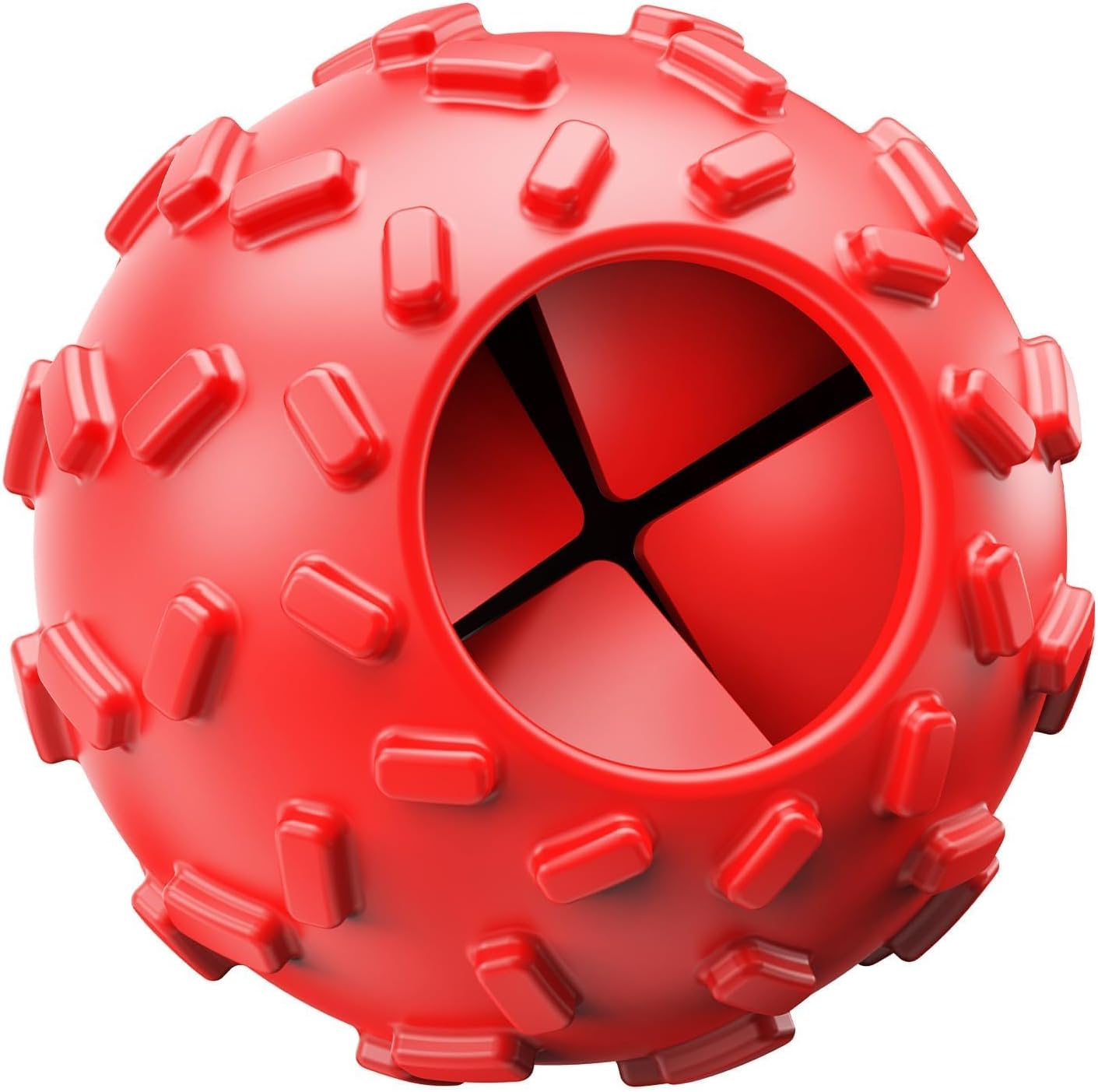
| Material Type | Natural Rubber |
|---|---|
| Pet Toy Type | Treat Dispenser Toy |
| Breed Recommendation | Small |
| Indoor Outdoor Usage | Indoor, Outdoor |
This compact treat-dispensing ball turns snacks into an interactive puzzle that keeps small dogs and puppies occupied. Fill the hollow core with kibble or small treats, then let the dog nudge, roll, and paw the ball to release rewards; flexible inner flaps can be trimmed to slow or speed dispensing so the challenge grows with the dog. The textured natural rubber surface gives grip for rolling and fetch, floats for water play, and is easy to rinse clean after use. Its small 2.7-inch size and 3.2-ounce weight make it easy to stash in a travel bag or crate and suitable for apartment play without taking much space. It is not intended for aggressive chewers or continuous heavy gnawing, so expect limited lifespan if a dog chews destructively. Scented options add extra interest but do not change function. For short supervised solo sessions, training, or slow-feeding enrichment, this ball is a practical, portable solution.
Best for: Owners who need a compact, travel-friendly enrichment toy to occupy small dogs or puppies in crates, apartments, or on the go and prioritize portability and adjustable challenge over chew resistance.
Less Ideal for: Households with powerful chewers or dogs that destroy toys quickly should choose a heavier-duty chew toy instead.
- Small, lightweight and highly portable for travel or crate use
- Adjustable inner flaps let you control treat flow for longer-lasting engagement
- Made from natural rubber with a textured surface for grip and easy rinsing
- Floats for versatile indoor, outdoor, or water play
- Not meant for aggressive chewers so durability is limited under heavy chewing
- Small opening limits treat size to kibble or small treats only
Verdict: The best low-cost treat toy that still offers safe materials, decent durability, and enough engagement for regular use.
Outward Hound Nina Ottosson Dog Brick
Best Interactive Treat Toy

| Pet Toy Type | Puzzle |
|---|---|
| Recommended Uses For Product | Indoor, Mental Health, Playing, Training |
| Additional Features | Lightweight, Portable |
| Water Resistance Level | Not Water Resistant |
| Material Type | Plastic |
The Outward Hound Nina Ottosson Dog Brick is a Level 2 interactive puzzle that challenges dogs to lift lids, slide red sliders, and remove bone covers to find hidden treats or kibble. Designed for supervised indoor play, it has multiple treat compartments and several ways to increase or decrease difficulty so you can match the puzzle to your dog's skill level. The plastic construction is lightweight and portable, and the food-safe materials are BPA, PVC, lead, and phthalate-free, making it simple to fill, clean, and reuse. It also doubles as a slow feeder for dogs that bolt their food, turning mealtime into an enrichment session. Limitations include the plastic pieces which are not chew-proof, so the toy requires supervision and is unsuitable for heavy chewers who may disassemble components. For many owners the adjustable challenge, clear learning curve for dogs, and moderate treat capacity make this one of the most versatile puzzle toys available.
Best for: Owners who want a single, versatile puzzle that provides adjustable mental stimulation and can double as a slow feeder during supervised indoor play.
Less Ideal for: Dogs that are aggressive chewers or owners who need an unsupervised, indestructible toy should consider more rugged options.
- Adjustable difficulty with lids, sliders, and removable covers to tailor challenge level
- Multiple treat compartments that also allow use as a slow feeder
- Made from food-safe materials and easy to clean
- Lightweight and portable for indoor supervised play
- Plastic construction is not chew-proof and requires supervision to prevent damage
Verdict: The best interactive treat toy for owners who want mentally stimulating play that rewards dogs with treats for problem-solving.
KONG Wobbler Large
Best Slow-Dispensing Treat Toy

| Pet Toy Type | Treat Dispenser Toy |
|---|---|
| Breed Recommendation | Medium/Large |
| Indoor Outdoor Usage | Indoor |
| Water Resistance Level | Water Repellent |
The KONG Wobbler is a durable, hollow treat dispenser that wobbles unpredictably as dogs nudge it to release kibble or treats, turning mealtime into a game. Dogs push or paw the weighted base to make food fall out of the top opening, which encourages activity and extends eating time for pets that gulp or need extra mental stimulation. The toy unscrews for easy filling and cleaning, and the plastic construction is water repellent and dishwasher safe for simple maintenance. Its shape and erratic movement keep the challenge engaging without complicated puzzles or interchangeable parts, so it works well for repeated daily use. Limitations are that very aggressive chewers may eventually damage plastic toys, and the dispensing hole size and weight mean very small kibble or tiny dogs will get less benefit than the intended medium and large breeds. For owners seeking a straightforward, robust dispenser that promotes slow feeding and play, the Wobbler is a reliable, low-fuss option.
Best for: Buyers who prioritize a long-lasting, low-maintenance puzzle that reliably dispenses food and keeps medium to large dogs mentally and physically engaged during meals.
Less Ideal for: Owners of very small breeds or dogs that are extreme power chewers who need heavy-duty rubber or reinforced toys should consider other options.
- Sturdy plastic construction designed for repeated interactive play
- Weighted wobble action dispenses kibble gradually to slow feeding
- Unscrews for easy stuffing and dishwasher-safe cleaning
- Simple design with no small removable parts to lose or break
- Encourages physical activity and mental stimulation during mealtime
- Plastic material can be chewed through by very powerful chewers
- Large size and hole diameter are not ideal for very small dogs or tiny kibble
Verdict: The best slow-dispensing treat toy for stretching snack time and reducing gulping by delivering small rewards during play.
Outward Hound Lil' Snoop 3.9"
Best Compact Treat Toy

| Pet Toy Type | Treat Dispenser Toy |
|---|---|
| Breed Recommendation | Small-Medium Breeds |
| Indoor Outdoor Usage | Indoor, Outdoor |
| Water Resistance Level | Water Resistant |
The Lil' Snoop is a compact treat-dispensing ball made for small dogs and puppies that encourages foraging and slows fast eaters. You fill the translucent, squishy cavity with kibble or small treats, close it, and let your pup nudge and paw to release rewards; the toy's size and 1/4-cup capacity make it easy to use in crates, carriers, or small living rooms. It is made from a flexible Orbee-Tuff TPE-like material that the brand describes as durable for treat play and is mint-scented to help freshen breath. Cleaning is straightforward — fill with warm soapy water, shake, rinse, and air dry. Important limitations are that it is not intended as a chew toy and should be used under supervision, and very determined chewers may still damage it. For casual puzzle play, slow feeding, and short supervised sessions in confined spaces, the Lil' Snoop makes treat time more engaging without taking up much room.
Best for: Puppy and small-dog owners who need a compact, portable treat toy for crates, travel, or small living spaces and want to add short supervised enrichment sessions.
Less Ideal for: Owners of aggressive chewers or dogs that play destructively should choose a sturdier, chew-specific toy instead.
- Sized for puppies and small dogs so it fits in crates and small spaces
- Treat-dispensing design encourages mental stimulation and slows fast eaters
- Mint-infused material helps freshen breath during play
- Translucent, squishy construction makes it easy to see and retrieve treats
- Simple cleaning method with warm soapy water
- Not a chew toy and requires supervision during use
- May be damaged by heavy or persistent chewers
Verdict: The best compact treat toy for owners needing a portable option that's easy to pack, store, and use on the go.
West Paw Zogoflex Toppl Small
Best Premium Treat Toy

| Pet Toy Type | Puzzle |
|---|---|
| Recommended Uses For Product | Chewing, Playing, Treat Dispensing |
| Indoor Outdoor Usage | Indoor, Outdoor |
| Material Type | Plastic |
| Size | Small |
The West Paw Zogoflex Toppl is a premium treat-dispensing puzzle that turns snack time into an interactive game. Its bowl-like Toppl shape and interior rubber prongs let you load kibble, soft fillings, or freeze wet treats to extend engagement, while the tough Zogoflex material stands up to repeated chewing, floats for water play, and is top-rack dishwasher safe for easy cleaning. Because it holds treats securely and requires some manipulation to extract food, it slows fast eaters and provides mental stimulation for dogs that love problem-solving. The toy is lightweight and portable for indoor or outdoor use and is made in the USA from recyclable materials eligible for the maker's recycling program. Expect a small size suited to smaller breeds and not intended as an indestructible chew for extreme chewers, and note that the proprietary plastic is not natural rubber which may feel firmer to some dogs. For owners who prioritize durability, safety, and versatile treat options, the Toppl is a practical, long-lasting choice.
Best for: Buyers who want a thoughtfully designed, long-lasting treat toy and are willing to pay for premium materials and manufacturer-backed durability for regular enrichment sessions.
Less Ideal for: Owners seeking an inexpensive, disposable treat toy or those whose dogs are extreme chewers that quickly destroy durable toys should look elsewhere.
- Sturdy Zogoflex material resists wear and is BPA and phthalate free
- Holds kibble or soft fillings and can be frozen for longer-lasting puzzles
- Dishwasher safe for easy cleaning
- Floats and is water resistant for versatile indoor and outdoor play
- Small size limits use to small dogs or supervised sessions with larger dogs
- Not indestructible and may not withstand aggressive power chewers
Verdict: The best premium treat toy for owners willing to pay more for superior materials, thoughtful design, and enhanced longevity.
Choosing the Right Dog Treat Toy: Key Factors to Consider
Durability and Material Safety
Durability directly affects how long a treat toy will last and whether it is safe for regular dog play. Choose toys made from dense rubber, reinforced fabric, or other chew-resistant materials for strong chewers. Softer plastics can be fine for light chewers, but they wear faster and may create small pieces the dog could swallow.
Material safety also matters: non-toxic, BPA-free compounds and tested finishes reduce the risk of chemical exposure during mouthing. Inspect seams, glued joints, and removable parts; any loose components increase ingestion risk and shorten functional life. Prioritizing durable construction reduces replacement frequency and keeps play safer.
Treat-dispensing Mechanics
The way a toy dispenses treats determines how rewarding and predictable it is for your dog. Some toys release kibble or small treats through simple openings that shake loose; others use more complex internal baffles or puzzles that require manipulation. Simpler mechanisms are easier for puppies and seniors, while adjustable or more complex systems suit dogs that need higher mental challenge.
Reliability of the dispensing mechanism matters for positive reinforcement. A toy that rarely dispenses treats will frustrate a dog, while one that gives treats too easily stops being engaging. Look for designs that allow you to control portion size and frequency to match training goals and daily caloric limits.
Adjustable Difficulty and Replay Value
A toy with adjustable difficulty stays useful longer because it grows with your dog's skill level. Adjustable openings, removable inserts, or multi-stage puzzles let you start easy and increase challenge as the dog learns. Replay value prevents boredom and encourages repeated use rather than one-off novelty.
Consider whether difficulty changes are tool-free and quick to set. If adjustments are cumbersome, you may not bother changing them and the toy will lose its long-term appeal. High replay value supports ongoing mental exercise and reduces destructive boredom behaviors.
Size and Chew Strength Suitability
Matching toy size and build to your dog's size and jaw strength prevents frustration and safety problems. A toy intended for small dogs may be a choking hazard for a large dog, while oversized toys can be unwieldy for small mouths. Manufacturers often list size and recommended weight ranges; use those as a starting point and consider your dog's individual chew habits.
Also consider the dog's bite force. Power chewers need denser, reinforced constructions; casual chewers and puppies can use softer options. Choosing the right size and strength profile improves engagement and prolongs the toy's lifespan.
Ease of Cleaning and Maintenance
Treat toys quickly attract saliva and food residue, so ease of cleaning affects hygiene and convenience. Toys that are dishwasher-safe or have wide openings for hand washing reduce bacterial buildup and keep treats tasting fresh. Complex internal chambers that trap food require more time and effort to clean properly.
Regular cleaning also prevents odors and mold. Consider whether components can be fully disassembled for cleaning and whether replacement parts or washable covers are available to extend the toy's service life.
Portability and Storage
Portability determines whether the toy will be practical for travel, park visits, or quick sessions outside the home. Lightweight, compact toys that fold or nest are easier to pack, while bulky or rigid items are best kept for home use. Storage matters too: toys with fewer loose parts reduce the chance of losing pieces and make tidy-up faster.
Evaluate whether the toy fits your typical routines. A highly portable design increases the frequency of use, which in turn boosts the enrichment and training value you get from the purchase.
How Do I Choose the Right Treat Toy for My Dog's Skill Level?
Start by matching the toy's difficulty profile to your dog's current problem-solving experience. Beginners and puppies benefit from toys that dispense treats readily or have large openings so the reward comes quickly. More experienced dogs need puzzle elements, adjustable openings, or internal baffles that require sustained nudging or rolling.
Introduce a new toy in stages: begin on an easy setting and gradually increase difficulty once your dog reliably gets treats. Monitor frustration—if your dog loses interest, dial the challenge back a notch. Frequent short sessions work better than long, frustrating attempts.
- Use large, visible treats during initial training to show how the toy works.
- Increase difficulty only after consistent success over several sessions.
- Rotate toys to maintain novelty and prevent overfamiliarity.
What Treats Work Best in Treat Toys?
Choose treats that are small, dry, and sturdy enough to pass through openings without jamming. Kibble, dehydrated training treats, and small crunchy bites are commonly effective. Softer or greasy treats can stick and make cleaning harder.
Consider the toy's dispensing size and your dog's calorie limits. Use tiny portions or break larger treats into pieces to avoid overfeeding during repeated play sessions.
- Avoid very sticky or liquid treats that can clog mechanisms.
- Rotate treat types to keep the toy interesting.
- Use kibble for longer sessions where calories are a concern.
How to Introduce a New Treat Toy so Your Dog Uses It Confidently
Start with a supervised, guided session. Sit with your dog, show how treats come out, and gently help them manipulate the toy until they get the idea. Praise and reward every small success to build positive association.
Keep initial sessions short and fun. If the dog seems confused, demonstrate again or temporarily make the toy easier. Gradually move from guided play to independent use as the dog gains confidence.
- Use high-value treats for the first few sessions to encourage interaction.
- Demonstrate rolling or nudging motions if the toy requires specific actions.
- End sessions on a positive note to build enthusiasm for next time.
Can Treat Toys Help with Separation Anxiety or Excessive Energy?
Treat toys are effective tools for short-term distraction and mental enrichment. They occupy the dog's attention and provide a constructive outlet for energy and curiosity. For dogs with mild separation anxiety, leaving a treat toy with a predictable dispensing pattern can reduce stress during short absences.
However, treat toys are not a cure for severe anxiety. They work best as part of a broader plan that includes training, environment management, and, if needed, professional behavior support. Use them alongside other calming strategies rather than relying solely on the toy.
- Use longer-duration dispensing toys for separation periods to maintain engagement.
- Combine treat toy use with a calm departure routine to reduce stress signals.
- Monitor for signs of increased anxiety or destructive behavior and adjust strategies accordingly.
Safety Checklist Before Giving a Treat Toy to Your Dog
Inspect the toy for loose parts, exposed seams, or bits that could become choking hazards. Ensure openings are appropriate for your dog's muzzle size so treats cannot lodge and cause obstruction. For stuffed or fabric toys, confirm stitching is secure and no small pieces can be pulled off.
Supervise initial uses and regularly check the toy for wear. Replace or retire toys that show irreversible damage or persistent residue that cannot be cleaned. Keep an eye on your dog's chewing pattern; if they try to destroy the toy rather than solve it, opt for a sturdier design.
- Remove the toy immediately if pieces come loose.
- Avoid toys with small detachable parts for power chewers.
- Clean and dry toys thoroughly between uses to prevent mold.
How We Chose the Best Dog Treat Toy
We focused on evaluation criteria that reflect real-world use and long-term value for dog owners. Key factors included material durability under chewing, the reliability and safety of treat-dispensing mechanisms, and how well the toy scales difficulty to match different skill levels. We also assessed ease of cleaning and maintenance, since sticky or hard-to-clean toys reduce hygiene and usability. Portability and versatility were considered to ensure toys work for short indoor sessions and outdoor play. Finally, we looked at whether the toy supports training goals such as impulse control, problem solving, and longer engagement without supervision. We excluded toys that rely on fragile electronic modules or single-use components that require frequent replacement. Products with unclear safety materials or limited cleaning options were not considered. The shortlist reflects items that balance robust construction, repeatable reward mechanics, and meaningful mental stimulation across a range of dog sizes and temperaments.
Our full evaluation process is outlined in our review methodology.
FAQ
Are treat toys safe for puppies?
Often yes, but choose designs specifically rated for puppies and softer mouths. Look for simple dispensing mechanics, small sizes, and easy-clean materials. Supervise young puppies closely to prevent chewing through soft materials.
How often should I let my dog play with a treat toy?
It depends on your dog's energy level and calories; many owners use short sessions once or twice daily. Rotate toys to keep interest high and limit treat portions to avoid overfeeding during repeated play.
Can treat toys replace mealtime?
Sometimes treat toys can be used to deliver part of a meal, especially kibble, but they should not completely replace balanced feeding routines. Using toys for portion of feeding adds enrichment but track total daily calories to maintain weight.
What if my dog loses interest quickly?
Try increasing treat value, lowering difficulty, or rotating different toys to restore novelty. Short, frequent sessions and positive reinforcement often rekindle interest. If boredom persists, consider toys that offer longer reward timelines.
Do treat toys work for senior dogs?
Yes, many treat toys are suitable for seniors if you choose lower-difficulty options and softer materials. Adjustable toys that do not require strong jaw force let older dogs enjoy mental stimulation without strain.
Final Verdict
Choose a treat toy that aligns with your dog's chewing style, skill level, and daily routine. Prioritize durable, safe materials and a dispensing mechanism that rewards effort without causing frustration. Consider cleaning ease and whether the toy's difficulty can be adjusted to maintain long-term engagement. Balance stimulation with calorie control and supervised introduction to ensure the toy supports training and boredom reduction. With the right tradeoffs—durability for power chewers, adjustability for learners, or portability for travel—you can pick a treat toy that consistently adds enrichment to your dog's day.

