

Finding the right treats for a dachshund matters more than you might think. Dachshunds have unique jaw shape, small mouths, and a tendency to gain weight, so treat choice affects training success, dental health, and overall diet. This guide shortlists the top options for dachshunds and explains why each style can work for different needs, from training rewards to daily snacks. We evaluated treats for size, texture, palatability, and ingredient quality to help you pick options that are safe and effective for this breed. Below are the top picks and what to consider when choosing treats for a dachshund.
Top Picks at a Glance
| Best Overall Treat for Dachshunds The best all-around choice for Dachshund tastes and needs | Milk-Bone MaroSnacks Small Dog Treats |  |
| Best Budget Treat for Dachshunds A low-cost option that still appeals to picky small-breed mouths | Milk-Bone Flavor Snacks Small |  |
| Best Premium Treat Higher-end ingredients and craftsmanship for owners who want the best | Pur Luv Chicken Jerky Treats 16 oz |  |
| Best Soft Treat Tender, easy-to-chew bites ideal for small jaws and older dogs | Pupford Soft & Chewy Training Treats 5 oz |  |
| Best High-Protein Treat Protein-forward snacks to support lean muscle and active pets | Waggin' Train Duck Jerky 12 oz |  |
| Best Training Treat Tiny, highly motivating bites that work well for repetition | Zuke's Mini Naturals Beef 6 oz |  |
| Best Grain-Free Treat Treats without grains for dogs with sensitivities or owner preference | Buddy Biscuits Softies Beef 5 oz |  |
Milk-Bone MaroSnacks Small Dog Treats
Best Overall Treat for Dachshunds

| Flavor | Beef |
|---|---|
| Item Form | Treats |
| Dog Breed Size | Small |
| Unit Count | 40 Ounce |
| Calories per Treat | 10 calories |
Milk-Bone MaroSnacks are crunchy, bite-sized dog biscuits with a real bone marrow center designed for small dogs and training rewards. Each treat runs about 10 calories, making them easy to portion for frequent rewarding without blowing daily calorie targets, and the canister format keeps a large supply on hand. The texture is a crunchy outer biscuit with a meaty center, which most dogs find palatable and helps deliver a satisfying chew when used for training or casual rewards. Ingredients include wheat flour, meat and bone meal, cooked bone marrow, and beef fat, so they provide a meaty flavor but are not limited to single-protein formulations. Practical downsides are the presence of common fillers and preservatives and that the size and crunch may not suit dogs with sensitive teeth. For owners prioritizing convenience, consistent bite size, and low-calorie treats to use multiple times per day, these deliver a straightforward, familiar option.
Best for: Owners who need an everyday training treat for small dogs that is low in calories, easy to portion, and broadly palatable for repeated rewards.
Less Ideal for: People looking for single-source, limited-ingredient treats for dogs with food sensitivities or for dogs with fragile teeth should consider alternative softer or novel-protein options.
- Consistent small, bite-sized pieces suitable for training rewards
- Low calorie per treat (~10 calories) for frequent use
- Crunchy shell with a meaty bone marrow center that many dogs find appealing
- Large 40-ounce canister provides a long-lasting supply
- Contains wheat and meat-and-bone meal rather than single-source whole protein
- Includes preservatives and added colors listed in ingredients
- Crunchy texture may be too hard for dogs with dental sensitivity
Verdict: The best overall treat for Dachshunds balances size, texture, nutrition, and palatability so most owners can use it for everyday rewards and snacks.
Milk-Bone Flavor Snacks Small
Best Budget Treat for Dachshunds

| Unit Count | 24 Ounce |
|---|---|
| Flavor | Beef, Chicken, Turkey, Bacon & Sausage – Small |
| Item Form | Stick |
| Age Range Description | All Life Stages |
Milk-Bone Flavor Snacks are crunchy small-size biscuits sold in a 24-ounce box and meant for everyday rewarding and snacking. The bag contains a mix of beef, chicken, turkey, bacon and sausage flavors and is vitamin-fortified with about 15% protein plus added vitamins and minerals, so it doubles as a treat and a small nutritional boost. The crunch helps freshen breath and reduce tartar when used regularly, and the stick-like shape is easy to break into smaller pieces for tiny mouths and training sessions. Because these are wheat-based and include meat and by-product meals, they are best for dogs without grain sensitivities. The large box gives a lot of servings, which keeps per-treat cost low, but bulk quantity means treats can get stale if not resealed and they are not the softest option for dogs with sensitive teeth. For owners who need an affordable, flavorful bite-sized treat to use frequently during training or daily rewards, these deliver predictable taste and portion control.
Best for: Buyers who want a very affordable, flavorful small-biscuit treat for frequent rewards and short training sessions with tiny dogs.
Less Ideal for: Owners looking for grain-free, single-ingredient, or soft training treats for dogs with dental sensitivity should consider alternatives.
- Small, breakable biscuit size suitable for tiny mouths and training rewards
- Five mixed savory flavors that appeal to picky eaters
- Vitamin-fortified formula with added protein and minerals
- Crunchy texture that can help freshen breath and reduce tartar
- Large 24-ounce box offers a low per-treat cost for frequent use
- Contains wheat and by-product meals so not suitable for grain-sensitive dogs
- Bulk packaging can lose freshness if not stored airtight
- Crunchy texture may be hard for older dogs with dental issues
Verdict: The best budget treat for Dachshunds delivers good flavor and appropriate bite-size portions at a lower price without sacrificing basic ingredient quality.
Pur Luv Chicken Jerky Treats 16 oz
Best Premium Treat

| Unit Count | 16 Ounce |
|---|---|
| Item Form | Stick |
| Age Range Description | All Life Stages |
| Allergen Information | Pea-Free |
Pur Luv Chicken Jerky treats are dehydrated strips made with 100% real chicken breast as the first ingredient plus vegetable glycerin and salt, packaged in a resealable 16 oz bag. They function as everyday rewards for training, high-value incentives during behavior sessions, or occasional chew-worthy snacks to keep dogs engaged. The simple ingredient list and absence of artificial colors, flavors, or preservatives make them easy to understand for pet owners watching diets or ingredient sensitivity. In practice the strips are chewy and easy to portion into small pieces for multiple rewards and the resealable bag helps maintain freshness between sessions. These treats are high in protein and relatively low in fat compared with many soft treats, but because they are meat-based jerky they are more calorie-dense than single-bite low-cal treats and can be messy if given outdoors. Dogs that need very soft or tiny training bites may require you to break pieces down further. Overall they are a straightforward, wholesome option for routine rewarding when you want real meat and minimal extras.
Best for: Buyers who prioritize simple, meat-first ingredients and want a high-protein, everyday reward that is easy to portion for training and bonding.
Less Ideal for: Owners who need ultra-small, calorie-minimal training nibbles or who prefer completely dry, crumb-free treats for outdoor use should consider alternatives.
- Real chicken breast is the first ingredient providing high protein and clear sourcing
- Limited ingredient recipe with no artificial colors, flavors, or preservatives
- Resealable 16 oz bag keeps treats fresher between uses
- Chewy texture satisfies natural chewing behavior and works as a reward or chew alternative
- Jerky strips are thicker than tiny training treats so you may need to break them into smaller pieces
- Can be messier or stickier than dry biscuit-style treats when handled
Verdict: The best premium treat is for owners willing to pay more for superior ingredients, artisan recipes, or specialty sourcing that justify the higher cost.
Pupford Soft & Chewy Training Treats 5 oz
Best Soft Treat

| Flavor | Chicken |
|---|---|
| Item Form | Bite-Sized Treat |
| Unit Count | 5 Ounce |
| Special Ingredients | Chicken, Sweet Potato |
| Animal Food Diet Type | Limited Ingredient |
Pupford Soft & Chewy Training Treats are bite-sized, chicken-flavored rewards designed for frequent use during training and enrichment. The treats come in a small pouch and have a soft, chewy texture that makes them easy to break into pieces or feed whole to young pups and dogs with sensitive teeth. Each treat is made from a short ingredient list that includes chicken and sweet potato and is free from artificial colors and fillers, which supports use with dogs that benefit from limited-ingredient snacks. With under 2 kcal per treat and a high protein claim, these are useful for extended training sessions without adding excess calories. They are intended for one-bite rewards, which helps keep sessions moving and reduces crumb mess. Limitations: the pouch is a 5 ounce size, so power users or trainers who reward very frequently may need to buy multiple packs, and the product information does not list guaranteed analysis values beyond general claims so buyers with strict allergy concerns should check ingredients closely.
Best for: Puppy owners and trainers seeking a soft, hypoallergenic-style reward for teething pups or dogs with sensitive mouths who need frequent, low-calorie treats during sessions.
Less Ideal for: Households that reward constantly or train multiple dogs at once and need bulk quantities or complete nutrient breakdowns for strict medical diets.
- Soft, easily chewable texture suitable for teething puppies and senior dogs
- Limited ingredient recipe focused on chicken and sweet potato, reducing exposure to fillers
- Low calorie per treat (<2 kcal) for frequent rewarding without weight gain
- Bite-sized pieces that minimize crumbs and keep training sessions fast
- Small 5 oz pouch may be insufficient for heavy trainers or multi-dog households
- Nutrient details are summarized by claims rather than full guaranteed analysis on the listing
Verdict: The best soft treat is formulated to be easy to chew and break apart, making it ideal for Dachshunds, puppies, and dogs with sensitive teeth.
Waggin' Train Duck Jerky 12 oz
Best High-Protein Treat

| Flavor | Duck |
|---|---|
| Unit Count | 12 Ounce |
| Item Form | Stick |
| Special Ingredients | Prebiotic |
Waggin' Train Duck Jerky is a limited-ingredient, high-protein dog treat made from 100% whole muscle duck breast with vegetable glycerin and dried chicory root (a prebiotic). It is used as an occasional snack or training reward and can be broken into smaller pieces for small dogs. The three-ingredient formula and absence of grains, corn, artificial flavors, and preservatives make it easy to digest for dogs with sensitive stomachs, while the dehydrated, chewy texture provides satisfying chewing without fillers. Practical benefits include strong palatability from real meat, a novel protein option for dogs with common food sensitivities, and prebiotic fiber to support gut health. Important limitations are that jerky treats are calorie-dense so they should be given sparingly and are not a replacement for balanced meals, and very small dogs or dogs that gulp may need pieces softened or closely supervised to avoid choking.
Best for: Buyers seeking a highly palatable, limited-ingredient treat for dogs with food sensitivities who prioritize digestibility and a novel protein option.
Less Ideal for: Owners who need calorie-free or daily-use dental chews or who prefer soft training treats for rapid repeated rewards should consider alternatives.
- Real whole-muscle duck is the first ingredient for true meat flavor and protein.
- Only three ingredients, which reduces exposure to common dietary triggers.
- Includes dried chicory root as a prebiotic to support digestive health.
- Grain-free and corn-free formulation suitable for limited-ingredient diets.
- Pouch format and breakable sticks make portioning and training use convenient.
- Calorie-dense jerky that should be limited to under 10% of daily calories.
- Chewy, firm texture may require supervision or smaller pieces for very small or gulping dogs.
Verdict: The best high-protein treat suits owners who want treats that contribute meaningful protein toward their Dachshund's daily intake while still working as rewards.
Zuke's Mini Naturals Beef 6 oz
Best Training Treat
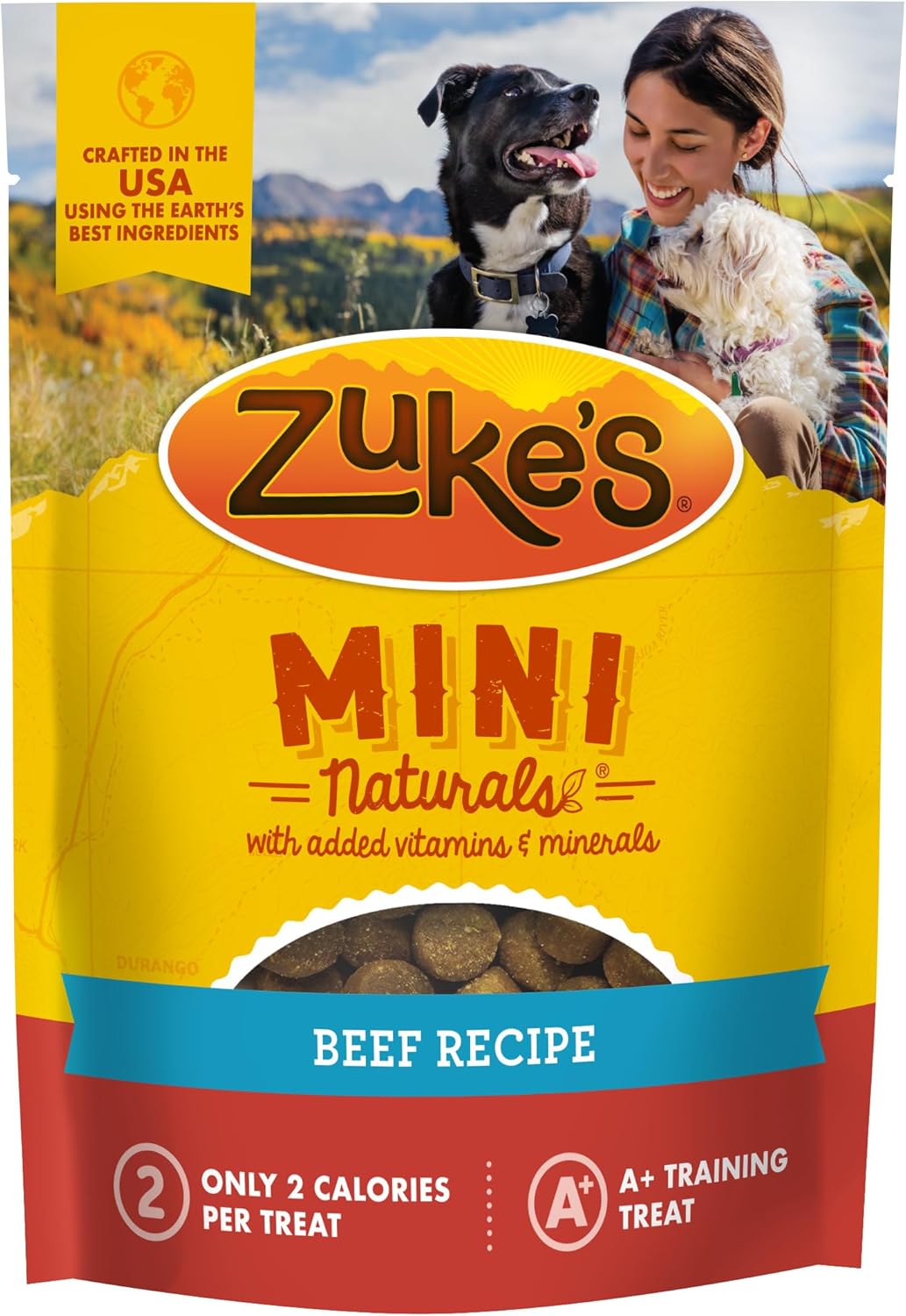
| Flavor | Beef |
|---|---|
| Unit Count | 6 Ounce |
| Item Form | Treats |
| Target Species | Dog |
Zuke's Mini Naturals Beef are bite-sized, soft training treats made with real beef as the first ingredient and a few simple additions like cherries and oats. They are designed for frequent rewards during sessions or outings: each treat has about 2 calories, a chewy texture that dogs find easy to eat quickly, and a resealable pouch for on-the-go use. The formula avoids corn, wheat, and soy and lists added vitamins and minerals, which supports using many small rewards without heavily increasing daily calories. Practical strengths are the palatable beef-forward flavor, small portion size for repetitive training, and the convenient pouch. Limitations include a simple ingredient list that contains glycerin and cane sugar, so owners aiming for ultra-low-sugar or single-ingredient options may prefer alternatives, and the 6 oz pouch is modest in volume if you train frequently and need bulk. For routine clicker work, leash training, or high-repetition reward drills these treats deliver tasty, low-calorie reinforcement in a portable package.
Best for: Owners who need many low-calorie, tasty rewards for frequent training sessions and value portability and straightforward ingredients.
Less Ideal for: People seeking single-ingredient, no-sugar treats or bulk packaging for extremely high-volume training should consider other options.
- Real beef listed as the first ingredient for strong palatability
- About 2 calories per treat, suitable for high-frequency training
- Soft, chewy texture dogs can eat quickly during sessions
- Resealable 6 oz pouch keeps treats fresh and is easy to carry
- Contains cane sugar and glycerin, so not a single-ingredient or no-sugar option
- 6 oz pouch may be small for owners who train very frequently or need bulk supplies
Verdict: The best training treat is small, low-mess, and highly motivating so owners can give frequent rewards during obedience sessions without overfeeding.
Buddy Biscuits Softies Beef 5 oz
Best Grain-Free Treat

| Flavor | Beef |
|---|---|
| Unit Count | 5 Ounce |
| Item Form | Chewy |
| Age Range Description | All Life Stages |
| Allergen Information | Beef, Soy Free, Sulphites Free |
These Buddy Biscuits Softies are bite-sized, soft-and-chewy beef treats baked without grain ingredients, packaged as a 5 oz pouch suited to casual rewards and training sessions. They are made from recognizable ingredients like beef, pea flour, chickpea and potato with vegetable glycerin and flaxseed to keep the texture soft, which makes them easy for small-jawed breeds such as Dachshunds to chew. The pouch size and low calorie focus in the brand lineup make portioning simple for frequent reinforcement during short training intervals. Because they are oven-baked and free from corn, soy, artificial flavors, colors and preservatives, they feel closer to a simple home-baked snack rather than a highly processed crunchy biscuit. Limitations are the small pouch size if you plan to use them long-term or for multi-dog households and the recipe does include potato and pea flour which some owners avoid in strict exclusion diets.
Best for: Owners of Dachshunds who want a soft, grain-free reward that is easy to portion for training and suitable for small mouths and older dogs.
Less Ideal for: People seeking larger bulk bags for frequent dispensing or those following very restrictive ingredient exclusion diets should consider other options.
- Grain-free recipe suitable for dogs with grain sensitivities
- Soft, chewy texture that is easy for small or senior dogs to chew
- Made from simple, recognizable ingredients and oven-baked
- Bite-sized pieces and a 5 oz pouch that are convenient for training rewards
- Small pouch may not be economical for heavy treat users or multi-dog homes
- Contains pea flour and potato which some elimination diets restrict
Verdict: The best grain-free treat is for pet owners seeking snacks that avoid grains while still offering balanced flavor, texture, and appropriate portion sizes for Dachshunds.
Choosing the Right Dog Treat Dachshund: Key Factors to Consider
Size and Portion Control
Treat size directly affects safety and training usefulness. For dachshunds you want treats that can be broken into small pieces or are already bite-sized so you can reward rapidly without overfeeding. Smaller pieces also reduce the risk of choking given the breed's narrow jaw and long snout.
Portion control ties into daily calorie management. Because dachshunds are prone to weight gain, low-calorie single-serve treats or easily divisible snacks help keep total daily intake in check while allowing frequent reinforcement during training.
Texture and Chewability
The right texture keeps a dachshund interested without creating dental problems. Soft, chewy treats are easier for small mouths and older dogs with worn teeth, while slightly firmer treats can provide mild dental abrasion. Avoid extremely hard chews that can damage teeth or brittle biscuits that break into sharp pieces.
Consider how quickly the dog eats the treat. Fast-consuming treats work well for rapid training rewards, whereas longer-lasting chews are better for enrichment sessions but must be safe for smaller teeth and jaws.
Ingredient Quality and Digestibility
High-quality ingredients reduce the chance of stomach upset and food sensitivities. Look for identifiable protein sources listed near the top of the ingredient panel and minimal artificial additives. Single-protein or limited-ingredient formulas can be helpful for dogs with sensitivities.
Digestibility also matters for smaller dogs because they may react poorly to heavy fillers or novel proteins. Treats formulated with whole-food ingredients and balanced macronutrients are easier to incorporate into a controlled feeding plan.
Caloric Density and Training Suitability
Treat calories add up quickly during training. Low-calorie treats or options that can be divided into many small pieces let you reward frequently without exceeding daily calorie needs. Consider treats specifically marketed for training or those that specify calories per piece so you can track intake.
For intensive training sessions, moist or high-value morsels may be more effective, but you should offset the extra calories at meal times. Treats that double as part of a meal replacement should be used sparingly and with portion adjustments.
Palatability and Variety
Dachshunds can be picky, so palatability matters. Having a mix of flavors and textures helps maintain interest over time and lets you reserve high-value flavors for challenging training tasks. Rotate treats occasionally to prevent flavor fatigue while ensuring each option meets safety and ingredient standards.
Variety also helps when addressing life-stage needs like teething puppies or older dogs with dental changes, allowing owners to match treat type to current needs without sacrificing acceptability.
Safety, Storage, and Packaging
Packaging that keeps treats fresh and portionable reduces waste and contamination risk. Resealable bags or small, single-serve packs make it easier to control portions and maintain crispness or moisture level. Clear labeling on allergens and batch codes improves traceability.
Safety also includes avoiding treats with small parts that can be swallowed whole and checking for choking hazards in texture. Consider how a treat will hold up in different environments, such as outdoor training sessions or travel, where crumbling or melting could be an issue.
What Treat Size Works Best for a Dachshund During Training?
Choose treats that are easy to break into pea- to dime-size pieces for quick rewards. Small, fast-chew pieces keep the dog focused and allow you to deliver many repetitions without long gaps between rewards.
If you use slightly larger treats for enrichment, break them into smaller portions when training. This preserves calorie budget while keeping reinforcement immediate, which is critical for effective learning.
- Aim for treats you can divide into at least four to six pieces.
- Use higher-value, slightly larger morsels sparingly for particularly difficult commands.
How to Balance Treat Calories with Daily Feeding
Track the calories in treats and subtract those from your dog's regular meal allowance when necessary. For dachshunds, even small extras add up quickly, so using low-calorie options for frequent rewards is a smart strategy.
When planning intensive training days, reduce meal portions slightly so the total daily energy intake stays consistent. Use training treats that list calories per piece to make this easy.
- Prefer treats with clear calorie labeling for easier tracking.
- Reserve high-calorie treats for problem-solving sessions rather than routine reinforcement.
Are Natural or Limited-ingredient Treats Better for Sensitive Dachshunds?
Dogs with food sensitivities often do better on limited-ingredient or single-protein treats. These reduce exposure to common triggers like certain grains, artificial colors, or complex additives.
Switching to a simpler formula can clarify whether reactions are diet-related. Introduce new treats gradually and monitor stool quality, energy, and skin condition over a week to gauge tolerance.
- Start new treats in small amounts and watch for digestive changes.
- Choose recipes that list the primary protein first and avoid vague ingredient names.
What Treat Textures Help with Dental Care Without Risking Damage?
Moderately firm treats can provide mild cleaning action while remaining safe for smaller teeth. Avoid very hard bones or dense chews that require excessive pressure to bite through, since small jaws exert less force and risk dental fracture.
Soft chews are gentler for senior dachshunds or those with missing teeth, while dehydrated meat strips provide concentrated flavor but should be monitored for sharp edges.
- Use softer options for older dogs and firmer, but not brittle, treats for healthy adult teeth.
- Inspect chews periodically and remove pieces that splinter or become too small.
How to Choose Treats That Work for Travel and On-the-go Training
For outdoor sessions or travel, pick compact, durable treats that do not crumble or melt easily. Resealable packaging or small treat pouches help keep portions handy and fresh.
Water-resistant or low-crumb options are useful in pockets or bags, and individually wrapped single-serve pieces simplify portioning during short outings.
- Pack a mix: easy-training bits plus one or two higher-value treats for distraction management.
- Avoid greasy or overly moist treats that can soil pockets or attract insects outdoors.
When Should You Switch Treat Types as Your Dachshund Ages?
Puppies need softer, easy-to-chew treats that are small and high in digestible protein to support growth. As the dog matures, you can introduce firmer textures for dental benefit while monitoring dental health.
Senior dachshunds often require softer, lower-calorie options with joint-support nutrients if needed. Make transitions gradually and observe willingness to accept new textures and flavors.
- Match treat texture to dental condition rather than age alone.
- Consider nutritional needs: growth, maintenance, or senior formulas when appropriate.
How We Chose the Best Dog Treat Dachshund
We used a consistent, breed-focused framework to shortlist the seven treats included here. Our evaluation prioritized portion size and texture because dachshunds have smaller mouths and are prone to choking when treats are too large or brittle. Ingredient quality was measured by the presence of whole proteins, limited fillers, and the absence of common irritants. We also considered caloric density per treat so owners can use them during training without upsetting daily calorie goals. Palatability testing criteria focused on willingness to accept during training scenarios and variety to accommodate picky eaters. Durability and dental impact were assessed to balance chew time with safety for small teeth. Shelf life and storage practicality mattered for owners who keep multiple treat types on hand. Exclusions included treats with unclear ingredient lists, those consistently larger than bite size for small dogs, and products with frequent safety recalls. The final list reflects items that meet multiple breed-specific needs rather than one-off strengths.
Our full evaluation process is outlined in our review methodology.
FAQ
How many treats can a dachshund have in a day?
It depends on the treat calorie content and your dog's daily energy needs. Often, frequent training treats should be low calorie or divided pieces; tally treat calories and adjust meal portions to keep total intake within recommended ranges.
Are soft treats better for small breeds like dachshunds?
Soft treats are often easier for small mouths and older dogs, but they may not provide any dental benefit. Choose soft options for training or senior dogs and combine them with appropriate dental care when needed.
What if my dachshund is picky and refuses most treats?
Try rotating textures and flavors and reserve the most desirable treats for challenging training tasks. Warming a moist treat slightly or offering small bits of cooked lean protein on rare occasions can help identify motivating flavors.
Can dried meat strips be given to dachshunds daily?
Dried meat strips are often high in protein and flavor but can be calorie-dense and sometimes hard. Use them sparingly or in small pieces, and ensure the strips have smooth edges and come from reliable ingredient sources.
How should I store treats to keep them fresh?
Keep treats in resealable containers or bags in a cool, dry place. For moist or perishable treats, follow label guidance and refrigerate if recommended. Proper storage preserves texture and reduces the risk of mold or spoilage.
Final Verdict
Prioritize treat size, texture, and ingredient clarity when choosing treats for dachshunds. Small, low-calorie pieces that break easily work best for training and reduce choking risk, while limited-ingredient formulas help with sensitivities. Balance palatability with calorie control, and adjust textures as your dog ages or as dental needs change. Focus on the tradeoffs between training effectiveness and daily calorie allowance when selecting treats so you can reward frequently without compromising health. With those priorities in mind, you can confidently pick treats that support behavior goals and long-term wellbeing.

