

If your dog has persistent bad breath, the right fresh-breath treat can make daily care easier and more effective. Treats designed for fresh breath combine mechanical cleaning, odor-neutralizing ingredients, and palatable flavors so you can reward good behavior while supporting oral hygiene. This guide highlights the top shortlisted options in the fresh-breath treat category and explains the factors we used to evaluate them. Below you will find quick buying criteria, practical use tips, and answers to common questions to help you pick a treat that fits your dog's size, chewing style, and health needs.
Top Picks at a Glance
| Best Overall Treat A balanced choice that freshens breath and pleases most dogs | Greenies Regular Dental Dog Treats 36 Count |  |
| Best Budget Treat An inexpensive option that still helps reduce doggy bad breath | Dingo Dental Sticks Chicken 20-Count |  |
| Best Dental Treat Specifically formulated to scrub teeth and reduce plaque buildup | Pedigree Dentastix Large 36ct |  |
| Best Long-Lasting Treat A durable chew that keeps dogs occupied while freshening breath | OraVet Dental Chews Large |  |
| Best Training Treat Small, highly palatable pieces ideal for frequent training rewards | Old Mother Hubbard Minty Fresh Mini Treats |  |
| Best Natural Treat Made from simple, whole-food ingredients with fewer additives | Merrick Fresh Kisses Dental Chews Medium |  |
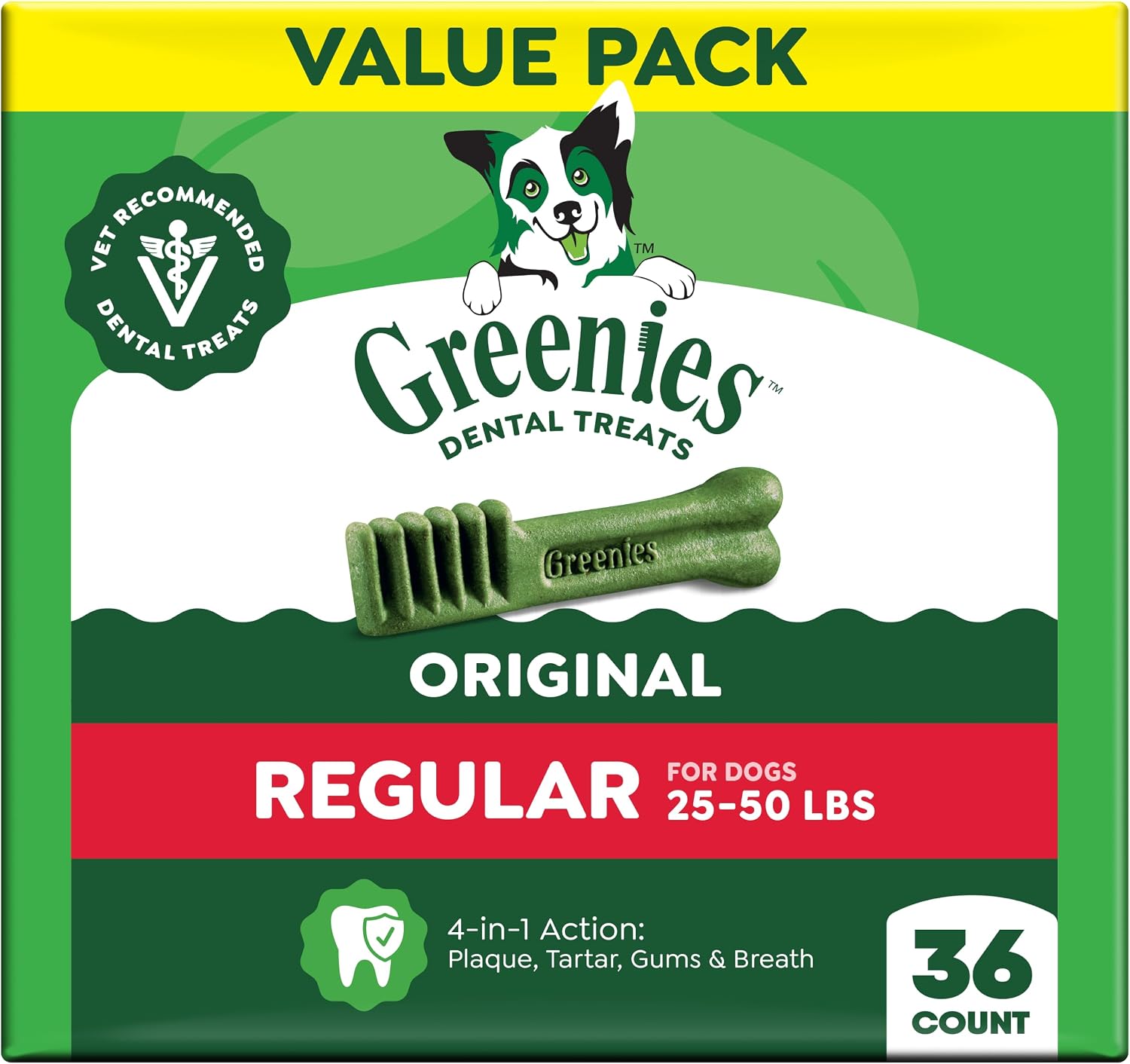
Greenies Regular Dental Dog Treats 36 Count
Best Overall Treat
| Flavor | Original |
|---|---|
| Item Form | Bone |
| Unit Count | 36 Count |
| Breed Recommendation | Medium Breeds |
| Allergen Information | Rawhide-Free |
Greenies Regular Dental Dog Treats are chewy dental chews made for dogs around 25–50 lb to support daily oral care. Designed with a toothbrush-like shape and flexible texture, the chews scrub down to the gumline while remaining bendable so they are less likely to snap; the manufacturer cites reductions in tartar and plaque when used daily. Owners typically give one chew per day as a treat or part of a dental routine, and the pouch packaging is convenient for storage. The treats are rawhide-free, made with common pantry ingredients plus added vitamins and minerals, and are veterinarian-recommended and VOHC-accepted as an option for plaque and tartar control. Expect good palatability — most dogs find the original chicken flavor tasty — but these are a daily edible product so supervision is recommended to ensure adequate chewing. They are sized for medium breeds, so buyers with very small or very large dogs should pick the appropriate size variant.
Best for: Dog owners who want a convenient, veterinarian-recommended daily chew that most medium-breed dogs will eat and that supports routine plaque and tartar control.
Less Ideal for: Owners of toy or giant breeds, or dogs with specific grain or ingredient sensitivities, should choose a size or formula made for those needs instead.
- Toothbrush-shaped chewy texture that helps clean to the gumline
- Vet-recommended formula accepted by VOHC for plaque and tartar control
- Rawhide-free and bendable texture reduces risk of snapping
- Formulated with added vitamins and minerals and common ingredients familiar to pet owners
- Single-daily-use and pouch packaging make them easy to include in a routine
- Sized specifically for medium dogs so this package is not ideal for very small or very large breeds
- Contains wheat and other common allergens that may not suit dogs with ingredient sensitivities
Verdict: The best overall treat for fresh breath that balances breath-fighting ingredients, palatability, texture, and ingredient quality to suit most dogs' daily use.
Dingo Dental Sticks Chicken 20-Count
Best Budget Treat

| Flavor | Chicken |
|---|---|
| Item Form | Stick |
| Unit Count | 6.3 Ounce |
| Number of Items | 1 |
| Target Species | Dog |
Dingo Dental Sticks are daily chew treats built to scrub plaque and help control bad breath through the abrasive action of chewing and included ingredients like baking soda and parsley oil. They are given as a once-a-day treat and feature a soft, long stick shape with a real chicken center that most dogs find palatable, so they work well as a regular reward without being hard to break down. In practice these treats brush teeth mechanically as the dog chews, which can reduce tartar buildup over time and leave breath fresher than standard soft treats. Ingredients include rawhide and common additives, so they are not a premium, single-protein formula and may not suit dogs with sensitive diets. Packaging is a simple bag of 20 sticks sized for all breeds, making them convenient for daily use but not intended as a veterinary dental replacement for professional cleaning. If you want an inexpensive, tasty daily chew that helps with breath between cleanings, these are a practical choice.
Best for: Buyers who prioritize an affordable, easy-to-feed daily chew that improves breath between dental cleanings and whose dogs accept rawhide-based treats.
Less Ideal for: Owners seeking limited-ingredient, single-protein treats or clinical dental therapy should look at veterinary formulas or specialty options instead.
- Designed for daily use to help reduce tartar and plaque through chewing action
- Real chicken center increases palatability for most dogs
- Contains breath-freshening ingredients like baking soda and parsley oil
- Soft long-stick shape suitable for easy chewing by many dogs
- Sold as a 20-count bag convenient for regular once-a-day feeding
- Contains rawhide and multiple additives so not ideal for dogs with dietary sensitivities
- Not a replacement for professional dental cleaning or targeted veterinary dental products
Verdict: The best budget treat for pet owners who want an affordable breath-freshening option that still delivers reasonable effectiveness and acceptable ingredient quality.
Pedigree Dentastix Large 36ct
Best Dental Treat

| Flavor | Mint |
|---|---|
| Unit Count | 36 Count |
| Breed Recommendation | Large Breeds |
| Special Ingredients | Green Tea Extract |
| Animal Food Diet Type | Limited Ingredient |
Pedigree Dentastix Large are daily dental chews designed for adult large-breed dogs (40+ lb) that combine a chewy texture and an X-shaped profile to mechanically scrape plaque while the dog chews. Typically given as one treat per day, these sticks aim to reduce tartar buildup, freshen breath with a minty note, and support routine at-home dental care without added sugar. The package includes 36 chews in a resealable bag and the formula contains green tea extract and natural peppermint flavor for breath benefits. In real-world use Dentastix work well as an easy-to-administer reward during training or a nightly ritual after meals, and their size and texture suit larger jaws so they last long enough to have a cleaning action. Limitations are that they are sized for large dogs only and are not appropriate for puppies or smaller dogs, and ingredients include wheat and artificial colors which may be a concern for pets with sensitivities. For owners wanting a convenient chew that doubles as a breath freshener, these are a practical, vet-accepted option for daily use.
Best for: Pet owners who want a tasty, easy daily chew that both rewards a large dog and contributes to fresher breath and tartar control as part of a home dental routine.
Less Ideal for: Owners of small-breed dogs, puppies, or pets with grain or colorant sensitivities should choose a size-specific or ingredient-limited alternative.
- Designed X-shape and chewy texture to scrape plaque while chewing
- VOHC accepted for tartar control
- Minty fresh flavor helps freshen breath
- No added sugar in the formulation
- Resealable value pack with 36 chews suitable for daily use
- Formulated for large dogs only, not suitable for smaller breeds or puppies
- Contains wheat and artificial colors which can bother sensitive dogs
Verdict: The best dental treat for owners prioritizing oral care, offering textures and ingredients designed to mechanically clean teeth and help reduce plaque and tartar.
OraVet Dental Chews Large
Best Long-Lasting Treat

| Flavor | Poultry |
|---|---|
| Item Form | Chew |
| Special Ingredients | Delmopinol |
| Unit Count | 30 Count |
OraVet Dental Chews are designed as a daily dental maintenance chew for large dogs over 50 pounds. Each chew pairs a chewable texture that mechanically scrubs teeth with delmopinol, an ingredient that coats tooth surfaces to help prevent plaque from forming. In practice you give one chew per day and monitor consumption until the chew is finished; the bag contains 30 chews for a month of use. The formula is veterinarian-backed and clinically tested to reduce plaque and tartar, and the poultry flavor plus dissolvable texture encourages regular use. Because these are chews rather than a brush or rinse, they work best as part of a home routine alongside periodic professional cleanings. Ingredients include pork protein, wheat, and soy, so they are not suitable for dogs with those specific dietary restrictions. For owners prioritizing a premium, clinically supported daily option, OraVet offers a convenient, month-long supply in a size matched to large breeds.
Best for: Dog owners who want a premium, clinically supported daily chew to help reduce plaque and tartar and are willing to pay for veterinary-formulated oral care for large breeds.
Less Ideal for: Owners of dogs with pork, wheat, or soy sensitivities or those seeking a brushing-first dental plan should consider alternative products or consult a veterinarian.
- Contains 0.7% delmopinol to create a protective barrier against plaque formation
- Clinically shown to reduce plaque and tartar when used daily
- Monthly 30-count bag provides an easy daily regimen
- Texture and flavor encourage chewing for effective mechanical cleaning
- Formulated specifically for large breeds for appropriate chew size
- Contains common allergens like wheat, soy, and pork protein
- Not a substitute for professional dental cleanings and exams
Verdict: The best long-lasting treat for dogs that need extended chewing time, combining durability with breath-freshening benefits to occupy and clean as they chew.
Old Mother Hubbard Minty Fresh Mini Treats
Best Training Treat

| Flavor | Oatmeal & Chicken Fresh Breath |
|---|---|
| Unit Count | 20 Ounce |
| Item Form | Treat |
| Special Ingredients | spearmint, parsley, fennel |
| Age Range Description | Adult |
These Old Mother Hubbard Minty Fresh mini biscuits are small, oven-baked crunchy treats meant for intermittent feeding and training rewards. Each bite-sized biscuit combines spearmint, parsley, and fennel to help freshen breath while the crunchy texture can assist with surface cleaning of teeth during chewing. They are formulated from recognizable ingredients like oats, whole wheat flour, chicken and fruits and are free of added artificial preservatives. In practical use the mini size makes them easy to break up or hand out rapidly during training sessions without creating large calorie hits, and the bagged format is convenient for keeping on hand. Limitations include that they are crunchy rather than soft, so very young puppies or dogs with dental issues may prefer a softer option, and dogs with specific grain sensitivities will need a grain-free alternative. These treats are best used sparingly as rewards or breath-freshening snacks rather than as a meal replacement.
Best for: Owners who give many small rewards during training and want a low-fuss, breath-freshening bite-size treat that is easy to portion and hand out quickly.
Less Ideal for: People whose dogs are on grain-free diets, have compromised teeth, or require very soft treats for medical reasons should choose alternatives.
- Mini, bite-sized crunchy biscuits suited for frequent rewards
- Contains spearmint, parsley and fennel to help freshen breath
- Oven-baked formula with recognizable ingredients and no added artificial preservatives
- Crunchy texture provides light dental cleaning while chewing
- Not suitable for dogs needing soft treats or those with dental problems
- Contains grains so not appropriate for dogs requiring grain-free diets
Verdict: The best training treat for owners who reward frequently, offering bite-sized, tasty pieces that freshen breath without overfeeding during sessions.
Merrick Fresh Kisses Dental Chews Medium
Best Natural Treat

| Flavor | Coconut Oil |
|---|---|
| Age Range Description | Adult |
| Item Form | Semi Moist |
| Unit Count | 22 Count |
Merrick Fresh Kisses are grain-free dental chews sized for medium dogs that combine a dual-texture "double-brush" design with coconut and botanical oils to help clean teeth and freshen breath as the dog chews. They are intended to be given as a daily treat and are marketed as easily digestible with a short ingredient list that avoids common fillers like corn, wheat and soy. In practice these chews are soft enough for regular chewing while still providing ridges that reach tooth surfaces and help reduce plaque buildup, and the coconut and peppermint oils add a noticeable breath-freshening effect. The product is made in the U.S. and comes in a 22-count box sized for dogs around 25 to 50 pounds. Limitations are that the treats are formulated for adult medium dogs and the manufacturer recommends only one chew per day, so they are not a substitute for brushing or professional dental care and may not be sized or suitable for puppies or very small or very large breeds.
Best for: Buyers who prioritize natural, minimally processed ingredients and want a daily, easy-to-feed chew that helps freshen breath and support oral care without complex additives.
Less Ideal for: Owners looking for an intensive dental solution, multi-dog daily dosing, or treats for puppies and very small or very large breeds should consider alternatives.
- Grain-free recipe with limited, recognizable ingredients.
- Double-brush textured design helps reach tooth surfaces while chewing.
- Infused with coconut and botanical oils for breath freshening.
- Made in USA facilities and sized specifically for medium breed dogs.
- Recommended serving is only one chew per day so impact is incremental.
- Formulated specifically for adult medium dogs and not recommended for puppies under 1 year.
Verdict: The best natural treat for owners seeking minimal processing and recognizable ingredients while still supporting fresher breath with gentle, effective components.
Choosing the Right Dog Treat Fresh Breath: Key Factors to Consider
Texture and Chew Mechanics
The treat's texture determines how much mechanical cleaning it provides. A firm, ridged, or fibrous surface can help scrape plaque from tooth surfaces as a dog chews, which reduces the bacterial build-up that causes bad breath. If the treat is too soft the dog may swallow it whole and miss the oral-cleaning benefit, while an overly hard treat can risk tooth damage in aggressive chewers.
Consider your dog's chewing style and dental condition when choosing texture. Puppies and dogs with missing teeth need gentler options, while adult dogs that are vigorous chewers will benefit from more substantial, abrasion-capable treats. Also note that chew time matters: treats designed for longer engagement are generally more effective at giving mechanical cleaning time to work.
Active Ingredients for Odor Control
Some treats include ingredients that directly neutralize or reduce the compounds that cause halitosis, such as enzymes, zinc compounds, chlorophyll derivatives, or natural odor absorbers. These act chemically or biologically rather than just masking smells with strong flavors, and they can complement the mechanical action of chewing.
When evaluating active ingredients, look for clear labeling and avoid vague proprietary blends. Check for ingredients with a known safety profile for dogs and consider whether any specific component could trigger sensitivities in your pet. Active ingredients are most effective when paired with appropriate chew mechanics and regular use.
Size, Portioning, and Caloric Impact
Treats contribute to daily caloric intake and can affect weight management if given frequently. Portion-controlled treats or ones that break into appropriate sizes for small, medium, and large dogs make it easier to reward without overfeeding. Consider treats that provide a clear serving size guide and that fit your dog's body weight and activity level.
For multi-dog households or dogs on calorie-restricted diets, smaller or lower-calorie fresh-breath options allow more frequent rewarding while controlling total daily calories. Also think about whether a treat can be split safely to extend use and customize portion size.
Safety and Ingredient Transparency
Knowing what is in the treat and how it was made matters for long-term use. Treats should list ingredients clearly and avoid high levels of sugars, artificial colors, or controversial preservatives. Food safety considerations include sourcing practices and whether the product follows standard manufacturing controls.
Check for common allergens if your dog has known sensitivities. Also consider whether the treat includes any ingredients that could interact with medications or contribute to gastrointestinal upset. Transparent labeling and simple ingredient lists reduce the risk of unintended reactions.
Appropriate Formulations for Dental Conditions
Dogs with existing dental disease may need different treat choices than healthy dogs. Soft or puréed odor-fighting formulations can be suitable for dogs with painful mouths, while dogs with heavy tartar may need more abrasive textures combined with veterinarian care. Treats should not be treated as a substitute for professional dental treatment when there is active disease.
If your dog has chronic dental issues, choose treats that are explicitly safe for compromised mouths and consult with a veterinarian about incorporating them into a broader oral care plan. Some formulations are designed specifically for maintenance after professional cleaning, offering lower abrasion with active odor control.
Palatability and Acceptance
Even the most technically effective treat is useless if the dog will not eat it. Palatability balances flavor, aroma, and texture. Look for treats with natural flavor sources and a history of acceptance across a range of dogs. If your dog is picky, consider trying a small package size first.
Palatable treats are especially important when using them to reinforce training or reward calm behavior during dental routines. Some formulations achieve palatability without heavy use of sugars or artificial flavorings, which helps maintain both breath control and overall diet quality.
How Quickly Can Treats Improve My Dog's Breath?
Treats that combine mechanical cleaning with active odor-fighting ingredients can reduce noticeable breath odors within days of regular use, but the timeline depends on the underlying cause. If bad breath is due to food or surface bacteria, consistent daily use often shows improvement within one to two weeks.
If halitosis stems from deeper dental disease, metabolic issues, or gastrointestinal causes, treats may have limited effect. Use treats as part of a maintenance routine and consult a veterinarian if breath does not improve or if there are other signs like swollen gums, drooling, or decreased appetite.
- Daily use typically offers better results than intermittent use.
- Longer chew times generally improve mechanical cleaning effects.
- Treats are a supplement to toothbrushing and professional care, not a replacement.
Which Treat Textures Work Best for Small Versus Large Dogs?
Small dogs often need thinner, more flexible treats that they can chew safely without swallowing whole. Look for treats that present abrasion on a smaller scale and that break into appropriately sized pieces. For toy and small breeds, softer chews with active ingredients can be a good compromise between cleaning and safety.
Large dogs will usually benefit from thicker, denser textures that sustain chewing and offer greater plaque abrasion. Avoid treats that are so hard they risk cracking teeth; instead choose durable yet slightly yielding formulations that provide sustained engagement without excessive force.
- Match treat size to jaw breadth and chewing power.
- Consider portioning options for multi-size households.
- Monitor chewing to ensure the dog is breaking pieces down safely.
Can Fresh-breath Treats Replace Toothbrushing?
No. Treats can support dental hygiene by reducing plaque and neutralizing odors, but they do not replace the mechanical effectiveness of regular toothbrushing. Brushing reaches gumlines and interdental spaces more thoroughly than most treats can.
Use treats as a complementary tool to make daily oral care easier, especially for dogs that resist brushing. Pairing treats with an occasional brushing routine and regular veterinary dental checks gives the best outcomes for breath and overall oral health.
- Aim for a combination of brushing, professional care, and daily supportive treats.
- Treats can help maintain results between brushings or cleanings.
- If brushing is impossible, opt for treats with proven mechanical and active properties.
How to Introduce a New Fresh-breath Treat Safely
Start by offering the treat in a small amount and watching for signs of gastrointestinal upset or allergic reaction. Gradually increase frequency while monitoring stool quality and appetite. If your dog has a sensitive stomach, choose treats labeled for sensitive digestion or hypoallergenic ingredients.
Observe chewing behavior the first several times to ensure pieces are being chewed rather than swallowed whole. For aggressive chewers, supervise the initial sessions to prevent tooth stress. If any adverse reaction appears, discontinue the treat and consult a veterinarian.
- Begin with one treat per day and assess tolerance.
- Check ingredient lists for known allergens before introducing.
- Supervise first uses for dogs that are heavy chewers or are new to textured chews.
Using Treats as Part of a Training or Reward Plan
Incorporate fresh-breath treats into positive-reinforcement routines to reward calm behavior during grooming or dental care. Because these treats serve an oral health purpose, they are ideal for reinforcing short training sessions that end with a beneficial outcome for the dog's mouth.
Balance reward frequency with calorie considerations and choose portionable treats if you need to give multiple rewards during a session. Small, palatable fresh-breath treats work well for training and for associating dental care with positive experiences.
- Use smaller sizes to avoid excess calories during frequent rewards.
- Give the treat after obtaining calm behavior to reinforce cooperation with oral care.
- Rotate reward types to maintain novelty but keep a fresh-breath option in the routine.
How We Chose the Best Dog Treat Fresh Breath
We focused on evidence-backed traits that matter most for treats designed to improve canine breath and support dental health. Our selection criteria prioritized chewing texture that reduces plaque and tartar buildup, ingredients that neutralize odor without harsh additives, and formulations suitable for different dog sizes and chewing strengths. We also weighed palatability, since dogs must accept the treat for it to be useful, and nutrient balance to avoid creating dietary imbalances when given regularly. For quality control we looked for treats manufactured under transparent processes and with clear ingredient lists, as well as products that limit questionable preservatives, artificial colors, and excessive sugars. We excluded items that rely solely on flavor masking without any mechanical or active odor-fighting properties, and we filtered out treats unsuitable for common dietary restrictions such as grain intolerance when alternatives were available. Our final shortlist reflects a balance of effectiveness, safety, and real-world usability, with attention to portion size, appropriate chew times, and dependable ingredient sourcing.
Our full evaluation process is outlined in our review methodology.
FAQ
Are fresh-breath treats safe for daily feeding?
Often yes, if the treat is formulated for daily use and within your dog's caloric budget. Check serving size recommendations and ingredient lists to ensure they fit your dog's dietary needs. For dogs with special health conditions, consult a veterinarian before daily use.
Will treats help dogs with very strong, persistent bad breath?
They can help reduce odor in many cases, but persistent strong bad breath may indicate an underlying issue such as dental disease or metabolic problems. If breath does not improve after consistent use, have your dog examined by a veterinarian.
Can puppies use fresh-breath treats?
Puppies can use some fresh-breath treats, but choose formulations suited to their smaller mouths and developing teeth. Avoid overly hard or large treats and follow age and weight guidelines on packaging. When in doubt, consult your veterinarian for age-appropriate recommendations.
Do natural ingredients work better than synthetic additives for odor control?
It depends. Some natural ingredients like enzymes and certain plant extracts have evidence for odor reduction, while some synthetic compounds are also effective and well-studied. Prioritize safety and transparent labeling over the natural versus synthetic distinction alone.
How should I store fresh-breath treats to keep them effective?
Store treats in a cool, dry place in their original sealed packaging or an airtight container to preserve texture and active ingredients. Avoid prolonged exposure to heat or humidity, which can degrade the product and reduce efficacy.
Final Verdict
Choose treats that balance mechanical cleaning, proven odor-fighting ingredients, and suitability for your dog's size and chewing style. Prioritize safety and transparent ingredient lists, and factor portion size into daily caloric intake. Treats work best as part of a broader oral care plan that includes occasional brushing and professional dental checks. Focus on consistent, appropriate use rather than expecting instant fixes. With the right treat selection and routine, you can reduce breath odors while keeping rewards enjoyable and safe for your dog.

