

If your dog struggles with digestive upset, the right treats can make training and rewards low-risk and stress-free. Sensitive-stomach treats minimize common triggers like rich fats, artificial additives, and complex proteins while still offering palatable texture and aroma. This guide covers seven carefully shortlisted options that prioritize simple ingredients, easy digestibility, and clear labeling. We evaluated candidates for ingredient transparency, digestive tolerance, and practical use so you can pick treats that reduce flare-ups while keeping positive routines intact. Read on for criteria to weigh and practical tips for introducing new treats safely.
Top Picks at a Glance
| Best Overall Treat A dependable all‑around option that soothes sensitive stomachs effectively | Waggin' Train Duck Jerky 12 oz |  |
| Best Budget Treat A low‑cost option formulated to be gentle on digestion without breaking the bank | Blue Buffalo Health Bars Pumpkin & Cinnamon 16 oz |  |
| Best Limited‑Ingredient Treat Short ingredient list to minimize triggers and simplify digestion for pets | Waggin' Train Chicken Jerky Tenders 11 oz |  |
| Best Low‑Fat Treat Lower‑fat recipes to reduce digestive stress and avoid greasy upset | Beefeaters Duck Jerky Strips 38 oz |  |
| Best Soft‑Texture Treat Gentle, easy‑to‑chew treats that break down quickly for sensitive tummies | Cesar Softies Medley Trio 16 oz |  |
| Best Probiotic‑Enriched Treat Treats with added probiotics to support healthy gut bacteria and digestion | Zesty Paws Probiotics Pumpkin 90 Ct |  |
| Best Premium Treat Higher‑end formula with superior ingredients and quality control standards | Stella & Chewy's Beef Digestive Boost 4.25 oz |  |
Waggin' Train Duck Jerky 12 oz
Best Overall Treat

| Flavor | Duck |
|---|---|
| Unit Count | 12 Ounce |
| Item Form | Stick |
| Special Ingredients | Prebiotic |
Waggin' Train Duck Jerky is a limited-ingredient, high-protein dog treat made from 100% whole muscle duck breast with vegetable glycerin and dried chicory root (a prebiotic). It is used as an occasional snack or training reward and can be broken into smaller pieces for small dogs. The three-ingredient formula and absence of grains, corn, artificial flavors, and preservatives make it easy to digest for dogs with sensitive stomachs, while the dehydrated, chewy texture provides satisfying chewing without fillers. Practical benefits include strong palatability from real meat, a novel protein option for dogs with common food sensitivities, and prebiotic fiber to support gut health. Important limitations are that jerky treats are calorie-dense so they should be given sparingly and are not a replacement for balanced meals, and very small dogs or dogs that gulp may need pieces softened or closely supervised to avoid choking.
Best for: Buyers seeking a highly palatable, limited-ingredient treat for dogs with food sensitivities who prioritize digestibility and a novel protein option.
Less Ideal for: Owners who need calorie-free or daily-use dental chews or who prefer soft training treats for rapid repeated rewards should consider alternatives.
- Real whole-muscle duck is the first ingredient for true meat flavor and protein.
- Only three ingredients, which reduces exposure to common dietary triggers.
- Includes dried chicory root as a prebiotic to support digestive health.
- Grain-free and corn-free formulation suitable for limited-ingredient diets.
- Pouch format and breakable sticks make portioning and training use convenient.
- Calorie-dense jerky that should be limited to under 10% of daily calories.
- Chewy, firm texture may require supervision or smaller pieces for very small or gulping dogs.
Verdict: The best overall treat for sensitive stomachs that balances gentle ingredients, digestibility, palatability, and consistent digestive tolerance for most dogs.
Blue Buffalo Health Bars Pumpkin & Cinnamon 16 oz
Best Budget Treat

| Flavor | Pumpkin & Cinnamon |
|---|---|
| Unit Count | 16 Ounce |
| Item Form | Wafer |
| Special Ingredients | Natural |
| Allergen Information | Corn-Free, Gluten Free, Soy Free |
Blue Buffalo Health Bars Pumpkin & Cinnamon are crunchy, oven-baked dog biscuits designed for intermittent feeding and training rewards. They pair whole grains and pumpkin with flaxseed for omega-3s and include added antioxidants and vitamins intended to support overall health and coat condition. The treats break easily into smaller pieces for use in training sessions and have a pronounced pumpkin and cinnamon aroma dogs tend to find appealing. Ingredient-wise they avoid corn, wheat, and soy and contain no poultry by-product meals or artificial colors, which helps reduce exposure to common irritants for dogs with sensitive stomachs. On the downside these are grain-containing treats (barley, oatmeal, rye) so they are not suitable for dogs that require grain-free diets, and some dogs with specific sensitivities may still react to individual ingredients like canola oil or molasses. The bagged format is convenient but requires a sealed container for long-term freshness. For owners seeking an affordable, easy-to-break, and relatively simple ingredient treat for sensitive stomachs, these deliver practical value in everyday training and snacking.
Best for: Owners seeking an affordable everyday or training treat that limits common irritants and uses recognizable, digestible ingredients for dogs with mild stomach sensitivity.
Less Ideal for: Dogs on a strict grain-free or novel-protein elimination diet or pets with known allergies to any listed ingredients should avoid these and seek a specialized formula.
- No corn, wheat, or soy and no poultry by-product meals
- Oven-baked crunchy texture that breaks easily for training
- Includes pumpkin and flaxseed for added fiber and omega-3 support
- Fortified with antioxidants and vitamins to support overall health
- Contains grains (barley, oatmeal, rye) so not grain-free
- Bag requires resealing or transfer to an airtight container for best freshness
Verdict: The best budget treat for owners seeking an affordable, stomach‑friendly option that still uses minimal, digestible ingredients and avoids common irritants.
Waggin' Train Chicken Jerky Tenders 11 oz
Best Limited‑Ingredient Treat

| Flavor | Chicken |
|---|---|
| Unit Count | 11 Ounce |
| Item Form | Stick |
| Animal Food Diet Type | Limited Ingredient |
| Target Species | Dog |
Waggin' Train Chicken Jerky Tenders are single-ingredient-forward treats designed for simple feeding and training. The bag contains thin chicken tenders made with 100% real chicken breast as the first ingredient and vegetable glycerin as the only other listed component, so they function as high-protein rewards without grains, artificial colors, or flavors. In practice these work well as small training rewards or occasional snacks for adult dogs that do not need added fillers or flavors; the tender sticks are easy to break into smaller pieces for repetition during sessions. The limited-ingredient approach reduces the number of potential irritants for dogs with sensitive stomachs, though owners should still follow the feeding guidance on the bag and introduce any new treat slowly. One limitation is the product origin and manufacturing details are not tailored to therapeutic diets, so dogs with severe food allergies or clinical intolerances should consult their veterinarian before switching. Packaging is a standard resealable pouch which keeps pieces together between uses but may not be fully airtight long term.
Best for: Buyers looking for a straightforward, limited-ingredient reward to minimize dietary triggers for adult dogs and to use as simple training treats.
Less Ideal for: Dogs with confirmed clinical food allergies, dogs on prescription elimination diets, or owners who require guaranteed local sourcing.
- Only two ingredients with real chicken breast first, minimizing exposure to unnecessary additives
- Grain and corn free which helps reduce common dietary triggers
- Tender form that is easy to break into smaller training-sized pieces
- No artificial colors, flavors, or preservatives listed
- Not formulated as a veterinary therapeutic diet for diagnosed food allergies
- Made in China which may concern buyers seeking local sourcing
Verdict: The best limited‑ingredient treat for dogs whose stomachs react to complex formulas, focusing on just a few easily digested components to reduce the risk of upset.
Beefeaters Duck Jerky Strips 38 oz
Best Low‑Fat Treat

| Flavor | Duck |
|---|---|
| Item Form | Stick |
| Unit Count | 38 Ounce |
| Age Range Description | All Life Stages |
Beefeaters Duck Jerky Strips are oven-baked treats made primarily from real duck and intended for training, rewards, or occasional snacks. The chewy strips break into smaller pieces easily, which makes them convenient for frequent reinforcement during sessions without overfeeding. Their ingredient list is short and focused—duck, soy protein isolate, glycerin, and salt—and the product is marketed as grain-free with no corn, wheat, soy, artificial colors, or flavors, which simplifies ingredient exposure for sensitive dogs. The low-fat, high-protein profile helps reduce fat load on the stomach while still offering a strong meaty flavor that many dogs find motivating. Practical limitations: soy protein isolate appears in the ingredient list, so these treats are not strictly single-ingredient duck and may not suit dogs with soy sensitivity, and the bag is large so leftover treats should be stored carefully to preserve freshness. For owners managing mild digestive sensitivity, these strips offer an easy-to-feed, lower-fat option with clear training utility.
Best for: Pet owners looking to reduce dietary fat during training or frequent rewarding while keeping treats flavorful and easy to portion for dogs with mild stomach sensitivity.
Less Ideal for: Owners whose dogs have a soy allergy or who need a single-ingredient novel protein should choose a pure-meat alternative instead.
- Made with real duck as primary ingredient for strong flavor
- Oven-baked chewy texture that breaks into training-sized pieces
- Low fat and high protein profile suitable for reducing stomach workload
- Free of added corn, wheat, artificial colors, and artificial flavors
- Large resealable bag provides plenty of treats for repeated training sessions
- Contains soy protein isolate which may trigger soy-sensitive dogs
- Large 38 oz bag can lose freshness if not stored properly
Verdict: The best low‑fat treat for dogs prone to nausea or loose stools, offering satisfying flavor with reduced fat to ease digestion and stomach workload.
Cesar Softies Medley Trio 16 oz
Best Soft‑Texture Treat
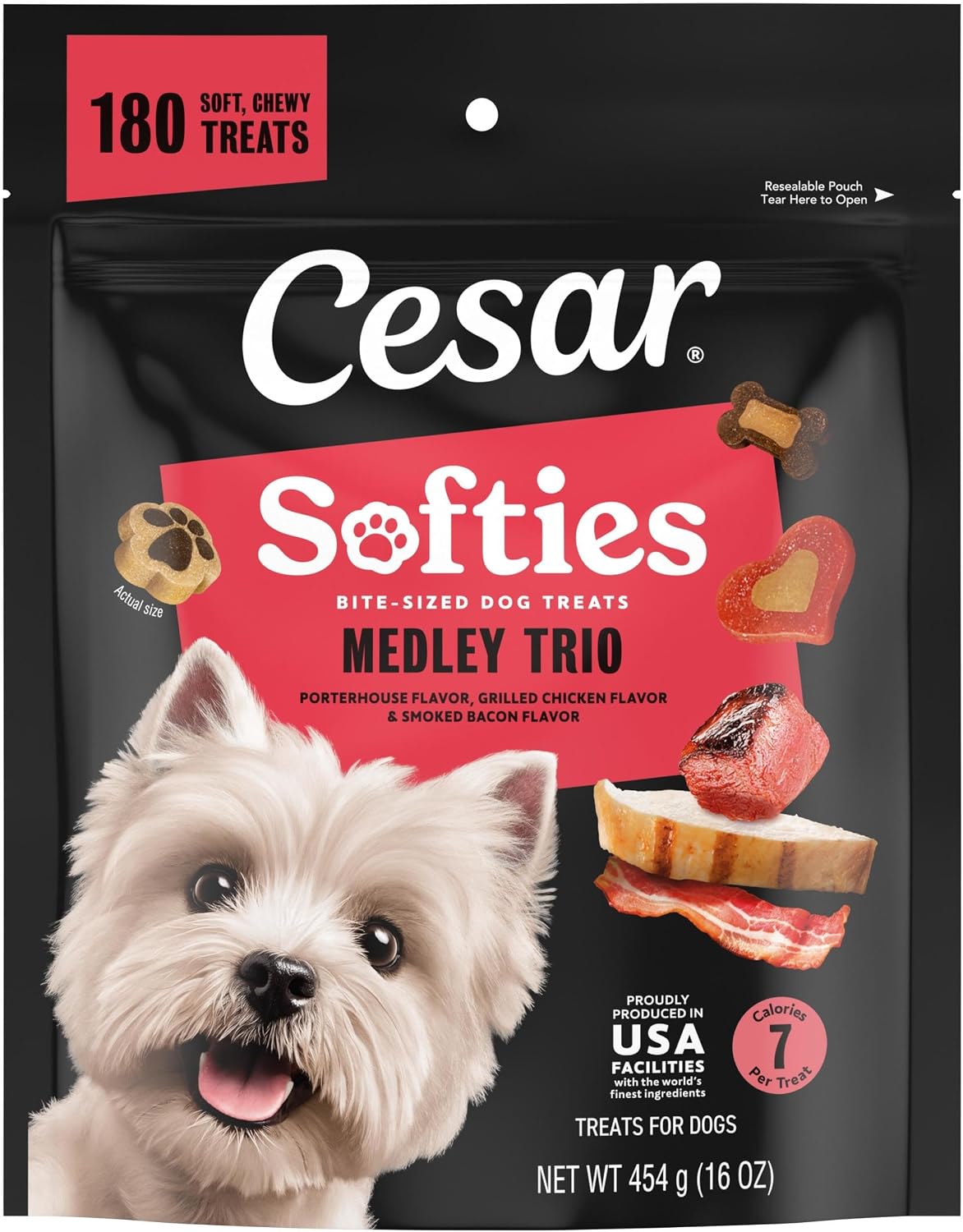
| Flavor | Trio: Porterhouse, Chicken, Bacon |
|---|---|
| Item Form | Chunk |
| Unit Count | 16 Ounce |
| Recommended Uses For Product | Training, Treating |
Cesar Softies Medley Trio delivers small, chewy rewards in Porterhouse, Grilled Chicken, and Smoked Bacon flavors that are aimed at reinforcing training and everyday good behavior. The treats are bite-sized and soft, so dogs consume them quickly during sessions without long chewing breaks, and at about seven calories each they are simple to portion into frequent rewards. The pouch format keeps treats accessible for on-the-go training and the playful heart, paw, and bone shapes are an added bonus for engagement. Ingredients list is straightforward for a snack and the product is made in U.S. facilities, but it does contain wheat, glycerin, sugars, animal fat preserved with BHA, and color additives, so it is not an elimination-diet option. For dogs with mild sensitivities who tolerate grains and common preservatives, the soft texture and low calorie count make these convenient training treats; for dogs with known allergies to the listed components, consult your veterinarian before introducing them.
Best for: Owners who need low‑calorie, easy‑to‑chew treats for frequent training rewards and whose dogs tolerate common grain and preservative ingredients.
Less Ideal for: Dogs on elimination diets or with known allergies to wheat, artificial colors, or specific preservatives should avoid these and choose vet‑recommended hypoallergenic treats instead.
- Very soft, chewy texture that is easy for dogs to eat quickly during training
- Low calorie per treat (about 7 calories) which supports frequent rewarding
- Bite-sized shapes and trio of savory flavors increase palatability for picky eaters
- Pouch packaging is convenient for travel and training sessions
- Contains wheat, sugar, glycerin, preservatives (BHA, potassium sorbate) and artificial color Red 40
- Not suitable as an elimination or hypoallergenic option for dogs with ingredient-specific sensitivities
Verdict: The best soft‑texture treat for dogs that need easily chewed, fast‑digesting bites that are less likely to irritate sensitive digestive systems.
Zesty Paws Probiotics Pumpkin 90 Ct
Best Probiotic‑Enriched Treat

| Flavor | Pumpkin – Probiotic |
|---|---|
| Item Form | Soft Chew |
| Active Ingredients | Prebiotics & Probiotics, glycerin, pumpkin |
| Unit Count | 90 Count |
Zesty Paws Probiotics are soft chew treats designed to make daily probiotic dosing simple and appealing for dogs. Each serving delivers a Gut First Blend of Bacillus coagulans, Bacillus subtilis and Saccharomyces boulardii along with FOS prebiotic fiber and pumpkin, so the product targets digestive regularity, gas reduction and immune support. The chews are given by hand or mixed with food and the label provides weight-based dosing that scales from small dogs to large dogs. Practical benefits include tasty pumpkin flavor that most dogs accept, a soft texture that hides easily for picky eaters, and a measured CFU count that supports short-term gut support during travel, diet changes or occasional upset. Limitations are that the formula contains shellfish allergen and glycerin-based soft chew ingredients that may not suit dogs with specific ingredient sensitivities, and the product is intended as supplemental support rather than a veterinarian treatment for chronic digestive disease.
Best for: Owners who want a treat-style probiotic that is easy to give by hand or with food and who prioritize palatability and simple daily dosing for occasional digestive support.
Less Ideal for: Pet owners looking for an elimination-ingredient formula for food-allergic dogs or those needing a therapeutic veterinary probiotic regimen should consider alternatives.
- Tasty pumpkin-flavored soft chews that most dogs will eat by hand
- Three-strain probiotic blend providing 6 billion CFU per two chews (as labeled)
- Includes FOS prebiotic fiber and pumpkin to support regular stools and gut flora
- Clear weight-based dosing makes daily administration straightforward
- Soft chew format doubles as a treat for easy, treat-style dosing
- Contains shellfish allergen and several inactive ingredients that may not suit sensitive dogs
- Not a veterinary treatment for chronic or severe GI conditions
Verdict: The best probiotic‑enriched treat for owners who want to actively support gut health and regularity in dogs with sensitive stomachs through added beneficial cultures.
Stella & Chewy's Beef Digestive Boost 4.25 oz
Best Premium Treat

| Flavor | Beef (Digestive Boost) |
|---|---|
| Item Form | Freeze Dried Raw |
| Life Stage | All Life Stages |
| Unit Count | 4.25 Ounce |
| Special Ingredients | Flaxseed |
This freeze-dried raw formula is designed as a digestive-support treat or topper and can also serve as a complete meal for small servings. It centers on grass-fed beef with added pumpkin, papaya, coconut flour, flaxseed and multiple probiotic strains to promote regularity, nutrient absorption and firmer stools. High-Pressure Processing preserves raw nutrients while reducing bacterial risk, and the product is grain-free with no artificial preservatives, colors, flavors, hormones or antibiotics. In practice you can break pieces into training rewards, sprinkle as a topper over kibble, or rehydrate for a fuller meal; feeding guidelines give clear portion suggestions by weight. Limitations include the small 4.25 ounce bag size for regular use and the premium ingredient set means this is a higher-cost option compared with standard treats. Dogs with very specific ingredient allergies should still check the full ingredient list before feeding.
Best for: Owners prioritizing digestive relief and high-quality sourcing who want a versatile, nutrient-dense treat or topper for dogs with sensitive stomachs.
Less Ideal for: Shoppers looking for bulk, low-cost training treats or those who need very large servings frequently should consider larger or cheaper alternatives.
- Formulated specifically for digestive support with pumpkin, papaya and multiple probiotic strains
- Freeze-dried raw preserves nutrients and offers flexible feeding as a topper, treat, or rehydrated meal
- Made with grass-fed beef and organic fruits and vegetables with no artificial preservatives or hormones
- Clear feeding directions for using as a meal or topper and safe rehydration guidance
- Small 4.25 oz bag may require frequent repurchase for regular use
- Premium sourcing and formulation make it a higher-cost treat compared with standard options
Verdict: The best premium treat for owners willing to invest in higher‑quality sourcing and formulation, offering carefully selected, highly digestible ingredients for demanding digestive issues.
Choosing the Right Dog Treat Sensitive Stomach: Key Factors to Consider
Ingredient Simplicity
A short, simple ingredient list reduces the number of potential triggers. Dogs with sensitive stomachs often react to additives, multiple protein sources, or complex blends. Look for treats that list a single named protein early in the ingredient statement and avoid products with vague terms like natural flavors or proprietary blends.
Keeping ingredients minimal also makes it easier to trace and test potential intolerances when you introduce a new treat. If a dog reacts, you can more confidently eliminate that ingredient from the diet. Simple formulas also tend to be easier for digestive enzymes to process, which can reduce stool changes and vomiting.
Digestibility
Digestibility affects how quickly and gently a treat moves through the gut. Highly processed treats with lots of fillers or heavy fats can slow digestion or irritate sensitive systems. Conversely, treats made from lean proteins and easily digested carbohydrates are less likely to cause gas or loose stools.
Consider treats described as easily digestible or formulated specifically for sensitive digestion. Texture plays a role too: soft treats often break down more quickly and are easier on the stomach than hard, dense biscuits, especially for small dogs or older animals with dental issues.
Protein Source and Novelty
Novel or single-protein treats can help if your dog has a known sensitivity to common proteins like beef or chicken. Choosing a single, uncommon protein reduces exposure to cross-reactive ingredients and simplifies elimination testing. At the same time, if your dog tolerates common proteins, familiar sources can be fine as long as they are processed gently and listed transparently.
Rotate cautiously: switching proteins frequently can itself cause digestive upset. When trying a new protein, introduce it in small amounts and watch for changes over several days.
Additives and Preservatives
Artificial colors, flavors, and certain preservatives are common culprits in digestive and skin sensitivities. Treats formulated for sensitive stomachs often avoid these additives and use minimal, recognizable preservatives such as vitamin E or other standard food-grade antioxidants.
Read labels for unnecessary enhancers like smoke flavoring or intense flavor coatings that can increase fat content and irritability. Natural does not always mean gentle, so check what natural flavorings are being used if your dog has known sensitivities.
Portion Size and Texture
Smaller portions reduce the digestive load and let you reward without upsetting a sensitive stomach. Thin, soft bites or small training treats are useful for repeated rewards during training without overloading the gut. Texture affects chewing speed and saliva mixing, which in turn changes how the treat is broken down before entering the stomach.
For dogs with dental issues, softer treats reduce the risk of incomplete chewing, which can lead to larger pieces reaching the stomach and causing distress. Choose appropriate treat sizes for your dog's mouth and feeding routine.
Clear Feeding Guidance and Packaging
Treats that include explicit feeding guidelines, suggested serving sizes, and storage recommendations are easier to use safely. Clear packaging that lists batch or lot information and expirations helps you avoid degraded or rancid fats, which can trigger stomach upset.
Small trial-size packs are useful for testing tolerance without committing to a large quantity. Resealable packaging also helps preserve freshness and prevents flavor changes that might cause an adverse reaction.
How Can I Introduce New Treats Without Upsetting My Dog
Introduce any new treat slowly over a period of five to seven days, starting with a few tiny pieces mixed into regular food or given after meals. This gradual approach reduces the likelihood of sudden digestive reactions and lets you monitor stool consistency, appetite, and energy levels.
Keep a short journal of what you feed and any symptoms. If mild changes occur, pause and wait until the dog returns to baseline before trying a different treat. For clear signs of intolerance such as vomiting, severe diarrhea, or lethargy, stop immediately and consult your veterinarian.
- Start with one quarter to one half of the suggested serving size
- Offer treats after meals to minimize stomach sensitivity
- Monitor stool quality for 48 to 72 hours after introduction
What Textures Work Best for Dogs with Sensitive Stomachs
Soft, easily chewable treats usually digest more smoothly than very dense or oily options. Soft textures allow saliva to begin breaking the treat down in the mouth and reduce the need for forceful chewing, which helps digestion.
Freeze-dried single-ingredient bites can be gentle if they rehydrate in the mouth quickly, but some dogs may find them too dry. Conversely, very oily jerky-style treats may be high in fat and increase the risk of pancreatitis in predisposed dogs, so choose low-fat formulations when sensitivity is related to fat.
- Prefer small, soft bites for repeated rewards
- Avoid heavy, greasy jerky for dogs with fat-related sensitivity
- Consider rehydrating extremely dry treats if your dog struggles to chew
How Important Is Fat Content for Sensitive Stomachs
Fat content is a major factor for dogs prone to diarrhea or pancreatitis. Low- to moderate-fat treats are generally safer for sensitive stomachs. Very fatty treats can delay gastric emptying and trigger gastrointestinal distress in susceptible animals.
When reviewing fat levels, look at both the ingredient list and any nutritional analysis provided. Lean protein sources and low-oil processing methods are preferable for dogs with known fat sensitivity.
- Choose low-fat treats if your dog has a history of digestive upset
- Check for added oils or fat-rich coatings in ingredient lists
- Use fatty treats sparingly and only after confirming tolerance
Can Single-ingredient Treats Be Enough for Training
Yes. Many single-ingredient treats offer sufficient palatability and scent to reward dogs during training. Break larger pieces into smaller portions to use them as frequent rewards without overfeeding.
Single-ingredient options also make it easier to identify triggers if a reaction occurs, and they are often more versatile as toppers, mixers, or training rewards.
- Break or dice single-ingredient pieces for frequent rewards
- Use moist or softened versions for fast consumption during training
- Rotate sparingly once tolerance is established
When Should I Consult My Veterinarian About Treat Choices
Consult a veterinarian if your dog shows persistent gastrointestinal signs such as recurring vomiting, chronic diarrhea, weight loss, or loss of appetite. These symptoms may indicate an underlying condition that treats alone will not resolve.
Also seek veterinary advice before introducing novel proteins if your pet has a diagnosed food allergy, or if you plan to use treats as a significant portion of daily caloric intake for supplementation.
- Persistent or severe symptoms merit professional evaluation
- Discuss elimination diets and single-protein trials with your vet
- Ask about appropriate caloric allowances when treats are used frequently
How We Chose the Best Dog Treat Sensitive Stomach
We focused on criteria that directly affect digestive tolerance and everyday usability. First, ingredient simplicity: we favored formulas with a short ingredient list and single or limited protein sources to reduce the chance of food sensitivities. Second, digestibility: we prioritized treats made from easily broken-down proteins and carbohydrates and those avoiding known common irritants. Third, ingredient safety and transparency: products with clear labeling, no vague proprietary blends, and limited use of artificial colors, flavors, and preservatives scored higher. Fourth, texture and size: bite-sized, easily chewable treats help reduce gastric upset, especially for small dogs or dogs with dental limitations. Fifth, clinical guidance and suitability: we preferred options that are commonly recommended by veterinarians or that align with standard dietary recommendations for sensitive stomachs. Finally, practical suitability: shelf stability, availability in small-pack sizes for trials, and clear feeding guidance were considered. We excluded treats with unclear labeling, long lists of additives, or multiple novel proteins without clear benefit. We did not consider pricing or retailer availability in our evaluation. The result is a focused set of options that emphasize gentle ingredients, predictable digestion, and clear product information.
Our full evaluation process is outlined in our review methodology.
FAQ
How quickly will my dog show signs if a treat upsets their stomach
Signs often appear within a few hours but can take 24 to 72 hours depending on the ingredient and the dog's sensitivity. Watch for vomiting, changes in stool, decreased appetite, or lethargy and stop the treat if symptoms develop.
Are natural preservatives safer for sensitive dogs
Natural preservatives like tocopherols are generally better tolerated than some synthetic options, but tolerance varies by dog. Focus first on the overall ingredient profile and whether the preservative appears alongside other potential irritants.
Can I use human-grade or homemade treats for a sensitive stomach
Homemade single-ingredient treats can work well because you control the ingredients. Keep recipes simple, avoid added fats, spices, and dairy, and introduce any homemade option gradually while monitoring tolerance.
Should I avoid treats with grains if my dog has a sensitive stomach
Not necessarily. Many dogs tolerate grains fine, and some grain-containing treats are low in fat and easy to digest. Only exclude grains if your dog has a diagnosed grain sensitivity or if symptoms consistently correlate with grain exposure.
How many treats per day are safe for a dog with a sensitive stomach
Treats should generally make up no more than 10 percent of daily calories, and for sensitive dogs you may want to stay well below that. Use small portions and adjust main meals to account for extra calories to prevent weight and digestive problems.
Final Verdict
Prioritize simple, easily digested treats and introduce them slowly to protect a sensitive stomach. Focus on single or limited proteins, low-fat formulations, and soft textures to reduce the chance of gastrointestinal upset. Balance treat-based rewards with overall calorie control and monitor your dog closely during any change. When in doubt, consult a veterinarian to rule out underlying conditions and to design a safe rotation or elimination plan that fits your dog's needs.

