

Finding the right treats for a small dog matters more than you might think. Smaller mouths and faster metabolisms mean portion size, texture, and ingredients have outsized effects on training success, weight control, and dental care. This guide highlights the top short-listed small treats designed for small dogs and explains why each made the cut. Below you will find concise reviews of seven top options plus clear criteria to help you match a treat to your dog's age, training needs, and dietary sensitivities.
Top Picks at a Glance
| Best Overall Treat for Small Dogs A well-rounded pick balancing taste, size, and nutrition for small dogs | Milk-Bone MaroSnacks Small Dog Treats |  |
| Best Budget Treat for Small Dogs An affordable option that still satisfies small-dog tastes and portion needs | Blue Buffalo Mini Health Bars 16 oz |  |
| Best Soft Treat Easy-to-chew treats ideal for seniors, puppies, and small mouths | Milk-Bone Soft & Chewy Mini's 18 oz |  |
| Best Training Treat Small, highly palatable bites that reward quickly during training sessions | Zuke's Mini Naturals Chicken 16 oz |  |
| Best Long-Lasting Treat Durable chews that keep small dogs occupied longer than standard bites | Purina Busy Bone Tiny Dog Chews |  |
| Best Limited-Ingredient Treat Simple, minimal-ingredient options for sensitive stomachs and allergy concerns | Vital Essentials Beef Liver Treats 2.1 oz |  |
| Best Premium Treat Higher-end treats with superior ingredients, sourcing, or unique formulations | JustFoodForDogs JustChicken Dog Treats 5 oz |  |
Milk-Bone MaroSnacks Small Dog Treats
Best Overall Treat for Small Dogs

| Flavor | Beef |
|---|---|
| Item Form | Treats |
| Dog Breed Size | Small |
| Unit Count | 40 Ounce |
| Calories per Treat | 10 calories |
Milk-Bone MaroSnacks are crunchy, bite-sized dog biscuits with a real bone marrow center designed for small dogs and training rewards. Each treat runs about 10 calories, making them easy to portion for frequent rewarding without blowing daily calorie targets, and the canister format keeps a large supply on hand. The texture is a crunchy outer biscuit with a meaty center, which most dogs find palatable and helps deliver a satisfying chew when used for training or casual rewards. Ingredients include wheat flour, meat and bone meal, cooked bone marrow, and beef fat, so they provide a meaty flavor but are not limited to single-protein formulations. Practical downsides are the presence of common fillers and preservatives and that the size and crunch may not suit dogs with sensitive teeth. For owners prioritizing convenience, consistent bite size, and low-calorie treats to use multiple times per day, these deliver a straightforward, familiar option.
Best for: Owners who need an everyday training treat for small dogs that is low in calories, easy to portion, and broadly palatable for repeated rewards.
Less Ideal for: People looking for single-source, limited-ingredient treats for dogs with food sensitivities or for dogs with fragile teeth should consider alternative softer or novel-protein options.
- Consistent small, bite-sized pieces suitable for training rewards
- Low calorie per treat (~10 calories) for frequent use
- Crunchy shell with a meaty bone marrow center that many dogs find appealing
- Large 40-ounce canister provides a long-lasting supply
- Contains wheat and meat-and-bone meal rather than single-source whole protein
- Includes preservatives and added colors listed in ingredients
- Crunchy texture may be too hard for dogs with dental sensitivity
Verdict: The best overall treat for small dogs that balances palatability, bite-sized pieces, appropriate calorie counts, and ingredient quality for everyday rewarding.
Blue Buffalo Mini Health Bars 16 oz
Best Budget Treat for Small Dogs

| Flavor | Apple & Yogurt |
|---|---|
| Unit Count | 16 Ounce |
| Target Species | Dog |
| Item Form | Wafer |
Blue Buffalo Mini Health Bars are bite-size oven-baked biscuits that give small dogs a crunchy apple-and-yogurt flavored treat suitable for training or everyday rewards. The mini wafer form makes them easy to break into smaller pieces and portion control during sessions, and the bag contains 16 ounces so you get a usable quantity for repeated training. Ingredients list whole grains, real apples and yogurt, flaxseed for omega-3s, and added antioxidants and vitamins, while the recipe avoids corn, wheat, soy, and artificial colors. In practice these treats offer a satisfying crunch that many dogs enjoy and are convenient for reinforcing behavior without large caloric bites. On the downside they are still biscuits rather than soft training treats, so very young puppies or dogs with dental issues may prefer softer options. Also, while the ingredient list is simple and free of common fillers, this is not a limited-ingredient or single-protein formula for dogs with specific sensitivities.
Best for: Buyers who want an inexpensive, shelf-stable training treat sized for small dogs and who prioritize simple, recognizable ingredients over specialty formulas.
Less Ideal for: Owners seeking soft, highly palatable training chews for very young puppies or those needing a single-protein hypoallergenic treat should look elsewhere.
- Mini size easy to break into smaller pieces for training
- Made with real apples, yogurt and whole grains rather than artificial flavors
- Fortified with omega-3s from flaxseed plus antioxidants and vitamins
- No corn, wheat, soy or artificial colors listed
- Crunchy biscuit texture may be hard for puppies or dogs with dental issues
- Not a limited-ingredient or single-protein treat for dogs with strict allergies
Verdict: The best budget treat for small dogs that delivers acceptable flavor and size at a lower price without sacrificing basic ingredient safety.
Milk-Bone Soft & Chewy Mini's 18 oz
Best Soft Treat

| Flavor | Chicken |
|---|---|
| Unit Count | 18 Ounce |
| Protein | 18% protein |
| Container Type | Can |
| Allergen Information | Rawhide-Free |
Milk-Bone Soft & Chewy Mini's are small, tender training treats made with real chicken breast and fortified with vitamins and minerals. Packaged in an 18 oz canister, the minis are sized for frequent rewards during training or everyday snacking and have a soft, chewy texture that is easy for puppies to chew and swallow. The recipe provides 18% protein and added micronutrients like iron, zinc, and vitamin B12, and directions note feeding guidance tied to bodyweight so you can limit calories during growth. Practical benefits include high palatability for repeat reinforcement, a resealable canister to keep treats accessible, and a texture that works well for young dogs with developing teeth. Limitations are that the ingredient list includes preservatives and some fillers such as soy grits and corn starch, and the feeding directions advise reducing regular food to account for treat calories, so you must monitor total daily intake. These treats are best used as frequent low-calorie rewards during positive-reinforcement sessions rather than as a primary food source.
Best for: Puppy owners who need an everyday training treat that is easy for young mouths to chew and that holds up to frequent rewarding during sessions.
Less Ideal for: Owners seeking a single-ingredient or preservative-free option, or those wanting a complete diet replacement rather than supplemental training treats.
- Mini size and soft, chewy texture suitable for puppies and easy to portion for training
- Made with real chicken breast for strong palatability
- Fortified with vitamins and minerals including iron, zinc, and vitamin B12
- Resealable 18 oz canister keeps treats fresh and convenient for sessions
- Contains fillers and preservatives such as soy grits, corn starch, and propylene glycol
- Not formulated to be a complete meal so treat calories must be accounted for in the daily diet
Verdict: The best soft treat for small dogs that’s gentle on teeth and gums, making it ideal for training, older pets, and puppies who need easy chewing.
Zuke's Mini Naturals Chicken 16 oz
Best Training Treat

| Flavor | Chicken |
|---|---|
| Unit Count | 16 Ounce |
| Item Form | Bites, Bits, Tender, Soft |
| Specific Uses For Product | Training |
| Allergen Information | Allergen-Free |
Zuke's Mini Naturals Chicken are bite-sized, soft training treats intended for frequent rewards during sessions or short outings. Each treat is low in calories (about 2 calories per piece) and made with real chicken plus fruits and vegetables, which makes them appealing to most puppies and easy to break or carry on long walks. The soft texture and small size let trainers give rapid reinforcement without interrupting flow, and the resealable pouch preserves freshness for on-the-go use. Formulated without corn, wheat, or soy and fortified with added vitamins and minerals, these treats double as a lightweight snack between lessons. Limitations include a simple ingredients list that contains glycerin and cane sugar, so owners managing strict low-sugar or specialized medical diets should consult their vet before regular use. Also the bag is a single 16 ounce size which may be large if you prefer smaller trial packs. For standard puppy training where frequent, desirable rewards are the priority, these treats are a practical choice.
Best for: Puppy owners and trainers who need a highly rewarding, low-calorie treat to use repeatedly during short training sessions and outings.
Less Ideal for: People managing veterinary-prescribed diets that restrict sugars or specific ingredients, or owners who prefer trial-size or single-serve packaging.
- Very small, soft bites suited for frequent training rewards
- Low calorie per treat (about 2 calories) so you can reward often
- Made with real chicken plus fruits and vegetables
- Resealable pouch for freshness and easy portability
- Contains cane sugar and glycerin which may be undesirable for strict low-sugar diets
- Only sold in a single 16 oz bag size which may be more than needed for some puppy owners
Verdict: The best training treat for small dogs because it’s small, enticing, and quick to chew so you can reward behavior without interrupting lessons.
Purina Busy Bone Tiny Dog Chews
Best Long-Lasting Treat
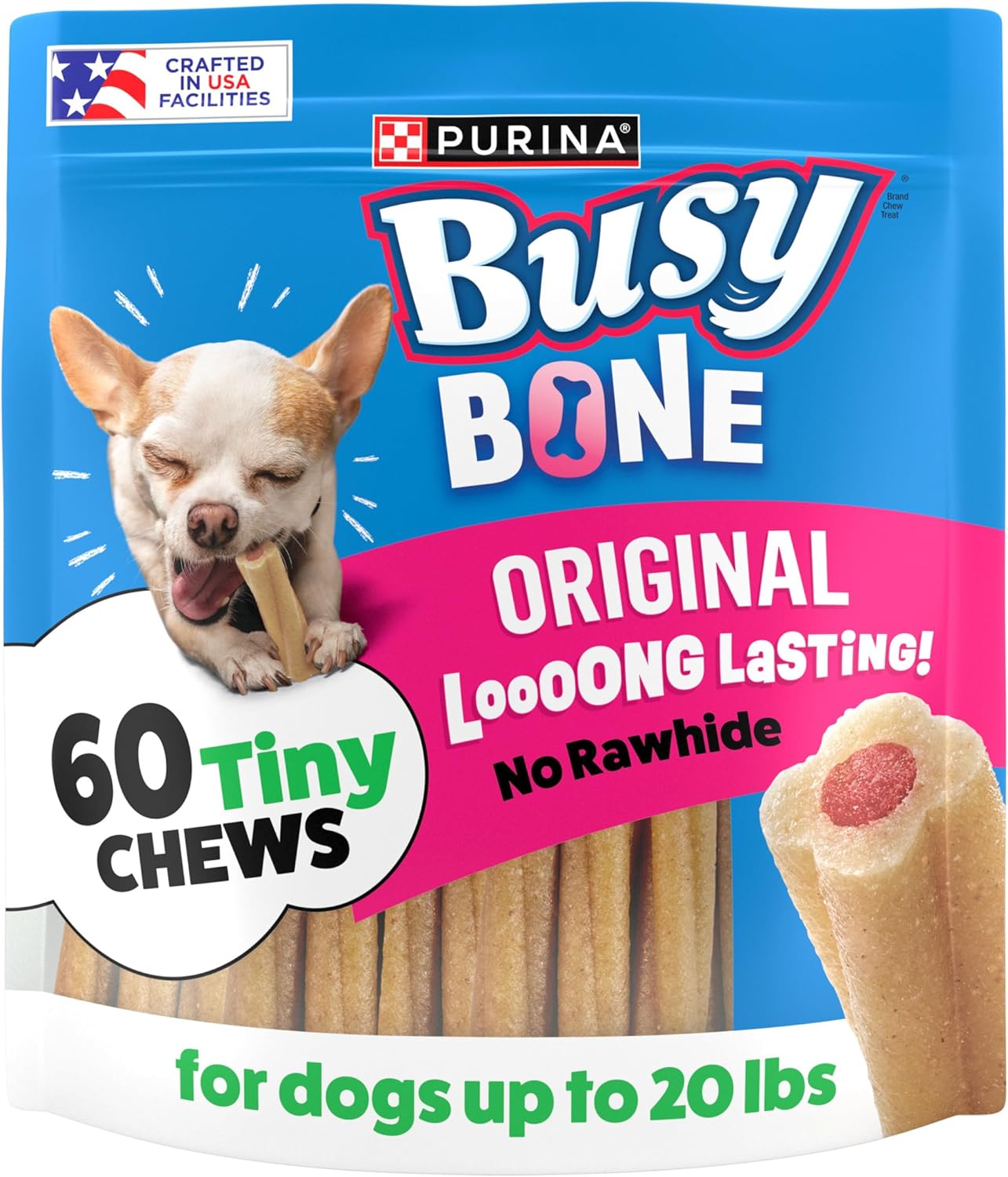
| Flavor | Pork |
|---|---|
| Item Form | Stick |
| Age Range Description | Adult |
| Unit Count | 35.4 Ounce |
| Included Components | One (1) 60-Count Pouch – Tiny |
Purina Busy Bone Tiny are twist-shaped chew treats made for very small adult dogs, with a firm exterior and a real pork center to keep dogs occupied while they chew. They are typically offered as an occasional treat or to occupy a dog during alone time, and the pouch contains multiple single pieces sized for tiny mouths. The product is rawhide-free and formulated to be easily digestible, which reduces concerns some owners have about traditional rawhide chews, and the chewing action can help reduce tartar buildup. Ingredients include grain-based binders and preservatives, so they are not a single-ingredient meat chew and should be given as a treat rather than a meal. Directions note the treats are for adult dogs under about 30 pounds and are not suitable for puppies under one year, and owners should monitor chewing to ensure pieces are adequately broken down before swallowing. If you want a long-lasting, meat-centered chew in a size made for very small dogs, these deliver consistent engagement, but they are a processed treat rather than a whole-food chew alternative.
Best for: Buyers who need a ready-to-serve, long-lasting chew sized for very small adult dogs and who prioritize sustained engagement and dental chewing activity.
Less Ideal for: Owners seeking single-ingredient or minimally processed natural chews, or those looking for treats appropriate for puppies or large breeds.
- Sized specifically for tiny adult dogs so pieces are manageable for small mouths
- Rawhide-free formulation with a real meat center for stronger flavor appeal
- Firm, twisty shape that provides longer chewing engagement than soft treats
- Made in Purina-owned USA facilities and marketed as easily digestible
- Contains multiple preservatives and artificial colors rather than being a single-ingredient natural chew
- Not intended as a meal substitute and not suitable for puppies under one year
Verdict: The best long-lasting treat for small dogs that provides extended chewing time to reduce boredom while remaining appropriately sized and safe.
Vital Essentials Beef Liver Treats 2.1 oz
Best Limited-Ingredient Treat

| Item Form | Freeze Dried |
|---|---|
| Flavor | Beef |
| Special Ingredients | 100% Raw Freeze Dried Beef |
| Unit Count | 2.1 Ounce |
| Allergen Information | Grain-Free, Corn-Free, Gluten Free, Soy Free, Wheat Free |
These bite-sized freeze-dried beef liver treats deliver strong aroma and concentrated meat flavor that keeps dogs focused during training sessions. Each piece is made from 100% beef liver with no fillers or artificial additives, making them an easy single-ingredient reward for dogs with sensitivities. The freeze-drying process preserves nutrients and creates a lightweight, shelf-stable snack that is simple to carry and portion into multiple tiny rewards during repetition-heavy sessions. Because they are dense in protein and low in calories per piece, you can reward frequently without overfeeding, and the texture provides enough interest for picky eaters. Limitations include the small 2.1 ounce bag size, which may run out fast for heavy trainers, and the strong smell that some owners may find intense when opened. These treats are best used as high-value training rewards, meal toppers for picky dogs, or short-session incentives.
Best for: Trainers and pet owners who need a reliably enticing, single-ingredient reward for repeated short training intervals or to motivate picky eaters.
Less Ideal for: People who give large-volume treats during long training sessions, those who prefer low-odor rewards, or households needing bulk quantities for multiple dogs.
- Single-ingredient formula (100% beef liver) suitable for dogs with food sensitivities
- Freeze-dried to retain aroma, flavor, and nutrients for strong training appeal
- Small, bite-sized pieces that are easy to portion for frequent reinforcement
- Shelf-stable and lightweight for easy storage and on-the-go training
- Small 2.1 oz bag may be insufficient for frequent trainers or multi-dog households
- Very strong aroma that can be off-putting to some owners
Verdict: The best limited-ingredient treat for small dogs with sensitivities, offering a short, transparent ingredient list to minimize reactions while still tasting good.
JustFoodForDogs JustChicken Dog Treats 5 oz
Best Premium Treat

| Flavor | Chicken |
|---|---|
| Item Form | Treats |
| Unit Count | 5 Ounce |
| Age Range Description | All Life Stages |
| Specific Uses For Product | Behavior, Coat, Skin, Stomach, Weight |
These treats are thin strips of real chicken breast dried into a chewy, semi-crisp jerky that works well as a high-value training reward or an everyday healthy snack. They are single-ingredient, human-grade chicken breast with no preservatives, fillers, artificial colors, or growth hormones, which makes them easy to feed to dogs with sensitivities and straightforward to track in an elimination diet. The resealable pouch helps keep portions fresh and the low-calorie profile is convenient for reinforcing behavior without adding many extra calories. Texture is appealing to most dogs and breaks into small pieces for training sessions, though because they are real meat they can be softer or more pliable than baked crunchy treats and may not last as long for very enthusiastic chewers. Packaging is pantry-stable but should be stored in a cool, dry place after opening. If you want a simple, high-quality meat-only treat with a gourmet ingredient list, these deliver the expected flavor and simplicity.
Best for: Pet owners who prioritize clean, transparent ingredient lists and want a human-grade, single-protein treat for training, allergy management, or everyday healthy rewards.
Less Ideal for: Owners seeking long-lasting chew toys or large bulk packs for frequent dispensing should consider firmer or higher-quantity alternatives.
- Single-ingredient recipe (100% chicken breast) suitable for dogs with food sensitivities
- Human-grade sourcing and no artificial colors, preservatives, or growth hormones
- Resealable 5 oz pouch for freshness and easy portioning
- Low-calorie, high-protein formulation appropriate for training and weight management
- Real-meat texture can be softer and less long-lasting than baked or hard chews
- Small 5 oz pouch may require frequent repurchasing for multi-dog households
Verdict: The best premium treat for small dogs for owners willing to pay more for higher-quality ingredients, thoughtful sourcing, and often richer flavor or novel functional benefits.
Choosing the Right Dog Treat Small Dog: Key Factors to Consider
Portion Size and Calorie Density
Portion size matters for small dogs because a single large treat can deliver too many calories and disrupt weight management. Look for treats sold in small, pre-portioned pieces or that can be easily broken into multiple rewards.
Calorie density affects how many times you can reward during a training session without exceeding daily energy needs. Lower-calorie bite-sized options let you reinforce behavior frequently while keeping overall intake in check. Check serving size guidance and adjust reward frequency based on your dog's activity level and body condition.
Texture and Hardness
Texture affects both palatability and safety. Soft, easily chewable treats are better for puppies, senior small dogs, and those with dental issues because they reduce the risk of choking and are easier to consume quickly during training.
Harder or crunchy treats can offer mild dental abrasion to help reduce plaque, but they must be appropriately sized and not brittle. Avoid treats that require aggressive chewing or large hasps that a small dog cannot handle comfortably. Consider any existing dental conditions when choosing texture.
Ingredient Quality and Allergies
Ingredient quality determines digestibility and risk of adverse reactions. Simple recipes with named protein sources and limited fillers are easier to evaluate for sensitivities. For dogs with known allergies, treat formulations that exclude common triggers offer safer choices.
Whole-food inclusions like single proteins, vegetables, or limited grains can add nutritional value. Avoid treats with vague ingredient listings or long chains of preservatives and artificial additives if your priority is cleaner nutrition.
Training Utility and Palatability
For owners who use treats for training, palatability and instant reward value are critical. Highly tasty treats should be small and low in calories so they can be given frequently without affecting weight.
Some treats are specifically formulated for training with strong-smelling, soft textures that dogs find irresistible. Consider how quickly a treat can be consumed and whether it can be used as a high-value reinforcement for hard-to-train behaviors.
Dental Benefit and Oral Safety
Some treats offer mild dental benefits by providing texture that helps scrape plaque, but these must be balanced against choking risk for small dogs. Look for products designed to provide dental abrasion in small sizes or options labeled specifically for dental health in smaller breeds.
Avoid overly hard chews and long-lasting items not sized for small mouths. For dogs prone to swallowing large pieces, select treats that crumble safely or dissolve rather than forming large fragments that could cause an obstruction.
Packaging and Portion Control
Good packaging helps maintain freshness and supports portion control. Resealable bags, single-serve packs, or easy break-apart pieces reduce waste and make it simpler to carry training rewards on the go.
Consider how a product stores in warm weather and whether pieces remain consistent in size over time. Clear serving guidance and reliable packaging reduce guesswork and help owners maintain consistent feeding and rewarding habits.
How Do I Choose Treats for a Toy or Teacup Dog?
Toy and teacup dogs have very small mouths and lower caloric needs, so choose treats specifically designed as bite-sized or with an option to break into many tiny pieces. Soft textures and easily dissolvable chews are safer choices for preventing choking and for quick swallowing during training.
When selecting treats for these tiny dogs, prioritize low calorie per piece and clear feeding guidance. Use treats that can be portioned into several micro-rewards to maintain motivation without overfeeding.
- Prefer single-ingredient or short-ingredient lists for sensitive digestive systems
- Choose soft or easily broken treats for safe, rapid rewards
- Monitor total daily calories from treats to prevent gradual weight gain
Are Grain-free Treats Better for Small Dogs?
Grain-free formulations can be helpful if your dog has a diagnosed grain sensitivity, but they are not inherently superior for all small dogs. Evaluate whether your dog has symptoms that suggest a problem with grains before assuming grain-free is necessary.
Look at the overall ingredient profile rather than an isolated label claim. Some grain-free treats replace grains with higher carbohydrate ingredients that can still contribute calories. If you suspect a sensitivity, introduce a new treat gradually and watch for digestive changes.
- Use grain-free only when indicated by intolerance or veterinarian advice
- Check carbohydrate and calorie levels even on grain-free options
- Rotate treats slowly to spot any adverse reactions
Which Treat Textures Work Best for Training Sessions?
Soft, moist treats or small soft pellets tend to work best for repeated training because dogs can consume them instantly and you can deliver rewards rapidly. Harder crunchy treats can interrupt flow because they take longer to chew and may not be practical during intense training.
If you rely on food to shape behavior, keep a mix of low-calorie training bites for repetition and occasional higher-value treats for big wins. That approach preserves the effectiveness of rewards while preventing overfeeding.
- Soft chews for rapid rewarding
- Low-calorie bits for frequent reinforcement
- Higher-value soft treats for difficult behaviors
How to Use Treats to Support Dental Health Without Overdoing Calories
Dental-specific treats that provide abrasion can help reduce plaque buildup, but many of these are higher in calories. Use dental treats sparingly and combine them with regular toothbrushing and appropriate chew toys to maintain oral hygiene without adding excessive calories.
If your dog requires daily dental support, choose lighter dental options and reserve denser treats for occasional use. Monitor weight and adapt daily feeding to account for any dental treats you include.
- Pair occasional dental treats with toothbrushing
- Use lower-calorie dental options when available
- Track treat calories within the dog's daily allowance
How to Introduce a New Treat Without Upsetting Digestion
Introduce any new treat gradually over several days. Start by mixing a small amount with familiar food or giving a single piece and watch for changes in stool, energy, or appetite. A gradual approach reduces the chance of gastrointestinal upset and lets you identify potential sensitivities quickly.
If your dog has a known sensitive stomach, choose a novel protein or a simple ingredient treat and consult your veterinarian before switching. Keep a consistent feeding schedule while testing to isolate cause and effect.
- Start with one piece and observe for 48 to 72 hours
- Increase slowly while monitoring stool consistency
- Consult your veterinarian for persistent digestive changes
How We Chose the Best Dog Treat Small Dog
We selected treats that meet the practical needs of small dogs and owners. Our evaluation prioritized portion size and texture to ensure bites are easy to chew and suitable for training, along with ingredient transparency so owners can avoid common sensitivities. Nutritional profile and calorie information were used to assess suitability for weight management and frequent rewarding during training. We also considered palatability indicators such as variety of flavors and formulation options for picky eaters. Durability and dental benefit were reviewed when applicable, focusing on whether a treat helps reduce plaque without posing a choking hazard. Packaging and resealability were checked for freshness and portion control. Finally, we excluded treats that lacked clear ingredient labels, those intended only for larger breeds, and products that deliver excessive calories in single pieces. The resulting shortlist reflects options that balance safety, training utility, and everyday nutrition for small dogs.
Our full evaluation process is outlined in our review methodology.
FAQ
How many treats can I give my small dog each day?
The number depends on the treat's calorie content and your dog's daily calorie needs. Often it is better to use very low-calorie training bites multiple times and reserve higher-value treats for special occasions. Adjust meal portions if you regularly give many treats.
Are soft treats safer than hard chews for small dogs?
Soft treats are generally safer for puppies, seniors, and dogs with dental issues because they reduce choking risk and can be swallowed quickly during training. Hard chews can help dental health but must be appropriately sized and supervised to avoid breaking into hazardous pieces.
Can treats help with training picky small dogs?
Yes, highly palatable soft treats or small pieces of real protein often motivate picky eaters. If a dog is consistently uninterested, try rotating flavors or textures and test a small sample before purchasing larger quantities.
Should I choose single-ingredient treats for sensitive dogs?
Single-ingredient treats can simplify identifying triggers and are easier to digest for some dogs. They are a good starting point when you suspect food sensitivities, but always introduce any new protein gradually and monitor for reactions.
Do dental treats replace toothbrushing?
No. Dental treats can supplement oral care by providing mild abrasion, but regular toothbrushing and professional dental checks remain the most reliable ways to manage plaque and gum health.
Final Verdict
Choose treats for small dogs by balancing portion size, texture, and ingredient quality against your training goals and your dog's health needs. Prioritize soft, low-calorie bites for frequent reinforcement and reserve denser or dental-specific treats for occasional use. By focusing on calories per piece, safe textures, and transparent ingredients, you can reward behaviors without compromising weight or digestive comfort. Use the decision factors above to match a treat to your dog's age, dental condition, and dietary sensitivities for the best everyday results.

