

Choosing the right dog treat matters more than you might think. The treats you use affect training outcomes, weight management, and your dog's long-term health. Whether you need high-value rewards for training, low-calorie bites for frequent reinforcement, or chewy snacks for dental support, the options in this guide cover those needs. This guide highlights seven top picks shortlisted for quality and purpose. We evaluated nutrient profiles, ingredient transparency, and usability so you can match treats to behavior goals and dietary constraints. Read on to find treats that fit your routine and the way you train or reward your dog.
Top Picks at a Glance
| Best Overall Treat A versatile, widely appealing treat that suits most dogs | Milk-Bone Original Medium Dog Biscuits 10 lb |  |
| Best Budget Treat Low-cost treats that still deliver decent flavor and texture | Milk-Bone Flavor Snacks Small |  |
| Best Premium Treat Higher-end treats with superior ingredients or artisanal preparation | Greenies Regular Dental Dog Treats 36 Count |  |
| Best Training Treat Small, soft, and highly motivating treats for repeat rewards | Zuke's Mini Naturals Peanut Butter & Oats 16 oz |  |
| Best Grain-Free Treat Treats formulated without grains for sensitive or specific diets | Waggin' Train Salmon Jerky 12 oz |  |
| Best Dental Treat Treats designed to reduce tartar and promote oral health | Pedigree Dentastix Large 36ct |  |
| Best Long-Lasting Treat Chewy or dense treats that keep dogs occupied longer | GOOD 'N' FUN Triple Flavor Kabobs |  |
Milk-Bone Original Medium Dog Biscuits 10 lb
Best Overall Treat

| Flavor | Beef |
|---|---|
| Age Range Description | All Life Stages |
| Item Form | Biscuit |
| Unit Count | 160 Ounce |
Milk-Bone Original Medium Dog Biscuits are a large bulk box of crunchy beef-flavored biscuits intended for medium adult dogs and everyday rewarding. The biscuits are sized for dogs over 20 pounds and deliver a firm crunch that can help freshen breath and reduce tartar buildup when chewed. Each biscuit provides about 15% protein and a blend of 12 vitamins and minerals including calcium and phosphorus to support teeth and bones, making them useful as regular rewards, training treats, or occasional snacks. The 10 pound box contains roughly 280 treats, which is convenient for households that reward frequently or train often, but the bulk packaging means you should monitor freshness once opened. Ingredients include wheat and meat and bone meal plus preservatives like BHA and BHT, so these are not limited-ingredient or grain-free options for dogs with sensitivities. Feeding directions recommend limiting treats to about 10% of daily calories and adjusting meal portions accordingly. For buyers prioritizing classic flavor, quantity, and everyday utility, these biscuits are a practical staple; buyers seeking grain-free or minimalist ingredient lists should look elsewhere.
Best for: Buyers who want an affordable, classic-flavored everyday treat in bulk for medium adult dogs and value quantity and consistent performance for training and rewards.
Less Ideal for: Owners seeking limited-ingredient, grain-free, or preservative-free treats or those who prefer single-serve or small-pack portioning should consider alternatives.
- Large 10 lb supply suitable for frequent rewarding or group households
- Sized for medium adult dogs, making portioning simple for 20–50 lb pets
- Crunchy texture that helps freshen breath and reduce tartar buildup
- Fortified with 15% protein plus 12 vitamins and minerals for basic nutritional support
- Contains wheat and preservatives (BHA/BHT) so not ideal for dogs with grain sensitivities
- Bulk packaging may lose freshness faster after opening if not stored properly
Verdict: The best overall treat balances taste, ingredient quality, appropriate size, and consistent palatability to work for the widest range of dogs and everyday uses.
Milk-Bone Flavor Snacks Small
Best Budget Treat

| Unit Count | 24 Ounce |
|---|---|
| Flavor | Beef, Chicken, Turkey, Bacon & Sausage – Small |
| Item Form | Stick |
| Age Range Description | All Life Stages |
Milk-Bone Flavor Snacks are crunchy small-size biscuits sold in a 24-ounce box and meant for everyday rewarding and snacking. The bag contains a mix of beef, chicken, turkey, bacon and sausage flavors and is vitamin-fortified with about 15% protein plus added vitamins and minerals, so it doubles as a treat and a small nutritional boost. The crunch helps freshen breath and reduce tartar when used regularly, and the stick-like shape is easy to break into smaller pieces for tiny mouths and training sessions. Because these are wheat-based and include meat and by-product meals, they are best for dogs without grain sensitivities. The large box gives a lot of servings, which keeps per-treat cost low, but bulk quantity means treats can get stale if not resealed and they are not the softest option for dogs with sensitive teeth. For owners who need an affordable, flavorful bite-sized treat to use frequently during training or daily rewards, these deliver predictable taste and portion control.
Best for: Buyers who want a very affordable, flavorful small-biscuit treat for frequent rewards and short training sessions with tiny dogs.
Less Ideal for: Owners looking for grain-free, single-ingredient, or soft training treats for dogs with dental sensitivity should consider alternatives.
- Small, breakable biscuit size suitable for tiny mouths and training rewards
- Five mixed savory flavors that appeal to picky eaters
- Vitamin-fortified formula with added protein and minerals
- Crunchy texture that can help freshen breath and reduce tartar
- Large 24-ounce box offers a low per-treat cost for frequent use
- Contains wheat and by-product meals so not suitable for grain-sensitive dogs
- Bulk packaging can lose freshness if not stored airtight
- Crunchy texture may be hard for older dogs with dental issues
Verdict: The best budget treat gives pet owners an affordable option that still provides acceptable taste, reasonable ingredients, and reliable portioning for frequent rewards.
Greenies Regular Dental Dog Treats 36 Count
Best Premium Treat
| Flavor | Original |
|---|---|
| Item Form | Bone |
| Unit Count | 36 Count |
| Breed Recommendation | Medium Breeds |
| Allergen Information | Rawhide-Free |
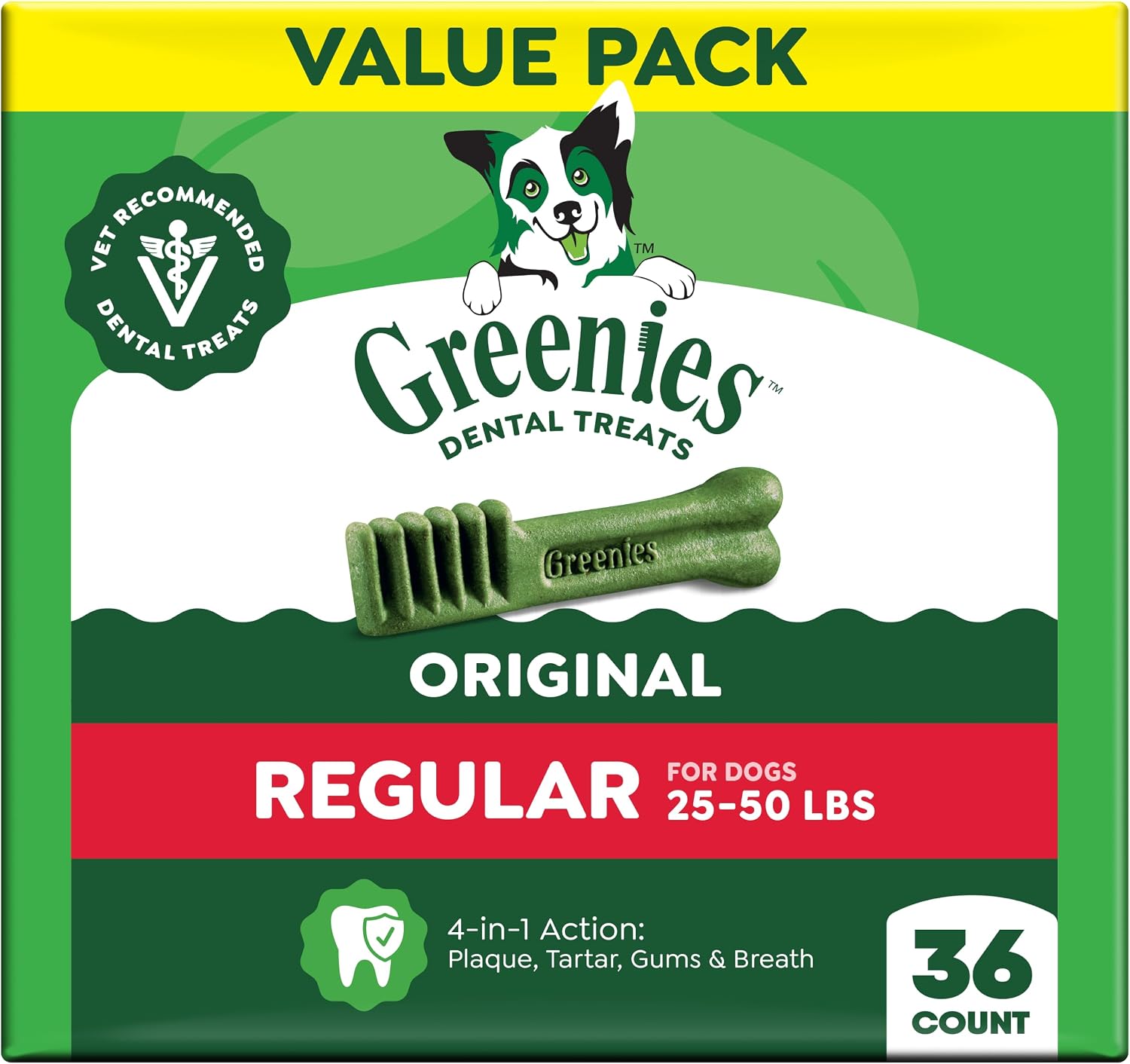
Greenies Regular Dental Dog Treats are chewy dental chews made for dogs around 25–50 lb to support daily oral care. Designed with a toothbrush-like shape and flexible texture, the chews scrub down to the gumline while remaining bendable so they are less likely to snap; the manufacturer cites reductions in tartar and plaque when used daily. Owners typically give one chew per day as a treat or part of a dental routine, and the pouch packaging is convenient for storage. The treats are rawhide-free, made with common pantry ingredients plus added vitamins and minerals, and are veterinarian-recommended and VOHC-accepted as an option for plaque and tartar control. Expect good palatability — most dogs find the original chicken flavor tasty — but these are a daily edible product so supervision is recommended to ensure adequate chewing. They are sized for medium breeds, so buyers with very small or very large dogs should pick the appropriate size variant.
Best for: Dog owners who want a convenient, veterinarian-recommended daily chew that most medium-breed dogs will eat and that supports routine plaque and tartar control.
Less Ideal for: Owners of toy or giant breeds, or dogs with specific grain or ingredient sensitivities, should choose a size or formula made for those needs instead.
- Toothbrush-shaped chewy texture that helps clean to the gumline
- Vet-recommended formula accepted by VOHC for plaque and tartar control
- Rawhide-free and bendable texture reduces risk of snapping
- Formulated with added vitamins and minerals and common ingredients familiar to pet owners
- Single-daily-use and pouch packaging make them easy to include in a routine
- Sized specifically for medium dogs so this package is not ideal for very small or very large breeds
- Contains wheat and other common allergens that may not suit dogs with ingredient sensitivities
Verdict: The best premium treat is aimed at owners willing to pay more for exceptional ingredients, careful sourcing, or gourmet recipes that prioritize nutrition and taste.
Zuke's Mini Naturals Peanut Butter & Oats 16 oz
Best Training Treat

| Flavor | Peanut Butter & Oats |
|---|---|
| Unit Count | 16 Ounce |
| Item Form | Tender, Bites, Bits |
| Special Ingredients | Chicken |
| Recommended Uses For Product | Dog Training, On-the-go Rewards |
Zuke's Mini Naturals Peanut Butter & Oats are tiny, soft training treats formulated for frequent rewarding during training sessions or outings. Each treat is low in calories so you can give multiple rewards without dramatically increasing daily calorie intake, and the soft texture makes them easy to break up or quickly deliver during repetitions. The recipe highlights real ingredients like peanut butter, oats, and cherries and excludes corn, wheat, and soy, which helps with simple dietary needs and palatability. A resealable bag keeps the treats fresh for hikes or pockets, and the tender bite suits small and medium dogs that need quick, high-value reinforcement. Limitations include the peanut-forward formula, which is unsuitable for dogs with peanut allergies, and the bagged format can be less convenient than small training tins for some handlers. For weight-conscious owners who need many small, tasty rewards, these treats strike a good balance between flavor and low calories per piece.
Best for: Owners who need a small, low-calorie reward to give many repetitions while managing their dog’s daily calorie intake and reinforcing behavior frequently.
Less Ideal for: People seeking single-ingredient or hypoallergenic treats for dogs with multiple ingredient sensitivities or handlers who prefer compact training tins for pocket carry.
- Low calorie per piece suitable for frequent rewards during training
- Soft, tender texture that is easy to break and quickly deliver
- Made with real ingredients like peanut butter, oats, and cherries
- Resealable bag for portability and freshness on the go
- Peanut-forward recipe is not appropriate for dogs with peanut allergies
- Bag format can be bulkier than dedicated training treat tins or pouches
Verdict: The best training treat is small, easy to chew, and intensely appealing so it can be used frequently during training without overfeeding or slowing sessions.
Waggin' Train Salmon Jerky 12 oz
Best Grain-Free Treat

| Flavor | Salmon |
|---|---|
| Item Form | Stick |
| Unit Count | 12 Ounce |
| Age Range Description | Adult |
| Allergen Information | Corn-Free, Dairy Free, Grain-Free |
Waggin' Train Salmon Jerky are single-ingredient-forward treats made with real salmon plus a few simple binders, sold in a 12-ounce pouch. They are dehydrated salmon tenders that function as high-protein training rewards or occasional chews, and the package guidance lets you break pieces down for small breeds. Notable features include salmon as the first ingredient, added omegas for skin and coat support, and a grain- and corn-free recipe with no artificial colors or flavors. In practice these treats are very aromatic and palatable, so they work well for picky Shih Tzus and for reinforcing good behavior during short training sessions. Because they are dense and protein-rich, portion control is important and the manufacturer recommends keeping treats under 10% of daily calories. Also, the chew texture may be chewier than soft training treats, so break pieces appropriately for tiny mouths and supervise to avoid large swallows. If you want a simple, limited-ingredient salmon treat that emphasizes coat benefits, this is a solid choice.
Best for: Owners of Shih Tzus seeking a limited-ingredient, grain-free treat that still delivers strong flavor and coat-supporting omegas.
Less Ideal for: People who need very soft, melt-in-the-mouth training rewards for frequent use or owners wanting a hypoallergenic novel-protein treat not containing fish.
- First ingredient is 100% real salmon for a clear protein source
- Grain-free and corn-free formulation suited to sensitive diets
- High protein content supports muscle maintenance and is very enticing to dogs
- Contains balanced Omega-3 and Omega-6 fatty acids for skin and coat support
- Chewy, dense texture requires breaking into smaller pieces for very small dogs
- Treats are calorie-dense so portion control is necessary to avoid exceeding daily calories
Verdict: The best grain-free treat suits dogs needing or owners preferring grain-free formulas while still offering balanced nutrition and palatable flavors.
Pedigree Dentastix Large 36ct
Best Dental Treat

| Flavor | Mint |
|---|---|
| Unit Count | 36 Count |
| Breed Recommendation | Large Breeds |
| Special Ingredients | Green Tea Extract |
| Animal Food Diet Type | Limited Ingredient |
Pedigree Dentastix Large are daily dental chews designed for adult large-breed dogs (40+ lb) that combine a chewy texture and an X-shaped profile to mechanically scrape plaque while the dog chews. Typically given as one treat per day, these sticks aim to reduce tartar buildup, freshen breath with a minty note, and support routine at-home dental care without added sugar. The package includes 36 chews in a resealable bag and the formula contains green tea extract and natural peppermint flavor for breath benefits. In real-world use Dentastix work well as an easy-to-administer reward during training or a nightly ritual after meals, and their size and texture suit larger jaws so they last long enough to have a cleaning action. Limitations are that they are sized for large dogs only and are not appropriate for puppies or smaller dogs, and ingredients include wheat and artificial colors which may be a concern for pets with sensitivities. For owners wanting a convenient chew that doubles as a breath freshener, these are a practical, vet-accepted option for daily use.
Best for: Pet owners who want a tasty, easy daily chew that both rewards a large dog and contributes to fresher breath and tartar control as part of a home dental routine.
Less Ideal for: Owners of small-breed dogs, puppies, or pets with grain or colorant sensitivities should choose a size-specific or ingredient-limited alternative.
- Designed X-shape and chewy texture to scrape plaque while chewing
- VOHC accepted for tartar control
- Minty fresh flavor helps freshen breath
- No added sugar in the formulation
- Resealable value pack with 36 chews suitable for daily use
- Formulated for large dogs only, not suitable for smaller breeds or puppies
- Contains wheat and artificial colors which can bother sensitive dogs
Verdict: The best dental treat helps clean teeth and freshen breath through texture and ingredients that support oral hygiene as part of a regular routine.
GOOD 'N' FUN Triple Flavor Kabobs
Best Long-Lasting Treat

| Flavor | Triple Flavor Kabobs (Chicken, Duck & Chicken Liver) |
|---|---|
| Item Form | Stick |
| Unit Count | 12 Ounce |
| Age Range Description | young-adult |
Good 'n' Fun Triple Flavor Kabobs are kabob-shaped rawhide chews wrapped with real chicken, duck and chicken liver to give small dogs a mix of tastes while they chew. They are intended for supervised, intermittent treat time and marketed as long-lasting, so they work well as an occupied-chew between walks or play sessions. The wrapped meat layers provide strong scent and flavor that keeps interest high for dogs that lose interest in plain rawhide, and the firm rawhide body helps scrape plaque and tartar during chewing. Because these are real-hide chews with added flavorings and colorants, owners should select a size a bit larger than the dog's mouth and remove fragments as they form; the product is not meant to be swallowed whole. Also they are suitable only for adult dogs over one year and should be limited to under 10% of daily calories. For Yorkies and other small breeds who need a slower-to-consume chew, these kabobs are a flavorful, durable option when used with supervision.
Best for: Owners of small adult dogs looking for a slower-to-consume, flavorful chew that keeps a Yorkie engaged during supervised chew sessions.
Less Ideal for: Puppies under one year, dogs that gulp or swallow large pieces, or owners seeking fully natural additive-free chews should consider other options.
- Designed to be long-lasting to keep small dogs occupied
- Wrapped with real chicken, duck and chicken liver for strong flavor attraction
- Natural chewing action can help reduce plaque and tartar buildup
- Sold in a resealable bag format (unit count 12 ounce) so you can store extras
- Contains rawhide which can produce fragments that must be discarded during supervised chewing
- Includes artificial colorants and wheat flour which some owners may wish to avoid
Verdict: The best long-lasting treat is durable and engaging, made to occupy chewers safely for extended periods without breaking into dangerous shards.
Choosing the Right Dog Treat: Key Factors to Consider
Ingredient Quality and Transparency
High-quality ingredients matter because treats are part of a dog's daily intake and can affect health over time. Look for named protein sources and limited filler ingredients. Single-protein or simple recipes reduce the chance of digestive upset and make it easier to avoid common allergens.
Transparency also signals better manufacturing practices. If an ingredient list uses vague terms like "meat meal" or lists multiple chemical-sounding additives, that raises questions about nutrient value and digestibility. Prefer treats that list real foods and explain preservative or flavoring methods.
Calorie Density and Size
Calorie control is critical when treats become a routine part of training. Treats that are high in calories or too large will add up quickly and can derail weight goals. Choose lower-calorie bites for frequent reinforcement and reserve higher-calorie, high-value treats for occasional use or special rewards.
Size matters for delivery speed and chewing time. Small, soft bites work best for rapid training rewards, while firmer chews can be reserved for enrichment or dental benefits. Consider how many treats you might give per session to estimate daily caloric impact.
Texture and Palatability
Texture influences both appeal and function. Soft, moist treats are ideal during training because they can be eaten quickly and keep the session moving. Chewy or crunchy treats take longer to consume and are better for enrichment or dental abrasion.
Palatability varies by dog. Some dogs prefer liver-forward flavors; others favor chicken or fish. If you are training a picky dog, prioritize extremely palatable, high-value options for key behaviors while using lower-value rewards for routine reinforcement.
Digestibility and Allergies
Digestibility determines how well a dog tolerates a treat. Ingredients like novel proteins, limited-ingredient recipes, or grain-free formulas can help dogs with sensitivities, but each dog reacts differently. Watch stool quality and energy levels after introducing a new treat.
When allergies are a concern, rotate treats slowly and choose single-source protein options. Avoid treats that list multiple potential allergens together, and consult your veterinarian for dogs with diagnosed food sensitivities.
Packaging and Portion Control
Good packaging preserves freshness and makes it easier to control portions. Resealable pouches, portioned sticks, or pre-measured bites help you avoid overfeeding and keep treats crisp. For training, packaging that allows you to access a single small piece quickly is especially helpful.
Portion control also ties back to calorie tracking. If a product does not provide clear serving sizes, it can be difficult to integrate into a daily feeding plan.
Safety and Preservative Methods
Safety covers both ingredient safety and manufacturing practices. Check for preservatives and understand whether they are natural (for example, tocopherols) or synthetic. Natural preservation is often preferable but not always necessary if the product is handled and stored correctly.
Also look for treats produced under recognized quality standards and for clear batch or lot information on packaging. This helps if a safety concern arises and also indicates better traceability from manufacturer to consumer.
Which Treats Work Best During Training Sessions?
For training you want treats that are small, soft, and highly palatable so you can deliver multiple rewards without interrupting the session. Low-calorie soft bites let you reinforce many repetitions while keeping total calories in check. Use high-value, strong-flavored treats for teaching difficult or new behaviors, and switch to lower-value options once the behavior is reliable.
- Choose pieces that can be broken into pea-sized portions for small dogs and toy breeds.
- Prefer moist or soft textures for quick consumption during clicker or marker training.
- Reserve very high-calorie or large-format treats for special rewards only.
How Can I Manage Treat Calories Without Losing Training Effectiveness?
Track daily calories from treats as part of total intake and reduce meal portions slightly if you increase treat volume. Use low-calorie training bites or break larger treats into many small pieces. Another strategy is to use part of your dog's regular kibble as reinforcement for routine training, saving richer treats for higher-value behaviors.
- Estimate treat calories per minute of training to plan sessions.
- Consider using fresh produce like small carrot pieces where appropriate as occasional low-calorie rewards.
- Monitor weight and body condition and adjust food or treat portions accordingly.
Are There Treats That Help with Dental Health?
Some crunchy treats are formulated to provide mechanical abrasion to help reduce plaque and tartar buildup during chewing. These can be useful as part of a dental care routine but should not replace tooth brushing or professional dental care when needed. Choose appropriately sized dental treats to avoid choking hazards and limit frequency to avoid excess calories.
- Use dental treats with a texture designed for gradual abrasion rather than brittle hard pieces that can fracture.
- Limit dental treat frequency to a few times per week unless otherwise indicated by a veterinarian.
- Always match treat size to your dog's mouth to reduce choking risk.
What to Do when Your Dog Has Food Sensitivities
Introduce new treats one at a time and allow several days to observe tolerance. If your dog has known sensitivities, pick single-protein or limited-ingredient treats and avoid common allergens that have caused reactions in the past. Keep a food diary to track symptoms and discuss findings with your veterinarian if problems persist.
- Rotate treats infrequently during an elimination trial to spot reactions more easily.
- Avoid treats with multiple animal proteins listed together when diagnosing an allergy.
- Consult your veterinarian before trying novel protein sources for dogs with severe reactions.
How to Choose Treats for Small Breeds Versus Large Breeds
Small breeds often need smaller, lower-calorie bites that can be consumed instantly. Large breeds may handle chewier or larger-format treats and can benefit from portion-controlled sticks that provide longer chewing time. Always consider choking risk and match portion size to your dog's jaw and bite force.
- Break treats into appropriately sized pieces for small dogs.
- Choose tougher, longer-lasting formats for large dogs if the goal is enrichment.
- Avoid giving very hard chews to small or elderly dogs with missing teeth.
How We Chose the Best Dog Treat
We applied practical, category-specific filters to assemble the shortlist of seven treats. Our evaluation emphasized ingredient transparency and sourcing, preferring treats with identifiable whole-food proteins and minimal artificial additives. Nutritional profile was next: we looked at protein-to-calorie ratios, fat content, and fiber to assess suitability for training, weight management, or slower-paced rewarding. Texture and size were considered for usability during sessions and for different dog sizes. Safety factors included allergen avoidance options and preservative approaches. We also considered manufacturing quality controls and third-party testing where available, as well as packaging that protects freshness and supports portion control. Exclusions included treats with vague ingredient lists, excessive added sugars, and formats that are impractical for training (for example, very large or single-use-only items). The result is a set of treats that balance palatability, nutrition, and everyday practicality for most dog owners.
Our full evaluation process is outlined in our review methodology.
FAQ
Can I use people food as dog treats?
Some people foods are safe in small amounts, such as plain cooked chicken or carrots. However, many human foods are toxic or too rich for dogs. Always check ingredients and avoid anything with xylitol, onion, garlic, or high fat and salt content.
How often should I give my dog treats each day?
Frequency depends on treat calorie content and your dog's overall calorie needs. For frequent training you can give many small, low-calorie pieces; for richer treats limit to occasional rewards. Monitor body condition and adjust daily food portions as needed.
Are grain-free treats better for dogs?
Grain-free is not automatically better. Some dogs benefit from grain-free options if they have specific sensitivities, but many dogs digest grains without issue. Choose based on your dog's history, not a general assumption that grain-free equals healthier.
What should I do if my dog refuses a new treat?
Try a different texture or flavor; some dogs prefer moist or liver-forward flavors while others like milder tastes. Warm or slightly softening a treat can boost scent and appeal. If refusal persists, use a known favorite for reinforcement and introduce new treats gradually.
Can treats replace meals during training?
Treats should not fully replace balanced meals. For extended training that requires many rewards, use low-calorie training pieces or part of the daily kibble to avoid nutritional imbalance. Adjust meal portions to account for treat calories when needed.
Final Verdict
When choosing dog treats, prioritize ingredient clarity, appropriate calorie density, and a texture that fits how you plan to use them. Match treat format to the task: small, soft bites for high-repetition training and firmer chews or dental treats for enrichment or oral care. Watch calorie totals and adjust meal portions to prevent weight gain. Decide first on the role treats will play in your routine, then pick options that satisfy that role while minimizing unnecessary additives. That approach will help you reward good behavior effectively without compromising nutrition or safety.

