

Picking the right dog walking training harness makes daily walks safer and less stressful for both you and your dog. A harness that fits properly and gives predictable control can reduce pulling, prevent chafing, and make training signals clearer. This guide presents seven top shortlisted harnesses selected for everyday training, structured walks, and behavior correction. We evaluated stability, adjustability, and leash-attachment options so you can quickly find the style that matches your dog and your training approach. Read on for practical guidance and the factors we used to choose these top picks.
Top Picks at a Glance
| Best Overall Walking Training Harness The best all-around harness for most training and walks | rabbitgoo No Pull Dog Harness Large |  |
| Best Budget Walking Training Harness A low-cost harness that still performs reliably for basics | Gudpeit Dog Harness M |  |
| Best Premium Walking Training Harness A higher-end harness with upgraded materials and refined features | Ruffwear Front Range Dog Harness Medium |  |
| Best Heavy-Duty Walking Training Harness Built for strong pullers and frequent, rugged outdoor use | OneTigris Tactical Dog Harness Medium |  |
| Best No-Pull Walking Training Harness Features front-clip or anti-pull geometry to reduce lunging | PetSafe Easy Walk Harness Medium |  |
| Best Reflective Walking Training Harness Enhanced nighttime visibility for safer early morning or late walks | tobeDRI No Pull Dog Harness Large |  |
| Best Easy-On Walking Training Harness Simple put-on design for quick, stress-free harnessing | rabbitgoo Dog Harness Large |  |
rabbitgoo No Pull Dog Harness Large
Best Overall Walking Training Harness

| Dog Breed Size | Large |
|---|---|
| Weight Range | 15-45 kg |
| Closure Type | Buckle |
| Material Type | Polyester |
| Size | Large |
The rabbitgoo No Pull Dog Harness is a step‑over vest-style harness built for everyday walks and basic training with medium to large breeds. It uses a front chest clip to help redirect forward motion when a dog lunges and a rear D-ring for casual walking or jogging, plus two metal leash attachments for versatile control. The harness is made from polyester oxford with padded air-mesh lining to reduce chafing and keep dogs cooler during activity, and reflective strips improve visibility in low light. Four adjustable straps and quick-release buckles let you fine-tune the fit, while a top handle gives instant lift or extra control getting in and out of vehicles. Practical limits are its non-chewproof construction and that very strong pullers may need a more specialized training harness or head halter; accurate sizing is important because the vest design can shift on dogs with unusual body shapes. For most owners seeking a comfortable, durable, and easy-to-adjust no-pull option for everyday walks, this covers the essentials well.
Best for: Owners of medium to large active dogs who want a comfortable, easy-to-adjust harness that provides reliable no-pull control for daily walks and light training.
Less Ideal for: People who need a heavy-duty, chewproof restraint or handlers working with extremely strong pullers who require professional training tools.
- Front chest clip redirects forward momentum for basic no-pull control
- Padded air-mesh lining offers breathable comfort and reduces rubbing
- Two metal leash attachments (front and back) for training and everyday use
- Multiple adjustment points and quick-release buckles make fitting and removal fast
- Reflective strips and top handle add safety and short-term lift/control
- Not designed to resist chewing or heavy abrasion
- May not fully stop very strong, sustained pullers without additional training
Verdict: The best overall walking training harness balances comfort, control, durability, and adjustability to suit most dogs and everyday training needs.
Gudpeit Dog Harness M
Best Budget Walking Training Harness

| Size | M |
|---|---|
| Closure Type | Hook & Loop |
| Material Type | Nylon |
| Pet Type | Cat, Dog |
This Gudpeit step-in harness is a simple, no-frills walking and training set that pairs a breathable three-layer mesh vest with a 47-inch basic leash. It is designed for slip-on use so you have your dog step into the harness, buckle it, then clip the leash to the D-ring; the Velcro wrap plus a plastic buckle and dual D-rings provide three layers of security and help distribute pulling pressure across the chest instead of the neck. The nylon air-mesh construction is lightweight, machine-washable, and quick-drying, making it easy to keep clean after daily walks, training sessions, or jogging. Reflective strips improve visibility for low-light outings, but the simple design lacks reinforced hardware and heavy-duty padding found on higher-end no-pull or service vests, so it is best for casual training and everyday walking rather than strong pullers or advanced control work. For its low price the harness delivers comfortable fit, breathable material, and basic safety features that suit routine leash work.
Best for: Cost-conscious owners who want a lightweight, easy-to-use harness and leash for everyday walks and basic training without paying for premium hardware or specialty control features.
Less Ideal for: Owners who need heavy-duty no-pull control, reinforced metal hardware, or professional training equipment should choose a sturdier harness designed for strong pullers.
- Breathable three-layer mesh is lightweight and quick-drying for comfortable daily wear
- Step-in slip-on design with Velcro and buckle makes on/off fast and straightforward
- Includes a 47-inch basic leash so you get a complete walk-ready set
- Reflective strips increase visibility for early morning or evening walks
- Hardware and construction are basic and not intended for heavy pullers or service work
- Velcro closure may require occasional readjustment and can wear over time
Verdict: The best budget walking training harness offers dependable fit and basic training control at a lower price for cost-conscious pet owners.
Ruffwear Front Range Dog Harness Medium
Best Premium Walking Training Harness

| Closure Type | Pull On |
|---|---|
| Material Type | Polyester |
| Adjustment Points | 4 Points |
| Leash Attachment | Back V-ring + Chest webbing |
The Ruffwear Front Range harness is a daily-use vest that pairs padded comfort with practical control features. It uses closed-cell foam in the chest and belly panels for cushioning during long walks or hikes, and four adjustment points plus side-release buckles let you dial in a secure fit across many body shapes. Two leash attachment options — an aluminum V-ring on the back and a reinforced chest/webbing point — give you the choice of standard rear lead walking or front-clip redirection for dogs that pull. Reflective trim and a light loop increase visibility for low-light outings, and a small ID pocket adds convenience. The harness is hand-wash only and constructed from polyester, so it is durable but requires occasional care to stay clean. The design favors everyday comfort and control rather than heavy-duty lifting or vehicle restraint, so buyers wanting rescue-style support or seatbelt-certified car anchors may need a different model. For most owners looking for an adjustable, comfortable harness for regular walks and hikes, this balances fit, durability, and practical features very well.
Best for: Owners who want a comfortable, adjustable harness for everyday walks, hikes, and general outdoor use and prioritize a secure fit and visibility over heavy-duty rescue features.
Less Ideal for: People who need a harness specifically for vehicle restraint, full-body lifting, or intensive working/rescue applications should consider purpose-built alternatives.
- Foam-padded chest and belly panels provide cushioning to reduce chafing on long outings
- Four points of adjustment and side-release buckles allow a customizable, secure fit
- Two leash attachment points (back aluminum V-ring and reinforced chest webbing) offer both standard and front-clip control
- Reflective trim and a dedicated light loop improve visibility in low-light conditions
- Hand wash only care may be less convenient than machine-washable options
- Not designed for heavy vehicle restraint or full-body lifting
Verdict: The best premium walking training harness delivers superior materials, enhanced comfort, and extra features for owners willing to invest in long-term performance.
OneTigris Tactical Dog Harness Medium
Best Heavy-Duty Walking Training Harness

| Material Type | Nylon |
|---|---|
| Closure Type | Buckle |
| Dog Breed Size | Medium |
| Included Components | Harness |
| Features | MOLLE system, Hook & Loop panels |
The OneTigris Tactical Dog Harness is built for active, working, and outdoorsy dogs that need a durable, supportive vest rather than a simple strap harness. Constructed from 1000D nylon with soft padding across pressure points, it wraps the chest and belly to spread load during walks, hikes, or training sessions. The harness includes four quick-release buckles for secure donning and doffing, a front V-ring for no-pull leash attachment, and a top handle for close control in traffic or brief guidance. MOLLE loops and hook-and-loop panels let you add ID patches or pouches for longer outings. Practical strengths are the robust webbing and hardware designed for long-term use plus breathable mesh lining to limit chafing. Limitations are that the handle is intended for guidance only, not for lifting, and the harness is not chew- or scratch-proof, so it will show wear if heavily abused; getting the correct size requires careful measuring and strap adjustment to avoid rubbing. For owners prioritizing durability and comfort on active outings, this harness balances protection and control well.
Best for: Owners of powerful or highly active dogs who want a rugged, long-wearing harness that offers control, modular attachment options, and padded comfort for outdoor use.
Less Ideal for: Owners who need a lift-rated harness for carrying dogs, or those whose pets are frequent chewers or destructive with gear should consider alternatives designed specifically for lifting or chew resistance.
- Military-grade 1000D nylon construction for abrasion and water resistance
- Soft padded lining and full-wrap design to distribute pressure and reduce chafing
- Front V-ring plus top handle provide options for no-pull control and short-range guidance
- MOLLE webbing and hook-and-loop panels for attaching pouches or ID patches
- Multiple quick-release buckles and adjustable straps for a secure fit
- Not chew- or scratch-proof so durability will decline with heavy chewing or contact with sharp objects
- Top handle is not rated for lifting the dog and should only be used for brief control
Verdict: The best heavy-duty walking training harness is designed with reinforced stitching and tough hardware to handle strong pullers and active outdoor adventures.
PetSafe Easy Walk Harness Medium
Best No-Pull Walking Training Harness

| Material Type | Nylon |
|---|---|
| Weight Range | 20-50 lbs (9-23 kg) |
| Closure Type | Snap |
| Size | Medium |
The PetSafe Easy Walk Harness is a straightforward front-clip harness designed to reduce pulling by redirecting force to the dog's shoulders instead of the neck. It uses a patented martingale loop on the chest strap so that when a dog lunges the loop tightens slightly and helps steer the dog toward the handler, making it useful for training walks and everyday control. The harness is lightweight with relatively low coverage, which keeps dogs cooler and improves breathability on longer outings, and the nylon construction and metal sliders make it durable for frequent use. Fit is simplified by a contrasting belly strap and quick-snap closure, though accurate measuring is important since the system relies on a snug fit to function correctly. Limitations include minimal padding for dogs sensitive to strap pressure and a design that primarily addresses leash manners rather than providing heavy-duty restraint for very strong or reactive dogs. For owners focused on consistent training and reliable no-pull performance, this harness balances simplicity and durability well.
Best for: Owners who want a durable, training-focused no-pull harness to improve leash manners and maintain everyday control during walks.
Less Ideal for: People needing a heavily padded or tactical restraint for very strong, reactive, or frequently escaping dogs should consider purpose-built control harnesses instead.
- Front-chest martingale loop redirects pulling without putting pressure on the neck
- Lightweight, low-coverage design improves breathability for active dogs
- Nylon construction with metal adjusters is durable for regular walks
- Quick-snap shoulder strap and contrasting belly strap make fitting fast and intuitive
- Minimal padding may be uncomfortable for dogs that dislike direct strap pressure
- Front-clip design reduces pulling but is not a substitute for a heavy-duty control harness for very strong dogs
Verdict: The best no-pull walking training harness uses front-clip attachments or control geometry to discourage pulling and improve leash manners during walks.
tobeDRI No Pull Dog Harness Large
Best Reflective Walking Training Harness
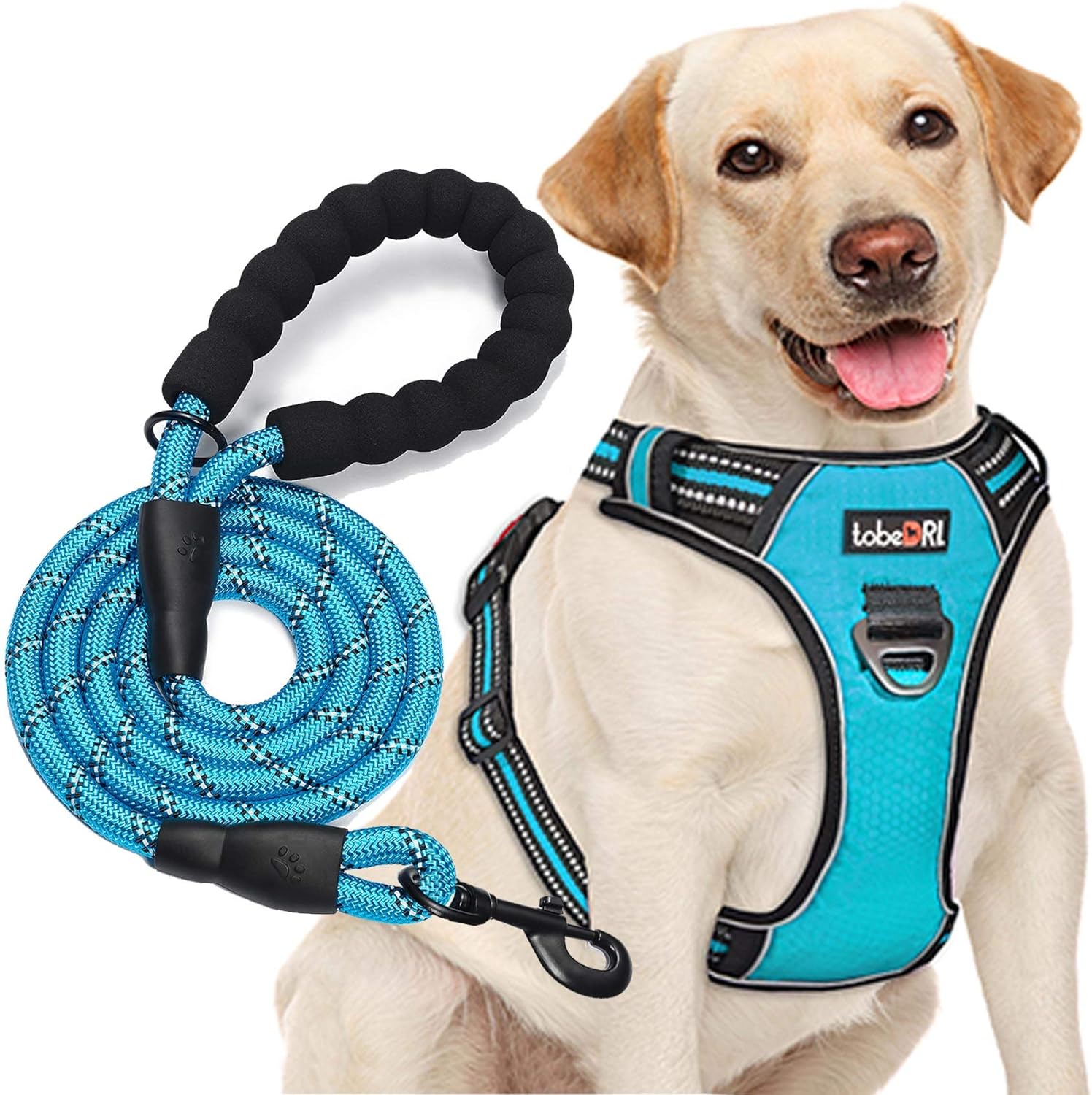
| Material Type | Neoprene, Nylon, Plastic, Polyester |
|---|---|
| Closure Type | Buckle |
| Dog Breed Size | Large |
| Included Components | dog leash |
This tobeDRI harness is built for everyday walks with large dogs and emphasizes control and visibility. It uses two metal delta rings—one front clip to discourage pulling and one back clip for relaxed walking—so you can switch attachment points depending on training or leash-walking needs. The harness fastens with quick snap buckles that include a locking feature to reduce accidental release, and four adjusters let you fine-tune fit around the neck and chest. Materials combine breathable mesh and high-density nylon oxford with neoprene padding for comfort, and reflective stitching improves visibility during low-light walks. It is machine washable and comes with a heavy-duty 5ft leash, while metal hardware is described as rust-proof. Limitations are that fit depends on accurate sizing for large breeds and the harness does not list heavy-duty reinforcement ratings for very strong pullers, so very powerful dogs may still require a dedicated training system or harness rated for high loads.
Best for: Owners of medium to large dogs who prioritize improved visibility and a no-pull option for dawn, dusk, or night walks and want a comfortable, adjustable harness for regular outdoor use.
Less Ideal for: People looking for a harness with a certified load or professional-grade training hardware for very strong pullers should consider purpose-built training harnesses instead.
- Front and back metal delta rings let you switch between no-pull control and relaxed walking
- Reflective stitching increases visibility for dawn, dusk, and nighttime walks
- Neoprene padding and breathable mesh improve comfort for long wear
- Locking snap buckles and multiple adjusters provide a secure, customized fit
- Machine washable with rust-proof metal hardware for easy maintenance
- Sizing must be accurate for large breeds to ensure effectiveness
- Not specified or rated for extreme pulling forces from very powerful dogs
Verdict: The best reflective walking training harness increases low-light visibility with reflective trim or panels to keep dogs and owners safer on dawn or dusk outings.
rabbitgoo Dog Harness Large
Best Easy-On Walking Training Harness

| Size | Large |
|---|---|
| Material Type | Polyester |
| Closure Type | Buckle |
| Dog Breed Size | Large |
This rabbitgoo harness is built for fast, fuss-free fitting and control on walks. It uses three quick-release buckles so you can open the harness, slip it onto a wiggly dog and snap it closed without forcing a head entry, which saves time for busy routines or handlers with limited mobility. The vest combines breathable mesh and soft padding for all-day comfort, and reflective strips improve visibility on evening walks. Two metal leash attachments give options: a front clip to reduce pulling and a back clip for casual walking or jogging, while a reinforced top handle offers extra control for lifting or quick restraint. Practical details include four adjustable straps for a tailored fit, sturdy metal hardware, and a lockable neck buckle to discourage accidental release. Limitations to note are the polyester construction is not chew-proof and the harness must be hand-washed per care instructions, so it may need more upkeep than simpler nylon straps.
Best for: Owners who need the quickest, least-fussy harness to get a wriggly or impatient dog ready for a walk, or handlers who value easy on/off and speed when gearing up.
Less Ideal for: People whose dogs habitually chew gear or who want a completely machine-washable harness should consider different heavy-duty or washable options.
- Three quick-release buckles enable very fast on/off without slipping the harness over the head
- Front and back metal leash clips let you switch between anti-pull control and regular walking
- Soft padded mesh vest with breathable lining for comfort on longer outings
- Reflective strips increase nighttime visibility
- Top handle and sturdy metal hardware provide secure short-term restraint and lifting support
- Not chew-proof, so unsuitable if your dog constantly nibbles gear
- Requires handwashing rather than machine wash for care
Verdict: The best easy-on walking training harness prioritizes quick-fitting design and straightforward closures so owners can harness their dogs fast with minimal fuss.
Choosing the Right Dog Walking Training Harness: Key Factors to Consider
Fit and Adjustability
A harness that fits properly is the foundation of effective training. Multiple adjustment points let you tailor the harness to your dog's unique shape, reducing gaps that lead to pressure spots and preventing the dog from slipping free. Proper fit distributes force across the chest and shoulders rather than the throat, which is safer for dogs that pull and gives you better mechanical advantage for redirection. Look for straps that can be tightened or loosened independently around the neck and chest so you can fine-tune fit as the dog grows or gains/loses weight.
A good fit also affects how training cues translate. If the harness shifts when you give a leash correction, the signal becomes muddled and learning slows. For that reason, expect to spend time measuring and adjusting at first, and choose materials and buckles that stay put once set.
Leash Attachment Options
Where the leash attaches determines how the harness controls motion. Front-clip attachments redirect the dog toward you when they pull, which can interrupt the behavior and encourage attention. Back-clip attachments are more comfortable for casual walking and give better overall control at a distance. Some harnesses include both clips or convertible hardware so you can switch depending on training goals.
Consider the hardware strength and placement. A leash ring positioned too low or too far back can create awkward angles or encourage mouth-focused pulling. The ideal setup offers a balance of training functionality and everyday convenience so you can practice correction techniques without compromising routine walks.
Material, Padding, and Breathability
Material and padding determine long-term comfort and durability. Breathable mesh and padded chest plates reduce rubbing and help on longer outings, while heavy-duty nylon or webbing withstands repeated strain. Padding should be placed where straps contact the skin, but not so thick that it causes heat retention in warm weather.
Also consider strap edge finishes and seam placement. Smooth, rounded edges and covered seams prevent chafing, especially for dogs with short coats. For dogs that swim or get wet, quick-drying fabrics and corrosion-resistant hardware are useful features to preserve the harness' lifespan.
Ease of Use and Donning
A harness should be quick and intuitive to put on and take off. Complicated designs that require threading the dog's legs or multiple awkward adjustments reduce real-world usability and make training sessions less consistent. Snap buckles in accessible locations, clear left/right markings, and a simple step-in or over-the-head path speed the process.
Ease of cleaning is also part of usability. Many owners need a harness that stands up to muddy walks and can be rinsed or machine washed without losing shape. Practical features like removable padding or washable straps extend useful life and simplify maintenance.
Safety and Hardware Quality
Reliable hardware prevents failures during high-stress moments. Look for metal D-rings or reinforced attachment points rather than weak plastic rings. Buckles should latch securely and resist accidental opening under load. Reinforced stitching at stress points reduces the chance of seam failure when a dog lunges or reacts to a sudden stimulus.
Safety also includes visibility: reflective trim or brightly colored panels help drivers and pedestrians spot you during dawn or dusk walks. Finally, consider whether the harness offers quick-release features for emergency situations while still preventing accidental disengagement during normal use.
Training Features and Handle Placement
Specific training features speed behavior change. Built-in top handles let you instantly gain close control for recalls, stair negotiation, or managing crowded areas. Some harnesses include attachment points for training leads or short lines that help shape behavior without repeatedly switching equipment.
Think about how the handle sits relative to the leash clip. A handle directly over the clip gives better leverage for emergency restraint, while offset handles can be more ergonomic for routine use. Choose a harness whose features match your training methods, whether you rely on redirection, voice cues, or gentle leash corrections.
How Do I Measure My Dog for a Training Harness?
Measure your dog before buying to ensure a secure fit. Key measurements are neck circumference where the collar would sit and chest girth at the widest point behind the front legs. Use a flexible tape and allow space for two fingers between the tape and the dog for comfort.
If your dog is between sizes, prefer the larger size with more adjustment range. Note the harness' strap widths and whether the manufacturer recommends trimming excess webbing for a cleaner fit. Keep a record of measurements so you can adjust the harness when weight or coat thickness changes.
- Neck: around the base, not the throat.
- Chest: widest part behind front legs.
- Check manufacturer size charts against your measurements.
Which Clip Style Should I Use for Training?
Front-clip attachments are effective for reducing pulling because they steer the dog toward you when tension is applied. They are particularly useful during leash-training sessions and for dogs that need consistent redirection.
Back-clip attachments are comfortable for relaxed walks and give slightly better directional control when your dog is walking calmly at your side. Many owners find a convertible harness with both options is the most versatile approach, allowing front-clip work during training and back-clip use for casual outings.
- Use front-clip for pull reduction and engagement.
- Use back-clip for comfortable, everyday walks.
- Convertible setups let you switch without swapping gear.
How Can I Prevent Chafing and Hotspots?
Prevent rubbing by ensuring straps sit flat and do not twist. Padding over the chest plate and around the girth straps reduces pressure points. For dogs with sensitive skin, choose softer materials and check straps regularly for wear that creates rough edges.
If you notice redness after a walk, loosen or re-position straps and try shorter sessions while adjusting fit. Long-term prevention includes keeping the coat clean and trimmed where straps sit, and rotating harness types if the dog uses a harness daily.
- Check fit after 10–15 minute walks and adjust as needed.
- Use padded chest pieces for short-muzzled breeds or small dogs.
- Replace harnesses with frayed straps to avoid new hot spots.
What Are Practical Leash Setups to Use with a Training Harness?
Choose a leash length and style that complements the harness and your training goals. Shorter training lines, 4 to 6 feet long, give better control in urban areas and during redirection work. Longer lines are useful for recall practice and off-leash simulation in safe, enclosed areas.
Consider a leash with a secure clip that matches the harness hardware to avoid twisting or accidental release. Having a short training lead plus a standard walking leash in your kit lets you switch quickly between tight control and relaxed walking without changing the harness.
- Short 4–6 ft lead for training and busy areas.
- Longer line for recall practice in safe spaces.
- Match leash clip type to harness hardware for compatibility.
When Should I Introduce a Harness to a Puppy?
Introduce harnesses early but gradually. Start by letting the puppy sniff the harness, then briefly put it on indoors for a few minutes while offering treats and praise. Slowly increase wear time over several days so the puppy associates the harness with positive experiences.
Avoid long sessions initially and never force the puppy into a full walk immediately. Use short, frequent practice sessions to build tolerance and pair the harness with training cues like a regular heel or sit before moving to outdoor walks.
- Begin with short, positive indoor sessions.
- Gradually increase wear time before outdoor walks.
- Use treats and praise to build a positive association.
How We Chose the Best Dog Walking Training Harness
We focused on features that matter most when selecting a walking training harness for consistent, everyday use. Primary evaluation criteria included fit and adjustability, since a secure, customizable fit prevents rubbing and keeps control points effective; leash attachment options, because front-clip versus back-clip placement changes how force is distributed and how easily you can manage pulling; build quality and materials, to ensure the harness holds up to repeated use and is easy to maintain; padding and comfort, so the harness is wearable for long walks without causing pressure points; and training utility, meaning places to add handles or quick-release buckles that support specific techniques. We also considered safety features such as reflective trim for low-light visibility and properly rated hardware to avoid failure under load. Excluded from consideration were products lacking clear adjustability or using flimsy fastenings, items aimed solely at fashion rather than control, and harnesses intended only for car restraint or sport-specific activities. Final selections balanced durability, adjustability, and training-friendly hardware rather than relying on any single attribute.
Our full evaluation process is outlined in our review methodology.
FAQ
Can a harness stop my dog from pulling completely?
A harness can significantly reduce pulling by changing how force is directed, but it rarely eliminates the behavior alone. Consistent training, reinforcement of loose-leash walking, and choosing a harness with the right clip placement together produce the best results.
Is a front-clip harness safe for all dogs?
Front-clip harnesses are safe for most dogs and effective at redirecting pulling, but their suitability depends on the dog's size and temperament. Very strong or reactive dogs may still require additional training techniques or more robust hardware for safety.
How often should I replace a walking training harness?
Replace a harness when you see significant wear such as frayed webbing, cracked hardware, or stretched straps that no longer hold adjustments. Regular inspection after heavy use or exposure to water and dirt helps spot issues before they become safety risks.
Can I use a training harness for everyday walks too?
Yes. Many training harnesses are designed for both focused training sessions and routine walks. If you plan to use the same harness daily, prioritize comfort, breathable materials, and easy cleaning to keep it comfortable over repeated use.
Should small dogs use the same harness style as large dogs?
The basic principles of fit, adjustability, and attachment placement apply to all sizes, but strap width, hardware rating, and padding should match the dog's size. Small dogs benefit from narrower straps and lighter hardware to avoid unnecessary bulk.
Final Verdict
Choose a walking training harness that balances secure fit, appropriate leash attachment, and comfort for regular use. Prioritize adjustability and strong hardware so the harness stays safe and effective as your dog progresses through training. Remember that equipment supports training, but consistent, positive reinforcement and proper leash techniques are what ultimately change behavior. With the right harness and a clear plan, you can reduce pulling and enjoy more controlled, comfortable walks.

