

When your dog has a sensitive stomach, the food you choose can make daily life much easier. Dry dog food formulated for digestive problems focuses on gentle proteins, predictable carbohydrate sources, and fiber that supports regular stool quality. Picking the right formula matters for reducing vomiting, loose stools, and gas, while still delivering complete nutrition. This guide covers seven carefully shortlisted dry foods for digestive problems. each pick was evaluated for ingredient transparency, fiber and carbohydrate choices, digestibility, and suitability for common canine GI issues. Read on to understand the key tradeoffs so you can match a formula to your dog's specific digestive needs.
Top Picks at a Glance
| Best Overall Dry Food for Digestive Problems A well-rounded formula that soothes digestion and meets daily needs | Hill's Prescription Diet GI Biome Dry Dog Food |  |
| Best Budget Dry Food for Digestive Problems An affordable formula that still helps manage common digestion issues | IAMS Advanced Health Healthy Digestion 4.5 lb |  |
| Best High-Fiber Dry Food Formulas focused on extra fiber to support gut motility and stool health | Fromm Family Nutritionals Digestive Support 4 lb |  |
| Best Limited-Ingredient Dry Food Simple formulas with fewer ingredients for easier digestion and sensitivity testing | KOHA Bland Diet Chicken Dry Kibble |  |
| Best Grain-Free Dry Food Grain-free recipes that replace cereals with alternative carbohydrate sources | Nature's Recipe Grain Free Salmon 4 lb |  |
| Best Sensitive-Stomach Dry Food Specifically formulated recipes for dogs with frequent upset or loose stool | Hill's Science Diet Sensitive Stomach Small Bites |  |
| Best Premium Dry Food Higher-end formulas with superior ingredient quality and targeted digestive support | Open Farm Digestive Health Dry Dog Food 4lb |  |
Hill's Prescription Diet GI Biome Dry Dog Food
Best Overall Dry Food for Digestive Problems

| Flavor | Chicken |
|---|---|
| Item Form | Dry Food |
| Specific Uses For Product | Sensitive Stomach |
| Special Ingredients | Prebiotic |
| Animal Food Diet Type | Veterinary Diet |
Hill's Prescription Diet Gastrointestinal Biome is a veterinary therapeutic dry food meant to manage dogs with digestive upset and loose stool. It works as a daily feeding option under veterinary guidance, delivering a high-fiber recipe with a proprietary ActivBiome+ prebiotic blend that the brand says helps firm stool within 24 hours and reduces recurrence. The formula includes sources of soluble and insoluble fiber plus omega-3 fatty acids to support gut function and overall nutrition, and it is made in the U.S. with ingredients selected by Hill's nutritionists. Practical benefits include an evidence-backed focus on microbiome support and clear feeding and transition guidance for introducing the diet. Limitations are that it is a prescription-strength veterinary diet intended for dogs with GI issues, so it should be used under vet direction and may be more nutrient-specific than a general maintenance food, and some dogs may need a gradual transition if they are picky or have strong flavor preferences.
Best for: Buyers seeking a vet-formulated dry diet to manage active digestive upset and firm stools while maintaining daily nutrition for dogs.
Less Ideal for: Pet owners looking for a general everyday maintenance kibble for healthy dogs without GI issues or those who prefer an over-the-counter, non-therapeutic formula.
- Clinically shown formula aimed at firming loose stool quickly with ActivBiome+ prebiotic technology
- High-fiber blend designed to support regular bowel movements and reduce recurrence of diarrhea
- Includes omega-3 fatty acids (DHA and EPA) that support gut and overall health
- Formulated by Hill’s nutritionists and veterinarians and made in the USA
- Therapeutic veterinary diet intended for use under veterinary supervision rather than casual maintenance feeding
- May not suit picky eaters because of its focused formulation and flavor profile
Verdict: The best overall dry food for digestive problems balances gentle, digestive-supporting ingredients, consistent nutrient levels, and broad palatability for most dogs with tummy issues.
IAMS Advanced Health Healthy Digestion 4.5 lb
Best Budget Dry Food for Digestive Problems
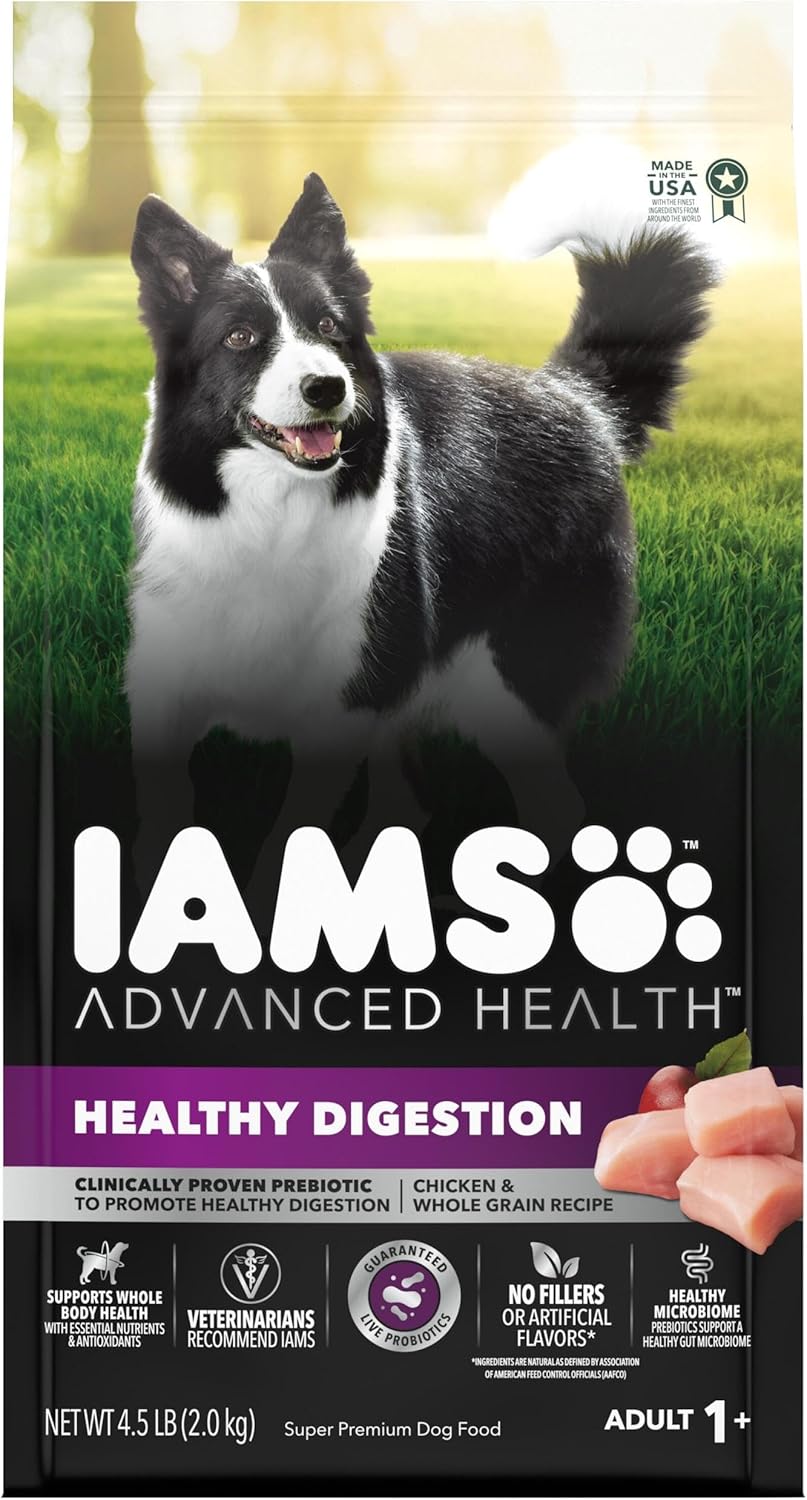
| Flavor | Chicken |
|---|---|
| Age Range Description | Adult |
| Item Form | Dry Kibble |
| Specific Uses For Product | Digestive Health |
| Unit Count | 72 Ounce |
IAMS Advanced Health Healthy Digestion is a dry kibble aimed at supporting regularity and healthy stools through a fiber-forward recipe that includes beet pulp, prebiotics and guaranteed live probiotics. You feed it as an everyday adult maintenance diet and the package provides a clear feeding guide to adjust portions by weight and activity level. The formula lists real chicken first and avoids wheat, artificial flavors, and artificial preservatives, which helps keep ingredients straightforward for budget-conscious buyers. Practical benefits include easier stool consistency for dogs with mild digestive sensitivity and the convenience of a widely available kibble with nutrient targets for adult maintenance. Limitations to expect are that the ingredient panel includes chicken by-product meal and grain ingredients like corn and sorghum rather than novel or limited-ingredient proteins, so it is not tailored for dogs with specific protein or grain allergies. Also the 4.5 lb bag size is modest, so frequent repurchasing may be necessary for larger dogs or multi-dog households.
Best for: Owners who need an affordable, fiber-focused adult kibble that helps firm stools and supports routine digestive health without premium ingredient premiums.
Less Ideal for: Families seeking a grain-free, single-protein, or limited-ingredient diet for confirmed food allergies should consider alternatives designed for elimination diets.
- Blend of natural fiber and prebiotics to support digestion and stool regularity
- Real chicken listed as the primary ingredient for animal protein
- Includes guaranteed live probiotics for gut support
- Formulated without wheat, artificial flavors, or artificial preservatives
- Contains common grains and chicken by-product meal rather than novel or single-source protein
- Smaller 4.5 lb bag may require frequent repurchasing for larger dogs
Verdict: The best budget dry food for digestive problems provides cost-conscious pet owners a reasonably gentle, digestible recipe that supports stool quality and digestion without premium pricing.
Fromm Family Nutritionals Digestive Support 4 lb
Best High-Fiber Dry Food

| Flavor | Chicken & Oatmeal |
|---|---|
| Age Range Description | Adult |
| Item Form | Dry Kibble |
| Special Ingredients | pre-, pro-, and postbiotics, hydrolyzed proteins |
| Unit Count | 64 Ounce |
Fromm Family Nutritionals Digestive Support is a low-fat dry kibble designed to help dogs with sensitive stomachs and weaker digestion. It combines hydrolyzed chicken and chicken liver for highly digestible protein with a mix of soluble and insoluble fibers — pumpkin, dried beet pulp, miscanthus grass, and dried chicory root — plus added prebiotics, probiotics, and postbiotics to promote a balanced gut microbiome. In practice you would feed this as a daily adult maintenance diet for dogs that need firmer stools and steadier digestion; the low fat level can also help pets prone to pancreatitis or weight gain. The recipe emphasizes digestibility and nutrient absorption, so transitions should be gentler than with standard formulas, and the ingredient list includes whole grains like oatmeal and rice rather than being grain-free. Limitations are that it is a 4 lb bag intended for short-term trials or small dogs rather than long-term bulk supply for large households, and dogs with allergies to chicken or grains will need an alternative protein or grain-free option.
Best for: Seniors and adult dogs with sensitive digestion who need firmer stools and gentler, more digestible nutrition focused on fiber and gut-supporting microbes.
Less Ideal for: Owners seeking a grain-free or novel-protein diet, or those who need large bulk bags for multiple or large-breed dogs.
- Specialized fiber blend combining soluble and insoluble sources to support stool bulk and regularity
- Hydrolyzed proteins for easier digestion and improved nutrient absorption
- Added prebiotics, probiotics, and postbiotics to support a healthy gut microbiome
- Low-fat formulation suitable for dogs needing reduced dietary fat
- Small 4 lb package size may not be economical for large or multi-dog households
- Contains chicken and grains, so not suitable for dogs with chicken or grain-specific allergies
Verdict: The best high-fiber dry food is aimed at dogs who need improved stool bulk and regularity by providing elevated, digestible fiber sources in the kibble.
KOHA Bland Diet Chicken Dry Kibble
Best Limited-Ingredient Dry Food

| Flavor | Chicken |
|---|---|
| Item Form | Dry Kibble |
| Unit Count | 55.98 Ounce |
| Special Ingredients | Bone Broth, Brown Rice, Prebiotic, Probiotic, Pumpkin |
| Allergen Information | Corn-Free, Pea-Free, Potato-Free, Soy Free, Wheat Free |
KOHA Bland Diet is a limited-ingredient dry kibble designed to simplify feeding for dogs with sensitive stomachs. It uses a single animal protein source, chicken, paired with brown rice and pumpkin to support digestion and regular stools, and each bite is finished with a bone broth coating to improve palatability. The formula includes prebiotics and probiotics to help maintain a healthy gut microbiome and lists omega-3 and omega-6 sources for skin and coat support. It omits common fillers and potential triggers such as corn, peas, potatoes, soy, and artificial colors or flavors, making it practical for elimination trials or long-term sensitive-stomach feeding. Practical trade-offs are that the recipe is focused on digestive support rather than novel-protein rotation, so dogs needing multiple protein options for complex allergies may need alternatives; also unit count is one package size so confirm portioning for small breeds. For small dogs with uncomplicated ingredient sensitivity, this kibble is an easy-to-serve, nutritionally complete option that prioritizes digestibility and taste.
Best for: Buyers seeking a short, focused ingredient list to manage suspected food sensitivities in small dogs and who prioritize digestibility and simple elimination diets.
Less Ideal for: Owners who need multiple novel protein options for confirmed complex food allergies or who prefer rotating proteins frequently should consider other formulas.
- Single animal protein (chicken) simplifies elimination diets
- Includes pumpkin and brown rice for gentle, highly digestible carbohydrates
- Contains prebiotics and probiotics to support gut health
- Coated in bone broth to increase palatability for picky eaters
- Free from common fillers and artificial colors or flavors
- Only one listed protein option which limits choices for dogs reactive to chicken
- Sold in a single package unit count that may require careful portioning for very small dogs
Verdict: The best limited-ingredient dry food suits dogs with suspected ingredient sensitivities by minimizing components to reduce triggers while still supplying essential nutrition.
Nature's Recipe Grain Free Salmon 4 lb
Best Grain-Free Dry Food

| Flavor | Salmon |
|---|---|
| Life stage | Adult |
| Unit Count | 64 Ounce |
| Special Ingredients | grain-free |
| Breed Recommendation | All Breed Sizes |
Nature's Recipe Grain Free Salmon, Sweet Potato & Pumpkin is a 4 lb dry dog food built around real salmon as the top ingredient and carbohydrate sources chosen for digestibility. It is typically fed as a regular adult diet and can be used as the sole kibble or mixed with wet food; the package is resealable for everyday use. Key features include salmon and salmon meal for animal protein, grain-free carbohydrate sources like sweet potato and pumpkin to supply fiber, and added vitamins and minerals intended to support immune and digestive health. In practice this formula offers an accessible grain-free option for dogs with suspected grain sensitivities and for owners prioritizing skin and coat support from omega-rich fish ingredients. Limits to consider are that grain-free does not guarantee relief for all gastrointestinal or skin issues and ingredient-sensitive dogs may still react to novel proteins or peas, and the 4 lb bag may require frequent repurchasing for larger dogs or multi-dog households.
Best for: Owners who prefer grain-free formulas to address suspected grain-related sensitivities and want a salmon-based recipe aimed at supporting digestion and skin and coat health.
Less Ideal for: Owners seeking large-bag, economy feeding solutions or those whose dogs have known sensitivities to fish, peas, or other included ingredients should consider alternatives.
- Real salmon is listed as the number one ingredient for animal-based protein
- Grain-free carbohydrate sources like sweet potato and pumpkin provide digestible fiber
- Includes added vitamins and minerals aimed at digestive and immune support
- Resealable 4 lb bag is convenient for daily feeding and freshness
- Grain-free formulation still contains legumes and novel ingredients that can trigger sensitivities in some dogs
- Small 4 lb bag may be inconvenient or less economical for large dogs or households with multiple dogs
Verdict: The best grain-free dry food is for owners seeking diets without grains, using alternative carbohydrates and digestible proteins to support sensitive stomachs when grain intolerance is suspected.
Hill's Science Diet Sensitive Stomach Small Bites
Best Sensitive-Stomach Dry Food

| Flavor | Chicken |
|---|---|
| Age Range Description | Adult 1-6 |
| Item Form | Pellet |
| Specific Uses For Product | Stomach & Skin Sensitivity support Small Kibble |
| Unit Count | 64 Ounce |
Hill's Science Diet Sensitive Stomach & Skin Small Bites is a dry adult formula designed for dogs that have occasional digestive upset and skin sensitivity. The recipe uses high-quality chicken as the first ingredient along with prebiotic fiber to support a balanced gut microbiome and improve nutrient absorption, and it includes vitamin E and omega fatty acids to help maintain skin and coat health. The small kibble size makes it easy for brachycephalic breeds like French Bulldogs to pick up and chew, and the formula emphasizes gentle carbohydrates such as barley and rice rather than heavy legumes. Practical benefits include predictable digestibility, a complete nutrient profile with clinically proven antioxidants, and guidance for transitioning pets to the food. Limitations are that it is not an elimination diet with a novel protein, so dogs with specific protein allergies may need a more restricted formula, and the bag sizes and ingredient list include grains, which some owners prefer to avoid entirely. For many dogs prone to mild-to-moderate stomach sensitivity, this offers a veterinary-backed, easy-to-feed option.
Best for: Owners seeking a veterinarian-recommended, highly digestible daily food for adult dogs that commonly have mild digestive upset and skin sensitivity, especially for breeds that benefit from small kibble.
Less Ideal for: Owners whose dogs require a novel protein or strict limited-ingredient elimination diet for confirmed food allergies should choose a dedicated hypoallergenic formula instead.
- First ingredient is high-quality chicken for consistent protein
- Prebiotic fiber to support gut microbiome and digestibility
- Includes vitamin E and omega fatty acids to support skin and coat
- Small kibble size suited to dogs with short muzzles or picky chewers
- Clinically backed antioxidants to support immune health
- Contains common grains and chicken, so not suitable as a novel-protein elimination diet
- Not marketed as a limited-ingredient formula for dogs with multiple food sensitivities
Verdict: The best sensitive-stomach dry food targets pets with recurrent digestive upset by using gentle proteins, prebiotics, and highly digestible ingredients to soothe digestion and improve stool consistency.
Open Farm Digestive Health Dry Dog Food 4lb
Best Premium Dry Food

| Flavor | Digestive Health |
|---|---|
| Item Form | Pellet |
| Age Range Description | Adult |
| Unit Count | 64 Ounce |
| Special Ingredients | Alaskan Pollock |
Open Farm Digestive Health is a premium dry kibble designed to support dogs with sensitive stomachs and chronic digestive issues. It uses wild Alaskan pollock and ocean whitefish meal as primary proteins and adds soluble fibers like oatmeal and pumpkin plus dried chicory root to help maintain stool quality. The formula explicitly includes prebiotics, probiotics (Bacillus coagulans fermentation product), and postbiotics to support healthy gut flora and nutrient absorption, and it omits common fillers like poultry, corn, soy, peas, and potatoes. In practice this food works as a daily complete diet for adult dogs that need gut support; follow the gradual transition schedule on the bag to reduce upset. Benefits include traceable sourcing and veterinarian formulation, which can reassure owners prioritizing ingredient quality and manufacturing standards. Limits are typical for specialized premium kibble: some dogs may not respond to any single formula and you should expect higher cost versus standard brands, and this is not a therapeutic veterinary prescription diet—consult your vet for severe GI disease.
Best for: Owners who prioritize high-quality, vet-formulated nutrition and want a daily kibble that actively supports gut flora and stool quality for dogs with mild to moderate digestive sensitivity.
Less Ideal for: Owners seeking a veterinary-prescribed medical diet for serious GI disorders or those on a strict budget who need the lowest-cost maintenance food.
- Formulated by veterinarians with targeted gut-support ingredients (pre-, pro-, and post-biotics).
- Uses easily digestible wild Alaskan pollock as the first ingredient.
- Includes soluble fibers like pumpkin and chicory root to support stool quality and healthy microbiome.
- No poultry, corn, wheat, soy, peas, legumes, or potato, reducing common irritants for sensitive dogs.
- Traceable sourcing and made in the USA with third-party certified ingredients.
- Not a prescription diet; may be insufficient for dogs with severe or diagnosed gastrointestinal disease.
- Premium ingredients mean a higher cost compared with mainstream kibble.
- Some dogs may still need an elimination trial to confirm ingredient tolerance.
Verdict: The best premium dry food is for owners willing to invest in top-quality ingredients, advanced digestive aids, and rigorous manufacturing standards to optimize gut health and overall nutrition.
Choosing the Right Dry Dog Food Digestive Problems: Key Factors to Consider
Protein Source and Digestibility
Protein quality affects both nutrient delivery and how easy the food is to break down in the digestive tract. Highly digestible proteins or single-protein formulas reduce the chance of food-related sensitivities and lower the workload on the pancreas and intestines.
For dogs with chronic digestive problems, consider formulas that list a clear, named protein early in the ingredient list. Hydrolyzed proteins are sometimes recommended for immune-mediated food reactions because they are broken into smaller chains that are less likely to trigger a response. Low-fat proteins can also be easier to tolerate for dogs prone to pancreatitis or fat-induced diarrhea.
Carbohydrate Type and Complexity
Carbohydrates vary in how readily they are digested and how much they affect stool volume. Simple grains and highly processed starches can spike fermentative activity in the colon and worsen gas or loose stools for some dogs.
Prefer foods with lower-glycemic, easily digestible carbohydrate sources such as cooked rice, sweet potato, or peas, depending on tolerance. For dogs with inflammatory bowel disorders, limited-ingredient formulas that use a single, predictable carbohydrate help identify triggers and stabilize stool consistency.
Fiber Composition and Amount
Fiber is central to managing stool quality and colonic health. Soluble fiber helps form a gel that firms stool and slows transit time, while insoluble fiber adds bulk and supports regularity. The right balance reduces both constipation and diarrhea in many cases.
Look for foods that list specific fiber sources like beet pulp, psyllium, or pumpkin rather than a generic fiber declaration. Too much fermentable fiber may worsen gas in sensitive dogs, so consider moderate total fiber and a mix of soluble and insoluble types tailored to your dog's symptoms.
Digestive Supports: Probiotics and Enzymes
Added probiotics and digestive enzymes can improve nutrient absorption and help stabilize the intestinal microbiome after bouts of diarrhea or antibiotic use. Probiotics may shorten recovery time and reduce pathogen-driven diarrhea, while enzymes assist in breaking down fats, proteins, and carbohydrates for dogs with enzyme insufficiencies.
Check for stable probiotic strains and whether they are listed with safe counts or guaranteed viability. Enzyme blends that include protease, amylase, and lipase can be helpful for dogs that struggle to digest a full-fat or complex diet, but enzyme benefits vary by individual need.
Fat Level and Fat Type
Dietary fat influences stool consistency and is a common cause of digestive upset when levels are too high or when a dog has pancreatic issues. Lower to moderate fat levels are generally easier on dogs with chronic digestive problems, while omega-3 fatty acids can help reduce intestinal inflammation.
When evaluating formulas, compare crude fat on the guaranteed analysis and look for named fat sources such as fish oil. For dogs with recurrent pancreatitis, stricter fat limits are often necessary and should be discussed with a veterinarian.
Ingredient Transparency and Allergen Management
Clear ingredient labeling helps you identify potential allergens and decide whether an elimination trial is feasible. Limited-ingredient diets or those that avoid common triggers like beef, dairy, or wheat make it easier to isolate the cause of chronic GI signs.
Avoid formulas that use vague meat meals or multiple unnamed components early in the list. Transparency also helps you match dietary therapy to any concurrent medical guidance from your veterinarian, especially when planning a trial for food-responsive digestive disease.
How Soon Should I Expect Improvement After Switching Foods?
Improvement timelines vary depending on the underlying cause. Many dogs show measurable changes in stool quality within one to two weeks when switched to a gentler, more digestible formula, but some conditions take longer to respond.
If you are performing an elimination trial for suspected food sensitivity, allow at least eight weeks on the new diet to accurately judge response. For acute upset, a change in 48 to 72 hours may be noticeable, but persistent or worsening signs merit veterinary evaluation.
- Acute mild upset: 48–72 hours for initial improvement
- Food trials for sensitivity: up to 8 weeks
- Chronic conditions: may require dietary plus medical management
Can Probiotics and Prebiotics Replace a Therapeutic Diet?
Probiotics and prebiotics are supportive tools rather than full replacements for a therapeutic diet. They can help rebalance gut flora and improve stool quality but do not change the base macronutrient profile or remove dietary triggers.
Use them as an adjunct alongside a suitable dry food when the goal is to improve digestion or recover from a gastrointestinal episode. Discuss strain selection and dosing with your veterinarian, especially for puppies, elderly dogs, or immunocompromised animals.
- Probiotics support microbiome balance
- Prebiotics feed beneficial bacteria and may increase short-chain fatty acid production
- Not a substitute for removing known dietary triggers
How to Transition Your Dog's Diet Without Causing More Upset
A gradual transition over 7 to 10 days is safest for most dogs. Start with mostly the current food with a small portion of the new food mixed in, then slowly increase the new food proportion every couple of days. Rapid switches can trigger vomiting or diarrhea, undoing the benefit of a better formula.
If your dog has severe sensitivity or a history of dramatic reactions during transitions, extend the transition to two weeks and monitor stool quality and appetite closely. Keep fresh water available at all times, and pause the transition if vomiting occurs, consulting your veterinarian.
- Day 1–2: 25% new, 75% old
- Day 3–5: 50% new, 50% old
- Day 6–7: 75% new, 25% old
- Day 8+: 100% new if tolerated
When Should I Call the Veterinarian?
Contact your veterinarian if your dog shows signs of severe dehydration, persistent vomiting, bloody stools, abdominal pain, lethargy, or a rapid decline in appetite. These signs suggest more than simple dietary intolerance and need prompt medical attention.
Also seek veterinary advice if dietary changes fail to improve symptoms after an appropriate trial period or if you suspect a metabolic or infectious cause. Your veterinarian can recommend diagnostics and whether a prescription therapeutic diet or medical treatment is needed.
- Severe or bloody diarrhea
- Repeated vomiting or refusal to eat
- Marked weight loss, lethargy, or dehydration
Reading Guaranteed Analysis: What Matters Most
The guaranteed analysis lists crude protein, fat, fiber, and moisture. For dogs with digestive problems, focus on crude protein digestibility and moderate fat levels, plus a reasonable crude fiber percentage that indicates the presence of fiber without excess fermentable material.
Remember that guaranteed analysis does not tell the whole story about ingredient quality. Use it alongside the ingredient list and any declared digestive supports like probiotics or enzymes to form a complete picture of how a food will likely perform.
- Moderate protein with clear named sources
- Lower to moderate fat for easier digestion
- Moderate total fiber with specific fiber sources listed
How We Chose the Best Dry Dog Food Digestive Problems
We screened dry dog foods designed for digestive problems using criteria that matter for everyday gut health and reliable nutrition. Key evaluation points included ingredient quality and sourcing, focusing on limited or novel protein options and easily digested carbohydrate sources. We assessed fiber type and amount to ensure formulas provide soluble and insoluble fiber in balanced proportions for stool consistency and colonic health. Digestibility measures were approximated from guaranteed analysis and ingredient order to prefer formulas likely to be absorbed without stressing the gut. Protein digestibility and hypoallergenic potential were weighed, with emphasis on single-protein or hydrolyzed options when appropriate. We also considered added digestive supports such as prebiotics, probiotics, digestive enzymes, and omega fatty acids that can reduce inflammation and support mucosal repair. Exclusions included any foods with vague ingredient lists, excessive unspecified meat by-products, or incompatible formulations for dogs with common GI restrictions. The final shortlist reflects products that best align with the nutritional and digestive priorities described above.
Our full evaluation process is outlined in our review methodology.
FAQ
Is a limited-ingredient dry food always better for digestive problems?
Not always. Limited-ingredient diets can simplify identifying triggers and reduce exposure to potential allergens, but the overall nutrient balance and digestibility remain crucial. Some dogs tolerate diverse but highly digestible formulas better than a limited-ingredient option that lacks certain nutrients.
Should I avoid all grains if my dog has digestive issues?
Grains are not inherently harmful and can be easy to digest for many dogs when cooked and combined appropriately. Avoiding grains is only necessary if your veterinarian suspects a grain-specific sensitivity. Focus instead on carbohydrate quality and individual tolerance.
How do I know if my dog needs a low-fat diet?
Low-fat diets are recommended when a dog has a history of pancreatitis or shows fat-related diarrhea. Discuss your dog's clinical history with a veterinarian to determine appropriate fat targets, and choose formulas that list fat percentage in the guaranteed analysis to guide your decision.
Can adult dogs with digestive problems eat puppy formulations?
Puppy formulas are higher in calories and certain nutrients to support growth and are usually unnecessary for adult dogs unless directed by a veterinarian. Using the wrong life-stage food long term can lead to excess weight gain or nutrient imbalances, which may worsen digestive signs.
Will switching to a home-cooked diet fix my dog's digestion?
Home-cooked diets can be tailored to avoid triggers but require careful planning to meet complete nutritional needs. Without veterinary or nutritionist guidance, home diets risk nutrient imbalances that could harm long-term health. Consider them as a short-term diagnostic tool only with professional oversight.
Final Verdict
Addressing digestive problems with the right dry food starts with clear priorities: choose predictable, digestible proteins, moderate fat, and a balanced fiber profile that suits your dog's symptoms. Complementary digestive supports such as probiotics or enzymes can be helpful, but they do not replace the importance of the base diet. Weigh the tradeoff between a limited-ingredient approach for easier diagnosis and a nutritionally complete formula designed for gut health. When in doubt or when signs are severe or persistent, consult your veterinarian to align diet choice with any necessary medical treatment.

