

Finding the right dry dog food for arthritis can make daily life easier for a dog with stiff or painful joints. The right formula supports mobility, helps control inflammation, and preserves lean muscle so your dog can stay active. This guide shortlists the top dry foods focused on arthritis care and explains how each option is suited to dogs with joint concerns. We evaluated nutrient composition, joint-supporting ingredients, and digestibility to highlight the best choices for different needs. Read on to see the top picks and what to consider when choosing the right dry food for an arthritic dog.
Top Picks at a Glance
| Best Overall Dry Food for Arthritis A balanced formula focused on joint support and overall nutrition | Purina ONE Plus Joint Health Dog Food 16.5 lb |  |
| Best Budget Dry Food for Arthritis A lower-cost option with basic joint-supporting ingredients | IAMS Healthy Aging Dry Dog Food 5 lb |  |
| Best Premium Dry Food Higher-end recipes with superior ingredients and manufacturing standards | Royal Canin Large Joint Care 30 lb |  |
| Best Grain-Free Dry Food A grain-free formulation that avoids grains while meeting nutrient needs | Open Farm Grain Free Senior Dog Food 4 lb |  |
| Best High-Protein Dry Food A protein-forward option to support muscle mass and mobility | Nutro Ultra Senior Dry Dog Food 24 lb |  |
| Best Large-Bag Dry Food A high-capacity bag for multi-dog homes or long-term savings | Nutrish Real Chicken & Veggies 40 lb |  |
Purina ONE Plus Joint Health Dog Food 16.5 lb
Best Overall Dry Food for Arthritis

| Flavor | Chicken |
|---|---|
| Age Range Description | Adult |
| Item Form | Blended, Crunchy, Kibble, Morsels |
| Specific Uses For Product | Heart Care, Hip and Joint Support, Immune Support, Muscle Care |
| Unit Count | 264 Ounce |
Purina ONE Plus Joint Health is a high-protein dry kibble built to support older dogs with joint stiffness and declining mobility. Chicken is the first ingredient and the formula includes glucosamine and fish oil to support cartilage and deliver omega fatty acids, while crunchy kibble plus meaty morsels aim to keep meals palatable for picky seniors. The recipe also lists additional vitamins, minerals, and antioxidant sources intended to support immune health, skin and coat, and muscle strength, and it is designed to be fed dry or moistened for easier chewing. Practical benefits include readily available joint-support nutrients in every serving and a protein-forward profile that helps preserve lean mass in less active dogs. Limitations are that the ingredient list contains grains and by-product meals, which some owners avoid, and portion control is important because the calorie density requires monitoring to prevent weight gain in sedentary seniors. Feeding transitions should be gradual and a vet should be consulted for dogs with specific medical conditions.
Best for: Owners seeking a palatable, protein-forward adult kibble that delivers joint-support nutrients and easy feeding options for older dogs with mild to moderate arthritis.
Less Ideal for: Owners who require grain-free or limited-ingredient diets for food sensitivities or those needing veterinary-prescribed therapeutic diets should look elsewhere.
- Contains glucosamine and fish oil to support joint cartilage and mobility
- Real chicken is listed as the first ingredient for a high-protein profile
- Includes omega fatty acids and multiple antioxidant sources for skin, coat, and immune support
- Can be served dry or moistened to accommodate seniors with dental sensitivity
- Includes grain and chicken by-product meal, which some owners prefer to avoid
- Calorie-dense formula requires careful portion control for less active or overweight seniors
Verdict: The best overall dry food for arthritis combines clinically supported joint nutrients, complete balanced nutrition, good palatability, and ingredient quality to support mobility and everyday health.
IAMS Healthy Aging Dry Dog Food 5 lb
Best Budget Dry Food for Arthritis

| Flavor | Chicken |
|---|---|
| Age Range Description | Senior |
| Item Form | Dry Kibble |
| Unit Count | 80 Ounce |
| Specific Uses For Product | Bone Health, Digestive Health, Hip and Joint Support, Immune Support |
IAMS Proactive Health Healthy Aging is a senior-targeted dry kibble that aims to support older dogs with a mix of targeted nutrients and accessible ingredients. It is typically fed as a maintenance diet for senior dogs and includes DHA from marine microalgae for mental and visual sharpness, an antioxidant blend with vitamin E and beta carotene for immune support, and a tailored fiber and prebiotic blend for digestion. The crunchy kibble is intended to help reduce plaque buildup while balanced minerals support vital organs and ingredients like chicken and chicken by-product meal provide the primary protein sources. For budget-conscious owners this 5 lb bag offers a recognizable brand formula with many functional claims you would expect in a senior recipe, though the ingredient list includes by-product meal, grains, and soy which are lower-cost components compared with premium formulas. Expect reliable everyday senior nutrition at a lower price point, but not the grain-free or single-protein ingredient profile found in higher-end options.
Best for: Owners of small-breed senior dogs who need an affordable, purpose-formulated senior diet that covers core needs like joint, immune, and digestive support without premium ingredient costs.
Less Ideal for: Owners seeking grain-free recipes, single-source novel proteins, or a premium limited-ingredient formula for dogs with multiple food sensitivities should look elsewhere.
- Formulated specifically for senior dogs with DHA for cognitive and visual support
- Includes antioxidant blend (vitamin E and beta carotene) to help support immune health
- Tailored fiber and prebiotics to promote healthy digestion
- 5 lb bag size is convenient and budget-friendly for small-breed owners
- Contains chicken by-product meal and common grains rather than single high-end protein sources
- Includes allergens like soy and barley that may not suit sensitive dogs
Verdict: The best budget dry food for arthritis delivers affordable, nutritionally complete meals with sensible levels of joint-support ingredients and reliable quality for cost-conscious pet owners.
Royal Canin Large Joint Care 30 lb
Best Premium Dry Food

| Targeted age | Adult (15 months+) |
|---|---|
| Breed size | Large breeds 56-100 lb |
| Primary benefit | Hip and Joint Support |
| Form | Pellet |
| Container | Bag, 30 lb |
Royal Canin Large Joint Care is a veterinary-style dry formula aimed at large adult dogs with joint concerns. It is used as a daily diet to support joint and bone health through added ingredients such as collagen and targeted nutrients, and the calorie level is adjusted to help maintain an ideal weight. The kibble is intended for dogs 15 months and older in the 56 to 100 lb range and can be mixed with the matching wet Joint Care food for texture variety or to entice picky eaters. Practical benefits include nutrient targeting for joint comfort, a calorie profile that supports weight management to reduce joint strain, and a brand background of research and veterinary formulation. Limitations to consider are the ingredient mix that includes common grains and by-products rather than single-source premium proteins, and that a therapeutic diet should be used alongside veterinary guidance and an appropriate exercise plan.
Best for: Owners who prioritize a vet-formulated, joint-focused dry diet for large adult dogs and are willing to use a specialized nutrition plan alongside exercise and veterinary advice.
Less Ideal for: People seeking grain-free or single-source protein premium recipes or those wanting a purely holistic/limited-ingredient diet for food-sensitive dogs.
- Formulated specifically for large adult dogs with joint support nutrients including collagen
- Adjusted calorie content to help maintain healthy weight and reduce joint loading
- Pairs with a wet Joint Care formula for feeding flexibility and improved palatability
- Developed by veterinary nutritionists and positioned as a targeted veterinary diet
- Includes common grains and chicken by-product meal rather than exclusively high-end single-source proteins
- Not a standalone medical treatment; best used under veterinary supervision as part of a joint care plan
Verdict: The best premium dry food prioritizes higher-quality proteins, targeted supplements, and stricter sourcing or processing standards for owners willing to invest more in long-term joint and overall health.
Open Farm Grain Free Senior Dog Food 4 lb
Best Grain-Free Dry Food

| Flavor | Senior Chicken & Turkey |
|---|---|
| Age Range Description | Senior |
| Item Form | Pellet |
| Unit Count | 64 Ounce |
| Special Ingredients | Sweet Potato, Probiotic |
This Open Farm grain-free senior formula is a protein-forward dry kibble built around humanely raised turkey and chicken and functional inclusions like green lipped mussel, pumpkin, sweet potato and probiotics. It is intended to support joint health and mobility through natural sources of glucosamine and chondroitin found in the listed proteins, while providing higher protein and healthy fats that help maintain muscle in older dogs. The kibble can be served dry or softened with a little water, which helps handlers manage texture for dogs with worn or painful teeth. The recipe avoids common fillers and artificial preservatives and emphasizes traceable, ethically sourced ingredients, which will appeal to owners focused on ingredient quality. Expect the convenience and shelf life of dry food but know that very small or extremely mouth-sensitive seniors may still need a softer wet or fresh diet for comfortable eating without additional soaking. Feeding should follow package guidelines or a veterinarian for dental or medical issues.
Best for: Owners who prioritize premium, traceable ingredients and want a high-protein, joint-supporting dry option they can easily soften for older dogs with dental wear.
Less Ideal for: Caregivers whose seniors cannot chew any dry kibble at all or require therapeutic wet diets for medical swallowing or dental recovery should choose a fully moist formula instead.
- High protein formula using humanely raised chicken and turkey to support lean mass in seniors
- Includes green lipped mussel and sources of glucosamine for joint and mobility support
- Grain-free recipe without corn, wheat, soy or artificial flavors or preservatives
- Can be served dry or softened with water to ease chewing for dogs with dental sensitivity
- Transparent, traceable sourcing and third-party vetted ingredients
- Still a dry kibble that may require soaking or mixing with wet food for dogs that cannot chew at all
- Bag size and kibble texture may not be ideal for very small-mouthed seniors without additional preparation
Verdict: The best grain-free dry food eliminates grains while maintaining complete nutrition and appropriate levels of joint-support nutrients for pets whose diets benefit from grain-free formulas.
Nutro Ultra Senior Dry Dog Food 24 lb
Best High-Protein Dry Food
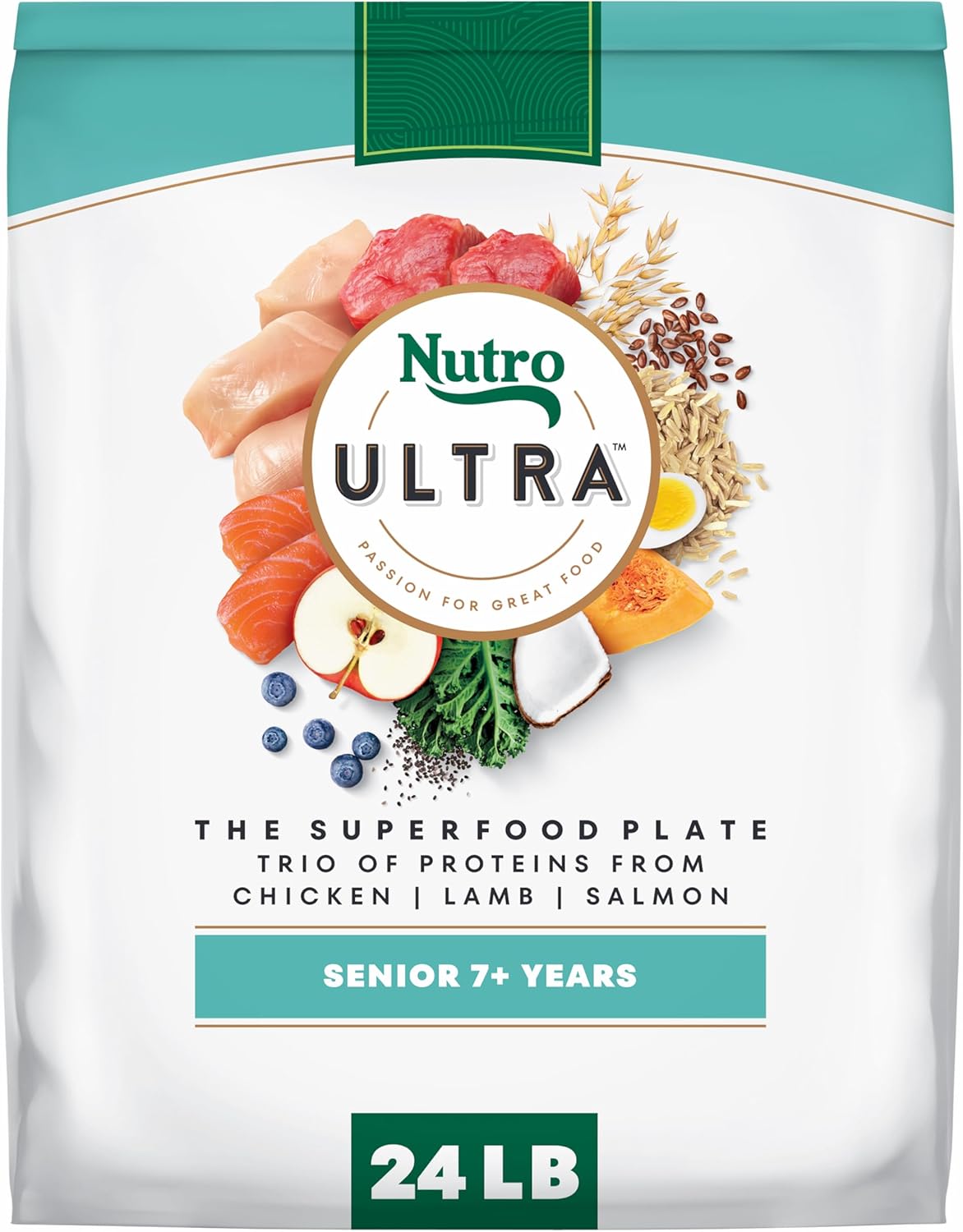
| Flavor | Chicken, Lamb & Salmon |
|---|---|
| Age Range Description | Senior |
| Item Form | Dry Kibble |
| Allergen Information | Corn-Free, Non-GMO, Soy Free, Wheat Free |
| Unit Count | 384 Ounce |
Nutro Ultra Senior High Protein Dry Dog Food is a senior-focused kibble built around real chicken as the #1 ingredient and supplemented with lamb and salmon meals to raise animal-protein content. It is intended for daily feeding of older dogs and aims to support muscle maintenance, joint health, digestion, and immunity through added glucosamine, chondroitin, antioxidants, and a blend of 14 superfoods. In practice this kibble works as a straightforward swap into a senior feeding routine — portion according to weight and monitor tolerance during the first week. The inclusion of natural joint-support ingredients and a higher-protein profile is useful for active seniors that still need muscle and mobility support, while whole grains and fiber sources target digestive health. Limitations to consider are that this is a grain-inclusive formula and sized as a large 24 pound bag, so owners wanting grain-free or single-protein limited-ingredient diets will need a different option. Also, multi-protein formulas can be less suitable for dogs with specific protein intolerances.
Best for: Buyers who prioritize higher animal-protein diets to preserve muscle and energy in active or mobile senior dogs and who want joint-supporting nutrients built into daily food.
Less Ideal for: Owners seeking grain-free, single-protein limited-ingredient diets or those managing strict protein allergies should consider other specialized formulas.
- Real chicken listed as the first ingredient and additional animal proteins from lamb and salmon for higher protein content
- Contains natural sources of glucosamine and chondroitin to support joint health in seniors
- Includes antioxidants and a 14-superfood blend aimed at immune and whole-body support
- Formulated to support digestive health with whole grains and fiber sources
- Not grain-free, so not appropriate for owners seeking grain-free formulas
- Contains multiple animal proteins which may not suit dogs with single-protein sensitivities
Verdict: The best high-protein dry food supplies elevated, bioavailable protein to help maintain muscle mass and joint support for active or recovering dogs.
Nutrish Real Chicken & Veggies 40 lb
Best Large-Bag Dry Food

| Flavor | Chicken |
|---|---|
| Age Range Description | Adult |
| Item Form | Pellet |
| Special Ingredients | all-natural |
| Animal Food Diet Type | Veterinary Diet |
Rachael Ray Nutrish Real Chicken & Veggies in the 40 lb bag is a straightforward bulk dry food for adult dogs that emphasizes real chicken as the top ingredient and a natural-ingredient formulation. It is typically used by multi-dog households or owners who prefer buying in bulk to reduce refill frequency; feedings follow the package guide and the brand recommends a gradual transition over 7 to 10 days. Notable features include a veterinarian-reviewed recipe, added vitamins, minerals and taurine, and omega-3s from fish oil intended to support overall wellness and lean muscle. The large bag provides value and convenience, and the absence of artificial flavors or poultry by-product meal may reassure buyers seeking cleaner ingredient lists. Limitations are that this is a general adult maintenance formula rather than a dedicated joint or senior diet with therapeutic levels of glucosamine or chondroitin, so owners looking specifically for arthritis support should plan to supplement or pair it with a joint-specific product after consulting their veterinarian. The product is best for stocking up and delivering everyday balanced nutrition rather than treating clinical joint conditions.
Best for: Pet parents who need a large, ready-to-feed adult dry food to stock for multiple dogs or frequent feeders and who prioritize everyday nutrition and convenience over a clinical joint formula.
Less Ideal for: Owners seeking a prescription-strength or purpose-made arthritis diet for dogs with active joint disease should choose a targeted veterinary joint formula instead.
- Real chicken listed as the #1 ingredient for high-quality protein
- Large 40 lb bag provides convenience and reduces purchase frequency for multi-dog homes
- Formulated with added vitamins, minerals, taurine, and omega-3s to support overall health
- No artificial flavors or poultry by-product meal in the recipe
- Not formulated as a therapeutic joint or senior diet with added glucosamine or chondroitin
Verdict: The best large-bag dry food offers value and convenience for multi-dog households or frequent feeders while retaining the joint-supporting formulation and shelf stability needed for long-term use.
Choosing the Right Dry Dog Food Arthritis: Key Factors to Consider
Omega-3 Fatty Acids and Anti-inflammatory Fats
Omega-3s from fish oil or marine sources are strongly associated with reduced joint inflammation and improved mobility in dogs. Look for explicit listings of EPA and DHA content or a clear source such as oily fish; generic "fish oil" without amounts makes it hard to judge potency.
The balance of omega-6 to omega-3 matters because excessive omega-6 can promote inflammation. A formula that includes adequate omega-3s and a reasonable omega-6 ratio helps manage chronic joint irritation over time. If your dog is on other supplements, factor total daily omega-3 intake to avoid overdosing.
Glucosamine and Chondroitin Content
Glucosamine and chondroitin are structural compounds that support cartilage repair and joint cushion. Effective support usually requires measurable amounts; look for formulas that list these compounds with approximate milligram amounts per kilogram or per calorie so you can estimate daily intake.
When amounts are not provided, plan to supplement separately or choose a diet with clear dosing. Note that individual response varies, and these ingredients work best as part of a comprehensive plan including weight control and regular low-impact exercise.
Protein Quality and Muscle Maintenance
Maintaining lean muscle is essential for dogs with arthritis because stronger muscles reduce stress on painful joints. Choose a dry food with a named animal protein source high in essential amino acids and a protein level appropriate for your dog's life stage and activity.
Low-quality or ambiguous protein sources can undermine muscle maintenance. Also consider how digestible the protein is; highly digestible proteins allow better nutrient uptake and reduce the chance of excess body fat, which can worsen joint strain.
Calorie Density and Weight Management
Carrying extra weight increases joint load and accelerates degeneration. A dry food's calorie density determines how easy it is to feed a satisfying portion while controlling calories. Lower-density formulas can help dogs feel full on fewer calories, while higher-density foods may need smaller measured portions and stricter feeding control.
Check feeding guidelines relative to your dog's ideal weight and be prepared to adjust portions. A formula that supports slow, maintainable weight loss or weight control is often the best choice for an arthritic dog.
Digestibility and Gut-supporting Ingredients
Good digestibility ensures dogs absorb the nutrients that support joint health. Ingredients like prebiotic fibers, moderate levels of soluble fiber, and highly digestible protein sources improve nutrient uptake and reduce stool volume, which helps monitoring and dosing.
Poorly digestible formulas can lead to inconsistent nutrient delivery and gastrointestinal upset, making it harder to rely on the diet as a consistent source of joint-supporting compounds.
Palatability and Texture for Reduced Appetite
Arthritic dogs may be older or have reduced appetite, making palatability crucial. Texture and kibble size can affect chewing comfort, especially for dogs with dental issues or jaw pain. Choose kibbles sized and shaped for your dog's breed and chewing habits and consider formulas with natural flavor enhancers.
If your dog is reluctant to eat, look for options with proven palatability without relying on excessive fat or salt, so you maintain nutrition while encouraging consistent intake.
How Much Joint-supporting Ingredient Is Enough?
There is no single universal dose for every dog, but useful targets exist. For glucosamine, many supportive regimens fall in the several hundred to low-thousands of milligrams per day range for medium to large dogs when combined with chondroitin. For omega-3s, aim for a daily EPA plus DHA level that reflects clinical recommendations for anti-inflammatory effect, recognizing smaller dogs need proportionally less.
Use the guaranteed analysis and feeding guidelines to estimate daily intake from the dry food and compare that to published dosing ranges. If the diet does not provide sufficient amounts, plan a consistent supplemental strategy approved by your veterinarian.
- Estimate daily joint supplement intake from the product's stated amounts.
- Compare EPA/DHA totals rather than just fish oil volume.
- Adjust feeding amounts only under veterinary guidance to maintain nutrient balance.
Can Diet Help if My Dog Is Already on Joint Medication?
Dietary support often complements medication by addressing inflammation and maintaining muscle. Nutritional approaches do not replace veterinarian-prescribed pain control but can reduce joint stress and support long-term function. Discuss any diet changes with your veterinarian so meals and medications work together safely.
Be aware of potential interactions if your dog is on multiple supplements. For example, combining high-dose omega-3s from food and supplements may increase total intake beyond what is necessary, so monitoring is important.
- Coordinate diet and medication plans with your veterinarian.
- Track clinical improvements like activity level and stiffness rather than relying on a single metric.
Feeding for Weight Loss and Steady Energy
For dogs carrying excess weight, a transition to a lower-calorie, high-protein, and high-fiber dry food can support gradual weight loss while preserving muscle. Shift portions slowly and monitor body condition weekly. Rapid cuts to calories can be counterproductive and reduce lean mass.
Look for feeding plans on the package and use them as a starting point; adjust based on your dog's activity and veterinary guidance. Steady energy across the day helps keep arthritic dogs moving without creating glucose or insulin spikes that affect appetite.
- Aim for gradual weight loss of around 1 to 2 percent of body weight per week for most dogs.
- Provide structured mealtimes rather than free feeding to control calories.
Kibble Shape and Size: Does It Matter for Arthritic Dogs?
Kibble size affects ease of chewing, especially for older dogs that may also have dental disease. Smaller, softer, or partially moistened kibble can increase intake in dogs that struggle with hard textures. Consider the dog's jaw strength and any dental sensitivity when choosing kibble form.
Texture also influences how quickly a dog eats. Slower eating can aid digestion and reduce gulping, which is helpful if your dog is less mobile and eats in short bursts throughout the day.
- Match kibble size to your dog's breed and chewing ability.
- Soften kibble with warm water if needed for easier eating.
Transitioning Foods Without Upsetting Joints or Digestion
Switching diets too quickly can cause gastrointestinal upset and reduced intake, which is particularly problematic for arthritic dogs who need consistent nutrition. Use a gradual transition over 7 to 10 days, mixing increasing amounts of the new food with the old.
Monitor stool quality, appetite, and activity during the transition. If your dog shows signs of intolerance or increased stiffness, pause and consult your veterinarian before proceeding.
- Start with 25 percent new food and increase every few days as tolerated.
- Keep feeding times and locations consistent during the change.
When to Ask Your Veterinarian About Therapeutic Diets
If your dog has moderate to severe arthritis, repeated lameness, or other chronic conditions, veterinary input is essential. A veterinarian can recommend therapeutic or prescription-level feeding strategies tailored to the dog's overall health and concurrent conditions.
Therapeutic oversight is especially important for dogs with kidney, liver, or endocrine disorders where generalized joint-support diets may need modification.
- Seek veterinary advice when arthritis impacts daily function or when multiple health issues are present.
- Bring a feeding history and list of supplements to the appointment for a comprehensive plan.
How We Chose the Best Dry Dog Food Arthritis
We focused on nutritional profiles and evidence-based ingredients that support joint health. Key evaluation criteria included omega-3 fatty acid levels and source, glucosamine and chondroitin presence and typical dose ranges, overall protein quality and amount to maintain muscle, and calorie density for weight management. We also assessed ingredient transparency, digestibility markers such as fiber and prebiotics, and the presence of anti-inflammatory cofactors like vitamin E and zinc. We excluded wet-only diets, therapeutic prescription-only products, and formulas that did not list joint-supporting ingredients on the main guaranteed analysis. We prioritized complete and balanced dry foods suitable for long-term feeding that offer measurable nutritional support for arthritis. Additional filters included palatability cues, absence of excessive fillers, and formulations suitable for common life stages. Products that lacked clear nutrient information or relied solely on marketing claims without ingredient detail were not considered.
Our full evaluation process is outlined in our review methodology.
FAQ
Will switching dry food alone improve my dog's arthritis?
Dietary changes can support joint health and reduce inflammation, but they rarely eliminate symptoms alone. Nutrition is most effective as part of a plan that includes weight control, appropriate exercise, and medical management when needed.
How long until I see benefits from a joint-supporting dry food?
Improvements often emerge over several weeks to a few months as inflammation decreases and muscle condition improves. Expect gradual changes and track mobility, activity, and comfort rather than immediate results.
Is it safe to give additional joint supplements with a supportive dry food?
Often yes, but safety depends on total daily doses and any medications your dog is taking. Coordinate supplements with your veterinarian to avoid unnecessary overlap or excessive dosing of active compounds.
Can a dry food help with pain management?
A tailored dry food can reduce inflammation and support joint structure but does not replace targeted pain medications when needed. It is a complementary strategy that supports long-term joint health.
Should I choose a lower-calorie formula for my arthritic dog?
If your dog is overweight, lowering calories while preserving protein is a useful approach because reducing weight decreases joint load. If weight is appropriate, focus on nutrient density and joint-supporting ingredients rather than cutting calories.
Final Verdict
Choose a dry food for arthritis by prioritizing anti-inflammatory fats, measurable joint-supporting compounds, and protein quality that preserves lean mass. Weight control, digestibility, and palatability are practical tradeoffs to balance depending on your dog's age, dental health, and activity level. Work with your veterinarian to match a diet to your dog's medical needs and monitor progress over weeks to months. With the right nutritional plan, you can reduce joint strain and help your dog remain active and comfortable.

